
Market Report · July 31, 2026

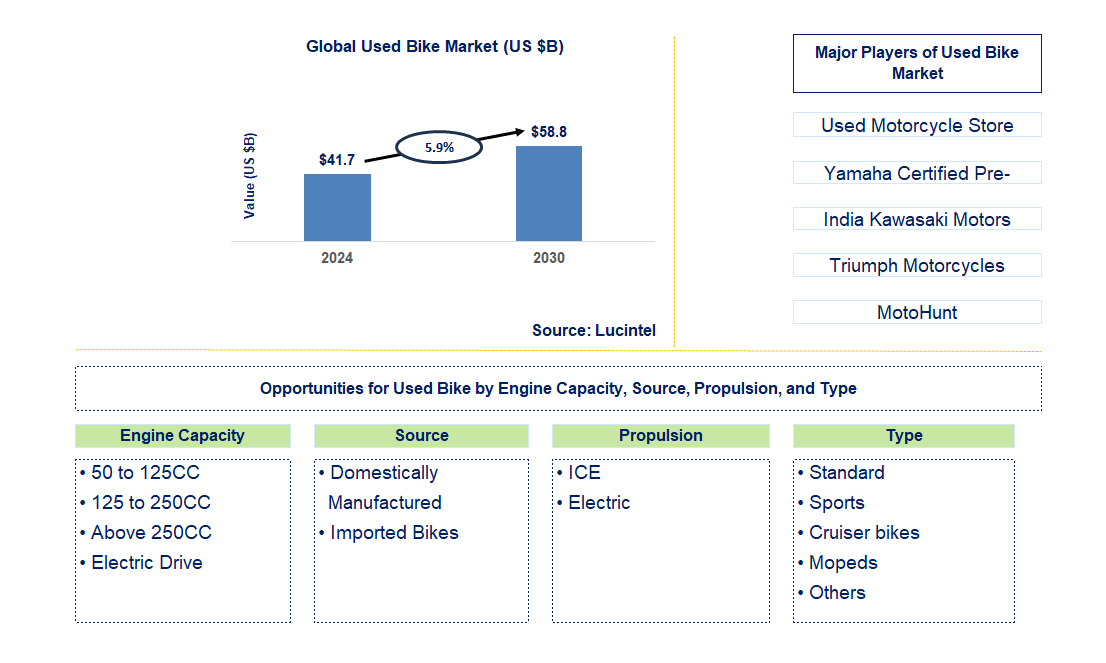
Key data points: The market size in 2030 = $58.8 billion, growth forecast = 5.9% annually for the next 6 years. Scroll below to get more insights. This market report covers trends, opportunities, and forecasts in the global used bike market to 2030 by engine capacity (50 to 125CC, 125 to 250CC, above 250CC, and electric drive), source (domestically manufactured and imported bikes), propulsion (ICE and electric), type (standard, sports, cruiser bikes, mopeds, and others), and region (North America, Europe, Asia Pacific, and the Rest of the World)
We'll send your sample report shortly.
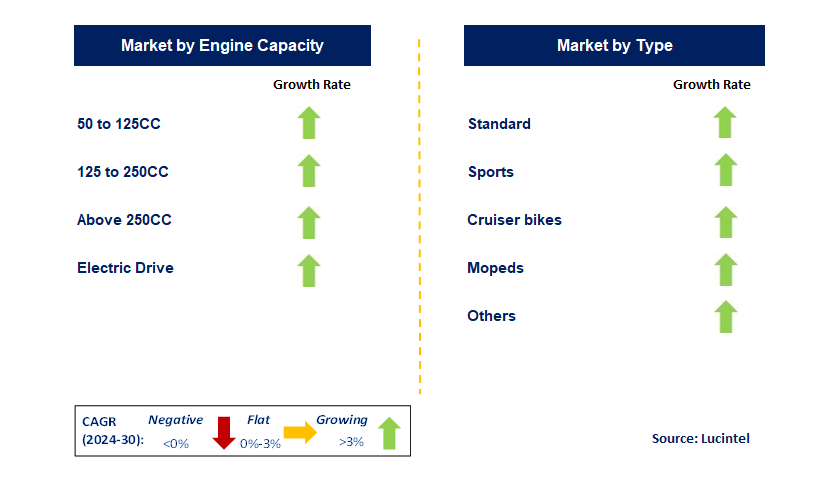
• Lucintel forecasts that, Within the engine capacity category, 125 to 250CC will remain the largest segment over the forecast period because they are versatile to manage both metropolitan commutes and sporadic highway journey.
• Within the type category, sport will remain the largest segment.
• In terms of regions, North America will remain the largest region over the forecast period due to increasing demand for affordable commute choices, and creation of new facilities or centers for used bikes as well as online platforms by current automakers and bike manufacturers across the country. Gain valuable insights for your business decisions with our comprehensive 150+ page report.
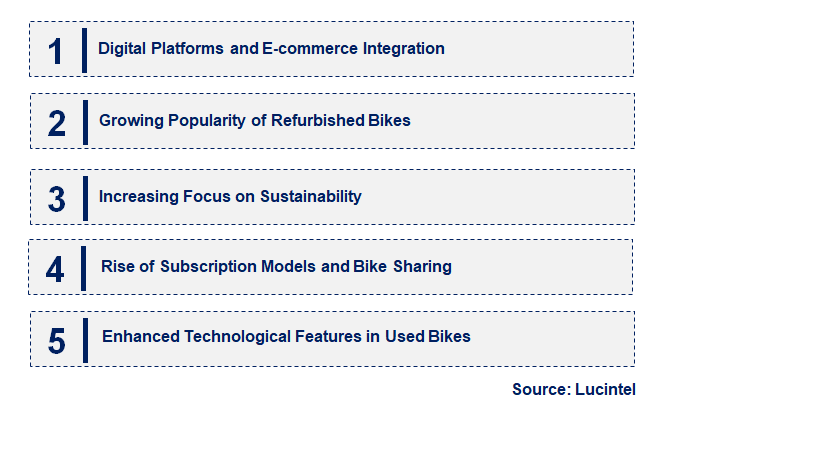
• Digital Platforms and E-commerce Integration: The integration of digital platforms and e-commerce has revolutionized the used bike market. Online marketplaces like eBay, Craigslist, and specialized bike platforms have become primary channels for buying and selling used bikes. This trend has made the process more convenient and accessible, allowing users to compare prices, check bike conditions through detailed listings, and make transactions with ease. As digital tools continue to evolve, they enhance transparency and efficiency in the used bike market.
• Growing Popularity of Refurbished Bikes: Refurbished bikes are gaining traction as consumers seek reliable, cost-effective, and environmentally friendly transportation options. Companies specializing in refurbishing used bikes are now providing high-quality, certified products with warranties. This trend addresses concerns about the durability and safety of used bikes, making them a more attractive choice. The focus on quality assurance and enhanced customer support has increased consumer confidence in purchasing refurbished bikes.
• Increasing Focus on Sustainability: Sustainability is becoming a significant driver in the used bike market. Consumers are increasingly motivated by environmental concerns and the desire to reduce their carbon footprint. Used bikes, being a more eco-friendly alternative to new ones, align with this trend. This shift is supported by government policies and incentives promoting sustainable transportation solutions. The growing emphasis on green practices is shaping consumer preferences and boosting the appeal of used bikes.
• Rise of Subscription Models and Bike Sharing: Subscription models and bike-sharing schemes are emerging trends in the used bike market. Companies offer flexible subscription plans that allow users to rent used bikes for short periods, catering to varying needs and preferences. Bike-sharing programs, often supported by municipalities, provide access to used bikes for public use. These models offer affordability and convenience while reducing the need for individual ownership, influencing the demand for used bikes.
• Enhanced Technological Features in Used Bikes: Technological advancements are being integrated into used bikes, enhancing their functionality and appeal. Features such as smart sensors, GPS tracking, and electronic shifting are becoming more common in high-end used bikes. This trend reflects a broader demand for modern technology even in the used bike sector. The incorporation of these features improves the overall user experience and adds value to used bikes, making them competitive with new models. These emerging trends are reshaping the used bike market by making it more accessible, sustainable, and technologically advanced. Digital platforms streamline transactions, while refurbished bikes and sustainability efforts address consumer concerns about quality and environmental impact. Subscription models and technological upgrades further enhance the market’s appeal, offering flexibility and modern features. Collectively, these trends indicate a robust and evolving used bike market poised to meet diverse consumer needs and preferences.
• Marketplaces and Online Selling Platforms: The emergence of digital markets and the advent of online sales have transformed the used bike industry. Craigslist, eBay, and other bike marketplaces such as Bike Exchange and The Pro’s Closet stock a great deal of used bikes, making it easy for sellers and buyers. These platforms increase transparency and trust in transactions by listing details such as images, specifications, and ratings of the sellers. The demand for used bicycles has been propelled further by the use of online shops where several sellers compete, and all their wares are advertised. Additionally, sites sometimes include tools that help evaluate the condition and cost of the bike, which is advantageous for both buyers and sellers.
• Improvements in Refurbishment and Certification Processes: The refurbishing and certification processes for used bikes have advanced, leading to more quality and confidence in pre-owned bikes. Many dealers and bicycle shops provide certified pre-owned programs that involve repairs and improvements on mainly used bikes. These programs give buyers confidence that the previously owned bicycles are operable and safe. Warranties and guarantees usually accompany reconditioned bicycles, which also raises their attractiveness. This development has changed consumer perceptions of the worth of old bikes, leading to positive dispositions toward purchasing second-hand models.
• Rising Acceptance of Electric Bikes: This development has greatly influenced the market for used bicycles, with more second-hand e-bikes available to users. A growing number of consumers seek e-bikes because they provide a green and effective transport solution, making previously owned models even more attractive. The increasing number of used e-bikes is a chance for those who wish to use this advanced device at a lower price. With e-bikes becoming common, the market for second-hand e-bikes is expanding as well, with specialized platforms and sellers focusing solely on used electric bikes. Such change is consistent with the general promotion of sustainable transport solutions and the growing consumer attention to e-bike technology.
• Shifts in Consumer Behavior and Preferences: Consumer behavior and preferences in the market are changing as consumers appear to be more inclined toward cheaper and more eco-friendly transportation such as used bikes. There is a growing zeal for environmental conservation combined with the need for low-cost transportation that encourages the use of used bikes. People are increasingly interested in buying second-hand goods, leading them to search for used bikes to minimize their impact on the environment. This change in mindset is helping expand the used cycle segment and enabling many to consider used bicycles as alternatives to new ones.
• Regulatory and Policy Changes: New factors are changing the dynamics in the used bike market, including regulatory policies and market strategies. For instance, in some states, requirements for the safety and emissions of bicycles are becoming mandatory, which may affect the resale and certification of used bicycles. These reforms are increasing the pressure on the condition of the bikes and may lead to a higher standard of refurbishment. Additionally, policy changes are extending to the promotion and provision of subsidies for using used e-bikes, which will also affect the demand for pre-owned bicycles. The recent changes affecting the used bike market are vital for its active development. These changes are making used bicycles more accessible, increasing the size of the market, and fitting in with larger movements toward sustainability and economics. As the market progresses with these changes, it is refreshing with new opportunities for both buyers and sellers, increasing growth and innovation in the used bike market.
• Commuter Bikes: The growing trend toward urban cycling and the need for affordable transportation solutions are boosting the demand for used commuter bikes. As cities expand and traffic congestion worsens, more individuals are opting for bicycles as a practical alternative to driving. Used commuter bikes offer an economical solution for daily travel. Businesses can tap into this market by providing well-maintained, reliable commuter bikes at competitive prices, catering to the increasing number of urban cyclists seeking cost-effective, eco-friendly transportation options.
• Recreational Bikes: The rising interest in outdoor activities and fitness is creating opportunities in the recreational bike segment. Used bikes for leisure and sports are becoming popular among enthusiasts looking for high-quality yet affordable options. As people seek ways to stay active and enjoy outdoor experiences, there is a growing market for used recreational bikes, including mountain bikes and road bikes. Companies can capitalize on this trend by offering a diverse range of refurbished recreational bikes that meet the needs of various types of riders.
• Electric Bikes: The increasing adoption of electric bikes presents a notable growth opportunity in the used bike market. With advancements in battery technology and rising consumer interest in eco-friendly transportation, used electric bikes are becoming more desirable. These bikes offer a cost-effective alternative to new electric models, making them appealing to budget-conscious consumers. Businesses that specialize in refurbishing and reselling used electric bikes can attract customers looking for affordable, high-performance e-bikes.
• Bike-Sharing Programs: The expansion of bike-sharing programs presents a strategic opportunity for the used bike market. As cities implement bike-sharing initiatives to promote sustainable urban transport, there is a growing need for reliable used bikes to support these programs. Partnerships with municipalities and bike-sharing companies can provide a steady demand for used bikes. This opportunity allows companies to leverage their inventory for large-scale, high-volume sales while contributing to green urban mobility solutions.
• Premium Refurbishing: The demand for high-quality, premium refurbished bikes is increasing as consumers seek top-tier performance at a lower cost. This growth opportunity involves focusing on high-end used bikes, such as top-tier road and mountain bikes, and offering them with a refurbishment guarantee. By providing detailed inspection, repair, and customization services, businesses can attract customers looking for high-performance bikes at more affordable prices, thereby enhancing their market position in the premium segment. The strategic growth opportunities in the used bike market are diverse and promising. By focusing on commuter, recreational, and electric bikes, as well as bike-sharing programs and premium refurbishing, businesses can align with evolving consumer preferences and capitalize on emerging trends. These opportunities cater to varying market needs and support the broader movement toward sustainable and cost-effective transportation solutions. As these segments expand, they will drive significant growth in the used bike market.
• Sustainability Trends: Increasing environmental awareness is a major driver in the used bike market. Consumers prioritize sustainable transportation options to reduce their carbon footprint. Used bikes align with this trend by offering an eco-friendly alternative to new bikes. This shift is driven by global efforts to combat climate change and reduce waste. As more individuals and governments support green initiatives, the demand for used bikes as a sustainable choice continues to grow.
• Technological Advancements: Technological advancements in bike components and refurbishing processes enhance the appeal of used bikes. Innovations such as improved materials, electronic shifting systems, and advanced diagnostic tools make used bikes more reliable and attractive. Refurbishing technologies that ensure high-quality repairs and upgrades also contribute to market growth. These advancements help overcome concerns about the performance and longevity of used bikes, driving their adoption among tech-savvy consumers.
• Economic Factors: Economic considerations are a significant driver for the used bike market. Rising costs of new bikes and fluctuating economic conditions make used bikes a more affordable option for many consumers. Budget-conscious buyers, including students and low-income individuals, increasingly turn to used bikes for cost savings. This trend is particularly pronounced during economic downturns when consumers are more likely to seek cost-effective alternatives.
• Urbanization and Traffic Congestion: Rapid urbanization and increasing traffic congestion are driving the demand for used bikes, particularly for commuting purposes. As cities expand and traffic issues worsen, more individuals turn to bikes as a practical solution for short-distance travel. Used bikes offer an economical and efficient alternative to driving, appealing to those looking to avoid traffic and parking hassles while benefiting from a cost-effective mode of transportation.
• Government Policies and Incentives: Government policies and incentives supporting cycling and sustainable transport boost the used bike market. Many governments implement measures such as subsidies, tax breaks, and infrastructure investments to promote cycling. These policies encourage more people to adopt bikes as a regular mode of transport, including used bikes. Support for green transportation solutions helps increase the market potential for used bikes. Challenges in the used bike market include:
• Quality Assurance and Safety Concerns: Ensuring the quality and safety of used bikes is a major challenge. Consumers may be wary of purchasing used bikes due to concerns about their condition and reliability. Effective quality control processes and transparent refurbishment practices are crucial to addressing these concerns. Companies must invest in thorough inspections, repairs, and certifications to build trust and ensure that used bikes meet safety and performance standards.
• Regulatory Compliance: Navigating regulatory requirements related to the sale of used bikes can be challenging. Different regions have varying regulations regarding safety standards, emissions, and environmental practices. Compliance with these regulations is essential to avoid legal issues and penalties. Businesses must stay informed about local and national regulations and ensure their operations align with regulatory requirements to operate successfully in the used bike market.
• Market Saturation and Competition: Market saturation and intense competition are significant challenges in the used bike sector. With the growing number of players entering the market, it can be difficult to differentiate products and capture market share. Companies need to develop unique value propositions, focus on customer service, and leverage technological innovations to stand out. Effective marketing strategies and partnerships can also help mitigate the effects of competition and market saturation. The used bike market is shaped by a complex interplay of drivers and challenges. Sustainability trends, technological advancements, and economic factors are driving growth, while quality assurance, regulatory compliance, and market saturation present notable challenges. Addressing these challenges while leveraging growth drivers will be crucial for businesses seeking to capitalize on market opportunities. Overall, the ability to navigate these dynamics effectively will determine the success and expansion of the used bike market.
• Used Motorcycle Store
• Yamaha Certified Pre-Owned
• India Kawasaki Motors
• Triumph Motorcycles
• MotoHunt
• Motorbikes 4 All
• Droom
• Mundimoto
• Blade Motorcycles
• Batfa Japan
• 50 to 125CC
• 125 to 250CC
• Above 250CC
• Electric Drive
• Domestically Manufactured
• Imported Bikes
• ICE
• Electric
• Standard
• Sports
• Cruiser bikes
• Mopeds
• Others
• North America
• Europe
• Asia Pacific
• The Rest of the World
• United States: In the U.S., the used bike market has seen significant growth driven by rising environmental consciousness and a shift toward more sustainable transportation options. The COVID-19 pandemic accelerated interest in cycling, leading to a boom in both new and used bike sales. Online platforms and marketplaces, such as Craigslist and Facebook Marketplace, have become pivotal in buying and selling used bikes. Additionally, specialized refurbishing shops and bike-sharing programs have increased the availability and appeal of used bikes.
• China: The Chinese used bike market is expanding as urban mobility solutions become more crucial. The market is influenced by rising incomes and an increasing focus on green transportation. The growth of e-commerce platforms like Taobao and Alibaba has made it easier for consumers to access used bikes. Additionally, the government’s promotion of cycling as part of its environmental policy has further driven demand. Chinese consumers are increasingly seeking high-quality used bikes, with a focus on both affordability and reliability.
• Germany: In Germany, the used bike market benefits from a strong cycling culture and a focus on sustainability. The popularity of cycling in urban areas, combined with the high cost of new bikes, has bolstered the used bike sector. Online marketplaces and local bike shops are key players in this market. Additionally, Germany’s stringent environmental regulations and incentives for sustainable transport solutions have spurred interest in used bikes as an eco-friendly option.
• India: The Indian used bike market is growing rapidly due to urbanization and increasing disposable incomes. The affordability of used bikes makes them an attractive option for the country’s large population of young and budget-conscious consumers. Online platforms and local dealerships have become major channels for buying and selling used bikes. The government’s push for increased cycling infrastructure and the rise in fuel prices have also contributed to the growing popularity of used bikes in India.
• Japan: In Japan, the used bike market is characterized by high demand for well-maintained and high-quality bikes. Japanese consumers value reliability and longevity, making used bikes a popular choice for both practical and recreational purposes. The market benefits from an efficient system of bike recycling and refurbishing. Online platforms, as well as second-hand stores, play a crucial role in the distribution of used bikes. Additionally, Japan’s focus on reducing carbon emissions and promoting eco-friendly transport options has further supported the used bike market.


• Used Motorcycle Store
• Yamaha Certified Pre-Owned
• India Kawasaki Motors
• Triumph Motorcycles
• MotoHunt
• Motorbikes 4 All
• Droom
• Mundimoto
• Blade Motorcycles
• Batfa Japan Q6. Which used bike market segment will be the largest in future? Answer: Lucintel forecasts that 125 to 250CC will remain the largest segment over the forecast period because they are versatile to manage both metropolitan commutes and sporadic highway journey. Q7. In used bike market, which region is expected to be the largest in next 5 years? Answer: North America will remain the largest region over the forecast period due to increasing demand for affordable commute choices, and creation of new facilities or centers for used bikes as well as online platforms by current automakers and bike manufacturers across the country. Q.8 Do we receive customization in this report? Answer: Yes, Lucintel provides 10% customization without any additional cost.


Choose a license that fits your team. Instant PDF delivery.
Prices exclude taxes. Instant delivery. Custom licensing available on request.
Market Report · July 31, 2026
Market Report · July 17, 2026
Market Report · May 18, 2026
Trusted partner for strategic intelligence and business growth


Receive a complimentary market analysis tailored to your industry. Our analysts will identify key growth opportunities and competitive dynamics specific to your business.

Market size, growth rate, and key trend analysis for your specific sector.

Top competitor positioning and market share analysis.

Strategic recommendations backed by data-driven insights.
Get curated market intelligence and competitive moves straight to your inbox.
By subscribing, you agree to receive our monthly insights. Unsubscribe anytime.
Receive a complimentary market analysis tailored to your industry. Our analysts will identify key growth opportunities and competitive dynamics specific to your business.
Market size, growth rate, and key trend analysis for your specific sector.
Top competitor positioning and market share analysis.
Strategic recommendations backed by data-driven insights.
Get curated market intelligence, emerging trends, and competitive moves straight to your inbox each month.
By subscribing, you agree to receive our monthly insights. Unsubscribe anytime.
We'll send your sample report shortly.