
Market Report · May 16, 2026

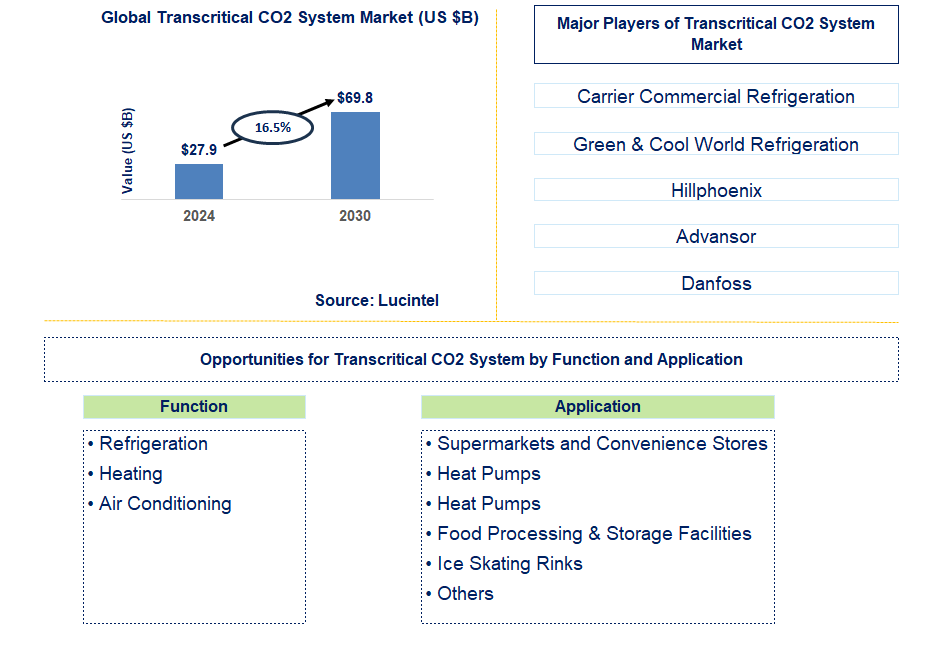
Key data points: The market size in 2030 = $69.8 billion, growth forecast = 16.5% annually for the next 6 years. Scroll below to get more insights. This market report covers trends, opportunities, and forecasts in the global transcritical co2 system market to 2030 by function (refrigeration, heating, and air conditioning), application (supermarkets and convenience stores, heat pumps, food processing & storage facilities, ice skating rinks, and others), and region (North America, Europe, Asia Pacific, and the Rest of the World)
We'll send your sample report shortly.
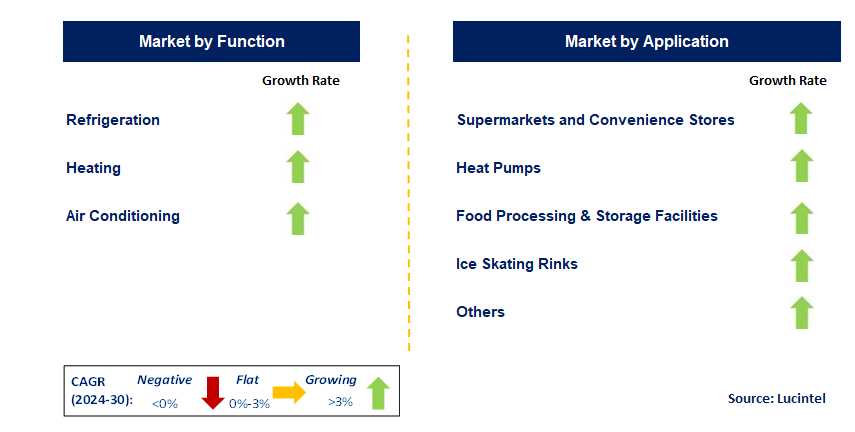
• Lucintel forecasts that, witjin the function category, refrigeration segment will remain the largest segment over the forecast period due to growing demand from supermarkets and food sellers for HFC-free technologies, as well as, the demand for natural refrigerants used in heating processes has increased owing to growing environmental awareness and stricter construction norms and regulations.
• In terms of regions, Europe will remain the largest region over the forecast period due to an increase in the need for CO2 condensing equipment in small-format retailers, fast-food franchises, restaurants, and ongoing projects in the region. Gain valuable insights for your business decissions with our comprehensive 150+ page report.
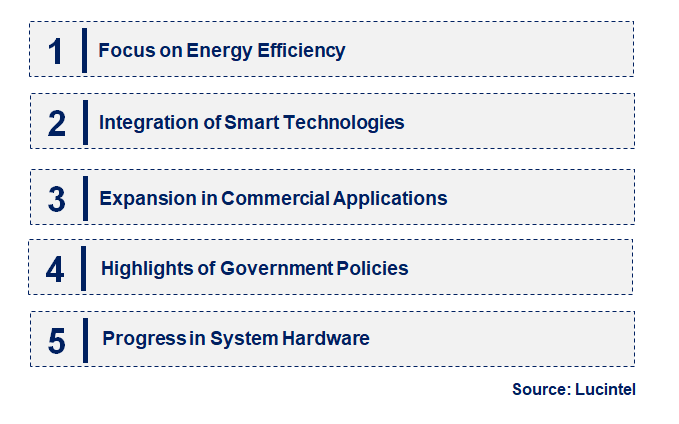
• Focus on Energy Efficiency: Energy efficiency has become one of the key trends, especially as more CO2 technology plays into greater efficiency within operational costs. This focus is as a result of regulatory commitments.
• Integration of Smart Technologies: Transcritical CO2 systems are being managed in a better way with the help of advanced smart technologies, such as IoTs, integrated controls, and new approaches which contribute to their increased performance. These technologies ensure that quality improvement of the entire efficiency of the systems is attained.
• Expansion in Commercial Applications: There is an increasing trend of the utilization of transcritical CO2 systems in commercial applications such as retail refrigeration and cold storage. This explains the growth rise in the efficient working of more useful systems.
• Highlights of Government Policies: The growing government incentives and stringent regulations are using the momentum for the vigorous campaign to integrate the transcritical CO2 system. Targeted policies and subsidies are creating the possibility of investing in CO2 technology, leading to expansion in the market.
• Progress in System Hardware: New designers of transcritical CO2 systems, such as heat exchangers and compressors, boost the effectiveness and reliability of transcritical CO2 systems. These improvements will enhance the overall performance of the system and decrease the service costs. These trends are transforming the market of transcritical CO2 systems by promoting technical advancement, enhancing the energy efficiency of the systems, and widening the scope of their applications. Businesses are responding to these shifts because competition is becoming heightened together with changes in the industry context.
• Improvement in Efficiency: Recent upgrades on transcritical CO2 systems efficiency have been recorded thanks to advanced heat exchangers and modern compressors. These advancements help achieve enhanced efficiency alongside decreased electricity use, thus making CO2 systems more economically viable.
• Government Provision: Adoption of transcritical CO2 systems has been fueled by increasing government support and incentives towards energy-efficient technologies. Policies and subsidies are serving as good sources of investments and aiding the placing of CO2 systems in different applications.
• Technological Integration: Adoption of smart technologies such as IoT and advanced control systems is improving the management and operations of transcritical systems. These technologies allow monitoring and optimizing systems to be better so that the efficiency of the system is improved.
• Market Expansion: There is a more significant penetration of transcritical CO2 systems in new markets and uses such as commercial refrigeration and industrial cooling. This penetration underscores the growing need for efficient and environmentally friendly cooling measures.
• Focus on Sustainability: The market is no exception as there is a growing trend towards sustainability where CO2 systems have been advocated for as an eco-friendlier substitute for conventional refrigerant systems. This change goes hand in hand with the need to cut down the level of gas emissions to the atmosphere. These developments are impacting the transcritical CO2 system market as they are enhancing efficiency, increasing the scopes of applications, and improving the aspect of sustainability. Enhancement of these developments has become essential for improving the firms to comply with the policies in place and market needs.
• Retail Refrigeration: There are more developments in this market segment due to the need of implementing more energy-efficient and eco-friendly cooling solutions. More and more retailers are converting to transcritical CO2 systems because of their enhanced capabilities and low impact on the environment.
• Industrial Cooling: This segment is recording an increase in the use of transcritical CO2 systems due to their efficiency and reliability. There is a scope in manufacturing hi-tech CO2 systems which are customized to suit industrial use.
• Cold Storage: The cold storage market witnesses growth due to the increase in efficiency of refrigeration demands by the users. There is a potential in reducing energy consumption and operational costs associated with implementing transcritical CO2 systems in cold storage facilities.
• Pharmaceuticals: The pharmaceutical sector requires thermal management solutions geared towards energy efficiency and reliability in storage and production applications. Transcritical CO2 systems present an opportunity for the pharmaceutical sector to address this problem while maintaining the required standards.
• Food Processing: As competition rises, food processing industries have zeroed in on the use of transcritical CO2 systems for cooling efficiency as well as for sustainability. There exists an opportunity for meeting the challenges of food processing with specialized CO2 systems. These growth opportunities are impacting the transcritical CO2 system market by driving innovation, expanding applications, and enhancing market reach. The companies are positioning themselves in advance of these market opportunities and trends which are shifting.
• Technology Change: Development of CO2 systems such as the development of efficient heat exchangers and superior control systems is one of the factors propelling market growth. Improvements in these areas lead to higher levels of efficiency, performance qualities, and reliability of systems.
• Regulatory Pressure: More and more pressure in the form of regulations and policies that encourage energy efficiency and reductions in greenhouse gas emissions are driving higher uptake of transcritical CO2 systems. Companies are pursuing CO2 technologies to meet these regulatory policies.
• Government Incentives: Policies of strengthening government assistance and incentives in favor of energy-saving technologies supplement the applicability of transcritical CO2 systems. Various subsidies and grants help recover the expenses and encourage investment in CO2 technology.
• Market Demand for Sustainability: The increasing focus on environmental sustainability has resulted in users purchasing CO2 systems for use which are considered safer than traditional refrigerants. This transition is consistent with the global objectives to minimize environmental pollution.
• Energy Efficiency: A major factor that propels the use of transcritical CO2 systems is the growing need for energy-conserving cooling appliances. These systems help in cutting down operational expenses as they perform better than traditional refrigeration systems. Challenges in the transcritical CO2 system market are:
• High Initial Costs: Factors contributing to the slow adoption of transcritical CO2 systems include the high up-front installation costs of the systems. Most businesses will shy away from investing in CO2 systems due to the cost of sophisticated technology and the costs of the installation.
• Technological Complexity: Transcritical CO2 systems’ complexity can actually pose operational and maintenance issues to companies who are involved in those systems. Companies have to provision the requisite expertise and material resources needed to operate such systems.
• Market Competition: Multifunctional refrigeration systems manufactured in the general refrigeration market pose problems to CO2 system manufacturers. Companies need to find a niche through innovation, quality, and price in order to weather these pressures. These drivers and challenges are contributing to the shaping of the transcritical CO2 system market by influencing market dynamics, investment decisions, and growth opportunities. Companies must contend with these factors in order to flourish in a changing and competitive environment.
• Carrier Commercial Refrigeration
• Green & Cool World Refrigeration
• Hillphoenix
• Advansor
• Danfoss
• BITZER
• Carnot Refrigeration
• SCM Frigo
• Emerson Climate Technologies
• Baltimore Aircoil Company
• Refrigeration
• Heating
• Air Conditioning
• Supermarkets and Convenience Stores
• Heat Pumps
• Food Processing & Storage Facilities
• Ice Skating Rinks
• Others
• North America
• Europe
• Asia Pacific
• The Rest of the World
• United States: While CO2 transcritical systems are gradually penetrating the retail refrigeration business, the industrial cooling sector is the fastest growing area. This trend is attributable to increased regulation on the environment and the need for energy conservation thus increasing the number of installations and technology improvement.
• China: In terms of policy, China is providing the necessary support and rewards for using transcritical CO2 systems. The emphasis is on the increase in the use of CO2 systems for commercial and domestic purposes with large sectors of R&D directed towards increasing system efficiency and reliability.
• Germany: Germany describes the trend of integrating transcritical CO2 systems into various processes within industries, cold chain, and food processing. With its vision of cutting greenhouse gas emissions, the nation is shifting gears to advanced CO2 additional technologies in refrigeration.
• India: India also contributes to the growth of the transcritical CO2 applications market segment due to still rampant industrialization and energy efficiency requirements for cooling systems. Sectors such as pharmaceuticals and food are witnessing a growing interest in CO2 systems owing to sustainable low-cost refrigeration systems.
• Japan: The incorporation of modern control technology is leading to new possibilities in the development of transcritical CO2 systems in Japan. Improvement of energy consumption as well as control of operation costs is the drive with areas of application ranging from commercial refrigerators to industrial chilling.


• Carrier Commercial Refrigeration
• Green & Cool World Refrigeration
• Hillphoenix
• Advansor
• Danfoss
• BITZER
• Carnot Refrigeration
• SCM Frigo
• Emerson Climate Technologies
• Baltimore Aircoil Company Q6. Which transcritical CO2 system market segment will be the largest in future? Answer: Lucintel forecasts that refrigeration segment will remain the largest segment over the forecast period due to growing demand from supermarkets and food sellers for HFC-free technologies, as well as, the demand for natural refrigerants used in heating processes has increased owing to growing environmental awareness and stricter construction norms and regulations. Q7. In transcritical CO2 system market, which region is expected to be the largest in next 6 years? Answer: In terms of regions, Europe will remain the largest region over the forecast period due to an increase in the need for CO2 condensing equipment in small-format retailers, fast-food franchises, restaurants, and ongoing projects in the region. Q.8 Do we receive customization in this report? Answer: Yes, Lucintel provides 10% customization without any additional cost.


Choose a license that fits your team. Instant PDF delivery.
Prices exclude taxes. Instant delivery. Custom licensing available on request.
Market Report · May 16, 2026
Market Report · May 16, 2026
Market Report · May 16, 2026
Trusted partner for strategic intelligence and business growth


Receive a complimentary market analysis tailored to your industry. Our analysts will identify key growth opportunities and competitive dynamics specific to your business.

Market size, growth rate, and key trend analysis for your specific sector.

Top competitor positioning and market share analysis.

Strategic recommendations backed by data-driven insights.
Get curated market intelligence and competitive moves straight to your inbox.
By subscribing, you agree to receive our monthly insights. Unsubscribe anytime.
Receive a complimentary market analysis tailored to your industry. Our analysts will identify key growth opportunities and competitive dynamics specific to your business.
Market size, growth rate, and key trend analysis for your specific sector.
Top competitor positioning and market share analysis.
Strategic recommendations backed by data-driven insights.
Get curated market intelligence, emerging trends, and competitive moves straight to your inbox each month.
By subscribing, you agree to receive our monthly insights. Unsubscribe anytime.
We'll send your sample report shortly.