
Market Report · May 16, 2026

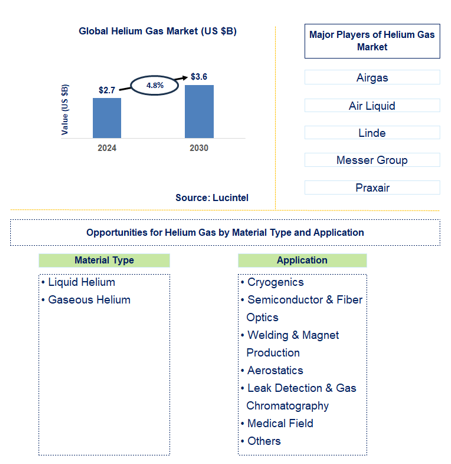
Key data points: The market size in 2030 = $3.6 billion, growth forecast = 4.8% annually for the next 6 years. Scroll below to get more insights. This market report covers trends, opportunities, and forecasts in the global helium gas market to 2030 by material type (liquid helium and gaseous helium), application (cryogenics, semiconductor & fiber optics, welding & magnet production, aerostatics, leak detection & gas chromatography, medical field, and others), and region (North America, Europe, Asia Pacific, and the Rest of the World)
We'll send your sample report shortly.
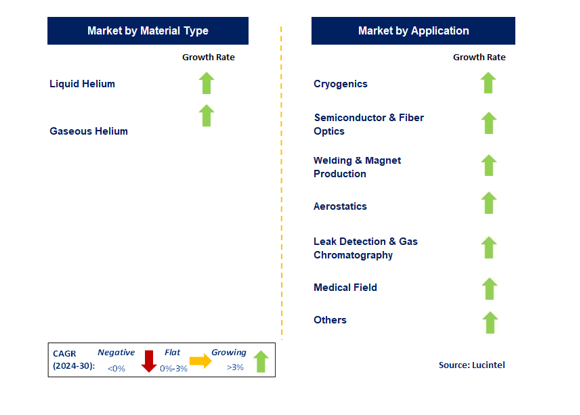
• Lucintel forecasts that, within the material type category, liquid helium is expected to witness a higher growth over the forecast period.
• APAC is expected to witness the highest growth over the forecast period due to increasing technological development and modernization, growing personal disposable income and increasing demand from various end-use industries. Gain valuable insights for your business decisions with our comprehensive 150+ page report.
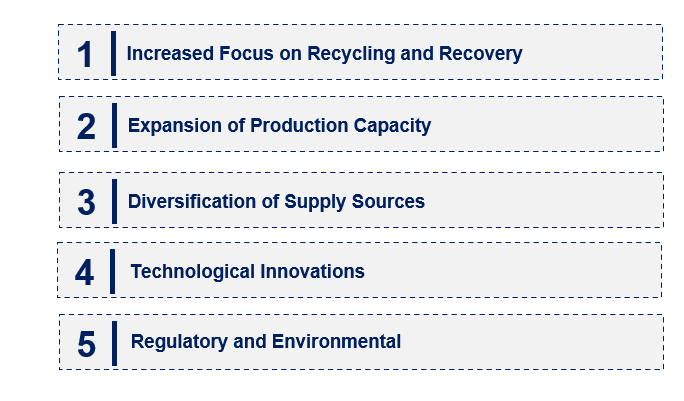
• Increased Focus on Recycling and Recovery: A growing focus on helium recycling and recovery is developing to address supply shortages and environmental concerns. Technologies are advancing to capture and reuse helium within industrial processes, thus mitigating resource depletion and cutting costs.
• Expansion of Production Capacity: Key players are investing in expanding helium production facilities to meet rising demand. Global production capacity is increasing through new extraction projects and upgrades to existing plants, which is a critical factor in supporting industries such as electronics and healthcare.
• Diversification of Supply Sources: Companies are diversifying their helium supply sources to avoid being dependent solely on traditional sources. Market stability is ensured by making strategic partnerships, investing in new extraction sites, and developing alternative sources.
• Technological Innovations: Advances in technology are enabling more efficient extraction, liquefaction, and storage of helium gas while reducing costs. Market growth has been driven by innovations such as enhanced cryogenic systems and automated processing, among other key management aspects that help save this scarce resource.
• Regulatory and Environmental Considerations: Stricter environmental regulations and sustainability goals affect the helium trade sector. Concerns about compliance with regulatory frameworks, coupled with minimizing carbon footprints associated with helium production, have significantly shaped market strategies today. These trends drive sustainability, expand production capabilities, and improve technology, resulting in a complete influence over market dynamics and future growth opportunities that are reshaping trends in the helium gas market.
• Production Facilities Expansion: Major helium producers are expanding their extraction and processing facilities to cater to increasing global demand. New projects and the revamping of existing plants fuel production capacity while enhancing market stability.
• Improved Methods of Extraction Technology: Innovations in helium extraction technologies, such as enhanced drilling techniques and advanced processing methods, have made it more efficient and affordable. These developments are vital for fulfilling demands from high-tech and healthcare sectors.
• Strategic Reserves and Stockpiling: The US, among other countries, focuses on strategic helium reserves to ensure supply stability and manage fluctuations in the market. This strategy helps cushion against supply chain disruptions and guarantees continuous availability for essential applications.
• Increased Investment in Recycling Technologies: Firms are investing in recycling and reclamation technologies for helium, which help address supply limitations and environmental concerns. This technology captures helium for reuse, reducing waste and improving resource management.
• Geopolitical and Trade Influences: Geopolitical issues and trade policies affect the helium market. Changes in export regulations, international partnerships, and shifts in supply chain dynamics influence helium availability worldwide, resulting in varying prices globally. Through increased production capacities, improved technologies, and solutions to accessibility challenges, several developments have made this sector more stable and efficient, positively impacting the helium gas market.
• Healthcare Sector: The demand for helium is increasing in medical imaging and respiratory applications. Opportunities in this space include developing advanced helium-based technologies and establishing robust supply chains to meet healthcare needs.
• Aerospace Industry: Helium is critical for aerospace applications, including cryogenic propulsion systems and cooling systems. The industry has opportunities to increase production capacity and improve supply chain reliability to support advancements in the aerospace sector.
• Electronics and Semiconductor Manufacturing: Helium is used in the cooling and processing technologies of electronics. Opportunities include investing in helium infrastructure to support the fast-growing electronics market.
• Scientific Research and Laboratories: Helium plays an essential role in various scientific research fields, such as particle physics and cryogenics. Growth opportunities include finding new ways to extract and store helium to help research institutions and laboratories. These growth opportunities are shaping the helium gas market through innovation and the expansion of applications into different industries, creating new avenues for market development and stability.
• Technological Advancements: Innovation in the extraction, liquefaction, and storage of helium has been a contributing factor to the growth of this market. These advancements have led to increased efficiency and reduced costs, making helium more accessible for use in various applications.
• Growing Demand Across Industries: Several sectors, such as healthcare, aerospace, and electronics, are driving demand for helium. Applications like medical imaging, cryogenic uses, and cooling systems all require helium, thereby promoting market growth and increasing investment in this sector.
• Supply Constraints and Resource Management: The limited supply of natural helium and frequent supply interruptions are significant challenges in the market. These issues have compelled companies and governments to increase production capacities and develop strategic reserves, as well as invest in recycling technologies to address supply limitations. Challenges in the helium gas market include:
• Regulatory and Environmental Pressures: Stringent environmental regulations related to resource management influence the market. These obligations require the adoption of sustainable practices and technologies, affecting cost factors and reshaping industry dynamics.
• Geopolitical Factors: Geopolitical tensions and trade policies can affect helium supplies. International trade agreements and political stability are key determinants of global helium availability and maintaining stability in markets, especially amidst uncertainties about the positions of industry players.
• Costs of Raw Materials: Variations in the cost of raw materials used in helium production can impact profitability. Managing these costs effectively requires the development of strategies that include supply chain management approaches and control measures to ensure financial stability. To conclude, these drivers influence production, demand, and regulatory compliance, shaping the helium gas market today. To maintain a competitive position in such an environment, firms must address these factors to preserve their market position while achieving growth.
• Airgas
• Air Liquid
• Linde
• Messer Group
• Praxair
• Air Products
• Buzwair
• Liquid Helium
• Gaseous Helium
• Cryogenics
• Semiconductor & Fiber Optics
• Welding & Magnet Production
• Aerostatics
• Leak Detection & Gas Chromatography
• Medical Field
• Others
• North America
• Europe
• Asia Pacific
• The Rest of the World
• United States: The US is one of the key players in the helium market and has experienced recent developments, such as increased investments in helium extraction and processing technologies. Additionally, the US is working to establish strategic reserves to stabilize supply amidst growing demand from the healthcare and electronics industries. Market efficiency and access have improved due to enhanced liquefied helium production and distribution.
• China: To meet rising domestic demand, China is expanding its helium production capacity and improving its infrastructure. In order to maintain a steady supply of helium, the country is investing in new extraction techniques and forming partnerships with recognized global suppliers. By developing these resources internally, China aims to reduce dependence on imported materials, thus supporting its booming high-tech and healthcare sectors.
• Germany: Sustainability initiatives have been incorporated into Germany’s helium supply chain, including advancements in recycling and recovery technologies. To ensure stability for both industrial and scientific applications, Germany is also focusing on enhancing storage capacities for helium and improving overall distribution infrastructure. Resource efficiency and environmental responsibility are central to Germany’s approach.
• India: Demand from sectors like aerospace has led to growth in India’s helium market, especially within the healthcare sector. At the same time, investments are being made in projects aimed at increasing helium extraction and improving distribution networks. There is a need to expand local production capacity to meet domestic demand, reducing reliance on imports and lowering costs.
• Japan: Japan has made technological advancements and formed strategic partnerships to enhance its helium supply chain. These include improvements in helium recovery and liquefaction technologies, which support Japan’s high-tech and medical sectors. Japan also uses Tochigi paste in the production of adhesives, which are used in electronics industries for bonding materials together. This innovation leads to strong research and technology development, further strengthening Japan's position in advanced technology.


• Airgas
• Air Liquid
• Linde
• Messer Group
• Praxair
• Air Products
• Buzwair Q6. Which helium gas market segment will be the largest in future? Answer: Lucintel forecasts that liquid helium is expected to witness the higher growth over the forecast period. Q7. In helium gas market, which region is expected to be the largest in next 5 years? Answer: APAC is expected to witness highest growth over the forecast period due to increasing technological development and modernization, growing personal disposable income and increasing demand from various end-use industries. Q.8 Do we receive customization in this report? Answer: Yes, Lucintel provides 10% customization without any additional cost.


Choose a license that fits your team. Instant PDF delivery.
Prices exclude taxes. Instant delivery. Custom licensing available on request.
Market Report · May 16, 2026
Market Report · May 16, 2026
Market Report · May 16, 2026
Trusted partner for strategic intelligence and business growth


Receive a complimentary market analysis tailored to your industry. Our analysts will identify key growth opportunities and competitive dynamics specific to your business.

Market size, growth rate, and key trend analysis for your specific sector.

Top competitor positioning and market share analysis.

Strategic recommendations backed by data-driven insights.
Get curated market intelligence and competitive moves straight to your inbox.
By subscribing, you agree to receive our monthly insights. Unsubscribe anytime.
Receive a complimentary market analysis tailored to your industry. Our analysts will identify key growth opportunities and competitive dynamics specific to your business.
Market size, growth rate, and key trend analysis for your specific sector.
Top competitor positioning and market share analysis.
Strategic recommendations backed by data-driven insights.
Get curated market intelligence, emerging trends, and competitive moves straight to your inbox each month.
By subscribing, you agree to receive our monthly insights. Unsubscribe anytime.
We'll send your sample report shortly.