
Market Report · July 31, 2026

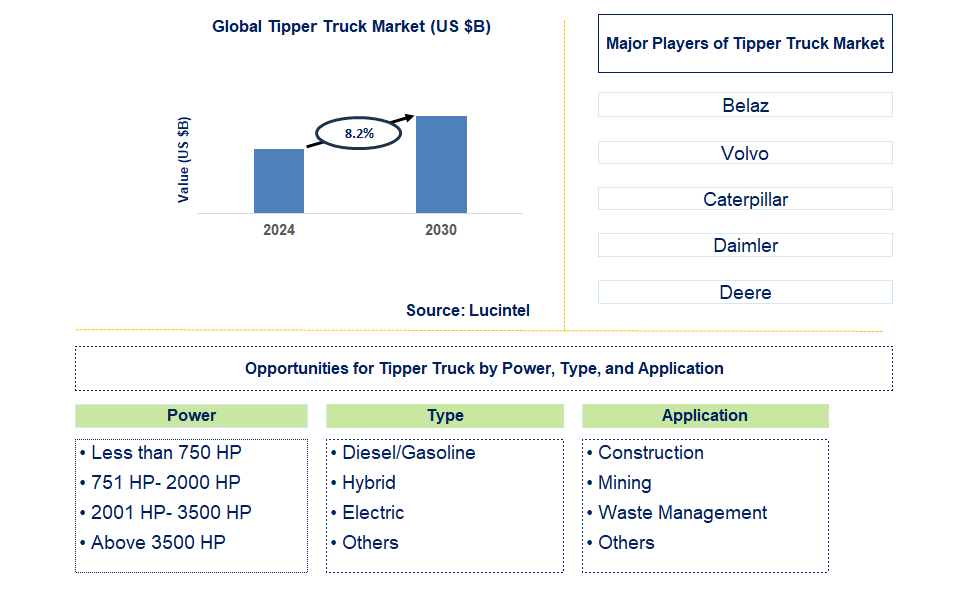
Key data points: The growth forecast = 8.2% annually for the next 6 years. Scroll below to get more insights. This market report covers trends, opportunities, and forecasts in the global tipper truck market to 2030 by power (less than 750 HP, 751 HP- 2000 HP, 2001 HP- 3500 HP, and above 3500 HP), type (diesel/gasoline, hybrid, electric, and others), application (construction, mining, waste management, and others), and region (North America, Europe, Asia Pacific, and the Rest of the World)
We'll send your sample report shortly.
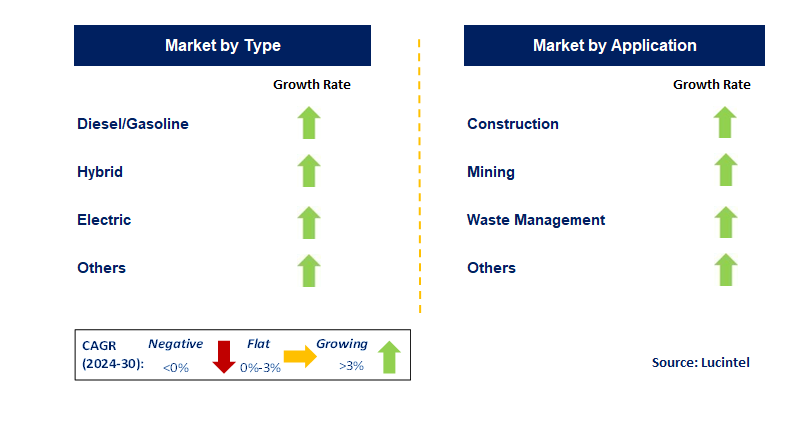
• Lucintel forecasts that, within the type category, diesel/gasoline segment is expected to witness the highest growth over the forecast period due to their high power, fuel efficiency, and wide range of applications.
• Within the application category, construction is expected to witness the highest growth due to cost-effective and efficient method for transporting construction materials over short and medium distances.
• In terms of regions, APAC is expected to witness the highest growth over the forecast period due to huge growth of the construction and mining industries. Gain valuable insights for your business decissions with our comprehensive 150+ page report.
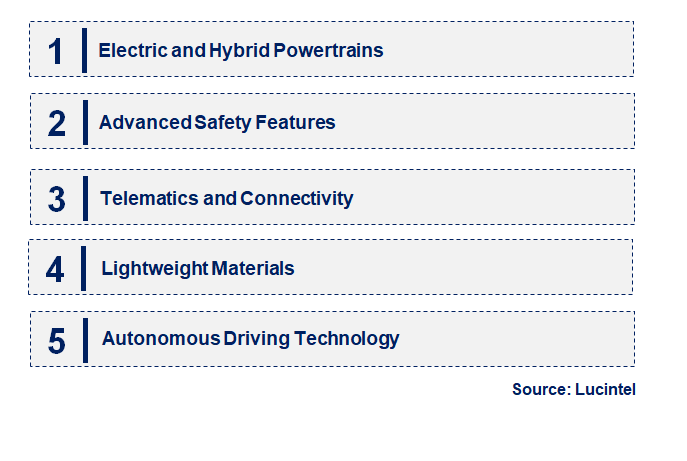
• Electric and Hybrid Powertrains: The shift towards electric and hybrid powertrains is gaining momentum. These technologies offer reduced emissions and lower operating costs, aligning with global sustainability goals and regulatory requirements.
• Advanced Safety Features: Integration of advanced safety features, such as collision avoidance systems and automated braking, is increasing. These features enhance driver safety and compliance with stringent safety regulations.
• Telematics and Connectivity: Telematics systems are becoming standard in tipper trucks, providing real-time data on vehicle performance and location. This connectivity improves fleet management, maintenance, and overall operational efficiency.
• Lightweight Materials: The use of lightweight materials, such as aluminum and composites, is on the rise. These materials reduce the overall weight of tipper trucks, improving fuel efficiency and load capacity.
• Autonomous Driving Technology: Autonomous driving technology is being explored for tipper trucks, particularly for off-road applications. This trend aims to enhance safety, reduce labor costs, and improve operational efficiency. These trends are reshaping the tipper truck market by promoting sustainability, enhancing safety, improving efficiency, and advancing technology. The integration of electric powertrains, advanced safety features, telematics, lightweight materials, and autonomous technology reflects the industry’s shift towards innovation and improved performance.
• Introduction of Electric Tipper Trucks: Major manufacturers are launching electric tipper trucks, addressing environmental concerns and meeting regulatory requirements. These electric models offer lower emissions and reduced operational costs compared to traditional diesel engines.
• Enhanced Safety Features: New safety features, including advanced driver assistance systems (ADAS) and automated braking, are being integrated into tipper trucks. These enhancements aim to improve road safety and compliance with stricter safety standards.
• Increased Use of Telematics: Telematics technology is becoming more prevalent, providing real-time data on vehicle performance and location. This data helps fleet managers optimize operations, schedule maintenance, and reduce downtime.
• Adoption of Lightweight Materials: The use of lightweight materials such as aluminum and composites is increasing. These materials reduce vehicle weight, which improves fuel efficiency and payload capacity, addressing both environmental and economic concerns.
• Development of Autonomous Technology: Research and development in autonomous driving technology are advancing, with pilot projects and trials underway. This technology promises to enhance safety and operational efficiency by reducing human error and automating complex tasks. These developments are driving significant changes in the tipper truck market by introducing electric and autonomous technologies, enhancing safety, and optimizing efficiency. The integration of telematics and lightweight materials further supports the industry’s move towards sustainability and improved performance.
• Expansion into Electric Tipper Trucks: Investing in electric tipper trucks offers growth potential due to increasing environmental regulations and demand for sustainable solutions. This expansion aligns with global trends towards reducing carbon emissions and enhancing energy efficiency.
• Development of Advanced Safety Systems: There is an opportunity to develop and integrate advanced safety systems, such as automated braking and collision avoidance, to meet rising safety standards and enhance driver protection.
• Adoption of Telematics Solutions: Implementing telematics solutions provides opportunities to improve fleet management, optimize vehicle performance, and reduce operational costs. Telematics also enables better maintenance planning and data-driven decision-making.
• Exploration of Autonomous Driving Technology: Investing in autonomous driving technology for tipper trucks can lead to growth by improving operational efficiency, reducing labor costs, and enhancing safety in complex and hazardous environments.
• Utilization of Lightweight Materials: Leveraging lightweight materials like aluminum and composites presents an opportunity to improve fuel efficiency and payload capacity. This can lead to cost savings and better performance, catering to both environmental and operational needs. These growth opportunities in the tipper truck market emphasize advancements in electric vehicles, safety systems, telematics, autonomous technology, and lightweight materials. Capitalizing on these opportunities will drive innovation and enhance the competitive edge of industry players.
• Regulatory Push for Sustainability: Increasing environmental regulations and sustainability goals drive the adoption of electric and hybrid tipper trucks. This shift helps meet emission standards and aligns with global green initiatives.
• Technological Advancements: Innovations in safety, telematics, and autonomous driving technologies enhance tipper truck performance and operational efficiency, driving market growth.
• Demand for Fuel Efficiency: Rising fuel costs and economic pressures drive the need for more fuel-efficient tipper trucks. The adoption of lightweight materials and advanced powertrains helps address this demand.
• Infrastructure Development: Growing infrastructure projects, such as construction and mining activities, boost the demand for tipper trucks. These projects require efficient and reliable vehicles for transporting materials.
• Investment in R&D: Investment in research and development fosters innovation in tipper truck technologies, leading to new product offerings and improved market competitiveness. Challenges in the tipper truck market are:
• High Initial Costs: The initial investment required for advanced technologies and electric vehicles can be high, posing a barrier for some operators and affecting market adoption.
• Regulatory Compliance: Navigating complex and varying regulatory requirements across different regions can be challenging for manufacturers and operators, impacting market operations.
• Technological Integration Issues: Integrating new technologies, such as telematics and autonomous systems, can be complex and require significant adjustments to existing infrastructure and processes. The major drivers of the tipper truck market include regulatory push for sustainability, technological advancements, demand for fuel efficiency, infrastructure development, and investment in R&D. Challenges such as high initial costs, regulatory compliance, technological integration, market competition, and maintenance issues must be addressed to navigate the market successfully. rket competition, and maintenance issues must be addressed to navigate the market successfully.
• Belaz
• Volvo
• Caterpillar
• Daimler
• Deere
• Less than 750 HP
• 751 HP- 2000 HP
• 2001 HP- 3500 HP
• Above 3500 HP
• Diesel/Gasoline
• Hybrid
• Electric
• Others
• Construction
• Mining
• Waste Management
• Others
• North America
• Europe
• Asia Pacific
• The Rest of the World
• United States: In the U.S., the focus is on enhancing fuel efficiency and emissions control in tipper trucks. Innovations such as hybrid powertrains and advanced telematics systems are becoming more prevalent, aiming to reduce operational costs and improve environmental impact.
• China: China is seeing significant investments in electric tipper trucks, driven by government incentives and environmental regulations. Major manufacturers are developing and deploying electric models to support the country's goals for reducing carbon emissions and improving air quality.
• Germany: Germany is leading the charge with the integration of advanced safety features and autonomous driving technology in tipper trucks. Innovations include automatic braking systems and lane-keeping assistance, reflecting the country’s focus on increasing road safety and efficiency.
• India: In India, there is a growing emphasis on durability and cost-effectiveness in tipper trucks. Manufacturers are focusing on robust designs to handle challenging terrains and heavy loads, while also implementing affordable solutions to cater to the local market demands.
• Japan: Japan is advancing in the use of lightweight materials and energy-efficient technologies for tipper trucks. The adoption of aluminum and composite materials aims to enhance fuel efficiency, while hybrid systems are being introduced to reduce emissions and operational costs.


• Belaz
• Volvo
• Caterpillar
• Daimler
• Deere Q5. Which tipper truck market segment will be the largest in future? Answer: Lucintel forecasts that diesel/gasoline segment is expected to witness the highest growth over the forecast period due to their high power, fuel efficiency, and wide range of applications. Q6. In tipper truck market, which region is expected to be the largest in next 6 years? Answer: In terms of regions, APAC is expected to witness the highest growth over the forecast period due to huge growth of the construction and mining industries. Q.7 Do we receive customization in this report? Answer: Yes, Lucintel provides 10% customization without any additional cost.


Choose a license that fits your team. Instant PDF delivery.
Prices exclude taxes. Instant delivery. Custom licensing available on request.
Market Report · July 31, 2026
Market Report · July 17, 2026
Market Report · May 18, 2026
Trusted partner for strategic intelligence and business growth


Receive a complimentary market analysis tailored to your industry. Our analysts will identify key growth opportunities and competitive dynamics specific to your business.

Market size, growth rate, and key trend analysis for your specific sector.

Top competitor positioning and market share analysis.

Strategic recommendations backed by data-driven insights.
Get curated market intelligence and competitive moves straight to your inbox.
By subscribing, you agree to receive our monthly insights. Unsubscribe anytime.
Receive a complimentary market analysis tailored to your industry. Our analysts will identify key growth opportunities and competitive dynamics specific to your business.
Market size, growth rate, and key trend analysis for your specific sector.
Top competitor positioning and market share analysis.
Strategic recommendations backed by data-driven insights.
Get curated market intelligence, emerging trends, and competitive moves straight to your inbox each month.
By subscribing, you agree to receive our monthly insights. Unsubscribe anytime.
We'll send your sample report shortly.