
Market Report · July 22, 2026

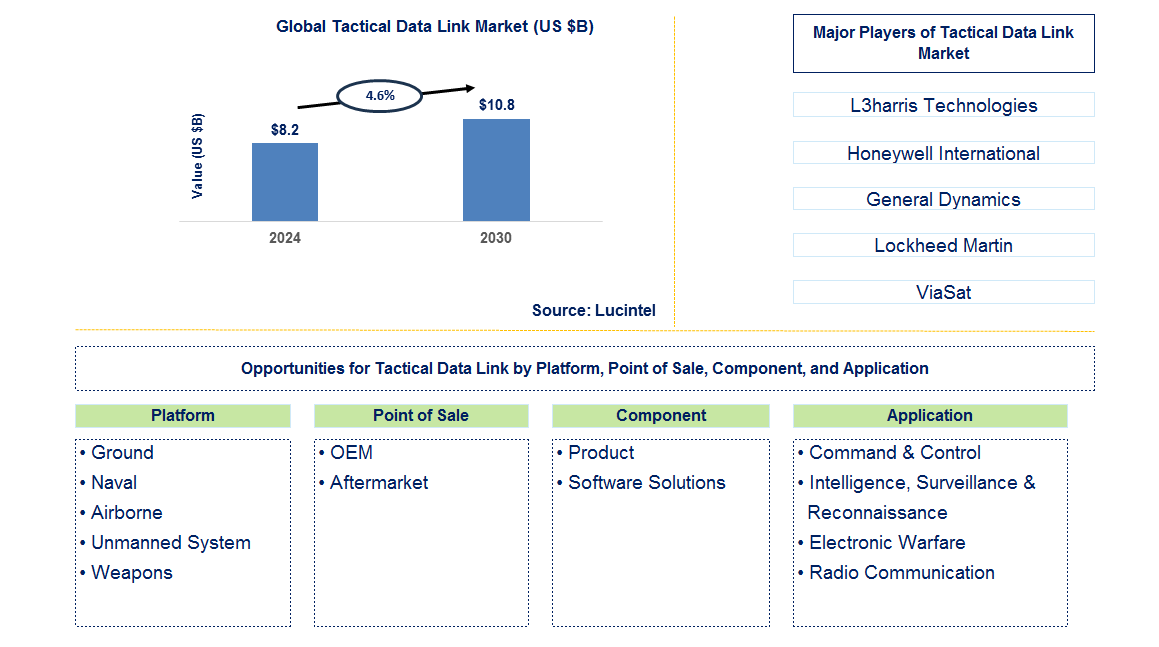
Key data points: The market size in 2030 = $10.8 billion, growth forecast = 4.6% annually for the next 6 years. Scroll below to get more insights. This market report covers trends, opportunities, and forecasts in the global tactical data link market to 2030 by platform (ground, naval , airborne, unmanned system, and weapons), point of sale (OEM and aftermarket), component (product and software solutions), application (command & control, intelligence, surveillance & reconnaissance, electronic warfare, radio communication, and others), and region (North America, Europe, Asia Pacific, and the Rest of the World)
We'll send your sample report shortly.
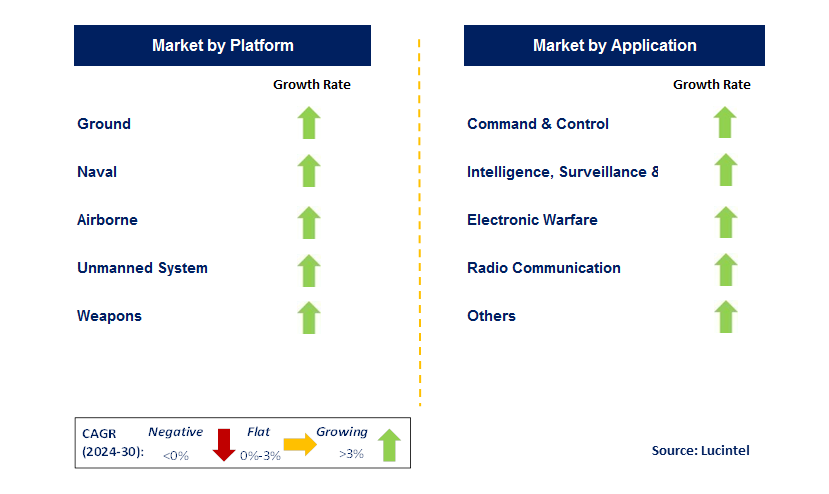
• Lucintel forecasts that, within the platform category, unmanned system is expected to witness the highest growth over the forecast period.
• Within the application category, radio communication is expected to witness the highest growth over the forecast period.
• In terms of regions, North America will remain the largest region over the forecast period. A more than 150-page report is developed to help in your business decisions.
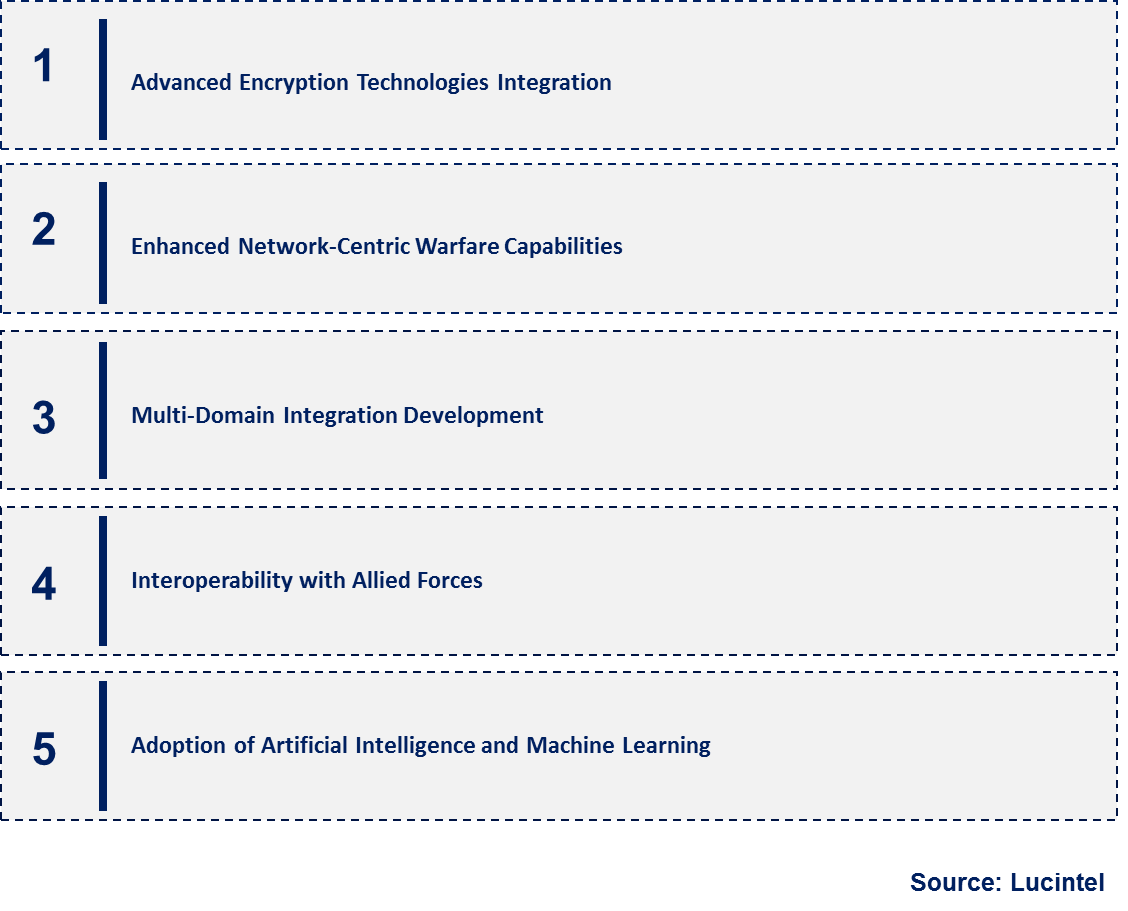
• Advanced Encryption Technologies Integration: Advanced encryption technologies are being incorporated into tactical data link systems to boost their security. This aims to safeguard sensitive information from hacking and other unauthorized intrusions. With enhanced encryption methods, even contested environments can maintain secure communications that are essential for operational integrity and confidentiality.
• Enhanced Network-Centric Warfare Capabilities: Network-centric warfare capabilities are expanding through tactical data links. This trend means that military platforms will have more capability to share information with each other on a real-time basis, thus helping them coordinate operations more effectively. In addition, improved network-centric capabilities support superior situational awareness, shortened decision-making loops, and synchronized actions across different platforms and units interacting concurrently.
• Multi-Domain Integration Development: The development of multi-domain integration is a trend in tactical data link systems, which involves solutions that can operate across different domains, such as land, sea, air, space, and cyber. It also allows military branches and their allies to coordinate more effectively.
• Interoperability with Allied Forces: Interoperability with allied forces is driven by the need for coalition operations and joint missions. The goal is to design tactical data link systems that are compatible with international standards and operating procedures used by other countries. This enables increased collaboration between nations for better joint operations.
• Adoption of Artificial Intelligence and Machine Learning: The emergence of artificial intelligence (AI) and machine learning (ML) in tactical data link systems has significantly increased. These technologies analyze large volumes of data, anticipate possible risks, and optimize network performance. They also enable faster decision-making and data processing at higher speeds. In the tactical data link market, emerging trends indicate an inclination toward stronger security measures, multi-domain integration, and interoperability. Modernization in areas such as advanced encryption techniques, network-centric warfare capabilities, and AI applications is shaping how these devices support modern warfare activities. Innovative improvements enhancing communication efficiency, security levels, and operational effectiveness are influencing the direction this market is taking.
• Increased Link 16 Capabilities: Enhancing Link 16 features involves improving data throughput rates, ensuring secure operations, and making it interoperable with other networks. Advancements like improved encryption methodologies and better anti-jamming systems enable more reliable information exchange between platforms. This allows for more efficient network-centric operations and joint missions.
• Introduction of Advanced Data Fusion Systems: Advanced data fusion systems are being introduced to integrate information from multiple sources and generate a comprehensive operational picture. By combining data from different sensors and platforms into one cohesive view, these systems enhance situational awareness, contributing to more informed decision-making on the battlefield.
• Integration of Secure Communication Protocols: Integrating sophisticated secure communication protocols improves the safety of tactical data links. These protocols are designed to protect data from cyber threats and unauthorized access, ensuring that confidentiality and privacy are upheld. In conflict zones, robust security features are essential for maintaining operational integrity.
• Expansion of Multi-Domain Communication Capabilities: Expanding multi-domain communication capabilities involves building systems that can effectively function in all domains, including land, sea, air, space, and cyber. It enhances flexibility and coordination within military operations, enabling closer integration and greater synchronization across various operational areas.
• Adoption of AI and ML Technologies: Artificial intelligence (AI) and machine learning (ML) technologies are gradually transforming tactical data link systems. The use of AI/ML helps analyze information, predict threats, and optimize network performance. These technologies also enable faster data processing and improved decision-making, providing actionable insights. Further developments in communication capabilities, security, and operational efficiency are the major key advancements in the tactical data link market. This progress is driven by innovations in Link 16, data fusion systems, secure communication protocols, multi-domain capabilities, and the adoption of AI and ML, which have led to significant improvements. These developments are shaping tactical data links for future military operations.
• Development of Next-Generation Data Links: Next-generation data links offer significant growth potential. These systems achieve better data transfer speeds, improved security, and greater interconnectivity with modern platforms, as well as legacy systems. Investments in advanced technologies for data links can enhance communication and coordination, especially in complex operational environments.
• Expansion of Coalition Communication Networks: Expanding coalition communication networks is a key growth opportunity. Enhancing cooperation with allied forces through standardized data link systems will result in more efficient joint missions. It also improves coordination between international partners for multinational tasks, such as exercises.
• Integration of Secure Mobile Communication Solutions: Integrating secure mobile communication solutions into tactical data links presents a growth opportunity. For example, naval vessels or aircraft may use these solutions to enhance flexibility and reliability while performing their functions away from shipyards or bases. These solutions ensure the secure receipt, transmission, and storage of data even in dynamic operational conditions.
• Implementation of Advanced Cybersecurity Measures: Implementing advanced cybersecurity measures is crucial for protecting tactical data link systems from adversaries. This technology prevents hackers from infiltrating communication networks or altering data exchanges during operations. Stronger security measures are necessary to maintain operational integrity and prevent security breaches.
• Adoption of AI-Driven Data Management Systems: The adoption of AI-driven data management systems represents a growth opportunity by optimizing data processing and decision-making. AI/ML can enhance network performance, detect threats, and facilitate more efficient data analysis, leading to actionable insights that significantly improve operational performance. Strategic growth opportunities in the tactical data link market focus on advancing communication technologies, enhancing interoperability, and integrating secure, AI-driven solutions. Developing next-generation data links, expanding coalition networks, implementing advanced cybersecurity, and adopting AI-driven systems are key to enhancing tactical communication capabilities and supporting modern military operations.
• Technological Advancements: Technological advancements are a major driver of the tactical data link market. These advancements have been driven by innovations such as improvements in Link 16 and advanced encryption processes, which enhance communication between armed forces and improve operational efficiencies. With these developments, secure information sharing within military platforms is guaranteed.
• Increasing Demand for Interoperability: To make allied forces interoperable, there has been a growing demand for common data link systems. Improved interoperability is essential for joint operations and coordination among military branches and international partners. This demand allows for seamless data exchange across various platforms.
• Expansion of Network-Centric Warfare: The need for advanced tactical data link systems is driven by the expansion of network-centric warfare. This approach requires real-time sharing of information between platforms to achieve operational dominance. Tactical data link investments enable the implementation of network-centric warfare, boosting the overall efficiency of armed forces.
• Emphasis on Enhanced Cybersecurity: The development of secure tactical data link systems emphasizes better cybersecurity measures. A properly secured data link is essential for maintaining operational integrity and protecting sensitive data from increasingly sophisticated cyber threats. Protection efforts must be accompanied by advancements in encryption and other web surveillance mechanisms.
• Strategic Defense Investments: The market growth is driven by strategic defense investments in advanced communication technologies. Governments and defense agencies are investing in next-generation data link systems to enhance military capabilities and maintain technological superiority. These investments lay the foundation for developing reliable tactical data link solutions. Challenges in the tactical data link market include:
• Integration with Legacy Systems: Integrating new data link technologies with existing legacy systems presents challenges. Engineers must carefully test modernization projects to ensure old and new devices work seamlessly together across platforms in the field. These issues need to be addressed to ensure reliable and effective communication.
• Evolving Cyber Threats: The dynamic nature of cyber threats poses a challenge to the security of tactical data link systems. Protecting against these evolving threats is essential. Protection efforts must be sustained to withstand changing cyber-security trends for communication networks. The tactical data link market is driven by technological advancements, the need for interoperability among allied forces, network-centric warfare strategies, and an emphasis on enhanced cybersecurity. High development costs, integration challenges, and evolving cyber threats act as major obstacles. However, growth will result from strategic investments and innovations aimed at improving communication capabilities. Balancing both drivers and challenges is crucial for advancing this market and developing efficient tactical data link solutions.
• L3harris Technologies
• Honeywell International
• General Dynamics
• Lockheed Martin
• ViaSat
• Leonardo
• BAE Systems
• Ground
• Naval
• Airborne
• Unmanned System
• Weapons
• OEM
• Aftermarket
• Product
• Software Solutions
• Command & Control
• Intelligence, Surveillance & Reconnaissance
• Electronic Warfare
• Radio Communication
• Others
• North America
• Europe
• Asia Pacific
• The Rest of the World
• United States: The U.S. armed forces have refined their tactical data link systems by upgrading Link 16, which improves interoperability and data exchange between platforms. Security and reliability have been strengthened through advanced encryption and anti-jamming technologies. New TDL standards have also been established to facilitate greater network-centric warfare capabilities and integration with future technologies like artificial intelligence.
• China: China is improving its tactical data link systems by enhancing JY-27 radar performance and other networked communication systems. Developments include better data fusion, more secure communication protocols, and improvements in network-centric warfare capabilities and command & control.
• Germany: Germany is upgrading NATO-compatible TDL systems, including Link 16, and its domestic systems. The focus is on improving data throughput, interoperability with allied forces, and enhancing cybersecurity. These advancements ensure seamless integration into NATO operations and strengthen Germany's indigenous defense communication infrastructure.
• India: India has been developing its indigenous TDL systems, including enhancements in secure communication channels and real-time information sharing between platforms regarding threats or targets. Improved interoperability, advanced encryption technologies, and better data linkages aim to make India more self-reliant in national defense.
• Japan: Japan is upgrading its tactical data link systems to be more compatible with international standards like Link 16. Recent developments include improved data sharing, encryption, and system integration. Japan’s achievements include strengthening its defense communication infrastructure and improving its ability to operate effectively with allied forces.
• United States: The US armed forces have refined their TDL systems with an upgrade to Link 16 that improves interoperability and data exchange between platforms. Security and reliability has been strengthened through advanced encryption and anti-jamming technologies. Moreover, new TDL standards have been established by the US that would facilitate greater network centric warfare capabilities as well as integration with future technologies such as artificial intelligence.
• China: In a bid to improve its own tactical data link systems, China is concentrating on enhancing JY-27 radar performance along with several other networked communication systems. The developments feature better data fusion competencies, more secure communications protocols among others. This is part of efforts being made by China to boost its military’s network-centric warfare capabilities alongside command & control.
• Germany: Upgrading NATO-compatible TDL systems including Link 16 and German domestic ones forms the focus of Germany. Latest trends emphasize improved data throughput, allied forces’ interoperability as well as enhanced cyber security measures. These advancements aim at making sure that there is seamless incorporation into NATO operations besides strengthening their indigenous defense communication infrastructure.
• India: India has been developing its indigenous TDL systems which include enhancements in secure communication channels and real time sharing of information between platforms regarding threats or targets movements among others. Improved interoperability features advanced encryption technologies coupled with better data linkages; all aimed at making India self-reliant in terms of national defense.
• Japan: Japan is currently upgrading its tactical datalink system towards a more compatible system with international standards like Link 16. Recent developments include, data sharing has been improved, encryption and system integration. Among the various achievements by Japan in this regard is the strengthening of defense communication infrastructure as well as its abilities to operate effectively with aggregated forces.


• L3harris Technologies
• Honeywell International
• General Dynamics
• Lockheed Martin
• ViaSat
• Leonardo
• BAE Systems Q6. Which tactical data link market segment will be the largest in future? Answer: Lucintel forecasts that unmanned system is expected to witness the highest growth over the forecast period. Q7. In tactical data link market, which region is expected to be the largest in next 6 years? Answer: North America will remain the largest region over the forecast period. Q8. Do we receive customization in this report? Answer: Yes, Lucintel provides 10% customization without any additional cost. This report answers following 11 key questions:


Choose a license that fits your team. Instant PDF delivery.
Prices exclude taxes. Instant delivery. Custom licensing available on request.
Market Report · July 22, 2026
Market Report · July 17, 2026
Market Report · July 17, 2026
Trusted partner for strategic intelligence and business growth


Receive a complimentary market analysis tailored to your industry. Our analysts will identify key growth opportunities and competitive dynamics specific to your business.

Market size, growth rate, and key trend analysis for your specific sector.

Top competitor positioning and market share analysis.

Strategic recommendations backed by data-driven insights.
Get curated market intelligence and competitive moves straight to your inbox.
By subscribing, you agree to receive our monthly insights. Unsubscribe anytime.
Receive a complimentary market analysis tailored to your industry. Our analysts will identify key growth opportunities and competitive dynamics specific to your business.
Market size, growth rate, and key trend analysis for your specific sector.
Top competitor positioning and market share analysis.
Strategic recommendations backed by data-driven insights.
Get curated market intelligence, emerging trends, and competitive moves straight to your inbox each month.
By subscribing, you agree to receive our monthly insights. Unsubscribe anytime.
We'll send your sample report shortly.