
Market Report · July 15, 2026

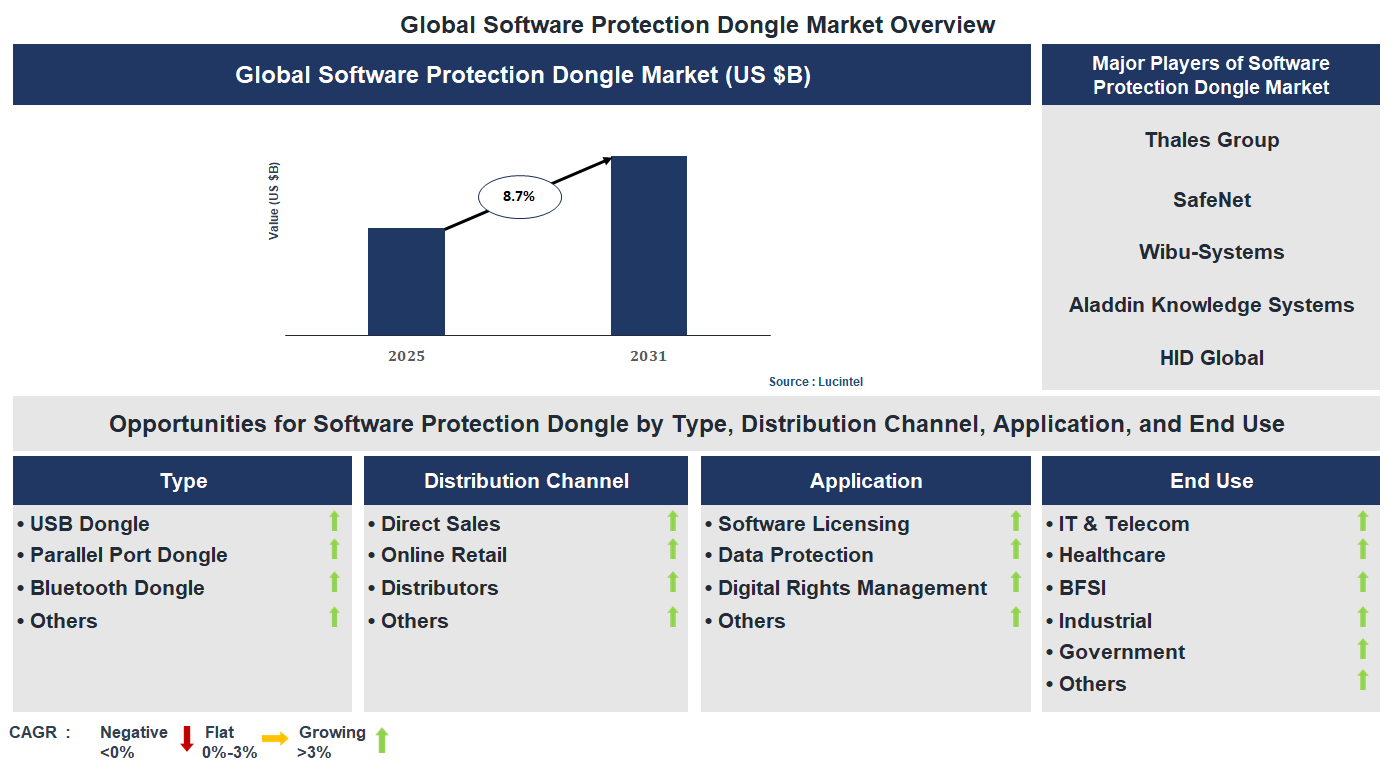
Key data points: The growth forecast = 8.7% annually for the next 7 years. Scroll below to get more insights. This market report covers trends, opportunities and forecasts in software protection dongle market to 2031 by type (USB dongle, parallel port dongle, bluetooth dongle, and others), distribution channel (direct sales, online retail, distributors, and others), application (software licensing, data protection, digital rights management, and others), end use (IT & telecom, healthcare, BFSI, industrial, government, and others), and region (North America, Europe, Asia Pacific, and the Rest of the World)
We'll send your sample report shortly.
• Lucintel forecasts that, within the type category, USB dongle is expected to witness the highest growth over the forecast period.
• Within the application category, software licensing is expected to witness the highest growth.
• In terms of region, North America is expected to witness the highest growth over the forecast period. Gain valuable insights for your business decisions with our comprehensive 150+ page report. Sample figures with some insights are shown below.
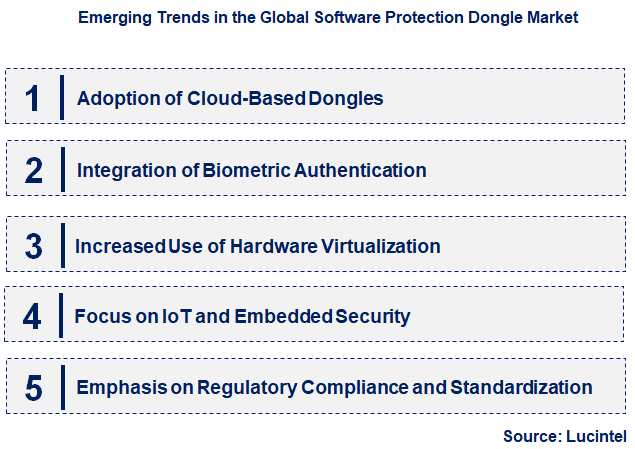
• Adoption of Cloud-Based Dongles: The shift towards cloud computing has led to the development of cloud-based dongles that offer flexible, scalable security solutions. These dongles enable remote management, reduce hardware dependency, and lower costs for users. They are particularly appealing to small and medium-sized enterprises seeking robust protection without significant infrastructure investments. This trend enhances accessibility and simplifies deployment, making software protection more versatile and adaptable to modern digital workflows.
• Integration of Biometric Authentication: Biometric features such as fingerprint or facial recognition are increasingly integrated into dongle security systems. This trend enhances user authentication, making it more secure and user-friendly. Biometric integration reduces the risk of theft or duplication of dongles, thereby strengthening software protection. It also aligns with broader security trends emphasizing multi-factor authentication, providing a seamless yet highly secure user experience that appeals to industries with stringent security requirements.
• Increased Use of Hardware Virtualization: Hardware virtualization techniques are being incorporated into dongle designs to improve flexibility and security. Virtualization allows multiple virtual dongles to run on a single physical device, optimizing resource utilization and enabling easier management. This approach simplifies licensing and deployment, especially in complex environments. It also enhances security by isolating different software applications, reducing the risk of breaches, and providing a more scalable solution for diverse organizational needs.
• Focus on IoT and Embedded Security: As IoT devices proliferate, the demand for embedded security solutions like dongles is rising. These security modules are integrated directly into IoT hardware to prevent unauthorized access and ensure data integrity. The trend emphasizes miniaturization, energy efficiency, and rugged design to suit various IoT applications. This development is crucial for industries such as manufacturing, healthcare, and automotive, where secure connectivity is vital, and it opens new markets for dongle providers.
• Emphasis on Regulatory Compliance and Standardization: Increasing regulatory requirements for data security and intellectual property protection are driving the adoption of standardized dongle solutions. Market players are focusing on compliance with international standards such as GDPR, ISO, and industry-specific regulations. This trend ensures that dongles meet legal and security benchmarks, facilitating global market access. It also encourages interoperability and reduces compatibility issues, fostering trust among users and enabling broader adoption across regulated sectors. These emerging trends are fundamentally reshaping the software protection dongle market by enhancing security, improving flexibility, and expanding application scope. They are enabling providers to offer more innovative, scalable, and compliant solutions, thereby driving growth and competitiveness in a rapidly evolving digital landscape.
• Adaptation of Cloud-Based Dongles: The shift towards cloud-based solutions has enabled remote management and deployment of dongles, offering flexibility and scalability. This development reduces physical hardware dependency, lowers costs, and enhances security through centralized control. It allows organizations to manage licenses efficiently and respond swiftly to security threats, thereby increasing market adoption among small and large enterprises.
• Integration with IoT and Mobile Devices: Increasing integration of dongles with Internet of Things (IoT) devices and mobile platforms has expanded their application scope. This development facilitates real-time license verification and secure data transfer across connected devices, boosting security in mobile and IoT environments. It enhances user convenience and broadens market reach, especially in industries like manufacturing, healthcare, and automotive.
• Enhanced Security Features: Recent dongles incorporate advanced encryption, multi-factor authentication, and tamper-proof designs to combat sophisticated cyber threats. These security enhancements significantly reduce the risk of software piracy and unauthorized access, increasing trust among users. As cyberattacks grow more complex, these features are becoming essential, driving demand for more secure protection solutions.
• Customization and Flexibility: Vendors now offer highly customizable dongle solutions tailored to specific industry needs and software applications. This flexibility allows businesses to implement tailored security measures, improve user experience, and meet compliance standards. Customization options attract a broader customer base and foster long-term client relationships, fueling market growth.
• Strategic Partnerships and Mergers: The market has seen increased collaborations between dongle manufacturers, software developers, and cybersecurity firms. These partnerships facilitate integrated security solutions, innovation, and expanded distribution channels. Mergers and acquisitions also enable companies to enhance their technological capabilities and market presence, fostering competitive advantages. In summary, these recent developments are transforming the software protection dongle market by enhancing security, flexibility, and integration capabilities. The adoption of cloud-based and IoT-compatible solutions, along with advanced security features, is driving increased demand across diverse sectors. Strategic collaborations further strengthen market positioning, leading to sustained growth and innovation. Overall, these trends are making software protection more robust, adaptable, and aligned with modern digital needs.
• Enterprise Software Security: Expansion in enterprise sectors is driven by the need to safeguard sensitive data and proprietary software. Dongles provide a reliable hardware-based security layer, reducing risks of cyberattacks and unauthorized use. This growth enhances trust in enterprise software solutions, encouraging wider adoption and fostering secure digital transformation initiatives.
• Gaming Industry: The gaming sector is increasingly adopting dongles to prevent piracy and ensure fair play. As online and mobile gaming grow, secure licensing becomes critical. Dongles help developers protect their intellectual property, ensuring revenue stability and encouraging innovation within the gaming ecosystem.
• Industrial Automation: The industrial sector leverages dongles to secure software used in manufacturing and automation processes. This prevents counterfeiting and unauthorized modifications, ensuring operational integrity. The growth in Industry 4.0 initiatives amplifies the importance of hardware-based security solutions in industrial environments.
• Healthcare and Medical Devices: The healthcare industry is adopting dongles to protect medical software and devices from cyber threats. Ensuring compliance with regulatory standards and safeguarding patient data are key drivers. This growth supports secure healthcare delivery and fosters trust in digital health solutions.
• Cloud and SaaS Applications: As cloud-based services expand, dongles are used to authenticate and secure access to SaaS platforms. They provide a hardware-based layer of security, reducing fraud and unauthorized access. This opportunity enhances the security framework of cloud services, promoting wider adoption and customer confidence. In summary, these growth opportunities are significantly impacting the software protection dongle market by broadening its application scope, increasing demand for secure digital solutions, and fostering innovation across industries. As organizations prioritize cybersecurity, the market is poised for sustained expansion, driven by technological advancements and evolving security needs.
• Technological Advancements: The rapid evolution of cybersecurity technologies and encryption methods enhances the effectiveness of dongles, making them more reliable for protecting software. Innovations such as hardware-based security modules and biometric authentication improve security levels, encouraging adoption across industries. As cyber threats become more sophisticated, the demand for advanced protection solutions increases, driving market growth. Companies investing in R&D to develop smarter, more integrated dongles are fueling this trend, ensuring that software remains secure against piracy and unauthorized access.
• Increasing Software Piracy and Intellectual Property Concerns: The rising incidence of software piracy globally has heightened the need for effective protection mechanisms. Organizations seek reliable solutions to safeguard their intellectual property, especially in industries like gaming, enterprise software, and media. Dongles provide a hardware-based barrier that is difficult to bypass, making them a preferred choice for companies aiming to prevent unauthorized use. This growing concern over piracy directly correlates with increased demand for dongle-based security solutions, fostering market expansion as businesses prioritize protecting their revenue streams.
• Growing Adoption in Enterprise and Industrial Sectors: Enterprises and industrial sectors are increasingly adopting dongle-based protection to secure critical software applications and prevent unauthorized access. Industries such as manufacturing, aerospace, and defense require high-security measures to protect sensitive data and proprietary technology. The integration of dongles into enterprise security frameworks ensures compliance with regulatory standards and reduces the risk of cyberattacks. As digital transformation accelerates, the need for robust, hardware-based security solutions becomes more prominent, further propelling market growth.
• Regulatory and Compliance Requirements: Stringent government regulations and industry standards related to data security and intellectual property protection are driving the adoption of dongles. Organizations are compelled to implement secure licensing and anti-piracy measures to meet compliance standards, such as GDPR, HIPAA, and industry-specific regulations. Dongles help companies demonstrate compliance by providing secure licensing mechanisms and audit trails. This regulatory pressure encourages businesses to invest in hardware-based security solutions, thereby expanding the market as organizations seek to meet legal and industry mandates.
• Increasing Demand for Secure Licensing and Digital Rights Management (DRM): The need for secure licensing solutions and DRM has surged with the proliferation of digital content and software distribution channels. Dongles offer a hardware-based approach to enforce licensing agreements, prevent unauthorized copying, and control access to software. As content creators and software providers seek to protect their revenue and intellectual property, the demand for reliable, tamper-proof protection methods grows. This trend supports market expansion, especially in sectors like gaming, multimedia, and enterprise software. The challenges facing this software protection dongle market include:-
• High Cost of Implementation: Implementing dongle-based security solutions involves significant costs related to hardware manufacturing, distribution, and management. Small and medium-sized enterprises may find these expenses prohibitive, limiting widespread adoption. Additionally, the need for specialized technical expertise to deploy and maintain dongle systems can further increase costs. This financial barrier hampers market growth, especially in emerging markets where budget constraints are more pronounced. Companies must balance security benefits against the economic impact, which can slow down overall market expansion.
• Compatibility and Usability Issues: Integrating dongles with diverse software platforms and hardware environments can pose technical challenges. Compatibility issues may lead to software malfunctions or user inconvenience, affecting customer satisfaction. Usability concerns, such as the need to carry physical devices or potential hardware failures, can deter end-users from adopting dongle-based solutions. These issues necessitate ongoing development to improve user experience and compatibility, but they remain significant hurdles that can impede market growth and limit adoption in certain sectors.
• Emergence of Alternative Security Solutions: The rapid development of software-based security measures, such as cloud licensing, digital certificates, and biometric authentication, presents competition to traditional dongle solutions. These alternatives often offer greater flexibility, lower costs, and easier integration, making them attractive options for many organizations. As technology advances, the reliance on physical hardware security devices may decline, challenging the long-term viability of dongles. Market players must innovate continuously to maintain relevance amid evolving security paradigms, which can be resource-intensive and complex. In summary, the software protection dongle market is shaped by technological innovations, rising piracy concerns, enterprise adoption, regulatory pressures, and the need for secure licensing solutions. However, high implementation costs, compatibility issues, and competition from alternative security methods pose significant challenges. These factors collectively influence the markets growth trajectory, requiring stakeholders to adapt strategies that balance security, cost, and usability. The overall impact suggests a dynamic landscape where continuous innovation and strategic positioning are essential for sustained success.
• Thales Group
• SafeNet
• Wibu-Systems
• Aladdin Knowledge Systems
• HID Global
• Sentinel
• Microcosm Ltd
• Keylok
• Feitian Technologies
• Marx CryptoTech
• USB Dongle
• Parallel Port Dongle
• Bluetooth Dongle
• Others
• Direct Sales
• Online Retail
• Distributors
• Others
• Software Licensing
• Data Protection
• Digital Rights Management
• Others
• IT & Telecom
• Healthcare
• BFSI
• Industrial
• Government
• Others
• North America
• Europe
• Asia Pacific
• The Rest of the World
• United States: The US market has seen increased adoption of advanced dongle solutions integrating biometric authentication and cloud connectivity. Major players are investing in R&D to develop tamper-proof hardware, driven by stringent cybersecurity regulations and the growing demand from sectors like aerospace, defense, and healthcare. The government’s emphasis on protecting intellectual property has further accelerated market growth, with startups and established firms collaborating to enhance product offerings.
• China: China’s software protection dongle market is expanding rapidly due to government initiatives promoting cybersecurity and intellectual property rights. Local companies are focusing on affordable, scalable solutions tailored for the manufacturing and software development industries. The integration of IoT and AI technologies into dongles is a recent trend, enabling smarter security features. Additionally, domestic manufacturers are gaining market share by offering customized solutions to meet specific industry needs.
• Germany: Germany’s market is characterized by a focus on high-quality, reliable dongle solutions for industrial applications, including automotive and machinery sectors. The emphasis on compliance with European data protection standards has led to innovations in secure hardware design. Several companies are investing in eco-friendly manufacturing processes and sustainable product development, aligning with Germany’s broader environmental goals. The market also benefits from strong R&D collaborations within the European Union.
• India: The Indian market is witnessing rapid growth driven by the increasing adoption of digital tools in manufacturing, IT, and telecom sectors. Local vendors are developing cost-effective dongle solutions to cater to small and medium enterprises. The government’s push for digital India and cybersecurity awareness campaigns is fueling demand. Recent developments include the integration of biometric features and mobile connectivity, making dongles more versatile and accessible for diverse applications.
• Japan: Japan’s market emphasizes innovation in secure hardware design, with a focus on protecting sensitive data in sectors like electronics, automotive, and robotics. Companies are investing in advanced encryption and anti-tampering technologies. The trend toward miniaturization and integration with IoT devices is prominent, enabling seamless security for connected systems. Japan’s strong emphasis on quality and reliability continues to drive the development of durable, high-performance dongles tailored for industrial and consumer markets.


• Thales Group
• SafeNet
• Wibu-Systems
• Aladdin Knowledge Systems
• HID Global
• Sentinel
• Microcosm Ltd
• Keylok
• Feitian Technologies
• Marx CryptoTech Q5. Which software protection dongle market segment will be the largest in future? Answer: Lucintel forecasts that, within the type category, USB dongle is expected to witness the highest growth over the forecast period. Q6. In software protection dongle market, which region is expected to be the largest in next 5 years? Answer: In terms of region, North America is expected to witness the highest growth over the forecast period. Q7. Do we receive customization in this report? Answer: Yes, Lucintel provides 10% customization without any additional cost.


Choose a license that fits your team. Instant PDF delivery.
Prices exclude taxes. Instant delivery. Custom licensing available on request.
Market Report · July 15, 2026
Market Report · June 26, 2026
Market Report · June 24, 2026
Trusted partner for strategic intelligence and business growth


Receive a complimentary market analysis tailored to your industry. Our analysts will identify key growth opportunities and competitive dynamics specific to your business.

Market size, growth rate, and key trend analysis for your specific sector.

Top competitor positioning and market share analysis.

Strategic recommendations backed by data-driven insights.
Get curated market intelligence and competitive moves straight to your inbox.
By subscribing, you agree to receive our monthly insights. Unsubscribe anytime.
Receive a complimentary market analysis tailored to your industry. Our analysts will identify key growth opportunities and competitive dynamics specific to your business.
Market size, growth rate, and key trend analysis for your specific sector.
Top competitor positioning and market share analysis.
Strategic recommendations backed by data-driven insights.
Get curated market intelligence, emerging trends, and competitive moves straight to your inbox each month.
By subscribing, you agree to receive our monthly insights. Unsubscribe anytime.
We'll send your sample report shortly.