
Market Report · July 15, 2026

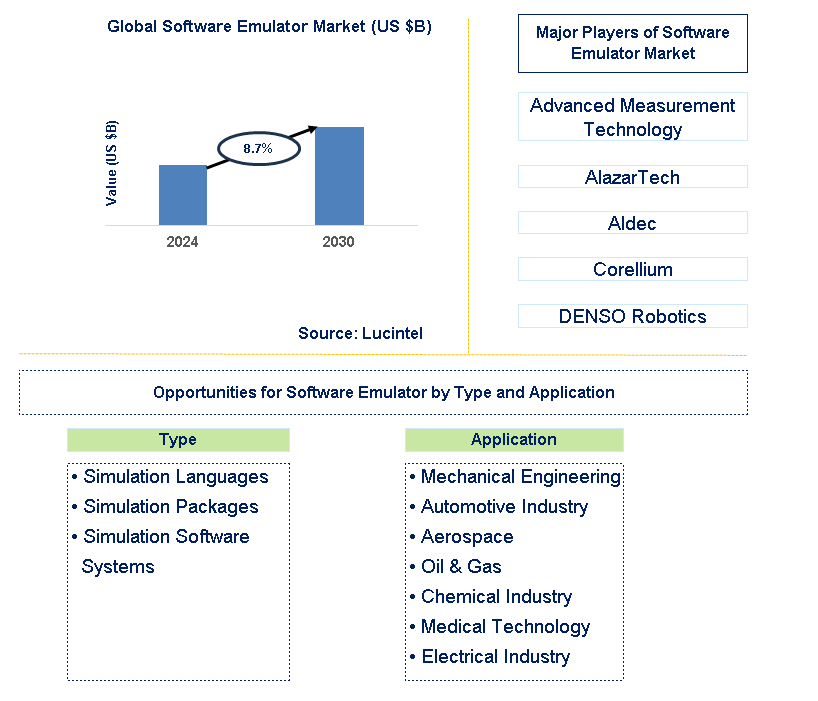
Key data points: The growth forecast = 8.7% annually for the next 6 years. Scroll below to get more insights. This market report covers trends, opportunities, and forecasts in the global software emulator market to 2030 by type (simulation languages, simulation packages, and simulation software systems), application (mechanical engineering, automotive industry, aerospace, oil & gas, chemical industry, medical technology, and electrical industry), and region (North America, Europe, Asia Pacific, and the Rest of the World)
We'll send your sample report shortly.
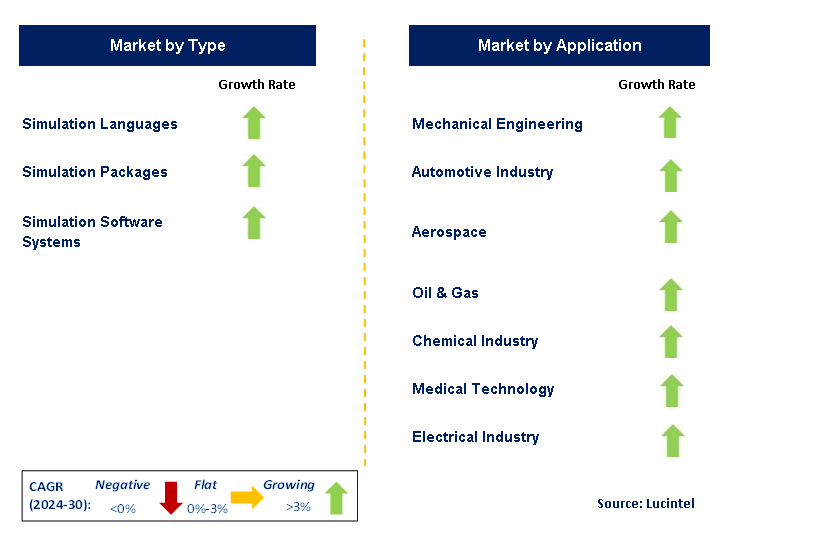
• Lucintel forecasts that, within the type category, simulation software systems is expected to witness highest growth over the forecast period.
• Within the application category, automotive industry is expected to witness highest growth over the forecast period.
• In terms of regions, North America is expected to witness highest growth over the forecast period. Gain valuable insight for your business decisions with our comprehensive 150+ page report
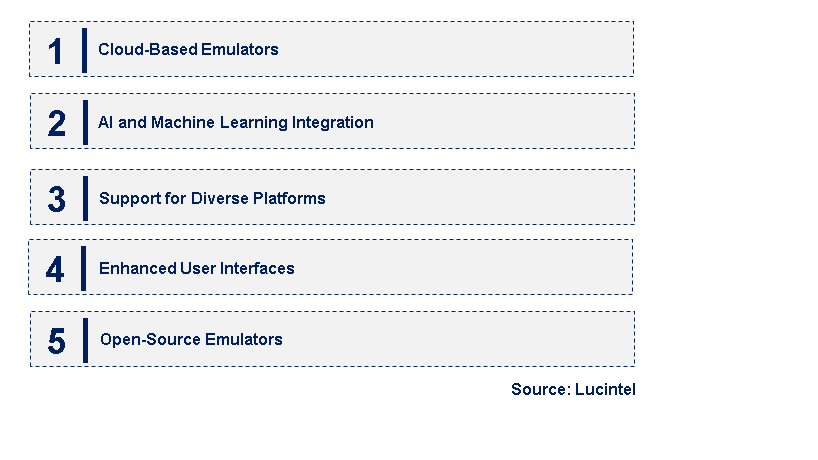
• Cloud-Based Emulators: Cloud-based emulators are becoming increasingly popular as they offer scalable and flexible solutions for software testing and development. This trend allows users to access emulators remotely, improving collaboration and reducing the need for local resources. It also supports on-demand scaling, catering to various development needs.
• AI and Machine Learning Integration: Emulators are integrating AI and machine learning to enhance performance and user experience. AI-driven emulation can optimize resource usage, predict and mitigate issues, and provide advanced debugging features. This integration is making emulators more intelligent and responsive to user needs.
• Support for Diverse Platforms: There is a growing trend toward emulators that support a wide range of platforms and operating systems. This includes emulating various mobile devices, gaming consoles, and legacy systems. Supporting diverse platforms helps developers and enterprises ensure compatibility and streamline testing processes.
• Enhanced User Interfaces: Modern emulators are focusing on improving user interfaces to provide a more intuitive and user-friendly experience. Enhanced UI/UX designs make it easier for users to configure, manage, and interact with emulators. This trend aims to reduce the learning curve and improve overall usability.
• Open-Source Emulators: The rise of open-source emulators is providing more flexibility and customization options for users. Open-source projects allow developers to modify and extend emulator capabilities according to their specific needs. This trend fosters innovation and community-driven improvements in emulator technology. These trends—cloud-based solutions, AI integration, support for diverse platforms, enhanced user interfaces, and open-source emulators—are reshaping the software emulator market. They are driving advancements in performance, usability, and flexibility, catering to evolving user demands and technological requirements.
• Cloud-Based Emulation Solutions: Cloud-based emulation has become a key development, allowing users to access emulators remotely and scale resources as needed. This advancement improves collaboration and flexibility in development and testing processes, reducing the need for local hardware.
• AI-Enhanced Performance: Integration of AI technologies into emulators is enhancing performance and efficiency. AI-driven features such as predictive resource management and automated debugging are improving the functionality and user experience of emulators.
• Support for Multiple Platforms: Emulators are now supporting a broader range of platforms and operating systems. This includes various mobile devices, gaming consoles, and legacy systems, enabling developers to test and ensure compatibility across diverse environments.
• Improved User Interfaces: Recent advancements include more intuitive and user-friendly interfaces for emulators. Enhanced UI/UX designs facilitate easier configuration and management, making emulators more accessible to users and reducing the learning curve.
• Growth of Open-Source Projects: The proliferation of open-source emulators is driving innovation and customization. These projects allow developers to modify and extend emulator features, fostering community-driven improvements and providing more tailored solutions. These key developments—cloud-based solutions, AI integration, platform support, enhanced user interfaces, and open-source projects—are significantly impacting the software emulator market. They are driving innovation and improving the functionality and accessibility of emulator technologies.
• Expansion into Emerging Markets: There is substantial growth potential in emerging markets where technology adoption is increasing. Tailoring emulator solutions to local needs and offering cost-effective options can capture new market segments and drive expansion.
• Integration with Cloud Services: Leveraging cloud technology to offer scalable and flexible emulation solutions can attract a broader range of users. Cloud-based emulators provide remote access, improve collaboration, and reduce the need for local resources, catering to modern development needs.
• Development of Specialized Emulators: Creating emulators for niche applications, such as gaming, industrial software, or legacy systems, presents growth opportunities. Specialized emulators can address specific market needs and offer tailored solutions for unique use cases.
• Enhancing AI Capabilities: Investing in AI and machine learning integration can improve emulator performance and functionality. AI-driven features such as predictive resource management, automated debugging, and enhanced user experience can differentiate offerings and attract users.
• Promotion of Open-Source Solutions: Supporting and promoting open-source emulator projects can drive innovation and community engagement. Open-source solutions offer flexibility and customization, appealing to developers who seek to modify and extend emulator capabilities. Strategic growth opportunities in the software emulator market include expansion into emerging markets, integration with cloud services, development of specialized emulators, enhancing AI capabilities, and promoting open-source solutions. Leveraging these opportunities can drive innovation and market growth.
• Technological Advancements: Continuous advancements in technology, such as AI and cloud computing, drive innovation in software emulators. These technologies enhance performance, scalability, and functionality, meeting evolving user needs and expanding market opportunities.
• Growing Demand for Compatibility Testing: The need for compatibility testing across diverse platforms and operating systems is increasing. Emulators play a critical role in ensuring that software performs well across different environments, driving demand for advanced emulation solutions.
• Expansion of Cloud Services: The rise of cloud computing offers opportunities for cloud-based emulators, providing scalable and flexible solutions for development and testing. Cloud-based emulation supports remote access and collaboration, appealing to modern development practices.
• Increased Focus on User Experience: There is a growing emphasis on improving user interfaces and user experience in emulators. Enhanced UI/UX designs make emulators more accessible and user-friendly, attracting a broader range of users and improving overall satisfaction.
• Rising Adoption of Open-Source Solutions: The popularity of open-source projects is driving innovation and customization in the emulator market. Open-source emulators provide flexibility and community-driven improvements, catering to diverse user needs and fostering innovation. Challenges in the software emulator market are:
• High Competition: The software emulator market is highly competitive, with numerous players offering similar solutions. Differentiating features and maintaining a competitive edge can be challenging in a crowded market.
• Complexity of Integration: Integrating emulators with various platforms and technologies can be complex. Ensuring compatibility and seamless operation across different environments requires significant development effort and expertise.
• Cost of Development and Maintenance: Developing and maintaining advanced emulator technologies can be costly. Balancing innovation with affordability is crucial for attracting and retaining users while managing development expenses. Major drivers such as technological advancements, demand for compatibility testing, cloud services expansion, focus on user experience, and adoption of open-source solutions are shaping the software emulator market. Challenges including high competition, integration complexity, and development costs need to be addressed to leverage growth opportunities and ensure market success.
• Advanced Measurement Technology
• AlazarTech
• Aldec
• Corellium
• DENSO Robotics
• Digital Equipment
• Emulate3D
• iTrinegy
• Ivanti
• NPP SENSOR
• Simulation Languages
• Simulation Packages
• Simulation Software Systems
• Mechanical Engineering
• Automotive Industry
• Aerospace
• Oil & Gas
• Chemical Industry
• Medical Technology
• Electrical Industry
• North America
• Europe
• Asia Pacific
• The Rest of the World
• United States: In the U.S., software emulators are gaining prominence with advancements in cloud-based solutions and increased integration with development environments. Major tech companies like Microsoft and Google are enhancing their emulator tools to support diverse programming languages and platforms. Innovations focus on improving performance, compatibility, and user experience, catering to both developers and enterprise needs.
• China: China’s software emulator market is expanding rapidly, driven by the country's focus on technology innovation and local software development. Companies like Tencent and Alibaba are developing emulators to support their proprietary applications and services. Recent developments include advanced emulation for mobile applications and integration with AI technologies to enhance performance and user experience.
• Germany: In Germany, there is a strong emphasis on high-performance emulators for industrial applications and testing environments. Companies are focusing on precision and reliability, with advancements in emulators that support complex industrial software and legacy systems. There is also a growing trend toward open-source emulator projects, which provide flexibility and customization for various industries.
• India: India's software emulator market is witnessing growth due to the increasing number of tech startups and developers. Local companies and international players are focusing on affordable and scalable emulator solutions that cater to mobile app development and testing. Key advancements include improved emulation of Android and iOS platforms, as well as enhanced support for emerging technologies.
• Japan: In Japan, software emulators are evolving with a focus on integrating with high-tech applications and supporting traditional Japanese software systems. Major advancements include emulators that offer high compatibility with legacy systems and improved user interfaces. There is also an emphasis on developing emulators for niche markets like gaming and specialized industrial applications.


• Advanced Measurement Technology
• AlazarTech
• Aldec
• Corellium
• DENSO Robotics
• Digital Equipment
• Emulate3D
• iTrinegy
• Ivanti
• NPP SENSOR Q5. Which software emulator market segment will be the largest in future? Answer: Lucintel forecasts that, within the type category, simulation software systems is expected to witness highest growth over the forecast period. Q6. In software emulator market, which region is expected to be the largest in next 5 years? Answer: In terms of regions, North America is expected to witness highest growth over the forecast period. Q7. Do we receive customization in this report? Answer: Yes, Lucintel provides 10% customization without any additional cost.


Choose a license that fits your team. Instant PDF delivery.
Prices exclude taxes. Instant delivery. Custom licensing available on request.
Market Report · July 15, 2026
Market Report · June 26, 2026
Market Report · June 24, 2026
Trusted partner for strategic intelligence and business growth


Receive a complimentary market analysis tailored to your industry. Our analysts will identify key growth opportunities and competitive dynamics specific to your business.

Market size, growth rate, and key trend analysis for your specific sector.

Top competitor positioning and market share analysis.

Strategic recommendations backed by data-driven insights.
Get curated market intelligence and competitive moves straight to your inbox.
By subscribing, you agree to receive our monthly insights. Unsubscribe anytime.
Receive a complimentary market analysis tailored to your industry. Our analysts will identify key growth opportunities and competitive dynamics specific to your business.
Market size, growth rate, and key trend analysis for your specific sector.
Top competitor positioning and market share analysis.
Strategic recommendations backed by data-driven insights.
Get curated market intelligence, emerging trends, and competitive moves straight to your inbox each month.
By subscribing, you agree to receive our monthly insights. Unsubscribe anytime.
We'll send your sample report shortly.