
Market Report · July 31, 2026

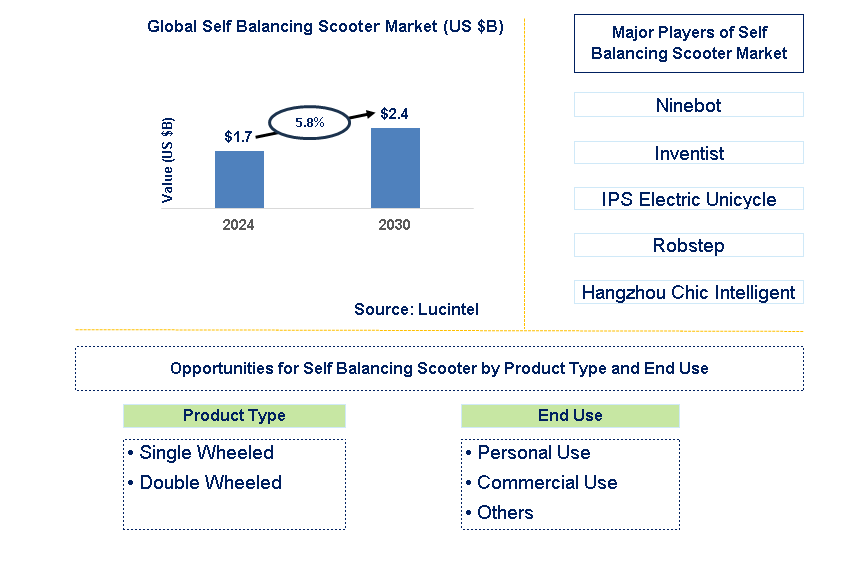
Key data points: The market size in 2030 = $2.4 billion, growth forecast = 5.8% annually for the next 6 years. Scroll below to get more insights. This market report covers trends, opportunities, and forecasts in the global self balancing scooter market to 2030 by product type (single wheeled and double wheeled), end use (personal use, commercial use, and others), and region (North America, Europe, Asia Pacific, and the Rest of the World)
We'll send your sample report shortly.
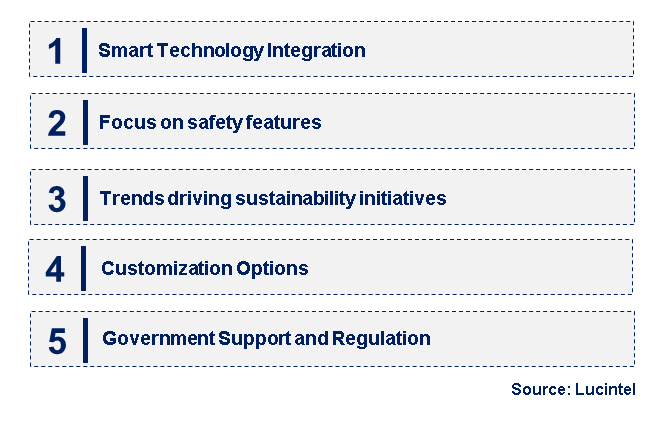
• Smart Technology Integration: The latest models come with smart technology integrated, allowing users to connect their devices through different applications for real-time tracking and diagnostics. The integration of such features increases adoption due to aspects like route optimization and performance monitoring, making scooters attractive to tech-conscious consumers.
• Focus on Safety Features: As safety issues grow, manufacturers are focusing on enhanced safety features like brakes, LED lights, and stability control. These improvements also serve to boost consumer confidence, which works in favor of compliance with higher regulatory standards and subsequently increases market acceptance.
• Trends Driving Sustainability Initiatives: The emergence of electric self-balancing scooters, driven by a shift toward eco-friendly transport, is changing how people get around. Manufacturers are producing more energy-efficient models that lower carbon footprints, aligning with the immediate plans of the global sustainability agenda, thus attracting environmentally conscious consumers.
• Customization Options: Consumers are experiencing what can be termed as customization madness, and self-balancing scooters are no exception; there is a significant trend in customization options offered by manufacturers. These companies provide various colors, accessories, and even performance modifications so the scooters can be tailored to individual tastes and preferences.
• Government Support and Regulation: As cities benefit from self-balancing scooters, sympathetic rules and infrastructure development emerge. Governments are developing lanes and safety regulations to integrate scooters into a more cohesive urban transport system. These changes are transforming the self-balancing scooter market, providing a better experience for users, supporting sustainability, and enhancing safety standards. Once these changes are implemented by manufacturers, the market will grow, and self-balancing scooters will find their place among other urban transportation solutions.
• Advanced Battery Technology: Investment in sophisticated, power-efficient batteries that do not degrade battery life and provide extra mileage, while enabling faster charging, minimizes idle time.
• Better Safety Rules: Some countries have implemented strict safety rules that ensure vehicles are equipped with lights, reflectors, and speed limits. These are among the trends set by developing countries to instill consumer trust and a greater focus on safe urban mobility solutions.
• Smart Connectivity Features: The use of smart connectivity features, such as GPS tracking and mobile app integration, is becoming standard. These enhancements provide opportunities for more timely data streaming and performance monitoring capabilities, appealing to tech-savvy consumers.
• New Geographic Markets: Companies are targeting new geographic markets with the rapid pace of urbanization in developing countries. This presents massive opportunities for growth, as people are increasingly interested in green transportation alternatives.
• Focus on Design and Aesthetics: Manufacturers are placing more emphasis on design and appearance. Recently, they have introduced more attractive styles with modern aesthetics to capture consumers' attention. Aesthetics, alongside performance, are crucial for attracting the young generation seeking fashionable modes of transport. These developments are positively impacting the self-balancing scooter market through improved usability, safety, and consumer appeal. Most of these factors will remain pivotal in driving the growth and adoption of self-balancing scooters in future markets.
• Last-Mile Connectivity Solutions: With effective last-mile connectivity options, scooters will serve as fantastic modes of transport for city commuters. As last-mile connectivity improves, it will lead to faster and more comfortable travel, particularly in dense areas, and integrate well with public transportation.
• Tourism and Recreational Use: There is significant potential for self-balancing scooters in guided tours and recreational activities that the tourism sector can offer. These scooters can provide unique adventures for tourists, thereby enhancing local economies and advancing eco-tourism.
• Corporate Mobility Solutions: Companies are recognizing the benefits of self-balancing scooters for employee commutes and intra-office transportation. This aligns with sustainability goals and boosts employee satisfaction, as scooters offer convenient mobility.
• Education and Training Programs: Educational institutions can embrace self-balancing scooters for transportation on campuses, involving students in environmentally conscious travel. This application can help improve campus mobility and stimulate awareness about sustainability.
• Integration into Smart Cities: As cities evolve into smart environments, self-balancing scooters can become integral to integrated urban mobility solutions. This contributes to the development of efficient transport networks through technological advancements aimed at improving service delivery. These strategic growth opportunities are poised to revolutionize the self-balancing scooter market by enhancing urban mobility and making technological and innovative applications more viable. This will help companies solidify their market position and cultivate long-term growth.
• Growing Demand for Eco-Friendly Transportation: The increasing demand for environmentally friendly transport inspires consumers to prefer cleaner alternatives. Self-balancing scooters, being electric, reflect consumers' eco-friendly preferences and contribute to a reduction in carbon footprints.
• Urbanization and Congestion: Self-balancing scooters have gained popularity amid rapid urbanization, as they provide an efficient personal transportation option compared to traditional vehicles, helping alleviate traffic congestion.
• Technological Advancements: Advanced technology makes scooters stand out in the market. Innovations in battery life, safety features, and smart connectivity ensure optimal functionality, improving user experience and attracting tech-savvy consumers. Challenges in the self-balancing scooter market include:
• Safety: Many accidents and injuries involving self-balancing scooters necessitate a reevaluation of safety issues. Improvements in design and stricter regulations are needed to enhance customer attraction.
• Competition: The market for self-balancing scooters is highly competitive, with many players offering similar products. Companies must differentiate their offerings to gain market share.
• Regulatory Barriers: Each region has unique requirements, posing challenges for manufacturers. Compliance with local laws regarding usage, safety standards, and operational requirements can complicate operations. The self-balancing scooter market is driven by eco-friendliness and urbanization. However, it faces hurdles related to safety and regulatory compliance. Understanding these factors is crucial for anyone looking to succeed in this emerging market.
• Ninebot
• Inventist
• IPS Electric Unicycle
• Robstep
• Hangzhou Chic Intelligent Technology
• Airwheel
• Shenzhen Counterbalance Technology
• Esway
• Solowheel
• Segway
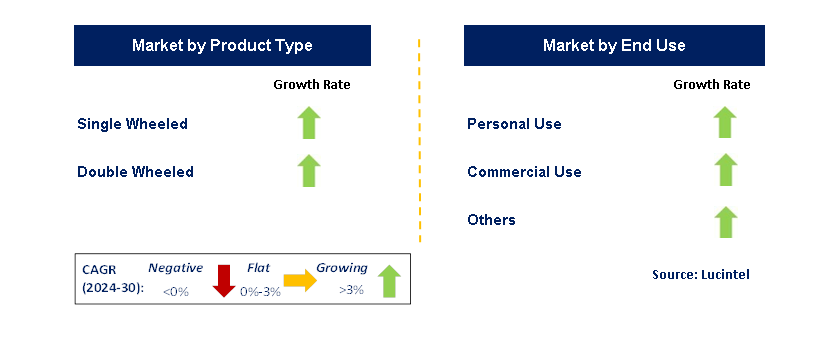
• Single Wheeled
• Double Wheeled
• Personal Use
• Commercial Use
• Others
• North America
• Europe
• Asia Pacific
• The Rest of the World
• United States: The market for self-balancing scooters in the U.S. is robust. Manufacturers like Segway and Razor are introducing highly sophisticated models with increased battery life and enhanced security features. This oversight has established better safety measures, such as enforcing helmet use in many states. Furthermore, as urbanization increases and congestion becomes a nuisance, more people are opting for these scooters for short-distance travel. The adoption of smart technology is also on the rise, including integration with applications to monitor performance, thereby improving user engagement and experience.
• China: China leads the self-balancing scooter market due to robust manufacturing capabilities and a tech-savvy consumer base. Companies such as Xiaomi and Ninebot continue to innovate with features like real-time data and mobile application integration. The Chinese government promotes eco-friendly transportation solutions, resulting in increased electric scooter usage. However, variations in local regulations compel manufacturers to frequently adapt their products to comply with safety standards and address public safety concerns.
• Germany: The self-balancing scooter market in Germany is gradually growing, reflecting the country's emphasis on sustainability and urban mobility. New regulations are being introduced to ensure safety for public road usage. Companies focus on high-quality engineering, incorporating features like regenerative braking and enhanced stability controls. The integration of smart technology, including GPS navigation and theft protection, has become essential to meet consumer expectations for modern urban transport solutions.
• India: The self-balancing scooter market is gaining traction in India, with a focus on affordability and accessibility. Young urban consumers are targeted through budget-friendly models from local manufacturers. Electric vehicles are becoming popular as eco-friendly modes of transport, supported by government initiatives. The industry faces challenges such as infrastructure development and the need for safety regulations, but there is growing demand driven by increased awareness of last-mile connectivity solutions.
• Japan: The self-balancing scooter market in Japan is progressing steadily, albeit with stringent regulations. Companies like Honda are exploring innovative designs that comply with local standards while ensuring user safety. Compact models targeting urban commuters are favored, and electric scooters are slowly gaining popularity among those interested in sustainable transport solutions. Collaborations with tech companies are enhancing performance and connectivity features.


• Ninebot
• Inventist
• IPS Electric Unicycle
• Robstep
• Hangzhou Chic Intelligent Technology
• Airwheel
• Shenzhen Counterbalance Technology
• Esway
• Solowheel
• Segway Q6. Which self balancing scooter market segment will be the largest in future? Answer: Lucintel forecasts that double-wheeled will remain the larger segment over the forecast period due to its wide range of applications in the commercial and manufacturing sectors. Q7. In self balancing scooter market, which region is expected to be the largest in next 5 years? Answer: Europe will remain the largest region over the forecast period. Q.8 Do we receive customization in this report? Answer: Yes, Lucintel provides 10% customization without any additional cost.


Choose a license that fits your team. Instant PDF delivery.
Prices exclude taxes. Instant delivery. Custom licensing available on request.
Market Report · July 31, 2026
Market Report · July 17, 2026
Market Report · May 18, 2026
Trusted partner for strategic intelligence and business growth


Receive a complimentary market analysis tailored to your industry. Our analysts will identify key growth opportunities and competitive dynamics specific to your business.

Market size, growth rate, and key trend analysis for your specific sector.

Top competitor positioning and market share analysis.

Strategic recommendations backed by data-driven insights.
Get curated market intelligence and competitive moves straight to your inbox.
By subscribing, you agree to receive our monthly insights. Unsubscribe anytime.
Receive a complimentary market analysis tailored to your industry. Our analysts will identify key growth opportunities and competitive dynamics specific to your business.
Market size, growth rate, and key trend analysis for your specific sector.
Top competitor positioning and market share analysis.
Strategic recommendations backed by data-driven insights.
Get curated market intelligence, emerging trends, and competitive moves straight to your inbox each month.
By subscribing, you agree to receive our monthly insights. Unsubscribe anytime.
We'll send your sample report shortly.