
Market Report · July 15, 2026

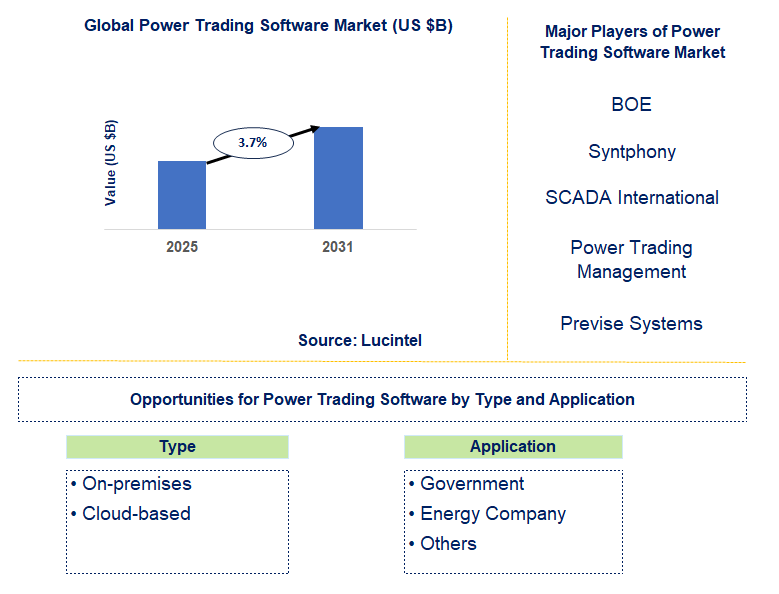
Key data points: The growth forecast = 3.7% annually for the next 7 years. Scroll below to get more insights. This market report covers Trends, opportunities and forecasts in power trading software market to 2031 by type (on-premises and cloud-based), application (government, energy company, and others), and region (North America, Europe, Asia Pacific, and the Rest of the World)
We'll send your sample report shortly.
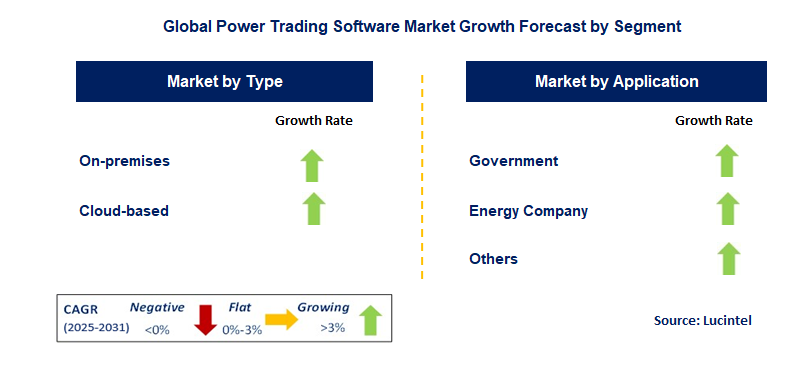
• Lucintel forecasts that, within the type category, cloud-based is expected to witness higher growth over the forecast period due to its cost-efficiency benefits.
• Within the application category, energy company is expected to witness higher growth due to the increasing demand for advanced energy trading solutions.
• In terms of region, APAC is expected to witness the highest growth over the forecast period.
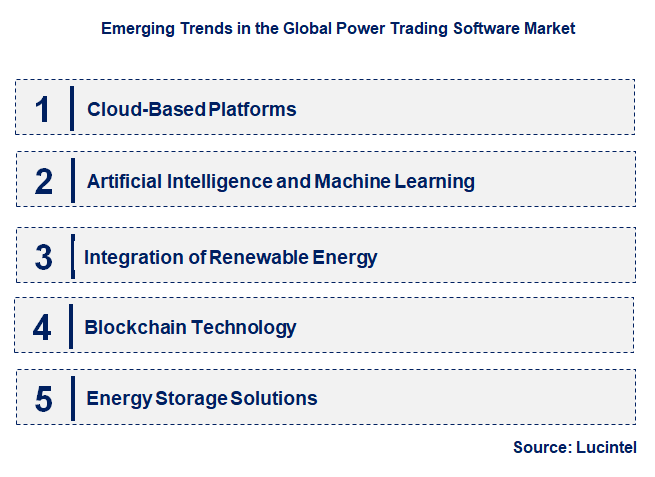
• Cloud-Based Platforms: The use of power trading software is becoming common and it is typically stored on the cloud owing to its scalability, flexibility, and cost saving features. Power traders can now use cloud platforms to access real-time data and analytics which aids in making more informed trading decisions. Cloud solutions enhance collaboration and sharing of information across regions, enabling better response to market changes. Due to low initial investment costs and quicker implementation, cloud solutions are becoming favorable among energy companies around the world.
• Artificial Intelligence and Machine Learning: The surge of artificial intelligence (AI) and its subset machine learning (ML) is evident in the constantly evolving power trading software that is designed for precise analytics, automated decision-making, and risk management. Automation of business processes allows for more streamlined decision-making, and better risk management. AI algorithms have the capability to scan massive datasets for predicting energy prices, analyzing demand behavior, and optimizing trading activities. AI and ML’s unparalleled ability to analyze and comprehend exhaustive data and adapt to real-time changes is thoroughly maximizing trading efficiency and offering traders unprecedented opportunities.
• Integration of Renewable Energy: Existing obsolete legacy systems will be upgraded to incorporate the new functionalities as the global energy industry transitions to renewable energy sources, the same applies to the market of power trading software which is progressively looking forward to the incorporation of wind, solar, and other types of renewable energies. Renewable energy requires completely new computer tools to assist in addressing the unpredictability issues of renewables. In order to trade renewables effectively, it is necessary to combine constant surveillance of renewables and sophisticated forecasting techniques. This allows for optimum trading actions while ensuring grid stability.
• Blockchain Technology: Power trading software is gaining ground for the blockchain technology due to the transparent and secure transactions it offers. The decentralized nature of blockchain technology offers the development of non-editable records of energy trades, which minimizes fraud and ensures adherence to regulatory standards. Furthermore, it enables the creation of peer-to-peer energy trading systems, which could change energy buying and selling by providing more independence and flexibility to traders and consumers alike.
• Energy Storage Solutions: Power trading software now comes with energy storage solutions which are vital. These systems enable traders to manage the supply and demand of electricity at a higher level by storing energy when it is not in high demand, and releasing it into the marketplace during peak demand. To maintain the stability of the grid as renewable energy generation becomes more frequent, reliable energy supply becomes vital. The ability to use energy storage in conjunction with the trading software increases participation in the market and optimizes the usage of resources. The trends mentioned above will strongly influence the future of the power trading software market. With the adoption of cloud infrastructures, AI, blockchain technology, and energy storage systems, the ability of power traders to operate the modern energy markets has tremendously increased. The integration of renewable energy together with advanced technologies not only increases trading efficiency but also propels the global energy industry towards greater sustainability and flexibility.
• Integration of AI and Machine Learning: Incorporating AI and ML into power commodities trading software is one of the most revolutionary changes in the industry. These technologies improve predictive analytics, which allow traders to estimate the demand and price of energy more accurately. AI and ML algorithms analyze historical data alongside current market trends in real time, automatically detecting market patterns and optimizing trading strategies while minimizing risk, thus providing a competitive edge to traders that adopt these technologies.
• Transparency and Security with Blockchain: There is wider adoption of blockchain technology to improve transparency and security in power trading. Its decentralized and immutable nature allows for secure and verifiable transactions, which greatly lowers the chance of fraud and ensures regulations are followed. Blockchain is changing the approach to energy trade by making it easier for participants to verify and follow trades as well as eliminating the need for intermediaries in peer-to-peer trading.
• Cloud Solution Software: The need to maintain and provide service to infrastructure systems makes cloud-based power trading software solutions more appealing because of their flexibility, scalability, and ease of use. These platforms enable traders to use data on a real-time basis, remote collaboration with different traders, and faster processing speeds. The movement to the cloud also decreases overhead costs and enables seamless updates and integration with different software tools. All of these features make cloud-based platforms irrefutably appealing to energy companies.
• Concentration of Renewables Energy Trade: There's no limitation on how much renewable energy an operator can devise, thus, power trading software for trading renewables is being specifically designed to address the unique challenges posed by renewables trading. These software solutions are geared towards optimizing trading strategies to manage the intermittence of renewables such as wind and solar energy. This necessitates enhancements in forecasting and real-time market intelligence so that traders can minimize risks posed by renewable energy's unreliable generation.
• Compliance Regulation Features: Software development on the power trading market is broadening for almost every feature, but compliance regulation remains the most integral component within this domain. Reporting, auditing, and trade tracking tools that ensure adherence to legal, regulatory, and environmental standards are becoming more plentiful. As international energy regulations become more stringent, compliance features are being more thoroughly incorporated into trading systems and aid traders in complex regulatory environments. Compliance with evolving regulations is made easier by these developments in power trading software, and the energy trading process becomes even more efficient, secure, and profitable than It was previously. The market is also set for new transformations with the fast growth of AI, blockchain technology, and cloud computing. With enhanced capability of energy trading, the security and transparency of trading operations alongside regulatory compliance is greatly improved.
• Grid Optimization and Management: The utility industry's quest to enhance the efficiency and dependability of power grids is driving the adoption of grid optimization software. In the domain of grid management, there is a necessity for software that can forecast energy demand, predict outages, and properly allocate energy resources. Modern grids are becoming more intricate, and their integration with renewable energy sources increases the demand in this area. This software assists utilities in providing enhanced service while decreasing the operational costs.
• Integrating Renewable Energy: As wind and solar energy sources grow, there is a notable need for trading software that supports renewable energy trading. These solutions optimize the scarce and unpredictable power output from renewables through real-time data analytics and sophisticated forecasting models. These algorithms improve the integration of renewables into the energy market by enabling better trading of renewable energy.
• Risk Management and Compliance: In light of heightened regulations, the incorporation of compliance and risk management capabilities are important features of power trading software. New software platforms are emerging to assist traders in mitigating operational and financial risks while achieving necessary compliance with national and international standards. Achieving non-discretionary trading compliance has become critical to market safety and transparency due to the increasing sophistication and regulations of energy trading.
• Energy Markets Transition: The incorporation of real-time data analytics is changing the face of energy markets. With immediate access to market changes, pricing information, and other relevant data, traders can make timely decisions. Real-time analytics prove to be most helpful when managing the volatility of renewable energy generation, as well as price and demand shifts.
• Power Trading Market: The combination of energy storage systems and trading software represents a major opportunity for growth in the power trading sector. Energy storage devices allow for the capturing of surplus energy during off-peak hours and releasing it during peak times. Powerful energy storage software provides traders with critical information, such as battery charge and discharge cycles, market prices, and overall battery health which can facilitate stored energy and profitability. In my two decades of experience in the power and energy fields, I believe that there will always be opportunities for trade and investment with regard to power trading software. Global shift strategies and politics create a need for the software. Shifting from compliance to proactive software development will result in new agile, efficient, and flexible sustainable trading platforms. Thy economically deprived Eastern European region still remains competitive because of geopolitical difficulties and crisis-stricken compliance. Therefore, despite its challenges, the future market has the resources to continue growing.
• BOE
• Syntphony
• SCADA International
• Power Trading Management
• Previse Systems
• KYOS
• PCI Energy Solutions
• Tigernix Singapore
• Isotrol
• ION Group
• On-premises
• Cloud-based
• Government
• Energy Company
• Others
• North America
• Europe
• Asia Pacific
• The Rest of the World
• United States: The demand for the U.S. power trading software is increasing due to the enhancing management of energy grids and growing usage of renewable resources. The systems are required to provide solutions in real time due to the governing bodies wanting solutions that enabled a decrease in carbon emission and adoption of green energy. These software platforms use systems based on data mining, real time analyses, and automated trading offerings. Industry leaders are trying to the increase efficiency, the make operational decisions on cloud based platforms and AI systems.
• China: China is ensuring that all of its renewable energy expansion needs will be met with the development of new advanced software that enable power trading. Using energy and having increased flexibility within a supple system requires a lot of trading instruments, which are additional power trading tools. These software systems are being developed for exercising clean energy trades, demand response activities, and balancing services. China has already shaped software solutions to clean energy trading. Moreover, the efforts from Republican China are enabling greater efficiency, clarity, and order in the power trading market.
• Germany: Germany as a result of the reformation of the “Evergreened” strategy has quickly embraced power trading software and surged ahead with their implementation. Germany is trying to take more advantage of renewables, especially wind and solar, which makes the need for software capable of appropriately managing complex grid boundaries and energy output allocation even greater. Germany is also implementing software for power exchanges between members of EU in order to enhance energy safety and market functioning efficiency.
• India: In India, the expansion of renewable energy and the rising demand for electricity has increased the growth of power trading software solutions in the country. The need for more sophisticated trading tools is being driven by India’s attempt to incorporate more solar and wind energy into the grid and improve grid stability. Automation of power distribution, optimization of energy storage, and real-time monitoring of trading activities are some of the specific requirements of the Indian market for which software solutions are being designed.
• Japan: Japan’s reliance on renewable energy and the liberalization of its energy market has led to innovations in its power trading software market. Following the Fukushima disaster, Japan has been focusing on the incorporation of diverse energy sources as well as improving grid security. Japanese companies are developing software solutions that provide efficient power market participation as well as real-time price forecasting and risk management. Moreover, there is an increase in the use of AI and machine learning in Japan to enhance accuracy in trading software.


• BOE
• Syntphony
• SCADA International
• Power Trading Management
• Previse Systems
• KYOS
• PCI Energy Solutions
• Tigernix Singapore
• Isotrol
• ION Group Q5. Which power trading software market segment will be the largest in future? Answer: Lucintel forecasts that, within the type category, cloud-based is expected to witness higher growth over the forecast period due to its cost-efficiency benefits. Q6. In power trading software market, which region is expected to be the largest in next 5 years? Answer: In terms of region, APAC is expected to witness the highest growth over the forecast period. Q7. Do we receive customization in this report? Answer: Yes, Lucintel provides 10% customization without any additional cost.


Choose a license that fits your team. Instant PDF delivery.
Prices exclude taxes. Instant delivery. Custom licensing available on request.
Market Report · July 15, 2026
Market Report · June 26, 2026
Market Report · June 24, 2026
Trusted partner for strategic intelligence and business growth


Receive a complimentary market analysis tailored to your industry. Our analysts will identify key growth opportunities and competitive dynamics specific to your business.

Market size, growth rate, and key trend analysis for your specific sector.

Top competitor positioning and market share analysis.

Strategic recommendations backed by data-driven insights.
Get curated market intelligence and competitive moves straight to your inbox.
By subscribing, you agree to receive our monthly insights. Unsubscribe anytime.
Receive a complimentary market analysis tailored to your industry. Our analysts will identify key growth opportunities and competitive dynamics specific to your business.
Market size, growth rate, and key trend analysis for your specific sector.
Top competitor positioning and market share analysis.
Strategic recommendations backed by data-driven insights.
Get curated market intelligence, emerging trends, and competitive moves straight to your inbox each month.
By subscribing, you agree to receive our monthly insights. Unsubscribe anytime.
We'll send your sample report shortly.