
Market Report · July 31, 2026

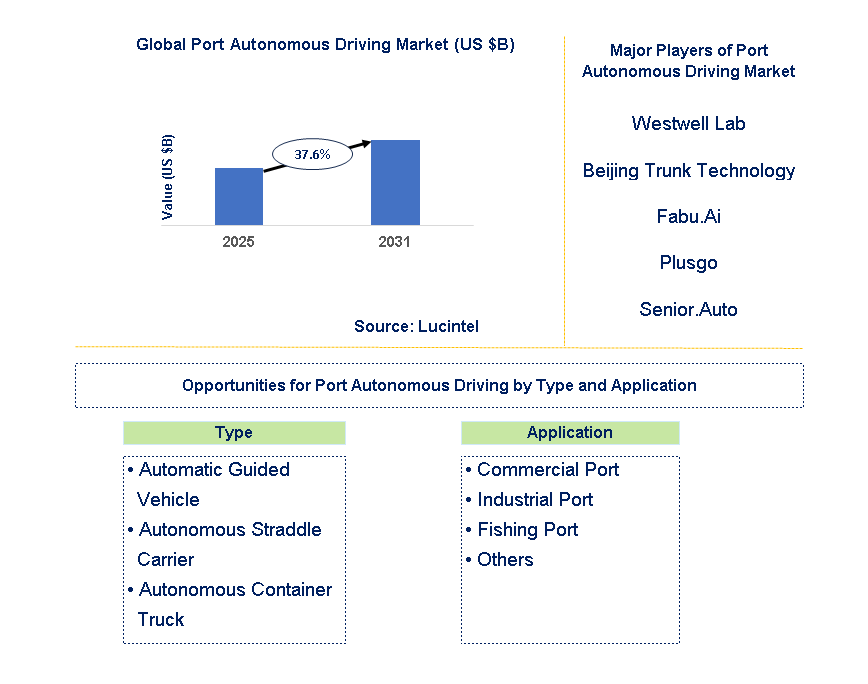
Key data points: The growth forecast = 37.6% annually for the next 7 years. Scroll below to get more insights. This market report covers Trends, opportunities and forecasts in port autonomous driving market to 2031 by type (automatic guided vehicle, autonomous straddle carrier, and autonomous container truck), application (commercial port, industrial port, fishing port, and others), and region (North America, Europe, Asia Pacific, and the Rest of the World)
We'll send your sample report shortly.
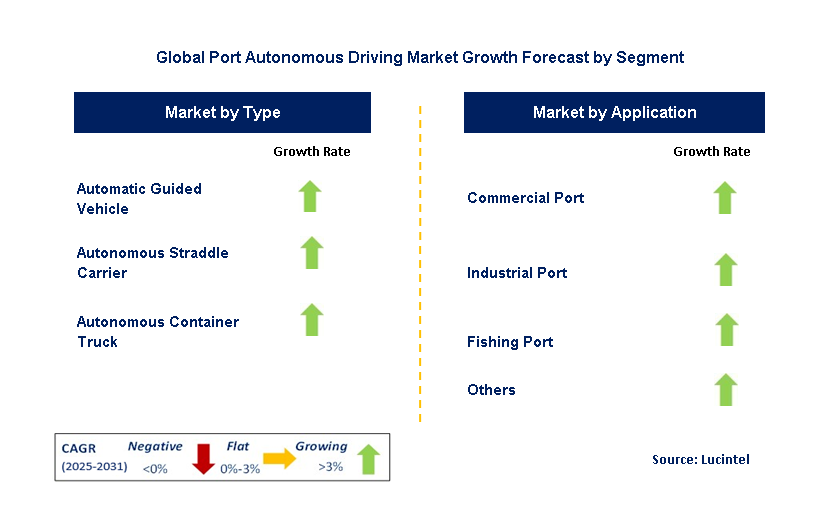
• Lucintel forecasts that, within the type category, automatic guided vehicle is expected to witness the highest growth over the forecast period due to its ability to enhance operational efficiency.
• Within the application category, commercial port is expected to witness the highest growth due to increased automation adoption to improve efficiency.
• In terms of region, APAC is expected to witness the highest growth over the forecast period due to growing demand for efficient cargo handling.
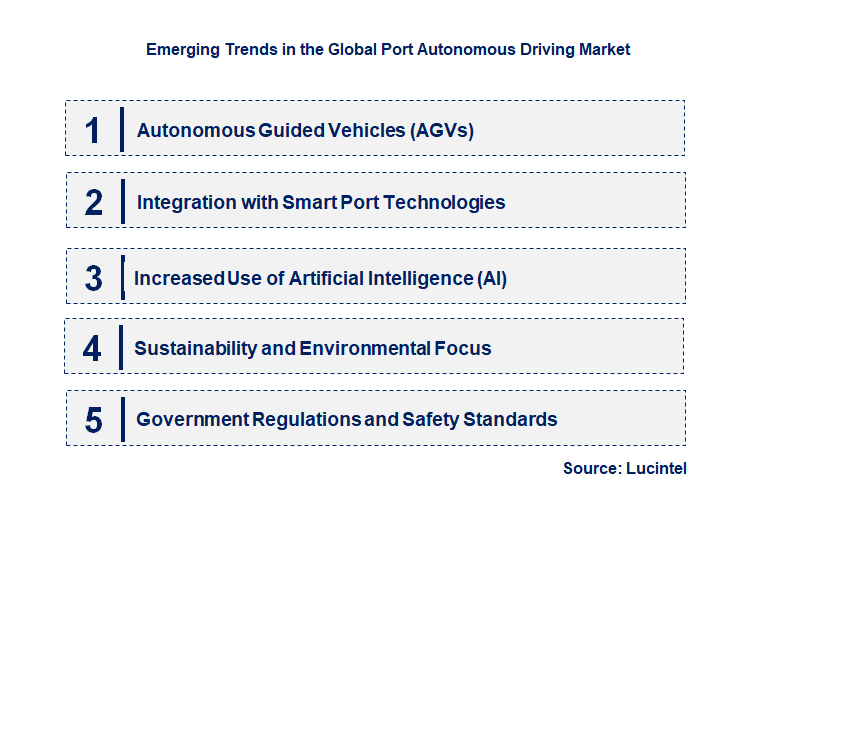
• Autonomous Guided Vehicles (AGVs): AGVs are increasingly being used in ports to automate the transport of containers within port terminals. These vehicles reduce human intervention and improve operational efficiency by moving containers between docks and storage areas. AGVs are powered by electric and autonomous driving technology, which minimizes emissions and enhances sustainability. The trend towards AGVs reflects the growing demand for efficient, cost-effective, and environmentally friendly solutions in port logistics.
• Integration with Smart Port Technologies: The most critical trend is the integration of autonomous driving systems with smart port technologies. These technologies utilize real-time data and advanced sensors on optimization processes, such as traffic management, tracking of containers, and cargo handling. Autonomous vehicles also can be communicated with port infrastructure, which improves coordination and efficiency. The fusion of autonomous driving and smart technology results in extremely effective, interconnected systems that streamline operations in a port and raise the overall productivity level.
• Increased Use of Artificial Intelligence (AI): Artificial intelligence (AI) is playing a significant role in the development of autonomous driving technologies in ports. AI helps autonomous vehicles make real-time decisions based on environmental conditions and other variables, improving safety and operational efficiency. Machine learning algorithms enable these systems to learn from experience, continuously optimizing their routes and tasks. AI is transforming autonomous port operations, enhancing decision-making, and reducing human error in complex environments.
• Sustainability and Environmental Focus: As sustainability emerges as a serious challenge in the field of global logistics, autonomous vehicles are becoming more helpful to the ports by saving them from a negative impact on the environment. Electric-powered autonomous trucks and container handling systems also help with clean and sustainable operations. It has been mainly supported by the source of renewable energy and decreased emission from the ports' activities. The interest in environmentally friendly technologies is now increased, and autonomy is regarded as one of the major contributions towards sustainability goals.
• Government Regulations and Safety Standards: Government regulations and safety standards are becoming more defined as the port autonomous driving market expands. Countries around the world are developing and implementing regulatory frameworks to ensure the safe deployment of autonomous vehicles in ports. These regulations cover aspects such as vehicle safety, data security, and operational standards. The trend towards clearer regulations is helping to build industry confidence and accelerate the adoption of autonomous systems in port operations. These emerging trends demonstrate that the port autonomous driving market is being shaped by innovations in AGVs, AI, sustainability, smart port technologies, and regulatory frameworks. As these trends continue to evolve, they will contribute to a more efficient, sustainable, and automated global logistics ecosystem.
• Deployment of Autonomous Trucks in Ports: Autonomous trucks are being deployed in several major ports around the world to transport cargo within port terminals. These trucks use advanced sensors and AI to navigate and operate autonomously, reducing the need for human drivers and improving operational efficiency. The development and deployment of autonomous trucks is expected to reduce congestion, increase throughput, and lower operational costs in ports.
• Integration of Autonomous Cranes for Container Handling: Autonomous cranes are being developed and deployed to automate the container loading and unloading process. These cranes use advanced robotics and AI to move containers efficiently and safely. Autonomous cranes are being used in ports such as Hamburg and Shanghai, reducing operational downtime and improving the overall speed of cargo handling. These systems also reduce human error and improve safety on port terminals.
• Implementation of Smart Port Solutions: Smart ports are integrating autonomous systems with Internet of Things (IoT) technologies to enhance the management of logistics operations. These solutions provide real-time data on container movements, traffic conditions, and equipment usage. By using AI-powered systems to analyze this data, ports can optimize operations and improve efficiency. The adoption of smart port solutions is driving the growth of autonomous driving technology in the port sector.
• Development of Autonomous Marine Vessels: Autonomous marine vessels are being tested and developed for cargo transportation in ports. These vessels, which operate without human intervention, can reduce human labor costs and enhance safety on the waters. The development of autonomous marine vessels is a game-changer for port logistics, particularly for large-scale ports that require efficient and cost-effective shipping solutions.
• Government Initiatives to Support Autonomous Port Development: Governments are investing in initiatives and regulatory frameworks to support the adoption of autonomous driving technologies in ports. These initiatives include providing funding for research and development, creating safety standards, and promoting collaboration between public and private sectors. Government support is helping to drive innovation in the port autonomous driving market and accelerate the deployment of autonomous systems. Recent developments in the port autonomous driving market are driving innovation and increasing efficiency in port operations. The deployment of autonomous trucks, cranes, and smart port solutions, as well as the development of autonomous marine vessels, are transforming the logistics industry and creating new growth opportunities in global ports.
• Autonomous Trucks for Port Logistics: One of the major growth opportunities is in the deployment of autonomous trucks in port terminals. The vehicle can move containers around the terminal, reducing the human workforce and making operations more efficient. With the trend of ports automating their logistics, demand for autonomous trucks is expected to increase. The growth opportunity is more significant in large ports with high cargo volumes and a need for efficient container transport systems.
• Autonomous Cranes and Automated Container Handling: Autonomous cranes and automated container handling systems represent another key growth opportunity. These systems enhance the speed and efficiency of container loading and unloading, reducing human error and improving safety. The adoption of these technologies is expected to increase as ports seek to streamline operations and handle larger volumes of cargo with fewer disruptions. This growth opportunity is particularly relevant in ports experiencing congestion.
• Integration with Smart Port Technologies: The integration of autonomous vehicles with smart port technologies offers a significant growth opportunity. By linking autonomous systems to real-time data, ports can optimize their operations, improve scheduling, and reduce bottlenecks. This will enable ports to enhance productivity, reduce operational costs, and better manage supply chain logistics, driving the growth of autonomous technologies in ports.
• Autonomous Marine Vessels for Cargo Transport: Autonomous marine vessels are poised to revolutionize cargo transport in ports. These vessels operate without human intervention, reducing the risk of accidents and labor costs while enhancing efficiency. The development and deployment of autonomous marine vessels will be crucial for large ports handling high volumes of goods. This growth opportunity is gaining momentum as technology progresses and regulatory frameworks evolve to accommodate autonomous shipping.
• Government Regulations and Support: Government support and regulatory frameworks present a growth opportunity in the port autonomous driving market. Governments worldwide are investing in infrastructure and safety standards to encourage the development and adoption of autonomous port technologies. These initiatives will accelerate innovation and make autonomous systems more accessible to ports, driving market growth. Strategic growth opportunities in the port autonomous driving market include the expansion of autonomous trucks, cranes, and marine vessels, as well as the integration with smart port technologies and government support. These opportunities are positioning the market for rapid growth and transformation in the coming years.
• Westwell Lab
• Beijing Trunk Technology
• Fabu.Ai
• Plusgo
• Senior.Auto
• Deeproute.Ai
• TuSimple
• Automatic Guided Vehicle
• Autonomous Straddle Carrier
• Autonomous Container Truck
• Commercial Port
• Industrial Port
• Fishing Port
• Others
• North America
• Europe
• Asia Pacific
• The Rest of the World
• United States: In the United States, port autonomous driving technology is rapidly being implemented, especially in large ports like the Port of Long Beach and the Port of Los Angeles. Companies such as Tesla and Waymo are developing autonomous trucks for port logistics. The U.S. is currently concentrating on combining autonomous vehicles with the existing infrastructure at the ports to improve the efficiency of cargo handling. Moreover, smart port technology is being developed to streamline customs and supply chain processes. The U.S. government is also working on regulatory frameworks to ensure the safe and widespread implementation of autonomous driving technology within ports.
• China: China is making strides in autonomous driving within ports, with the country’s large-scale ports like Shanghai and Shenzhen leading the charge. There has been an emergence of autonomous trucks, cranes, and container handling systems in Chinese ports, increasing efficiency in their operations. Chinese government is investing in automation and digitalization as well as major port operators deploying automated guided vehicles to handle container transport. Companies, including ZPMC, in China are developing innovative autonomous systems. China is leading globally in the automation of ports.
• Germany: Germany is at the forefront of integrating autonomous driving technology in European ports. The Port of Hamburg has implemented automated systems for cargo handling, including autonomous transport vehicles and cranes. German companies like Konecranes and Liebherr are leading the development of autonomous crane systems, improving the speed and safety of container loading and unloading. Germany’s strong focus on digitalization, Industry 4.0, and sustainability has accelerated the adoption of autonomous vehicles in port logistics, positioning the country as a leader in smart port initiatives.
• India: India’s port automation is still in the early stages compared to other countries, but it is growing rapidly. The government has identified automation as a key focus area to improve port efficiency and competitiveness. Autonomous vehicles are being trialed at major ports like Jawaharlal Nehru Port and Chennai Port. Indian ports are focusing on adopting automated truck systems and container handling equipment to improve cargo movement and reduce congestion. In addition, government-backed initiatives are helping fund the digital transformation of port infrastructure, paving the way for autonomous driving technology.
• Japan: Japan has been exploring autonomous driving technology in ports for several years. Ports like Tokyo and Yokohama are experimenting with autonomous trucks and AGVs for logistics. Japanese companies such as Mitsubishi Heavy Industries are collaborating with port operators to develop autonomous systems. Japan’s commitment to technological innovation in automation is supported by government initiatives focused on improving port efficiency and reducing human labor in logistics. Autonomous driving technology is being integrated with smart port solutions, enhancing cargo handling and promoting sustainability in port operations.


• Westwell Lab
• Beijing Trunk Technology
• Fabu.Ai
• Plusgo
• Senior.Auto
• Deeproute.Ai
• TuSimple Q5. Which port autonomous driving market segment will be the largest in future? Answer: Lucintel forecasts that, within the type category, automatic guided vehicle is expected to witness the highest growth over the forecast period due to its ability to enhance operational efficiency. Q6. In port autonomous driving market, which region is expected to be the largest in next 5 years? Answer: In terms of region, APAC is expected to witness the highest growth over the forecast period due to growing demand for efficient cargo handling. Q7. Do we receive customization in this report? Answer: Yes, Lucintel provides 10% customization without any additional cost.


Choose a license that fits your team. Instant PDF delivery.
Prices exclude taxes. Instant delivery. Custom licensing available on request.
Market Report · July 31, 2026
Market Report · July 17, 2026
Market Report · May 18, 2026
Trusted partner for strategic intelligence and business growth


Receive a complimentary market analysis tailored to your industry. Our analysts will identify key growth opportunities and competitive dynamics specific to your business.

Market size, growth rate, and key trend analysis for your specific sector.

Top competitor positioning and market share analysis.

Strategic recommendations backed by data-driven insights.
Get curated market intelligence and competitive moves straight to your inbox.
By subscribing, you agree to receive our monthly insights. Unsubscribe anytime.
Receive a complimentary market analysis tailored to your industry. Our analysts will identify key growth opportunities and competitive dynamics specific to your business.
Market size, growth rate, and key trend analysis for your specific sector.
Top competitor positioning and market share analysis.
Strategic recommendations backed by data-driven insights.
Get curated market intelligence, emerging trends, and competitive moves straight to your inbox each month.
By subscribing, you agree to receive our monthly insights. Unsubscribe anytime.
We'll send your sample report shortly.