
Market Report · May 16, 2026

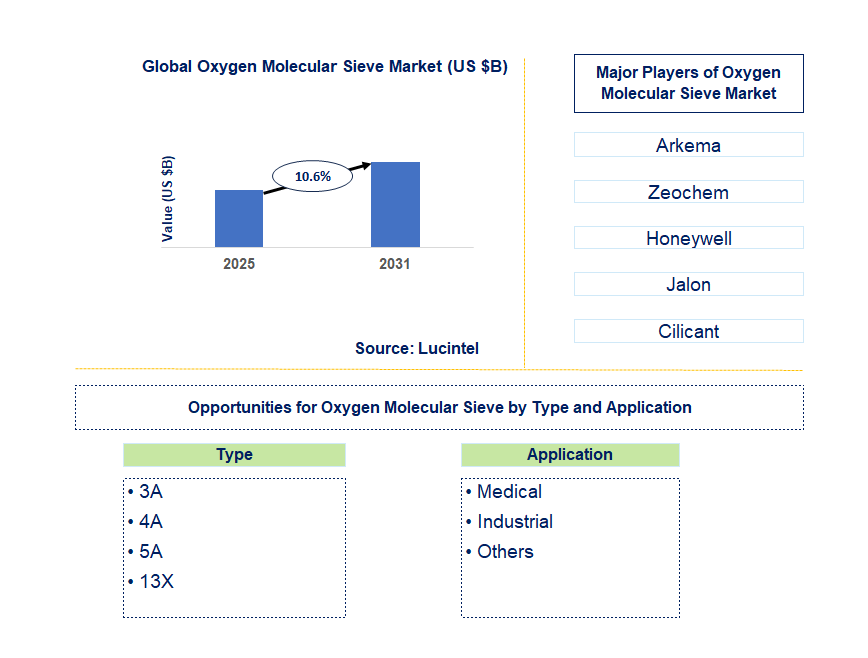
Key data points: The growth forecast = 10.6% annually for the next 7 years. Scroll below to get more insights. This market report covers Trends, opportunity and forecast in oxygen molecular sieve market to 2031 by type (3A, 4A, 5A, and 13X), application (medical, industrial, and others), and region (North America, Europe, Asia Pacific, and the Rest of the World)
We'll send your sample report shortly.
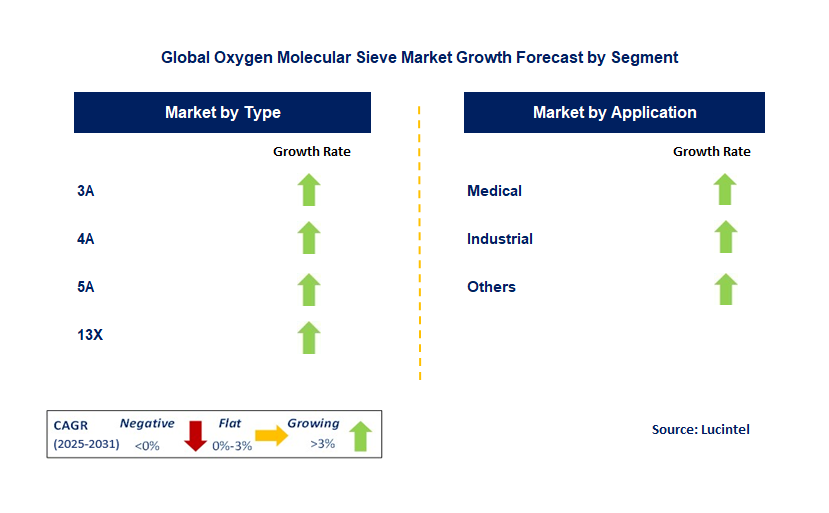
• Lucintel forecasts that, within the type category, 13X will remain the largest segment over the forecast period due to its high efficiency in oxygen generation applications.
• Within the application category, industrial is expected to witness the higher growth due to demand for oxygen molecular sieves, particularly in oxygen generation systems.
• In terms of region, APAC is expected to witness the highest growth over the forecast period. Gain valuable insights for your business decisions with our comprehensive 150+ page report. Sample figures with some insights are shown below.
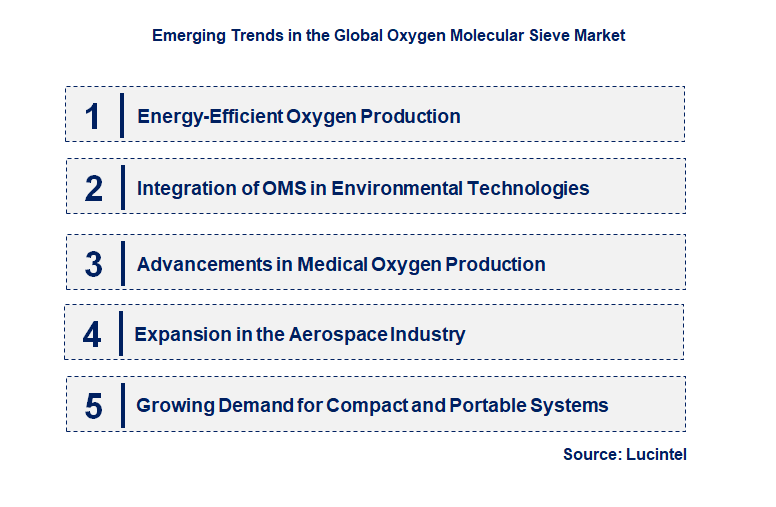
• Energy-Efficient Oxygen Production: Advances in OMS technology are leading to more energy-efficient oxygen production systems, especially in industries like steel manufacturing and petrochemicals. Energy efficiency is a critical factor in reducing operational costs, particularly in large-scale oxygen generation. New materials, such as advanced zeolites, and improvements in Pressure Swing Adsorption (PSA) technology are enabling more efficient separation of oxygen from air, making oxygen production less costly and more sustainable.
• Integration of OMS in Environmental Technologies: oxygen molecular sieves are becoming integral to environmental applications, such as water treatment, waste management, and air purification. OMS systems are used to remove impurities and toxins from air and water by selectively absorbing unwanted gases. As global environmental regulations tighten, industries are adopting OMS for reducing emissions, purifying air, and supporting green technologies, contributing to cleaner industries and better urban air quality.
• Advancements in Medical Oxygen Production: OMS technology is seeing increasing adoption in the medical sector, where the need for high-purity oxygen has grown, especially during respiratory disease outbreaks. Medical oxygen generators based on OMS are now providing more reliable and cost-effective alternatives to traditional oxygen cylinders and liquid oxygen systems. These technologies offer hospitals and remote medical facilities the ability to produce oxygen on-site, reducing supply chain dependency and improving healthcare response times.
• Expansion in the Aerospace Industry: The aerospace sector is incorporating OMS technology to support life support systems for astronauts in space. Advanced OMS systems are being developed to generate oxygen from onboard resources, such as water or carbon dioxide, in spacecraft. The development of space exploration programs by countries like the United States, China, and Japan is driving demand for efficient, reliable oxygen production systems that can work in zero-gravity environments.
• Growing Demand for Compact and Portable Systems: The trend towards portable and compact OMS systems is growing, especially in medical and military applications. Portable oxygen concentrators (POCs) that utilize OMS technology are becoming popular in homecare settings and among people with chronic respiratory conditions. These compact units offer patients the convenience of oxygen therapy outside of hospital environments, improving their quality of life and reducing reliance on larger, stationary systems. These emerging trends in the oxygen molecular sieve market are reshaping the landscape of oxygen production and utilization. The push for energy-efficient, compact, and sustainable technologies is transforming industries, healthcare, and environmental management. As these trends continue to evolve, OMS systems will become even more integral to global oxygen supply chains.
• Development of High-Efficiency OMS Materials: The development of new, high-performance materials for oxygen molecular sieves is a significant advancement. Researchers are focusing on zeolite and silica-based materials that improve the efficiency of oxygen separation. These new materials enhance the lifespan and reduce energy consumption of OMS systems, making them more cost-effective. This development is especially relevant for industries like steel manufacturing, where large volumes of oxygen are required.
• Advancement of Modular Oxygen Generation Systems: Modular oxygen generation systems based on OMS technology have been gaining traction. These systems allow for flexible scaling of oxygen production depending on demand, making them highly attractive for industries like healthcare and remote locations. The ability to transport and install these modular systems quickly is improving oxygen supply in underdeveloped areas and during emergency situations like natural disasters or pandemics.
• Integration with Smart Monitoring and Control Systems: The integration of smart monitoring and control systems with OMS technology is enhancing performance management. Real-time monitoring of oxygen production, system health, and energy consumption is becoming standard in OMS systems. This development improves operational efficiency, enables predictive maintenance, and ensures the optimal functioning of oxygen generators in both industrial and medical applications.
• Adoption in Hydrogen Production: OMS technology is being increasingly integrated into the hydrogen production process, particularly in industries focused on sustainable energy solutions. Oxygen is a key byproduct in the electrolysis process used to produce hydrogen, and OMS systems help efficiently separate oxygen for other industrial uses. This development is driving demand for OMS systems in the growing hydrogen economy and supporting green energy initiatives.
• COVID-19 Pandemic Response: The COVID-19 pandemic highlighted the critical role of OMS technology in providing medical-grade oxygen for patients with respiratory issues. As a result, significant investments were made in the development of mobile oxygen generation units and on-site oxygen production systems in hospitals. These systems are more cost-effective than relying on traditional oxygen cylinders and help ensure that hospitals have a steady and reliable supply of oxygen during crises. These key developments demonstrate how the oxygen molecular sieve market is advancing to meet growing demand across various industries. From improved materials to smart systems and the adaptation of OMS in new sectors like hydrogen production, these innovations are enhancing the capabilities and applications of OMS technologies.
• Healthcare and Medical Applications: The healthcare sector offers one of the most promising growth opportunities for OMS technology. With increasing respiratory diseases and aging populations, the demand for on-site oxygen generation systems is growing. OMS systems are becoming crucial for hospitals, medical centers, and homecare settings to supply high-purity oxygen efficiently. The development of portable oxygen concentrators for homecare use is particularly driving this trend, making it a vital area for expansion.
• Industrial Gas Production: Industrial gas production, particularly in sectors like steel manufacturing, petrochemicals, and energy, remains a key application for OMS systems. These industries require large volumes of oxygen for various processes, and OMS systems offer a cost-effective and energy-efficient solution for oxygen separation. As industries move toward more sustainable production methods, OMS technology is playing an increasing role in helping them meet energy efficiency and emission reduction goals.
• Environmental Applications: Environmental sustainability is a growing driver for the OMS market. oxygen molecular sieves are increasingly used in air and water purification systems, where they help to separate and capture oxygen and other gases. With stricter environmental regulations and a focus on cleaner industries, OMS systems are becoming more integral in environmental technologies such as waste-to-energy, water treatment, and emission reduction systems.
• Space and Aerospace Industry: The space and aerospace sectors present significant growth opportunities for OMS technology. Oxygen production for life support systems is critical in spacecraft and space stations, where OMS technologies are being used to generate oxygen from water or carbon dioxide. With the rise of space exploration and commercialization, OMS systems are becoming indispensable for maintaining life support in long-duration space missions.
• Hydrogen Production and Renewable Energy: The push for renewable energy and hydrogen production is creating new opportunities for OMS applications. oxygen molecular sieves are being used in electrolysis systems to separate oxygen during hydrogen production. As the hydrogen economy grows and green energy solutions become more prevalent, OMS systems will play a critical role in supporting sustainable energy generation. Strategic growth opportunities in the oxygen molecular sieve market span across various sectors, including healthcare, industrial gas production, environmental sustainability, aerospace, and renewable energy. By leveraging OMS technology in these applications, companies can tap into a rapidly expanding market driven by the demand for more efficient and sustainable solutions.
• Arkema
• Zeochem
• Honeywell
• Jalon
• Cilicant
• Hanchang
• Chempack
• Naike Chemical
• Jiangxi Xintao Technology
• Ksource Chemical
• 3A
• 4A
• 5A
• 13X
• Medical
• Industrial
• Others
• North America
• Europe
• Asia Pacific
• The Rest of the World
• United States: The United States remains a leading market for oxygen molecular sieves, particularly in the industrial and medical sectors. Recent developments include innovations in the production and efficiency of Oxygen PSA (Pressure Swing Adsorption) systems. Companies are focusing on improving the energy efficiency and lifetime of OMS to reduce operational costs, particularly in medical oxygen production. The U.S. also plays a critical role in the research and development of advanced OMS technologies for aerospace applications, including the production of oxygen in space missions. Additionally, stricter environmental regulations are encouraging the use of OMS for reducing emissions in various industries.
• China: China's OMS market has seen rapid growth, spurred by increasing industrialization, urbanization, and the demand for oxygen in healthcare. China is heavily investing in infrastructure to enhance its oxygen production capabilities, both for industrial use and to support the growing demand in hospitals, particularly for respiratory treatments amid rising air pollution. The government’s policies supporting cleaner technologies and energy efficiency are driving OMS adoption. Furthermore, China’s space exploration programs are also incorporating advanced oxygen systems, utilizing OMS for life support systems in spacecraft. The focus on improving air quality also promotes greater use of OMS in environmental technologies.
• Germany: Germany has established itself as a leader in the development of advanced OMS technologies in Europe. The country’s engineering excellence and strong industrial base have enabled companies to innovate in oxygen production systems for use in both medical and industrial applications. German manufacturers are enhancing the efficiency of OMS systems, focusing on reducing energy consumption while increasing throughput for oxygen separation. Moreover, the government’s green energy policies are boosting the adoption of OMS in clean energy sectors, such as hydrogen production, where oxygen separation is a key component. The emphasis on sustainability is fostering innovations in OMS to meet environmental standards.
• India: India is experiencing growing demand for oxygen molecular sieves, driven by an expanding healthcare sector and rising industrial activity. The country has faced significant oxygen shortages, particularly during the COVID-19 pandemic, highlighting the need for reliable oxygen production systems. OMS technologies are now being increasingly adopted in healthcare settings, especially in rural hospitals that lack access to centralized oxygen supplies. Industrial applications such as steel production and petrochemicals are also contributing to the demand for OMS. India’s ongoing infrastructure development and increased healthcare investments are poised to drive further growth in the OMS market in the coming years.
• Japan: Japan is at the forefront of incorporating advanced oxygen production technologies, particularly in high-tech industries like robotics, aerospace, and healthcare. Japanese companies have been pioneers in developing highly efficient and compact OMS systems for both industrial use and medical applications. The focus on aging population healthcare needs in Japan has driven demand for medical oxygen systems, ensuring adequate supply for hospitals and home care. In aerospace, Japan’s ambitious space exploration programs require advanced oxygen production systems, further expanding the market. The country’s focus on energy-efficient and environmentally sustainable technologies is promoting innovations in OMS.


• Arkema
• Zeochem
• Honeywell
• Jalon
• Cilicant
• Hanchang
• Chempack
• Naike Chemical
• Jiangxi Xintao Technology
• Ksource Chemical Q5. Which oxygen molecular sieve market segment will be the largest in future? Answer: Lucintel forecasts that 13X will remain the largest segment over the forecast period due to its high efficiency in oxygen generation applications. Q6. In oxygen molecular sieve market, which region is expected to be the largest in next 5 years? Answer: APAC is expected to witness the highest growth over the forecast period. Q7. Do we receive customization in this report? Answer: Yes, Lucintel provides 10% customization without any additional cost.


Choose a license that fits your team. Instant PDF delivery.
Prices exclude taxes. Instant delivery. Custom licensing available on request.
Market Report · May 16, 2026
Market Report · May 16, 2026
Market Report · May 16, 2026
Trusted partner for strategic intelligence and business growth


Receive a complimentary market analysis tailored to your industry. Our analysts will identify key growth opportunities and competitive dynamics specific to your business.

Market size, growth rate, and key trend analysis for your specific sector.

Top competitor positioning and market share analysis.

Strategic recommendations backed by data-driven insights.
Get curated market intelligence and competitive moves straight to your inbox.
By subscribing, you agree to receive our monthly insights. Unsubscribe anytime.
Receive a complimentary market analysis tailored to your industry. Our analysts will identify key growth opportunities and competitive dynamics specific to your business.
Market size, growth rate, and key trend analysis for your specific sector.
Top competitor positioning and market share analysis.
Strategic recommendations backed by data-driven insights.
Get curated market intelligence, emerging trends, and competitive moves straight to your inbox each month.
By subscribing, you agree to receive our monthly insights. Unsubscribe anytime.
We'll send your sample report shortly.