
Market Report · July 31, 2026

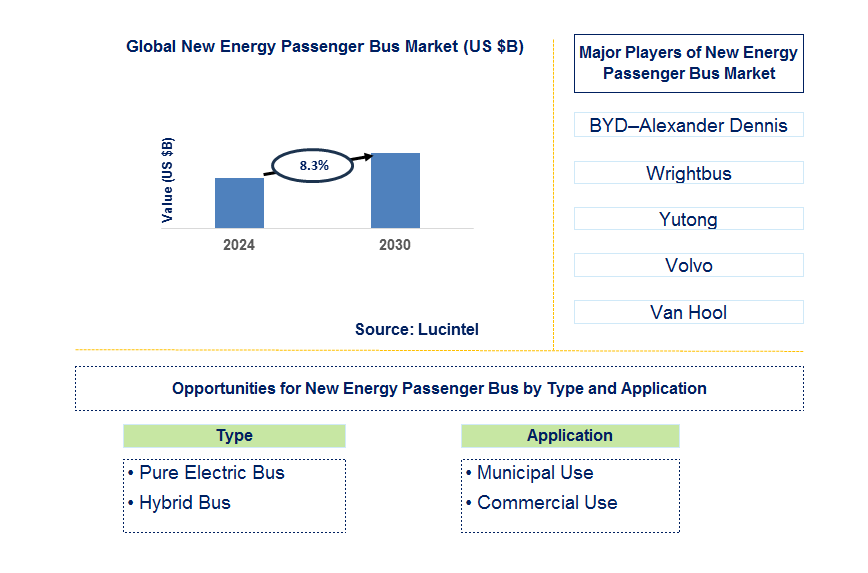
Key data points: The growth forecast = 8.3% annually next 6 years. Scroll below to get more insights. This market report covers trends, opportunities, and forecast in the global new energy passenger bus market to 2030 by type (pure electric bus and hybrid bus), application (municipal use and commercial use), and region (North America, Europe, Asia Pacific, and the Rest of the World)
We'll send your sample report shortly.
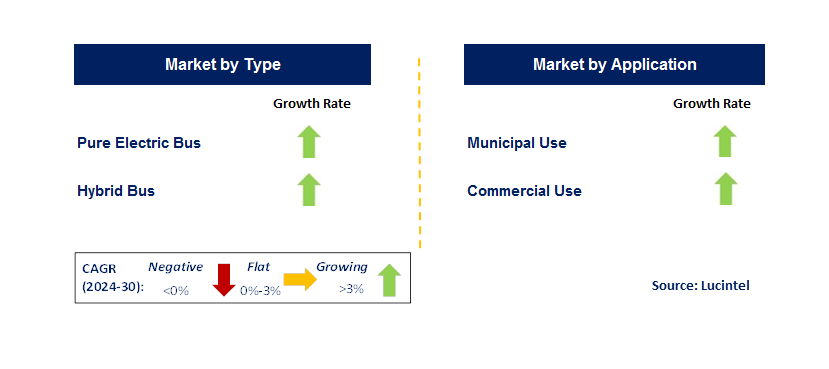
• Lucintel forecasts that pure electric bus is expected to witness the higher growth over the forecast period.
• Within this market, municipal use is expected to witness the higher growth.
• APAC is expected to witness highest growth over the forecast period. A more than 150-page report is developed to help in your business decisions.
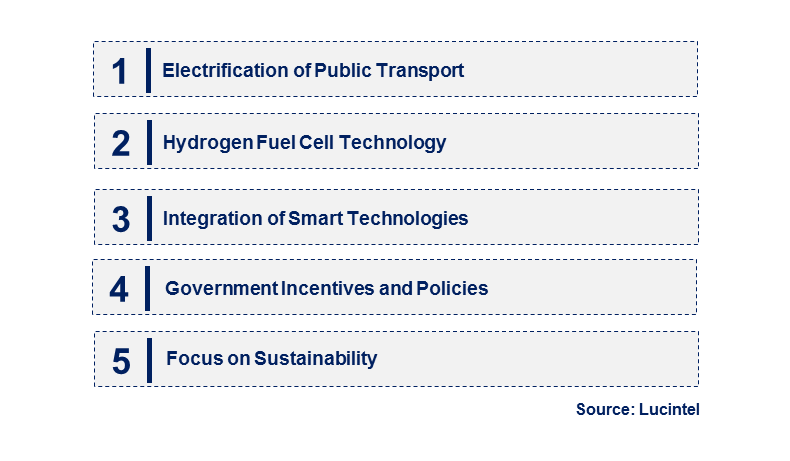
• Electrification of Public Transport: Cities globally are increasingly transitioning to electric buses to reduce emissions and improve air quality.
• Hydrogen Fuel Cell Technology: Growing interest in hydrogen as an alternative fuel source is leading to the development of hydrogen fuel cell buses.
• Integration of Smart Technologies: The incorporation of IoT and smart technologies is enhancing operational efficiency and passenger experience.
• Government Incentives and Policies: Supportive government initiatives are driving investments in new energy buses and charging infrastructure.
• Focus on Sustainability: The push for sustainable urban transport solutions is influencing vehicle design and manufacturing practices.
• Collaborative Efforts: Partnerships between manufacturers, governments, and tech firms are fostering innovation and accelerating market growth. These emerging trends indicate a significant shift towards cleaner, more efficient public transport solutions, positioning the new energy passenger bus market for robust growth.
• Increased Manufacturing Capacity: Manufacturers are ramping up production capabilities to meet the growing demand for electric and hydrogen buses.
• Technological Advancements: Innovations in battery technology and fuel cells are enhancing the performance and efficiency of new energy buses.
• Public-Private Partnerships: Collaborative efforts between governments and private companies are driving the deployment of electric buses in public transit systems.
• Pilot Programs and Trials: Various cities are conducting pilot programs to assess the feasibility and effectiveness of new energy buses in urban environments.
• Expansion of Charging Infrastructure: Investments in charging infrastructure are being made to support the increased deployment of electric buses.
• Regulatory Changes: Governments are implementing stricter emissions regulations, prompting a faster transition to cleaner public transport options. Recent developments highlight a dynamic and rapidly evolving landscape in the new energy passenger bus market, driven by innovation and strategic initiatives.
• Urban Transport Solutions: The increasing focus on urban mobility creates opportunities for electric buses in city public transport systems.
• Tourism and Shuttle Services: Growing interest in sustainable tourism is prompting the use of electric buses for shuttle and tour services.
• School and College Transportation: Electric buses are becoming popular choices for school districts aiming to reduce emissions and improve student safety.
• Corporate Fleets: Companies are increasingly adopting electric buses for employee transport as part of sustainability initiatives.
• Global Expansion: Manufacturers can explore emerging markets with rising urbanization and government support for clean transportation.
• Technological Integration: Incorporating advanced technologies, such as autonomous driving and smart connectivity, can enhance the appeal of new energy buses. By capitalizing on these strategic growth opportunities, stakeholders in the new energy passenger bus market can enhance their competitive positioning and drive sustainable growth.
• BYD–Alexander Dennis
• Wrightbus
• Yutong
• Volvo
• Van Hool
• Solaris
• Hyundai
• Caetano
• Safra
• King Long
• Pure Electric Bus
• Hybrid Bus
• Municipal Use
• Commercial Use
• North America
• Europe
• Asia Pacific
• The Rest of the World
• USA: Federal Investments and Urban Initiatives: In the U.S., the new energy passenger bus market is rapidly expanding, driven by federal investments and urban initiatives focused on sustainability. The Biden administration has allocated significant funding through programs like the Low or No Emission Grant Program to promote electric and hybrid buses in public transit. Major cities are updating their fleets to meet emissions reduction targets, with companies like Proterra and New Flyer leading the charge in electric bus manufacturing. Additionally, advancements in battery technology are enhancing the range and efficiency of these vehicles, making them more attractive to transit authorities.
• Germany: Innovation and Sustainability Focus: Germany is at the forefront of the new energy passenger bus market, with strong government support for sustainable transport solutions. The German government has launched initiatives to phase out diesel buses, encouraging the adoption of electric and hydrogen fuel cell buses. Companies like Daimler and MAN are investing heavily in R&D to produce high-performance electric buses. Moreover, cities like Hamburg and Berlin are expanding their electric bus networks, integrating renewable energy sources into charging infrastructure. This emphasis on innovation and sustainability is expected to accelerate the transition to cleaner public transport options across the country.
• China: Market Leadership and Rapid Adoption: China continues to dominate the new energy passenger bus market, with a robust focus on electric and hydrogen technologies. The Chinese government has implemented aggressive policies and subsidies to support the transition to electric buses, leading to a rapid increase in adoption across urban areas. Leading manufacturers like BYD and Yutong are expanding their production capacities and developing advanced technologies, including autonomous electric buses. Additionally, China is investing in charging infrastructure to support the growing fleet of electric buses, solidifying its position as a global leader in this sector.
• India: Growth Driven by Urbanization and Policy Support: In India, the new energy passenger bus market is gaining momentum, primarily due to urbanization and supportive government policies. The Faster Adoption and Manufacturing of Hybrid and Electric Vehicles (FAME) scheme is encouraging the adoption of electric buses, with cities like Delhi rolling out extensive electric bus fleets. Local manufacturers are collaborating with international companies to enhance technology and production capabilities. Moreover, the emphasis on reducing air pollution in major cities is driving demand for cleaner public transport solutions, paving the way for a significant shift toward new energy buses.
• Japan: Technological Innovation and Hybrid Solutions: Japan is focusing on technological innovation in the new energy passenger bus market, particularly with hybrid and fuel cell technologies. Major automakers like Toyota and Honda are developing advanced hybrid buses that combine electric and traditional propulsion systems to reduce emissions. The Japanese government is actively promoting the use of hydrogen fuel cell technology, aiming to create a hydrogen-based transport network. Cities like Tokyo are piloting various projects to integrate these advanced buses into public transport systems, highlighting Japan's commitment to sustainability and reducing carbon footprints in urban mobility.


• BYD–Alexander Dennis
• Wrightbus
• Yutong
• Volvo
• Van Hool
• Solaris
• Hyundai
• Caetano
• Safra
• King Long Q5. Which new energy passenger bus market segment will be the largest in future? Answer: Lucintel forecasts that pure electric bus is expected to witness the higher growth over the forecast period. Q6. In new energy passenger bus market, which region is expected to be the largest in next 5 years? Answer: APAC is expected to witness highest growth over the forecast period. Q.7 Do we receive customization in this report? Answer: Yes, Lucintel provides 10% customization without any additional cost.


Choose a license that fits your team. Instant PDF delivery.
Prices exclude taxes. Instant delivery. Custom licensing available on request.
Market Report · July 31, 2026
Market Report · July 17, 2026
Market Report · May 18, 2026
Trusted partner for strategic intelligence and business growth


Receive a complimentary market analysis tailored to your industry. Our analysts will identify key growth opportunities and competitive dynamics specific to your business.

Market size, growth rate, and key trend analysis for your specific sector.

Top competitor positioning and market share analysis.

Strategic recommendations backed by data-driven insights.
Get curated market intelligence and competitive moves straight to your inbox.
By subscribing, you agree to receive our monthly insights. Unsubscribe anytime.
Receive a complimentary market analysis tailored to your industry. Our analysts will identify key growth opportunities and competitive dynamics specific to your business.
Market size, growth rate, and key trend analysis for your specific sector.
Top competitor positioning and market share analysis.
Strategic recommendations backed by data-driven insights.
Get curated market intelligence, emerging trends, and competitive moves straight to your inbox each month.
By subscribing, you agree to receive our monthly insights. Unsubscribe anytime.
We'll send your sample report shortly.