
Market Report · July 31, 2026

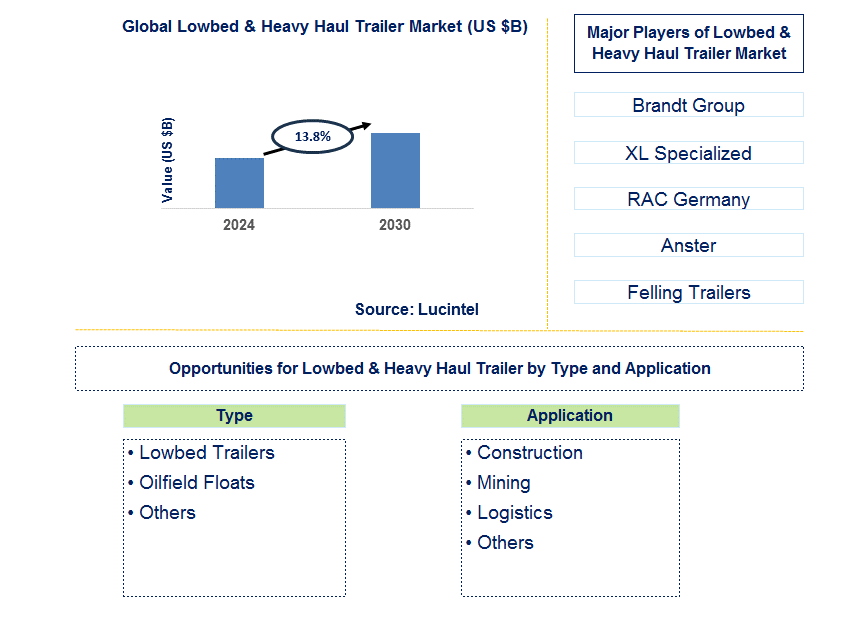
Key data points: The growth forecast = 13.8% annually for the next 6 years. Scroll below to get more insights. This market report covers trends, opportunities, and forecast in the global lowbed & heavy haul trailer market to 2030 by type (lowbed trailers, oilfield floats, and others), application (construction, mining, logistics, and others), and region (North America, Europe, Asia Pacific, and the Rest of the World)
We'll send your sample report shortly.
• United States: In the U.S., the market is gradually evolving due to technological advancements, such as improved load sensing and automated trailer systems. New legislation focuses on enhancing safety and environmental standards, presenting manufacturers with design challenges, including the use of lighter materials and improved fuel economy. Additionally, the expansion of infrastructure projects and a greater need for specialized transport solutions are driving market growth.
• China: The market in China is booming due to significant infrastructure initiatives, such as the Belt and Road Initiative. The country is adopting advanced manufacturing processes and materials for lowbed and heavy haul trailers to enhance capability and efficiency. Currently, the market is experiencing a rapid shift toward electrification and hybridization to comply with regulations and reduce carbon emissions.
• Germany: In Germany, high-precision engineering is a dominant focus, particularly in light of strict EU standards. The market is shifting toward trailers with enhanced features and automated systems. Improvements in materials and design are also prominent, contributing to better performance and durability that meet the operational needs of the European logistics industry.
• India: India's lowbed and heavy haul trailer market is revitalizing with increased industrialization and improving infrastructure. Manufacturers are focusing on low-cost, high-strength solutions, applying technologies that allow for the design of affordable yet robust trailers. They are also responding to regulatory changes that are driving the transition toward cleaner and greener models.
• Japan: Japan remains a leader in incorporating modern technologies, such as the Internet of Things (IoT) and automation, into trailer designs. The emphasis is on maintaining high performance levels while ensuring safety and compliance with stringent local and international standards. The market is also exploring opportunities for lightweighting to enhance fuel efficiency and operational performance.
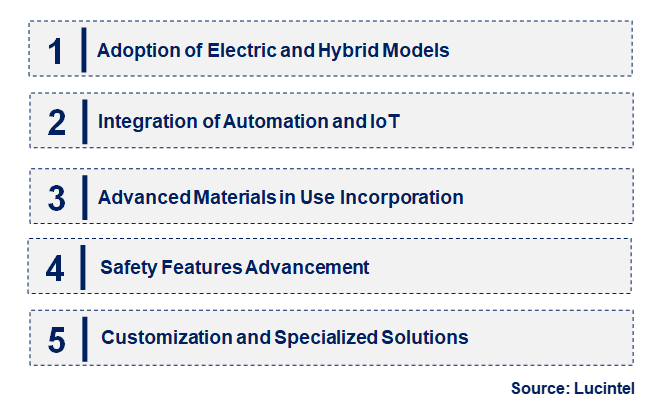
• Adoption of Electric and Hybrid Models: The trend in the market is gradually shifting from diesel-powered trailers to electric and hybrid trucks due to frustration with severe environmental policies. These models produce fewer pollutants, and operation costs are decreasing, attracting the green transportation market that seeks to cut costs. Companies are investing resources in battery technology and hybrid systems.
• Integration of Automation and IoT: Automation and IoT technologies have changed how trailers are operated, making them safer and more efficient. Automated braking systems, load sensing, and real-time tracking are features that are quickly becoming standard. These innovations assist in increasing operational effectiveness while decreasing the probability of accidents, thus meeting the needs of the tech-oriented market.
• Advanced Materials Usage: More attention is being paid to the application of lightweight and durable materials, such as high-strength steel and composite materials. Such materials help reduce fuel consumption, increase the load capacity of the trailer, and enhance the trailers themselves. Increasing market demand for efficiency and durability is forcing manufacturers to change their approach and focus on material innovation.
• Safety Features Advancement: With advanced features stemming from enacted regulations, safety has become a greater consideration. There are collision avoidance systems, improved lighting, and better methods for securing loads. When these safety features are implemented, they enhance the effectiveness of reducing accidents and compliance with the new safety standards that have been set.
• Customization and Specialized Solutions: Recently, there has been a demand for specialized and customized trailers tailored to the needs of specific industries. Different manufacturers are providing specialized solutions based on the nature of the goods to be transported and how they need to be handled. This reflects a growing need for more flexible and agile modes of transport within an expanding marketplace.
• The Rise of Technologies: There is a growing trend among manufacturers to embed advanced systems into trailers, particularly IoT, GPS tracking, and automated systems. These advancements enhance operational efficiency, safety, and fleet management by providing timely information. In summary, the growing use of technology will prove beneficial even in a challenging economy.
• Shift Towards Sustainability: Another trend is the increasing emphasis on making trailers more eco-friendly, including electric and hybrid combustion engines. This change results from tighter emissions standards and a global trend aimed at lowering carbon emissions. Companies are adopting environmentally sound technologies to meet changing environmental requirements.
• Stricter Safety Regulations: The level of safety enforcement regarding trailer overturn prevention features is increasing. As a result, trailers equipped with additional safety features, such as collision avoidance systems and enhanced load security, are being designed. These regulations supersede previous measures aimed at reducing crashes and enhancing road safety.
• Advanced Materials Usage: The trend in using lightweight, high-strength materials is increasing the efficiency of trailers. The use of advanced materials results in increased payload, lower fuel consumption, and a longer working life for trailers. This trend emphasizes the industry's focus on performance optimization in line with regulations and market demands.
• Increase in Customization: The level of specialization and customization is rising due to the need to transport multiple types of cargo and cater to different industries. Manufacturers are providing custom solutions for various operations, signaling a growing trend toward diverse and flexible transport solutions.
• Infrastructure Development: As infrastructure projects such as roads, bridges, and construction sites continue to develop and expand, there will be a significant need for lowbed and heavy haul trailers. Many of these projects require heavy and oversized equipment to be transported, creating opportunities for manufacturers.
• Renewable Energy Projects: The increase in wind and solar farm projects has led to a demand for heavy haul trailers used to transport large and bulky components in the energy market. There is an opportunity for manufacturers to design and build trailers that are more effective for moving renewable energy parts and equipment.
• Mining and Resource Extraction: Mining and resource extraction require rugged, heavy-duty trailers to move equipment and other loads. With the growth of these industries, there is an opportunity to develop high-volume and regulated trailers that meet the specific needs of these applications.
• E-commerce and Logistics: The growth of e-commerce and logistics is increasing the need to transport heavier and bulkier goods efficiently. There is a large volume of goods to be moved, and lowbed and heavy haul trailers are critical for transporting these goods. Manufacturers in this market can also profit by constructing high-tech adjustable trailers for logistics use.
• Urban and Public Transport Projects: Urban growth and public transport projects require flatbed or similar transportation vehicles for moving construction equipment and infrastructure parts. In this regard, manufacturers have an opportunity to provide solutions that meet the needs of urban development and public infrastructure.
• Technological Advancements: Types of technology, such as IoT, automation, and new materials, are driving market growth as they facilitate better functionality, efficiency, and safety for trailers. These technologies improve operational efficiency and meet the increasing demand for better transportation methods.
• Increasing Infrastructure Projects: The rise in infrastructure projects on a global scale increases the demand for lowbed and heavy haul trailers. Such construction activities require the transportation of heavy and oversized machinery, creating a need for specialized transport solutions and boosting the market.
• Regulatory Pressures for Sustainability: Due to increasingly strict environmental regulations, manufacturers are compelled to develop more eco-friendly trailers, such as electric and hybrid models. This trend supports the growth and innovation of the market as companies adapt to new regulatory requirements.
• Growth in E-commerce and Logistics: The expansion of e-commerce and logistics industries increases the demand for effective transport solutions. Lowbed and heavy haul trailers are essential for transporting large volumes of goods, thereby driving market growth and demand for better-equipped trailer solutions.
• Focus on Safety Enhancements: Improved safety legislation and the demand for enhanced safety measures have spurred research and development on trailer modifications. Technologies such as collision prevention systems and load-securing devices are being incorporated to meet safety goals and promote road safety.
• High Development Costs: Designing high-tech trailers using advanced materials and technologies can be costly, posing challenges for manufacturers. Balancing costs while integrating state-of-the-art technologies is essential to meet market trends.
• Regulatory Compliance: The changing rules regarding safety measures and environmental issues can limit market opportunities for firms. Companies must consistently respond to these changes, which can complicate production operations.
• Economic Factors: Demand for heavy haul trailers may be affected by economic fluctuations and market instability. Market conditions and legal requirements may slow down production, as there may not be enough new infrastructure and industrial projects in the foreseeable future.
• Brandt Group
• XL Specialized
• RAC Germany
• Anster
• Felling Trailers
• Marmon Highway Technologies
• Carry-On Trailer
• Kaufman Trailers
• Interstate Trailers
• Load King Trailers
• Lowbed Trailers
• Oilfield Floats
• Others
• Construction
• Mining
• Logistics
• Others
• North America
• Europe
• Asia Pacific
• The Rest of the World
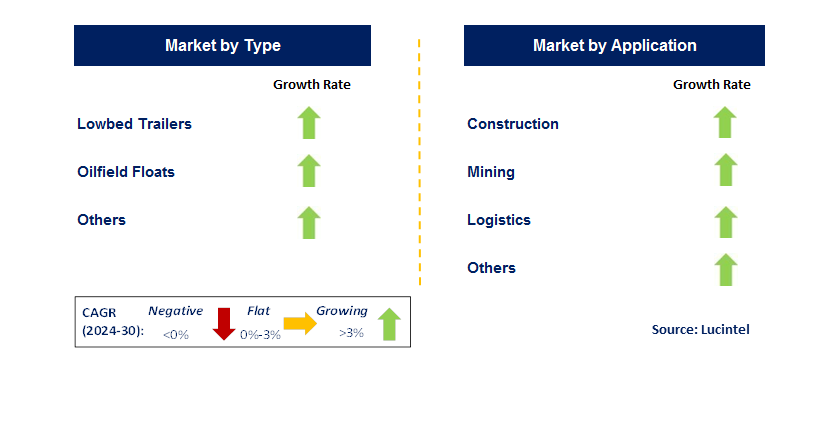
• Lucintel forecasts that, within the type category, low bed trailer is expected to witness a higher growth over the forecast period.
• Within the application category, construction is expected to witness a higher growth.
• In terms of regions, APAC is expected to witness the highest growth over the forecast period.


• Brandt Group
• XL Specialized
• RAC Germany
• Anster
• Felling Trailers
• Marmon Highway Technologies
• Carry-On Trailer
• Kaufman Trailers
• Interstate Trailers
• Load King Trailers
Q5. Which low bed & heavy haul trailer market segment will be the largest in the future?

Choose a license that fits your team. Instant PDF delivery.
Prices exclude taxes. Instant delivery. Custom licensing available on request.
Market Report · July 31, 2026
Market Report · July 17, 2026
Market Report · May 18, 2026
Trusted partner for strategic intelligence and business growth


Receive a complimentary market analysis tailored to your industry. Our analysts will identify key growth opportunities and competitive dynamics specific to your business.

Market size, growth rate, and key trend analysis for your specific sector.

Top competitor positioning and market share analysis.

Strategic recommendations backed by data-driven insights.
Get curated market intelligence and competitive moves straight to your inbox.
By subscribing, you agree to receive our monthly insights. Unsubscribe anytime.
Receive a complimentary market analysis tailored to your industry. Our analysts will identify key growth opportunities and competitive dynamics specific to your business.
Market size, growth rate, and key trend analysis for your specific sector.
Top competitor positioning and market share analysis.
Strategic recommendations backed by data-driven insights.
Get curated market intelligence, emerging trends, and competitive moves straight to your inbox each month.
By subscribing, you agree to receive our monthly insights. Unsubscribe anytime.
We'll send your sample report shortly.