
Market Report · July 31, 2026

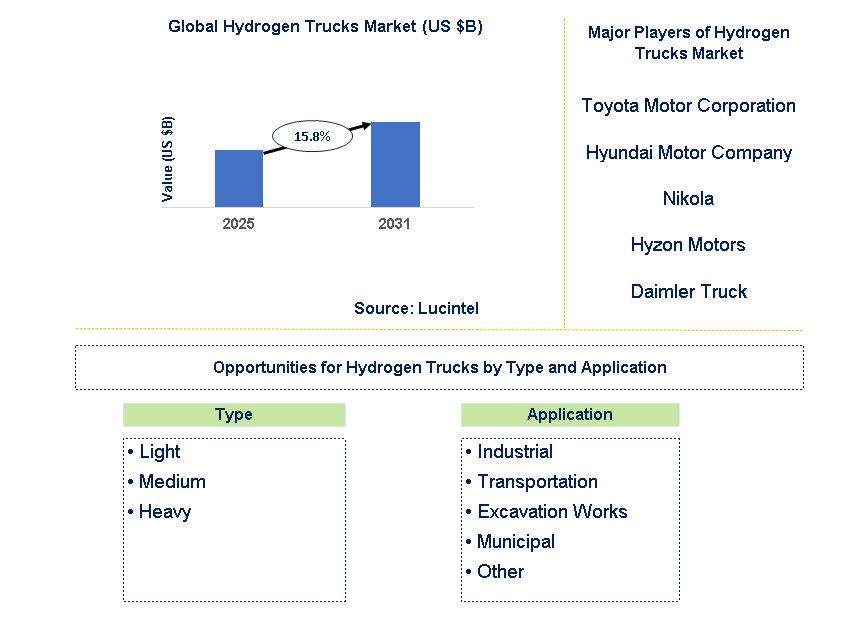
Key data points: The growth forecast = 15.8% annually for the next 7 years. Scroll below to get more insights. This market report covers Trends, opportunities and forecasts in hydrogen trucks market to 2031 by type (light, medium, and heavy), application (industrial, transportation, excavation works, municipal, and other), and region (North America, Europe, Asia Pacific, and the Rest of the World)
We'll send your sample report shortly.
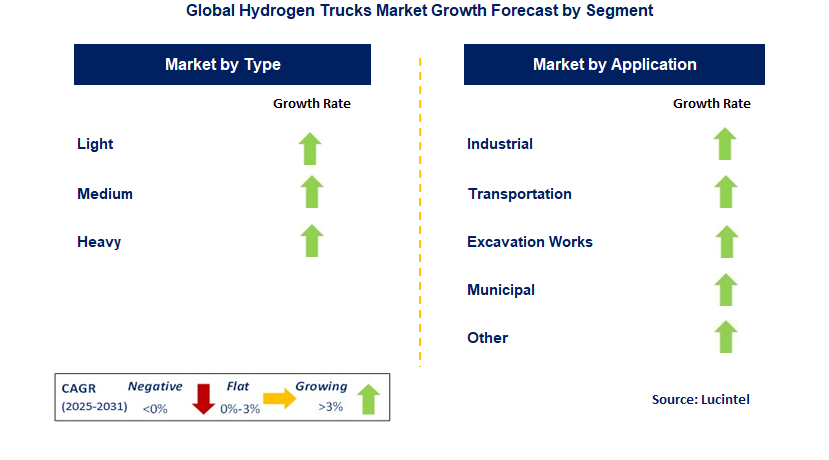
• Lucintel forecasts that, within the type category, heavy is expected to witness the highest growth over the forecast period.
• Within the application category, transportation is expected to witness the highest growth.
• In terms of region, APAC is expected to witness the highest growth over the forecast period.
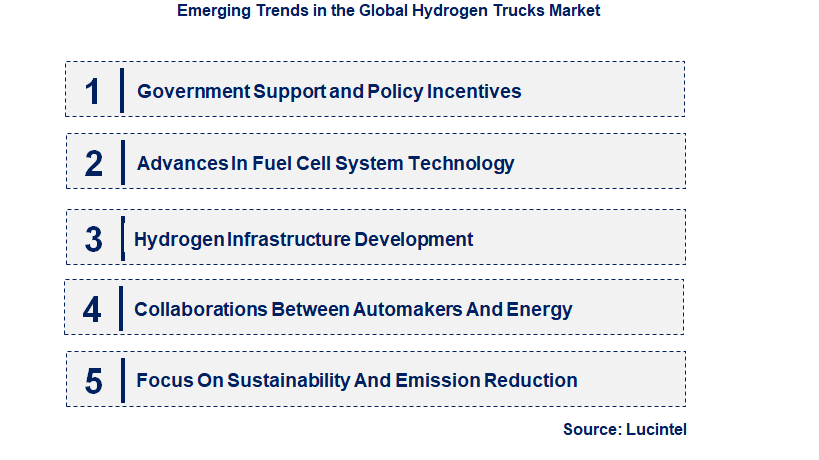
• Government Support and Policy Incentives: Governments around the world are playing a crucial role in giving the hydrogen truck market the much-needed boost in terms of developments. The governments have encouraged the sector by offering subsidies, tax incentives, and funding to build hydrogen infrastructure. The three already installed these policies in Germany, Japan, and China to support the adoption of hydrogen for clean energy alternatives in the transportation sector. Such supporting policies are of immense importance for investments in hydrogen trucks and for building the necessary infrastructure, including refueling stations and distribution networks.
• Advances in Fuel Cell System Technology: Advancements in fuel cell technology represent one of the major trends within the hydrogen truck market. Fuel cells convert hydrogen into electricity that powers the vehicles, with these systems being constantly improved regarding efficiency, durability, and cost. Such advancements help hydrogen trucks find more applicability in long-distance transportation, a domain in which BEVs currently struggle. Businesses are investing their R&D towards the betterment of fuel cells, longer mileage, and reduction in refueling time for vehicles. This will bring competition to the age-old diesel and electric trucks while hydrogen trucks arrive at par.
• Hydrogen Infrastructure Development: One of the biggest obstacles to the wider adoption of hydrogen trucks has been the lack of refueling infrastructure. However, a trend in this direction is the development of hydrogen refueling stations, led by public and private sector investments. Countries like Japan, Germany, and China are rapidly developing hydrogen refueling networks to support the deployment of hydrogen vehicles, including trucks. This infrastructure growth is crucial for ensuring that hydrogen trucks can operate across long distances and serve various industries. As the infrastructure expands, the adoption of hydrogen trucks is expected to accelerate.
• Collaborations between Automakers And Energy Providers: Collaboration between automakers and energy providers is becoming a significant trend in the hydrogen truck market. Companies in the automobile and energy industries are partnering for the development of hydrogen production, storage, and distribution systems. These partnerships would be important in ensuring a supply of hydrogen fuel and developing the infrastructure for trucks running on hydrogen. Other such partnerships are Toyota, Daimler, with other large car manufacturers and companies in the energy sector, promoting integrated hydrogen solutions, including fleets and refueling stations powered by hydrogen.
• Focus on Sustainability And Emission Reduction: The hydrogen truck market focuses on sustainability, reducing carbon emissions from heavy-duty transport. Hydrogen trucks emit only water vapor as a byproduct; thus, they offer a zero-emissions alternative to diesel-powered trucks. This is due to the increase in environmental regulations and a push toward meeting global climate targets. Hydrogen trucks, as one of the largest sectors in greenhouse gas emissions, have been considered an important solution to achieve net-zero emissions in logistics and freight transportation. The emerging trends of government support, fuel cell advancement, infrastructure expansion, cooperation between car and energy firms, and sustainability are all remodeling the hydrogen truck market. All these trends therefore accelerate the pace of development in hydrogen-powered trucks and their use in the transportation ecosystem. Thus, in due course, hydrogen trucks would prove to be a more mainstream solution for the decarbonization of the transportation industry.
• Hydrogen-Powered Trucks by Leading Automobile Manufacturers: There are several top automobile manufacturers including Toyota, Daimler, and Hyundai which have already come up with hydrogen-powered trucks that will contribute toward sustainable transportation. These trucks have fuel cell technology that converts hydrogen into electricity thereby reducing carbon emission associated with a traditional diesel truck. The successful launch of these vehicles increases confidence in hydrogen trucks and paves the way for broader adoption across the logistics sector. Trucks with hydrogen provide a longer range and faster refueling times compared to electric trucks, making them suitable for long-haul transportation.
• Expansion of Hydrogen Refueling Infrastructure: The expansion of hydrogen refueling infrastructure is critical to supporting the growth of hydrogen trucks. Countries like Germany, Japan, and China are now taking the lead in building refueling stations for hydrogen vehicles. Infrastructure growth will help overcome one of the main obstacles to adopting hydrogen trucks – lack of refueling options. As more stations are built, refueling convenience for hydrogen trucks will increase, making them a more practical choice for businesses transitioning to cleaner transport solutions.
• Hydrogen truck development by Governments: The development of hydrogen trucks is highly being supported by the government. Various regions offer grants, tax reductions, and fund to promote hydrogen fuel cell adoption in the respective region. As a matter of fact, in Germany, their national hydrogen strategy offers funding in developing hydrogen technology R&D, along with development for hydrogen refueling stations. These incentives are making the hydrogen trucks cost-competitive and rapidly scaling up their commercialization. With even more aggressive climate policies that governments around the world will implement, hydrogen trucks will also face even greater incentives.
• Partnerships for Hydrogen Truck Ecosystems: Joint efforts between car makers, energy providers, and logistics companies serve as a foundation for the building of hydrogen truck ecosystems. These joint ventures target the development of the full hydrogen supply chain-from fuel production to refueling stations. For example, there is a partnership between leading automotive companies and energy companies in the development of green hydrogen production and supply infrastructure. As part of these collaborations, integration and optimization of the hydrogen infrastructure are promoted among partners, bringing in more widespread development and deployment of hydrogen trucks.
• Increasing Interest from Freight Operators: Freight operators are increasingly realizing the potential of hydrogen trucks in addressing the growing demand for green logistics solutions. Companies in the logistics and transportation sectors are experimenting with hydrogen-powered fleets, testing them in real-world conditions, and analyzing their performance. With growing pressure to reduce emissions and improve fuel efficiency, hydrogen trucks are gaining traction as a viable alternative to diesel trucks. This trend is expected to accelerate as more companies deploy hydrogen-powered vehicles for their fleets. Recent advances in the hydrogen truck market have included the roll-out of hydrogen trucks, expansions in refueling infrastructure, and government funding for this emerging market. With increased innovation and collaborative efforts between manufacturers, energy suppliers, and logistics companies, hydrogen trucks are positioned to become integral to the future of global transportation.
• Long Haul Freight Transportation: Hydrogen trucks are ideal for long haul freight transportation since, unlike battery electric vehicles (BEVs), hydrogen-powered trucks provide a greater range and a refueling time, which can save more hours, especially when traversing a distance. Thus, they become very ideal for large-scale logistics companies in freight long-distance haul operations. These hydrogen trucks, however, become much more economical compared to their conventional diesel-powered peers in the long-haul business as more infrastructure for hydrogen begins to take place.
• Urban Freight and Distribution Networks: Hydrogen trucks will transform urban freight and distribution networks. They could reduce issues related to air pollution and noise in the city, and they offer zero-emission options for last-mile delivery. With cities becoming increasingly congested and environmental, hydrogen trucks provide a clean alternative to traditional delivery trucks. As cities implement stricter environmental regulations, hydrogen-powered vehicles will play a key role in urban logistics, offering businesses a way to comply with emission standards while maintaining efficient operations.
• Hydrogen Infrastructure Development: The expansion of hydrogen refueling infrastructure is a significant growth opportunity for the hydrogen truck market. The more refueling stations built, the more practical hydrogen trucks will become for a variety of applications from long-haul to urban freight. Investment in refueling infrastructure will spur widespread adoption of hydrogen trucks, especially in regions with heavy freight traffic. Automakers, energy companies, and governments must collaborate to establish the necessary infrastructure to support a growing hydrogen vehicle fleet.
• Green Hydrogen Production and Supply Chains: One of the key growth opportunities in the hydrogen truck market is in the development of green hydrogen production and supply chains. Green hydrogen, produced through renewable energy sources such as wind and solar power, offers the ultimate sustainable option for hydrogen trucks. Companies related to hydrogen production, including energy providers and fuel cell manufacturers, will be supported by the growth in demand for green hydrogen. This trend coincides with international efforts to curb carbon emissions and transition to clean energy sources. It will lead to a high demand for hydrogen trucks and allied technologies.
• Fleet Electrification and Integration of Hydrogen: Fleet electrification is on the rise, and the trucking industry has a key part to play. Many logistics companies are integrating hydrogen trucks into their fleets in pursuit of more comprehensive sustainability goals. Combining hydrogen-powered trucks with electric vehicles can create a diverse fleet that is both efficient and sustainable. This trend is particularly important for businesses that need to balance the need for long-range travel with the environmental benefits of hydrogen-powered vehicles. Long-haul transportation, urban freight, infrastructure development, green hydrogen production, and fleet electrification are all opportunities that have led to strategic growth in the hydrogen truck market, and this trend will continue to shape the future of the industry.
• Toyota Motor Corporation
• Hyundai Motor Company
• Nikola
• Hyzon Motors
• Daimler Truck
• Saic Motor
• Weichai Power
• Light
• Medium
• Heavy
• Industrial
• Transportation
• Excavation Works
• Municipal
• Other
• North America
• Europe
• Asia Pacific
• The Rest of the World
• United States: In the United States, the hydrogen truck market is emerging as part of the broader decarbonization of the transportation sector. Several companies, including major players like Nikola and Toyota, are testing hydrogen-powered trucks. The U.S. government is supporting these efforts through incentives and funding for research into hydrogen infrastructure. The state of California has been at the forefront, with initiatives aimed at building hydrogen refueling stations and promoting zero-emission freight transport. Hydrogen trucks are seen as a viable solution for long-haul trucking, where battery electric vehicles face challenges due to limited range and longer refueling times.
• China: China has been investing more in hydrogen truck technology, seeking to reduce the environmental impact of its massive logistics and transportation sector. The government has been proactively implementing policies to support hydrogen as a source of fuel through subsidies for the manufacturers of hydrogen trucks and investment in hydrogen infrastructure. Leading players such as SAIC Motor and BYD are working on hydrogen-powered trucks. China will be playing its role in the global hydrogen truck revolution as the world's largest commercial vehicle market. Hydrogen refueling stations and research into fuel cell technology are fast improving.
• Germany: Germany is said to be one of the front-runners when it comes to hydrogen truck development. Several initiatives to reduce carbon emissions from its industrial and transportation sectors have been implemented by the country. The country has been working with companies like Daimler and MAN in developing hydrogen-powered heavy-duty trucks. The government of Germany is also supporting the development of hydrogen infrastructure, such as refueling stations and green hydrogen production facilities. The commitment of the country to renewable sources of energy aligns with the growth of the hydrogen economy. Hydrogen trucks will play a great role in achieving the climate goals of Germany.
• India: Indian hydrogen truck market is still developing, but it is showing greater interest in the country towards hydrogen as a green alternative to fossil fuels. India has announced that it will invest in hydrogen fuel cell technology and use it to fuel clean energy adoption. Companies like Tata Motors are exploring hydrogen-powered commercial vehicles, including trucks. The country’s growing need for eco-friendly transportation solutions, along with its extensive logistics network, presents a strong market opportunity for hydrogen trucks. India is also working on establishing hydrogen refueling infrastructure to support these vehicles in the future.
• Japan: Japan is at the forefront of hydrogen truck development, with strong government support for hydrogen technology across various industries. The Japanese government has set the goal of extensive hydrogen adoption into its transportation, setting ambitious goals. It further supported the hydrogen refueling station and infrastructure with several companies on the development phase for hydrogen truck usage. Even today, many Japanese transportation players already see such hydrogen trucks used. The strategic focus of Japan on hydrogen as a source of clean energy, along with technological innovations, has positioned it as a global leader in the hydrogen truck market.


• Toyota Motor Corporation
• Hyundai Motor Company
• Nikola
• Hyzon Motors
• Daimler Truck
• Saic Motor
• Weichai Power Q5. Which hydrogen trucks market segment will be the largest in future? Answer: Lucintel forecasts that, within the type category, heavy is expected to witness the highest growth over the forecast period. Q6. In hydrogen trucks market, which region is expected to be the largest in next 5 years? Answer: In terms of region, APAC is expected to witness the highest growth over the forecast period. Q7. Do we receive customization in this report? Answer: Yes, Lucintel provides 10% customization without any additional cost.


Choose a license that fits your team. Instant PDF delivery.
Prices exclude taxes. Instant delivery. Custom licensing available on request.
Market Report · July 31, 2026
Market Report · July 17, 2026
Market Report · May 18, 2026
Trusted partner for strategic intelligence and business growth


Receive a complimentary market analysis tailored to your industry. Our analysts will identify key growth opportunities and competitive dynamics specific to your business.

Market size, growth rate, and key trend analysis for your specific sector.

Top competitor positioning and market share analysis.

Strategic recommendations backed by data-driven insights.
Get curated market intelligence and competitive moves straight to your inbox.
By subscribing, you agree to receive our monthly insights. Unsubscribe anytime.
Receive a complimentary market analysis tailored to your industry. Our analysts will identify key growth opportunities and competitive dynamics specific to your business.
Market size, growth rate, and key trend analysis for your specific sector.
Top competitor positioning and market share analysis.
Strategic recommendations backed by data-driven insights.
Get curated market intelligence, emerging trends, and competitive moves straight to your inbox each month.
By subscribing, you agree to receive our monthly insights. Unsubscribe anytime.
We'll send your sample report shortly.