
Market Report · July 15, 2026

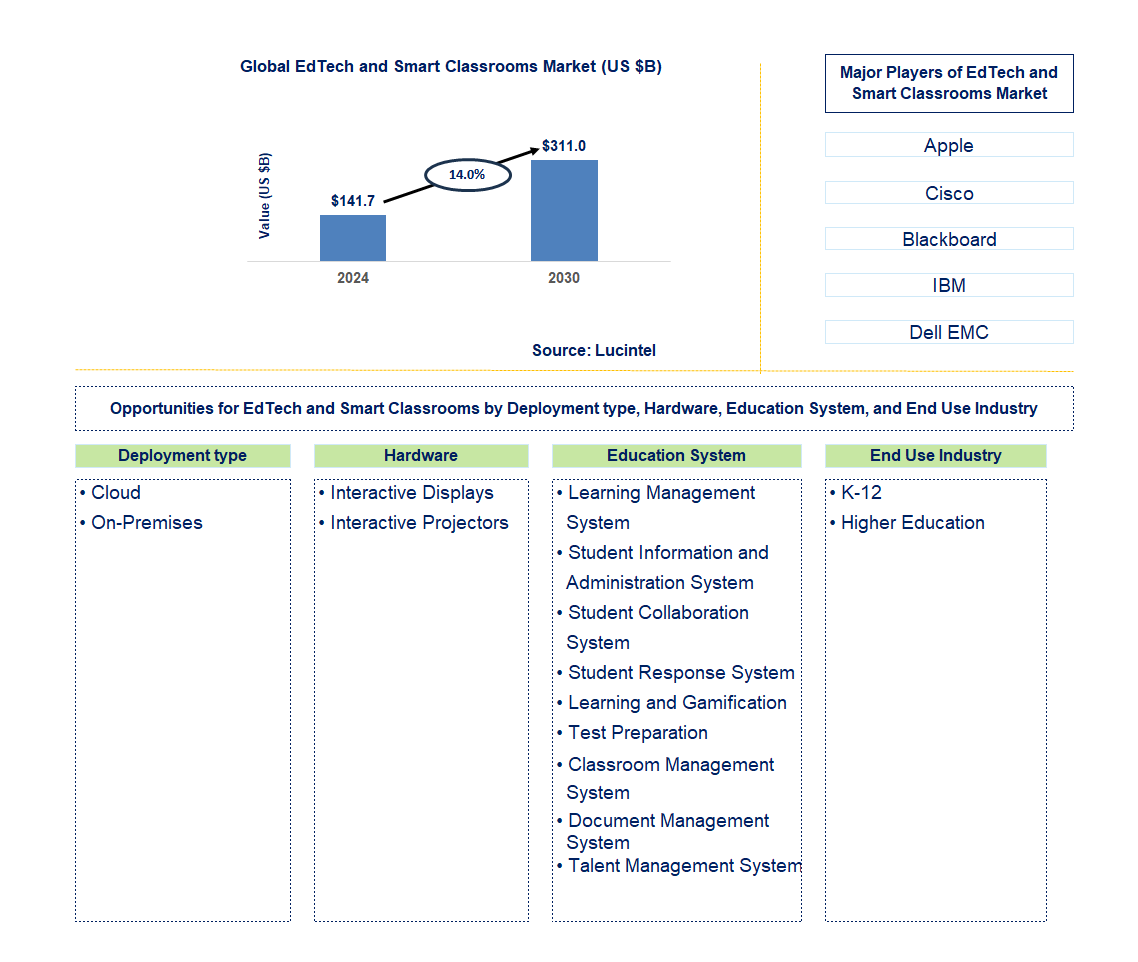
Key data points: The market size in 2030 = $311.0 billion, growth forecast = 14.0% annually for the next 6 years. Scroll below to get more insights. This market report covers trends, opportunities, and forecasts in the global edtech and smart classrooms market to 2030 by deployment type (cloud and on-premises), hardware (interactive displays and interactive projectors), education system (learning management system, student information and administration system, student collaboration system, student response system, learning and gamification, test preparation, classroom management system, document management system, and talent management system, ), end use industry (K-12 and higher education), and region (North America, Europe, Asia Pacific, and the Rest of the World)
We'll send your sample report shortly.
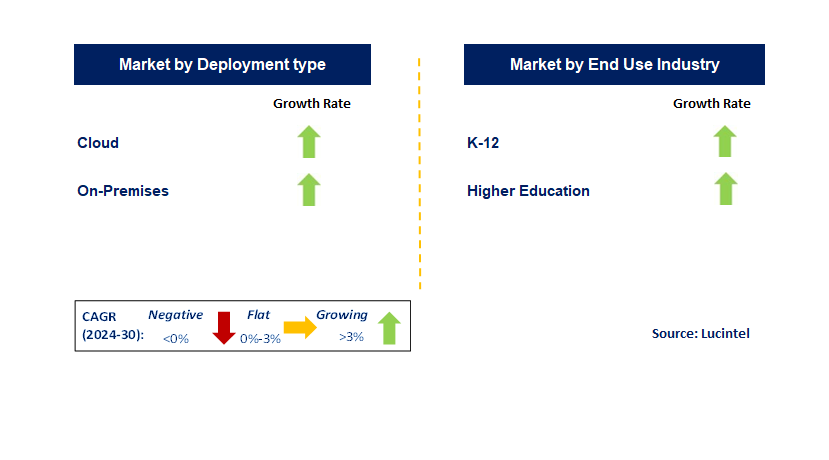
• Lucintel forecasts, within the deployment type, cloud is expected to witness highest growth over the forecast period.
• Within the end-use industry market, K-12 will remain the largest segment.
• In terms of regions, APAC is expected to witness highest growth over the forecast period. A more than 150-page report is developed to help in your business decisions.
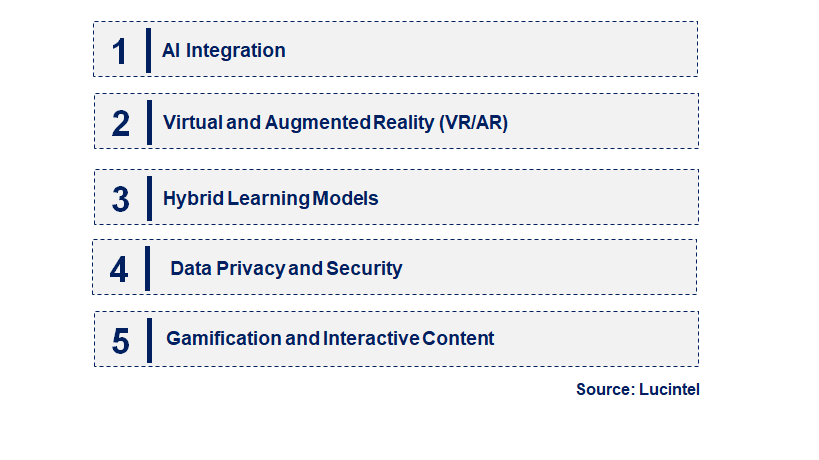
• AI Integration: The integration of AI forms the core of EdTech, with more platforms using this technology to personalize learning experiences. AI-driven tools analyze student performance data to customize educational content or provide feedback in real time. Such customization ensures that individual learning needs are addressed while easing the load on educators by automating administrative duties. Thus, it is clear that AI plays a significant role in adaptive learning environments, improving engagement and educational outcomes.
• Virtual and Augmented Reality (VR/AR): VR and AR are revolutionizing classroom learning by providing immersive educational experiences. These tools enable students to study in virtual environments, perform virtual experiments, and observe complex concepts in 3D. Augmented reality applications allow for interactive learning based on projecting digital information onto real-world settings. The use of VR and AR can ensure a deeper understanding and engagement with subjects such as science, history, and geography.
• Hybrid Learning Models: Hybrid learning combines in-person and online education and is rapidly becoming the trend. This model allows flexibility, enabling students to balance remote and classroom learning. The rise of sophisticated online platforms and learning tools further promotes this approach, offering resources such as video lectures, interactive assignments, and virtual classrooms. Hybrid learning increases inclusion in education by addressing the diverse needs and preferences of students.
• Data Privacy and Security: Advances in educational technologies have raised data privacy and security as key concerns. Security integrations by schools and EdTech providers aim to prevent breaches and unauthorized access to student data. Regulations like GDPR and FERPA are important to comply with to safeguard personal information. Advancements in encryption and secure data storage solutions are crucial for gaining trust and establishing safe digital learning environments.
• Gamification and Interactive Content: Gamification is increasingly applied in education to enhance learners' motivation and participation. By turning learning activities into game-like experiences, educators can raise the frequency of learner interactions with educational content and maintain their interest in learning for a longer period compared to traditional methods. This gamification aspect enhances active student participation and retention of information through increased enjoyment in learning. These trends provide evidence of personalization, interactivity, and security in educational settings. Advanced technologies such as AI, VR, and AR, together with the hybrid learning model, are changing the concept of traditional education. Emphasis on data privacy and gamification further enriches the learning environment, creating a more engaging and accessible method of education. Collectively, these trends shape the EdTech and Smart Classrooms market, drive innovation, and improve learning outcomes.
• AI-Powered Personalization: AI technologies are transforming education by enabling personalized learning experiences. Platforms utilizing AI analyze student performance and learning behaviors to tailor educational content and provide targeted feedback. This customization helps address individual learning needs, improving student engagement and achievement. AI also assists teachers in identifying struggling students and adjusting their instructional strategies accordingly, making learning more effective and responsive.
• Integration of AR and VR Technologies: Augmented reality (AR) and virtual reality (VR) are becoming integral to modern classrooms, offering immersive learning experiences. AR enhances physical classrooms by overlaying digital information onto real-world objects, while VR creates fully virtual environments for interactive learning. These technologies make complex subjects more accessible and engaging, fostering deeper understanding and retention. They are particularly beneficial in fields such as science, history, and engineering.
• Growth of Hybrid Learning Models: Hybrid learning models, which blend in-person and online education, are gaining traction. This approach offers flexibility by allowing students to participate in both remote and classroom-based learning. The development of sophisticated online platforms supports this model, providing tools for virtual collaboration, content delivery, and assessment. Hybrid learning accommodates diverse learning styles and needs, expanding educational access and adaptability.
• Advancements in Digital Infrastructure: Significant investments in digital infrastructure are modernizing educational facilities. Schools are upgrading their technology to include high-speed internet, interactive whiteboards, and digital textbooks. This infrastructure supports the integration of new educational tools and enhances the overall learning environment. Improved digital infrastructure ensures that students and teachers have the resources needed to effectively utilize EdTech solutions.
• Focus on Data Privacy and Security: As EdTech adoption increases, so does the emphasis on data privacy and security. Schools and technology providers are implementing measures to protect student information from breaches and misuse. Compliance with regulations like GDPR and FERPA is crucial for maintaining trust and safeguarding sensitive data. Enhanced security measures are essential for ensuring the safe use of educational technologies and protecting user privacy. Recent developments in the EdTech and Smart Classrooms market reflect a shift toward more personalized, interactive, and secure educational environments. The integration of AI, AR, and VR technologies, alongside the growth of hybrid learning models and advancements in digital infrastructure, is enhancing the quality and accessibility of education. Simultaneously, a heightened focus on data privacy and security addresses critical concerns related to student information. These developments are collectively transforming how education is delivered and experienced, driving innovation and improving learning outcomes across diverse educational settings.
• AI-Driven Personalized Learning: AI-driven platforms enable highly tailored learning experiences. These systems leverage data about students to personalize content and instructional techniques to meet their unique needs. AI enhances engagement in learning and its outcomes, improving overall learning results while supporting teachers in managing diverse classrooms. This growth area promises to respond to differences in learning styles and paces.
• Hybrid Learning Solutions: In recent years, hybrid models of learning have begun to dominate, blending online and on-premise education. This opens opportunities to build platforms and tools that allow seamless integration of remote and physical learning environments. It makes learning flexible, accommodates different learning styles, and increases educational accessibility while adapting to the needs of various groups or entities.
• Creation of Immersive Learning Technologies: The adoption of VR and AR presents a significant growth avenue for developing immersive learning experiences. These technologies will help make abstract subjects more tangible and interactive. This creates opportunities for investors who could gain returns by developing VR and AR content and infrastructure that spur innovation and improve learning outcomes across various disciplines.
• Growth in EdTech for Remote Areas: The demand for EdTech solutions to reach remote and underserved areas continues to rise. Mobile-based education platforms and low-cost technological solutions can bridge educational gaps in these regions. This growth opportunity addresses equity issues
• Growth in EdTech for Remote Areas: The demand keeps rising for the EdTech solutions that will assist in reaching the remote areas and unserved; this is a place where mobile-based education platforms and low-cost technological solution can bridge educational gaps in these underserved/rural areas. This growth opportunity thus addresses equity issues in education and offers quality learning resources to all students.
• Enhanced Solutions for Data Security: As digital tools become more pervasive, an increasing need for solid solutions in data security becomes evident. Hence, technologies and strategies regarding the protection of students' data, together with privacy regulations, have become a domain of crucial development. Security and privacy in educational data build trust to allow safe usage of EdTech tools. Strategic growth opportunities within the EdTech and Smart Classrooms market will focus on leveraging AI, expanding hybrid learning, developing immersive technologies, addressing remote education needs, and enhancing data security. These reflect a continuing transformation in education in response to rapid technological advancement and imperatives for accessibility and personalization. By capitalizing on these areas, stakeholders in position can drive innovation and an improvement in educational outcomes globally.
• Technological Advancements: Continuous technological innovations are major growth drivers in the EdTech market. Innovations such as AI, VR, and other interactive tools introduce new methods into education, improving engagement and personalization. These tools provide new methods of content delivery and assessment of performance, leading to wide acceptance and investment in EdTech solutions.
• Increased Demand for Remote Learning: The acceleration in the rate of remote and hybrid learning models due to recent global events has increased the demand for EdTech solutions. Institutions have been investing in tools that provide virtual classrooms, digital content, and collaboration platforms to ensure e-education is possible. This opens access to education and presents further opportunities for providers of EdTech.
• Emphasis on Customized Learning: Increasing importance is placed on personalized learning to meet the approach and requirements of different students. In this regard, EdTech solutions utilizing data analytics and AI to facilitate personalized content and instructional methodologies are in high demand. This focus on personalization enhances student engagement and improves learning outcomes.
• Government and Institutional Investments: Initiatives by governments and institutional investments have resulted in the growth of the EdTech market. Funding programs and policies aimed at integrating technology into education support the development and implementation of smart classroom technologies. Such investments are key to advancing educational infrastructure and accessibility.
• Increasing Digital Literacy: With increasing digital literacy at the forefront of the job market, schools and institutions emphasize developing digital skills, thus enhancing technologies that improve students' technical capabilities. This aligns with the vision of preparing students to be employment-ready in a technological world. Challenges in the EdTech and Smart Classrooms market include:
• Data Privacy and Security Concerns: Data privacy and security are major deterrents in the EdTech market. The collection and management of student performance data carry risks of possible breaches and data misuse. Stringent protective measures regarding data collection and adherence to regulations are necessary to instill trust and protect sensitive information.
• Digital Divide and Accessibility Issues: The digital divide persists, creating inequities in technological access and internet connectivity that affect the equity of education. Students in disadvantaged areas may lack sufficient resources to benefit fully from EdTech solutions. These accessibility issues must be addressed to ensure all students have equal opportunities for success.
• Integration and Compatibility Challenges: Integrating new technologies into existing educational systems is complicated and costly. Different tools and platforms may be incompatible, hindering the smooth implementation of EdTech solutions. Efficient integration strategies, supported by adequate training, are required to overcome these challenges and fully leverage technological advancements. Technological advancement, demand for remote learning, and investments in education are some of the drivers fueling the growth of the EdTech and Smart Classrooms market. At the same time, challenges continue to mount around issues such as data privacy, accessibility, and integration. Addressing these drivers and challenges is essential for ensuring market growth and enhancing learning outcomes. Understanding these factors will help stakeholders navigate the evolving landscape of educational technology and leverage opportunities for growth and innovation.
• Apple
• Cisco
• Blackboard
• IBM
• Dell EMC
• Microsoft
• Oracle
• SAP
• Instructure
• Cloud
• On-Premises
• Interactive Displays
• Interactive Projectors
• Learning Management System
• Student Information and Administration System
• Student Collaboration System
• Student Response System
• Learning and Gamification
• Test Preparation
• Document Management System
• Talent Management System
• K-12
• Higher Education
• North America
• Europe
• Asia Pacific
• The Rest of the World
• United States: Recent trends in the United States regarding EdTech have focused on integrating artificial intelligence and immersive technologies into classrooms. AI-based platforms offer learning outcomes tailored to adapt according to the requirements of students, while augmented and virtual reality serve to develop more interactive lessons. Also worth mentioning is the push toward hybrid learning models whereby schools invest in various digital tools to provide in-person instruction. There is also an increasing trend toward data privacy and cybersecurity amid rising calls for protecting student information.
• China: The EdTech market in China is one of the fastest-growing in the world, with substantial government support and investments in intelligent classrooms. The country is among the first movers in implementing artificial intelligence to enable personalized learning and administrative efficiency. Big data analytics is integrated to help educators design curricula that achieve better learning outcomes for students. Additionally, a keen interest in remote learning infrastructure, accelerated by recent global events, has led to a rapid adoption of online education platforms and tools.
• Germany: EdTech in Germany is being developed with a focus on enhancing digital infrastructure and integrating digitization within the school curriculum. Significant investment is being made in a variety of digital tools and platforms, all aimed at further improving learning environments and supporting teachers. Programs that are well-developed include the DigitalPakt Schule, through which modernization of schools is underway across the country. It is now a policy to place much greater emphasis on teaching science, technology, engineering, and mathematics, along with skills in digital literacy. New programs have been established to ensure students are well prepared for job markets shaped by technology in the coming years.
• India: The sector is growing rapidly, with considerable excitement in India's EdTech landscape due to a surge in online learning platforms and mobile-based education solutions. The Digital India movement aims to ensure better access to quality education in the country, especially in rural areas. Innovations include adaptive learning technologies and interactive content to meet diverse educational needs. More importantly, content in vernacular languages is increasing, thus enhancing access to education for non-English-speaking students.
• Japan: Japan has been integrating advanced technologies in education, from robotics to AI, which will most definitely improve learning outcomes. Similarly, interactive whiteboards and digital textbooks are becoming the norm even in Japanese classrooms. Japan can leverage technology to find solutions to challenges such as declining student enrollments and an aging teaching workforce, thereby improving teaching efficiency and engaging learners more effectively.


• Apple
• Cisco
• Blackboard
• IBM
• Dell EMC
• Microsoft
• Oracle
• SAP
• Instructure Q6. Which edtech and smart classrooms market segment will be the largest in future? Answer: Lucintel forecasts that cloud is expected to witness highest growth over the forecast period. Q7. In edtech and smart classrooms market, which region is expected to be the largest in next 5 years? Answer: APAC is expected to witness highest growth over the forecast period. Q.8 Do we receive customization in this report? Answer: Yes, Lucintel provides 10% customization without any additional cost.


Choose a license that fits your team. Instant PDF delivery.
Prices exclude taxes. Instant delivery. Custom licensing available on request.
Market Report · July 15, 2026
Market Report · June 26, 2026
Market Report · June 24, 2026
Trusted partner for strategic intelligence and business growth


Receive a complimentary market analysis tailored to your industry. Our analysts will identify key growth opportunities and competitive dynamics specific to your business.

Market size, growth rate, and key trend analysis for your specific sector.

Top competitor positioning and market share analysis.

Strategic recommendations backed by data-driven insights.
Get curated market intelligence and competitive moves straight to your inbox.
By subscribing, you agree to receive our monthly insights. Unsubscribe anytime.
Receive a complimentary market analysis tailored to your industry. Our analysts will identify key growth opportunities and competitive dynamics specific to your business.
Market size, growth rate, and key trend analysis for your specific sector.
Top competitor positioning and market share analysis.
Strategic recommendations backed by data-driven insights.
Get curated market intelligence, emerging trends, and competitive moves straight to your inbox each month.
By subscribing, you agree to receive our monthly insights. Unsubscribe anytime.
We'll send your sample report shortly.