
Market Report · July 15, 2026

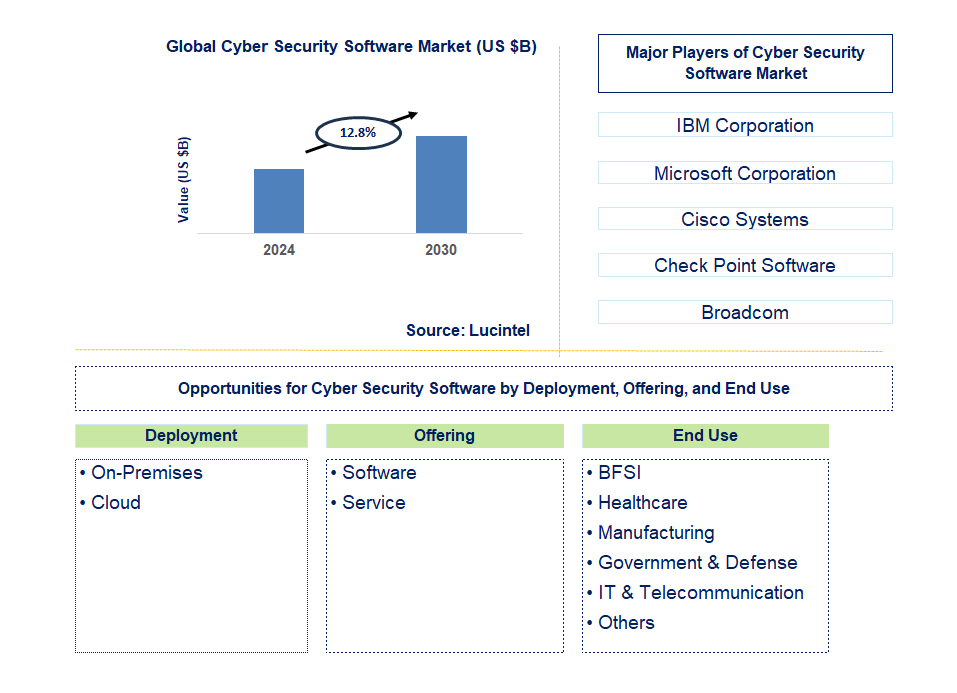
Key data points: The growth forecast = 12.8% annually for the next 6 years. Scroll below to get more insights. This market report covers trends, opportunities, and forecasts in the global cyber security software market to 2030 by deployment (on-premises and cloud), offering (software and service), end use (BFSI, healthcare, manufacturing , government & defense, IT & telecommunication, and others), and region (North America, Europe, Asia Pacific, and the Rest of the World)
We'll send your sample report shortly.
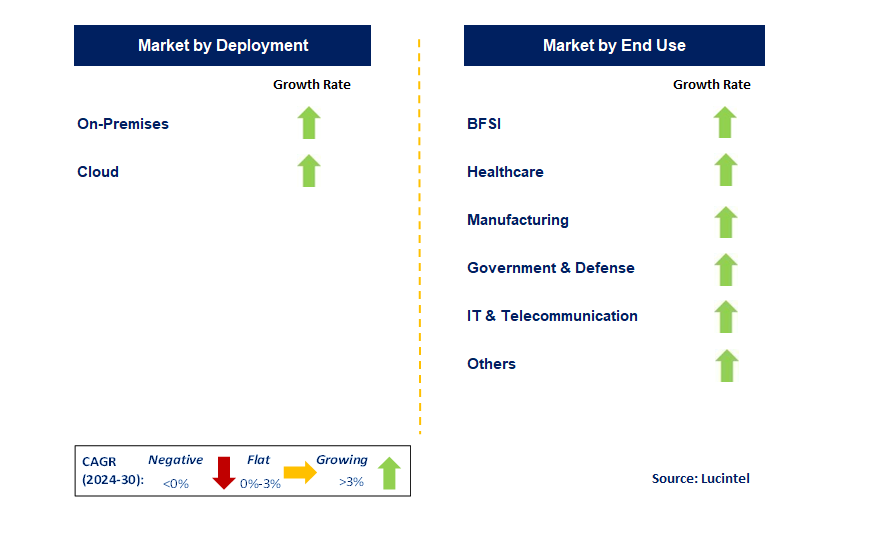
• Lucintel forecasts that, within the deployment category cloud segment expected to witness the higher growth over the forecast period.
• Within the end use category, BFSI is expected to witness the highest growth.
• In terms of regions, North America is expected to witness the highest growth over the forecast period due to increasing rate of infrastructure development and the exponential expansion of data across all industry verticals. Gain valuable insights for your business decisions with our comprehensive 150+ page report.
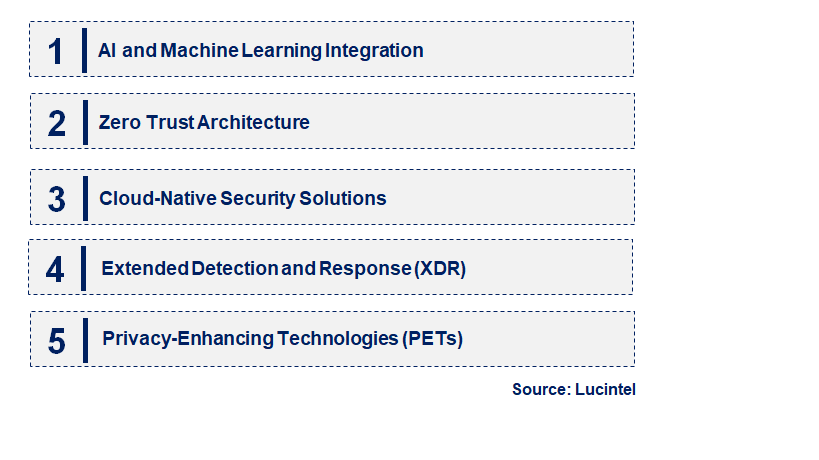
• AI and Machine Learning Integration: AI and machine learning (ML) are becoming central to modern cybersecurity solutions. These technologies analyze large volumes of data to identify patterns and anomalies indicative of potential threats. By automating threat detection and response, AI and ML can significantly reduce response times and improve accuracy. Advanced algorithms learn from new attack vectors and adapt defenses accordingly, making them crucial for managing the increasingly sophisticated nature of cyber threats. This integration enhances an organization’s ability to proactively address and mitigate risks in real time.
• Zero Trust Architecture: The Zero Trust Architecture (ZTA) model is gaining traction as organizations seek to bolster their security posture. ZTA operates on the principle of "never trust, always verify," requiring continuous authentication and validation of users and devices, regardless of their network location. This approach minimizes the risk of internal and external threats by enforcing strict access controls and segmenting network resources. By adopting ZTA, organizations can better protect sensitive data and applications, particularly in hybrid and cloud environments where traditional security models may fall short.
• Cloud-Native Security Solutions: As cloud adoption accelerates, so does the need for cloud-native security solutions designed to protect these dynamic environments. Unlike traditional security tools, cloud-native solutions are built to scale with cloud infrastructure, providing integrated threat protection and real-time monitoring. They address specific challenges of cloud security, such as data protection, identity management, and compliance. Cloud-native solutions offer flexibility and agility, ensuring robust security across diverse cloud platforms and reducing the complexity of managing disparate security systems.
• Extended Detection and Response (XDR): Extended Detection and Response (XDR) represents a shift toward more integrated security solutions. XDR platforms unify data from multiple security layers—such as endpoints, networks, and cloud environments—into a cohesive system. This integration enhances threat detection, investigation, and response by providing a comprehensive view of security events. XDR simplifies security management by reducing the need for disparate tools and improving the efficiency of threat response. It offers a more streamlined approach to handling complex security threats, making it a valuable asset for modern security operations.
• Privacy-Enhancing Technologies (PETs): Privacy-Enhancing Technologies (PETs) are increasingly important as data privacy concerns and regulatory requirements grow. PETs include tools like encryption, anonymization, and secure multi-party computation that protect personal and sensitive information while enabling data use and sharing. By incorporating PETs, organizations can ensure compliance with privacy laws, mitigate the risk of data breaches, and enhance user trust. As data privacy becomes a central focus, PETs are essential for safeguarding sensitive information and maintaining robust privacy practices in an evolving digital landscape. These emerging trends in the cybersecurity software market highlight a move toward more sophisticated, integrated, and adaptive security solutions. By leveraging advancements in AI, embracing Zero Trust principles, and utilizing cloud-native and privacy-focused technologies, organizations can enhance their security posture and better manage the evolving threat landscape.
• Advanced Threat Detection Platforms: New threat detection platforms leverage AI and machine learning to identify and mitigate advanced persistent threats (APTs) and zero-day vulnerabilities. These platforms use behavioral analytics and threat intelligence to detect suspicious activities and potential breaches before they cause significant damage, improving overall security posture.
• Enhanced Encryption Technologies: Advancements in encryption technologies, including quantum-resistant algorithms, address the growing need for secure data protection. These technologies ensure that sensitive information remains confidential even in the face of increasingly sophisticated attacks. Enhanced encryption methods are crucial for safeguarding data in transit and at rest.
• Increased Investment in Threat Intelligence: Organizations are investing more in threat intelligence platforms that provide real-time information on emerging threats and vulnerabilities. These platforms offer actionable insights to help organizations proactively defend against cyberattacks. Integration with automated response systems allows for swift action based on the latest threat intelligence.
• Expansion of Managed Security Services: Managed security service providers (MSSPs) are expanding their offerings to include advanced threat detection, incident response, and compliance management. This trend reflects the growing demand for outsourced cybersecurity expertise, allowing organizations to benefit from specialized knowledge and resources without maintaining in-house teams.
• Focus on Industrial Cybersecurity: With increasing cyber threats targeting industrial control systems and critical infrastructure, there is a heightened focus on industrial cybersecurity solutions. These solutions address specific challenges in securing operational technology (OT) environments, including real-time monitoring, anomaly detection, and incident response tailored to industrial settings. The cybersecurity software market is undergoing transformative changes driven by technological advancements, regulatory pressures, and evolving threats. Emerging trends such as AI integration, Zero Trust architecture, and cloud security solutions are shaping the future of cybersecurity. Recent developments, including advanced threat detection and enhanced encryption, address new challenges and improve overall security. As these trends and developments continue to evolve, they are reshaping the cybersecurity landscape, enhancing protection measures, and driving innovation across the industry.
• Endpoint Security: Endpoint security is a rapidly growing area due to the proliferation of devices and the rise in remote work. As organizations deploy more endpoints, such as laptops, mobile devices, and IoT gadgets, the need for robust protection against threats targeting these devices becomes critical. Strategic growth opportunities in this application include developing advanced endpoint protection solutions that leverage AI and machine learning to detect and respond to sophisticated threats in real time. Enhanced features such as behavioral analysis and automated threat response can further bolster endpoint security and address emerging attack vectors.
• Cloud Security: With the increasing shift toward cloud computing, cloud security presents significant growth opportunities. As organizations migrate to cloud environments, they require specialized solutions to protect data, applications, and infrastructure from cyber threats. Growth opportunities in cloud security include developing cloud-native security tools that offer scalability, integration, and real-time threat monitoring. Innovations such as cloud security posture management (CSPM) and cloud access security brokers (CASBs) can address specific challenges like misconfigurations and unauthorized access, providing comprehensive protection for dynamic cloud environments.
• Identity and Access Management (IAM): Identity and Access Management (IAM) is essential for securing user access to systems and data. As organizations adopt more complex IT environments, including hybrid and multi-cloud setups, the need for advanced IAM solutions grows. Strategic growth opportunities in IAM include enhancing authentication methods with biometrics, multi-factor authentication (MFA), and adaptive access controls. Additionally, developing solutions that integrate seamlessly with various platforms and provide granular access controls can address the evolving challenges of managing user identities and ensuring secure access to resources.
• Threat Intelligence: Threat intelligence provides critical insights into emerging threats and vulnerabilities, enabling proactive defense strategies. As cyber threats become more sophisticated, there is a growing need for advanced threat intelligence solutions that offer real-time data, predictive analytics, and actionable insights. Opportunities for growth in this area include developing platforms that aggregate and analyze threat data from diverse sources, use AI for predictive threat modeling, and provide automated threat alerts. Enhanced threat intelligence capabilities can improve an organization’s ability to anticipate and respond to potential security incidents effectively.
• Security Operations (SecOps): Security Operations (SecOps) involves managing and responding to security incidents in real time. As the volume and complexity of security alerts increase, there is a growing demand for more efficient SecOps solutions. Strategic growth opportunities in this application include developing integrated Security Information and Event Management (SIEM) systems, automating incident response with security orchestration, automation, and response (SOAR) tools, and enhancing threat detection with advanced analytics. By streamlining security operations and improving incident response capabilities, organizations can better manage their security posture and reduce the impact of cyber threats. The cybersecurity software market offers robust growth opportunities across various key applications. By focusing on advancements in endpoint security, cloud security, IAM, threat intelligence, and SecOps, organizations can capitalize on the evolving demands of the digital landscape and enhance their overall security posture. These strategic areas not only address current challenges but also set the stage for future innovations in the cybersecurity domain.
• Increasing Cyber Threats: The rise in sophisticated cyber threats, including ransomware, phishing, and advanced persistent threats (APTs), drives demand for advanced cybersecurity solutions. As threats become more complex, organizations require robust and innovative software to protect their digital assets. This continuous evolution of cyber threats ensures sustained growth in the cybersecurity software market as businesses seek to safeguard against potential breaches and attacks.
• Regulatory Compliance Requirements: Stringent regulatory frameworks, such as GDPR, CCPA, and HIPAA, compel organizations to invest in cybersecurity solutions to ensure compliance. These regulations impose significant penalties for data breaches and non-compliance, driving demand for software that helps organizations meet regulatory requirements and manage data protection. Compliance-driven investments contribute to market growth and encourage innovation in cybersecurity technologies.
• Digital Transformation and Cloud Adoption: The ongoing digital transformation and widespread adoption of cloud computing create new security challenges, boosting the demand for advanced cybersecurity solutions. Organizations migrating to cloud environments need robust cloud security measures to protect data and applications. This trend stimulates growth in cloud security solutions and drives the development of new technologies tailored to cloud environments.
• Increasing Use of IoT Devices: The proliferation of Internet of Things (IoT) devices introduces additional security vulnerabilities, creating opportunities for growth in endpoint and network security solutions. As more IoT devices are connected to networks, the need for solutions that can secure these devices and manage their vulnerabilities becomes crucial. This growing IoT ecosystem drives innovation and demand in cybersecurity software.
• Advancements in Artificial Intelligence and Machine Learning: The integration of AI and machine learning in cybersecurity solutions enhances threat detection, response, and automation. These technologies enable more sophisticated analysis of cyber threats and faster identification of anomalies. The adoption of AI-driven solutions is a significant driver of market growth, as organizations seek to leverage advanced technologies to improve their security posture. Challenges in the cybersecurity software market include:
• Evolving Cyber Threats: The rapid evolution of cyber threats poses a significant challenge for cybersecurity software developers. As attackers employ increasingly sophisticated techniques, keeping up with new threats and updating security solutions accordingly is a constant struggle. This challenge requires ongoing innovation and adaptation to ensure that cybersecurity solutions remain effective against emerging threats.
• Skill Shortage in Cybersecurity: The shortage of skilled cybersecurity professionals limits the ability of organizations to implement and manage advanced security solutions effectively. This skills gap impacts the deployment and maintenance of cybersecurity software, leading to potential vulnerabilities and increased risk. Addressing this challenge requires investment in training and development to build a skilled workforce capable of managing complex security environments.
• High Costs of Cybersecurity Solutions: The high cost of implementing and maintaining comprehensive cybersecurity solutions can be a barrier for small and medium-sized enterprises (SMEs). Budget constraints often limit the ability of these organizations to invest in advanced security technologies, leaving them vulnerable to cyber threats. Cost-effective solutions and scalable options are needed to address this challenge and ensure broader adoption of cybersecurity measures. The cybersecurity software market is shaped by a dynamic interplay of drivers and challenges. Increasing cyber threats, regulatory compliance requirements, digital transformation, IoT proliferation, and advancements in AI drive market growth. However, evolving threats, a shortage of skilled professionals, and high costs pose significant challenges. Navigating these factors effectively is essential for leveraging growth opportunities and overcoming obstacles. As the market adapts to these drivers and challenges, it will continue to evolve, presenting new opportunities for innovation and investment in cybersecurity solutions.
• IBM Corporation
• Microsoft Corporation
• Cisco Systems
• Check Point Software Technologies
• Broadcom
• Fortinet
• F5 Networks
• Palo Alto Networks
• Proofpoint
• CyberArk Software
• On-Premises
• Cloud
• Software
• Service
• BFSI
• Healthcare
• Manufacturing
• Government & Defense
• IT & Telecommunication
• Others
• North America
• Europe
• Asia Pacific
• The Rest of the World
• United States: In the United States, cybersecurity software development is increasingly focused on AI and machine learning technologies to enhance threat detection and response capabilities. Major advancements include the integration of AI-driven analytics and automation tools to handle complex cyber threats more effectively. Additionally, the U.S. is seeing a rise in partnerships between government agencies and private sector firms to bolster national cyber resilience. The expansion of regulatory frameworks, such as the new standards under the Cybersecurity and Infrastructure Security Agency (CISA), also plays a crucial role in shaping the market.
• China: China's cybersecurity software market is evolving rapidly due to heightened government scrutiny and regulatory mandates. The country is investing heavily in developing domestic technologies to reduce dependency on foreign solutions, emphasizing advancements in encryption and data protection. New regulations, such as the Personal Information Protection Law (PIPL), are driving demand for compliance solutions. China is also focusing on integrating cybersecurity measures with its broader technology initiatives, including the "Made in China 2025" plan, which prioritizes innovation in cybersecurity.
• Germany: Germany's approach to cybersecurity software is heavily influenced by its commitment to data privacy and protection, driven by the General Data Protection Regulation (GDPR). Recent developments include the enhancement of tools for data breach detection and response, as well as investments in secure communication technologies. The German government is also fostering collaboration between academic institutions and industry leaders to advance research and development in cybersecurity. Additionally, there is an increased focus on securing critical infrastructure against cyber threats, reflecting the country’s emphasis on industrial and energy sector protection.
• India: In India, the cybersecurity software market is experiencing growth due to rapid digital transformation and increasing cyber threats. Key advancements include the development of indigenous security solutions tailored to local needs and regulatory compliance, driven by initiatives such as the National Cyber Security Policy. India is also seeing increased investment in cloud security solutions and threat intelligence platforms. The government is enhancing its cybersecurity posture through initiatives like the Indian Computer Emergency Response Team (CERT-IN) and new data protection regulations aimed at improving overall cyber resilience.
• Japan: Japan's cybersecurity software market is focusing on integrating advanced technologies like artificial intelligence and blockchain to enhance security measures. The country is investing in solutions to address the unique challenges posed by its aging infrastructure and high-tech industries. Recent developments include the adoption of AI for threat detection and the expansion of national cybersecurity strategies to counteract increasing cyber espionage threats. The Japanese government is also working to strengthen cybersecurity regulations and foster collaboration between public and private sectors to safeguard critical infrastructure and personal data.


• IBM Corporation
• Microsoft Corporation
• Cisco Systems
• Check Point Software Technologies
• Broadcom
• Fortinet
• F5 Networks
• Palo Alto Networks
• Proofpoint
• CyberArk Software Q5. Which cyber security software market segment will be the largest in future? Answer: Lucintel forecasts that, within the deployment category cloud segment expected to witness the higher growth over the forecast period. Q6. In cyber security software market, which region is expected to be the largest in next 5 years? Answer:In terms of regions, North America is expected to witness the highest growth over the forecast period due to increasing rate of infrastructure development and the exponential expansion of data across all industry verticals. Q.7 Do we receive customization in this report? Answer: Yes, Lucintel provides 10% customization without any additional cost.


Choose a license that fits your team. Instant PDF delivery.
Prices exclude taxes. Instant delivery. Custom licensing available on request.
Market Report · July 15, 2026
Market Report · June 26, 2026
Market Report · June 24, 2026
Trusted partner for strategic intelligence and business growth


Receive a complimentary market analysis tailored to your industry. Our analysts will identify key growth opportunities and competitive dynamics specific to your business.

Market size, growth rate, and key trend analysis for your specific sector.

Top competitor positioning and market share analysis.

Strategic recommendations backed by data-driven insights.
Get curated market intelligence and competitive moves straight to your inbox.
By subscribing, you agree to receive our monthly insights. Unsubscribe anytime.
Receive a complimentary market analysis tailored to your industry. Our analysts will identify key growth opportunities and competitive dynamics specific to your business.
Market size, growth rate, and key trend analysis for your specific sector.
Top competitor positioning and market share analysis.
Strategic recommendations backed by data-driven insights.
Get curated market intelligence, emerging trends, and competitive moves straight to your inbox each month.
By subscribing, you agree to receive our monthly insights. Unsubscribe anytime.
We'll send your sample report shortly.