
Market Report · July 17, 2026

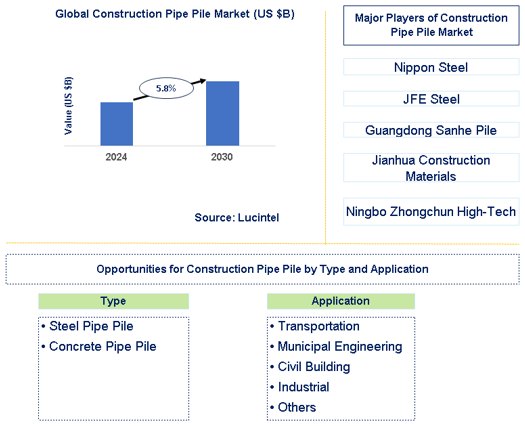
Key data points: The growth forecast = 5.8% annually for the next 6 years. Scroll below to get more insights. This market report covers trends, opportunities, and forecasts in the global construction pipe pile market to 2030 by type (steel pipe pile and concrete pipe pile), application (transportation, municipal engineering, civil building, industrial, and others), and region (North America, Europe, Asia Pacific, and the Rest of the World)
We'll send your sample report shortly.
• United States: In the U.S., the construction pipe pile market is focusing on sustainability and efficiency. The adoption of advanced materials, such as high-strength steel and recycled composites, is gaining traction. Additionally, innovations in manufacturing processes are reducing production costs and improving delivery times. Increased federal investment in infrastructure projects has spurred demand for reliable and durable pipe piles, positioning manufacturers to expand their market share. The trend toward modular construction is also influencing pipe pile designs, enhancing versatility for various construction applications.
• China: China remains a dominant player in the construction pipe pile market, driven by rapid urbanization and extensive infrastructure development. Recent advancements include the use of prefabricated pipe piles that streamline installation processes. Manufacturers are investing in automated production technologies to enhance efficiency and reduce labor costs. The government's focus on sustainability is promoting the use of environmentally friendly materials, such as fiber-reinforced polymers. Additionally, innovations in seismic-resistant designs are becoming crucial, especially in regions prone to earthquakes, ensuring safety and durability in construction.
• Germany: Germany's construction pipe pile market is characterized by a strong emphasis on technology and innovation. The integration of smart technology in manufacturing processes is enhancing the quality and performance of pipe piles. German companies are increasingly focusing on sustainable production methods, utilizing recycled materials and energy-efficient processes. Moreover, the trend toward digitalization is driving the adoption of Building Information Modeling (BIM), which facilitates better project planning and execution. This focus on innovation positions German manufacturers as leaders in the European market, catering to high-quality construction standards.
• India: India's construction pipe pile market is experiencing significant growth, fueled by rapid urbanization and government initiatives aimed at improving infrastructure. Recent developments include the introduction of cost-effective and high-strength pipe piles tailored for local soil conditions. Manufacturers are investing in advanced production techniques to enhance quality and reduce lead times. The emphasis on sustainable construction practices is prompting the use of eco-friendly materials. Furthermore, increased foreign investment in Indian infrastructure projects is expected to boost demand for reliable pipe piling solutions.
• Japan: In Japan, the construction pipe pile market is adapting to the challenges posed by natural disasters, particularly earthquakes. Innovations in pipe pile design, such as the development of flexible and lightweight materials, are gaining importance for seismic resilience. Manufacturers are increasingly using advanced technologies, including 3D printing, to create customized pipe piles that meet specific project requirements. Additionally, the focus on sustainability is leading to the adoption of green construction practices, making pipe piles more eco-friendly. Japan's commitment to disaster preparedness is reshaping its construction methodologies and materials.
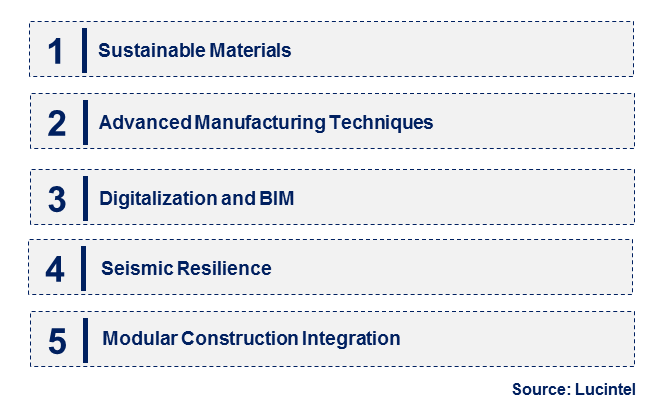
• Sustainable Materials: The increasing focus on sustainability is driving the adoption of eco-friendly materials in pipe pile manufacturing. Manufacturers are exploring alternatives like recycled steel and composite materials, which reduce environmental impact while maintaining structural integrity. This trend aligns with global efforts to promote green construction practices, making pipe piles more appealing to environmentally conscious clients and regulators.
• Advanced Manufacturing Techniques: Innovations in manufacturing processes, such as automation and 3D printing, are revolutionizing the production of pipe piles. These techniques enhance efficiency, reduce labor costs, and allow for greater customization. As manufacturers adopt advanced technologies, they can produce high-quality products faster and at lower costs, improving competitiveness in the market.
• Digitalization and BIM: The integration of digital tools and Building Information Modeling (BIM) is transforming project planning and execution in the pipe pile market. BIM enables better visualization and coordination among stakeholders, reducing errors and streamlining workflows. This trend enhances project efficiency, leading to faster completion times and lower overall costs.
• Seismic Resilience: With increasing awareness of natural disasters, particularly in regions prone to earthquakes, there is a growing emphasis on designing pipe piles for seismic resilience. Innovations in materials and engineering techniques are being employed to create flexible and durable pipe piles that can withstand seismic forces. This trend is critical for ensuring the safety and longevity of structures in vulnerable areas.
• Modular Construction Integration: The trend toward modular construction is influencing the design and application of pipe piles. As projects shift towards prefabricated solutions, pipe piles are being designed for easier transportation and installation. This approach not only speeds up construction timelines but also reduces waste, aligning with sustainability goals and increasing efficiency in project delivery. These emerging trends are fundamentally reshaping the construction pipe pile market, driving innovation and sustainability while enhancing efficiency and safety. Stakeholders who embrace these trends are likely to gain a competitive advantage in an evolving landscape.
• Introduction of High-Strength Materials: The development of high-strength materials, such as advanced steel alloys and composites, has significantly improved the performance of pipe piles. These materials offer greater load-bearing capacity and durability, making them suitable for a wider range of applications. Manufacturers that adopt these materials can enhance their product offerings and cater to projects requiring high-performance foundations, ultimately increasing market competitiveness.
• Adoption of Prefabricated Pipe Piles: The shift towards prefabricated pipe piles is streamlining construction processes. Prefabrication allows for quicker installation and reduces on-site labor requirements, addressing labor shortages in the industry. This development not only accelerates project timelines but also minimizes waste, contributing to overall sustainability in construction practices. As demand for prefabricated solutions rises, manufacturers can tap into new markets and enhance operational efficiency.
• Integration of Smart Technologies: The integration of smart technologies into pipe pile manufacturing processes is advancing quality control and operational efficiency. IoT devices and data analytics enable real-time monitoring of production metrics, ensuring consistency and reducing defects. This development empowers manufacturers to optimize their processes and improve product reliability, fostering customer trust and satisfaction in a competitive marketplace.
• Innovations in Seismic-Resistant Designs: As seismic activity poses a growing threat in various regions, innovations in seismic-resistant pipe pile designs are becoming crucial. Enhanced engineering techniques and flexible materials are being utilized to create pipe piles that can withstand earthquake forces. This focus on seismic resilience not only ensures compliance with safety regulations but also appeals to clients in high-risk areas, driving demand for specialized products.
• Expansion into Emerging Markets: Manufacturers are increasingly looking to expand their presence in emerging markets, particularly in Asia and Africa, where infrastructure development is on the rise. This expansion involves adapting pipe pile designs to meet local soil conditions and construction practices. By entering these markets, manufacturers can tap into new growth opportunities and diversify their revenue streams, positioning themselves favorably for future demand. These developments are significantly impacting the construction pipe pile market by enhancing product quality, efficiency, and adaptability to evolving construction practices. As the market continues to grow, manufacturers that embrace these changes will be well-positioned for success.
• Urban Infrastructure Projects: Urban infrastructure development presents a significant opportunity for the construction pipe pile market. As cities expand, there is an increasing need for reliable foundation solutions for buildings, bridges, and roads. Manufacturers that focus on developing specialized pipe piles designed for urban environments can capture a substantial share of this growing market, contributing to enhanced city planning and resilience.
• Renewable Energy Installations: The growth of renewable energy projects, such as wind and solar farms, creates demand for durable pipe piles that can withstand harsh environmental conditions. Manufacturers can develop tailored solutions that meet the specific needs of these projects, positioning themselves as leaders in the green construction sector. This focus on renewable energy applications aligns with global sustainability goals and opens up new revenue streams.
• Coastal and Marine Construction: With rising sea levels and climate change impacts, there is a growing need for coastal and marine construction projects that require robust foundation solutions. The construction pipe pile market can capitalize on this trend by offering specialized products designed for underwater and coastal applications. By addressing the unique challenges of marine environments, manufacturers can tap into a niche but vital segment of the market.
• Disaster Recovery and Resilience: The increasing frequency of natural disasters highlights the need for resilient infrastructure. Opportunities exist for manufacturers to innovate pipe pile designs that enhance disaster preparedness and recovery efforts. Developing products that meet stringent safety standards and provide structural integrity in the face of earthquakes and floods will appeal to government and private sectors alike, driving demand for advanced solutions.
• Technological Integration: The integration of digital tools, such as BIM and IoT, in the construction process creates opportunities for manufacturers to offer value-added services. By providing pipe piles that are compatible with digital construction methods, manufacturers can enhance project efficiency and reduce errors. This strategic alignment with technological advancements positions companies favorably in a competitive landscape, catering to the needs of modern construction practices. These strategic growth opportunities are shaping the construction pipe pile market, allowing manufacturers to diversify their applications and meet the evolving demands of infrastructure development. Embracing these opportunities will be essential for long-term success in an increasingly competitive environment.
• Infrastructure Investment: Increased government spending on infrastructure projects is a significant driver for the construction pipe pile market. As nations invest in roads, bridges, and buildings, the demand for durable foundation solutions rises. This investment not only supports economic growth but also stimulates demand for high-quality pipe piles, providing manufacturers with lucrative opportunities.
• Urbanization Trends: Rapid urbanization is creating a heightened demand for construction pipe piles. As populations grow in urban areas, the need for new housing, commercial spaces, and public infrastructure escalates. This trend prompts construction firms to seek reliable and efficient piling solutions, driving growth in the pipe pile market.
• Technological Innovations: Advancements in technology, including materials science and manufacturing processes, are enhancing the performance and efficiency of pipe piles. Innovations such as automated production and smart monitoring systems allow manufacturers to produce high-quality products at lower costs. This technological edge is essential for remaining competitive in a fast-evolving market.
• Focus on Sustainability: The increasing emphasis on sustainable construction practices is driving the adoption of eco-friendly materials and methods in the pipe pile market. Consumers and regulators are prioritizing green solutions, prompting manufacturers to develop environmentally friendly pipe piles. This focus on sustainability not only meets regulatory requirements but also attracts a wider customer base.
• Seismic Safety Regulations: Stricter regulations regarding seismic safety are influencing the design and production of pipe piles, particularly in earthquake-prone regions. As safety standards become more rigorous, the demand for specially engineered pipe piles increases. Manufacturers that invest in developing seismic-resistant solutions will be well-positioned to capture this growing market segment. Challenges in the construction pipe pile market are:
• Cost Volatility of Raw Materials: Fluctuations in the prices of raw materials, such as steel and concrete, can impact the profitability of pipe pile manufacturers. Rising costs may lead to increased product prices, potentially reducing demand. Companies must develop strategies to manage supply chain risks and maintain cost efficiency to remain competitive.
• Labor Shortages: he construction industry faces significant labor shortages, which can hinder the production and installation of pipe piles. A lack of skilled workers impacts project timelines and quality. To address this challenge, manufacturers need to invest in training programs and promote careers in construction to attract new talent.
• Regulatory Compliance: Navigating the complex landscape of regulatory compliance can be a challenge for pipe pile manufacturers. Meeting safety, environmental, and quality standards requires ongoing investment in quality assurance processes. Failure to comply can result in penalties and damage to a company’s reputation, necessitating a proactive approach to regulatory adherence. The interplay of these drivers and challenges significantly influences the construction pipe pile market. By understanding and addressing these factors, stakeholders can better position themselves for success in an increasingly competitive landscape.
• Nippon Steel
• JFE Steel
• Guangdong Sanhe Pile
• Jianhua Construction Materials
• Ningbo Zhongchun High-Tech
• Guangdong Hongji Concrete
• SSAB
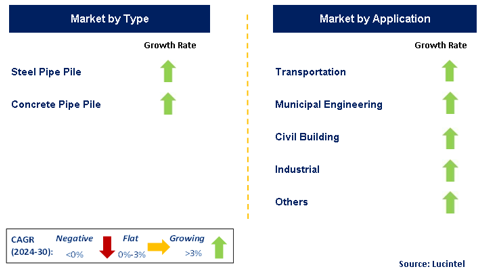
• Steel Pipe Pile
• Concrete Pipe Pile
• Transportation
• Municipal Engineering
• Civil Building
• Industrial
• Others
• North America
• Europe
• Asia Pacific
• The Rest of the World
• Lucintel forecasts that, within the type category, steel pipe pile is expected to witness higher growth over the forecast period.
• In terms of regions, APAC is expected to witness the highest growth over the forecast period.


• Nippon Steel
• JFE Steel
• Guangdong Sanhe Pile
• Jianhua Construction Materials
• Ningbo Zhongchun High-Tech
• Guangdong Hongji Concrete
• SSAB Q5. Which construction pipe pile market segment will be the largest in future? Answer: Lucintel forecasts that steel pipe pile is expected to witness higher growth over the forecast period. Q6. In construction pipe pile market, which region is expected to be the largest in next 5 years? Answer: APAC is expected to witness the highest growth over the forecast period. Q.7 Do we receive customization in this report? Answer: Yes, Lucintel provides 10% customization without any additional cost.


Choose a license that fits your team. Instant PDF delivery.
Prices exclude taxes. Instant delivery. Custom licensing available on request.
Market Report · July 17, 2026
Market Report · July 17, 2026
Market Report · July 16, 2026
Trusted partner for strategic intelligence and business growth


Receive a complimentary market analysis tailored to your industry. Our analysts will identify key growth opportunities and competitive dynamics specific to your business.

Market size, growth rate, and key trend analysis for your specific sector.

Top competitor positioning and market share analysis.

Strategic recommendations backed by data-driven insights.
Get curated market intelligence and competitive moves straight to your inbox.
By subscribing, you agree to receive our monthly insights. Unsubscribe anytime.
Receive a complimentary market analysis tailored to your industry. Our analysts will identify key growth opportunities and competitive dynamics specific to your business.
Market size, growth rate, and key trend analysis for your specific sector.
Top competitor positioning and market share analysis.
Strategic recommendations backed by data-driven insights.
Get curated market intelligence, emerging trends, and competitive moves straight to your inbox each month.
By subscribing, you agree to receive our monthly insights. Unsubscribe anytime.
We'll send your sample report shortly.