
Market Report · May 16, 2026

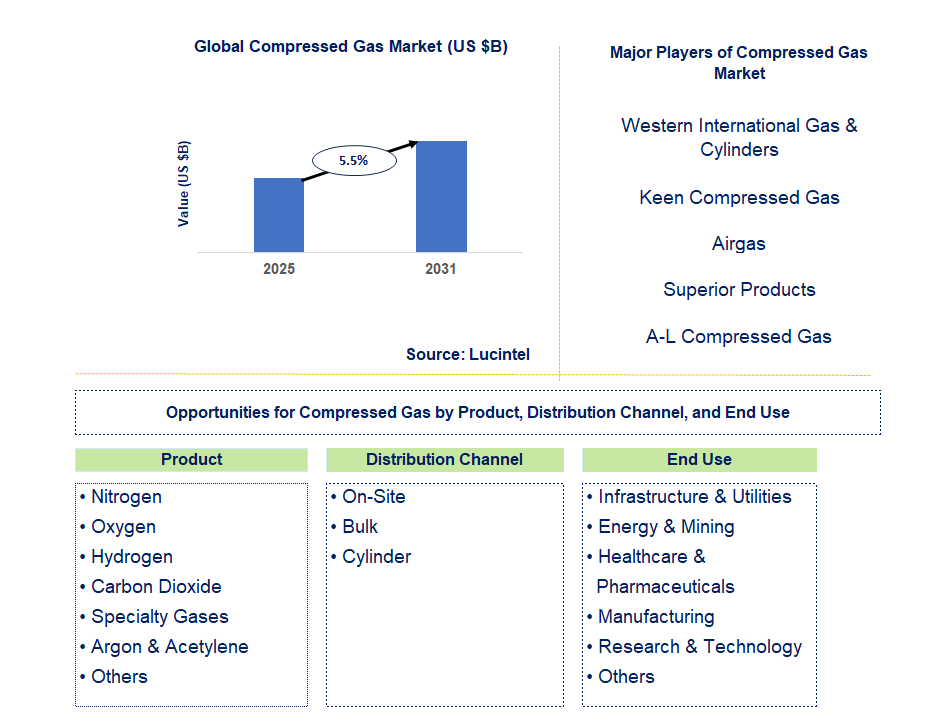
Key data points: The growth forecast = 5.5% annually for the next 7 years. Scroll below to get more insights. This market report covers Trends, opportunities and forecasts in compressed gas market to 2031 by product (nitrogen, oxygen, hydrogen, carbon dioxide, specialty gases, argon & acetylene, and others), distribution channel (on-site, bulk, and cylinder), end use (infrastructure & utilities, energy & mining, healthcare & pharmaceuticals, manufacturing, research & technology, and others), and region (North America, Europe, Asia Pacific, and the Rest of the World)
We'll send your sample report shortly.
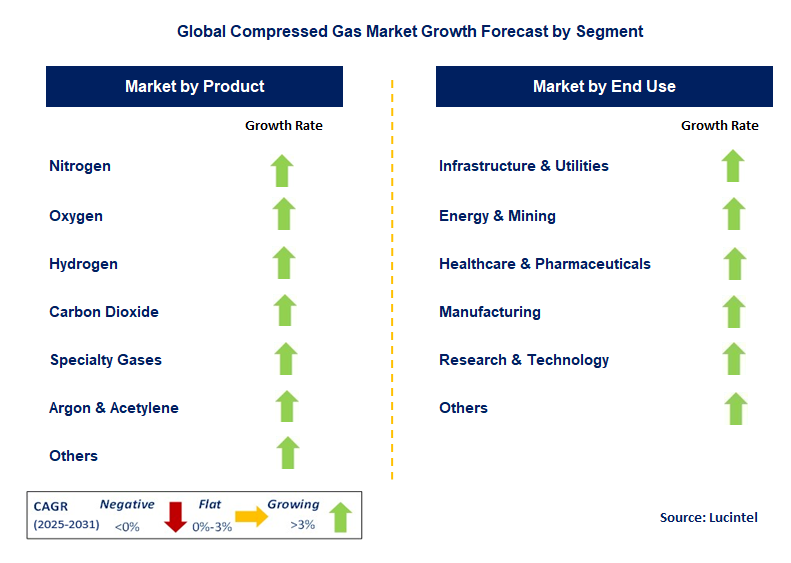
• Lucintel forecasts that, within the product category, hydrogen is expected to witness the highest growth over the forecast period.
• Within the end use category, healthcare & pharmaceutical is expected to witness the highest growth.
• In terms of region, APAC is expected to witness the highest growth over the forecast period.
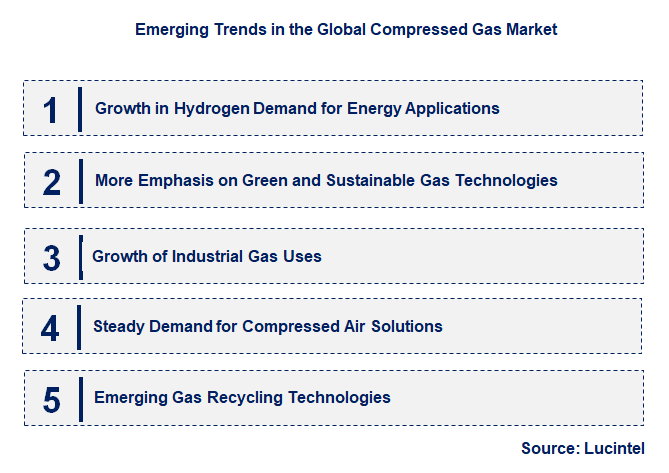
• Growth in Hydrogen Demand for Energy Applications: Hydrogen is being set to become a central figure in the clean energy transition. The use of hydrogen as a clean fuel for fuel cells and energy storage is being demanded because it has the potential to decrease carbon emissions in transport and energy industries. Heavy investments are being placed in hydrogen infrastructure in order to facilitate fuel cell vehicles, power generation, and industry. This trend is likely to propel long-term compressed gas market growth, as hydrogen is regarded as a clean and sustainable source of energy for use in many applications.
• More Emphasis on Green and Sustainable Gas Technologies: With governments and businesses increasingly emphasizing sustainability, demand for compressed gases manufactured using greener processes is on the rise. Firms are investing in green gas technology, including carbon capture and storage (CCS), that can lower the carbon intensity of gas production. Moreover, the use of environmentally friendly substitutes for conventional gases, such as biodegradable gases and renewable natural gas, is on the rise. This trend is transforming the industry by promoting cleaner production practices and using cleaner gases.
• Growth of Industrial Gas Uses: Industrial gases are increasing their uses in different industries with new uses in healthcare, food preservation, and electronics. In medical care, gases such as oxygen, nitrous oxide, and carbon dioxide are being utilized more and more, while for food preservation and packaging, gases are utilized in food processing. In electronics, gases find application in the production of semiconductors. The expanding number of applications is a key trend within the compressed gas industry, and it is boosting innovation and demand for specialty gases in these markets.
• Steady Demand for Compressed Air Solutions: Usage of compressed air in manufacturing and automation applications is increasing, with industries looking for more energy-saving solutions. Compressed air powers tools, machines, and control systems in a range of sectors such as automobiles, food production, and building. With energy efficiency in the forefront, companies are now investing in upgraded compressed air systems that minimize energy usage and improve performance. With increased emphasis on automation and cost savings, industries are demanding compressed air solutions.
• Emerging Gas Recycling Technologies: As the circular economy is on the rise, gas recycling technologies are taking center stage. These technologies enable gases such as carbon dioxide and nitrogen to be recovered and recycled for use in different industrial processes, lowering the demand for fresh gas production and waste. Advances in gas separation and purification technologies are making it possible to recycle gases more efficiently. This is assisting in lowering the environmental footprint while making gas resources be utilized more sustainably in industries like chemicals, manufacturing, and energy. These new trends in the compressed gas industry are transforming the business by fueling innovation, sustainability, and energy efficiency. The emphasis on hydrogen, green gas technologies, and new opportunities in markets such as healthcare and food processing are all driving a larger and more vibrant market. As these trends further evolve, the compressed gas industry will be a critical driver of the global shift toward a more sustainable and energy-efficient economy.
• Hydrogen Production and Infrastructure Advances: There have been major technological developments in hydrogen production technologies, like electrolysis, that make it possible to produce cleaner hydrogen. The development of hydrogen infrastructure, like refueling stations and storage facilities, is making hydrogen a more accessible fuel source for different uses, like transportation and energy production. These developments are increasing the use of hydrogen as a clean source of energy as opposed to fossil fuels, thus driving the growth of the compressed gas market in energy and transportation industries.
• Regulatory Push for Sustainable Gas Solutions: Governments across the globe are adopting more stringent environmental regulations that ensure the use of sustainable gas solutions. These regulations, such as carbon emission reduction goals and tax incentives for cleaner gas production, are pushing firms to invest in technologies that minimize the environmental footprint of compressed gases. Consequently, there is greater focus on creating low-carbon technologies and employing renewable energy sources to generate gases. This regulatory drive is fueling expansion in the compressed gas industry, especially for green gases such as hydrogen.
• Technological Advancements in Gas Separation and Purification: New technological advancements in gas separation and purification technologies are allowing businesses to extract and clean gases more effectively. These technologies are especially significant in industries such as chemicals, pharmaceuticals, and energy, where the requirement for high-purity gases is essential. Through enhanced gas separation efficiency, such innovations are cutting costs and enhancing the sustainability of gas production. This is a major innovation driving compressed gas market demand for advanced gas processing technologies.
• Growth of Medical Gas Applications: Demand for medical gases like oxygen and nitrous oxide has grown substantially, fueled by the needs of the global healthcare industry. Hospitals and healthcare institutions are increasingly turning to compressed gases for respiratory therapy, anesthesia, and other uses in medical care. The expansion of healthcare facilities in developing countries and the rising demand for patients needing medical gas treatment are driving this market. It is a major trend in the compressed gas market with medical gases being key to patient treatment.
• Enhanced Application of Carbon Dioxide in Carbon Capture and Storage: Carbon dioxide (CO2) is increasingly applied in carbon capture and storage (CCS) technologies, which lower industrial process emissions. CO2 capture systems are facilitating industries to store and capture CO2 rather than emit it into the environment. The technology is most applicable in industries such as power generation and cement production, where there is high emission. The greater utilization of CO2 in CCS is a significant milestone in the compressed gas industry, and it supports the global initiative to fight climate change. These new advancements are revolutionizing the compressed gas industry, with improvements in hydrogen production, regulatory pressures for green solutions, and innovation in gas purification leading the sector. Increasing medical gas application and the use of CO2 for carbon capture are also key advancements that are changing the shape of the market. As these trends further evolve, the compressed gas sector will take a central position in defining the future of energy, healthcare, and sustainability.
• Expansion in Hydrogen Energy Uses: With the world moving towards cleaner sources of energy, hydrogen is becoming an increasingly important player in the energy space. Opportunities for growth are in the production and delivery of hydrogen for fuel cells, energy storage, and industrial processes. Businesses investing in hydrogen infrastructure, such as refueling stations and storage facilities, will be able to take advantage of the increasing demand for this clean fuel. The growth of hydrogen energy solutions brings great growth potential in the market for compressed gases.
• Medical Gas Applications expansion: The medical industry continues to fuel the demand for medical gases, especially oxygen, nitrous oxide, and carbon dioxide. Opportunities lie in supplying high-quality medical gases to hospitals, clinics, and healthcare centers. With the aging population of the world and growing healthcare demands, medical gas consumption will only continue to rise. Companies engaged in producing and supplying medical gases can access a fast-growing market with tremendous growth prospect.
• Implementation of Sustainable and Green Gas Technologies: With growing environmental issues, tremendous growth prospects lie in the production and use of green gas technologies. Firms that invest in the production of gases such as bio-methane, renewable natural gas, and carbon-free hydrogen will be in a position to meet the growing demand for green solutions. Green gas technologies will be pivotal in achieving carbon reduction goals and will propel long-term growth within the compressed gas industry.
• Surging Demand for Compressed Air Solutions: Compressed air technology is being increasingly used in industry applications such as automation, manufacturing, and building construction because it is energy-saving and versatile. Advanced compressed air solutions like energy-saving compressors and automation tools are in greater demand, making companies that sell these products better positioned to profit from the new technologies. New opportunities for expansion in industries including automotive, electronics, and food processing are promising for companies with business in compressed air.
• Carbon Capture and Storage Technologies Development: Carbon capture and storage (CCS) technologies are becoming more critical for industries seeking to minimize carbon emissions. There are opportunities for those companies that specialize in the design of CO2 capture, storage, and transport systems, especially in industries such as power generation, cement, and chemicals. The growth of CCS technologies offers substantial growth opportunities as industries move towards sustainability goals and minimizing their footprint. The compressed gas market has several strategic opportunities for growth propelled by innovation in hydrogen energy, medical gas usage, green gas technology, compressed air solutions, and carbon capture. With industries innovating and adapting to pressures of sustainability, these opportunities will define the compressed gas market's future and provide new paths for development and growth.
• Western International Gas & Cylinders
• Keen Compressed Gas
• Airgas
• Superior Products
• A-L Compressed Gas
• Air Liquide
• Air Products
• INOX-Air Products
• Iwatani
• Linde
• Nitrogen
• Oxygen
• Hydrogen
• Carbon Dioxide
• Specialty Gases
• Argon & Acetylene
• Others
• On-Site
• Bulk
• Cylinder
• North America
• Europe
• Asia Pacific
• The Rest of the World
• United States: In the United States, the compressed gas market has been spurred by increased demand for industrial gases in manufacturing and healthcare. The growing move towards alternative sources of energy has fueled demand for hydrogen, particularly in the application for fuel cells. Firms are investing in green procedures, including cutting back on carbon emissions from producing compressed gases. The U.S. also aims to advance developments in hydrogen infrastructure to accommodate fuel cell cars. Regulatory aid for clean energy and growth of the healthcare industry, especially medical oxygen, also add to the growth of the market.
• China: China has experienced fast growth in the compressed gas market, especially with industrial gas use growth in manufacturing and chemical processing. The emphasis placed on environmental sustainability by the government has resulted in growing demand for gases such as oxygen and nitrogen for use in pollution control and energy efficiency. China is also spending big on hydrogen technologies, setting itself up to be a world leader in the production of hydrogen as a clean energy. China's aggressive drive towards infrastructure modernization, as well as policy support for industrial gas use, continues to fuel compressed gas market growth.
• Germany: Germany has been at the forefront of the compressed gas market for years, especially in industries such as automobile manufacturing, medicine, and energy. The nation's adoption of sustainable energy methods and its push for carbon emission cuts has seen a marked impact on the market for compressed gases, particularly hydrogen. Germany is also putting money into establishing hydrogen infrastructure for energy storage as well as fuel cells. The industrial gas sector in the country remains innovative due to the necessity for efficient, environmentally friendly solutions for industries such as chemicals and automotive.
• India: India's market for compressed gas is seeing strong growth with increasing industrial activity, especially in chemicals, pharma, and food processing. India is highlighting the creation of sustainable solutions, such as cleaner production techniques for industrial gases. As India moves to cleaner sources of energy, the demand for hydrogen and other gases for energy production and energy storage solutions is increasing. In addition, medical gases, particularly oxygen, have been in greater demand because of the healthcare requirements of the country. India's emphasis on infrastructure growth and industrialization is fueling growth in the compressed gas industry.
• Japan: Japan is experiencing growth in the application of compressed gases, led by developments in the automotive, healthcare, and energy industries. The nation's strong dedication to lowering carbon emissions has generated rising interest in the use of hydrogen as a clean energy source. Japan is also paying attention to fuel cell technology and the adoption of hydrogen as part of its energy mix. Besides, medical gases like oxygen are in demand due to aging populations and the development of healthcare infrastructure. Japan's high-tech capabilities and government backing continue to spur expansion in the compressed gas market.


• Western International Gas & Cylinders
• Keen Compressed Gas
• Airgas
• Superior Products
• A-L Compressed Gas
• Air Liquide
• Air Products
• INOX-Air Products
• Iwatani
• Linde Q5. Which compressed gas market segment will be the largest in future? Answer: Lucintel forecasts that, within the product category, hydrogen is expected to witness the highest growth over the forecast period. Q6. In compressed gas market, which region is expected to be the largest in next 5 years? Answer: In terms of region, APAC is expected to witness the highest growth over the forecast period. Q7. Do we receive customization in this report? Answer: Yes, Lucintel provides 10% customization without any additional cost.


Choose a license that fits your team. Instant PDF delivery.
Prices exclude taxes. Instant delivery. Custom licensing available on request.
Market Report · May 16, 2026
Market Report · May 16, 2026
Market Report · May 16, 2026
Trusted partner for strategic intelligence and business growth


Receive a complimentary market analysis tailored to your industry. Our analysts will identify key growth opportunities and competitive dynamics specific to your business.

Market size, growth rate, and key trend analysis for your specific sector.

Top competitor positioning and market share analysis.

Strategic recommendations backed by data-driven insights.
Get curated market intelligence and competitive moves straight to your inbox.
By subscribing, you agree to receive our monthly insights. Unsubscribe anytime.
Receive a complimentary market analysis tailored to your industry. Our analysts will identify key growth opportunities and competitive dynamics specific to your business.
Market size, growth rate, and key trend analysis for your specific sector.
Top competitor positioning and market share analysis.
Strategic recommendations backed by data-driven insights.
Get curated market intelligence, emerging trends, and competitive moves straight to your inbox each month.
By subscribing, you agree to receive our monthly insights. Unsubscribe anytime.
We'll send your sample report shortly.