
Market Report · July 31, 2026

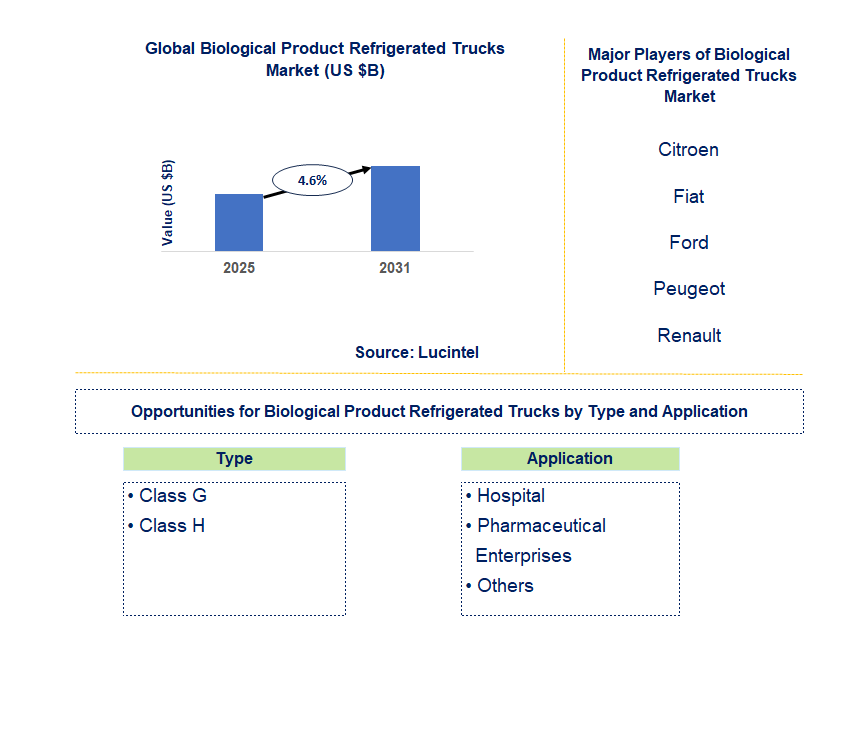
Key data points: The growth forecast = 4.6% annually for the next 7 years. Scroll below to get more insights. This market report covers Trends, opportunities and forecasts in biological product refrigerated trucks market to 2031 by type (class G and class H), application (hospital, pharmaceutical enterprises, and others), and region (North America, Europe, Asia Pacific, and the Rest of the World)
We'll send your sample report shortly.
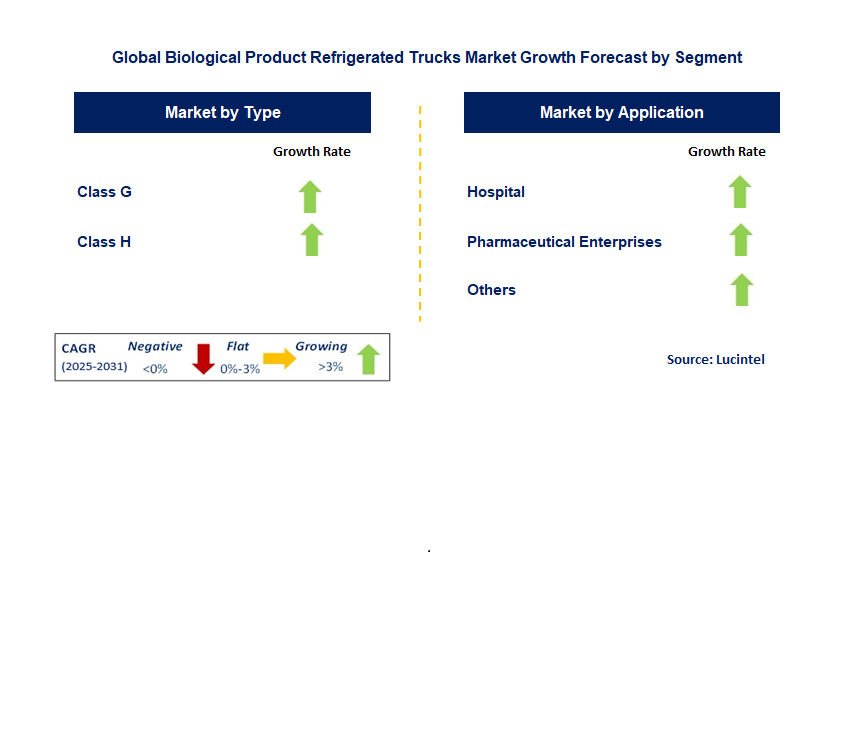
• Lucintel forecasts that, within the type category, class H is expected to witness higher growth over the forecast period.
• Within the application category, pharmaceutical enterprise is expected to witness higher growth due to rising need for controlled temperature transportation of pharmaceutical products.
• In terms of region, North America is expected to witness the highest growth over the forecast period due to the strong pharmaceutical industry in the U.S. and Canada.
• Growth of Electric Refrigerated Trucks: Electric refrigerated trucks are gaining traction because they minimize the environmental footprint and consume a lot of less energy. In electric refrigerated trucks, there is electric power for refrigeration, thus lowering the use of fossil fuels. The market has seen a great investment in the electric refrigerated truck fleet mainly in countries like Japan and the United States as sustainability initiatives take center stage. These trucks offer economies in fuel consumptions and reduction in maintenance compared to the conventionally designed models. Companies thus look forward to reducing carbon footprint through such solutions.
• IoT and Real-Time Monitoring: The integration of Internet of Things (IoT) technology in refrigerated trucks has become a significant trend. Real-time monitoring of temperature, humidity, and other environmental conditions allows for better control and traceability of goods during transit. IoT-enabled refrigerated trucks are equipped with sensors that send data to central systems, enabling fleet managers to track shipments and ensure compliance with regulations. This trend is particularly important in industries such as pharmaceuticals, where precise temperature control is critical.
• Automation and AI in Logistics: Automation and artificial intelligence are transforming cold chain logistics, including refrigerated transportation. AI-based systems are being used to optimize routes, monitor truck performance, and predict maintenance needs. Automated processes in loading and unloading are also improving operational efficiency. These technologies result in cost savings and faster delivery times and ensure better product integrity during transportation and thus are essential for biological product refrigerated trucks.
• Sustainability Emphasis in Refrigerated Transport Systems: The growing requirement for sustainability from the refrigeration transport sector comes at a rapid pace. Currently, one major trend dominating this market is turning towards environment-friendly refrigeration systems. Firms are implementing naturally available refrigerants and energy-optimistic refrigerator units in reducing carbon emissions caused by these practices. Especially on European platforms, there has been increasing regulatory compliance, thus boosting companies' ability to embrace eco-friendly technology. These benefit the environment, but they also save fleet operators significant dollars in the long term.
• Regulatory Compliance and Safety Standards: The transport of biological products is highly regulated. It is therefore highly focused on compliance with the safety and quality standards of the industry. Regulations are becoming increasingly tough on temperature control, hygiene, and traceability. The rise in global pharmaceutical trade has led to stricter regulations, which are driving the development of trucks that meet these high standards. Companies must invest in advanced refrigeration systems and monitoring technologies to ensure their vehicles comply with these evolving standards.
The emerging trends in the biological product refrigerated trucks market, including the growth of electric trucks, the integration of IoT, the use of AI, a focus on sustainability, and increasing regulatory compliance, are transforming the market. These trends represent a larger trend toward innovation, sustainability, and efficiency, setting the market up for further growth. The adoption of these trends will enhance the reliability and environmental impact of refrigerated transportation, benefiting industries that rely on temperature-sensitive products.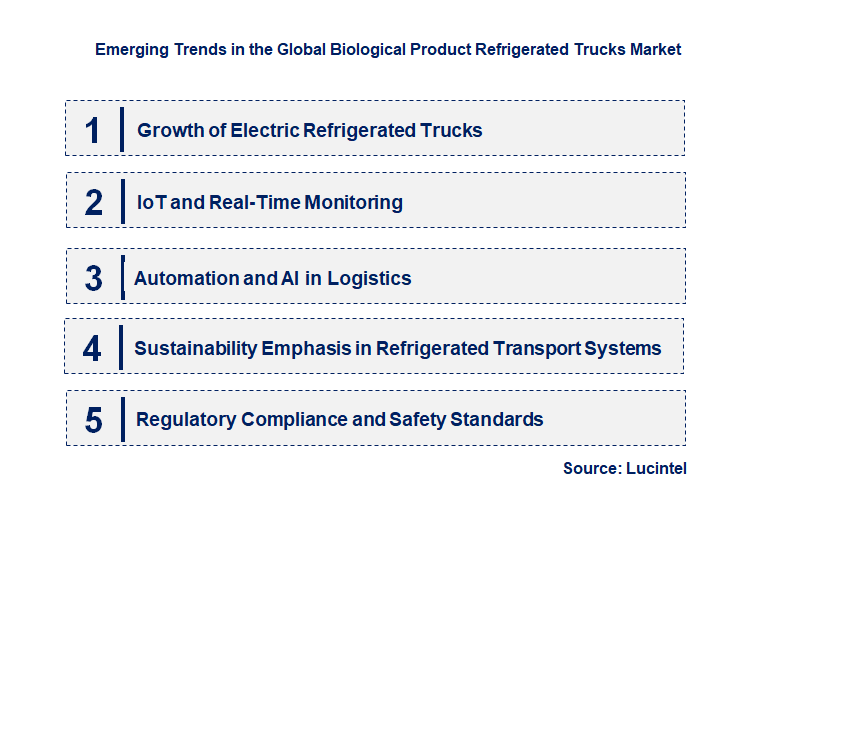
• Advancement in Refrigeration Technologies: Recent developments in refrigeration technologies are revolutionizing the biological product refrigerated trucks market. New systems, including electric-powered and hybrid refrigeration units, are being introduced to improve energy efficiency. These advancements reduce fuel consumption and operating costs, while also minimizing environmental impacts. Such improvements help businesses stay competitive while complying with sustainability goals.
• Integration of IoT for Enhanced Tracking: The integration of IoT in refrigerated trucks is improving cold chain management by enabling real-time tracking of temperature and humidity. Sensors embedded in the trucks monitor and transmit data, allowing operators to track shipments throughout the journey. This technology ensures that biological products, such as vaccines and pharmaceuticals, are transported under the required conditions, enhancing both safety and reliability.
• Focus on Sustainable Refrigeration Solutions: As sustainable development has started to become an important driver in the biological product refrigerated trucks market, several companies are adapting to natural refrigerants, especially CO2-based refrigeration system solutions, while reducing the carbon footprint of those systems. Meeting the increasingly tighter environmental regulations using energy-efficient technology is also serving the purpose, which is closely aligned with other global sustainability imperatives and could continue to push market developments.
• Increased Demand for Temperature-Controlled Vehicles: There is growing demand for pharmaceuticals, vaccines, and perishable foods with a need to ensure their reliable transportation. Currently, global trade is at an all-time high coupled with the continuous requirement for transporting the COVID-19 vaccine. Because of this, companies are manufacturing more specialized refrigerated trucks for this need, built with advanced features that make sure the temperature is kept steady in delivery.
• Increased use of Electric and Hybrid Vehicles: Electric and hybrid refrigerated trucks are gaining traction in the market due to their environmental benefits and operational cost savings. These vehicles offer an alternative to diesel-powered trucks, reducing greenhouse gas emissions and fuel consumption. The adoption of electric and hybrid vehicles is supported by government incentives and growing environmental awareness, which are driving the expansion of these trucks in the biological product refrigerated trucks market.
These key developments form the biological product refrigerated trucks market, that is both making it more efficient and sustainable. Technological progress in refrigeration and the increase in the inclusion of IoT aspects along with greater demand for electric and hybrid automobiles is improving the cold chain logistics. These alterations place the market for further development and change for the next decade.• Pharmaceutical Transportation: The growth opportunity of refrigerated trucks in pharmaceutical transportation has increased because of growing worldwide distribution of vaccines, biotechnology products, and other temperature-sensitive medicines. Refrigerated trucks ensure that these products maintain their efficacy by keeping them within the required temperature range. As pharmaceutical companies expand their reach, especially in developing markets, the demand for biological product refrigerated trucks will continue to rise, creating growth prospects for companies in this sector.
• Food and Beverage Industry: The food and beverage industry remains a key application for refrigerated trucks. As the global population grows and consumer preferences shift towards fresh, organic, and perishable foods, the need for refrigerated transportation becomes more critical. Trucks that maintain proper temperatures are essential for transporting products like fruits, vegetables, dairy, and meat. Additionally, with the rise of e-commerce for food deliveries, companies are increasingly investing in refrigerated trucks to ensure timely and safe transportation of food. This growing demand for refrigerated logistics offers a valuable opportunity for businesses in the market.
• E-Commerce Growth: The rise of e-commerce, particularly in sectors like grocery delivery and pharmaceutical sales, presents a new growth opportunity for refrigerated trucks. Online shopping for temperature-sensitive goods requires an efficient cold chain system to ensure product quality. As consumers increasingly demand home delivery of perishable goods, businesses are expanding their refrigerated truck fleets to meet these needs. This growth in e-commerce requires refrigerated logistics solutions that are fast, efficient, and capable of maintaining optimal conditions for biological products.
• Emerging Markets: Emerging markets, especially in regions like Asia-Pacific, are presenting growth opportunities for the refrigerated truck market. Countries such as India and China are seeing rapid urbanization and an increase in healthcare and food industry investments, driving demand for refrigerated transportation. As these markets develop, they require reliable cold chain logistics to meet the needs of the pharmaceutical and food industries. This growth, combined with the increasing focus on modernizing logistics infrastructure, opens up significant market opportunities for refrigerated truck manufacturers and operators.
• Sustainability and Eco-Friendly Solutions: Sustainability is becoming a key focus in the transportation industry, including refrigerated trucks. There is growing demand for energy-efficient, eco-friendly refrigeration solutions, especially in Europe and North America. The adoption of electric and hybrid refrigerated trucks, as well as natural refrigerants, offers a competitive advantage for businesses looking to reduce their environmental impact. Companies that prioritize sustainability in their refrigerated transport fleets can capture market share, especially as consumers and regulators continue to demand greener solutions.
Strategic growth opportunities in the biological product refrigerated trucks market are driven by demand in pharmaceutical transportation, the food and beverage sector, e-commerce, emerging markets, and sustainability initiatives. As global trade in temperature-sensitive goods continues to expand, these opportunities offer significant potential for businesses to innovate, improve operations, and meet regulatory requirements. By focusing on these key applications, companies can position themselves for long-term growth in the refrigerated transportation market.• Citroen
• Fiat
• Ford
• Peugeot
• Renault
• Mercedes
• Toyota
• Nissan
• Vauxhall
• Volkswagen
• Class G
• Class H
• Hospital
• Pharmaceutical Enterprises
• Others
• North America
• Europe
• Asia Pacific
• The Rest of the World
• United States: In the United States, the market for biological product refrigerated trucks has seen major breakthroughs in refrigeration technologies. The increasing demands for pharmaceutical and food transportation are pushing the demand for energy-efficient, eco-friendly trucks with electric refrigeration systems. There has been an increasing demand for special vehicles for the transportation of vaccines and other essential biological products in the wake of the COVID-19 pandemic. Further, the regulations for cold chain logistics and transportation have become more stringent, which in turn has been pushing for further technological advancements.
• China: The biological product refrigerated trucks market in China has been rapidly developing with the growth of domestic and international cold chain logistics. The pharmaceutical sector is growing in the country, along with the increasing demand for fresh food, and thus, the refrigerated trucks have become more sophisticated. Chinese manufacturers are emphasizing the thermal efficiency of refrigeration systems and introducing IoT-enabled tracking systems to maintain a timely and precise temperature that would help during transit. The rising government regulations in the cold chain logistics industry also work in favor of the growth of the market.
• Germany: Germany also leads in the biological product refrigerated trucking segment, with an emphasis on precision and reliability. These are predominantly driven by the strength of the pharmaceutical industry in Germany and increasing requirement for chilling the transport of sensitive goods. The manufacturers in Germany are upgrading to more sophisticated refrigeration systems, including hybrid systems that blend conventional and electric cooling techniques to achieve greater energy saving. Further, Germany has already set a high benchmark in requiring strict compliance to law in cold chain logistics, thereby assuring maximum standards of safety in the transportation of biological products.
• India: The Indian biological product refrigerated truck market is evolving with the country's expanding healthcare and food sectors. There is an increasing requirement for pharmaceutical transport, including vaccines, as public health systems gain momentum through various government programs. As a result, more and more Indian companies are investing in their fleets of refrigerated trucks to make sure that their truck's refrigeration unit is more reliable and energy-efficient. The Indian government is also implementing regulations to enhance the cold chain infrastructure, which is expected to boost the market further.
• Japan: Japan’s biological product refrigerated trucks market has seen rapid technological advancements, particularly in the adoption of electric refrigerated trucks. The market is driven by the country's need to transport temperature-sensitive biological products, including pharmaceuticals and perishable food items. The highly regulated market in Japan encourages the development of trucks with integrated IoT systems for real-time monitoring of temperature and humidity. In addition, there is increasing pressure on reducing carbon emissions in refrigerated transport, which increases investments in eco-friendly and energy-efficient refrigerated trucks.


• Citroen
• Fiat
• Ford
• Peugeot
• Renault
• Mercedes
• Toyota
• Nissan
• Vauxhall
• Volkswagen
Q5. Which biological product refrigerated trucks market segment will be the largest in future?

Choose a license that fits your team. Instant PDF delivery.
Prices exclude taxes. Instant delivery. Custom licensing available on request.
Market Report · July 31, 2026
Market Report · July 17, 2026
Market Report · May 18, 2026
Trusted partner for strategic intelligence and business growth


Receive a complimentary market analysis tailored to your industry. Our analysts will identify key growth opportunities and competitive dynamics specific to your business.

Market size, growth rate, and key trend analysis for your specific sector.

Top competitor positioning and market share analysis.

Strategic recommendations backed by data-driven insights.
Get curated market intelligence and competitive moves straight to your inbox.
By subscribing, you agree to receive our monthly insights. Unsubscribe anytime.
Receive a complimentary market analysis tailored to your industry. Our analysts will identify key growth opportunities and competitive dynamics specific to your business.
Market size, growth rate, and key trend analysis for your specific sector.
Top competitor positioning and market share analysis.
Strategic recommendations backed by data-driven insights.
Get curated market intelligence, emerging trends, and competitive moves straight to your inbox each month.
By subscribing, you agree to receive our monthly insights. Unsubscribe anytime.
We'll send your sample report shortly.