
Market Report · July 31, 2026

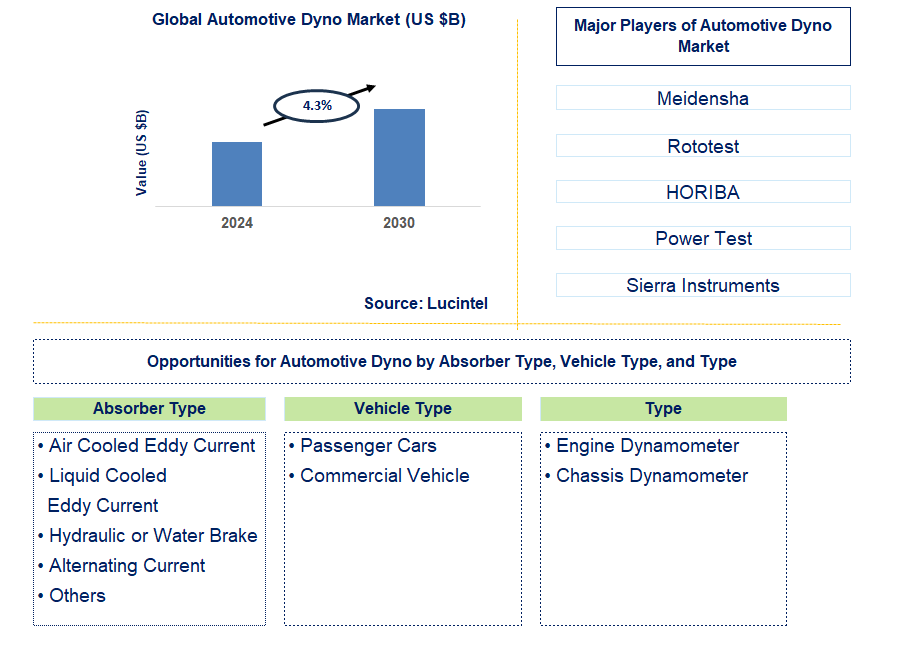
Key data points: The growth forecast = 4.3% annually for the next 6 years. Scroll below to get more insights. This market report covers trends, opportunities, and forecasts in the global automotive dyno market to 2030 by absorber type (air cooled eddy current, liquid cooled eddy current, hydraulic or water brake, alternating current , and others), vehicle type (passenger cars and commercial vehicle), type (engine dynamometer and chassis dynamometer), and region (North America, Europe, Asia Pacific, and the Rest of the World)
We'll send your sample report shortly.
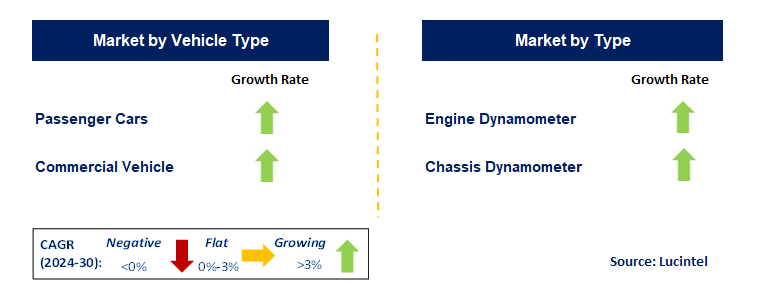
• Lucintel forecasts that, within the vehicle type category, passenger car will remain a larger segment over the forecast period due to increasing popularity of vehicle modification and the growing demand for more fuel-efficient and powerful vehicles.
• In terms of region, APAC will remain the largest region over the forecast period because of growing popularity of electric vehicles in this region. A more than 150-page report is developed to help in your business decisions.
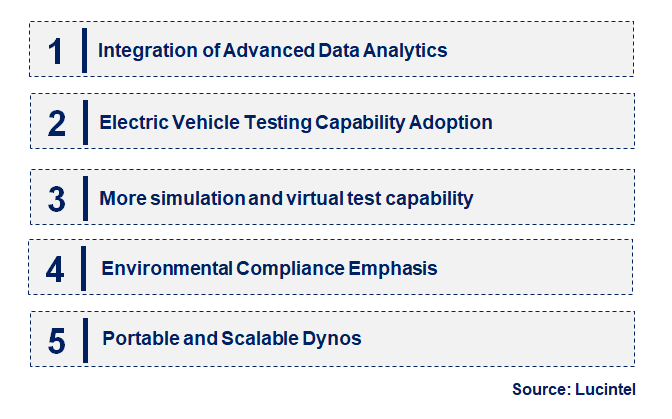
• Integration of Advanced Data Analytics: The integration of state-of-the-art data analytics has been considered a front-runner in automotive dynos in recent times. This trend enables real-time processing and detailed analysis of data, further enhancing testing processes related to accuracy and efficiency. Better insights into data help optimize vehicle performance and meet regulatory standards.
• Electric Vehicle Testing Capability Adoption: With the rise of electric vehicles, much emphasis is being placed on the development of dynos with EV testing capabilities. These dynamometers are designed to accommodate the unique performance characteristics and requirements of electric drivetrains, supporting the growing demand for EV testing and validation.
• Increased Use of Simulation and Virtual Test Capabilities: The increased use of simulation and virtual testing technologies is gaining ground in dyno testing. These tools enable the modeling of various driving conditions and scenarios, providing valuable insights with limited physical testing. This helps reduce costs and accelerates the product development process.
• Environmental Compliance Emphasis: There is a growing focus on ensuring vehicles comply with strict environmental standards. In this regard, modern dyno systems now incorporate more value-added features for testing emissions and fuel efficiency, helping to meet global regulatory requirements and supporting the shift toward greener automotive technologies.
• Portable and Scalable Dynos: The demand for portable and scalable solutions in dynamometers has increased. These systems are flexible and can easily operate in various testing environments, both onsite and mobile. This trend is driven by the availability of affordable and flexible testing solutions. The emerging trends in the automotive dyno market are driving technological innovation, improving testing capabilities, and aligning with the evolving requirements of the industry. Companies that embrace these trends will be well-positioned to meet the needs of the modern automotive sector.
• Advanced Automation and Integration of AI: The increasing integration of automation and artificial intelligence in automotive dynamometers is continuously raising the bar for precision and efficiency. This system, driven by artificial intelligence, is capable of real-time data analysis, predicting possible issues, and optimizing test processes to result in more accurate and reliable performance assessments.
• Increased Attention to Electric Vehicle Testing: With growing interest in electric vehicles comes a parallel increase in the number of dynos dedicated to EVs. These systems are designed to address the peculiarities of electric drivetrains, such as high torque and different patterns of power delivery, ensuring accurate performance evaluations of such vehicles.
• Introduction of High-Precision Emissions Testing Dynos: New dynos with high-precision emissions testing capabilities have been introduced to meet stringent environmental regulations. These advanced systems offer more precise measurement of emissions and fuel efficiency to facilitate compliance with global environmental standards.
• Expansion of Remote and Cloud-Based Testing Solutions: There is growing interest in expanding remote and cloud-based testing solutions within the dyno market. This approach fulfills the need for remote monitoring and control over the test process, offering greater flexibility and increased efficiency. Options for cloud storage and analysis open better avenues for accessing and managing test results.
• Development of Modular and Scalable Dyno Systems: Modern developments are focusing on modular and scalable dynamometer systems, which offer flexibility to adapt to diverse testing requirements. These systems can be modified or expanded based on specific needs, making them ideal for testing environments of all sizes, from the smallest to the largest scales. These developments have driven technological advancement in the after-sales automotive dyno market, improving testing accuracy and meeting new industry requirements. The market itself is being reshaped to meet modern demands for automotive testing and performance validation.
• Testing of Electric Vehicles: The growing importance of electric vehicles presents significant development opportunities for dyno manufacturers. Specializing in EV testing with measurements for high torque and power output provides insight into the growing demand for EV performance testing.
• Emissions and Environmental Testing: With the recent tightening of environmental legislation, there is a corresponding increase in demand for advanced emissions test dynos. Companies can take advantage of this trend by offering high-precision systems that meet or exceed global environmental standards, supporting the greening of the automotive industry.
• Remote and Cloud-Based Testing Solutions: There is an increasing demand for remote and cloud-based testing solutions. Offering dynos with remote monitoring and cloud-based data management will provide flexibility and efficiency for modern automotive test bench environments.
• High-Performance and Motorsport Testing: The need for advanced high-performance dyno systems is growing within the field of motorsport. The ability to develop advanced dynos that simulate extreme conditions and measure performance accurately will unlock a larger market for testing motorsport and high-performance vehicles.
• Dyno Systems: Modular and Scalable Solutions: Modular and scalable dynamometer solutions provide flexibility across a range of test applications. This includes delivering dynos that are customizable and expandable to meet the diverse needs of automotive manufacturers and test laboratories supporting both small and large-scale operations. In essence, these strategic growth opportunities provide expansive and innovative prospects for the automotive dyno market. Companies will be well-positioned to capitalize on these opportunities, meet changing industry needs, and contribute to market growth.
• Technological Advancements: Automation, AI, and data analytics are revolutionizing the automotive dyno market. These advancements are expected to enhance the accuracy of tests, improve efficiency, and enable real-time data analytics to meet the evolving demands of the automotive industry.
• Emerging Demand for Electric Vehicles: The increasing adoption of electric vehicles (EVs) is driving demand for sophisticated dynos capable of testing EVs. This, in turn, drives investment in new technologies and solutions tailored to electric drivetrains.
• Tightening Environmental Regulations: The growing strictness of environmental regulations calls for effective testing of emissions and fuel efficiency. As a result, there is a demand for advanced dynos that meet these stringent environmental standards.
• Growth in Emerging Economy Automotive Markets: The expansion of automotive markets in emerging economies is driving demand for dynamometer systems. Companies are investing in new facilities and technologies that support such expansion while also addressing local testing requirements.
• High-Performance Testing Requirements: The motorsport and high-performance vehicle industries require advanced dyno systems capable of high-precision testing. This demand is fueling innovation and the development of high-capacity, high-precision dynamometers. Challenges in the automotive dyno market include:
• High Prices for Advanced Dyno Systems: The high prices of advanced dynamometer systems discourage small entrants and test houses. Maintaining a balance between cost and technological innovation is a key challenge for manufacturers in the market.
• Complex Regulatory Requirements: Keeping up with constantly changing regulations and standards is difficult. Companies must stay informed about global standards and ensure their dynos comply with various regulatory requirements, which can be resource-intensive.
• Competitive Market Landscape: The automotive dyno market is highly competitive, with many players offering similar products. Companies must constantly differentiate their offerings and maintain competitive pricing while delivering high-quality solutions. These drivers and challenges are shaped by trends in technological development, regulatory compliance, and market dynamics. Companies that can effectively respond to these factors will be better positioned to capitalize on growth opportunities and navigate the complexities of the market.
• Meidensha
• Rototest
• HORIBA
• Power Test
• Sierra Instruments
• Taylor Dynamometer
• AVL
• Air Cooled Eddy Current
• Liquid Cooled Eddy Current
• Hydraulic or Water Brake
• Alternating Current
• Others
• Passenger Cars
• Commercial Vehicle
• Engine Dynamometer
• Chassis Dynamometer
• North America
• Europe
• Asia Pacific
• The Rest of the World
• United States: The growth in demand for higher complexity dynamometer systems in the United States is driven by the need to test electric and hybrid vehicles. In recent years, advanced research in the field has led to the integration of sophisticated data analytics that enable real-time monitoring. These enhancements improve the accuracy and efficiency of testing, addressing the requirements for performance tuning and regulatory compliance.
• China: China's automotive dynamometer market is on the rise, with the country scaling up production and testing activities in the automobile sector. Key developments include increased investment in high-precision dynamometers and the adoption of advanced testing technologies to support the growing electric vehicle sector. Improved regulatory standards are driving the demand for more sophisticated testing equipment.
• Germany: Germany is a hub for automotive innovation. Recently, advancements in dynamometer technologies have focused more on high-performance and emissions testing. Developments include the introduction of more versatile and high-capacity dynamometers that cater to the diverse needs of the automotive industry. There is also a strong emphasis on integrating AI and machine learning to improve test data analysis.
• India: With a growing automotive sector and stringent regulatory requirements, the automotive dynamometer market in India continues to expand. Developments include the use of more affordable and scalable dynamometer solutions designed to meet the needs of both domestic manufacturers and global players. Increased focus on quality and performance testing is driving market growth.
• Japan: The automotive dynamometer market in Japan is deploying high-precision test equipment, which is rapidly evolving with novel technologies. Recent developments include the integration of high-tech simulation and testing capabilities to help advance new automotive technologies such as hydrogen fuel cells and electric vehicles. There is also a focus on improving test efficiency and accuracy.


• Meidensha
• Rototest
• HORIBA
• Power Test
• Sierra Instruments
• Taylor Dynamometer
• AVL Q5. Which automotive dyno market segment will be the largest in future? Answer: Lucintel forecasts that passenger car will remain the larger segment over the forecast period due to increasing popularity of vehicle modification and the growing demand for more fuel-efficient and powerful vehicles.
• Meidensha
• Rototest
• HORIBA
• Power Test
• Sierra Instruments
• Taylor Dynamometer
• AVL Q6. In automotive dyno market, which region is expected to be the largest in next 6 years? Answer: APAC will remain the largest region over the forecast period because of growing popularity of electric vehicles in this region. Q.7 Do we receive customization in this report? Answer: Yes, Lucintel provides 10% customization without any additional cost. Q.7 Do we receive customization in this report? Answer: Yes, Lucintel provides 10% customization without any additional cost.


Choose a license that fits your team. Instant PDF delivery.
Prices exclude taxes. Instant delivery. Custom licensing available on request.
Market Report · July 31, 2026
Market Report · July 17, 2026
Market Report · May 18, 2026
Trusted partner for strategic intelligence and business growth


Receive a complimentary market analysis tailored to your industry. Our analysts will identify key growth opportunities and competitive dynamics specific to your business.

Market size, growth rate, and key trend analysis for your specific sector.

Top competitor positioning and market share analysis.

Strategic recommendations backed by data-driven insights.
Get curated market intelligence and competitive moves straight to your inbox.
By subscribing, you agree to receive our monthly insights. Unsubscribe anytime.
Receive a complimentary market analysis tailored to your industry. Our analysts will identify key growth opportunities and competitive dynamics specific to your business.
Market size, growth rate, and key trend analysis for your specific sector.
Top competitor positioning and market share analysis.
Strategic recommendations backed by data-driven insights.
Get curated market intelligence, emerging trends, and competitive moves straight to your inbox each month.
By subscribing, you agree to receive our monthly insights. Unsubscribe anytime.
We'll send your sample report shortly.