
Report Feature
Phenolic Resin Market Trends and Forecast
Lucintel finds that the future of the global phenolic resin material market looks promising with growth opportunities in the construction, transportation, electrical and electronics, furniture, and industrial end uses. The global phenolic resin market is expected to reach an estimated $24 billion by 2030 with a CAGR of 4% from 2024 to 2030. The major drivers of growth for this market are increasing use of heat resistance, corrosion and chemical resistance materials in construction and transportation industry and lower cost of phenolic resin compared to its competitors.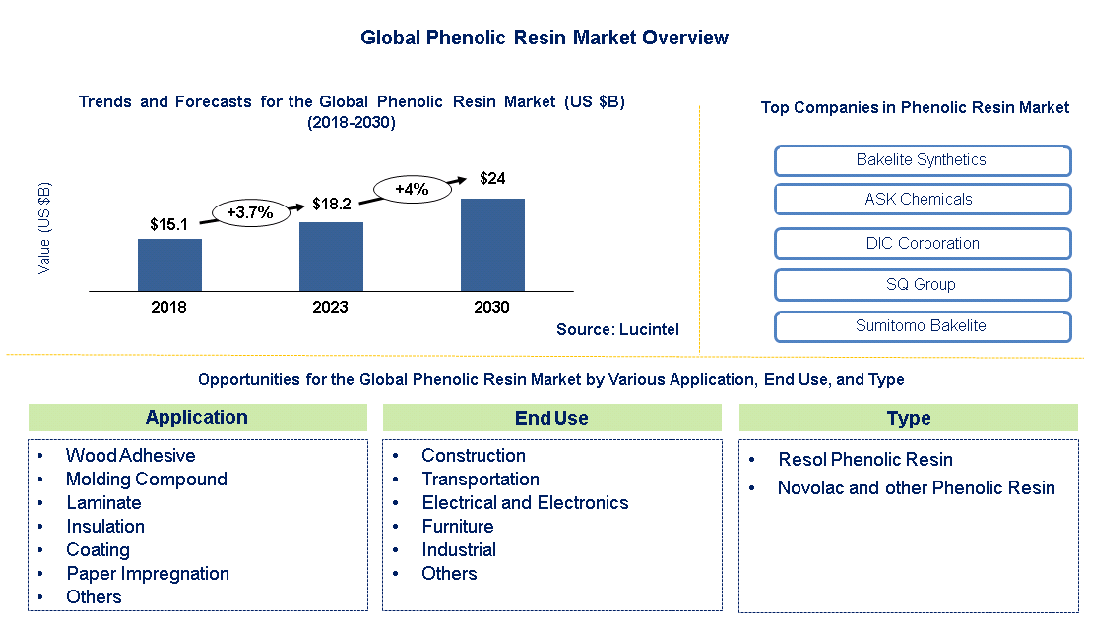
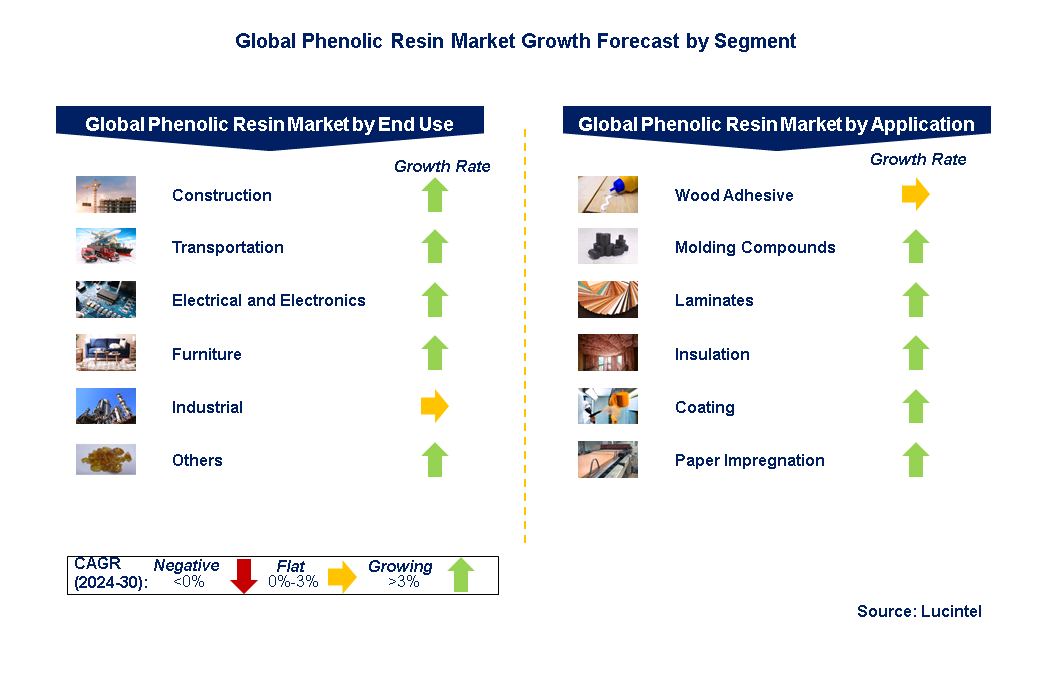
- Lucintel forecasts that the construction segment will remain the largest end use segment over the forecast period due to demand for heat resistant material and low cost material is driving phenolic resin market. Electrical and Electronics is expected to witness the highest growth over the forecast period.
- Wood adhesive segment will remain the largest end use segment over the forecast period. Molding compounds segment is expected to witness highest growth over the forecast period due to high heat resistance, mechanical strength and electrical properties and is used in automotive, aerospace, electronics and industrial market.
- Asia Pacific is expected to remain the largest region and witness the highest growth over the forecast period due to growth in end use industries such as residential and commercial activities, increasing automotive production, and growing electrical and electronics demand.
Country wise Outlook for the Phenolic Resin Market
The phenolic resin market is witnessing substantial growth globally. Major players in the market are expanding their operations and forming strategic partnerships to strengthen their positions. Below image highlights recent developments by major phenolic resin producers in key regions: the USA, Germany, China, India, and Brazil.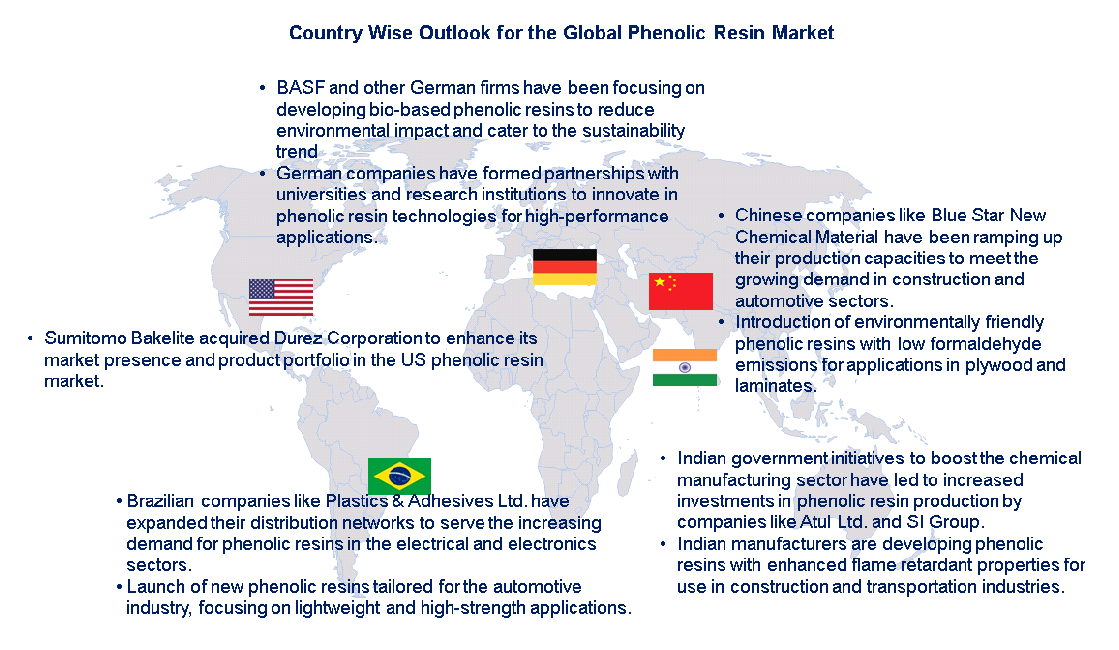
Emerging Trends in the Phenolic Resin Market
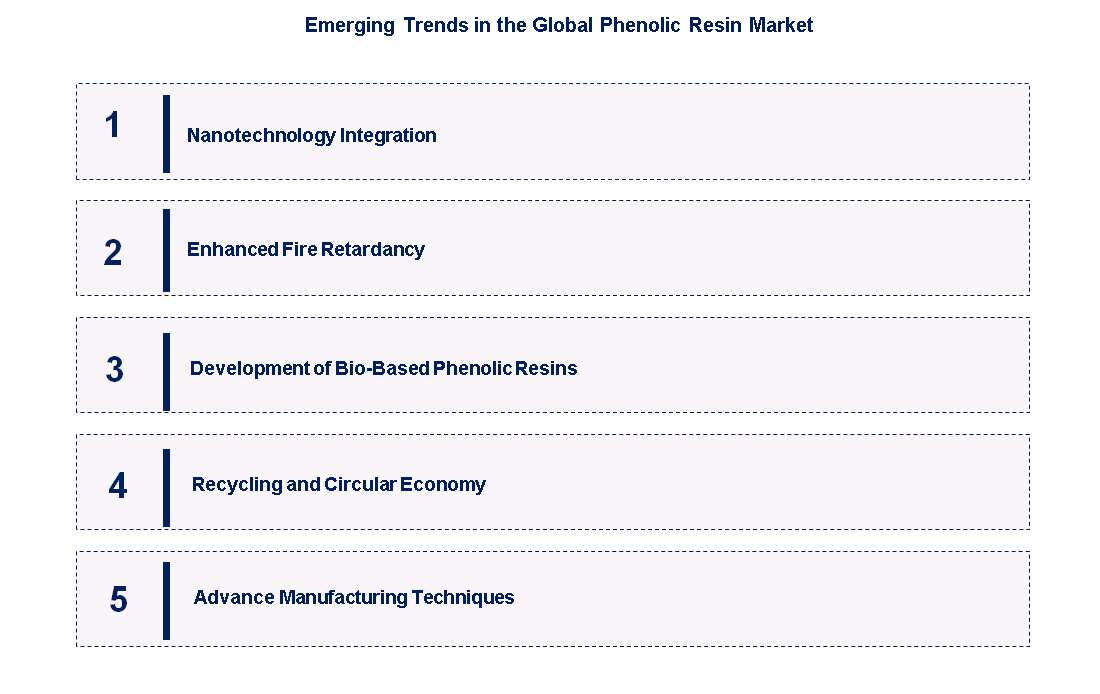
Emerging trends in the phenolic resin market shaping its future applications and market dynamics:- Nanotechnology Integration: There is an emerging trend towards the integration of nanotechnology into phenolic resin formulations. Nanomaterials such as graphene and carbon nanotubes are used to improve mechanical, electrical, and thermal properties of the phenolic resins in order to open up new applications in electronics and advanced composites....
- Enhanced Fire Retardancy: Innovations are focused on improving the fire-retardant properties of phenolic resins. Researchers are working on enhancing their thermal stability and improving their fire resistance making them useful for building, transport or electronics purposes.
- Development of Bio-Based Phenolic Resins: Currently there is a growing interest in developing bio-based phenolic resins as a sustainable alternative to traditional petrochemical-based ones. The use of renewable sources by these bio-based forms reduces the load on fossil fuels and carbon emission.
- Recycling and Circular Economy: Efforts are being made to enhance recyclability of phenolic resins and develop processes aligned with circular economy principles.. Studies have been conducted to make recovery processes easier for phenolics thereby reducing environmental concerns.
- Advanced Manufacturing Techniques: Improvements in manufacturing techniques like automated processing or precision molding have led to increased efficiencies and quality in products based on phenolic resin materials or components.Achieving this requires improvements such as complex shapes, high precision, large-scale geometries among others.
- Hybrid Resin Systems: The development of hybrid resins that combine phenol-formaldehyde resins with other types (e.g., epoxy, polyurethane) is gaining momentum.These hybrid formulations exhibit exceptional toughness enhanced flexibility, improved chemical resistance among other peculiarities.
- Application in 3D Printing: Additive manufacturing process known as 3D printing can be carried out using a variety of materials including Phenolic resins due to their superior mechanical strength properties and heat tolerance thus enabling the creation of intricate and high-performance parts for several industries.
- High-Performance Composites: Phenolic resins are increasingly used in high-performance composite materials, especially in the aerospace and automotive industries. These composites provide excellent mechanical properties, chemical resistance and dimensional stability at extreme temperatures.
A more than 150-page report is developed to help in your business decisions. Sample figures with some insights are shown below.
Recent Development in the Phenolic Resin Market
Recent developments in phenolic resin market by various companies highlight ongoing innovations and advancements across different sectors:- Automotive and Aerospace High Demand: High demand for the use of phenolic resins in automotive and aerospace industries has been realized due to their capacity to endure tough mechanical strengths, high temperatures, as well as being fireproof. This led many firms to attempt producing better developed phenol formaldehydes that meet strict demands of these two sectors.
- Improved Fire Safety Applications: Phenolic resins are broadly used in construction especially in circumstances when there is a risk of fire or other disasters hence they are highly demanded. They may include the development of phenolic foams and panels with enhanced fire retardancy so that they can be used for insulation purposes or structural components.
- Electrical and Electronics Sector Growth: For instance, this material is increasingly popular in the production of electronic parts such as circuit boards and insulators among others. Thus, special attention has been paid to high-performance phenol formaldehydes to make them demonstrate excellent electrical insulation properties accompanied by high thermal stability.
- Sustainability and Eco-friendly Products: In recent times, it is about green alternatives on how to produce phenolics as environmental friendly or sustainable developments. Therefore companies carrying out investigations towards decreasing pollution associated with manufacturing processes while at the same time creating alternative sources of organic compounds used for synthesis of phenols have become quite common.
- Wood Adhesives Innovations: The woodworking industry uses lots of Phenol Formaldehyde Resin in its manufacturing operations leading to plywood, flake board together with laminated veneer lumber. These include low emissions of phenolics woods adhesives because they have become important in meeting environmental regulations that are stringent enough.
- Paints and Coatings Advancements: As a result of outstanding adhesive properties, chemical resistance aspects and lastingness, paints are best advantaged by using Phenolic resins both traditional alkyd types as well as modified alkyd ones based upon epoxy resin mixtures containing hardener crosslinkers with modified poly(methyl methacrylate) film used for industrial/marine applications.
- Asia-Pacific Market Expansion: This market has been on the rise in terms of industrialization and construction activities in Asia–Pacific. Besides, these firms are increasing their production capabilities or forming links with other firms so as to tap into this market potential.
- Specialty Phenolic Resins Focus: Many customers have specific demands that can be met through special phenolics. These include high purity phenolic resins for pharmaceutical and medical use as well as phenolic resins designed specifically for advanced composites and nanomaterials.
- Collaborations and Partnerships: The best way to expand their product portfolios and improve on innovation is by forming partnerships or collaborations. For example, a few chemical manufacturers join up with research organizations to create novel techniques using phenol formaldehyde.
Strategic Growth Opportunities for Phenolic Resin Market
The phenolic resin market is very dynamic due to its unique properties of being lightweight, strong and thermally stable. Some key strategic growth opportunities for this market include:Expansion in Construction Sector:
- Increase the use of materials such as laminates, adhesives and coatings used for construction to make them more durable and fire resistant.
- Develop phenolic resins which are eco-friendly that are aimed at meeting the sustainable requirements for building materials.
- Infiltrate the automotive markets with lightweight components and other interior parts using phenolic resin composites
- Form pacts with manufacturers of automobiles so that they can meet the demanding safety and performance standards.
- The excellent thermal and electrical insulation properties have seen increased utilization on cold plates and electronic components.
- Development of low smoke/ halogen free phenolic resins for electronics applications.
- Seize this opportunity to benefit from fast industrialization and urbanization taking place in countries like China, India among others.
- These should be customized to comply with regional regulations while still meeting market demands in Asia Pacific region which is an emerging market for Phenolic Resin.
- Phenol-based products ought to be substituted by bio-based or renewable feedstock sources so as minimize reliance on fossil fuel resources when making these resins.
- These concerns over sustainability need to be faced head-on as well as increasing competitiveness within a given market scope.
- Production process will focus on development of abrasive materials, molding compounds and frictional articles using high performance phenolics (HPP)
- Also heat resistance, mechanical property improvements/changes plus chemical resistance is necessary in business applications.
Phenolic Resin Market Driver and Challenges
The exceptional heat resistance, durability and fire-retardant properties associated with phenolic resin have made it a vital component in numerous industries. These attributes are propelling the market growth hence the increased demand of construction materials, electronics and automotive parts. Despite this positive trend, some hurdles stand on the way such as fierce competition from substitutes, fluctuating volatile raw material prices, environmental legislations on formaldehyde emission among others. Thus to keep phenolic resin market pace with changing market dynamics and regulatory landscape there is need for innovation that will enhance sustainable production methods and open up new application areas for these resins.The key drivers for the global Phenolic resin market include:
- Thermal Stability: Phenolic resins, which are thermally stable, can be used in high-temperature automotive, industrial and aerospace applications. The thermal stability of phenolic resins enables their use as automotive, industrial and aerospace materials in high temperatures..
- Fire-Resistant Nature: The need for phenolic resins is boosted by its natural fire-retardant attributes that are utilized to ensure safety in construction, electronics as well as transportation sectors. Inherence to Flame Retardancy: Demand for phenolic resins arises from the fact that they innately exhibit flame retardance hence it finds application in building and construction industry; transportation sector; and electronics industry where the issue of fire or inflammability is critical.
- Wood Adhesion: Phenolic resin has properties that make it a strong adhesive for wood products such as laminates or composites essential to the furniture as well as constructions industries. Adhesion and bonding strength: This is due to their excellent adhesive properties that make them suitable for wood products including laminates used in the furniture industry and composites which are necessary for construction applications.
- Polymer Resistance: Water resistant chemicals used in coating, insulations and chemical processes industries render them important polymers. Chemical resistance: Their moisture impermeable qualities make these polymers suitable for insulation purposes, coatings manufacturing industries among others.
- Growth of Construction & Automobile Industry: Adhesives, coatings and molding compounds use this type of phenolic resin since it forms a higher percentage of global adhesives, coatings and molding compounds especially related with automobiles. Growth of Construction and Automotive Sectors: The rise in construction activities coupled with increased global automotive production acts as one of the major drivers behind phenol formaldehyde market being used in adhesives, coatings or molding compounds.
- Sustainability Trends: Environmental friendly disposition towards materials sustainability makes bio sourced feedstock an important fit for phenolic resins. Sustainability Trends: This is because of the recently developed inclination towards green products and sustainable materials which are sourced from raw materials that are eco-friendly such as bio-based potential of phenolic resins.
- Instability in the Costs of Raw Materials: This means that the price of producing phenolic resin is challenged by fluctuating prices of formaldehyde or phenol, if you prefer.
- Environmental Concerns on Health Risks: There are strict regulations as a result of environmental concerns regarding formaldehyde use in phenolic resin manufacturing hence attempts to find safer options.
- Problems Associated with Processing and Handling: Phenolics demand meticulous handling and processing due to its exothermic curing process throughout manufacture that may lead to brittleness which further complicates manufacturing processes.
- Competition from Substitutes: However, when it comes to some applications involving phenols there are other categories of resins and advanced materials such as polyurethane among others that can act as real threats concerning this competition.
- Problems Related to Recycling: Hence, the recycling or disposal of these substances becomes a complexity resulting in environmental issues which then translate into operational challenges for manufacturers
- Technological Barriers: Continuous R&D investment needs to be made towards developing special formulations for advanced phenolic resins aimed at satisfying industry requirements and appropriate processing methods.
Phenolic Resin Suppliers and Their Market Shares
In this globally competitive market, several key players such as Bakelite Synthetics, ASK Chemicals, DIC Corporation, SQ Group, and Sumitomo Bakelite etc. dominate the market and contribute to industry’s growth and innovation. These players capture maximum market share. To know the current market share of each of major players, contact us by email at helpdesk@lucintel.com.Companies in the market compete on the basis of product quality offered. Major players in this market focus on expanding their manufacturing facilities, R&D investments, infrastructural development, and leverage integration opportunities across the value chain. With these strategies Phenolic resin market cater increasing demand, ensure competitive effectiveness, develop innovative products & technologies, reduce production costs, and expand their customer base. Some of the phenolic resin companies profiled in this report include.
These companies have established themselves as leaders in the global phenolic resin market, with extensive product portfolios, global presence, and strong research and development capabilities. They continually strive to enhance their market positions through strategic partnerships, mergers and acquisitions, and product innovations. The market share dynamics within the Phenolic resin market are evolving, with the entry of new players and the emergence of innovative Phenolic resin market technologies. Additionally, collaborations between material suppliers, manufacturers, and end-users are fostering technological advancements and expanding market opportunities.
Phenolic Resin Market by Segment
The global market is witnessing a steady growth in the phenol resins industry. For instance, building construction incorporates phenolic resins for fireproof laminations and coatings. Brake pads and interior components manufactured within the automotive sector also depend on them since they can withstand heat and are strong enough to bear the stress. Similarly, electronic circuit boards exploit phenolic resins due to their excellent electrical insulation. In addition, wood adhesives exploit resins of this type that exist in exterior plywood or laminated beams so as to make a strong bond. Also, due to their resistance to high temperatures and dimensional stability, these thermoset moulding compounds find application in consumer goods manufacturing sector. These segments reveal how versatile and increasingly important phenolic resin is becoming in global construction industry, automobile manufacturers, electronics users, lumber suppliers as well as moulders. The study includes trends and forecast for the global phenolic resin market by application, type, end use, and region as follows:
Phenolic Resin Market by Resin Type [Value from 2018 to 2030]:
- Resol Phenolic Resin
- Novolac Phenolic Resin
Phenolic Resin Market by Application [Value from 2018 to 2030]:
- Wood Adhesive
- Molding Compounds
- Laminates
- Insulation
- Coating
- Paper Impregnation
- Others
Phenolic Resin Market by End Use [Value from 2018 to 2030]:
- Construction
- Transportation
- Electrical and Electronics
- Furniture
- Industrial
- Others
Phenolic Resin Market by Region [Value from 2018 to 2030]:
-
North America
- US
- Canada
- Mexico
-
Europe
- Western Europe
- Eastern Europe
-
APAC
- China
- Japan
- India
- Taiwan
- Republic of Korea
-
ROW
- Central/South America
- Middle East

Features of the Global Phenolic Resin Market
- Market Size Estimates: Phenolic Resins market size estimation in terms of value ($M) and volume (M lbs)
- Trend and Forecast Analysis: Market trends (2018-2023) and forecast (2024-2030) by various segments and regions.
- Segmentation Analysis: Market size by application, type, end use, and region
- Regional Analysis: Phenolic Resins market breakdown by North America, Europe, Asia Pacific, and the Rest of the World.
- Growth Opportunities: Analysis of growth opportunities in different application, type, end use, and regions for the phenolic resins market.
- Strategic Analysis: This includes M&A, new product development, and competitive landscape for the phenolic resin market.
- Analysis of competitive intensity of the industry based on Porter’s Five Forces model.

FAQ
Q1. What is the phenolic resins market size?Answer: The global phenolic resin market is expected to reach an estimated $24 billion by 2030.
Q2. What is the growth forecast for phenolic resin market?
Answer: The phenolic resin market is expected to grow at a CAGR of 4% from 2024 to 2030.
Q3. What are the major drivers influencing the growth of the phenolic resin market?
Answer: The major drivers of growth for this market are increasing use of heat resistance, corrosion and chemical resistance materials in construction and transportation industry and lower cost of phenolic resin as compared to its competitors.
Q4. What are the major applications or end use industries for Global Phenolic Resin?
Answer: Construction and electrical & electronics are the major end uses for global phenolic resin.
Q5. What are the emerging trends in phenolic resin market?
Answer: Emerging trends, which have a direct impact on the dynamics of the industry, includes nanotechnology integration, enhanced fire retardancy, development of bio-based phenolic resins, recycling and circular economy, advanced manufacturing techniques, and hybrid resin systems.
Q6. Who are the key phenolic resin companies?
Answer: Some of the key phenolic resin companies are Bakelite Synthetics, ASK Chemicals, SQ Group, Sumitomo Bakelite Co. Ltd., DIC Corporation, Mitsui Chemicals, Ineos Composites (KPS Capital), Aica Kogyo etc.
Q7.Which phenolic resin type segment will be the largest in future?
Answer: Lucintel forecasts that the wood adhesive segment will remain the largest end use segment over the forecast period. Molding compounds segment is expected to witness highest growth over the forecast period due to high heat resistance, mechanical strength and electrical properties and is used in automotive, aerospace, electronics and industrial market.
Q8: In phenolic resin market, which region is expected to be the largest in next 7 years?
Answer: APAC is expected to remain the largest region over next 7 years.
Q9. Do we receive customization in this report?
Answer: Yes, Lucintel provides 10% Customization Without any Additional Cost.
This report answers following 11 key questions:
Q.1 What are some of the most promising, high-growth in global phenolic resin market by application (wood adhesive, molding compounds, laminates, insulation, coating, paper impregnation, and others), resin type (resol phenolic resin and novolac and othet phenolic resin), end use (construction, transportation, electrical and electronics, furniture, industrial, and others), and region (North America, Europe, Asia Pacific and ROW)?Q. 2 Which segments will grow at a faster pace and why?
Q.3 Which regions will grow at a faster pace and why?
Q.4 What are the key factors affecting market dynamics? What are the drivers and challenges of the market?
Q.5 What are the business risks and threats to the market?
Q.6 What are the emerging trends in this market and the reasons behind them?
Q.7 What are the changing demands of customers in the market?
Q.8 What are the new developments in the market? Which companies are leading these developments?
Q.9 Who are the major players in this market? What strategic initiatives are being implemented by key players for business growth?
Q.10 What are some of the competitive products and processes in this area and how big of a threat do they pose for loss of market share via material or product substitution?
Q.11 What M & A activities have taken place in the last 6 years in this market?
Table of Contents
1. Executive Summary 2. Global Phenolic Resin Market: Market Dynamics 2.1: Introduction, Background, and Classifications 2.2: Supply Chain 2.3: Industry Drivers and Challenges
3. Market Trends and Forecast Analysis from 2018 to 2030 3.1. Macroeconomic Trends (2018-2023) and Forecast (2024-2030) 3.2. Global Phenolic Resin Market Trends (2018-2023) and Forecast (2024-2030) 3.3. Global Phenolic Resin Market Trends and Forecast 3.4. Global Phenolic Resin Market by Application
4. Market Trends and Forecast Analysis by Region from 2018 to 2030 4.1: Global Phenolic Resin Market by Region
5. Competitor Analysis 5.1: Product Portfolio Analysis 5.2: Operational Integration 5.3: Porter’s Five Forces Analysis
6. Growth Opportunities and Strategic Analysis 6.1: Growth Opportunity Analysis
7. Company Profiles of Leading Players 7.1. Bakelite Synthetics 7.2. ASK Chemicals 7.3. SQ Group 7.4. Sumitomo Bakelite Co. Ltd 7.5. DIC Corporation 7.6. Mitsui Chemicals 7.7. Ineos Composites (KPS Capital) 7.9. Aica Kogyo
Methodology
Lucintel has been in the business of market research and management consulting since 2000 and has published over 1000 market intelligence reports in various markets / applications and served over 1,000 clients worldwide. This study is a culmination of four months of full-time effort performed by Lucintel's analyst team. The analysts used the following sources for the creation and completion of this valuable report:
- In-depth interviews of the major players in this market
- Detailed secondary research from competitors’ financial statements and published data
- Extensive searches of published works, market, and database information pertaining to industry news, company press releases, and customer intentions
- A compilation of the experiences, judgments, and insights of Lucintel’s professionals, who have analyzed and tracked this market over the years.
Extensive research and interviews are conducted across the supply chain of this market to estimate market share, market size, trends, drivers, challenges, and forecasts. Below is a brief summary of the primary interviews that were conducted by job function for this report.

Thus, Lucintel compiles vast amounts of data from numerous sources, validates the integrity of that data, and performs a comprehensive analysis. Lucintel then organizes the data, its findings, and insights into a concise report designed to support the strategic decision-making process. The figure below is a graphical representation of Lucintel’s research process.

Buy Now
Choose a license that fits your team. Instant PDF delivery.
Prices exclude taxes. Instant delivery. Custom licensing available on request.


