
Market Report · July 15, 2026

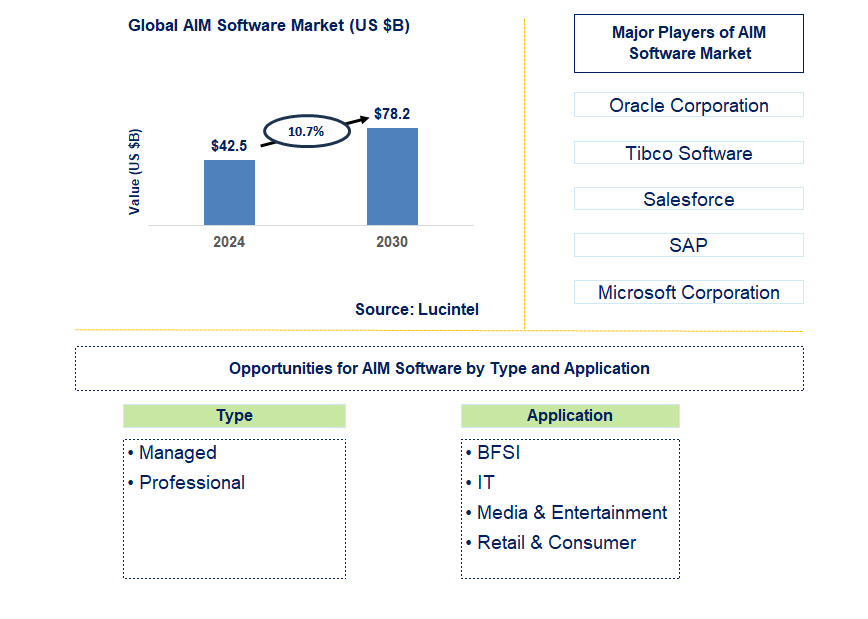
Key data points: The market size in 2030 = $78.2 billion, growth forecast = 10.7% annually for the next 6 years. Scroll below to get more insights. This market report covers trends, opportunities, and forecasts in the global aim software market to 2030 by type (managed and professional), application (BFSI, IT, media & entertainment, and retail & consumer), and region (North America, Europe, Asia Pacific, and the Rest of the World)
We'll send your sample report shortly.
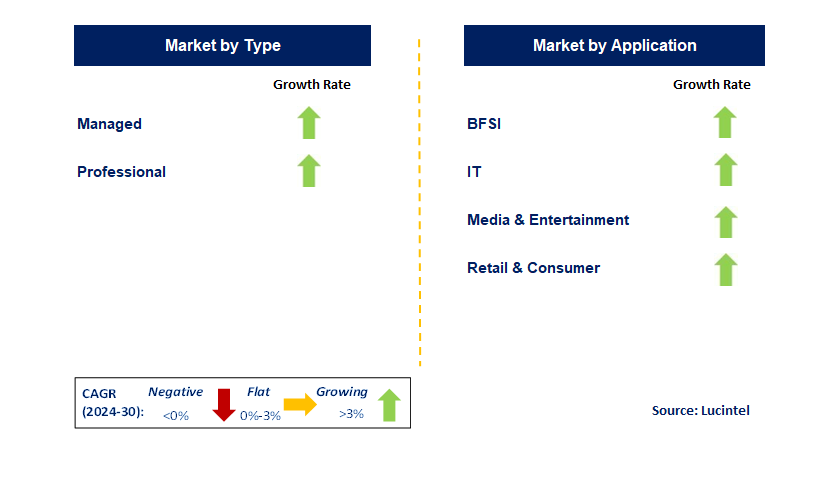
• Lucintel forecasts that, within the type category, managed is expected to witness higher growth over the forecast period.
• Within this application category, BFSI is expected to witness the highest growth.
• In terms of region, APAC is expected to witness the highest growth over the forecast period. A more than 150-page report is developed to help in your business decisions.
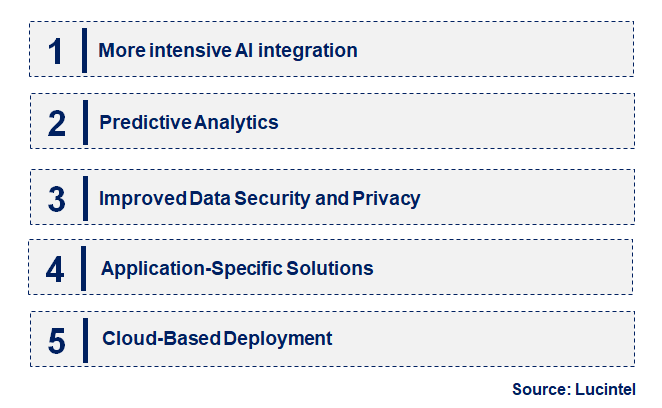
• More intensive AI integration: Advanced AI capabilities—such as deep learning and natural language processing—are finding their place in more and more AIM software to complement data analysis and decision-making. Embedding these functionalities into software enables more detailed insights and automation, resulting in broader business efficiency and accuracy.
• Predictive Analytics: Slowly but surely, AIM software is turning toward predictive analytics, which will enable organizations to predict future trends and outcomes based on historical data. This trend could improve strategic planning and operational efficiency by suggesting actionable insights as well as early warnings against potentially problematic issues.
• Improved Data Security and Privacy: Since AIM software contains sensitive data, it increasingly requires robust security and privacy controls. Improvements in areas such as encryption, access management, and compliance with data protection regulations will help instill trust in information protection.
• Application-Specific Solutions: AIM is increasingly being developed into sector-specific applications, such as those for finance, healthcare, and manufacturing. These application-specific solutions address unique challenges and needs, providing more precise and effective tools for various sectors.
• Cloud-Based Deployment: Adoption of cloud-based AIM software solutions is on the rise, promoting scalability, flexibility, and cost-efficiency. Cloud deployment facilitates advanced AIM capabilities without the heavy investment required for on-premise infrastructure, allowing for wider adoption and integration across organizations. These emerging trends are driving significant changes in the AIM software market, including the increased integration of AI, predictive analytics, enhanced data security, application-specific solutions, and cloud-based deployment. These shifts are reshaping how AIM software is developed and deployed, yielding more efficient solutions with targeted applications across industries.
• Advanced AI Algorithms: The integration of advanced AI, such as deep learning and reinforcement learning, has recently emerged in AIM software. These developments enable advanced data analytics, better decision-making, and automation of many functions, improving efficiency and effectiveness across all operational domains of an enterprise.
• Internet of Things (IoT) Integration: AIM software is increasingly integrated with IoT devices, improving data collection and analysis. This facilitates real-time monitoring and control of devices, providing valuable insights that enhance operational efficiencies across industries. Improved User Interfaces: Recent developments emphasize improving the user interface of AIM software, making it more intuitive and accessible. Features such as advanced visualization tools, customizable dashboards, and simplified controls are enabling users to interact with and manage AI systems more easily.
• Expansion into New Industries: AIM software is expanding into new sectors, including agriculture, retail, and education. This includes developing solutions tailored to these industries and using AI to solve specific problems, improving processes and outcomes.
• Growth of the SaaS Model: The growth of the SaaS model is crucial for AIM software. SaaS deployment offers flexibility, scalability, and cost-efficiency, enabling organizations to access advanced AIM capabilities with minimal upfront investment in infrastructure. These recent developments—advanced AI algorithms, IoT integration, improved user interfaces, sector-specific solutions, and SaaS models—are driving innovation and expanding the adoption of AIM technology. These changes will further develop and extend the capabilities and reach of AIM software, benefiting a wide range of industries.
• Financial Services: AIM software presents numerous growth opportunities in financial services, including risk management, fraud detection, and improving trading algorithms. AI-driven insights provide financial institutions with a means to enhance decision-making processes, optimize operations, and ensure regulatory compliance.
• Healthcare: AIM software opens up opportunities for improved diagnostics, patient care, and operational efficiency in healthcare. AI-driven solutions can enhance medical imaging, predictive analytics, and personalized treatment plans, driving innovation in healthcare delivery and improving patient outcomes.
• Manufacturing: The manufacturing industry benefits from AIM software through improved predictive maintenance, quality control, and supply chain management. AI-driven solutions optimize production processes, reduce downtime, and enhance overall manufacturing efficiency.
• Retail: AIM software offers tremendous opportunities for growth in retail, such as personalized recommendations, inventory management, and customer analytics. AI-driven insights enable retailers to improve marketing strategies, enhance customer experiences, and manage inventory more effectively.
• Education: In education, AIM software can improve personalized learning experiences, administrative efficiency, and student performance tracking. AI-driven tools enable adaptive learning, automate administrative tasks, and provide valuable insights into student progress and needs. With these strategic growth opportunities in financial services, healthcare, manufacturing, retail, and education, it is clear that AI-driven software solutions will continue to lead innovation and efficiency. By understanding the various applications of these technologies, stakeholders can better realize the potential of AIM technology for growth and development.
• Technology Innovation: The AIM software market is driven by continuous improvements in AI and machine learning technologies. Innovations such as better algorithms and enhanced computational power make AIM solutions more sophisticated and effective, increasing their capabilities and attractiveness.
• Increasing Demand for Automation: The growing need for automation across industries has gained significant momentum. Organizations are streamlining processes and reducing reliance on manual labor to improve efficiency, driving the demand for advanced AIM software solutions.
• Investment in AI Research: The rise of AIM software is closely tied to massive investments in AI research and development. Public and private funding for innovation accelerates the development of new technologies, further enhancing AIM capabilities.
• Data-Driven Decision Making: The increasing focus on data-driven decision-making is accelerating the adoption of AIM software. Organizations are relying more on AI-driven insights and analytics to make informed decisions, optimize operations, and differentiate themselves from competitors.
• Scalability and Flexibility: AIM software is scalable and flexible, making it attractive to a wide range of organizations. These solutions can be customized and scaled to meet specific business needs, enabling companies to adopt AIM technology effectively. Challenges in the AIM Software Market:
• High Development Costs: The development and implementation of sophisticated AIM software are costly. These high costs may deter smaller organizations from entering the market and limit the widespread adoption of AIM technology.
• Data Privacy Concerns: Ensuring data privacy and security is a major challenge for AIM software. Since these solutions often involve sensitive information, compliance with data protection regulations and implementation of appropriate security measures are essential to maintain trust and prevent breaches.
• Complexity in Integration: Integrating AIM software with existing systems and technologies can be challenging. Ensuring compatibility and smooth operation across diverse environments requires technical expertise, posing a barrier to successful implementation. The drivers of the AIM software market include technological advancements, increasing automation needs, investment in AI research, data-driven decision-making, and scalability. However, challenges related to high development costs, data privacy, and integration complexity must be addressed to ensure continued growth and adoption of AIM software.
• Oracle Corporation
• Tibco Software
• Salesforce
• SAP
• Microsoft Corporation
• Software
• Red Hat
• Managed
• Professional
• BFSI
• IT
• Media & Entertainment
• Retail & Consumer
• North America
• Europe
• Asia Pacific
• The Rest of the World
• United States: The U.S. has led the charge in AI software development. Its applications of AI analytics and machine learning algorithms are deeply embedded in enterprise functions. Companies like IBM and Microsoft are at the forefront, offering enhanced predictive analytics, automation of decision-making, and improved data-driven insights. The focus is also on expanding AIM software for diverse applications, including finance, healthcare, and cybersecurity.
• China: AIM software development in China is accelerating, supported by significant investments in AI and technology infrastructure. Major companies like Baidu and Alibaba are driving this growth by developing AIM software to optimize internal processes and support smart city initiatives. There is a strong focus on improving efficiency through AI applications across industries such as e-commerce, logistics, and manufacturing.
• Germany: Germany is leveraging its engineering expertise to drive the development of AIM software, particularly in the manufacturing and automotive sectors. Companies like Siemens and Bosch are working on solutions that use AI for predictive maintenance, quality control, and operational optimization, enhancing automation and efficiency in complex industrial environments.
• India: AIM software is gaining momentum in India, with a focus on providing affordable and scalable solutions across multiple industries. Indian companies are developing AIM software for sectors like supply chain management, healthcare, and financial services, offering cost-effective solutions for businesses of all sizes.
• Japan: Japan is upgrading AIM software to integrate AI in robotics, manufacturing, and consumer electronics. Companies like Fujitsu and Sony are developing AIM solutions that enhance automation, ensure better product quality, and drive innovation in technology-driven industries. These developments align with Japan’s strong emphasis on technological innovation and precision.


• Oracle Corporation
• Tibco Software
• Salesforce
• SAP
• Microsoft Corporation
• Software
• Red Hat Q6. Which AIM software market segment will be the largest in future? Answer: Lucintel forecasts that managed is expected to witness higher growth over the forecast period. Q7. In AIM software market, which region is expected to be the largest in next 5 years? Answer: APAC is expected to witness the highest growth over the forecast period. Q.8 Do we receive customization in this report? Answer: Yes, Lucintel provides 10% customization without any additional cost.


Choose a license that fits your team. Instant PDF delivery.
Prices exclude taxes. Instant delivery. Custom licensing available on request.
Market Report · July 15, 2026
Market Report · June 26, 2026
Market Report · June 24, 2026
Trusted partner for strategic intelligence and business growth


Receive a complimentary market analysis tailored to your industry. Our analysts will identify key growth opportunities and competitive dynamics specific to your business.

Market size, growth rate, and key trend analysis for your specific sector.

Top competitor positioning and market share analysis.

Strategic recommendations backed by data-driven insights.
Get curated market intelligence and competitive moves straight to your inbox.
By subscribing, you agree to receive our monthly insights. Unsubscribe anytime.
Receive a complimentary market analysis tailored to your industry. Our analysts will identify key growth opportunities and competitive dynamics specific to your business.
Market size, growth rate, and key trend analysis for your specific sector.
Top competitor positioning and market share analysis.
Strategic recommendations backed by data-driven insights.
Get curated market intelligence, emerging trends, and competitive moves straight to your inbox each month.
By subscribing, you agree to receive our monthly insights. Unsubscribe anytime.
We'll send your sample report shortly.