
Market Report · July 15, 2026

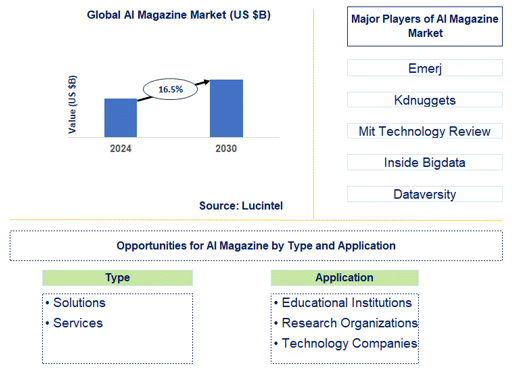
Key data points: The growth forecast = 16.5% annually for the next 6 years. Scroll below to get more insights. This market report covers trends, opportunities, and forecasts in the global AI magazine market to 2030 by type (solutions and services), application (educational institutions, research organizations, and technology companies), and region (North America, Europe, Asia Pacific, and the Rest of the World)
We'll send your sample report shortly.
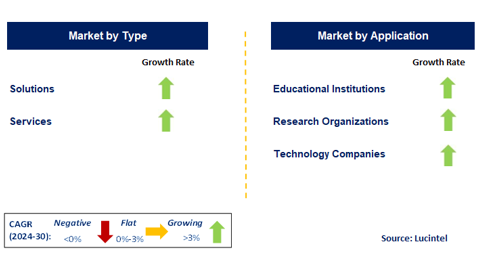
• Lucintel forecasts that, within the type category, the solution segment is expected to witness higher growth over the forecast period.
• Within the application category, educational institution is expected to witness higher growth.
• In terms of regions, APAC is expected to witness the highest growth over the forecast period. Gain valuable insights for your business decisions with our comprehensive 150+ page report.
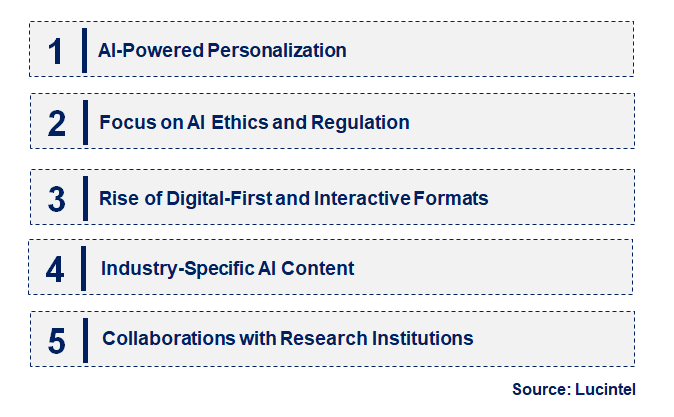
• AI-Powered Personalization: AI magazines are using AI-driven personalization algorithms to tailor content to individual readers. This trend improves reader engagement and satisfaction, offering articles, features, and ads based on personal interests and consumption habits.
• Focus on AI Ethics and Regulation: There is an increasing emphasis on AI ethics and regulatory frameworks. Magazines are dedicated sections to explore how governments and organizations are navigating the ethical challenges of AI, raising awareness of responsible AI use.
• Rise of Digital-First and Interactive Formats: Digital-first AI magazines are offering interactive formats with multimedia content, such as video interviews, podcasts, and virtual events. This trend allows for more dynamic engagement with readers and leverages AI to enhance user experiences.
• Industry-Specific AI Content: AI magazines are increasingly publishing industry-specific content, focusing on how AI is transforming sectors such as healthcare, automotive, and finance. This trend addresses the growing need for niche AI knowledge tailored to specific industries.
• Collaborations with Research Institutions: Magazines are partnering with AI research institutions to deliver cutting-edge insights and research findings. This trend ensures that readers stay informed on the latest breakthroughs in AI, fostering a deeper understanding of the technology. These trends are reshaping the AI magazine market by improving personalization, expanding digital offerings, and focusing on industry-specific content and ethical discussions. As AI continues to influence various fields, magazines are adapting to meet evolving reader needs.
• AI-Driven Content Personalization: Recent developments in AI-driven content personalization are allowing magazines to curate articles based on reader preferences. By using machine learning algorithms, magazines can recommend relevant content, creating a more engaging reading experience and increasing retention rates.
• Collaborations with AI Research Labs: AI magazines are partnering with top research labs to gain access to the latest AI research and innovations. These collaborations help magazines stay at the forefront of AI advancements and provide readers with exclusive, cutting-edge content.
• Expansion into Multilingual Publications: To cater to a global audience, many AI magazines are expanding their content into multiple languages. This development is particularly prominent in China and India, where publications are providing localized AI insights while reaching diverse international readers.
• Integration of Multimedia Content: The rise of digital AI magazines has led to the integration of multimedia content, including video interviews, podcasts, and interactive infographics. These formats enhance reader engagement and provide a richer, more dynamic learning experience.
• Focus on AI’s Societal Impact: Recent developments include an increased focus on the societal impact of AI. Magazines are dedicating more space to exploring how AI affects employment, privacy, and ethical considerations, providing a balanced view of AI’s benefits and challenges. These key developments are shaping the AI magazine market by offering more personalized content, fostering global readership, and expanding multimedia formats. Collaborations with research institutions and a focus on AI’s societal impact are positioning magazines as critical platforms for AI knowledge dissemination.
• Education and Learning: AI magazines have significant growth opportunities in education, providing resources for students, educators, and professionals. By offering AI learning modules, tutorials, and expert interviews, magazines can play a key role in AI literacy and professional development.
• Industry-Focused Insights: There is a growing demand for industry-specific AI insights in sectors like healthcare, finance, and manufacturing. AI magazines can capitalize on this by delivering specialized content tailored to professionals in these industries, helping them understand AI’s impact on their work.
• AI Entrepreneurship and Startups: AI entrepreneurship is a burgeoning field, and magazines can focus on providing content aimed at startups and innovators. By featuring success stories, funding opportunities, and industry challenges, AI magazines can cater to the needs of aspiring AI entrepreneurs.
• Government and Policy Analysis: With AI regulation becoming a critical topic, AI magazines can offer in-depth analyses of government policies, regulations, and global AI strategies. This application provides value to policymakers, companies, and academics interested in understanding AI governance.
• Consumer AI Applications: As AI becomes more prevalent in consumer technology, AI magazines can offer insights into consumer-facing AI applications, such as smart home devices, personal assistants, and AI in entertainment. This creates opportunities to engage a broader audience beyond industry professionals. These strategic growth opportunities allow AI magazines to expand their influence across education, industry insights, startups, government policy, and consumer AI applications. By diversifying their content, magazines can attract new readerships and become essential resources in AI knowledge.
• Rising Demand for AI Knowledge: As AI continues to transform industries, there is a growing demand for accessible, expert-driven content that educates professionals, entrepreneurs, and the general public about AI’s applications and impact.
• Technological Advancements in AI: Rapid advancements in AI technology, including machine learning and natural language processing, are enabling magazines to offer more sophisticated and personalized content, enhancing reader engagement and satisfaction.
• Increased Interest in AI Ethics and Regulation: The ethical implications of AI are becoming a central topic in public discourse. Magazines are responding to this demand by offering deep dives into AI ethics and fostering informed discussions on responsible AI use.
• Shift to Digital and Interactive Content: The shift to digital-first publications, supported by AI-driven multimedia and interactive content, is driving engagement. Digital formats enable magazines to reach a global audience while offering more dynamic and personalized experiences.
• Global Expansion of AI: AI is becoming a global phenomenon, with governments and businesses in countries like China, India, and Germany investing heavily in AI initiatives. This global expansion is driving the demand for localized and multilingual AI content. Challenges in the AI magazine market are:
• Monetization and Subscription Models: Monetizing AI magazines in an era of free online content remains a challenge. Developing sustainable subscription models and creating value-added content that justifies the cost is crucial for long-term profitability.
• Data Privacy and Security Concerns: AI-powered personalization in magazines relies on collecting reader data. Concerns over data privacy and security, especially with new regulations like GDPR, pose challenges for publishers looking to leverage AI.
• Balancing Technical and Accessible Content: Catering to both AI experts and general readers can be challenging. Magazines need to strike a balance between providing in-depth, technical content for professionals and accessible, engaging articles for casual readers. The AI magazine market is driven by the rising demand for AI knowledge, technological advancements, and global AI expansion, but it faces challenges related to monetization, data privacy, and competition. Addressing these challenges is key to sustaining growth and maintaining relevance.
• Emerj
• KDnuggets
• MIT Technology Review
• Inside Bigdata
• Dataversity
• Datafloq
• Dataconomy
• Solutions
• Services
• Educational Institutions
• Research Organizations
• Technology Companies
• North America
• Europe
• Asia Pacific
• The Rest of the World
• China: The Chinese AI magazine market is growing as publications highlight government-led AI initiatives and industrial applications. Recent developments include partnerships with AI research institutes, providing readers with cutting-edge insights into AI development. Magazines are increasingly publishing multilingual content to reach global audiences.
• Germany: In Germany, AI magazines are focusing on industrial automation and the role of AI in manufacturing. Recent advancements include collaborations with universities and think tanks to explore AI's impact on Industry 4.0. Magazines are also featuring in-depth discussions on AI ethics and regulatory frameworks.
• India: The Indian AI magazine market is expanding with a focus on AI’s role in education, healthcare, and agritech. Recent developments include the rise of local-language AI content and an emphasis on accessible AI learning resources for students and professionals, reflecting the country’s push towards AI literacy.
• Japan: The Japanese AI magazines emphasize robotics and AI-driven innovation. Recent developments highlight AI's integration in robotics, healthcare, and aging society solutions. Publications are increasingly featuring interviews with AI experts and profiles of startups pioneering new AI-driven technologies.


• Emerj
• KDnuggets
• MIT Technology Review
• Inside Bigdata
• Dataversity
• Datafloq
• Dataconomy Q5. Which AI magazine market segment will be the largest in future? Answer: Lucintel forecasts that solution segment is expected to witness higher growth over the forecast period. Q6. In AI magazine market, which region is expected to be the largest in next 5 years? Answer: APAC is expected to witness the highest growth over the forecast period. Q.7 Do we receive customization in this report? Answer: Yes, Lucintel provides 10% customization without any additional cost.


Choose a license that fits your team. Instant PDF delivery.
Prices exclude taxes. Instant delivery. Custom licensing available on request.
Market Report · July 15, 2026
Market Report · June 26, 2026
Market Report · June 24, 2026
Trusted partner for strategic intelligence and business growth


Receive a complimentary market analysis tailored to your industry. Our analysts will identify key growth opportunities and competitive dynamics specific to your business.

Market size, growth rate, and key trend analysis for your specific sector.

Top competitor positioning and market share analysis.

Strategic recommendations backed by data-driven insights.
Get curated market intelligence and competitive moves straight to your inbox.
By subscribing, you agree to receive our monthly insights. Unsubscribe anytime.
Receive a complimentary market analysis tailored to your industry. Our analysts will identify key growth opportunities and competitive dynamics specific to your business.
Market size, growth rate, and key trend analysis for your specific sector.
Top competitor positioning and market share analysis.
Strategic recommendations backed by data-driven insights.
Get curated market intelligence, emerging trends, and competitive moves straight to your inbox each month.
By subscribing, you agree to receive our monthly insights. Unsubscribe anytime.
We'll send your sample report shortly.