
Report Feature
Zinc Air Battery Market Trends and Forecast
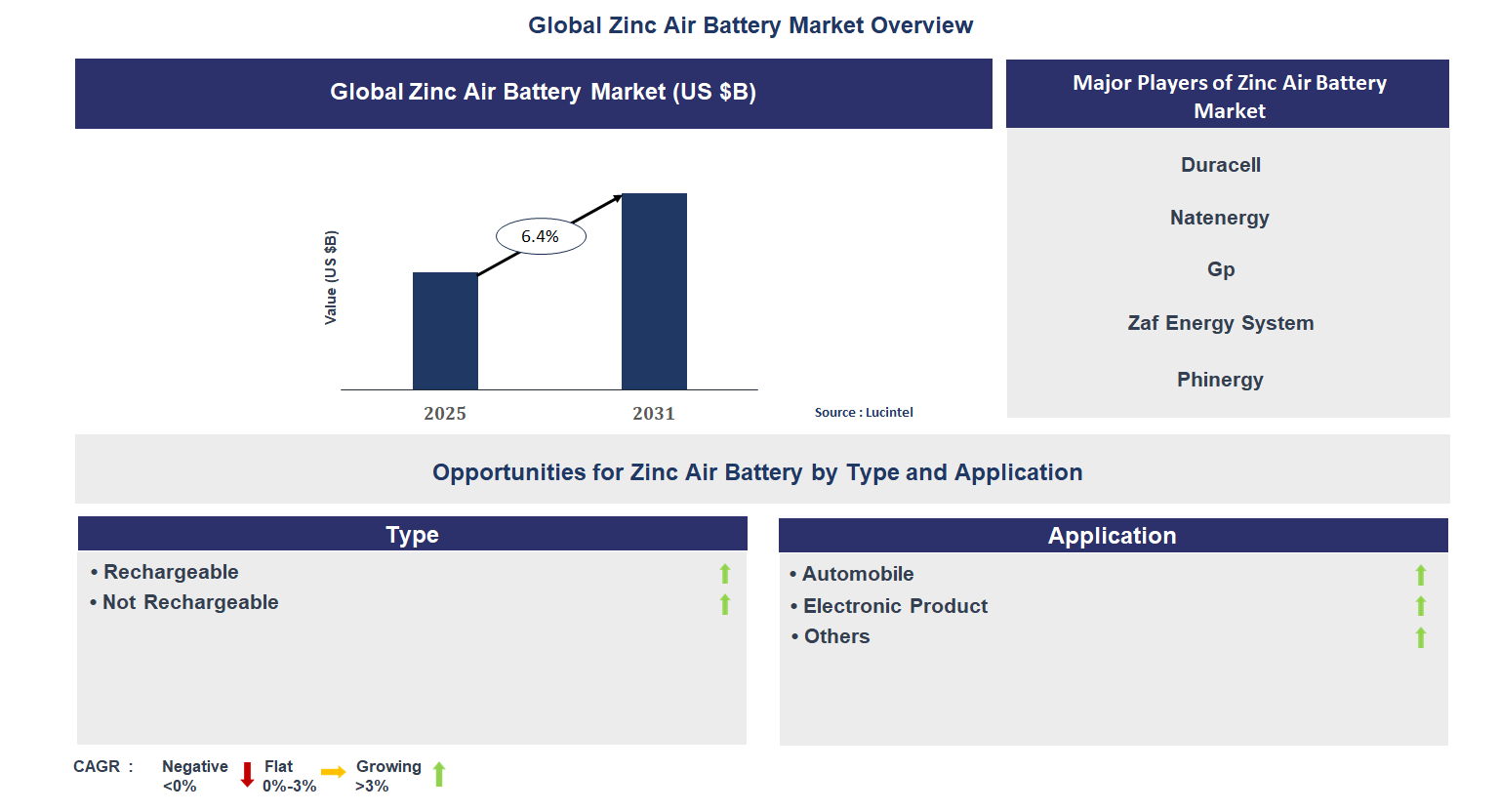
The future of the global zinc air battery market looks promising with opportunities in the automobile and electronic product markets. The global zinc air battery market is expected to grow with a CAGR of 6.4% from 2025 to 2031. The major drivers for this market are the increasing demand for hearing aid devices, the rising use in electric vehicle applications, and the growing adoption in renewable energy storage systems.• Lucintel forecasts that, within the type category, rechargeable is expected to witness higher growth over the forecast period.
• Within the application category, automobile is expected to witness higher growth.
• In terms of region, APAC is expected to witness the highest growth over the forecast period. Gain valuable insights for your business decisions with our comprehensive 150+ page report. Sample figures with some insights are shown below.
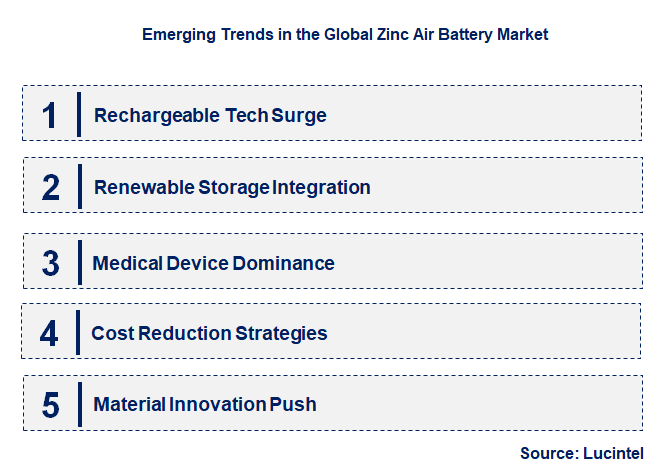
Emerging Trends in the Zinc Air Battery Market
Trends in the zinc air battery market signal a shift to versatile, eco-friendly alternatives, driven by climate goals and tech advances. Focus on rechargeability, cost reduction, and diverse applications from medical to grid scale reshapes energy landscapes. These trends enhance adoption, bridging performance gaps and positioning zinc air as a sustainable, scalable solution for global needs.• Rechargeable Tech Surge: Electrolyte and catalyst improvements enable rechargeable zinc air batteries, extending lifespan for EVs and portables. This reduces costs and waste, boosting consumer trust. The impact accelerates market penetration, shifting from disposable to cyclable systems, rivaling lithium-ion versatility while maintaining environmental advantages.
• Renewable Storage Integration: High-density zinc air pairs with solar and wind, enabling efficient grid buffering. Pilots prove scalability for peak shaving, cutting fossil reliance. This lowers utility costs, enhances grid resilience, and supports net-zero goals, driving investments in hybrid systems for stable, decentralized power.
• Medical Device Dominance: Compact designs power hearing aids and implants, offering long runtime and comfort. Advancements shrink sizes while boosting output. This elevates quality of life, expands healthcare market share, and inspires bio-integrated tech, blending energy with therapeutic functions for broader adoption.
• Cost Reduction Strategies: Optimized zinc sourcing and automated assembly lower production costs, making batteries affordable globally. Streamlined Asian supply chains amplify this. The impact democratizes access, accelerates EV adoption, and intensifies competition, driving volume-driven economies of scale and price compression.
• Material Innovation Push: Nanomaterials and alloys boost conductivity and stability, enabling lightweight aerospace and wearable uses. This enhances efficiency, attracts R&D funding, and positions zinc air as a leader in dense, portable power, catalyzing cross-industry disruptions and broader application scope. These trends reshape the zinc air battery market by enhancing rechargeability, affordability, and application diversity. They drive decarbonization, empower sectors from healthcare to energy, and foster a resilient ecosystem. Collectively, they position zinc air as a cornerstone for sustainable, accessible power solutions globally.
Recent Development in the Zinc Air Battery Market
Zinc-air battery market developments highlight breakthroughs in functionality and deployment, driven by clean energy demands. From dual-purpose devices to commercial launches, these advancements enhance viability for EVs, grids, and beyond. They signal a maturing sector, blending research with industry to overcome barriers and scale sustainable impact worldwide.• Commercial Launch Milestone: A non-flammable zinc air system revolutionizes grid storage, integrating with renewables for safety and scalability. This mitigates blackout risks, lowers costs, and inspires similar ventures, strengthening energy security and supporting climate-resilient infrastructure with broad industrial applications.
• Dual-Function Device Reveal: A device producing power and purifying water targets underserved regions, leveraging simple materials for dual utility. This amplifies access to essentials, spurs social enterprises, and models multifunctional batteries, broadening appeal in development-focused markets with significant social impact.
• Solid-State Performance Leap: Solid-state advancements yield stable, high-output cells for EVs and gadgets, curbing degradation. This drives manufacturing efficiencies, reduces transport emissions, and sets reliability benchmarks, strengthening Asia’s lead in next-gen battery exports and global adoption.
• Nanomaterial Density Boost: Nanomaterial integrations achieve superior energy packing, suiting aerospace drones with lighter weights. This improves flight times, greens aviation, and spills over to consumer tech, elevating battery competitiveness and attracting cross-sector investments.
• High-Capacity Cell Introduction: Advanced rechargeable cells with elevated density target portable and backup uses, enhancing usability. This fosters consumer adoption, diversifies supply chains, and challenges incumbents, driving market diversification and accelerating innovation across applications. These developments enhance zinc air battery practicality and reach, dismantling adoption barriers and aligning with sustainability goals. They ignite investments, expand economic footprints, and redefine reliable power, propelling a greener, more accessible energy landscape globally.
Strategic Growth Opportunities in the Zinc Air Battery Market
Growth opportunities in the zinc air battery market leverage its density and safety for sector-specific applications. Alignments with EVs, health tech, and storage unlock scalable potential. These application-focused strategies capture value, blending innovation with demand to drive exponential market growth and sustainable energy solutions.• Hearing Aid Integration: Zinc-air’s longevity powers discreet, long-lasting hearing aids, boosting comfort for aging populations. Miniaturization advancements drive adoption. This leads medical disposables, increases revenues from premium devices, and transfers tech to implants, enhancing global auditory health accessibility.
• Electric Vehicle Adoption: High-density packs extend EV ranges, complementing lithium hybrids cost-effectively. Recharge tweaks suit urban commuting. This accelerates electrification, reduces ownership costs, and supports emission cuts, positioning zinc air as a key player in diverse transport solutions.
• Grid Storage Expansion: Long-duration capabilities stabilize renewable grids, validated by scalable pilots. This ensures resilient infrastructures, optimizes energy trading, and aligns with policy incentives, transforming zinc air into a cornerstone for decentralized, low-carbon power systems.
• Aerospace Drone Powering: Lightweight designs extend drone endurance for surveillance and delivery, outperforming heavier alternatives. Advanced seals ensure reliability. This revolutionizes logistics, reduces downtimes, and opens defense contracts, amplifying aerial tech efficiency and reach.
• Wearable Electronics Surge: Flexible, biocompatible forms power smartwatches and trackers with all-day reliability. This drives gadget evolution, boosts brand loyalty via seamless charging, and embeds zinc air in IoT ecosystems, enhancing daily digital mobility. These opportunities reshape the zinc air battery market by targeting high-demand niches, amplifying revenues, and aligning with green transitions. They foster a vibrant, diverse landscape, accelerating energy equity and technological convergence across global applications.
Zinc Air Battery Market Driver and Challenges
The zinc air battery market is shaped by technological, economic, and regulatory drivers and challenges. Innovations in density and sustainability fuel growth, while recharge and scalability issues pose hurdles. These factors define a dynamic market, balancing rapid advances with strategic resolutions. The factors responsible for driving the zinc air battery market include: 1. Sustainability Imperative: Zinc-air’s recyclable materials align with green mandates, reducing mining impacts. Regulatory pushes amplify corporate shifts. This enhances brand appeal, secures subsidies, and accelerates market entry, embedding batteries in circular economies and climate-resilient chains. 2. Energy Density Edge: Superior capacity enables compact, powerful solutions for portables and EVs. Catalyst tweaks realize potential. This fosters premium applications, elevates benchmarks, and attracts automakers, widening competitive advantages and investment inflows. 3. Cost-Effectiveness Appeal: Low material costs and simple assembly undercut lithium, democratizing access. Scale economies compress expenses. This propels sales in consumer goods, eases utility budgets, and stimulates trade, anchoring zinc air in price-sensitive sectors. 4. Renewable Synergy Demand: Reliable storage for solar and wind meets rising intermittency needs. Policy incentives heighten synergy. This drives grid modernization, energy independence, and R&D, positioning zinc air as pivotal in renewable futures. 5. R&D Investment Boom: Surging funds fuel rechargeability and stability breakthroughs. Collaborative ecosystems speed iterations. This quickens commercialization, bridges lab-to-market gaps, and diversifies uses, sustaining innovation and talent pipelines. Challenges in the zinc air battery market are: 1. Rechargeability Constraints: Electrode degradation limits cycling, confining to primary uses. Complex fixes raise costs. This slows adoption, restricts niches, and invites lithium dominance, necessitating engineering to unlock rechargeable potential. 2. Cycle Life Shortfalls: Limited cycles cause early failure, eroding reliability for grids. Humidity sensitivity worsens wear. This increases replacement needs, fuels skepticism, and stalls scalability, requiring material overhauls to match rivals. 3. Scalability Bottlenecks: Manufacturing inconsistencies and supply chain issues impede mass production. Uniform quality remains elusive. This curbs rollout, favors premium markets, and heightens disparities, demanding infrastructure for high-volume deployment. Drivers like sustainability and density propel zinc air toward green horizons, outpacing challenges. Recharge and scalability hurdles demand urgent innovation. The net effect is optimistic growth, forging a resilient path to transformative energy solutions.List of Zinc Air Battery Companies
Companies in the market compete on the basis of product quality offered. Major players in this market focus on expanding their manufacturing facilities, R&D investments, infrastructural development, and leverage integration opportunities across the value chain. With these strategies zinc air battery companies cater increasing demand, ensure competitive effectiveness, develop innovative products & technologies, reduce production costs, and expand their customer base. Some of the zinc air battery companies profiled in this report include-• Duracell
• Natenergy
• Gp
• Zaf Energy System
• Phinergy
• Eos
• Ravoyac
• Zinc8 Energy Solutions
• Electric Fuel
• Ardney Technical Products
Zinc Air Battery Market by Segment
The study includes a forecast for the global zinc air battery market by type, application, and region.Zinc Air Battery Market by Type [Value from 2019 to 2031]:
• Rechargeable
• Not Rechargeable
Zinc Air Battery Market by Application [Value from 2019 to 2031]:
• Automobile
• Electronic Product
• Others
Zinc Air Battery Market by Region [Value from 2019 to 2031]:
• North America
• Europe
• Asia Pacific
• The Rest of the World
Country Wise Outlook for the Zinc Air Battery Market
The zinc air battery market thrives as global demand for sustainable energy grows, with innovations tackling rechargeability and density. Key nations drive progress through R&D and applications in EVs and grid storage, shifting toward eco-friendly power alternatives. These advancements highlight regional leadership, bridging lab breakthroughs to scalable solutions, reducing lithium reliance, and enhancing accessibility across diverse markets.• United States: A startup launched a water-based zinc air battery for grid storage, offering non-flammable, scalable tech for renewables. Federal funding boosts rechargeability for EVs and industrials. This positions the U.S. as a leader in safe, high-capacity storage, cutting costs and emissions while strengthening energy security for volatile climates.
• China: Solid-state zinc air battery breakthroughs enhance stability for portable and EV uses. Chinas manufacturing strength accelerates commercialization with state-backed investments. This drives expansion in electronics and defense, cementing Chinas lead in affordable, high-volume supply chains while advancing global standards for rechargeable battery technology.
• Germany: Stationary storage pilots integrate zinc air with wind and solar grids for reliable industrial backup. R&D with automakers refines durability for hybrids. These efforts promote circular economy goals, reducing waste and aligning with EU sustainability mandates, enhancing competitiveness with improved efficiency against traditional batteries.
• India: A zinc air device generating power while purifying water offers low-cost solutions for rural areas. Leveraging local zinc resources, it addresses energy-poverty challenges. This innovation spurs adoption in off-grid regions, positioning India as a hub for multifunctional, accessible battery tech with social impact.
• Japan: Refined zinc air integrations in hearing aids and wearables emphasize compact, long-life designs via advanced electrolytes. Aerospace applications for drones grow. This strengthens Japans precision manufacturing, improving device portability and aligning with goals for greener electronics in aging societies.

Features of the Global Zinc Air Battery Market
Market Size Estimates: Zinc air battery market size estimation in terms of value ($B). Trend and Forecast Analysis: Market trends (2019 to 2024) and forecast (2025 to 2031) by various segments and regions. Segmentation Analysis: Zinc air battery market size by type, application, and region in terms of value ($B). Regional Analysis: Zinc air battery market breakdown by North America, Europe, Asia Pacific, and Rest of the World. Growth Opportunities: Analysis of growth opportunities in different types, applications, and regions for the zinc air battery market. Strategic Analysis: This includes M&A, new product development, and competitive landscape of the zinc air battery market. Analysis of competitive intensity of the industry based on Porter’s Five Forces model.
FAQ
Q1. What is the growth forecast for zinc air battery market? Answer: The global zinc air battery market is expected to grow with a CAGR of 6.4% from 2025 to 2031. Q2. What are the major drivers influencing the growth of the zinc air battery market? Answer: The major drivers for this market are the increasing demand for hearing aid devices, the rising use in electric vehicle applications, and the growing adoption in renewable energy storage systems. Q3. What are the major segments for zinc air battery market? Answer: The future of the zinc air battery market looks promising with opportunities in the automobile and electronic product markets. Q4. Who are the key zinc air battery market companies? Answer: Some of the key zinc air battery companies are as follows:• Duracell
• Natenergy
• Gp
• Zaf Energy System
• Phinergy
• Eos
• Ravoyac
• Zinc8 Energy Solutions
• Electric Fuel
• Ardney Technical Products Q5. Which zinc air battery market segment will be the largest in future? Answer: Lucintel forecasts that, within the type category, rechargeable is expected to witness higher growth over the forecast period. Q6. In zinc air battery market, which region is expected to be the largest in next 5 years? Answer: In terms of region, APAC is expected to witness the highest growth over the forecast period. Q7. Do we receive customization in this report? Answer: Yes, Lucintel provides 10% customization without any additional cost.
Table of Contents
List of Figures
List of Tables
Methodology
- In-depth interviews of the major players in this market
- Detailed secondary research from competitors’ financial statements and published data
- Extensive searches of published works, market, and database information pertaining to industry news, company press releases, and customer intentions
- A compilation of the experiences, judgments, and insights of Lucintel’s professionals, who have analyzed and tracked this market over the years.


Buy Now
Choose a license that fits your team. Instant PDF delivery.
Prices exclude taxes. Instant delivery. Custom licensing available on request.
Key Questions
- • What are some of the most promising, high-growth opportunities for the zinc air battery market by type (rechargeable and not rechargeable), application (automobile, electronic product, and others), and region (North America, Europe, Asia Pacific, and the Rest of the World)?
- • Which segments will grow at a faster pace and why?
- • Which region will grow at a faster pace and why?
- • What are the key factors affecting market dynamics? What are the key challenges and business risks in this market?
- • What are the business risks and competitive threats in this market?
- • What are the emerging trends in this market and the reasons behind them?
- • What are some of the changing demands of customers in the market?
- • What are the new developments in the market? Which companies are leading these developments?
- • Who are the major players in this market? What strategic initiatives are key players pursuing for business growth?
- • What are some of the competing products in this market and how big of a threat do they pose for loss of market share by material or product substitution?
- • What M&A activity has occurred in the last 5 years and what has its impact been on the industry? For any questions related to Zinc Air Battery Market, Zinc Air Battery Market Size, Zinc Air Battery Market Growth, Zinc Air Battery Market Analysis, Zinc Air Battery Market Report, Zinc Air Battery Market Share, Zinc Air Battery Market Trends, Zinc Air Battery Market Forecast, Zinc Air Battery Companies, write Lucintel analyst at email: helpdesk@lucintel.com. We will be glad to get back to you soon.


