
Market Report · July 22, 2026

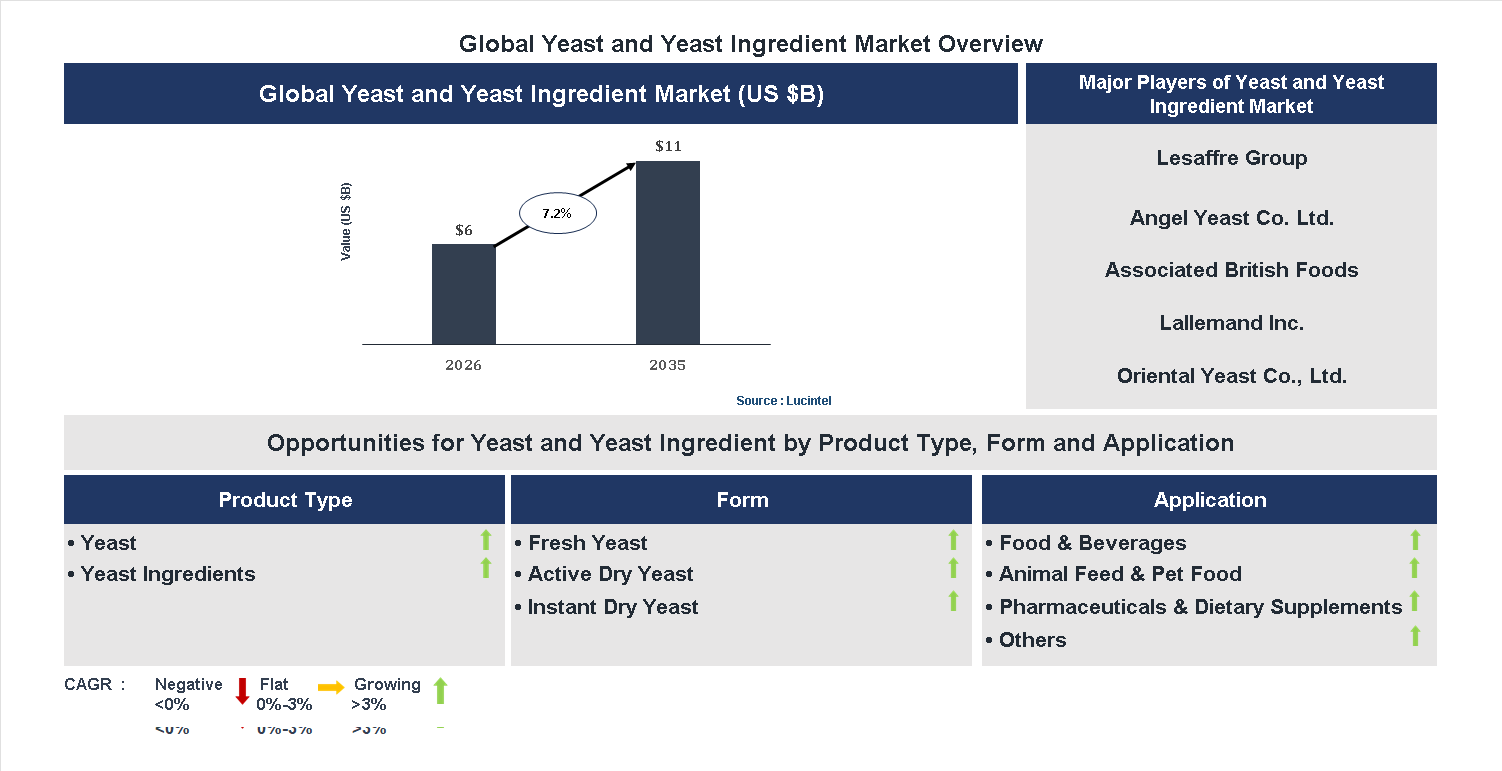
Key data points: The market size in 2035 = $11 billion, growth forecast = 7.2% annually for the next 8 years. Scroll below to get more insights. This market report covers trends, opportunities and forecasts in yeast and yeast ingredient market to 2035 by product type (yeast and yeast ingredients), form (fresh yeast, active dry yeast, and instant dry yeast), application (food & beverages, animal feed & pet food, pharmaceuticals & dietary supplements, and others), and region (North America, Europe, Asia Pacific, and the Rest of the World)
We'll send your sample report shortly.
• Lucintel forecasts that, within the product type category, yeast is expected to witness higher growth over the forecast period.
• Within the application category, pharmaceutical & dietary supplement is expected to witness the highest growth.
• In terms of region, APAC is expected to witness the highest growth over the forecast period. Gain valuable insights for your business decisions with our comprehensive 150+ page report. Sample figures with some insights are shown below.
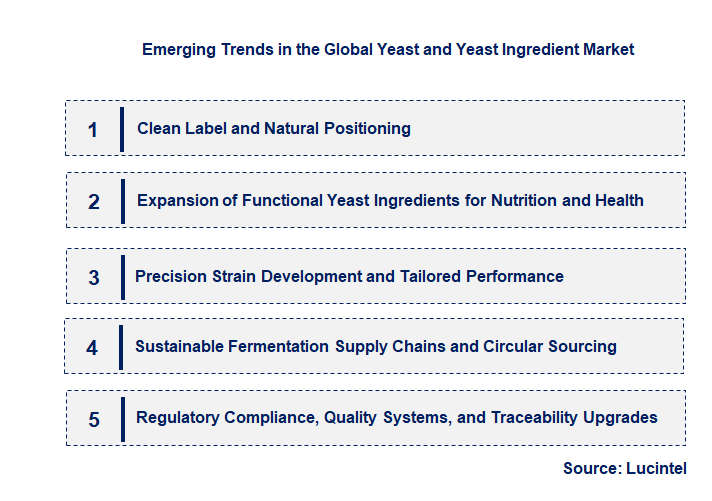
• Clean Label And Natural Positioning: Consumers and manufacturers are favoring yeast ingredients that are minimally processed, transparent in sourcing, and aligned with “clean label” expectations. In baking and brewing, this supports demand for consistent, non-GMO yeast options and clearer ingredient labeling. For yeast extract and nutritional yeast, marketing is increasingly focused on purity, allergen transparency, and removal of perceived additives where possible. Producers are improving documentation, traceability, and test results (microbial limits, heavy metals, and authenticity) to reduce retailer risk. Net impact: faster product adoption, premium pricing opportunities, and tighter quality standards across major channels.
• Expansion Of Functional Yeast Ingredients For Nutrition And Health: Yeast is increasingly used as a functional ingredient rather than only a fermentation aid. Applications include yeast beta-glucans for immune support narratives, nucleotides for growth and recovery positioning in supplements and sports nutrition, and yeast fractions for gut and metabolic wellbeing claims where permitted. In feed, yeast-derived components are used to improve palatability, feed conversion, and gut health in poultry, swine, and aquaculture. Segment advantages are strong in nutritional yeast, yeast extract-based seasoning, and dry yeast formats for easy dosing. Net impact: higher-margin specialization and stronger differentiation.
• Precision Strain Development And Tailored Performance: Strain engineering and selection are becoming core differentiators as customers demand predictable fermentation outcomes under varying processing conditions. Breweries and bakeries want improved attenuation, aroma profiles, fermentation speed, and tolerance to stressors such as temperature fluctuations, osmotic pressure, and ethanol exposure. Specialty food manufacturers increasingly source targeted strains for specific product categories, including sourdough-style fermentation and low-sugar or high-fiber formulations. Industrial producers also seek strains that perform efficiently in large-scale reactors with stable yields. Net impact: long-term supply contracts, reduced batch variability, and stronger collaboration between yeast suppliers and end-users.
• Sustainable Fermentation Supply Chains And Circular Sourcing: Sustainability is moving from marketing to procurement criteria. Yeast producers are reducing energy use and water intensity through process optimization, improved drying methods, and better bioreactor control. Many are exploring circular feedstocks, such as upgrading by-products from food and beverage operations, to lower environmental footprints and meet retailer or brand targets. Packaging and logistics are also under scrutiny, with a shift toward right-sized volumes, lower-emission transport, and recyclable packaging. Segmentally, this benefits bulk dry yeast for institutional baking and brewer volumes, and yeast extract producers with documented sourcing. Net impact: improved brand trust and resilience against raw material volatility.
• Regulatory Compliance, Quality Systems, And Traceability Upgrades: Regulatory scrutiny and customer audits are intensifying for food-grade and feed-grade yeast ingredients. Companies are investing in stronger GMP practices, HACCP-aligned controls, and validated testing for contaminants such as mycotoxins, microbial pathogens, and heavy metals. Traceability is expanding from batch-level records to more granular tracking of strain identity, upstream feedstock origin, and processing parameters. These upgrades also support global market access by reducing time-to-approval and audit failures. Segmentally, yeast extract and nutritional yeast face heightened scrutiny due to direct consumption and label claims. Net impact: fewer disruptions, improved market entry speed, and higher trust with large buyers. These trends are collectively shifting the market toward higher-value, function-driven, and performance-guaranteed yeast solutions, supported by sustainability and rigorous quality. Competition is moving from commodity pricing to differentiation through strains, formulations, and verified compliance, reshaping growth across baking, brewing, nutrition, feed, and industrial applications.
• Advanced Strain Engineering Improves Yield And Consistency: New genomic and CRISPR-style editing workflows enable tailoring of yeast metabolism for faster fermentation, higher biomass, and more predictable aroma profiles. Suppliers are adopting high-throughput phenotyping, single-cell sequencing, and robust starter cultures to reduce batch variability for breweries and bakers. These strains can also better tolerate stress from osmotic pressure, ethanol, or temperature swings, improving shelf life of dried yeast and derived extracts. Resulting stability lowers returns and supports premium positioning in functional beverages for consumers seeking consistent taste year-round
• Functional Yeast And Postbiotic Claims Expand Health Demand: Beyond nutrition, yeast-derived components such as β-glucans, mannan-oligosaccharides, and nucleotides are increasingly marketed for gut health, immune modulation, and recovery in both human nutrition and animal feed. Recent work focuses on standardized extraction, bioavailability testing, and clinically supported dose ranges to substantiate claims. In feed, combinations with enzymes and prebiotics help stabilize microbiota and improve feed conversion in poultry and aquaculture. For food, clean-label formats deliver functional benefits without fermentation residue concerns, accelerating adoption across mainstream brands and specialist lines
• Clean-Label Brewing And Baking Catalyze Specialty Yeast Products: Craft brewing, sourdough resurgence, and better-for-you baking are driving demand for specialty active dry yeast, yeast food, and yeast extract blends with targeted flavor and fermentation speed. Recent developments improve rehydration performance, reduce off-notes, and tailor nutrient profiles for different strains and fermentation styles, including low-sugar and cold-conditioning processes. Manufacturers are also offering transparent ingredient sourcing and allergen-safe processing to meet consumer expectations. These products give millers and brewers repeatable results, enabling premium limited releases and year-round production stability globally
• Sustainable Bio-Based Inputs Reduce Carbon Footprints: Rising regulation and sustainability goals are shifting yeast ingredient supply chains toward lower-carbon substrates and recovery of process streams. Recent projects use renewable feedstocks such as residue sugars and glycerol byproducts, while improving pretreatment and fermentation controls to cut energy use. Dried yeast production increasingly uses waste-heat recovery and water recycling, raising yield per tonne. For yeast extracts, greener extraction solvents and membrane concentration reduce wastewater. This sustainability unlocks preferred sourcing contracts and reduces compliance risk in stricter markets today
• Heading 5: Digital Traceability And Compliance Enable Premium Partnerships: Authenticity and regulatory scrutiny are driving adoption of digital traceability, contaminant monitoring, and standardized specs for yeast ingredients. Suppliers are implementing lot-level barcoding, QC dashboards, and rapid testing for microbial load, heavy metals, and mycotoxins in raw materials used for fermentation. In parallel, sustainability and origin reporting are being integrated for commercial buyers under auditing schemes. For pharma-adjacent uses of yeast components, tighter characterization of purity and residual nucleic acids reduces regulatory friction. Better documentation shortens qualification cycles, enabling contracts These developments are moving the yeast ingredient market toward higher-performance, and more sustainable products. Strain engineering and improved fermentation control strengthen supply reliability for food and beverage manufacturers. Functional extracts and postbiotics expand applications in health-oriented nutrition and animal husbandry, supporting differentiation beyond basic yeast. Clean-label specialty formats enhance consumer acceptance and reduce flavor complaints. Finally, traceability and compliance systems lower qualification barriers for large buyers. Overall, suppliers that integrate biotech, evidence, and sustainability are capturing growth across channels.
• Target Clean-Label Bakery And Dough Optimization: Develop dry and liquid baker’s yeast blends designed for extended shelf life, improved gas retention, and consistent crumb texture using natural stabilizers. Segment product offerings by dough type—lean, enriched, and frozen—so customers can match performance without reformulation. Add yeast-derived strengthening components such as autolyzed yeast for flavor, Maillard precursors, and dough-handling benefits. Offer technical services, QC specs, and transparent allergen statements to support retailer clean-label standards and reduce trial costs for commercial bakeries and industrial retreaders in fast-growing regional markets.
• Scale Brewer’s Yeast For Functional Flavor And Foam: Invest in strains and processing that deliver desired attenuation, aromatic profile, and foam stability for lagers, ales, and low-alcohol formats. Provide package solutions that combine brewer’s yeast with yeast extract for faster flavor development, supporting emerging sensory-driven beer styles. Use bioprocess analytics to guarantee batch-to-batch consistency, including viability, glycogen levels, and ester precursors. Partner with breweries on pilot brews and offer fermentation guidance, enabling premium positioning while meeting growing demand for reproducible craft and contract brewing outputs at commercial scale.
• Expand Yeast Extracts For Meat, Snacks, And Umami Bases: Grow yeast-extract and autolysate lines targeted to seasonings, soups, and meat alternatives by emphasizing natural umami, clean formulation, and sodium-reduction. Create sub-segments by application texture: powder for dry mixes, paste for sauces, and spray-dried fractions for flavor systems. Tailor protein hydrolysate ratios to achieve specific nucleotide release and bitterness control. Support customers with sensory panels, formulation playbooks, and allergen/GMO documentation. As reformulation accelerates, differentiated extracts can replace parts of flavor enhancers, improving margins and stickiness across retail and foodservice channels.
• Boost Probiotic And Postbiotics Through Yeast-Derived Actives: Commercialize non-GMO yeast-derived components for gut-health claims by focusing on postbiotics, β-glucans, and nucleotides derived from controlled autolysis and extraction. Build differentiated formats for supplements, functional beverages, and pet nutrition, emphasizing solubility, stability, and dose standardization. Validate efficacy through in-vitro fermentation models and supported clinical literature, then map claims to regional regulatory requirements. Offer co-manufacturing and microencapsulation services to protect actives from moisture and heat during processing and storage, expanding adoption by brand owners seeking science-backed ingredients with consistent performance.
• Optimize Industrial Yeast And Feed Formulations For Efficiency: Target animal-feed and industrial fermentation sectors with yeast and yeast-ingredient solutions that improve digestibility and process throughput. For feed, segment offerings by monogastric and ruminant needs, including mannan-oligosaccharides, yeast cell wall components, and autolyzed nutrients for weaning stress reduction. For industrial bioprocessing, supply nutrient concentrates that support yeast growth in bioethanol, enzymes, and specialty acids, reducing expensive additions. Implement sustainability programs such as sourcing from efficient fermentation streams and minimizing water/energy use, strengthening customer procurement and meeting environmental reporting demands. These opportunities move the yeast and yeast ingredients market from commodity supply toward application-specific, value-added performance. Bakery and brewing innovations enhance texture, flavor, and process reliability, while yeast extracts deliver umami with cleaner labels and sodium-reduction. Probiotic-focused yeast-derived actives open higher-margin categories in supplements and functional foods. Finally, optimized feed and industrial formulations improve biological efficiency and sustainability, helping customers reduce operating costs. Collectively, these segments expand demand, deepen customer loyalty, and support resilient growth across regions globally.
• Growing demand for clean label and natural flavor enhancement: Consumers increasingly prefer products with recognizable, minimally processed ingredients. Yeast and yeast-derived ingredients are used to deliver umami, aroma compounds, and nutritional benefits without synthetic additives, supporting reformulation in processed foods and beverages. This demand is amplified by growth in functional foods and better-for-you product lines where yeast extracts and autolysates offer perceived health and taste improvements. Manufacturers that can demonstrate consistent sensory profiles, traceability, and standardized nutrient/peptide compositions gain advantage, while those struggling with batch variability may lose contracts. Clean label positioning also encourages innovation in mild processing methods and tailored yeast fractions for specific applications.
• Expansion of fermentation-based food and beverage applications: Yeast is central to bread, beer, wine, and rising categories such as sourdough, craft beverages, and ready-to-eat foods. In addition, yeast ingredients such as hydrolysates support improved dough performance, fermentation control, and flavor development. Growth in convenience foods increases the need for ingredients that reduce processing time and enhance shelf life through better texture and flavor stability. Producers also invest in yeast cultures engineered or selected for faster fermentation, stronger performance under varying pH and temperatures, and reduced risk of off-flavors. This boosts supplier demand and supports longer-term supply agreements.
• Rising use in animal nutrition and alternative protein: Yeast-based ingredients help improve feed digestibility, gut health, and performance in livestock and poultry, particularly when feed formulations must adapt to cost pressures and variable raw material quality. In parallel, fermentation-derived protein and yeast ingredients are increasingly explored for alternative protein systems, where they can contribute functional proteins, peptides, and micronutrients. As feed producers seek products that can partially replace costly additives while maintaining health outcomes, demand for standardized yeast fractions grows. Suppliers that can provide application-specific recommendations, validated inclusion rates, and performance data are more likely to win durable partnerships.
• Technological advances in strain selection, production efficiency, and product standardization: Modern fermentation technologies, including better upstream controls and downstream purification, enhance yield, purity, and consistency across batches. Advances in strain engineering and screening improve tolerance to stress conditions such as temperature swings, osmotic pressure, and substrate variability, supporting stable commercial output. Better analytical methods for nucleotides, free amino acids, peptides, and nucleic acid content help align products with regulatory limits and customer specifications. Process intensification can reduce unit costs and resource use, improving competitiveness. Suppliers that invest in quality-by-design approaches, robust QC/QA systems, and scalable manufacturing platforms can meet tighter tolerances required by large brand owners.
• Increased focus on sustainability and cost optimization in upstream inputs: Producers increasingly optimize substrates, energy use, and waste streams to meet customer sustainability expectations and regulatory scrutiny. When feedstocks or utilities face price volatility, efficient fermentation and improved recovery of valuable components reduce economic exposure. Some manufacturers explore alternative substrates to broaden sourcing options and lower carbon footprints, supporting supply resilience. Sustainability also affects packaging, logistics, and water/effluent management, influencing total cost of ownership for customers. Suppliers that can show measurable reductions in emissions, water use, and process waste, while maintaining consistent product performance, are more competitive in tenders and long-term contracts. The challenges facing the yeast and yeast ingredient market include:
• Regulatory compliance and fluctuating limits on nutritional and bioactive components: Yeast ingredients may contain bioactive fractions such as nucleotides, peptides, and organic compounds whose levels can trigger regulatory scrutiny depending on region and intended use. Standards for food safety, allowable additives, contaminants, and labeling differ across countries, increasing documentation, testing, and reformulation costs. Claims related to nutrition or functionality require evidence and careful language to avoid compliance risk. Variability in raw materials and fermentation conditions can alter nutrient profiles, creating challenges for meeting specifications every batch. Companies must maintain robust regulatory intelligence, validated analytical testing, and supplier qualification programs to prevent market access disruptions and potential product recalls.
• Supply chain volatility and raw material price sensitivity: Yeast production depends on substrates, utilities, and consistent industrial-scale operations. Price swings in agricultural inputs, transportation costs, and energy can pressure margins, especially for contract manufacturers and mid-sized suppliers. Disruptions from weather events, geopolitics, or logistics bottlenecks may delay deliveries and reduce continuity for downstream customers like food processors and animal feed producers. Quality incidents in upstream inputs can also affect fermentation outcomes, leading to rejected lots and inventory write-offs. To manage this, firms need diversified sourcing, inventory planning, and long-term supplier agreements, but these require capital and operational complexity that can strain smaller players.
• Intense competition and technology/product differentiation barriers: The market includes global yeast producers and many local players, creating price competition and frequent bid pressure. Differentiation relies on consistent performance, sensory outcomes, and ingredient functionality, which require continuous innovation and quality investment. If customers perceive limited value beyond commodity yeast, margins compress quickly. Additionally, customers may develop in-house fermentation capabilities or multi-source suppliers to reduce dependence, weakening switching barriers. Switching costs for some yeast ingredients can be moderate if formulation changes are feasible. Suppliers therefore must invest in application testing, co-development, and strong technical support, while maintaining stable cost positions to defend share during downturns. The yeast and yeast ingredient market is advancing primarily because demand for clean label nutrition, fermentation-driven food and beverage performance, and growth in animal nutrition and alternative protein applications create sustained pull for standardized yeast and yeast-derived ingredients. Technology improvements in strain development, fermentation control, and analytical standardization strengthen reliability and expand new use cases. However, regulatory complexity and shifting limits on bioactive components increase compliance and testing burdens. Supply chain volatility and energy and substrate price sensitivity can erode margins and disrupt continuity. Intense competition further pressures differentiation and pricing, making operational excellence, evidence-based functionality, and resilient sourcing essential for durable growth.
• Lesaffre Group
• Angel Yeast Co. Ltd.
• Associated British Foods
• Lallemand Inc.
• Oriental Yeast Co., Ltd.
• Kerry Group
• Enzym Group
• Alltech Inc.
• Kohjin Life Sciences
• Van Wankum Ingredients
• Yeast
• Yeast Ingredients
• Fresh Yeast
• Active Dry Yeast
• Instant Dry Yeast
• Food & Beverages
• Animal Feed & Pet Food
• Pharmaceuticals & Dietary Supplements
• Others
• North America
• Europe
• Asia Pacific
• The Rest of the World
• United States: Growth is supported by strong demand for packaged bakery products, pizza and snack applications, and rising adoption of yeast-based ingredients in savory foods and beverages. Producers have focused on specialty fermentation formats, including active dry and instant yeasts with improved dough stability and consistency for large-scale industrial baking. Yeast extract and flavor-supporting yeast fractions are seeing steady uptake as manufacturers seek cleaner, more functional labeling. Investment priorities include capacity resilience, modernization of fermentation and drying lines, and enhanced traceability to meet customer quality requirements. Partnerships with bakeries and food manufacturers are increasingly used to validate performance in new recipes while controlling cost volatility from commodities and energy.
• China: Demand has remained robust due to large domestic food processing volumes and continuing expansion of fermented foods, yeast-leavened snacks, and brewing-related applications. Recent developments include expansion of yeast production capacity and greater emphasis on strain improvement to enhance fermentation rate, gas retention, and tolerance to processing variability. Specialty yeast products and yeast extracts are gaining traction as industrial food makers pursue differentiated flavor, umami depth, and nutritional functionality. Local manufacturers are also strengthening quality and compliance systems to meet both domestic and export expectations. In parallel, energy efficiency upgrades and supply chain optimization help manage raw material fluctuations. Competitive intensity remains high, with ongoing consolidation and capacity balancing across regions.
• Germany: The German market is shaped by advanced food manufacturing and high standards for product quality, traceability, and sustainability. Specialty yeasts and yeast extracts are used to support consistent flavor and texture in premium baked goods, convenience foods, and seasoning formulations. Recent developments include adoption of more efficient fermentation processes, improved drying stability, and optimization of shelf life to reduce waste. Companies are also responding to regulatory and customer expectations around responsible sourcing, process transparency, and lower environmental impact. Research collaboration with ingredient and biotechnology partners is supporting improved functional performance, including consistency across seasonal ingredient variability. Additionally, exporters focus on meeting EU requirements for labeling clarity and contamination risk controls.
• India: India has been experiencing growth driven by rising bread and bakery consumption, the expansion of organized retail bakeries, and increasing use of yeast ingredients in processed foods. Manufacturers are expanding capacity for active dry and instant yeasts to improve distribution coverage and reduce import dependence in key regions. Yeast extract and functional yeast ingredients are increasingly used to enhance savory profiles in snacks, seasonings, and ready-to-eat products. Recent improvements include investments in processing efficiency, quality testing, and strain performance to support dough strength, fermentation reliability, and consistent output for industrial customers. Supply chain development, including logistics upgrades and localized sourcing, is helping stabilize availability. Companies are also tailoring product formats for regional baking practices and climatic conditions.
• Japan: Japan continues to demand high-performance yeast ingredients with stable functionality for premium baking, confectionery, and specialty fermented foods. Recent developments include stronger focus on clean label positioning, flavor consistency, and performance under stringent process controls common in Japanese food manufacturing. Specialty active dry yeast and yeast-derived functional ingredients are being refined to deliver improved dough handling, gas retention, and aroma development. Yeast extracts and related flavor-supporting fractions remain important for umami enhancement in sauces, seasonings, and convenience foods. Manufacturers are also investing in quality assurance systems, including tighter microbial control and batch consistency. Sustainability and efficiency improvements are increasingly part of modernization efforts, supporting reliable supply for both domestic and export markets.


• Lesaffre Group
• Angel Yeast Co. Ltd.
• Associated British Foods
• Lallemand Inc.
• Oriental Yeast Co., Ltd.
• Kerry Group
• Enzym Group
• Alltech Inc.
• Kohjin Life Sciences
• Van Wankum Ingredients Q6. Which yeast and yeast ingredient market segment will be the largest in future? Answer: Lucintel forecasts that, within the product type category, yeast is expected to witness higher growth over the forecast period. Q7. In yeast and yeast ingredient market, which region is expected to be the largest in next 8 years? Answer: In terms of region, APAC is expected to witness the highest growth over the forecast period. Q8. Do we receive customization in this report? Answer: Yes, Lucintel provides 10% customization without any additional cost.


Choose a license that fits your team. Instant PDF delivery.
Prices exclude taxes. Instant delivery. Custom licensing available on request.
Market Report · July 22, 2026
Market Report · July 22, 2026
Market Report · July 22, 2026
Trusted partner for strategic intelligence and business growth


Receive a complimentary market analysis tailored to your industry. Our analysts will identify key growth opportunities and competitive dynamics specific to your business.

Market size, growth rate, and key trend analysis for your specific sector.

Top competitor positioning and market share analysis.

Strategic recommendations backed by data-driven insights.
Get curated market intelligence and competitive moves straight to your inbox.
By subscribing, you agree to receive our monthly insights. Unsubscribe anytime.
Receive a complimentary market analysis tailored to your industry. Our analysts will identify key growth opportunities and competitive dynamics specific to your business.
Market size, growth rate, and key trend analysis for your specific sector.
Top competitor positioning and market share analysis.
Strategic recommendations backed by data-driven insights.
Get curated market intelligence, emerging trends, and competitive moves straight to your inbox each month.
By subscribing, you agree to receive our monthly insights. Unsubscribe anytime.
We'll send your sample report shortly.