
Market Report · July 22, 2026

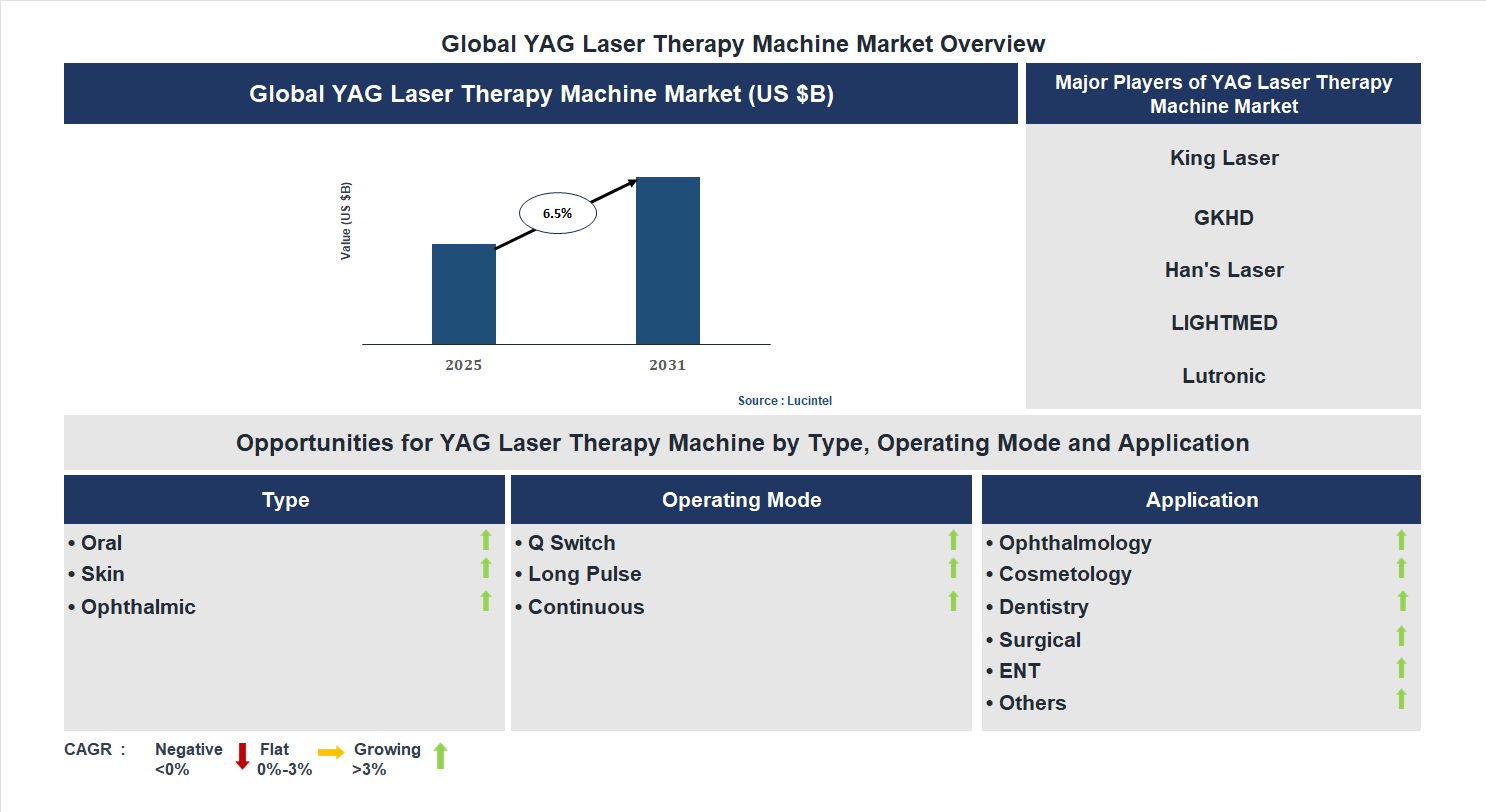
Key data points: The growth forecast = 6.5% annually for the next 6 years. Scroll below to get more insights. This market report covers trends, opportunities and forecasts in YAG laser therapy machine market to 2031 by type (oral, skin, and ophthalmic), operating mode (Q switch, long pulse, and continuous), application (ophthalmology, cosmetology, dentistry, surgical, ENT, and others), and region (North America, Europe, Asia Pacific, and the Rest of the World)
We'll send your sample report shortly.
• Lucintel forecasts that, within the type category, ophthalmic is expected to witness the highest growth over the forecast period.
• Within the application category, ophthalmology is expected to witness the highest growth.
• In terms of region, APAC is expected to witness the highest growth over the forecast period. Gain valuable insights for your business decisions with our comprehensive 150+ page report. Sample figures with some insights are shown below.
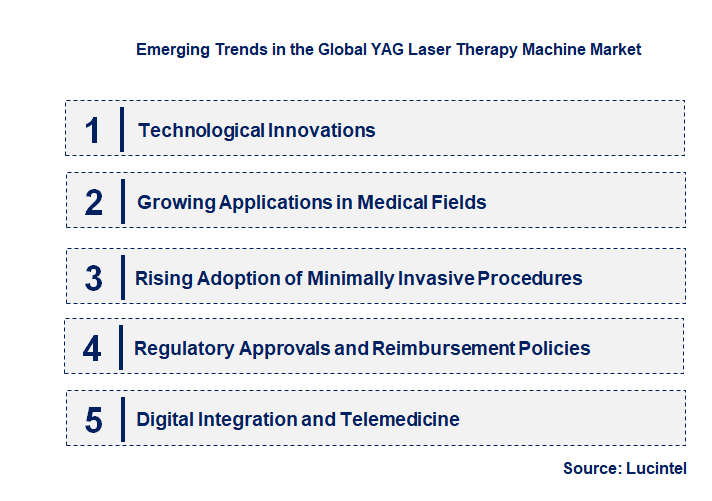
• Technological Innovations: The integration of advanced laser technologies, such as Q-switched and picosecond lasers, is enhancing treatment precision and safety. These innovations allow for targeted therapy with minimal side effects, broadening the scope of conditions treatable with YAG lasers. Continuous R&D efforts are leading to more compact, user-friendly devices, which facilitate easier adoption in clinics and hospitals. This trend is driving market growth by enabling providers to offer more effective and diverse treatment options, ultimately improving patient satisfaction and outcomes.
• Growing Applications in Medical Fields: Originally used primarily in ophthalmology, YAG laser therapy is now expanding into dermatology, urology, and oncology. For instance, it is increasingly employed for tattoo removal, skin rejuvenation, and cancer treatments. This diversification is opening new revenue streams for manufacturers and expanding the market base. As awareness of laser therapy benefits grows among healthcare professionals and patients, demand for versatile YAG laser systems is expected to rise, further fueling market expansion.
• Rising Adoption of Minimally Invasive Procedures: Patients and providers favor minimally invasive treatments due to reduced pain, shorter recovery times, and lower complication risks. YAG laser therapy offers these advantages, making it a preferred choice for various treatments. Hospitals and clinics are investing in these systems to meet patient demand and improve clinical outcomes. This trend is accelerating the adoption rate of YAG laser devices, contributing to increased sales and market penetration across healthcare settings.
• Regulatory Approvals and Reimbursement Policies: Favorable regulatory environments and improved reimbursement policies are facilitating market growth. Clear guidelines and insurance coverage encourage healthcare providers to adopt laser therapies. Governments and health authorities are recognizing the efficacy and safety of YAG laser treatments, streamlining approval processes. These factors reduce barriers to entry and promote wider adoption, thereby expanding the market and encouraging innovation in laser device development.
• Digital Integration and Telemedicine: The incorporation of digital technologies, such as AI-powered diagnostics and remote monitoring, is enhancing treatment planning and follow-up care. Telemedicine platforms enable remote consultations, making laser therapy more accessible, especially in underserved areas. This integration improves treatment accuracy, patient engagement, and overall outcomes. As digital health becomes more embedded in clinical practice, the YAG laser therapy market is poised for increased efficiency, broader reach, and personalized treatment approaches, reshaping the future landscape. In summary, these emerging trends are collectively transforming the YAG laser therapy machine market by fostering innovation, expanding applications, and improving accessibility. They are driving growth, enhancing treatment efficacy, and positioning laser therapy as a cornerstone of modern healthcare. As these developments continue, the market is expected to become more competitive, patient-centric, and technologically advanced, ultimately benefiting healthcare providers and patients alike.
• Technological Innovations in Laser Precision: The integration of advanced laser technology enhances treatment accuracy and safety. Improved beam control and targeting capabilities reduce side effects and improve patient comfort. These innovations enable clinicians to perform complex procedures with higher precision, expanding the scope of treatments. As a result, healthcare providers can offer more effective therapies, increasing adoption rates and market growth. This development also fosters confidence among practitioners and patients, driving demand for next-generation YAG laser systems.
• Expansion of Clinical Applications: The scope of YAG laser therapy is broadening beyond ophthalmology to include dermatology, urology, and oncology. New indications such as tattoo removal, skin resurfacing, and tumor ablation are emerging, creating additional revenue streams. This diversification attracts a wider customer base, including clinics and hospitals seeking versatile equipment. The expansion of applications accelerates market growth, encourages R&D investments, and enhances the overall value proposition of YAG laser systems in various medical fields.
• Increasing Adoption in Cosmetic Procedures: The rising popularity of minimally invasive cosmetic treatments is fueling demand for YAG laser devices. Procedures like skin tightening, hair removal, and pigmentation correction are increasingly preferred due to their safety and efficacy. This trend is driven by consumer awareness and technological improvements that make treatments more accessible and affordable. The growth in cosmetic applications significantly boosts market revenues, encourages product innovation, and broadens the customer base, especially in outpatient clinics and aesthetic centers.
• Regulatory Approvals and Reimbursement Policies: Favorable regulatory approvals and evolving reimbursement frameworks are facilitating market expansion. Clearances from authorities like the FDA ensure safety and efficacy, boosting clinician confidence. Reimbursement policies that cover laser treatments reduce out-of-pocket expenses for patients, increasing procedure adoption. These regulatory and financial incentives are crucial for market penetration, especially in emerging regions. They also encourage manufacturers to innovate and comply with standards, fostering sustainable growth in the YAG laser therapy market.
• Technological Integration and Digitalization: The incorporation of AI, IoT, and digital interfaces enhances device functionality and user experience. Smart systems enable real-time monitoring, data collection, and personalized treatment plans. Digitalization improves operational efficiency, reduces errors, and facilitates remote diagnostics and maintenance. These advancements attract tech-savvy clinicians and healthcare facilities seeking innovative solutions. The integration of digital technologies is expected to accelerate market growth, improve treatment outcomes, and create new revenue opportunities through service and software offerings. The overall impact of these developments is a dynamic, expanding market characterized by increased innovation, broader application areas, and improved patient outcomes. These opportunities are driving growth, attracting investments, and fostering competitive advantages for industry players, ultimately transforming the landscape of YAG laser therapy.
• Expansion into Ophthalmology for Cataract and Glaucoma Treatments: The use of YAG laser therapy in ophthalmology is growing due to its precision and minimally invasive nature. It effectively treats cataracts, posterior capsulotomy, and glaucoma, reducing recovery time and complications. The increasing prevalence of eye disorders and technological improvements are driving adoption. Market players are investing in specialized devices tailored for ophthalmic procedures, creating substantial growth opportunities in this segment.
• Growing Adoption in Dental and Orthopedic Applications: YAG lasers are increasingly used in dental procedures such as cavity removal, teeth whitening, and periodontal treatments, offering less discomfort and faster healing. In orthopedics, they assist in soft tissue surgeries and pain management. The demand for minimally invasive dental and orthopedic solutions is rising globally, prompting manufacturers to develop versatile, portable laser systems. This expansion enhances patient comfort and procedural efficiency, opening new revenue streams for market participants.
• Rising Use in Aesthetic and Cosmetic Procedures: The aesthetic industry is leveraging YAG laser technology for hair removal, skin rejuvenation, and pigmentation treatments. Its ability to target specific skin layers with minimal damage makes it popular among clinics. Growing awareness and acceptance of non-invasive cosmetic procedures are fueling demand. Companies are focusing on developing user-friendly, multi-functional devices to cater to a broader customer base, thus accelerating market growth in the aesthetic segment.
• Integration with Advanced Imaging and Robotic Systems: Combining YAG laser therapy with imaging technologies like ultrasound and optical coherence tomography enhances precision and outcomes. Integration with robotic systems allows for automated, highly accurate procedures, reducing operator variability. This technological convergence is attracting investments from healthcare providers seeking improved efficacy and safety. The development of integrated systems is expected to revolutionize treatment protocols, creating lucrative opportunities for innovation and market expansion.
• Increasing Focus on Portable and Cost-Effective Laser Devices: The demand for portable, affordable YAG laser systems is rising, especially in outpatient clinics and developing regions. Compact devices facilitate easier handling, lower costs, and broader accessibility. Manufacturers are innovating to produce lightweight, battery-operated units without compromising performance. This trend supports the democratization of laser therapy, enabling wider adoption across diverse healthcare settings and expanding the market reach into underserved areas. In conclusion, these growth opportunities are poised to significantly influence the YAG laser therapy machine market by fostering innovation, expanding application areas, and improving accessibility. Embracing these trends will enable industry stakeholders to capitalize on emerging demands, enhance treatment options, and achieve sustained market growth in the evolving healthcare landscape.
• Technological Advancements: The continuous development of laser technology has significantly improved the precision, safety, and efficacy of YAG laser therapy machines. Innovations such as miniaturization, enhanced cooling systems, and integrated imaging have expanded their application scope across ophthalmology, dermatology, and other medical fields. These advancements have made procedures less invasive, faster, and more comfortable for patients, thereby increasing adoption rates among healthcare providers. As technology progresses, the market is expected to see increased demand driven by improved device performance and new treatment capabilities.
• Rising Prevalence of Targeted Diseases: The increasing incidence of conditions such as glaucoma, cataracts, and various dermatological disorders has fueled demand for YAG laser therapy. As these diseases become more prevalent globally, especially among aging populations, the need for effective, minimally invasive treatment options grows. This trend is particularly prominent in developed countries with advanced healthcare infrastructure, but is also expanding in emerging markets. The rising disease burden directly correlates with increased utilization of YAG laser devices, supporting market growth.
• Growing Adoption in Cosmetic and Dermatological Procedures: The expanding use of YAG laser therapy in cosmetic dermatology, including hair removal, skin rejuvenation, and pigmented lesion removal, is a significant growth driver. Patients increasingly seek non-invasive aesthetic treatments, prompting clinics and hospitals to invest in advanced laser systems. The versatility, safety profile, and minimally invasive nature of YAG lasers make them popular choices among practitioners and patients alike. This trend is expected to continue as awareness and acceptance of laser-based cosmetic procedures grow worldwide.
• Increasing Healthcare Expenditure and Investment: Rising healthcare spending, particularly in emerging economies, is facilitating the adoption of advanced medical devices like YAG laser therapy machines. Governments and private healthcare providers are investing in modern equipment to improve treatment outcomes and attract patients. Additionally, the availability of funding and grants for technological upgrades encourages hospitals and clinics to incorporate laser therapy solutions. This financial support accelerates market expansion by enabling wider deployment of YAG laser systems across various healthcare settings.
• Favorable Regulatory Environment and Reimbursement Policies: Supportive regulatory frameworks and reimbursement policies in many regions are boosting market growth. Clear guidelines for the approval and use of laser devices ensure safety and efficacy, encouraging manufacturers to innovate and expand their product portfolios. Reimbursement schemes that cover laser treatments reduce out-of-pocket expenses for patients, increasing accessibility and demand. As regulatory processes become more streamlined and reimbursement policies more comprehensive, the market is poised for sustained growth driven by increased adoption. The challenges facing this YAG laser therapy machine market include:
• High Equipment Costs and Maintenance Expenses: The substantial initial investment required for YAG laser therapy machines, along with ongoing maintenance and calibration costs, pose significant barriers for smaller clinics and emerging markets. These high costs can limit widespread adoption, especially in resource-constrained settings. Additionally, the need for specialized training and skilled personnel adds to operational expenses. The financial burden may slow market growth and restrict access to advanced laser therapies in certain regions, impacting overall market expansion.
• Stringent Regulatory and Approval Processes: Navigating complex regulatory landscapes can delay product launches and increase compliance costs for manufacturers. Different regions have varying standards for safety, efficacy, and quality, requiring extensive clinical trials and documentation. These hurdles can hinder innovation, reduce market entry speed, and increase time-to-market for new devices. Consequently, regulatory challenges may dampen growth prospects and limit the availability of cutting-edge YAG laser systems in some markets.
• Limited Awareness and Skilled Workforce: A lack of awareness among healthcare providers and patients about the benefits of YAG laser therapy restricts market penetration. Additionally, the need for specialized training to operate these sophisticated devices limits their utilization. In many regions, the shortage of trained professionals hampers the effective deployment of laser systems, reducing treatment availability. Addressing these educational gaps and increasing awareness are crucial for expanding market reach and maximizing the technology’s potential. In summary, the YAG laser therapy machine market is driven by technological innovations, rising disease prevalence, expanding cosmetic applications, increased healthcare investments, and supportive regulatory policies. However, high costs, regulatory complexities, and workforce limitations present notable challenges. These factors collectively influence market growth, with opportunities for expansion in emerging economies and new treatment areas. Overcoming barriers through technological improvements, regulatory streamlining, and education will be vital for sustained market development, ultimately enhancing patient outcomes and broadening access to laser therapy solutions worldwide.
• King Laser
• GKHD
• Hans Laser
• LIGHTMED
• Lutronic
• Lumenis
• MEDA
• Oral
• Skin
• Ophthalmic
• Q Switch
• Long Pulse
• Continuous
• Ophthalmology
• Cosmetology
• Dentistry
• Surgical
• ENT
• Others
• North America
• Europe
• Asia Pacific
• The Rest of the World
• United States: The US market has seen rapid adoption of advanced YAG laser systems, driven by high healthcare expenditure and technological innovation. Leading companies are launching new, more precise devices, especially in ophthalmology and dermatology. Regulatory bodies like the FDA are approving innovative laser technologies, boosting market growth. The increasing prevalence of eye disorders such as glaucoma and cataracts has further expanded demand. Additionally, the integration of AI and automation in laser systems is enhancing treatment accuracy and patient safety. The US remains a key market for R&D and product launches in this sector.
• China: China’s market is experiencing rapid growth due to expanding healthcare infrastructure and rising awareness of laser therapies. Local manufacturers are developing cost-effective YAG laser devices to cater to a large population base. Government initiatives to modernize healthcare facilities and increase investments in medical technology are accelerating adoption. The demand for laser treatments in dermatology, ophthalmology, and urology is rising, supported by a growing middle class seeking advanced healthcare options. Regulatory reforms are facilitating faster approval processes, further boosting market expansion. The country is also witnessing increased collaborations between domestic and international firms.
• Germany: Germany’s market is characterized by high-quality standards and technological sophistication. The country is a leader in medical device innovation, with a focus on precision and safety. The adoption of YAG laser therapy machines is prominent in ophthalmology and dermatology clinics, supported by a well-established healthcare system. Germany’s emphasis on research and development has led to the introduction of cutting-edge laser technologies. The country also benefits from a strong regulatory framework that ensures product efficacy and safety. Growing awareness of laser therapy benefits and aging population trends are expected to sustain market growth.
• India: India’s market is rapidly expanding due to increasing healthcare access and rising awareness of laser treatments. Cost-effective solutions are in high demand, prompting local manufacturers to develop affordable YAG laser devices. The government’s initiatives to improve healthcare infrastructure and promote medical tourism are further fueling growth. The prevalence of eye disorders and skin conditions is rising, creating a substantial market for laser therapies. Additionally, the growing number of dermatology and ophthalmology clinics adopting laser technology is contributing to market expansion. Training and skill development programs are also supporting the adoption of advanced laser systems across the country.
• Japan: Japan’s market is driven by an aging population and a focus on minimally invasive treatments. The country has a high adoption rate of advanced YAG laser systems, especially in ophthalmology and cosmetic dermatology. Technological innovation and stringent safety standards are key factors influencing market growth. Japan’s healthcare system emphasizes quality and precision, leading to the integration of sophisticated laser technologies. The government’s support for medical innovation and aging-related healthcare solutions further propels market development. Increasing patient preference for non-invasive procedures and the presence of leading medical device companies sustain Japan’s position as a significant market player.


• King Laser
• GKHD
• Hans Laser
• LIGHTMED
• Lutronic
• Lumenis
• MEDA Q5. Which YAG laser therapy machine market segment will be the largest in future? Answer: Lucintel forecasts that, within the type category, ophthalmic is expected to witness the highest growth over the forecast period. Q6. In YAG laser therapy machine market, which region is expected to be the largest in next 5 years? Answer: In terms of region, APAC is expected to witness the highest growth over the forecast period. Q7. Do we receive customization in this report? Answer: Yes, Lucintel provides 10% customization without any additional cost.


Choose a license that fits your team. Instant PDF delivery.
Prices exclude taxes. Instant delivery. Custom licensing available on request.
Market Report · July 22, 2026
Market Report · July 22, 2026
Market Report · July 22, 2026
Trusted partner for strategic intelligence and business growth


Receive a complimentary market analysis tailored to your industry. Our analysts will identify key growth opportunities and competitive dynamics specific to your business.

Market size, growth rate, and key trend analysis for your specific sector.

Top competitor positioning and market share analysis.

Strategic recommendations backed by data-driven insights.
Get curated market intelligence and competitive moves straight to your inbox.
By subscribing, you agree to receive our monthly insights. Unsubscribe anytime.
Receive a complimentary market analysis tailored to your industry. Our analysts will identify key growth opportunities and competitive dynamics specific to your business.
Market size, growth rate, and key trend analysis for your specific sector.
Top competitor positioning and market share analysis.
Strategic recommendations backed by data-driven insights.
Get curated market intelligence, emerging trends, and competitive moves straight to your inbox each month.
By subscribing, you agree to receive our monthly insights. Unsubscribe anytime.
We'll send your sample report shortly.