
Report Feature
Xuesaitong Tablet Market Trends and Forecast
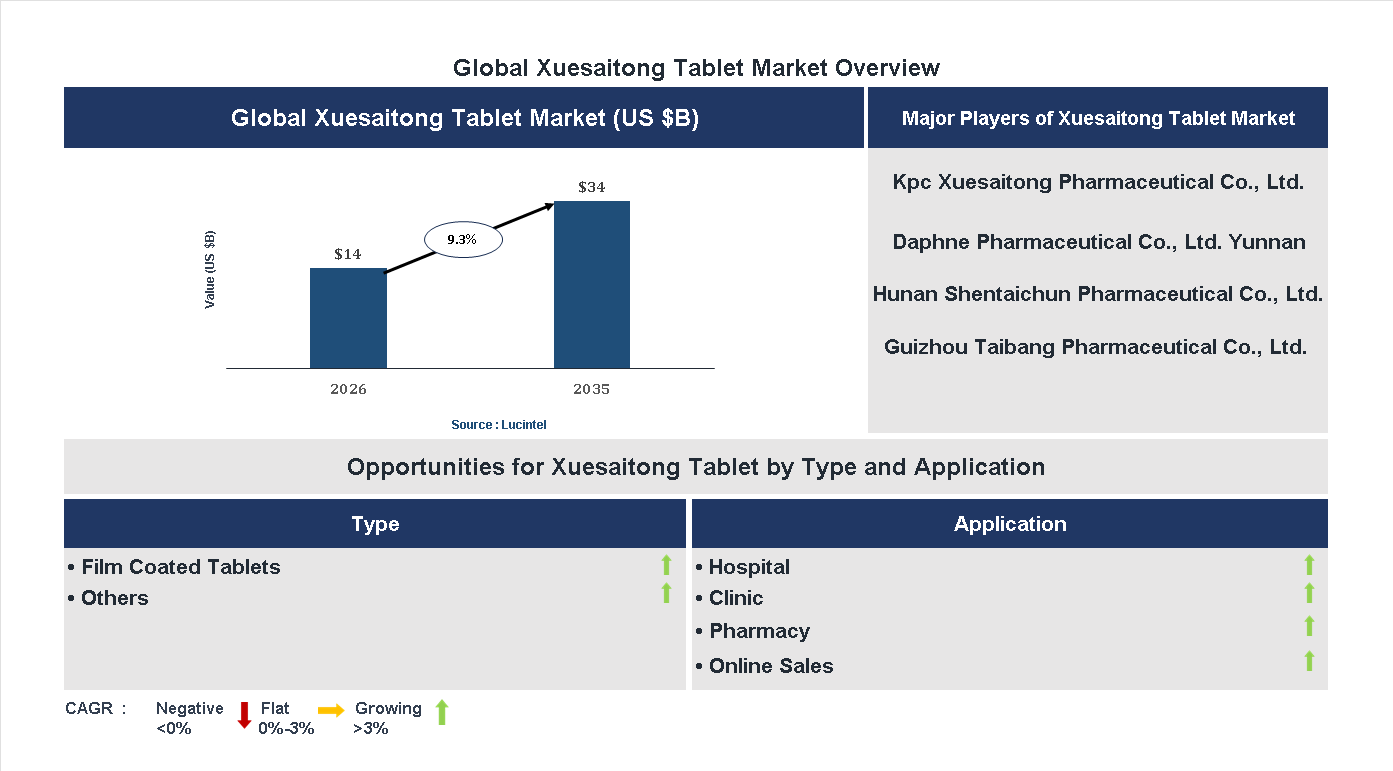
The future of the global xuesaitong tablet market looks promising with opportunities in the hospital, clinic, pharmacy, and online sale markets. The global xuesaitong tablet market is expected to reach an estimated $34 billion by 2035 with a CAGR of 9.3% from 2026 to 2035. The major drivers for this market are the growing consumer preference for natural herbal remedies, the rising healthcare spending in emerging economies, and the increasing trend of online pharmacy.• Lucintel forecasts that, within the type category, film coated tablet will remain the largest segment over the forecast period.
• Within the application category, hospital is expected to witness the highest growth.
• In terms of region, APAC is expected to witness the highest growth over the forecast period. Gain valuable insights for your business decisions with our comprehensive 150+ page report. Sample figures with some insights are shown below.
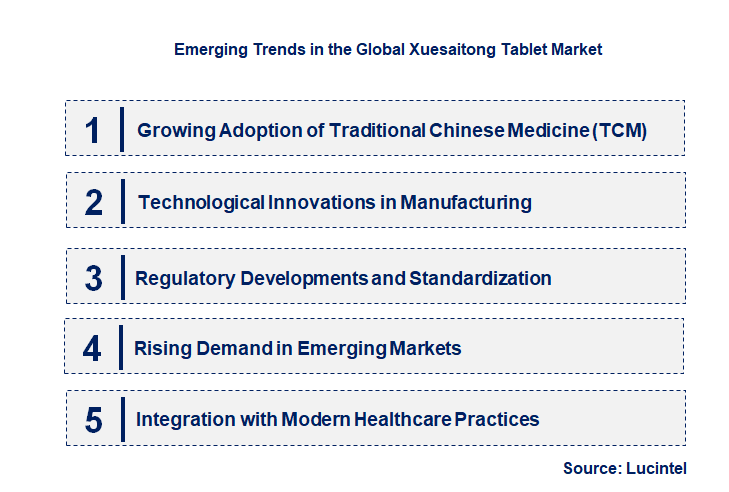
Emerging Trends in the Xuesaitong Tablet Market
The xuesaitong tablet market is experiencing rapid evolution driven by technological advancements, changing consumer preferences, and regulatory developments. As healthcare providers and patients seek more effective and accessible treatments, manufacturers are innovating to meet these demands. The market's growth is also influenced by increasing awareness of traditional Chinese medicine and integration with modern healthcare practices. These trends are shaping the future landscape of Xuesaitong Tablets, creating new opportunities and challenges for stakeholders. Understanding these key developments is essential for businesses aiming to capitalise on emerging market dynamics and deliver value to consumers and healthcare providers alike.• Growing Adoption of Traditional Chinese Medicine (TCM): Increasing acceptance of TCM globally is expanding the market. Consumers are seeking natural, holistic remedies, which boosts demand for Xuesaitong Tablets. This trend is supported by rising awareness of TCM's benefits and integration into mainstream healthcare systems. As a result, manufacturers are focusing on product efficacy, quality standards, and marketing strategies to attract a broader audience. The global shift towards natural and alternative medicines is significantly driving market growth, making TCM-based products like Xuesaitong Tablets more mainstream.
• Technological Innovations in Manufacturing: Advances in extraction, formulation, and quality control are enhancing product efficacy and safety. Innovative manufacturing techniques such as nanotechnology and precision extraction improve bioavailability and consistency. These developments help meet stringent regulatory standards and increase consumer confidence. Enhanced manufacturing processes also enable cost-effective production, allowing for competitive pricing. As technology continues to evolve, the market benefits from higher-quality products, which in turn boost consumer trust and expand market reach.
• Regulatory Developments and Standardisation: Governments and regulatory bodies are establishing clearer guidelines for herbal medicines, including Xuesaitong Tablets. Standardisation of ingredients, quality control measures, and safety assessments is becoming more rigorous. These regulations improve product credibility and facilitate international trade. However, they also pose challenges for manufacturers to meet new compliance standards. Overall, regulatory advancements are fostering a safer, more reliable market environment, encouraging both domestic and global expansion of Xuesaitong-based products.
• Rising Demand in Emerging Markets: Developing countries are witnessing increased interest in traditional medicines, driven by rising healthcare costs and limited access to conventional drugs. Xuesaitong Tablets are gaining popularity as affordable, effective alternatives. Local manufacturing and distribution are expanding, supported by government initiatives promoting traditional medicine. This trend opens new revenue streams for companies and diversifies market sources. The growing demand in emerging markets is a key driver of global market expansion, emphasizing the importance of tailored marketing and distribution strategies to meet regional needs.
• Integration with Modern Healthcare Practices: There is a growing trend of combining Xuesaitong Tablets with conventional treatments to enhance therapeutic outcomes. Integrative medicine approaches are gaining acceptance among healthcare providers and patients. This synergy improves treatment efficacy and reduces side effects, making herbal medicines more appealing. It also encourages research collaborations to validate clinical benefits. The integration trend is transforming the market by positioning Xuesaitong Tablets as complementary therapies, expanding their application scope and fostering greater acceptance within mainstream medicine. In summary, these emerging trends are reshaping the xuesaitong tablet market by promoting greater acceptance, improving product quality, expanding into new regions, and integrating traditional remedies with modern healthcare. This dynamic environment offers significant growth opportunities while also requiring stakeholders to adapt to evolving standards and consumer preferences.
Recent Development in the Xuesaitong Tablet Market
The xuesaitong tablet market has experienced significant recent developments driven by advancements in healthcare, increasing demand for traditional Chinese medicine, and technological innovations. These changes are shaping the market landscape, creating new opportunities for manufacturers and healthcare providers. As consumer awareness grows and regulatory frameworks evolve, the market is poised for substantial growth, with key players investing in research and development to meet rising demand. The following developments highlight the current trajectory and future potential of this dynamic industry.• Growing Demand for Traditional Chinese Medicine: The increasing preference for natural and holistic treatments has boosted the popularity of Xuesaitong Tablets, leading to expanded market reach and higher sales volumes. Consumers are seeking alternatives to synthetic drugs, emphasising safety and efficacy, which benefits the market. This trend encourages manufacturers to innovate and improve product formulations, ultimately enhancing market competitiveness and driving sustained growth.
• Regulatory Enhancements and Approvals: Recent regulatory updates have streamlined approval processes and increased safety standards for herbal medicines, including Xuesaitong Tablets. These changes foster greater consumer confidence and facilitate market entry for new products. Improved regulatory clarity also encourages investment and research, leading to higher-quality offerings. As a result, the market benefits from increased legitimacy and expanded distribution channels, supporting long-term growth.
• Technological Innovations in Manufacturing: Advances in extraction, formulation, and quality control technologies have improved the efficacy and safety of Xuesaitong Tablets. These innovations reduce production costs and enhance product consistency, which appeals to both consumers and healthcare providers. Enhanced manufacturing processes also enable scalability and faster market response, positioning companies to meet rising demand efficiently and maintain a competitive advantage.
• Expansion into International Markets: Companies are increasingly exploring global markets, driven by rising awareness of traditional Chinese medicine benefits. Strategic partnerships and export initiatives have opened new avenues for growth outside China, especially in Asia, Europe, and North America. This international expansion diversifies revenue streams, boosts brand recognition, and accelerates market penetration, ultimately contributing to the global footprint and market resilience.
• Investment in Research and Clinical Studies: Increased funding for scientific research has validated the therapeutic benefits of Xuesaitong Tablets, leading to more clinical evidence supporting their use. These studies improve credibility among healthcare professionals and consumers, fostering trust and adoption. Enhanced scientific backing also facilitates regulatory approvals and formulates new indications, broadening the product’s application scope and reinforcing market growth. These recent developments are significantly transforming the xuesaitong tablet market by enhancing product quality, expanding global reach, and strengthening consumer confidence. Regulatory improvements and technological innovations are creating a more competitive environment, while increased research validates therapeutic claims. Collectively, these factors are driving sustained growth, attracting investments, and positioning the market for long-term success. As a result, the industry is poised for continued expansion and increased influence within the healthcare sector.
Strategic Growth Opportunities in the Xuesaitong Tablet Market
The xuesaitong tablet market is experiencing significant growth driven by increasing demand for traditional Chinese medicine in cardiovascular and cerebrovascular treatments. Rising awareness of natural therapies, expanding healthcare infrastructure, and technological advancements in formulation are fueling market expansion. Additionally, regulatory support and growing research into herbal medicines are creating new opportunities. Companies are focusing on innovation, strategic partnerships, and geographic expansion to capture market share. This dynamic environment offers substantial potential for stakeholders aiming to leverage traditional medicine's benefits in modern healthcare.• Expansion into Cardiovascular and Cerebrovascular Treatment Segments: The growing prevalence of heart and stroke-related conditions is driving demand for Xuesaitong Tablets, which are traditionally used to improve blood circulation and reduce clot formation. As awareness of herbal alternatives increases, pharmaceutical companies are investing in clinical research to validate efficacy, leading to broader acceptance. This expansion is supported by regulatory approvals and marketing efforts targeting hospitals and clinics, positioning Xuesaitong as a preferred natural therapy for vascular health management.
• Increasing Adoption in Outpatient and Home Healthcare Settings: The shift towards outpatient care and home-based treatments is creating new opportunities for Xuesaitong Tablets. Patients prefer convenient, non-invasive options for managing chronic conditions like hypertension and ischemic diseases. Manufacturers are developing user-friendly packaging and dosage forms suitable for self-administration. This trend is complemented by telemedicine and digital health platforms, which facilitate remote monitoring and prescription, thereby expanding market reach and fostering patient adherence outside traditional clinical environments.
• Growing Research and Development for New Formulations and Indications: R&D efforts are focused on enhancing the bioavailability, stability, and efficacy of Xuesaitong Tablets. Researchers are exploring novel delivery systems, such as sustained-release formulations, to improve therapeutic outcomes. Additionally, investigations into new indications, including diabetic microvascular complications and neuroprotection, are broadening the application scope. These innovations aim to meet diverse patient needs, comply with regulatory standards, and differentiate products in a competitive market.
• Strategic Collaborations and Partnerships to Accelerate market Penetration: Companies are forming alliances with research institutions, healthcare providers, and distribution networks to expand their footprint. Collaborations facilitate clinical trials, regulatory approvals, and marketing efforts, enabling faster entry into new markets. Partnerships with traditional medicine practitioners and hospitals enhance credibility and acceptance. Such strategic moves help optimise resource utilisation, share risks, and leverage combined expertise to accelerate growth and establish a strong market presence.
• Expansion into International Markets with Regulatory Support: The global demand for herbal and traditional medicines is rising, prompting companies to explore international markets. Countries with growing acceptance of traditional Chinese medicine, such as Southeast Asia, Europe, and North America, present lucrative opportunities. Navigating regulatory pathways and obtaining necessary approvals are critical steps. Companies are tailoring marketing strategies to local preferences and establishing distribution channels, which will facilitate market entry, increase exports, and diversify revenue streams, ultimately strengthening the global footprint of Xuesaitong Tablets. The overall impact of these opportunities is poised to significantly enhance the growth trajectory of the xuesaitong tablet market. By leveraging innovation, strategic partnerships, and expanding into new regions, stakeholders can capitalise on the increasing acceptance of herbal medicines. This will foster market resilience, drive revenue growth, and support the integration of traditional Chinese medicine into mainstream healthcare systems worldwide.
Xuesaitong Tablet Market Driver and Challenges
The xuesaitong tablet market is influenced by a variety of technological, economic, and regulatory factors that shape its growth trajectory. Advances in pharmaceutical technology and increasing research and development efforts are driving innovation and product efficacy. Economic factors such as rising healthcare expenditure and growing demand for traditional Chinese medicine contribute to market expansion. Regulatory frameworks, including approvals and quality standards, impact market entry and product acceptance. Additionally, consumer awareness and preference for natural and herbal remedies further propel demand. However, the market also faces challenges related to regulatory hurdles, competition, and manufacturing complexities. Understanding these drivers and challenges is essential for stakeholders to navigate the evolving landscape effectively. The factors responsible for driving the xuesaitong tablet market include:• Technological Advancements: The development of improved extraction and formulation techniques enhances the efficacy and safety of Xuesaitong tablets. Innovations in pharmaceutical technology enable better bioavailability and targeted delivery, increasing consumer trust and acceptance. These advancements also facilitate the development of new formulations, expanding product portfolios. As research continues, the market benefits from improved quality standards and reduced manufacturing costs, making products more accessible. The integration of digital tools for clinical trials and quality control further accelerates innovation, ensuring the market remains competitive and responsive to consumer needs.
• Growing Healthcare Expenditure: Increasing healthcare spending worldwide, especially in emerging economies, boosts demand for effective traditional medicines like Xuesaitong tablets. As populations age and chronic diseases rise, consumers seek alternative and complementary therapies. Governments and private insurers are investing more in healthcare infrastructure, which includes traditional medicine segments. This economic trend supports market growth by expanding distribution channels and increasing consumer purchasing power. Additionally, rising awareness of the benefits of herbal and natural remedies encourages consumers to opt for Xuesaitong tablets, further fueling demand.
• Regulatory Support and Approvals: Favorable regulatory policies and approvals from health authorities facilitate market entry and product commercialization. Governments in various regions are recognising traditional Chinese medicine and establishing standards for quality and safety, which boosts consumer confidence. Regulatory support also encourages manufacturers to invest in research and development, leading to innovative products. Clear guidelines help streamline approval processes, reducing time-to-market and costs. As regulatory frameworks evolve to accommodate traditional medicines, the market benefits from increased legitimacy and wider acceptance among healthcare providers and consumers.
• Increasing Consumer Awareness: Growing awareness about the health benefits of herbal and traditional medicines drives demand for Xuesaitong tablets. Educational campaigns, digital media, and word-of-mouth influence consumer perceptions positively. Consumers are increasingly seeking natural alternatives to synthetic drugs, valuing the holistic approach of traditional Chinese medicine. This trend is particularly prominent among younger demographics and health-conscious individuals. As awareness spreads, demand for high-quality, authentic Xuesaitong products rises, encouraging manufacturers to focus on quality assurance and branding. The shift towards preventive healthcare also supports sustained market growth.
• Expansion of Distribution Channels: The proliferation of online pharmacies, health stores, and hospital pharmacies enhances product accessibility. E-commerce platforms enable manufacturers to reach a broader consumer base, including rural and remote areas. Strategic partnerships with healthcare providers and traditional medicine practitioners further expand distribution networks. Improved logistics and supply chain management ensure product availability and freshness. This expansion not only increases sales volume but also enhances brand visibility and consumer trust. As distribution channels evolve, the market becomes more competitive, with companies leveraging digital marketing and direct-to-consumer strategies to capture market share. The challenges facing this Market include:
• Regulatory Hurdles: Despite supportive policies, navigating complex regulatory landscapes remains challenging. Different countries have varying standards for herbal medicines, requiring extensive documentation and testing. Lengthy approval processes and changing regulations can delay product launches and increase costs. Non-compliance risks lead to product recalls or bans, damaging brand reputation. Additionally, a lack of harmonisation across regions complicates international expansion. Manufacturers must invest significantly in regulatory expertise and compliance measures, which can hinder agility and increase operational costs, ultimately impacting profitability and market growth.
• Intense Competition: The market faces stiff competition from both traditional Chinese medicine manufacturers and emerging herbal supplement brands. Many players offer similar products, leading to price wars and reduced profit margins. Innovation is crucial to differentiate offerings, but high R&D costs pose barriers for smaller companies. Counterfeit and substandard products also threaten brand integrity and consumer trust. Market saturation in certain regions limits growth opportunities, forcing companies to seek new markets or diversify product lines. Maintaining quality standards and brand loyalty becomes increasingly challenging amid a crowded marketplace.
• Manufacturing Complexities: Producing Xuesaitong tablets involves sourcing high-quality raw materials, which can be scarce or variable in quality. Ensuring consistency and potency across batches requires sophisticated manufacturing processes and strict quality control. Variability in raw material supply chains can lead to delays and increased costs. Additionally, scaling up production while maintaining standards poses technical challenges. Regulatory inspections and audits demand comprehensive documentation and adherence to Good Manufacturing Practices (GMP). These complexities can hinder rapid expansion and increase operational risks, affecting overall market stability and growth prospects. The xuesaitong tablet market is driven by technological innovations, economic growth, regulatory support, increasing consumer awareness, and expanding distribution channels. However, it faces significant challenges from regulatory complexities, intense competition, and manufacturing hurdles. These factors collectively influence market dynamics, requiring stakeholders to adapt strategically. While growth opportunities are substantial, addressing regulatory and operational challenges is crucial for sustained success. Overall, the market's future depends on balancing innovation and compliance while capitalising on the rising demand for traditional herbal medicines.
List of Xuesaitong Tablet Companies
Companies in the market compete on the basis of product quality offered. Major players in this market focus on expanding their manufacturing facilities, R&D investments, infrastructural development, and leverage integration opportunities across the value chain. With these strategies xuesaitong tablet companies cater increasing demand, ensure competitive effectiveness, develop innovative products & technologies, reduce production costs, and expand their customer base. Some of the xuesaitong tablet companies profiled in this report include-• Kpc Xuesaitong Pharmaceutical Co., Ltd.
• Daphne Pharmaceutical Co., Ltd. Yunnan
• Hunan Shentaichun Pharmaceutical Co., Ltd.
• Guizhou Taibang Pharmaceutical Co., Ltd.
Xuesaitong Tablet Market by Segment
The study includes a forecast for the global xuesaitong tablet market by type, application, and region.Xuesaitong Tablet Market by Type [Value from 2019 to 2035]:
• Film Coated Tablets
• Others
Xuesaitong Tablet Market by Application [Value from 2019 to 2035]:
• Hospital
• Clinic
• Pharmacy
• Online Sales
Xuesaitong Tablet Market by Region [Value from 2019 to 2035]:
• North America
• Europe
• Asia Pacific
• The Rest of the World
Country Wise Outlook for the Xuesaitong Tablet Market
The xuesaitong tablet market has experienced significant shifts driven by technological advancements, regulatory changes, and evolving consumer preferences across major economies. As healthcare demands grow and traditional medicine integrates with modern practices, countries are adopting innovative approaches to enhance market growth. The United States, China, Germany, India, and Japan each exhibit unique trends influenced by their healthcare infrastructure, regulatory environment, and cultural factors. These developments reflect a broader global movement towards improved cardiovascular and neurological health solutions, with increased research, product launches, and market expansion efforts shaping the future landscape of Xuesaitong Tablets.• United States: The US market has seen increased research funding and clinical trials focusing on Xuesaitong's efficacy for cardiovascular health. Regulatory agencies are streamlining approval processes, encouraging innovation. Market players are expanding distribution channels and investing in consumer awareness campaigns to boost adoption. The integration of traditional Chinese medicine with Western healthcare practices is gaining traction, fostering greater acceptance among healthcare providers and patients.
• China: As the origin of Xuesaitong, China continues to lead in production and innovation. Recent developments include new formulations and delivery methods to improve bioavailability. Government policies favour traditional medicine integration into mainstream healthcare, supporting market growth. Domestic demand is rising due to increasing awareness of traditional remedies' benefits, and exports are expanding to international markets. Local companies are investing heavily in R&D to develop more effective products.
• Germany: The German market is characterised by stringent regulatory standards and a focus on evidence-based medicine. Recent advancements involve rigorous clinical studies validating Xuesaitong's benefits, which help in gaining approval for broader use. There is a growing interest among healthcare professionals in integrating traditional Chinese medicine into holistic treatment plans. Market growth is also driven by increasing patient awareness and demand for natural health products.
• India: India exhibits rapid growth in the Xuesaitong market, driven by rising awareness of traditional medicine's role in managing chronic conditions. Recent developments include collaborations between Chinese and Indian pharmaceutical companies to develop localised formulations. Government initiatives promoting traditional medicine integration and herbal product exports are boosting market expansion. The increasing prevalence of cardiovascular diseases is also fueling demand for effective herbal therapies like Xuesaitong.
• Japan: Japan's market is evolving with a focus on scientific validation and safety profiles of Xuesaitong. Recent advancements include clinical research collaborations and regulatory approvals for specific indications. The ageing population's demand for natural and alternative therapies is a significant driver. Japanese companies are investing in product innovation, combining traditional Chinese medicine principles with modern pharmaceutical technology to enhance efficacy and safety.

Features of the Global Xuesaitong Tablet Market
Market Size Estimates: Xuesaitong tablet market size estimation in terms of value ($B). Trend and Forecast Analysis: Market trends (2019 to 2025) and forecast (2026 to 2035) by various segments and regions. Segmentation Analysis: Xuesaitong tablet market size by type, application, and region in terms of value ($B). Regional Analysis: Xuesaitong tablet market breakdown by North America, Europe, Asia Pacific, and Rest of the World. Growth Opportunities: Analysis of growth opportunities in different type, application, and regions for the xuesaitong tablet market. Strategic Analysis: This includes M&A, new product development, and competitive landscape of the xuesaitong tablet market. Analysis of competitive intensity of the industry based on Porter’s Five Forces model.
FAQ
Q1. What is the xuesaitong tablet market size? Answer: The global xuesaitong tablet market is expected to reach an estimated $34 billion by 2035. Q2. What is the growth forecast for xuesaitong tablet market? Answer: The global xuesaitong tablet market is expected to grow with a CAGR of 9.3% from 2026 to 2035. Q3. What are the major drivers influencing the growth of the xuesaitong tablet market? Answer: The major drivers for this market are the growing consumer preference for natural herbal remedies, the rising healthcare spending in emerging economies, and the increasing trend of online pharmacy. Q4. What are the major segments for xuesaitong tablet market? Answer: The future of the xuesaitong tablet market looks promising with opportunities in the hospital, clinic, pharmacy, and online sale markets. Q5. Who are the key xuesaitong tablet market companies? Answer: Some of the key xuesaitong tablet companies are as follows:• Kpc Xuesaitong Pharmaceutical Co., Ltd.
• Daphne Pharmaceutical Co., Ltd. Yunnan
• Hunan Shentaichun Pharmaceutical Co., Ltd.
• Guizhou Taibang Pharmaceutical Co., Ltd. Q6. Which xuesaitong tablet market segment will be the largest in future? Answer: Lucintel forecasts that, within the type category, film coated tablet will remain the largest segment over the forecast period. Q7. In xuesaitong tablet market, which region is expected to be the largest in next 5 years? Answer: In terms of region, APAC is expected to witness the highest growth over the forecast period. Q8. Do we receive customization in this report? Answer: Yes, Lucintel provides 10% customization without any additional cost.
Table of Contents
List of Figures
List of Tables
Methodology
- In-depth interviews of the major players in this market
- Detailed secondary research from competitors’ financial statements and published data
- Extensive searches of published works, market, and database information pertaining to industry news, company press releases, and customer intentions
- A compilation of the experiences, judgments, and insights of Lucintel’s professionals, who have analyzed and tracked this market over the years.


Buy Now
Choose a license that fits your team. Instant PDF delivery.
Prices exclude taxes. Instant delivery. Custom licensing available on request.
Key Questions
- • What are some of the most promising, high-growth opportunities for the xuesaitong tablet market by type (film coated tablets and others), application (hospital, clinic, pharmacy, and online sales), and region (North America, Europe, Asia Pacific, and the Rest of the World)?
- • Which segments will grow at a faster pace and why?
- • Which region will grow at a faster pace and why?
- • What are the key factors affecting market dynamics? What are the key challenges and business risks in this market?
- • What are the business risks and competitive threats in this market?
- • What are the emerging trends in this market and the reasons behind them?
- • What are some of the changing demands of customers in the market?
- • What are the new developments in the market? Which companies are leading these developments?
- • Who are the major players in this market? What strategic initiatives are key players pursuing for business growth?
- • What are some of the competing products in this market and how big of a threat do they pose for loss of market share by material or product substitution?
- • What M&A activity has occurred in the last 7 years and what has its impact been on the industry? For any questions related to Xuesaitong Tablet Market, Xuesaitong Tablet Market Size, Xuesaitong Tablet Market Growth, Xuesaitong Tablet Market Analysis, Xuesaitong Tablet Market Report, Xuesaitong Tablet Market Share, Xuesaitong Tablet Market Trends, Xuesaitong Tablet Market Forecast, Xuesaitong Tablet Companies, write Lucintel analyst at email: helpdesk@lucintel.com. We will be glad to get back to you soon.


