
Report Feature
Wound Plaster Market Trends and Forecast
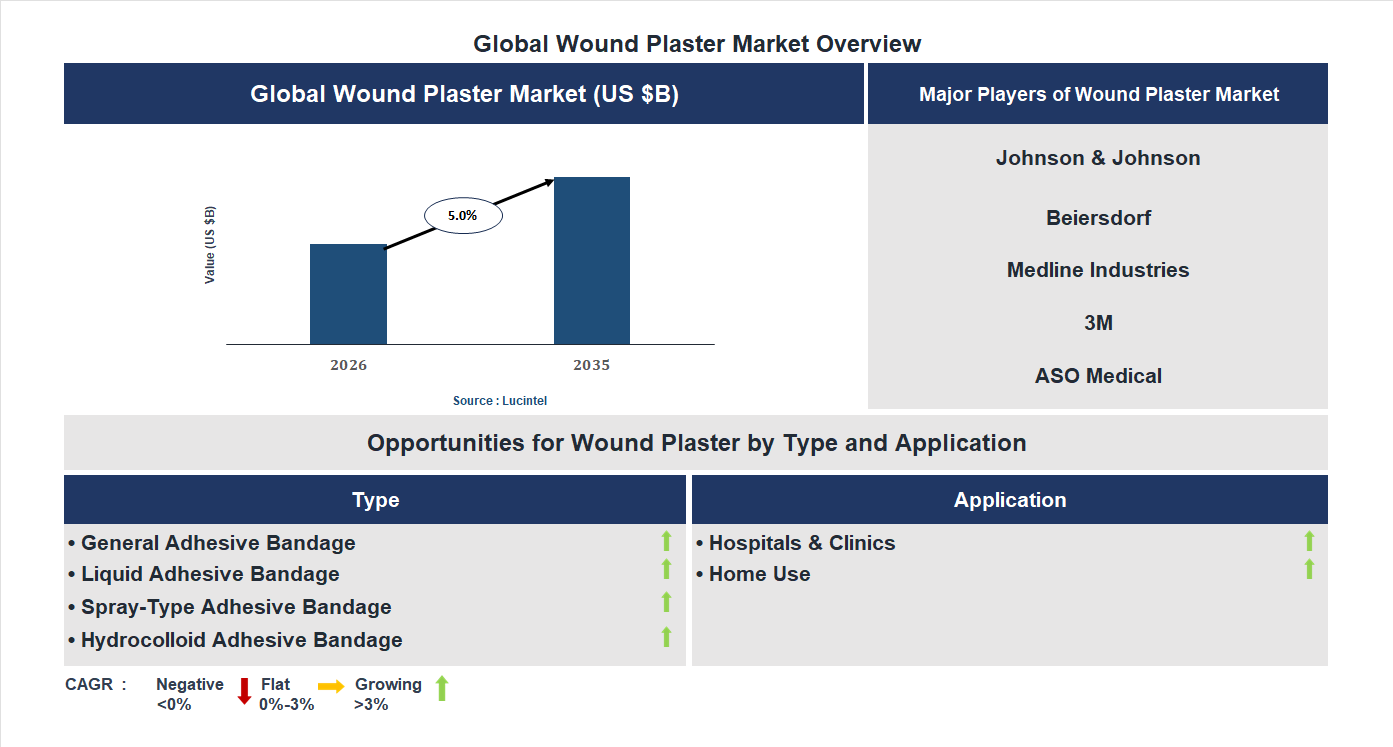
The future of the global wound plaster market looks promising with opportunities in the hospital & clinic and home use markets. The global wound plaster market is expected to reach an estimated $38 billion by 2035 with a CAGR of 7% from 2026 to 2035. The major drivers for this market are the increasing incidence of minor injuries, the rising demand for convenient wound care, and the growing awareness of hygiene practices.• Lucintel forecasts that, within the type category, hydrocolloid adhesive bandage is expected to witness the highest growth over the forecast period.
• Within the application category, home use is expected to witness higher growth.
• In terms of region, APAC is expected to witness the highest growth over the forecast period. Gain valuable insights for your business decisions with our comprehensive 150+ page report. Sample figures with some insights are shown below.
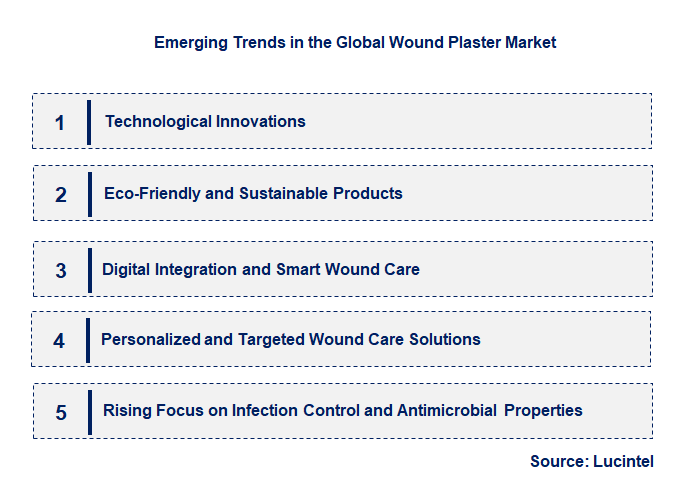
Emerging Trends in the Wound Plaster Market
The wound plaster market is experiencing a significant transformation driven by technological advancements, changing consumer preferences, and increasing healthcare awareness. As the demand for more effective, comfortable, and innovative wound care solutions grows, market players are adopting new strategies to meet these needs. The emergence of eco-friendly products, digital integration, and personalized treatments is shaping the future landscape of this industry. These trends are not only enhancing product efficacy but also improving patient outcomes and satisfaction. Understanding these developments is crucial for stakeholders aiming to stay competitive and capitalize on new opportunities within the evolving wound plaster market.• Technological Innovations: Advancements in material science and biomedical engineering are leading to the development of smarter wound plasters. These incorporate features like antimicrobial properties, moisture control, and real-time monitoring capabilities. Such innovations improve healing efficiency, reduce infection risks, and enhance patient comfort. Companies investing in R&D are launching products with enhanced adhesion, breathability, and biodegradability, which are gaining popularity. This trend is driving market growth by offering more effective and user-friendly wound care solutions, ultimately transforming traditional wound management practices.
• Eco-Friendly and Sustainable Products: Increasing environmental awareness is prompting manufacturers to develop biodegradable and eco-friendly wound plasters. These products use sustainable materials that decompose naturally, reducing plastic waste and environmental impact. Consumers are becoming more conscious of sustainability, demanding greener options. This shift is encouraging innovation in packaging, raw materials, and manufacturing processes. The adoption of eco-friendly products not only aligns with global sustainability goals but also appeals to environmentally conscious consumers, expanding market reach and fostering responsible industry growth.
• Digital Integration and Smart Wound Care: The integration of digital technology into wound care is revolutionizing the market. Smart wound plasters equipped with sensors can monitor parameters like moisture levels, temperature, and infection indicators in real-time. Data collected can be transmitted to healthcare providers for remote monitoring and timely intervention. This trend enhances personalized treatment, reduces hospital visits, and improves healing outcomes. The rise of telemedicine and digital health platforms further supports this shift, making wound management more efficient and accessible, especially in remote or underserved areas.
• Personalized and Targeted Wound Care Solutions: Customization of wound plasters based on individual patient needs is gaining traction. Advances in biomaterials and 3D printing enable the creation of tailored dressings that match wound size, shape, and specific healing requirements. Personalized solutions improve healing rates, reduce discomfort, and minimize complications. This trend is driven by a growing emphasis on patient-centric care and precision medicine. As healthcare providers seek more effective treatments, the market is witnessing increased demand for bespoke wound care products, fostering innovation and differentiation among manufacturers.
• Rising Focus on Infection Control and Antimicrobial Properties: The prevalence of wound infections has heightened the focus on antimicrobial wound plasters. Incorporating agents like silver, honey, or other antimicrobial compounds helps prevent infections and promote faster healing. The COVID-19 pandemic has further underscored the importance of infection control in wound management. Manufacturers are investing in developing advanced antimicrobial dressings that are safe, effective, and long-lasting. This trend is critical in reducing healthcare-associated infections, lowering treatment costs, and improving patient outcomes, thereby significantly impacting market growth and product development strategies. These trends are collectively reshaping the wound plaster market by fostering innovation, sustainability, personalization, and enhanced infection control. They are driving the industry toward more effective, patient-friendly, and environmentally responsible solutions, ultimately improving healthcare delivery and market competitiveness.
Recent Development in the Wound Plaster Market
The wound plaster market is experiencing rapid growth driven by technological advancements, increasing healthcare awareness, and rising incidences of injuries and chronic wounds worldwide. Innovations in materials and adhesive technologies are enhancing product efficacy and comfort. Additionally, expanding healthcare infrastructure and the growing geriatric population are fueling demand. Market players are focusing on product diversification and strategic collaborations to capture new opportunities. These developments are transforming the industry landscape, making wound care more effective, accessible, and tailored to patient needs.• Technological Innovations in Wound Care: The development of advanced wound dressings with improved healing properties and antimicrobial features is revolutionizing treatment options. These innovations reduce infection risks, promote faster healing, and improve patient comfort. As a result, healthcare providers prefer these products, boosting market growth. The integration of smart dressings with sensors for real-time monitoring is also emerging, offering personalized wound management solutions. This technological progress is expanding the market by attracting new customer segments and increasing product adoption.
• Rising Incidence of Chronic Wounds and Injuries: The increasing prevalence of diabetes, obesity, and aging populations is leading to a surge in chronic wounds such as diabetic foot ulcers and pressure sores. Additionally, rising accidents and sports injuries contribute to a higher demand for effective wound care products. This trend is prompting manufacturers to develop specialized wound plasters that cater to complex wound types. The growing burden of chronic wounds is significantly expanding the market, encouraging innovation and increased healthcare expenditure on wound management.
• Growing Healthcare Infrastructure and Awareness: Improved healthcare facilities and increased awareness about wound care are driving market expansion. Governments and the private sectors are investing in healthcare infrastructure, especially in developing regions, facilitating better access to wound care products. Educational campaigns are informing patients about proper wound management, increasing product demand. This enhanced infrastructure and awareness are enabling timely treatment, reducing complications, and fostering market growth. The trend is also encouraging local manufacturing and distribution channels, broadening market reach.
• Product Diversification and Customization: Companies are focusing on diversifying their product portfolios with various wound plaster types, including hydrocolloid, foam, and transparent dressings. Customization options for different wound types and patient needs are improving treatment outcomes. This diversification caters to a broader customer base, from hospitals to home care settings. It also allows for premium pricing and increased market share. The emphasis on personalized wound care solutions is making the market more competitive and innovative, attracting investments and expanding consumer options.
• Strategic Collaborations and Market Expansion: Industry players are forming alliances with research institutions and healthcare providers to develop innovative products and expand geographically. These collaborations facilitate access to new markets, especially in emerging economies with rising healthcare demands. Mergers and acquisitions are also enabling companies to strengthen their product lines and distribution networks. Such strategic moves are accelerating market growth, fostering innovation, and ensuring wider availability of advanced wound care solutions. This trend is positioning the market for sustained long-term expansion. These recent developments are significantly impacting the wound plaster market by fostering innovation, expanding access, and improving treatment outcomes. Technological advancements, demographic shifts, and increased healthcare investments are driving demand for diverse, effective wound care products. Strategic collaborations and product diversification are further strengthening market positions. Overall, these opportunities are creating a dynamic, competitive landscape that is poised for continued growth, ultimately benefiting patients through better wound management solutions and improved healthcare delivery.
Strategic Growth Opportunities in the Wound Plaster Market
The wound plaster market is experiencing significant growth driven by increasing healthcare awareness, technological advancements, and rising incidences of injuries and chronic wounds worldwide. Innovations in materials and adhesive technologies are expanding product applications, while the growing geriatric population and focus on wound care management are fueling demand. Market players are investing in R&D to develop more effective, comfortable, and skin-friendly wound dressings, creating new opportunities for expansion across various healthcare settings and consumer segments.• Innovation in Biocompatible and Breathable Materials: Developing advanced wound plasters with biocompatible, breathable, and moisture-wicking materials enhances healing and patient comfort. These innovations reduce infection risks and improve adherence, making wound care more effective. The focus on eco-friendly and biodegradable options also aligns with sustainability goals, attracting environmentally conscious consumers and healthcare providers. This technological evolution broadens product applications and opens new markets for wound plaster manufacturers.
• Expansion of Wound Care in Chronic and Diabetic Wounds: The rising prevalence of chronic wounds, especially among diabetic and elderly populations, presents a substantial growth opportunity. Customized wound plasters with enhanced healing properties, antimicrobial features, and moisture control are in high demand. The development of specialized dressings for difficult-to-heal wounds improves patient outcomes and reduces healthcare costs. This segments growth is driven by increasing awareness and the need for effective, long-term wound management solutions.
• Growing Adoption of Advanced Wound Dressings in Hospitals and Clinics: Healthcare facilities are increasingly adopting advanced wound dressings that offer faster healing, infection control, and ease of use. The integration of smart dressings with sensors for real-time monitoring is gaining traction. This trend enhances patient care and reduces hospital stays. Investments in training and infrastructure further support the adoption of innovative wound plaster solutions, creating a lucrative market for providers offering high-tech wound care products.
• Rising Consumer Awareness and Self-Care Trends: Consumers are becoming more aware of wound care options and prefer convenient, ready-to-use wound plasters for minor injuries. The demand for attractive, skin-friendly, and hypoallergenic products is increasing. E-commerce platforms facilitate easy access to a wide range of wound care products, expanding market reach. This trend encourages companies to innovate with design, branding, and product differentiation, fueling growth in retail and direct-to-consumer channels.
• Strategic Collaborations and Product Diversification by Market Players: Companies are forming strategic alliances to develop innovative wound plaster solutions and expand their product portfolios. Diversification into related segments such as burn dressings and surgical adhesives enhances market presence. Collaborations with research institutions accelerate product development and regulatory approvals. These strategies enable companies to meet diverse customer needs, penetrate new markets, and strengthen their competitive position, ultimately driving overall market growth. The overall impact of these opportunities is a dynamic, expanding wound plaster market characterized by technological innovation, increased healthcare adoption, and consumer engagement. These factors collectively foster a robust environment for growth, enabling providers to meet evolving patient needs and improve wound care outcomes globally. As companies capitalize on these opportunities, the market is poised for sustained expansion and innovation.
Wound Plaster Market Driver and Challenges
The wound plaster market is influenced by a variety of technological, economic, and regulatory factors that shape its growth and development. Advances in medical technology and materials science have led to more effective and comfortable wound care solutions. Economic factors such as increasing healthcare expenditure and rising awareness about wound management are driving demand. Regulatory standards ensure product safety and efficacy, impacting market entry and innovation. Additionally, demographic shifts, including aging populations and rising prevalence of chronic wounds, further propel market expansion. However, challenges such as regulatory hurdles, high R&D costs, and competition from alternative wound care products also influence market dynamics. Understanding these drivers and challenges is essential for stakeholders to navigate this evolving landscape effectively. The factors responsible for driving the wound plaster market include:• Technological Innovations: The development of advanced wound dressings, including hydrocolloids, alginates, and antimicrobial plasters, has significantly improved wound healing outcomes. These innovations offer better moisture management, infection control, and patient comfort, making wound plasters more effective and preferred. Continuous R&D efforts are leading to smarter, more adaptable products, which attract healthcare providers and consumers alike. The integration of nanotechnology and bioactive materials further enhances product efficacy, expanding market opportunities. As technology advances, the market benefits from increased product differentiation and improved patient outcomes, fueling growth.
• Rising Prevalence of Chronic Wounds: The increasing incidence of chronic wounds due to diabetes, obesity, and aging populations is a major driver. Chronic wounds require specialized, long-term care, often involving advanced wound dressings like plasters. The growing burden on healthcare systems and the need for effective wound management solutions boost demand for specialized wound plasters. This trend is particularly prominent in developing countries where healthcare infrastructure is expanding. The rising prevalence directly correlates with increased market sales, encouraging manufacturers to innovate and expand their product portfolios to meet these needs.
• Increasing Healthcare Expenditure: Governments and private sectors worldwide are investing more in healthcare infrastructure and wound care management. Higher healthcare spending translates into better access to advanced wound care products, including wound plasters. Hospitals, clinics, and home healthcare services are adopting these products to improve patient outcomes and reduce treatment costs. This economic trend supports market growth by enabling wider distribution and adoption of innovative wound plaster solutions. Additionally, reimbursement policies in many regions make advanced wound care products more accessible, further stimulating market expansion.
• Growing Awareness and Adoption of Wound Care Products: Increased awareness about wound management and the benefits of advanced wound dressings has led to higher adoption rates. Educational campaigns, improved healthcare literacy, and the availability of effective products have encouraged both healthcare professionals and patients to prefer wound plasters over traditional methods. This shift enhances market penetration, especially in outpatient and home care settings. The trend is supported by digital health platforms and social media, which disseminate information rapidly. As awareness continues to grow, demand for innovative, easy-to-use wound plasters is expected to rise, further expanding the market.
• Regulatory Approvals and Standards: Stringent regulatory frameworks ensure the safety, efficacy, and quality of wound plasters. Compliance with standards set by agencies such as the FDA and EMA influences product development and market entry strategies. While regulatory hurdles can delay product launches, they also build consumer trust and facilitate international trade. Companies investing in regulatory compliance often gain competitive advantages through certification and approval, enabling access to broader markets. Evolving regulations also drive innovation, as manufacturers develop products that meet new safety and efficacy criteria, ultimately fostering a more reliable and trustworthy market environment. The challenges facing the wound plaster market include:
• Regulatory Hurdles: Navigating complex regulatory landscapes can be time-consuming and costly for manufacturers. Different countries have varying standards and approval processes, which can delay product launches and increase compliance expenses. Stringent regulations, while ensuring safety, may also limit innovation and market entry for smaller companies. The need for extensive clinical trials and documentation adds to the development timeline, potentially hindering rapid product availability. These hurdles can restrict market growth, especially in emerging markets where regulatory frameworks are still evolving, creating barriers for new entrants and innovation.
• High R&D and Manufacturing Costs: Developing advanced wound plasters involves significant investment in research, clinical testing, and manufacturing infrastructure. These costs can be prohibitive for small and medium-sized enterprises, limiting their ability to innovate or expand product lines. Additionally, maintaining high-quality manufacturing standards to meet regulatory requirements increases operational expenses. The need for continuous innovation to stay competitive further escalates R&D costs. Consequently, high costs can restrict market entry and slow down the pace of new product development, impacting overall market growth and diversity.
• Competition from Alternative Wound Care Products: The market faces intense competition from traditional wound dressings, such as gauze and bandages, as well as newer products like hydrogel dressings and negative pressure wound therapy devices. These alternatives often offer comparable or superior healing benefits at lower costs, challenging the market share of wound plasters. Additionally, the rise of generic products and private label brands intensifies price competition. This competitive landscape pressures companies to innovate continuously and differentiate their offerings, which can be resource-intensive and impact profit margins, ultimately affecting market stability and growth prospects. The wound plaster market is driven by technological advancements, increasing prevalence of chronic wounds, rising healthcare expenditure, growing awareness, and regulatory support. However, it faces challenges such as regulatory complexities, high R&D costs, and stiff competition from alternative products. These factors collectively influence market dynamics, with opportunities for growth tempered by barriers that require strategic navigation. Overall, the market is poised for expansion, provided stakeholders can effectively address these challenges and leverage emerging technological and demographic trends to meet evolving healthcare needs.
List of Wound Plaster Companies
Companies in the market compete on the basis of product quality offered. Major players in this market focus on expanding their manufacturing facilities, R&D investments, infrastructural development, and leverage integration opportunities across the value chain. With these strategies wound plaster companies cater increasing demand, ensure competitive effectiveness, develop innovative products & technologies, reduce production costs, and expand their customer base. Some of the wound plaster companies profiled in this report include-• Johnson & Johnson
• Beiersdorf
• Medline Industries
• 3M
• ASO Medical
• Yunnan Baiyao
• Cardinal Health
• Coloplast
• Medtronic
• Smith & Nephew
Wound Plaster Market by Segment
The study includes a forecast for the global wound plaster market by type, application, and region.Wound Plaster Market by Type [Value from 2019 to 2035]:
• General Adhesive Bandage
• Liquid Adhesive Bandage
• Spray-Type Adhesive Bandage
• Hydrocolloid Adhesive Bandage
Wound Plaster Market by Application [Value from 2019 to 2035]:
• Hospitals & Clinics
• Home Use
Wound Plaster Market by Region [Value from 2019 to 2035]:
• North America
• Europe
• Asia Pacific
• The Rest of the World
Country Wise Outlook for the Wound Plaster Market
The wound plaster market has experienced significant growth driven by increasing awareness of wound care, technological advancements, and rising healthcare investments worldwide. As countries focus on improving patient outcomes and reducing recovery times, innovations in materials and application methods have emerged. The markets expansion is also fueled by the growing prevalence of chronic wounds, surgical procedures, and sports injuries. Different regions are adopting new products and strategies to meet local healthcare needs, leading to dynamic changes across the globe. Here is a country-wise overview of recent developments in this market.• United States: The US market has seen rapid adoption of advanced wound plasters incorporating antimicrobial properties and bioactive materials. Innovations such as hydrocolloid and foam dressings are gaining popularity for their superior healing capabilities. The rise in chronic wounds among aging populations and diabetic patients has increased demand. Additionally, the integration of smart wound dressings with sensors for real-time monitoring is emerging, enhancing personalized care. The healthcare infrastructure and high R&D investments continue to drive market growth, with key players expanding their product portfolios.
• China: Chinas wound plaster market is expanding due to increasing healthcare expenditure and a large patient base. The focus is on affordable, effective products, leading to the growth of local manufacturers. Recent developments include the introduction of herbal and traditional wound care plasters, aligning with cultural preferences. The government’s emphasis on improving rural healthcare and wound management has boosted market penetration. Technological advancements such as biodegradable and eco-friendly materials are also gaining traction. The rising incidence of injuries and chronic wounds from urbanization and industrialization further fuels market growth.
• Germany: Germanys market is characterized by a strong emphasis on innovation and quality. The adoption of advanced wound dressings with antimicrobial and moisture-retentive properties is prominent. Recent developments include the integration of nanotechnology to enhance healing and reduce infection risks. The country’s focus on sustainable and eco-friendly products is evident, with biodegradable wound plasters gaining popularity. Germany’s robust healthcare system and stringent regulatory standards foster the development of high-quality products. Additionally, collaborations between research institutions and industry players are accelerating the introduction of cutting-edge wound care solutions.
• India: The Indian wound plaster market is witnessing rapid growth driven by increasing awareness, rising healthcare infrastructure, and a large patient population. Affordable and effective wound care products are in high demand, prompting local manufacturers to innovate. Recent developments include the launch of herbal and ayurvedic wound plasters, catering to traditional preferences. The government’s initiatives to improve rural healthcare and reduce wound-related complications are significant contributors. The rising prevalence of diabetes and chronic wounds due to lifestyle changes further propels market expansion. Technological advancements such as medicated and bioactive dressings are gradually entering the market.
• Japan: Japan’s market is characterized by a focus on advanced, minimally invasive wound care solutions. Recent developments include the adoption of smart wound dressings with embedded sensors for monitoring healing progress. The aging population has increased demand for specialized wound care products tailored for elderly patients. Innovations in biocompatible and biodegradable materials are prominent, aligning with Japan’s sustainability goals. The country’s strong healthcare infrastructure supports the integration of cutting-edge technologies. Additionally, collaborations between biotech firms and healthcare providers are fostering the development of personalized wound management solutions, ensuring high standards of care and improved patient outcomes.

Features of the Global Wound Plaster Market
Market Size Estimates: Wound plaster market size estimation in terms of value ($B). Trend and Forecast Analysis: Market trends (2019 to 2025) and forecast (2026 to 2035) by various segments and regions. Segmentation Analysis: Wound plaster market size by type, application, and region in terms of value ($B). Regional Analysis: Wound plaster market breakdown by North America, Europe, Asia Pacific, and Rest of the World. Growth Opportunities: Analysis of growth opportunities in different types, applications, and regions for the wound plaster market. Strategic Analysis: This includes M&A, new product development, and competitive landscape of the wound plaster market. Analysis of competitive intensity of the industry based on Porter’s Five Forces model.
FAQ
Q1. What is the market size and growth forecast for wound plaster market? Answer: The global wound plaster market is expected to reach an estimated $38 billion by 2035 and grow with a CAGR of 7% from 2026 to 2035. Q2. What are the major drivers influencing the growth of the wound plaster market? Answer: The major drivers for this market are the increasing incidence of minor injuries, the rising demand for convenient wound care, and the growing awareness of hygiene practices. Q3. What are the major segments for wound plaster market? Answer: The future of the wound plaster market looks promising with opportunities in the hospital & clinic and home use markets. Q4. Who are the key wound plaster market companies? Answer: Some of the key wound plaster companies are as follows:• Johnson & Johnson
• Beiersdorf
• Medline Industries
• 3M
• ASO Medical
• Yunnan Baiyao
• Cardinal Health
• Coloplast
• Medtronic
• Smith & Nephew Q5. Which wound plaster market segment will be the largest in future? Answer: Lucintel forecasts that, within the type category, hydrocolloid adhesive bandage is expected to witness the highest growth over the forecast period. Q6. In wound plaster market, which region is expected to be the largest in next 5 years? Answer: In terms of region, APAC is expected to witness the highest growth over the forecast period. Q7. Do we receive customization in this report? Answer: Yes, Lucintel provides 10% customization without any additional cost.
Table of Contents
List of Figures
List of Tables
Methodology
- In-depth interviews of the major players in this market
- Detailed secondary research from competitors’ financial statements and published data
- Extensive searches of published works, market, and database information pertaining to industry news, company press releases, and customer intentions
- A compilation of the experiences, judgments, and insights of Lucintel’s professionals, who have analyzed and tracked this market over the years.


Buy Now
Choose a license that fits your team. Instant PDF delivery.
Prices exclude taxes. Instant delivery. Custom licensing available on request.
Key Questions
- • What are some of the most promising, high-growth opportunities for the wound plaster market by type (general adhesive bandage, liquid adhesive bandage, spray-type adhesive bandage, and hydrocolloid adhesive bandage), application (hospitals & clinics and home use), and region (North America, Europe, Asia Pacific, and the Rest of the World)?
- • Which segments will grow at a faster pace and why?
- • Which region will grow at a faster pace and why?
- • What are the key factors affecting market dynamics? What are the key challenges and business risks in this market?
- • What are the business risks and competitive threats in this market?
- • What are the emerging trends in this market and the reasons behind them?
- • What are some of the changing demands of customers in the market?
- • What are the new developments in the market? Which companies are leading these developments?
- • Who are the major players in this market? What strategic initiatives are key players pursuing for business growth?
- • What are some of the competing products in this market and how big of a threat do they pose for loss of market share by material or product substitution?
- • What M&A activity has occurred in the last 7 years and what has its impact been on the industry? For any questions related to Wound Plaster Market, Wound Plaster Market Size, Wound Plaster Market Growth, Wound Plaster Market Analysis, Wound Plaster Market Report, Wound Plaster Market Share, Wound Plaster Market Trends, Wound Plaster Market Forecast, Wound Plaster Companies, write Lucintel analyst at email: helpdesk@lucintel.com. We will be glad to get back to you soon.


