
Report Feature
Work Light Market Trends and Forecast
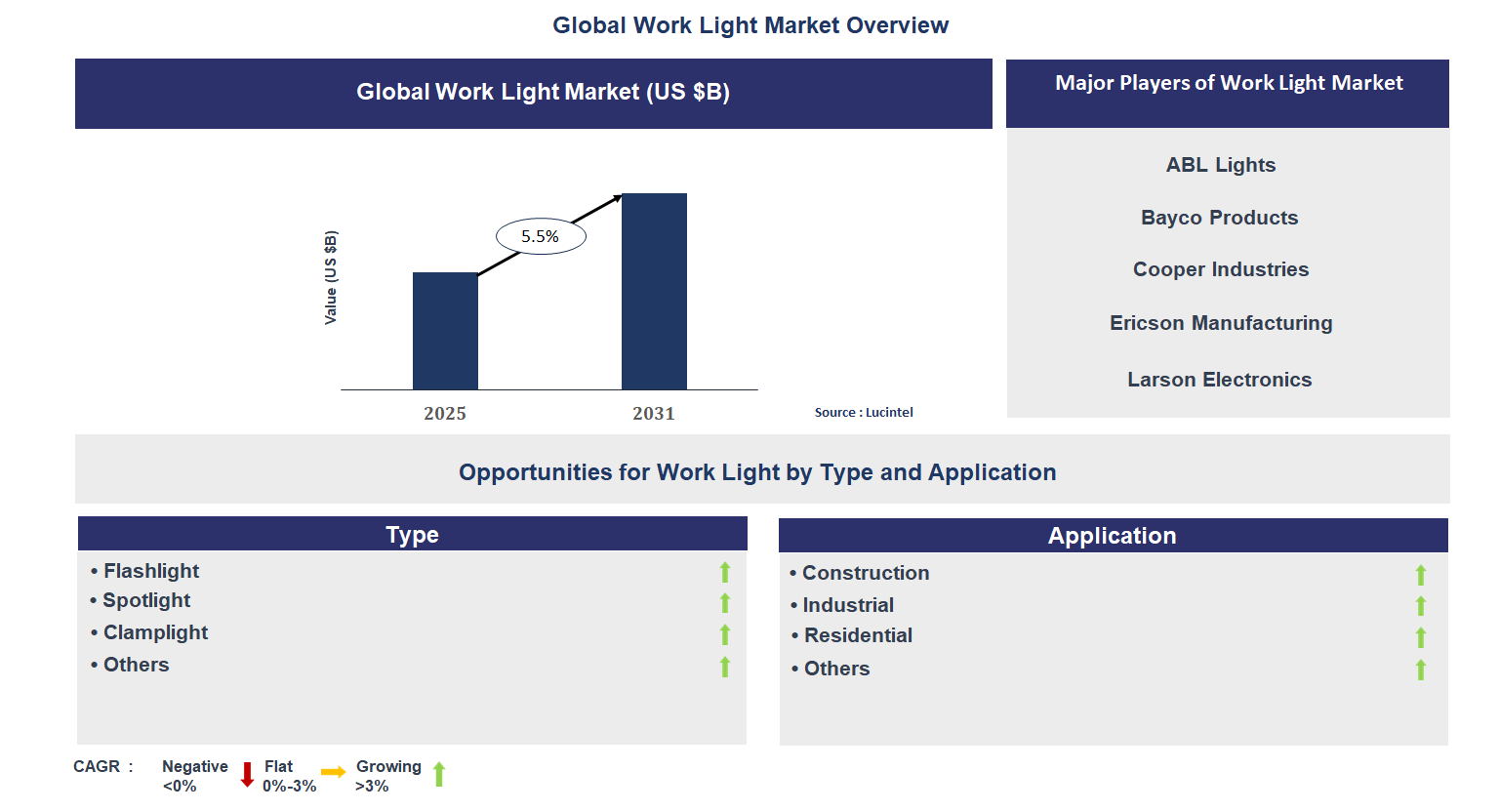
The future of the global work light market looks promising with opportunities in the construction, industrial, and residential markets. The global work light market is expected to grow with a CAGR of 5.5% from 2025 to 2031. The major drivers for this market are the increasing demand for portable lighting solutions, the rising adoption in construction & industrial sectors, and the growing need for energy-efficient lighting options.• Lucintel forecasts that, within the type category, spotlight is expected to witness the highest growth over the forecast period.
• Within the application category, industrial is expected to witness the highest growth.
• In terms of region, APAC is expected to witness the highest growth over the forecast period. Gain valuable insights for your business decisions with our comprehensive 150+ page report. Sample figures with some insights are shown below.
Emerging Trends in the Work Light Market
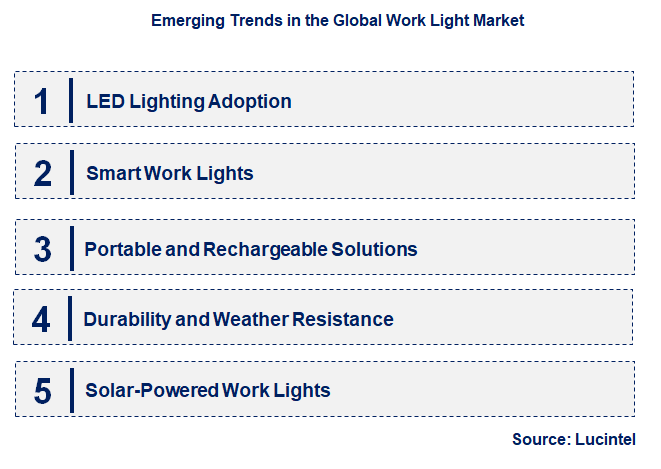
The work light market is evolving due to technological advancements, the demand for energy-efficient lighting, and new functionalities in portable lighting. These emerging trends are reshaping how industries approach worksite illumination.• LED Lighting Adoption: The shift toward LED work lights is one of the most significant trends in the market. LEDs are energy-efficient, long-lasting, and provide brighter illumination, making them ideal for demanding environments like construction sites and factories. Their lower operating costs and reduced environmental impact are accelerating their adoption across industries.
• Smart Work Lights: Smart work lights with IoT connectivity are gaining popularity. These lights can be controlled remotely via mobile apps or integrated systems, allowing for adjustments to brightness, color, and positioning. This improves safety, operational efficiency, and flexibility for workers in dynamic environments like construction and automotive repair.
• Portable and Rechargeable Solutions: The demand for portable, rechargeable work lights is on the rise, particularly in fields where mobility and flexibility are essential. Rechargeable batteries and compact designs make these work lights ideal for use in remote or hard-to-reach areas, providing reliable illumination wherever needed.
• Durability and Weather Resistance: Work lights with enhanced durability and weather resistance are increasingly in demand. Industrial and outdoor work environments require lights that can withstand harsh conditions, such as extreme temperatures, moisture, and physical impacts. This trend is driving manufacturers to focus on rugged, waterproof, and impact-resistant designs.
• Solar-Powered Work Lights: Solar-powered work lights are becoming a popular choice for industries seeking sustainable lighting solutions. These lights offer the advantage of being energy-independent, reducing operational costs, and minimizing the environmental impact. They are particularly useful in outdoor workspaces where electrical connections may not be easily available. Emerging trends such as the adoption of LEDs, smart lighting, portable solutions, and solar-powered designs are transforming the work light market. These trends are driving growth by offering cost-effective, energy-efficient, and versatile lighting solutions. Manufacturers are focusing on developing innovative products that cater to diverse industrial needs, improving safety, productivity, and sustainability in various work environments.
Recent Development in the Work Light Market
The work light market is undergoing significant changes due to technological innovations, growing demand for energy efficiency, and increasing industrial applications. These developments are influencing the markets growth trajectory and shaping the future of lighting solutions in workplaces.• Energy-Efficient LED Lighting: The widespread adoption of LED lighting technology has revolutionized the work light market. LEDs consume less energy, have longer lifespans, and provide higher-quality lighting compared to traditional lighting sources like halogen or incandescent bulbs. This transition is helping reduce energy consumption and operating costs in industries like construction, manufacturing, and automotive.
• Smart Work Lighting Systems: The introduction of smart work lights that integrate IoT and mobile app technology is gaining traction. These work lights allow users to control the light settings remotely, adjust brightness, and automate lighting changes based on time or environmental conditions. This development is making work environments more flexible and safer.
• Increase in Rechargeable and Cordless Work Lights: Manufacturers are focusing on developing cordless, rechargeable work lights that offer greater mobility and flexibility for workers. These lights provide the same high-quality illumination as traditional models but without the need for a power outlet, making them ideal for use in remote or outdoor areas.
• Portable LED Floodlights: The development of portable LED floodlights has expanded the work light market. These high-intensity lights provide broader and more uniform illumination, making them ideal for large work areas or outdoor applications. Their portability and ease of use make them a preferred choice for construction sites, emergency responders, and outdoor maintenance.
• Solar-Powered Work Lights: Solar-powered work lights are becoming a viable alternative to traditional electrically powered lights. These lights reduce dependence on the grid, lower energy costs, and are eco-friendly. As industries shift towards sustainable practices, solar-powered work lights are gaining popularity in outdoor, off-grid, and remote work environments. Key developments such as the adoption of LED technology, smart lighting systems, and solar-powered solutions are driving significant growth in the work light market. These innovations offer increased energy efficiency, flexibility, and sustainability. The focus on durability, portability, and smart functionality is reshaping the work light market by providing enhanced productivity and safety across various industrial and commercial sectors.
Strategic Growth Opportunities in the Work Light Market
The work light market presents numerous growth opportunities, especially in applications that require portable, energy-efficient, and durable lighting solutions. Manufacturers can capitalize on these opportunities by catering to the specific needs of various industries, such as construction, automotive, and emergency services.• Construction and Infrastructure Projects: As construction and infrastructure development continue to rise globally, there is an increasing need for portable, durable work lights. These lights provide reliable illumination for outdoor and indoor construction projects, ensuring worker safety and productivity even in low-light conditions.
• Automotive and Repair Services: Automotive repair shops and maintenance facilities require high-quality work lights to provide precision lighting for complex tasks. The growing demand for LED and smart work lights in the automotive sector presents a significant opportunity for manufacturers to supply energy-efficient and task-specific lighting solutions.
• Emergency and Outdoor Applications: Work lights are essential for emergency responders, especially during nighttime operations or in areas without reliable electrical infrastructure. Portable, solar-powered, and rechargeable work lights are in high demand for these applications, where mobility and reliability are crucial.
• Industrial and Manufacturing Facilities: Manufacturing plants and warehouses require high-quality lighting for tasks such as assembly, inspection, and maintenance. The shift towards energy-efficient, smart, and durable work lights in these settings presents a growth opportunity for manufacturers to offer tailored solutions that enhance operational efficiency and safety.
• Agriculture and Farming: In the agricultural sector, work lights are used for night-time farming, livestock care, and equipment maintenance. Portable, rechargeable, and weather-resistant lights are essential for these applications, creating opportunities for manufacturers to develop specialized solutions for farmers and agricultural workers. Strategic growth opportunities in construction, automotive, emergency services, and industrial sectors are driving the demand for more advanced, efficient, and durable work light solutions. As industries seek more sustainable, energy-efficient, and portable lighting, manufacturers that focus on these applications will be well-positioned for growth in the evolving work light market.
Work Light Market Driver and Challenges
The work light market is influenced by various technological, economic, and regulatory factors. Understanding the key drivers and challenges helps stakeholders navigate the markets evolving landscape. The factors responsible for driving the work light market include: 1. Technological Advancements in Lighting: Innovations in LED and smart lighting technologies are transforming the work light market. These advancements provide energy efficiency, longer lifespans, and enhanced functionality, driving the demand for modern work lighting solutions. 2. Increasing Demand for Safety and Productivity: The growing emphasis on worker safety and productivity in industries such as construction and manufacturing is driving the need for high-quality, portable, and durable work lights. These lights improve visibility and working conditions, enhancing overall operational efficiency. 3. Focus on Energy Efficiency and Sustainability: The global trend toward sustainability is encouraging the adoption of energy-efficient work lights, particularly LEDs and solar-powered solutions. These lights reduce energy consumption, lowering operational costs and minimizing the environmental impact. 4. Rising Industrialization and Infrastructure Development: The continued expansion of industries like construction, automotive, and manufacturing is fueling the demand for work lights. As industrial activities grow, the need for reliable and efficient lighting solutions in work environments becomes more critical. 5. Government Regulations and Safety Standards: Increasing regulations and safety standards in industries such as construction and mining are driving the adoption of work lights that meet specific performance criteria. Compliance with safety regulations is encouraging the use of advanced work lighting solutions. Challenges in the work light market are: 1. High Initial Costs of Advanced Work Lights: While advanced work lights, such as smart and solar-powered models, offer significant benefits, their high initial costs can deter smaller businesses from adopting these solutions, particularly in emerging markets. 2. Lack of Standardization in Work Light Designs: The absence of standardized designs and features for work lights across industries leads to inconsistency in product quality and performance. Manufacturers must focus on developing versatile and standardized solutions for broader market appeal. 3. Durability and Maintenance Concerns: While work lights are expected to be durable, issues such as damage from harsh environments or insufficient maintenance can affect their performance. Ensuring the long-term reliability of these products remains a challenge. Technological innovations, industrial growth, and sustainability efforts are driving the work light market forward. However, challenges such as high costs, design inconsistencies, and maintenance requirements pose barriers to widespread adoption. Addressing these challenges will allow manufacturers to better meet the growing demand for energy-efficient, durable, and smart work lighting solutions.List of Work Light Companies
Companies in the market compete on the basis of product quality offered. Major players in this market focus on expanding their manufacturing facilities, R&D investments, infrastructural development, and leverage integration opportunities across the value chain. With these strategies work light companies cater increasing demand, ensure competitive effectiveness, develop innovative products & technologies, reduce production costs, and expand their customer base. Some of the work light companies profiled in this report include-• ABL Lights
• Bayco Products
• Cooper Industries
• Ericson Manufacturing
• Larson Electronics
• Lex Products
• Luceco
Work Light Market by Segment
The study includes a forecast for the global work light market by type, application, and region.Work Light Market by Type [Value from 2019 to 2031]:
• Flashlight
• Spotlight
• Clamplight
• Others
Work Light Market by Application [Value from 2019 to 2031]:
• Construction
• Industrial
• Residential
• Others
Work Light Market by Region [Value from 2019 to 2031]:
• North America
• Europe
• Asia Pacific
• The Rest of the World
Country Wise Outlook for the Work Light Market
The global work light market is expanding rapidly, driven by the increasing demand for illumination in industrial, automotive, construction, and emergency settings. The market is seeing innovations in energy-efficient, portable, and durable lighting solutions that cater to a wide range of work environments. Countries like the United States, China, Germany, India, and Japan are major players, each with unique market developments.\• United States: In the U.S., the work light market is growing due to a surge in demand for energy-efficient lighting solutions. Companies are transitioning to LED work lights for their long lifespan and low energy consumption. Furthermore, the increasing focus on worker safety and ergonomics has led to advancements in portable, adjustable, and rugged work light designs, especially for construction and industrial applications.
• China: China remains one of the largest markets for work lights, primarily driven by industrial and construction sectors. The growing demand for smart lighting technologies, such as Bluetooth-enabled work lights, is gaining momentum. These systems offer enhanced control, allowing workers to adjust brightness and settings remotely, improving productivity and safety in heavy-duty work environments.
• Germany: Germanys work light market is marked by a focus on precision and innovation. As a leader in manufacturing and automation, there is a strong demand for high-quality, energy-efficient work lights. The trend towards integrating IoT and smart sensors into work lights is expanding in industries such as automotive, aerospace, and heavy machinery, where task-specific lighting is crucial for optimal performance.
• India: Indias rapidly growing industrial sector is fueling the demand for affordable and durable work lighting solutions. In particular, LED work lights are becoming popular due to their cost-effectiveness, energy efficiency, and long lifespan. The construction, agriculture, and manufacturing sectors are investing heavily in portable work lights to improve visibility and safety, driving the market forward.
• Japan: Japans work light market is witnessing significant advancements in smart lighting technologies, driven by the integration of IoT and artificial intelligence (AI). These innovations allow work lights to adjust based on environmental factors and work conditions. Additionally, Japan’s focus on energy-efficient and environmentally friendly solutions has led to the growth of solar-powered and battery-operated work lights in various industrial sectors.

Features of the Global Work Light Market
Market Size Estimates: Work light market size estimation in terms of value ($B). Trend and Forecast Analysis: Market trends (2019 to 2024) and forecast (2025 to 2031) by various segments and regions. Segmentation Analysis: Work light market size by type, application, and region in terms of value ($B). Regional Analysis: Work light market breakdown by North America, Europe, Asia Pacific, and Rest of the World. Growth Opportunities: Analysis of growth opportunities in different types, applications, and regions for the work light market. Strategic Analysis: This includes M&A, new product development, and competitive landscape of the work light market. Analysis of competitive intensity of the industry based on Porter’s Five Forces model.
FAQ
Q1. What is the growth forecast for work light market? Answer: The global work light market is expected to grow with a CAGR of 5.5% from 2025 to 2031. Q2. What are the major drivers influencing the growth of the work light market? Answer: The major drivers for this market are the increasing demand for portable lighting solutions, the rising adoption in construction & industrial sectors, and the growing need for energy-efficient lighting options. Q3. What are the major segments for work light market? Answer: The future of the work light market looks promising with opportunities in the construction, industrial, and residential markets. Q4. Who are the key work light market companies? Answer: Some of the key work light companies are as follows:• ABL Lights
• Bayco Products
• Cooper Industries
• Ericson Manufacturing
• Larson Electronics
• Lex Products
• Luceco Q5. Which work light market segment will be the largest in future? Answer: Lucintel forecasts that, within the type category, spotlight is expected to witness the highest growth over the forecast period. Q6. In work light market, which region is expected to be the largest in next 5 years? Answer: In terms of region, APAC is expected to witness the highest growth over the forecast period. Q7. Do we receive customization in this report? Answer: Yes, Lucintel provides 10% customization without any additional cost.
Table of Contents
List of Figures
List of Tables
Methodology
- In-depth interviews of the major players in this market
- Detailed secondary research from competitors’ financial statements and published data
- Extensive searches of published works, market, and database information pertaining to industry news, company press releases, and customer intentions
- A compilation of the experiences, judgments, and insights of Lucintel’s professionals, who have analyzed and tracked this market over the years.


Buy Now
Choose a license that fits your team. Instant PDF delivery.
Prices exclude taxes. Instant delivery. Custom licensing available on request.
Key Questions
- • What are some of the most promising, high-growth opportunities for the work light market by type (flashlight, spotlight, clamplight, and others), application (construction, industrial, residential, and others), and region (North America, Europe, Asia Pacific, and the Rest of the World)?
- • Which segments will grow at a faster pace and why?
- • Which region will grow at a faster pace and why?
- • What are the key factors affecting market dynamics? What are the key challenges and business risks in this market?
- • What are the business risks and competitive threats in this market?
- • What are the emerging trends in this market and the reasons behind them?
- • What are some of the changing demands of customers in the market?
- • What are the new developments in the market? Which companies are leading these developments?
- • Who are the major players in this market? What strategic initiatives are key players pursuing for business growth?
- • What are some of the competing products in this market and how big of a threat do they pose for loss of market share by material or product substitution?
- • What M&A activity has occurred in the last 5 years and what has its impact been on the industry? For any questions related to Work Light Market, Work Light Market Size, Work Light Market Growth, Work Light Market Analysis, Work Light Market Report, Work Light Market Share, Work Light Market Trends, Work Light Market Forecast, Work Light Companies, write Lucintel analyst at email: helpdesk@lucintel.com. We will be glad to get back to you soon.


