
Market Report · September 3, 2026

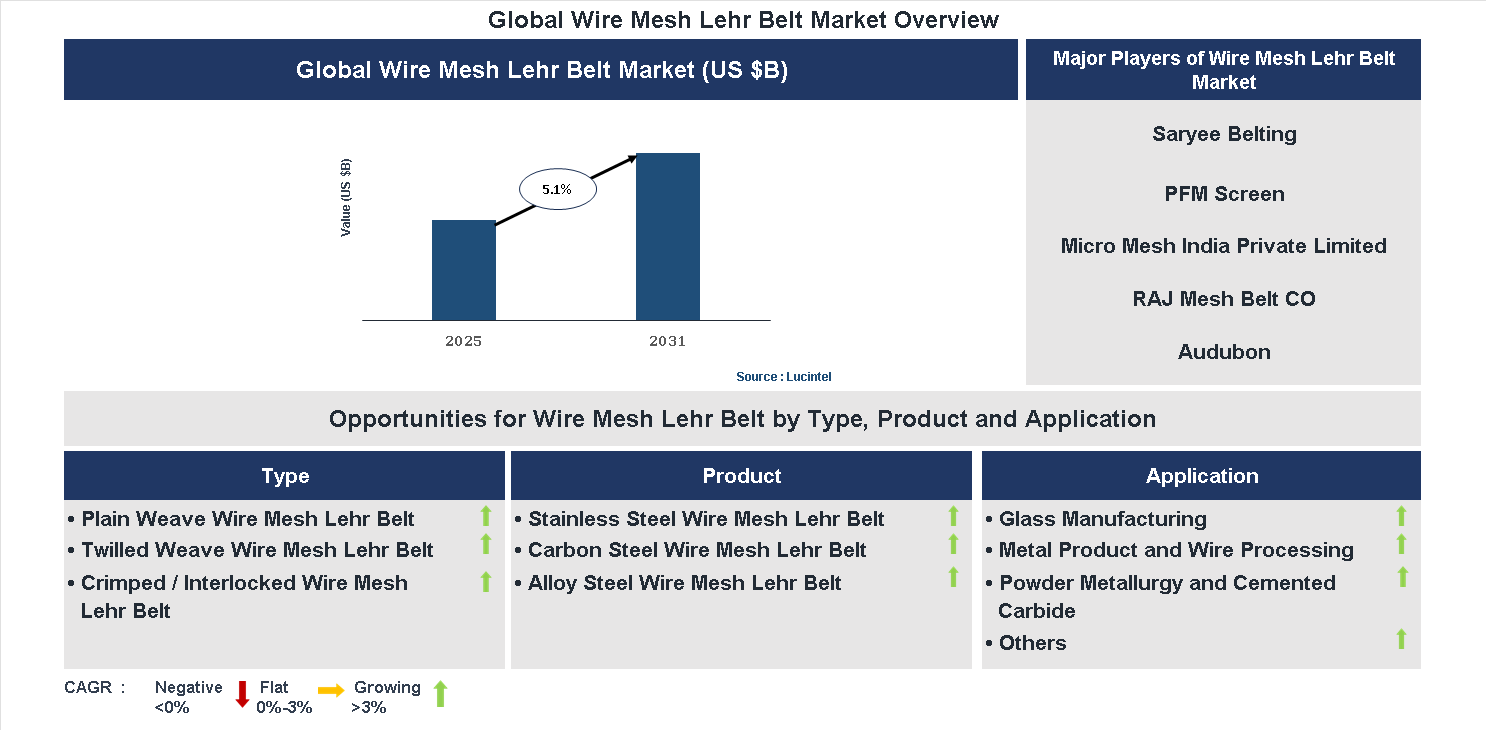
Key data points: The growth forecast = 5.1% annually for the next 6 years. Scroll below to get more insights. This market report covers trends, opportunities and forecasts in wire mesh lehr belt market to 2031 by type (plain weave wire mesh lehr belt, twilled weave wire mesh lehr belt, and crimped / interlocked wire mesh lehr belt), product (stainless steel wire mesh lehr belt, carbon steel wire mesh lehr belt, and alloy steel wire mesh lehr belt), application (glass manufacturing, metal product and wire processing, powder metallurgy and cemented carbide, and others), and region (North America, Europe, Asia Pacific, and the Rest of the World)
We'll send your sample report shortly.
• Lucintel forecasts that, within the type category, plain weave wire mesh lehr belt is expected to witness the highest growth over the forecast period.
• Within the application category, metal product & wire processing is expected to witness the highest growth.
• In terms of region, APAC is expected to witness the highest growth over the forecast period. Gain valuable insights for your business decisions with our comprehensive 150+ page report. Sample figures with some insights are shown below.
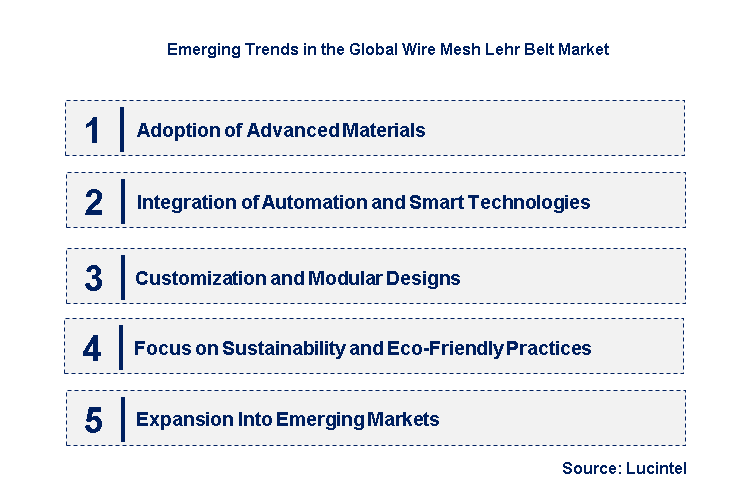
• Adoption of Advanced Materials: The market is witnessing a shift towards high-performance materials such as stainless steel, heat-resistant alloys, and composite materials. These materials offer enhanced durability, corrosion resistance, and temperature tolerance, making the belts suitable for demanding industrial applications. This trend improves product lifespan and reduces maintenance costs, thereby increasing overall efficiency and reliability in manufacturing processes.
• Integration of Automation and Smart Technologies: Automation is increasingly integrated into the production and operation of wire mesh Lehr belts. Smart sensors and IoT-enabled systems monitor belt performance, detect wear and tear, and optimize operational parameters in real-time. This technological integration reduces downtime, enhances precision, and improves safety standards, leading to increased productivity and reduced operational costs for manufacturers.
• Customization and Modular Designs: There is a rising demand for customized wire mesh Lehr belts tailored to specific industry needs. Modular designs allow for easy installation, maintenance, and adaptability to various conveyor systems. This trend enables manufacturers to meet diverse client requirements, improve process efficiency, and reduce lead times, thereby providing a competitive edge in the market.
• Focus on Sustainability and Eco-Friendly Practices: Environmental concerns are prompting manufacturers to adopt sustainable materials and manufacturing processes. Use of recyclable materials, energy-efficient production methods, and eco-friendly coatings is gaining popularity. These initiatives help reduce the environmental footprint, comply with regulations, and appeal to environmentally conscious clients, aligning the market with global sustainability goals.
• Expansion into Emerging Markets: Rapid industrialization in developing regions is opening new opportunities for wire mesh Lehr belt manufacturers. Increased infrastructure projects, automotive production, and manufacturing activities drive demand. Companies are expanding their distribution networks and establishing local manufacturing units to capitalize on these emerging markets, which are expected to contribute significantly to market growth in the coming years. In summary, these trends are collectively reshaping the wire mesh lehr belt market by enhancing product performance, operational efficiency, and sustainability. They are enabling manufacturers to meet evolving industry demands, penetrate new markets, and maintain competitive advantage in a rapidly changing industrial landscape.
• Innovation in Material Composition: The market is witnessing the development of advanced, durable materials that improve belt longevity and performance. These new materials offer resistance to wear, chemicals, and high temperatures, reducing maintenance costs and downtime. This innovation enhances product reliability, attracting more industrial clients seeking cost-effective solutions. As a result, manufacturers can expand their customer base and increase market share by offering superior, long-lasting belts tailored to specific industry needs.
• Automation and Smart Manufacturing: Integration of automation and IoT technologies in manufacturing processes is transforming the Wire Mesh Lehr Belt industry. Smart belts equipped with sensors enable real-time monitoring of performance and wear, facilitating predictive maintenance. This reduces operational disruptions and extends belt lifespan. Automation streamlines production, lowers labor costs, and improves quality control. These advancements lead to increased efficiency, reduced downtime, and higher customer satisfaction, positioning companies as leaders in innovative manufacturing solutions.
• Customization and Industry-Specific Solutions: Growing demand for tailored products is prompting manufacturers to develop customized wire mesh belts for specific applications such as food processing, textiles, and packaging. Industry-specific solutions improve process efficiency and product quality, meeting unique operational requirements. Customization also allows companies to differentiate their offerings in a competitive market. This trend fosters stronger client relationships and opens new revenue streams, ultimately expanding market reach and reinforcing industry leadership.
• Sustainability and Eco-Friendly Materials: Environmental concerns are driving the adoption of sustainable materials in belt manufacturing. Companies are exploring biodegradable, recyclable, and eco-friendly options to reduce carbon footprints. These initiatives appeal to environmentally conscious clients and comply with stricter regulations. Sustainable belts also offer long-term cost savings through energy efficiency and reduced waste. This focus on eco-friendly solutions enhances brand reputation and aligns with global sustainability goals, fostering market growth and attracting new customers committed to green practices.
• Expansion into Emerging Markets: Increasing industrialization in developing regions presents significant growth opportunities for the Wire Mesh Lehr Belt Market. Companies are expanding their distribution networks and establishing local manufacturing facilities to serve these markets better. Emerging markets offer a large customer base with rising demand for industrial belts across sectors like agriculture, construction, and manufacturing. Market players investing in these regions benefit from lower costs and increased market penetration, positioning themselves for long-term growth and competitive advantage in the global landscape. The overall impact of these developments is a more innovative, efficient, and sustainable Wire Mesh Lehr Belt Market. Companies are better equipped to meet diverse industry needs, reduce costs, and improve product performance. These advancements are driving market expansion, attracting new customers, and fostering competitive differentiation. As a result, the market is poised for sustained growth, with increased opportunities for stakeholders to capitalize on emerging trends and technological innovations.
• Expansion into the Food Processing Industry: Wire mesh Lehr belts are increasingly used in food processing for baking, cooling, and conveying baked goods. Their resistance to heat, moisture, and cleaning chemicals makes them ideal for hygienic applications. As the food industry grows and demands higher standards of safety and efficiency, the market for specialized belts tailored to food processing needs is expanding. This trend offers manufacturers opportunities to develop food-grade, customizable belts that meet strict regulatory standards, boosting overall market growth.
• Adoption of Advanced Materials for Enhanced Durability: The development of high-performance materials such as PTFE-coated fabrics and stainless steel meshes is improving belt longevity and resistance to wear and corrosion. These innovations enable belts to operate efficiently in harsh environments, reducing maintenance costs and downtime. As industries seek more reliable and long-lasting solutions, the demand for advanced material-based wire mesh Lehr belts is rising. This creates opportunities for manufacturers to differentiate their products through material innovation and quality enhancements.
• Growing Demand for Customization and Specialty Belts: Customers increasingly require belts tailored to specific applications, sizes, and operational conditions. Manufacturers are offering customized wire mesh Lehr belts with unique mesh patterns, widths, and surface finishes to meet diverse industry needs. This trend allows companies to capture niche markets and provide value-added solutions. The ability to deliver specialized belts enhances customer satisfaction and loyalty, driving market expansion through increased adoption across various sectors.
• Integration of Sustainable and Eco-Friendly Solutions: Environmental concerns are prompting the industry to develop eco-friendly belts made from recyclable and biodegradable materials. Sustainable manufacturing practices, such as reducing waste and energy consumption, are gaining importance. These initiatives appeal to environmentally conscious clients and comply with stricter regulations. The shift towards sustainable belts presents opportunities for innovation in material sourcing and manufacturing processes, positioning companies as responsible market leaders and expanding their customer base.
• Technological Innovations in Manufacturing Processes: Automation, precision engineering, and quality control advancements are improving belt consistency and performance. These technological improvements enable the mass production of high-quality belts with minimal defects. Enhanced manufacturing efficiency reduces costs and lead times, allowing companies to offer competitive pricing. As technology continues to evolve, the market benefits from increased product reliability and innovation, fostering growth and enabling the development of new applications for wire mesh Lehr belts across industries. The overall market outlook is positively influenced by these growth opportunities, promising increased adoption, innovation, and sustainability. Companies that capitalize on these trends will strengthen their market position and drive long-term growth, meeting evolving industry demands and expanding their global footprint.
• Technological Innovation: The continuous development of advanced wire mesh manufacturing techniques enhances product durability, heat resistance, and customization options. Innovations such as high-temperature alloys and corrosion-resistant coatings improve the performance of Lehr belts, making them suitable for demanding industrial applications. These technological advancements enable manufacturers to meet specific client needs, expand application scopes, and reduce operational costs, thereby fueling market growth. As industries seek more efficient and reliable solutions, the adoption of innovative wire mesh Lehr belts is expected to rise, further strengthening market prospects.
• Growing Industrial Automation: The increasing adoption of automation in manufacturing processes across sectors like automotive, food processing, and textiles is a significant driver. Automated systems require durable, high-performance conveyor belts such as wire mesh Lehr belts to ensure seamless operation. The demand for reliable, heat-resistant, and easy-to-maintain belts supports the expansion of the market. As industries aim to improve productivity and reduce labor costs, the reliance on advanced conveyor solutions like wire mesh Lehr belts is projected to grow, boosting market demand.
• Rising Construction and Infrastructure Development: Rapid urbanization and infrastructure projects worldwide are fueling demand for industrial equipment, including wire mesh Lehr belts used in construction materials processing and manufacturing. These belts facilitate efficient handling of heavy, abrasive materials, contributing to faster project completion and cost savings. The expansion of construction activities in emerging economies creates a substantial market opportunity for Lehr belt manufacturers, encouraging innovation and increased production capacity to meet rising demand.
• Environmental Regulations and Sustainability Initiatives: Stricter environmental standards and sustainability goals are prompting industries to adopt eco-friendly and energy-efficient conveyor solutions. Wire mesh Lehr belts made from recyclable materials and designed for energy conservation align with these regulatory requirements. Manufacturers investing in sustainable materials and processes can access new markets and improve their competitive edge. Compliance with environmental regulations not only mitigates legal risks but also enhances brand reputation, driving market growth in environmentally conscious sectors.
• Increasing Demand from Fhe ood and Beverage Industry: The food processing sectors need for hygienic, heat-resistant, and durable conveyor belts is a key growth factor. Wire mesh Lehr belts are ideal for high-temperature applications such as baking, sterilization, and drying processes. Their ease of cleaning and resistance to corrosion make them suitable for maintaining hygiene standards. As the food industry expands globally, the demand for specialized conveyor belts like wire mesh Lehr belts is expected to rise, supporting market expansion. The challenges facing this Market include:
• Fluctuating Raw Material Prices: The market heavily depends on raw materials such as stainless steel and alloys, whose prices are subject to volatility due to geopolitical tensions, supply chain disruptions, and fluctuating commodity markets. Rising raw material costs can increase manufacturing expenses, leading to higher product prices and potential loss of competitiveness. Manufacturers may face difficulties in maintaining profit margins, which could hinder market growth and limit innovation investments.
• Stringent Regulatory Compliance: Evolving safety, environmental, and quality standards impose additional compliance costs on manufacturers. Meeting diverse regional regulations requires significant investment in testing, certification, and process adjustments. Non-compliance can result in legal penalties, product recalls, and damage to reputation. Navigating complex regulatory landscapes can slow down product development cycles and increase operational costs, posing a challenge for market players to stay competitive.
• Market Fragmentation and Intense Competition: The presence of numerous regional and international players leads to a highly fragmented market. Price competition, product differentiation, and innovation are critical to gaining market share. Small and medium-sized enterprises may struggle to compete with larger firms due to limited resources and scale advantages. This competitive environment can result in price wars, reduced profit margins, and increased pressure to continuously innovate, which may hinder overall market stability and growth. In summary, the wire mesh lehr belt market is driven by technological advancements, industrial automation, infrastructure development, environmental regulations, and industry-specific demands. However, challenges such as raw material price fluctuations, regulatory compliance costs, and market fragmentation pose significant hurdles. The overall impact of these drivers and challenges will shape the market’s trajectory, requiring stakeholders to adapt strategically. Embracing innovation, ensuring regulatory compliance, and managing supply chain risks will be crucial for sustained growth and competitiveness in this evolving industry.
• Saryee Belting
• PFM Screen
• Micro Mesh India Private Limited
• RAJ Mesh Belt CO
• Audubon
• Umda Enginering
• Wire Belt System
• Plain Weave Wire Mesh Lehr Belt
• Twilled Weave Wire Mesh Lehr Belt
• Crimped / Interlocked Wire Mesh Lehr Belt
• Stainless Steel Wire Mesh Lehr Belt
• Carbon Steel Wire Mesh Lehr Belt
• Alloy Steel Wire Mesh Lehr Belt
• Glass Manufacturing
• Metal Product And Wire Processing
• Powder Metallurgy And Cemented Carbide
• Others
• North America
• Europe
• Asia Pacific
• The Rest of the World
• United States: The US market has seen increased adoption of automated manufacturing processes, improving efficiency and product consistency. Innovations in materials, such as corrosion-resistant alloys, have enhanced belt durability. The focus on safety standards has led to the development of advanced Lehr belts with better heat resistance and wear properties. Additionally, the rise of sustainable practices has prompted manufacturers to explore eco-friendly materials and recycling methods, aligning with environmental regulations and consumer preferences.
• China: China continues to dominate the market with rapid industrial growth and expanding manufacturing sectors. The country has invested heavily in modernizing its production facilities, leading to higher output and improved quality standards. Technological advancements include the integration of IoT for real-time monitoring and maintenance of Lehr belts. The government’s emphasis on sustainable development has also encouraged the adoption of energy-efficient and environmentally friendly materials, boosting the overall competitiveness of Chinese products in the global market.
• Germany: Germany remains a leader in high-quality engineering and manufacturing excellence. The market has seen a focus on precision and durability, with innovations in heat-resistant and chemically resistant wire mesh belts. German companies are investing in R&D to develop customized Lehr belt solutions for specialized applications in the automotive and chemical industries. Sustainability initiatives are also prominent, with efforts to reduce energy consumption and incorporate recyclable materials into belt production, aligning with EU environmental directives.
• India: The Indian market is experiencing rapid growth driven by expanding industrialization and infrastructure projects. Manufacturers are adopting advanced technologies to improve product quality and reduce costs. There is a rising demand for durable and heat-resistant Lehr belts suitable for diverse applications. The government’s push for Make in India and increased foreign investment has facilitated technological upgrades and capacity expansion. Additionally, local companies are focusing on developing cost-effective, eco-friendly belts to compete in both domestic and international markets.
• Japan: Japan’s market is characterized by innovation and high standards of quality. Companies are investing in research to develop Lehr belts with enhanced heat resistance, wear life, and safety features. The focus on automation and robotics integration has led to smarter, more efficient belt systems. Japan emphasizes sustainable manufacturing, incorporating environmentally friendly materials and energy-efficient processes. The industry also benefits from strong R&D capabilities, enabling the development of specialized belts for niche applications in electronics, automotive, and chemical sectors.


• Saryee Belting
• PFM Screen
• Micro Mesh India Private Limited
• RAJ Mesh Belt CO
• Audubon
• Umda Enginering
• Wire Belt System Q5. Which wire mesh lehr belt market segment will be the largest in future? Answer: Lucintel forecasts that, within the type category, plain weave wire mesh lehr belt is expected to witness the highest growth over the forecast period. Q6. In wire mesh lehr belt market, which region is expected to be the largest in next 5 years? Answer: In terms of region, APAC is expected to witness the highest growth over the forecast period. Q7. Do we receive customization in this report? Answer: Yes, Lucintel provides 10% customization without any additional cost.


Choose a license that fits your team. Instant PDF delivery.
Prices exclude taxes. Instant delivery. Custom licensing available on request.
Market Report · September 3, 2026
Market Report · July 22, 2026
Market Report · July 22, 2026
Trusted partner for strategic intelligence and business growth


Receive a complimentary market analysis tailored to your industry. Our analysts will identify key growth opportunities and competitive dynamics specific to your business.

Market size, growth rate, and key trend analysis for your specific sector.

Top competitor positioning and market share analysis.

Strategic recommendations backed by data-driven insights.
Get curated market intelligence and competitive moves straight to your inbox.
By subscribing, you agree to receive our monthly insights. Unsubscribe anytime.
Receive a complimentary market analysis tailored to your industry. Our analysts will identify key growth opportunities and competitive dynamics specific to your business.
Market size, growth rate, and key trend analysis for your specific sector.
Top competitor positioning and market share analysis.
Strategic recommendations backed by data-driven insights.
Get curated market intelligence, emerging trends, and competitive moves straight to your inbox each month.
By subscribing, you agree to receive our monthly insights. Unsubscribe anytime.
We'll send your sample report shortly.