
Report Feature
Winter Wear Market Trends and Forecast
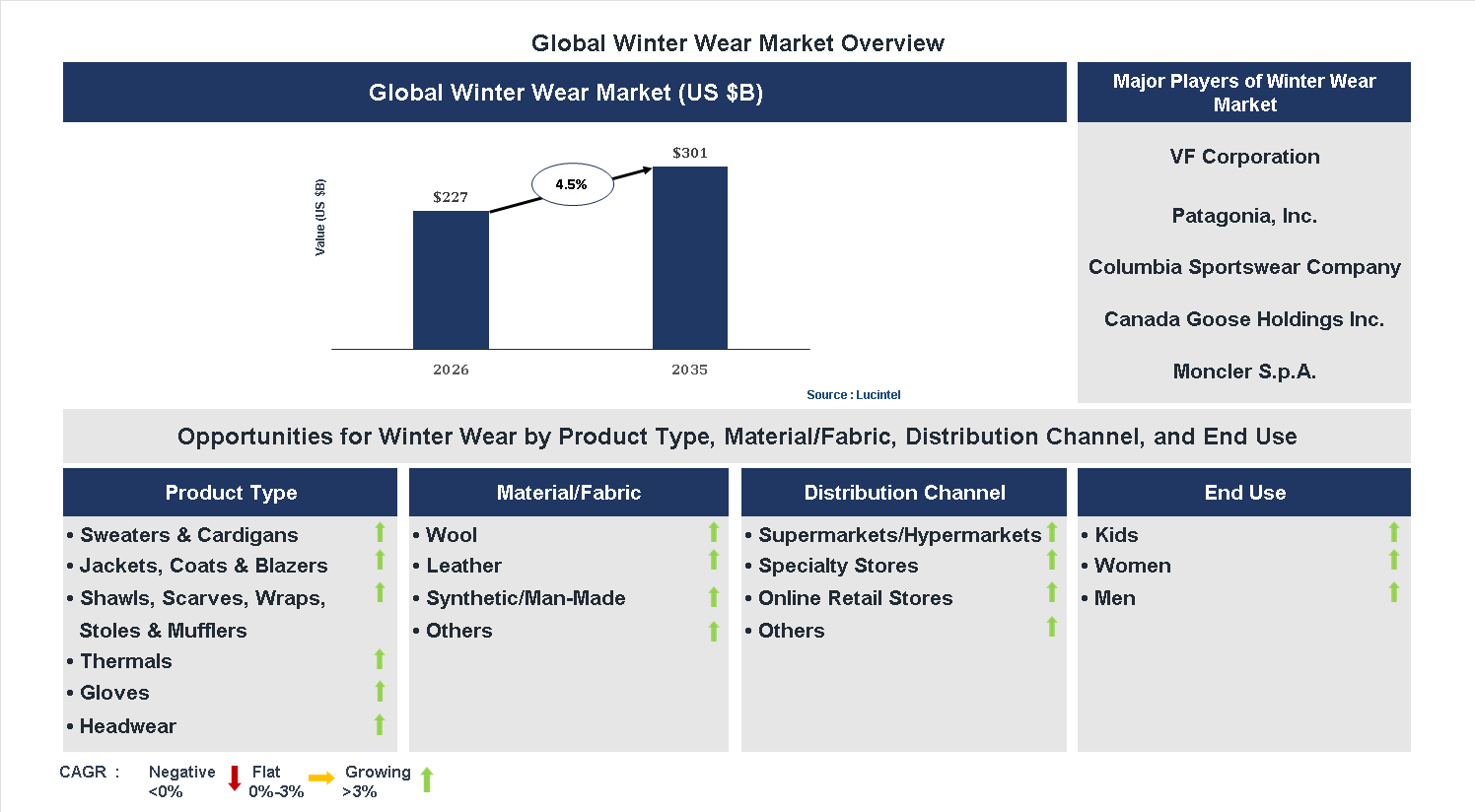
The future of the global winter wear market looks promising with opportunities in the supermarket/hypermarket, specialty store, and online retail store markets. The global winter wear market is expected to reach an estimated $301 billion by 2035 with a CAGR of 4.5% from 2026 to 2035. The major drivers for this market are the increasing demand of stylish winter wear, the growing travel in cold region, and the rising demand for premium & branded winter wear.• Lucintel forecasts that, within the product type category, jacket, coat & blazer is expected to witness the highest growth over the forecast period.
• Within the distribution channel category, specialty store is expected to witness the highest growth.
• In terms of region, APAC is expected to witness the highest growth over the forecast period. Gain valuable insights for your business decisions with our comprehensive 150+ page report. Sample figures with some insights are shown below.
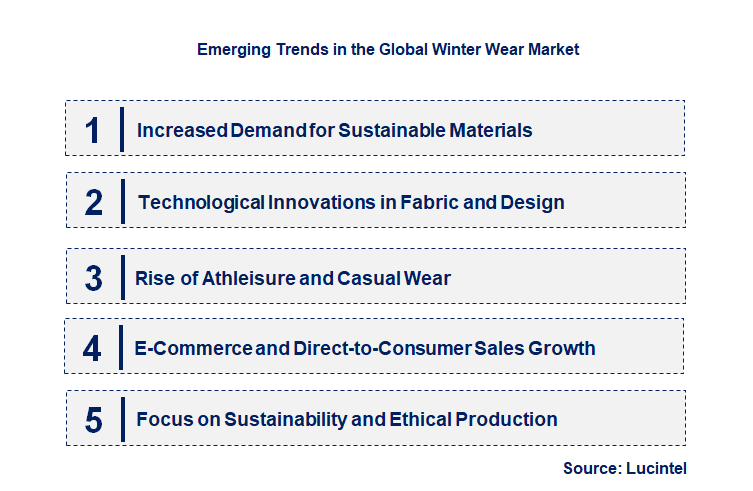
Emerging Trends in the Winter Wear Market
The winter wear market is experiencing rapid transformation driven by technological advancements, changing consumer preferences, and environmental considerations. As consumers seek more functional, sustainable, and stylish options, brands are innovating to meet these demands. The market is also influenced by global climate patterns and economic factors, prompting shifts in production and distribution strategies. These developments are creating new opportunities and challenges for manufacturers, retailers, and consumers alike. Understanding these emerging trends is essential for stakeholders aiming to stay competitive and capitalize on growth potential in this evolving landscape.• Increased Demand for Sustainable Materials: Consumers are increasingly prioritizing eco-friendly winter wear made from recycled or biodegradable materials. This trend is driven by growing environmental awareness and regulatory pressures. Brands are adopting sustainable sourcing and production practices, which not only reduce environmental impact but also appeal to eco-conscious buyers. The shift towards sustainability is influencing product development, marketing strategies, and supply chain management, ultimately reshaping the market to favor greener options.
• Technological Innovations in Fabric and Design: Advancements in fabric technology, such as waterproof, breathable, and thermal insulation materials, are enhancing product performance. Smart textiles with embedded sensors and heating elements are also emerging, offering personalized warmth and comfort. These innovations improve functionality, making winter wear more versatile and appealing. As technology integrates into design, consumers benefit from increased durability, convenience, and customization, driving demand for high-tech winter apparel.
• Rise of Athleisure and Casual Wear: The blending of athletic and casual styles is significantly impacting winter wear trends. Consumers prefer versatile, comfortable clothing suitable for both outdoor activities and everyday wear. Brands are developing stylish, functional pieces that cater to this demand, including insulated jackets, joggers, and layered outfits. This trend broadens market appeal, encouraging cross-category sales and expanding the customer base beyond traditional winter wear buyers.
• E-commerce and Direct-to-Consumer Sales Growth: The shift towards online shopping is accelerating in the winter wear market, driven by convenience and wider product availability. Brands are investing in digital platforms, virtual try-ons, and personalized shopping experiences to attract consumers. Direct-to-consumer models enable better control over branding and margins while providing consumers with exclusive products and offers. This trend is reshaping distribution channels, making winter wear more accessible and tailored to individual preferences.
• Focus on Sustainability and Ethical Production: Consumers are increasingly scrutinizing the ethical practices behind their purchases, including fair labor and environmentally responsible manufacturing. Brands are adopting transparent supply chains and obtaining certifications to demonstrate their commitment to sustainability. Ethical production practices are becoming a key differentiator, influencing purchasing decisions and brand loyalty. This focus is prompting the market to adopt more responsible manufacturing processes, aligning industry standards with consumer values. These trends are collectively transforming the winter wear market by emphasizing sustainability, technological innovation, versatility, digital engagement, and ethical practices. These developments are not only meeting evolving consumer expectations but also fostering a more sustainable and competitive industry landscape. As a result, stakeholders must adapt to these changes to capitalize on emerging opportunities and ensure long-term growth.
Recent Development in the Winter Wear Market
The winter wear market has experienced significant shifts driven by technological advancements, changing consumer preferences, and global economic factors. Recent developments highlight opportunities for growth across various segments, including sustainable materials, innovative designs, and digital marketing strategies. These trends are shaping the competitive landscape, influencing product offerings, and expanding market reach. Companies that adapt quickly to these changes are poised to capitalize on emerging opportunities, ensuring sustained growth and increased market share in the evolving winter wear industry.• Sustainable Materials Adoption: The integration of eco-friendly fabrics like recycled polyester and organic cotton is transforming the winter wear market. This shift responds to consumer demand for environmentally responsible products and regulatory pressures. Brands investing in sustainable materials are gaining a competitive edge, enhancing brand loyalty, and reducing environmental impact. This development encourages innovation in textile manufacturing, promotes circular economy practices, and opens new market segments focused on eco-conscious consumers.
• Technological Innovations in Fabric Design: Advances in fabric technology, such as thermal insulation and moisture-wicking properties, are improving winter wear performance. These innovations enhance comfort, durability, and functionality, appealing to outdoor enthusiasts and everyday consumers alike. Companies investing in R&D are creating smarter, more adaptable clothing that meets diverse needs. This development boosts product differentiation, allows premium pricing, and expands the market for high-performance winter apparel, especially in colder regions and outdoor sports sectors.
• E-commerce Expansion and Digital Marketing: The rise of online shopping platforms and targeted digital marketing strategies are significantly increasing market reach. Brands leveraging social media, influencer collaborations, and personalized advertising are attracting a broader customer base. E-commerce provides convenience, wider product selection, and competitive pricing, driving sales growth. This trend enables brands to penetrate new geographic markets quickly, gather valuable consumer data, and adapt offerings to evolving preferences, thereby accelerating overall market growth.
• Customization and Personalization Trends: Consumer demand for personalized winter wear options is fueling growth in customization services. Brands offering tailored fits, unique designs, and customizable features are gaining popularity. This trend enhances customer engagement, satisfaction, and brand loyalty. The ability to provide personalized products allows companies to differentiate themselves in a competitive market, command premium prices, and meet specific consumer needs, ultimately expanding market share and fostering long-term customer relationships.
• Impact of Global Supply Chain Resilience: Recent disruptions have prompted companies to diversify suppliers and adopt more flexible supply chain strategies. This resilience ensures consistent product availability and reduces lead times, which is critical during peak seasons. Strengthening supply chains also enables better cost management and risk mitigation. As a result, companies can respond swiftly to market demands, maintain competitive pricing, and improve customer satisfaction, thereby supporting sustained growth in the winter wear market. These developments are significantly transforming the winter wear market by fostering innovation, sustainability, and customer-centric approaches. They are enabling brands to expand their reach, improve product offerings, and adapt to changing consumer behaviors. As a result, the market is experiencing accelerated growth, increased competitiveness, and a more dynamic landscape poised for long-term success.
Strategic Growth Opportunities in the Winter Wear Market
The winter wear market is experiencing significant growth driven by changing consumer preferences, technological advancements, and expanding geographic reach. Increasing demand for functional, stylish, and sustainable winter apparel presents numerous opportunities for brands to innovate and capture market share. As global temperatures fluctuate and fashion trends evolve, companies that adapt to these dynamics can unlock new revenue streams and strengthen their competitive position. Strategic investments in product development and marketing are essential to capitalize on these emerging growth avenues.• Expansion into Sustainable Winter Wear Options: The rising consumer awareness of environmental issues is prompting brands to develop eco-friendly winter apparel using recycled materials, organic fabrics, and sustainable production processes. This shift not only meets consumer demand for responsible products but also differentiates brands in a competitive market. Investing in sustainable innovation can lead to increased brand loyalty, access to new customer segments, and compliance with evolving regulations, ultimately driving long-term growth in the winter wear market.
• Integration of Smart Technology for Enhanced Functionality: Incorporating wearable technology into winter clothing offers consumers added value through features like temperature regulation, health monitoring, and connectivity. Smart winter wear appeals to tech-savvy consumers seeking multifunctional apparel that combines comfort with innovation. Developing such products requires collaboration with tech firms and investment in R&D, but it can create new revenue streams, improve product differentiation, and position brands as leaders in the evolving smart apparel segment.
• Expansion into Emerging Markets with Rising Disposable Incomes: Rapid economic growth in regions such as Asia-Pacific and Latin America is increasing consumer purchasing power and demand for quality winter wear. Brands that tailor their offerings to local climates, preferences, and price points can tap into these expanding markets. Establishing local manufacturing, distribution channels, and marketing strategies will enable companies to capture market share early and establish a strong presence in these high-growth regions.
• Focus on Fashion-Forward and Versatile Winter Apparel: Consumers increasingly seek winter wear that combines style with practicality, favoring versatile pieces suitable for various occasions. Brands that innovate with trendy designs, color palettes, and multifunctional features can attract fashion-conscious buyers. Emphasizing aesthetic appeal alongside performance attributes allows companies to differentiate their products, command premium pricing, and expand their customer base across different demographics, fueling overall market growth.
• Adoption of E-commerce and Direct-to-Consumer Sales Channels: The shift toward online shopping has accelerated, providing brands with direct access to consumers and reducing reliance on traditional retail outlets. Developing robust e-commerce platforms, personalized marketing, and seamless logistics can enhance customer experience and increase sales. This approach enables brands to gather valuable consumer data, respond quickly to market trends, and expand their reach globally, thereby accelerating growth and market penetration in the winter wear segment. These strategic growth opportunities—sustainable innovation, smart technology integration, emerging market expansion, fashion-forward designs, and digital sales channels—are poised to significantly influence the winter wear market. Companies that effectively leverage these avenues can enhance their competitive edge, meet evolving consumer demands, and achieve sustained growth in a dynamic industry landscape.
Winter Wear Market Driver and Challenges
The winter wear market is influenced by a variety of technological, economic, and regulatory factors that shape its growth and development. Advances in textile technology, such as the development of innovative insulation materials and sustainable fabrics, are driving product innovation. Economic factors like rising disposable incomes and increasing consumer spending on fashion and comfort are boosting demand. Regulatory influences, including environmental standards and safety regulations, impact manufacturing processes and product offerings. Additionally, seasonal trends and changing consumer preferences play a significant role. Navigating these drivers and overcoming associated challenges is essential for market players to capitalize on opportunities and sustain growth in this competitive landscape. The factors responsible for driving the winter wear market include:• Technological Innovation: The advent of advanced textile technologies, such as lightweight insulation and moisture-wicking fabrics, enhances product performance and consumer appeal. These innovations enable brands to offer more functional and comfortable winter wear, attracting a broader customer base. Moreover, sustainable fabric development aligns with eco-conscious consumer preferences, fostering brand loyalty and opening new market segments. Continuous R&D investments are crucial for staying ahead in this competitive industry, ensuring products meet evolving demands for durability, warmth, and environmental responsibility.
• Rising Disposable Income: Increasing disposable incomes across emerging economies are significantly boosting consumer purchasing power. Consumers are willing to spend more on high-quality, fashionable winter wear that offers comfort and style. This economic upliftment encourages brand switching to premium products and expands the market for luxury winter apparel. As income levels rise, consumers also seek a variety of options, including technical and designer winter wear, which further propels market growth. Retailers and manufacturers are capitalizing on this trend by expanding their product lines and distribution channels to meet heightened demand.
• E-commerce Expansion: The growth of online retail platforms has revolutionized the winter wear market by providing consumers with easy access to a wide range of products. E-commerce offers convenience, competitive pricing, and extensive product information, influencing purchasing decisions. Digital marketing strategies and personalized shopping experiences attract more customers, especially younger demographics. The rise of direct-to-consumer brands and online-exclusive collections further fuels market expansion. This shift also enables brands to gather valuable consumer data, facilitating targeted marketing and inventory management, ultimately driving sales and market penetration.
• Seasonal and Fashion Trends: Changing fashion trends and seasonal demands significantly influence the winter wear market. Consumers seek trendy, stylish, and functional apparel that aligns with current fashion statements. The influence of social media and celebrity endorsements accelerates trend adoption, prompting brands to innovate rapidly. Seasonal variations, such as winter festivals and holiday shopping, create spikes in demand. Market players continuously adapt their collections to incorporate popular colors, designs, and features, ensuring relevance and competitiveness. Staying ahead of trends is vital for capturing consumer interest and maintaining market share.
• Sustainability and Eco-Friendly Materials: Growing environmental awareness among consumers is pushing brands to adopt sustainable practices. The use of eco-friendly fabrics, such as recycled polyester and organic cotton, appeals to environmentally conscious buyers. Regulatory pressures also encourage manufacturers to reduce carbon footprints and minimize waste. Sustainable winter wear not only meets regulatory standards but also enhances brand reputation. This shift towards eco-friendly products is creating new opportunities for innovation and differentiation in the market, although it requires investments in sustainable supply chains and materials. The challenges facing the winter wear market include:
• Supply Chain Disruptions: The winter wear industry faces significant supply chain challenges, including raw material shortages, logistical delays, and increased transportation costs. These disruptions can lead to production delays, inventory shortages, and increased costs, impacting profitability. Global events such as pandemics, geopolitical tensions, and natural disasters exacerbate these issues, making supply chain resilience a critical concern. Companies must diversify suppliers and optimize logistics to mitigate risks, but these strategies often require substantial investment and planning.
• Regulatory Compliance and Environmental Standards: Stricter regulations related to environmental impact, safety, and labor practices pose compliance challenges for manufacturers. Meeting diverse regulatory standards across different regions increases operational complexity and costs. Non-compliance can result in legal penalties, product recalls, and damage to brand reputation. As governments implement stricter eco-labeling and sustainability requirements, companies must adapt their manufacturing processes and supply chains, which can be resource-intensive and time-consuming.
• Intense Market Competition: The winter wear market is highly competitive, with numerous local and international brands vying for consumer attention. Price wars, product differentiation, and marketing strategies are critical to gaining market share. New entrants and private labels further intensify competition, pressuring profit margins. Additionally, rapid fashion cycles demand quick turnaround times and innovation, increasing operational pressures. Companies must continuously innovate and invest in branding to maintain relevance and customer loyalty in a crowded marketplace. The winter wear market is shaped by technological advancements, economic growth, and evolving consumer preferences, which drive demand and innovation. However, supply chain issues, regulatory hurdles, and fierce competition present significant challenges. Navigating these factors requires strategic agility, investment in sustainable practices, and a keen understanding of market trends. Overall, the markets growth prospects remain promising, provided companies effectively address these drivers and challenges to sustain competitive advantage and meet consumer expectations.
List of Winter Wear Companies
Companies in the market compete on the basis of product quality offered. Major players in this market focus on expanding their manufacturing facilities, R&D investments, infrastructural development, and leverage integration opportunities across the value chain. With these strategies winter wear companies cater increasing demand, ensure competitive effectiveness, develop innovative products & technologies, reduce production costs, and expand their customer base. Some of the winter wear companies profiled in this report include-• VF Corporation
• Patagonia, Inc.
• Columbia Sportswear Company
• Canada Goose Holdings Inc.
• Moncler S.p.A.
• Amer Sports
• H&M Group
• Lion Capital (AllSaints)
• Zara (Inditex)
• L.L.Bean, Inc.
Winter Wear Market by Segment
The study includes a forecast for the global winter wear market by product type, material/fabric, distribution channel, end use, and region.Winter Wear Market by Product Type [Value from 2019 to 2035]:
• Sweaters & Cardigans
• Jackets, Coats & Blazers
• Shawls, Scarves, Wraps, Stoles & Mufflers
• Thermals
• Gloves
• Headwear
Winter Wear Market by Material/Fabric [Value from 2019 to 2035]:
• Wool
• Leather
• Synthetic/Man-Made
• Others
Winter Wear Market by Distribution Channel [Value from 2019 to 2035]:
• Supermarkets/Hypermarkets
• Specialty Stores
• Online Retail Stores
• Others
Winter Wear Market by End Use [Value from 2019 to 2035]:
• Kids
• Women
• Men
Winter Wear Market by Region [Value from 2019 to 2035]:
• North America
• Europe
• Asia Pacific
• The Rest of the World
Country Wise Outlook for the Winter Wear Market
The winter wear market has experienced significant shifts driven by technological innovations, changing consumer preferences, and global economic factors. As countries adapt to climate variations and fashion trends, key players are investing in sustainable materials, smart textiles, and e-commerce expansion. The United States, China, Germany, India, and Japan are at the forefront of these developments, each contributing uniquely to the evolving landscape. These nations are focusing on product diversification, eco-friendly manufacturing, and digital marketing strategies to capture growing demand during the winter season. Understanding these regional trends provides insight into the global winter wear markets future trajectory.• United States: The US winter wear market has seen increased demand for sustainable and technologically advanced products, such as heated jackets and moisture-wicking fabrics. Major brands are expanding their online presence and offering customized options to meet consumer preferences. The rise of e-commerce platforms has facilitated wider access to premium winter apparel, especially during the pandemic. Additionally, there is a growing trend toward eco-friendly materials and ethical manufacturing practices, aligning with consumer values. Retailers are also investing in innovative marketing campaigns to target younger demographics, boosting overall sales.
• China: China remains the largest market for winter wear, driven by rapid urbanization and rising disposable incomes. The focus is on integrating smart textiles and functional clothing that combines style with utility. Local brands are gaining popularity through social media and e-commerce channels, offering affordable yet fashionable winter apparel. The market is also witnessing a surge in demand for thermal wear and layered clothing suitable for diverse climatic conditions across the country. Sustainability initiatives are gradually gaining traction, with brands exploring eco-friendly fabrics and production methods to appeal to environmentally conscious consumers.
• Germany: The German winter wear market emphasizes quality, durability, and sustainability. Consumers prefer high-performance fabrics that provide insulation and weather resistance. There is a notable shift toward eco-conscious products, with brands adopting recycled materials and environmentally friendly manufacturing processes. Technological innovations such as waterproof and windproof textiles are in high demand. The market also benefits from a strong outdoor and sportswear segment, with consumers investing in versatile winter gear suitable for outdoor activities. Digital retail channels are expanding, offering personalized shopping experiences and eco-friendly product options.
• India: The Indian winter wear market is experiencing rapid growth due to changing climatic conditions and increasing urbanization. The focus is on affordable, stylish, and functional clothing suitable for diverse regional climates. Local brands are expanding their product lines to include thermal wear, jackets, and layered clothing. E-commerce platforms are playing a crucial role in reaching rural and semi-urban consumers. There is a rising demand for sustainable and eco-friendly winter wear, although affordability remains a key factor. Innovations in fabric technology are being adopted to improve insulation and comfort, catering to the growing middle class.
• Japan: Japans winter wear market is characterized by a high demand for technologically advanced and fashionable products. Smart textiles with heating functions and moisture control are popular among consumers. The market also emphasizes eco-friendly and sustainable materials, driven by environmental awareness. Japanese brands are known for their innovative designs and high-quality craftsmanship, appealing to both domestic and international markets. The integration of digital technology in retail, such as virtual fitting rooms and online customization, enhances consumer experience. Seasonal collections are frequently updated to reflect current fashion trends, maintaining Japans position as a leader in winter apparel innovation.

Features of the Global Winter Wear Market
Market Size Estimates: Winter wear market size estimation in terms of value ($B). Trend and Forecast Analysis: Market trends (2019 to 2025) and forecast (2026 to 2035) by various segments and regions. Segmentation Analysis: Winter wear market size by various segments, such as by product type, material/fabric, distribution channel, end use, and region in terms of value ($B). Regional Analysis: Winter wear market breakdown by North America, Europe, Asia Pacific, and Rest of the World. Growth Opportunities: Analysis of growth opportunities in different product types, material/fabric, distribution channels, end uses, and regions for the winter wear market. Strategic Analysis: This includes M&A, new product development, and competitive landscape of the winter wear market. Analysis of competitive intensity of the industry based on Porter’s Five Forces model.
FAQ
Q1. What is the winter wear market size? Answer: The global winter wear market is expected to reach an estimated $301 billion by 2035. Q2. What is the growth forecast for winter wear market? Answer: The global winter wear market is expected to grow with a CAGR of 4.5% from 2026 to 2035. Q3. What are the major drivers influencing the growth of the winter wear market? Answer: The major drivers for this market are the increasing demand of stylish winter wear, the growing travel in cold region, and the rising demand for premium & branded winter wear. Q4. What are the major segments for winter wear market? Answer: The future of the winter wear market looks promising with opportunities in the supermarket/hypermarket, specialty store, and online retail store markets. Q5. Who are the key winter wear market companies? Answer: Some of the key winter wear companies are as follows:• VF Corporation
• Patagonia, Inc.
• Columbia Sportswear Company
• Canada Goose Holdings Inc.
• Moncler S.p.A.
• Amer Sports
• H&M Group
• Lion Capital (AllSaints)
• Zara (Inditex)
• L.L.Bean, Inc. Q6. Which winter wear market segment will be the largest in future? Answer: Lucintel forecasts that, within the product type category, jacket, coat & blazer is expected to witness the highest growth over the forecast period. Q7. In winter wear market, which region is expected to be the largest in next 5 years? Answer: In terms of region, APAC is expected to witness the highest growth over the forecast period. Q8. Do we receive customization in this report? Answer: Yes, Lucintel provides 10% customization without any additional cost.
Table of Contents
List of Figures
List of Tables
Methodology
- In-depth interviews of the major players in this market
- Detailed secondary research from competitors’ financial statements and published data
- Extensive searches of published works, market, and database information pertaining to industry news, company press releases, and customer intentions
- A compilation of the experiences, judgments, and insights of Lucintel’s professionals, who have analyzed and tracked this market over the years.


Buy Now
Choose a license that fits your team. Instant PDF delivery.
Prices exclude taxes. Instant delivery. Custom licensing available on request.
Key Questions
- • What are some of the most promising, high-growth opportunities for the winter wear market by product type (sweaters & cardigans, jackets, coats & blazers, shawls, scarves, wraps, stoles & mufflers, thermals, gloves, and headwear), material/fabric (wool, leather, synthetic/man-made, and others), distribution channel (supermarkets/hypermarkets, specialty stores, online retail stores, and others), end use (kids, women, and men), and region (North America, Europe, Asia Pacific, and the Rest of the World)?
- • Which segments will grow at a faster pace and why?
- • Which region will grow at a faster pace and why?
- • What are the key factors affecting market dynamics? What are the key challenges and business risks in this market?
- • What are the business risks and competitive threats in this market?
- • What are the emerging trends in this market and the reasons behind them?
- • What are some of the changing demands of customers in the market?
- • What are the new developments in the market? Which companies are leading these developments?
- • Who are the major players in this market? What strategic initiatives are key players pursuing for business growth?
- • What are some of the competing products in this market and how big of a threat do they pose for loss of market share by material or product substitution?
- • What M&A activity has occurred in the last 7 years and what has its impact been on the industry? For any questions related to Winter Wear Market, Winter Wear Market Size, Winter Wear Market Growth, Winter Wear Market Analysis, Winter Wear Market Report, Winter Wear Market Share, Winter Wear Market Trends, Winter Wear Market Forecast, Winter Wear Companies, write Lucintel analyst at email: helpdesk@lucintel.com. We will be glad to get back to you soon.


