
Market Report · July 29, 2026

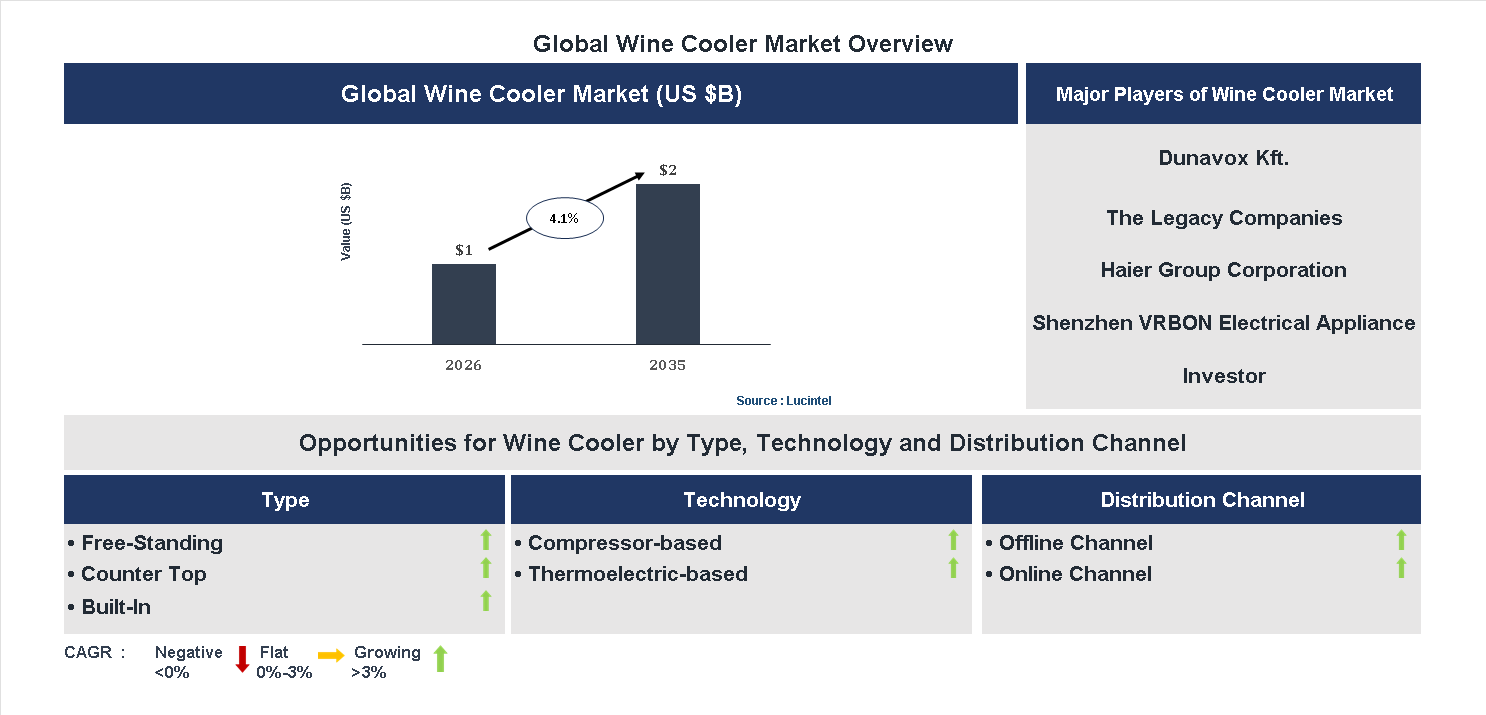
Key data points: The market size in 2035 = $2 billion, growth forecast = 4.1% annually for the next 8 years. Scroll below to get more insights. This market report covers trends, opportunities and forecasts in wine cooler market to 2035 by type (free-standing, counter top, and built-in), technology (compressor-based and thermoelectric-based), distribution channel (offline channel and online channel), and region (North America, Europe, Asia Pacific, and the Rest of the World)
We'll send your sample report shortly.
• Lucintel forecasts that, within the type category, built-in is expected to witness the highest growth over the forecast period.
• Within the distribution channel category, online channel is expected to witness higher growth.
• In terms of region, APAC is expected to witness the highest growth over the forecast period. Gain valuable insights for your business decisions with our comprehensive 150+ page report. Sample figures with some insights are shown below.
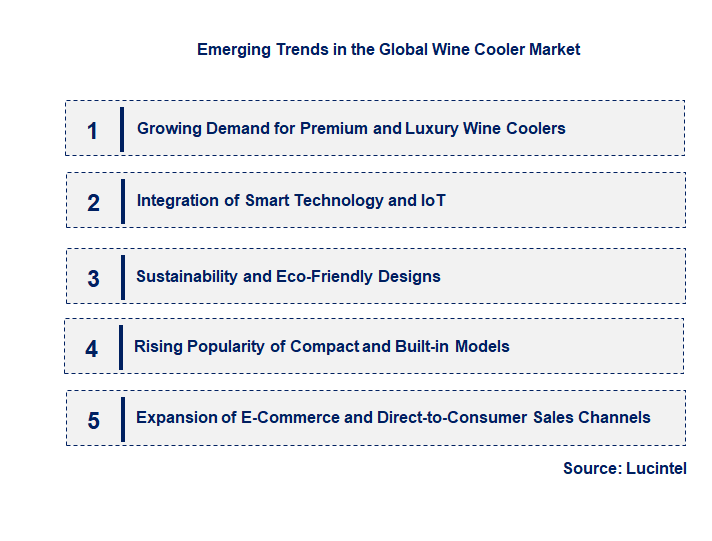
• Growing Demand for Premium and Luxury Wine Coolers: Consumers are increasingly investing in high-end wine coolers that offer advanced features, elegant designs, and superior temperature control. This trend reflects a shift towards viewing wine storage as a luxury experience, encouraging brands to innovate with premium materials and customizable options. The demand for luxury coolers is boosting market growth, especially among affluent consumers and collectors, and is prompting manufacturers to focus on aesthetics, brand reputation, and technological sophistication to differentiate their products.
• Integration of Smart Technology and IoT: The adoption of smart features such as Wi-Fi connectivity, remote temperature control, and digital displays is transforming the wine cooler market. IoT-enabled coolers allow users to monitor and adjust storage conditions via smartphones, enhancing convenience and precision. This trend improves user experience, ensures optimal wine preservation, and appeals to tech-savvy consumers. Manufacturers are investing in developing intelligent systems that can integrate with home automation setups, thereby expanding the functionality and appeal of wine coolers in modern households.
• Sustainability and Eco-Friendly Designs: Environmental concerns are driving the market toward sustainable practices, including energy-efficient cooling systems, eco-friendly materials, and recyclable packaging. Consumers are increasingly aware of the environmental impact of their purchases, prompting brands to adopt greener solutions. Energy-efficient wine coolers not only reduce carbon footprints but also lower operating costs, making them attractive to eco-conscious buyers. This trend is influencing product innovation, with companies emphasizing sustainability credentials to gain competitive advantage and meet regulatory standards.
• Rising Popularity of Compact and Built-in Models: Space constraints and aesthetic preferences are fueling demand for compact, built-in, and under-counter wine coolers. These models seamlessly integrate into kitchen designs and are ideal for urban dwellers with limited space. Their popularity is also driven by the convenience of having wine storage readily accessible in residential settings. Manufacturers are focusing on designing sleek, space-saving units that do not compromise on capacity or cooling performance, thereby expanding the market to a broader consumer base seeking functional yet stylish solutions.
• Expansion of E-commerce and Direct-to-Consumer Sales Channels: The shift toward online shopping is significantly impacting the wine cooler market. E-commerce platforms offer consumers a wider selection, detailed product information, and convenient purchasing options. Direct-to-consumer sales enable brands to build stronger relationships, gather customer feedback, and offer personalized services. This trend is especially relevant during the COVID-19 pandemic, which accelerated digital adoption. Companies investing in robust online presence and logistics are better positioned to reach a global audience, diversify revenue streams, and adapt swiftly to market changes. These emerging trends are reshaping the wine cooler market by fostering innovation, enhancing consumer experience, and emphasizing sustainability. They are driving product differentiation, expanding market reach, and aligning offerings with evolving consumer values. As these developments continue, the market is poised for sustained growth, with opportunities for brands that can adapt to technological, environmental, and aesthetic demands.
• Growing Consumer Preference for Premium Wine Storage: The demand for high-quality wine coolers is rising as consumers become more discerning about wine preservation. Premium models with advanced temperature control, humidity regulation, and aesthetic appeal are gaining popularity. This trend is driven by increasing wine consumption and a desire for luxury home entertainment. As a result, manufacturers are investing in innovative features and design enhancements to meet these expectations, expanding the premium segment and boosting overall market growth.
• Technological Innovations Enhancing User Experience: Integration of smart technology, such as Wi-Fi connectivity, touchscreen controls, and app-based management, is revolutionizing the wine cooler market. These innovations allow users to monitor and control storage conditions remotely, ensuring optimal wine preservation. Additionally, energy-efficient compressors and eco-friendly refrigerants are being adopted to reduce environmental impact. These advancements improve customer satisfaction, increase product differentiation, and open new avenues for marketing, thereby strengthening the market’s competitive edge.
• Expansion of Distribution Channels and E-commerce: The rise of online retail platforms and direct-to-consumer sales channels is significantly impacting market accessibility. Consumers now prefer purchasing wine coolers through e-commerce due to convenience, wider product selection, and competitive pricing. Retail partnerships with specialty wine stores and home appliance outlets are also expanding reach. This diversification of distribution channels enhances market penetration, accelerates sales growth, and enables brands to target a broader demographic, including emerging markets.
• Increasing Adoption in Commercial Sectors: Hotels, restaurants, and wine bars are increasingly investing in wine coolers to enhance their service quality and wine presentation. The demand from the hospitality industry is driven by the need for reliable storage solutions that maintain wine quality and appeal to customers. This sector’s growth provides a substantial revenue stream for manufacturers and encourages product innovation tailored to commercial needs, such as larger capacity units and customizable temperature zones, further expanding the market scope.
• Focus on Eco-Friendly and Energy-Efficient Designs: Sustainability is becoming a key consideration in product development. Manufacturers are adopting environmentally friendly refrigerants, energy-efficient compressors, and recyclable materials to meet regulatory standards and consumer preferences. These eco-conscious designs reduce operational costs and carbon footprint, appealing to environmentally aware consumers. The shift towards sustainable products is expected to drive innovation, increase market competitiveness, and align the industry with global sustainability goals, fostering long-term growth. The overall impact of these developments is a more dynamic, innovative, and accessible wine cooler market. Enhanced technological features, expanded distribution, and sustainability initiatives are attracting diverse consumer segments and increasing market penetration. As a result, the industry is poised for sustained growth, with opportunities for brands to differentiate themselves and meet evolving customer demands across both residential and commercial sectors.
• Product Innovation and Diversification: Developing advanced wine coolers with smart technology, customizable storage options, and energy-efficient features can attract a wider customer base. Sub-segments like built-in, freestanding, and dual-zone coolers cater to different needs, enhancing market penetration. Incorporating aesthetic designs and user-friendly interfaces further boosts appeal, especially among luxury consumers and hospitality sectors seeking premium solutions.
• Expansion in Hospitality and Commercial Sectors: The hospitality industry, including hotels, restaurants, and bars, offers substantial growth potential. Providing specialized wine storage solutions tailored for commercial use, such as climate-controlled wine cabinets and bulk storage units, can meet rising demand. Strategic partnerships with hospitality chains and interior designers can facilitate market expansion, especially in emerging markets with growing tourism and dining sectors.
• Focus on Eco-Friendly and Energy-Efficient Models: Increasing environmental awareness drives demand for sustainable products. Developing eco-friendly wine coolers with energy-saving features, recyclable materials, and low power consumption can differentiate brands. Sub-segments like solar-powered units and those with eco-label certifications appeal to environmentally conscious consumers and regulatory bodies, fostering long-term market growth.
• Geographic Market Expansion: Entering emerging markets in Asia-Pacific, Latin America, and Africa presents significant opportunities due to rising disposable incomes and changing lifestyles. Tailoring products to local preferences, such as compact designs for smaller living spaces, and establishing local distribution channels can accelerate growth. Strategic regional marketing and partnerships are essential to capture these expanding consumer bases.
• Integration of Smart Technology and Connectivity: Incorporating IoT-enabled features, such as remote temperature control, humidity monitoring, and app connectivity, enhances user experience. Smart wine coolers appeal to tech-savvy consumers seeking convenience and precision. Developing integrated systems with home automation platforms can create a competitive edge, especially in premium segments, and open avenues for data-driven product enhancements and personalized services. The overall market outlook is positively influenced by these growth opportunities, enabling companies to innovate, expand geographically, and meet evolving consumer demands. Emphasizing sustainability, technology, and tailored solutions will be crucial for capturing market share and ensuring long-term success in the competitive landscape.
• Technological Innovation: The development of advanced cooling systems and smart features has significantly enhanced product efficiency and user experience. Innovations such as temperature control, humidity regulation, and energy-efficient compressors allow consumers to store wine optimally, boosting demand. Manufacturers are investing in IoT-enabled wine coolers that offer remote monitoring and customization, which appeals to tech-savvy consumers. These technological advancements not only improve product performance but also differentiate brands in a competitive market, fostering growth and expanding consumer base.
• Rising Wine Consumption and Premiumization: Increasing wine consumption globally, especially among millennials and urban populations, is a major driver. Consumers are willing to invest in high-quality storage solutions to preserve wine quality, leading to a surge in demand for premium wine coolers. The trend toward premiumization, where consumers prefer luxury and branded products, further propels the market. As wine becomes more accessible and popular, the need for specialized storage solutions grows, encouraging manufacturers to innovate and expand their offerings.
• Urbanization and Changing Lifestyles: Rapid urbanization has led to smaller living spaces, creating a demand for compact and stylish wine coolers that fit into modern homes and apartments. Changing lifestyles, with increased focus on home entertainment and social gatherings, also drive demand for wine storage solutions that are both functional and aesthetically appealing. These consumers seek convenient, space-saving options that complement contemporary interior designs, thereby expanding the market for innovative and design-oriented wine coolers.
• Regulatory Environment and Standards: Stringent regulations regarding alcohol storage, safety standards, and energy efficiency influence the market. Governments are implementing policies to promote energy-saving appliances, which encourages the development of eco-friendly wine coolers. Additionally, regulations around alcohol storage in commercial and residential spaces impact product design and marketing strategies. Compliance with these standards ensures market access and consumer trust, but also requires ongoing adaptation by manufacturers to meet evolving legal requirements.
• E-commerce and Distribution Channels: The growth of online retail platforms has expanded market reach and accessibility for wine coolers. E-commerce offers consumers a wider selection, competitive pricing, and detailed product information, which influences purchasing decisions. The integration of digital marketing and direct-to-consumer sales channels has enabled brands to build stronger relationships with customers and gather valuable market insights. This shift in distribution channels accelerates market penetration, especially in emerging regions, and supports the overall growth trajectory of the industry. The challenges in the wine cooler market are:
• Regulatory Restrictions and Compliance: Stringent regulations related to alcohol storage, safety standards, and energy efficiency pose significant hurdles. Different regions have varying legal requirements, complicating product development and distribution. Non-compliance can lead to penalties, product recalls, or bans, impacting brand reputation and profitability. Navigating these complex regulatory landscapes requires substantial investment in compliance and certification processes, which can delay product launches and increase costs for manufacturers.
• High Initial Investment and Cost Barriers: Developing innovative, energy-efficient, and technologically advanced wine coolers involves substantial R&D and manufacturing costs. These high initial investments can be a barrier for small and medium-sized enterprises, limiting market entry and expansion. Additionally, premium-priced products may deter price-sensitive consumers, restricting market growth in emerging economies. Balancing quality, innovation, and affordability remains a key challenge for industry players aiming to capture a broader customer base.
• Environmental Concerns and Energy Consumption: The increasing focus on sustainability and environmental impact presents challenges related to energy consumption and refrigerant use. Traditional cooling systems consume significant electricity, raising concerns about carbon footprints and operational costs. Regulatory pressures to adopt eco-friendly refrigerants and energy-efficient technologies require ongoing innovation and investment. Failure to address these environmental issues could lead to restrictions, consumer backlash, and a decline in market appeal, especially among environmentally conscious buyers. The wine cooler market is driven by technological advancements, rising wine consumption, urbanization, regulatory support, and expanding online channels. However, it faces challenges such as regulatory complexities, high costs, and environmental concerns. These factors collectively influence market growth, requiring stakeholders to innovate, adapt, and strategize effectively. The interplay of drivers and challenges will determine the future trajectory of the industry, with opportunities for growth balanced by the need for sustainable and compliant practices.
• Dunavox Kft.
• The Legacy Companies
• Haier Group Corporation
• Shenzhen VRBON Electrical Appliance
• Investor
• Eurocave
• La Sommeliere Int.
• Liebherr
• Caple
• LG Corporation
• Free-Standing
• Counter Top
• Built-In
• Compressor-based
• Thermoelectric-based
• Offline Channel
• Online Channel
• North America
• Europe
• Asia Pacific
• The Rest of the World
• United States: The U.S. market has seen a surge in premium and smart wine coolers, driven by rising wine consumption and technological integration. Consumers prefer energy-efficient models with smart features like app control and temperature monitoring. Major brands are expanding their product lines to include customizable and dual-zone coolers, catering to both casual drinkers and connoisseurs. E-commerce sales have also increased, making wine coolers more accessible nationwide. The market is expected to grow further with innovations in design and connectivity, emphasizing convenience and sustainability.
• China: China’s wine cooler market is rapidly expanding due to increasing wine consumption and a growing middle class. Domestic brands are gaining ground by offering affordable, stylish, and compact models suitable for urban living spaces. There is a rising demand for wine storage solutions that combine aesthetics with functionality. International brands are entering the market, focusing on premium and technologically advanced coolers. E-commerce platforms are playing a crucial role in distribution, and local manufacturers are investing in R&D to develop energy-efficient and smart cooling systems to meet consumer preferences.
• Germany: Germany’s market is characterized by a focus on high-quality, energy-efficient, and environmentally friendly wine coolers. Consumers are increasingly interested in sustainable products with low energy consumption and eco-friendly materials. The market also sees a trend toward built-in and integrated wine storage solutions for modern kitchens. Technological innovations include precise temperature control and humidity regulation. The demand for vintage and designer models is rising among collectors and enthusiasts. Regulatory standards and environmental concerns are driving manufacturers to adopt greener technologies and improve product durability.
• India: The Indian wine cooler market is in its nascent stage but shows promising growth potential due to rising wine consumption and changing lifestyles. Consumers are looking for affordable, compact, and stylish coolers suitable for small spaces. There is a growing preference for dual-zone coolers that allow storage of different wine types at optimal temperatures. E-commerce platforms are facilitating access to a variety of brands and models. Local manufacturers are focusing on cost-effective solutions with energy efficiency to cater to the expanding middle class. The market is expected to expand as wine culture gains popularity among urban youth.
• Japan: Japan’s market emphasizes technological innovation, design, and energy efficiency. Consumers prefer sleek, compact, and highly functional wine coolers that blend seamlessly with modern interiors. Smart features such as remote control, temperature alerts, and humidity management are highly valued. The market also caters to collectors with specialized, high-end models offering precise climate control. Environmental sustainability is a key concern, prompting manufacturers to develop eco-friendly and energy-saving products. The growing interest in wine appreciation and the influence of Western lifestyles continue to drive demand for advanced wine storage solutions in Japan.


• Dunavox Kft.
• The Legacy Companies
• Haier Group Corporation
• Shenzhen VRBON Electrical Appliance
• Investor
• Eurocave
• La Sommeliere Int.
• Liebherr
• Caple
• LG Corporation Q6. Which wine cooler market segment will be the largest in future? Answer: Lucintel forecasts that, within the type category, built-in is expected to witness the highest growth over the forecast period. Q7. In wine cooler market, which region is expected to be the largest in next 5 years? Answer: In terms of region, APAC is expected to witness the highest growth over the forecast period. Q8. Do we receive customization in this report? Answer: Yes, Lucintel provides 10% customization without any additional cost.


Choose a license that fits your team. Instant PDF delivery.
Prices exclude taxes. Instant delivery. Custom licensing available on request.
Market Report · July 29, 2026
Market Report · July 15, 2026
Market Report · July 13, 2026
Trusted partner for strategic intelligence and business growth


Receive a complimentary market analysis tailored to your industry. Our analysts will identify key growth opportunities and competitive dynamics specific to your business.

Market size, growth rate, and key trend analysis for your specific sector.

Top competitor positioning and market share analysis.

Strategic recommendations backed by data-driven insights.
Get curated market intelligence and competitive moves straight to your inbox.
By subscribing, you agree to receive our monthly insights. Unsubscribe anytime.
Receive a complimentary market analysis tailored to your industry. Our analysts will identify key growth opportunities and competitive dynamics specific to your business.
Market size, growth rate, and key trend analysis for your specific sector.
Top competitor positioning and market share analysis.
Strategic recommendations backed by data-driven insights.
Get curated market intelligence, emerging trends, and competitive moves straight to your inbox each month.
By subscribing, you agree to receive our monthly insights. Unsubscribe anytime.
We'll send your sample report shortly.