
Market Report · July 22, 2026

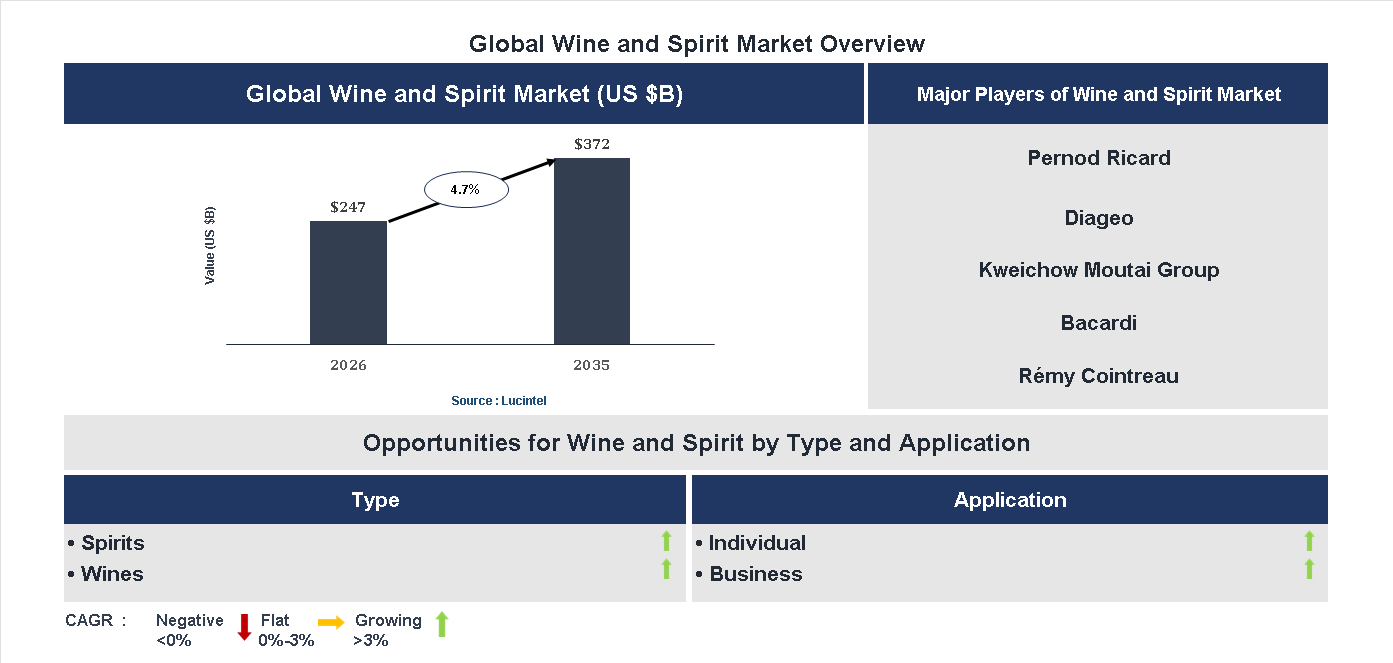
Key data points: The market size in 2035 = $372 billion, growth forecast = 4.7% annually for the next 8 years. Scroll below to get more insights. This market report covers trends, opportunities and forecasts in wine and spirit market to 2035 by type (spirits and wines), application (individual and business), and region (North America, Europe, Asia Pacific, and the Rest of the World)
We'll send your sample report shortly.
• Lucintel forecasts that, within the type category, spirit is expected to witness higher growth over the forecast period.
• Within the application category, individual is expected to witness higher growth.
• In terms of region, APAC is expected to witness the highest growth over the forecast period. Gain valuable insights for your business decisions with our comprehensive 150+ page report. Sample figures with some insights are shown below.
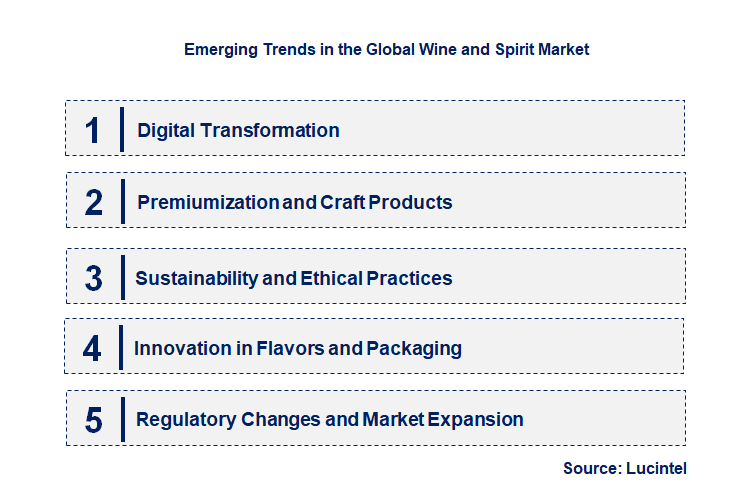
• Digital Transformation: The adoption of e-commerce platforms and digital marketing strategies is revolutionizing how wines and spirits are sold and promoted. Online sales channels provide consumers with greater convenience, access to a wider range of products, and personalized shopping experiences. Virtual tastings, augmented reality labels, and social media campaigns are enhancing engagement and brand loyalty. This shift not only broadens market reach but also reduces reliance on traditional retail outlets, making digital presence a critical component for success in the evolving landscape.
• Premiumization and Craft Products: Consumers are increasingly seeking high-quality, artisanal, and craft spirits, driven by a desire for unique flavors and authentic experiences. This trend is fueling growth in premium and super-premium segments, with brands emphasizing craftsmanship, heritage, and exclusivity. Small-batch distilleries and boutique wineries are gaining prominence, offering limited editions and innovative blends. The premiumization trend elevates profit margins and encourages innovation, but also requires brands to invest in storytelling and quality assurance to meet discerning consumer expectations.
• Sustainability and Ethical Practices: Environmental concerns and social responsibility are becoming central to consumer decision-making. Brands are adopting sustainable sourcing, eco-friendly packaging, and energy-efficient production methods to appeal to eco-conscious buyers. Certifications such as organic, biodynamic, and fair trade are gaining importance, influencing purchasing choices. This focus on sustainability not only enhances brand reputation but also aligns with regulatory pressures and long-term industry viability, prompting companies to integrate green practices into their core operations.
• Innovation in Flavors and Packaging: The market is witnessing a surge in innovative flavors, such as infused spirits and limited-edition releases, catering to adventurous consumers. Additionally, packaging innovations like eco-friendly bottles, reusable containers, and smart labels are enhancing product appeal and convenience. These innovations help brands differentiate themselves in a crowded marketplace, attract younger demographics, and meet evolving consumer preferences for novelty and sustainability. Continuous experimentation with flavors and packaging is vital for staying relevant and competitive.
• Regulatory Changes and Market Expansion: Evolving regulations regarding labeling, advertising, and distribution are shaping market strategies. Countries are tightening alcohol advertising restrictions and implementing stricter labeling requirements, impacting marketing approaches. Simultaneously, emerging markets in Asia, Africa, and Latin America present new growth opportunities due to rising disposable incomes and changing lifestyles. Companies are adapting to diverse regulatory environments and exploring these markets to diversify revenue streams, which requires strategic planning and local partnerships to navigate complexities and maximize potential. These trends are collectively transforming the wine and spirit market by fostering innovation, emphasizing sustainability, and expanding digital and geographic reach. They are encouraging brands to adopt more consumer-centric, environmentally responsible, and technologically advanced strategies, ultimately reshaping how products are developed, marketed, and consumed in this competitive industry.
• Growth in Premium and Luxury Segments: The demand for premium and luxury wines and spirits is rising globally, driven by increasing disposable incomes and a desire for exclusivity. Consumers are seeking high-quality, artisanal products, which encourages producers to innovate and elevate their offerings. This trend boosts profit margins and attracts a more affluent customer base, fostering brand loyalty and market differentiation. As a result, companies investing in premium segments are experiencing significant growth opportunities.
• Expansion of E-commerce and Digital Platforms: The rise of online sales channels is revolutionizing how consumers purchase wine and spirits. E-commerce platforms provide wider reach, convenience, and access to a broader product range. Digital marketing and virtual tastings enhance consumer engagement and brand visibility. This shift reduces reliance on traditional retail outlets, lowers distribution costs, and enables personalized shopping experiences. The growth of online sales is expected to continue, significantly impacting market dynamics and consumer behavior.
• Innovation in Product Offerings and Packaging: Companies are focusing on innovative products, including low-alcohol, organic, and craft spirits, to meet evolving consumer preferences. Packaging innovations, such as eco-friendly bottles and smart packaging, enhance sustainability and consumer appeal. These developments help brands differentiate themselves in a competitive market, attract health-conscious and environmentally aware consumers, and comply with regulatory standards. Innovation in products and packaging is crucial for capturing new market segments and driving sales growth.
• Regulatory Changes and Market Accessibility: Evolving regulations regarding labeling, advertising, and distribution are shaping the market landscape. Countries are implementing stricter standards to ensure product safety and transparency, which impacts production and marketing strategies. Conversely, some regions are easing restrictions to promote market accessibility and foreign investment. These regulatory shifts influence market entry, operational costs, and compliance requirements, creating both challenges and opportunities for industry players to expand their footprint globally.
• Focus on Sustainability and Ethical Practices: Increasing awareness of environmental and social issues is prompting companies to adopt sustainable practices. This includes sourcing ingredients responsibly, reducing carbon footprints, and supporting fair trade initiatives. Consumers are favoring brands with transparent and ethical practices, which enhances brand reputation and loyalty. Sustainability efforts also align with regulatory expectations and can lead to cost savings. Emphasizing ethical practices is becoming a key differentiator, influencing purchasing decisions and market positioning. The overall impact of these developments is a more dynamic, consumer-centric, and innovative market landscape. Companies that adapt to these trends can capitalize on new growth opportunities, improve competitiveness, and meet evolving consumer demands. This evolution is expected to drive sustained growth, diversify product portfolios, and expand market reach in the global wine and spirit industry.
• Expansion into Emerging Markets Offers Significant Growth Potential: Emerging economies present untapped consumer bases with increasing disposable incomes and evolving tastes. Companies can leverage local partnerships, adapt products to regional preferences, and establish distribution networks to capture market share. This expansion not only boosts sales volume but also enhances brand recognition in new territories, providing long-term growth prospects amid saturated mature markets.
• Premiumization Drives Higher-Value Product Offerings and Consumer Engagement: Consumers are increasingly seeking high-quality, premium spirits and wines, willing to pay more for exclusivity and craftsmanship. Brands focusing on premium segments can command higher margins, build brand loyalty, and differentiate themselves. Investment in storytelling, heritage, and unique production methods enhances perceived value, attracting affluent consumers and fostering sustainable growth in the luxury segment.
• Innovation in Product Development and Packaging Attracts Diverse Consumer Segments: Introducing novel flavors, limited editions, and sustainable packaging appeals to evolving consumer preferences. Functional beverages, organic options, and health-conscious formulations are gaining popularity. Creative packaging solutions, such as eco-friendly bottles and eye-catching designs, enhance shelf appeal and brand differentiation, enabling companies to tap into niche markets and expand their customer base.
• Digital Transformation and E-commerce Channels Accelerate Market Reach and Consumer Engagement: Online sales platforms, social media marketing, and virtual tastings facilitate direct-to-consumer interactions. Digital tools enable personalized marketing, data-driven insights, and streamlined purchasing experiences. As consumers increasingly shop online, brands that invest in digital infrastructure can expand globally, improve customer loyalty, and respond swiftly to market trends, ensuring competitive advantage in a digital-first environment.
• Sustainability Initiatives and Eco-Friendly Practices Influence Consumer Choices and Brand Reputation: Adoption of sustainable sourcing, eco-friendly packaging, and responsible production methods resonate with environmentally conscious consumers. Transparency about sustainability efforts enhances brand image and compliance with regulations. Companies integrating environmental initiatives can reduce costs, mitigate risks, and appeal to a growing segment of eco-aware buyers, positioning themselves as responsible industry leaders and fostering long-term market resilience. The overall impact of these opportunities is a more dynamic, innovative, and resilient wine and spirit market. Stakeholders who capitalize on emerging markets, premiumization, innovation, digitalization, and sustainability will be better positioned for sustained growth, increased profitability, and competitive advantage in an increasingly globalized and consumer-driven industry.
• Technological Innovations: The integration of advanced production techniques, such as precision fermentation and automation, enhances product quality and operational efficiency. Digital marketing and e-commerce platforms expand reach to new consumer segments, facilitating direct-to-consumer sales. These technological strides enable brands to innovate, personalize offerings, and streamline supply chains, ultimately boosting market growth and competitiveness.
• Changing Consumer Preferences: Modern consumers are increasingly seeking premium, organic, and craft spirits, driven by health consciousness and a desire for unique experiences. The rise of millennials and Gen Z consumers, who favor authentic and sustainable products, influences market offerings. This shift encourages producers to innovate and diversify their portfolios, fostering growth in niche segments and premium categories.
• Economic Factors: Fluctuations in disposable income levels directly impact consumer spending on wine and spirits. Economic stability promotes higher consumption of premium products, while downturns may lead to reduced discretionary spending. Currency exchange rates also affect import-export dynamics, influencing pricing strategies and profit margins for international brands.
• Global Trade and Market Expansion: International trade agreements and tariffs shape the accessibility of wines and spirits across borders. Emerging markets present new growth opportunities due to rising middle-class populations and increasing urbanization. Companies expanding into these regions benefit from diversified revenue streams but must navigate local regulations and cultural preferences. The challenges facing the wine and spirit market include:-
• Regulatory and Taxation Policies: Stringent regulations on advertising, labeling, and distribution can hinder marketing efforts and product availability. High taxes and excise duties increase retail prices, potentially reducing consumer demand. Navigating diverse regulatory environments across countries requires significant compliance efforts and strategic planning.
• Health and Safety Regulations: Growing concerns over alcohol-related health issues lead to stricter safety standards and labeling requirements. These regulations may increase production costs and limit marketing claims, impacting brand positioning. Additionally, public health campaigns aimed at reducing alcohol consumption can negatively influence market growth.
• Market Saturation and Competition: The proliferation of brands and product variants results in intense competition, especially in mature markets. Differentiating products becomes challenging, and price wars can erode profit margins. Companies must innovate continuously and develop effective branding strategies to maintain market share amid saturation. The wine and spirit market is shaped by technological progress, shifting consumer preferences, and economic conditions, which drive growth opportunities. However, regulatory complexities, health concerns, and market saturation pose significant challenges. These factors collectively influence strategic decisions, requiring industry players to adapt swiftly to sustain competitiveness and capitalize on emerging trends. The overall impact underscores the importance of innovation, compliance, and market diversification in navigating this dynamic environment.
• Pernod Ricard
• Diageo
• Kweichow Moutai Group
• Bacardi
• Rémy Cointreau
• Jack Daniel
• Wuliangye Yibin
• Luzhou Laojiao
• E. & J. Gallo Winery
• LVMH
• Spirits
• Wines
• Individual
• Business
• North America
• Europe
• Asia Pacific
• The Rest of the World
• United States: The US market has seen a surge in premium and craft spirits, driven by consumer demand for unique, high-quality products. E-commerce sales have grown substantially, especially during the pandemic, facilitating direct-to-consumer channels. Sustainability initiatives are gaining traction, with brands adopting eco-friendly practices. Regulatory changes have eased some distribution restrictions, boosting market accessibility. Additionally, health-conscious trends have increased interest in lower-alcohol and organic spirits. The US continues to lead in innovation, with a focus on flavor diversification and experiential marketing to attract younger consumers.
• China: China’s wine and spirit market is expanding rapidly, fueled by rising disposable incomes and a growing middle class. Premium spirits, especially baijiu, are experiencing increased domestic consumption and international recognition. E-commerce platforms are playing a crucial role in distribution, with online sales soaring. The government’s efforts to promote cultural heritage have boosted traditional spirits’ popularity. International brands are investing heavily to establish a foothold, while local producers innovate with new flavors and packaging. Sustainability and health trends are gradually influencing consumer choices, prompting brands to develop lighter and more health-conscious options.
• Germany: Germany remains a key player in the European wine and spirits industry, with a strong tradition in wine production, particularly Riesling. The market is witnessing a shift towards organic and biodynamic products, reflecting consumer preferences for sustainability. Craft spirits and small-batch distilleries are gaining popularity, emphasizing quality and local ingredients. Export markets are vital, with Germany expanding its reach into Asia and North America. Regulatory frameworks support innovation, and there is a growing interest in low-alcohol and flavored spirits. The industry is also embracing digital marketing and e-commerce to connect with modern consumers.
• India: India’s wine and spirits market is experiencing rapid growth, driven by urbanization, increasing disposable income, and changing lifestyles. The premium segment is expanding as consumers seek quality and international brands. Local spirits like whisky dominate, but there is a rising interest in wine and craft spirits. E-commerce platforms are expanding access, especially among younger demographics. Regulatory reforms, including relaxed licensing norms, are facilitating market entry for new players. Health and wellness trends are influencing product development, with some brands exploring low-alcohol and organic options. The market is poised for continued growth, with significant potential for innovation and expansion.
• Japan: Japan’s wine and spirits market is characterized by a strong tradition of sake production, alongside growing interest in Western spirits and wine. The industry is innovating with new flavors and packaging to appeal to younger consumers. Premium and craft products are gaining popularity, emphasizing quality and craftsmanship. Sustainability practices are increasingly adopted, aligning with global trends. E-commerce and direct sales channels are expanding, especially during the pandemic. The government supports industry growth through regulations and promotion initiatives. Japan’s focus on health-conscious products, such as low-alcohol and organic spirits, is shaping future market directions, with a keen eye on international markets.


• Pernod Ricard
• Diageo
• Kweichow Moutai Group
• Bacardi
• Rémy Cointreau
• Jack Daniel
• Wuliangye Yibin
• Luzhou Laojiao
• E. & J. Gallo Winery
• LVMH Q6. Which wine and spirit market segment will be the largest in future? Answer: Lucintel forecasts that, within the type category, spirit is expected to witness higher growth over the forecast period. Q7. In wine and spirit market, which region is expected to be the largest in next 5 years? Answer: In terms of region, APAC is expected to witness the highest growth over the forecast period. Q8. Do we receive customization in this report? Answer: Yes, Lucintel provides 10% customization without any additional cost.


Choose a license that fits your team. Instant PDF delivery.
Prices exclude taxes. Instant delivery. Custom licensing available on request.
Market Report · July 22, 2026
Market Report · July 22, 2026
Market Report · July 22, 2026
Trusted partner for strategic intelligence and business growth


Receive a complimentary market analysis tailored to your industry. Our analysts will identify key growth opportunities and competitive dynamics specific to your business.

Market size, growth rate, and key trend analysis for your specific sector.

Top competitor positioning and market share analysis.

Strategic recommendations backed by data-driven insights.
Get curated market intelligence and competitive moves straight to your inbox.
By subscribing, you agree to receive our monthly insights. Unsubscribe anytime.
Receive a complimentary market analysis tailored to your industry. Our analysts will identify key growth opportunities and competitive dynamics specific to your business.
Market size, growth rate, and key trend analysis for your specific sector.
Top competitor positioning and market share analysis.
Strategic recommendations backed by data-driven insights.
Get curated market intelligence, emerging trends, and competitive moves straight to your inbox each month.
By subscribing, you agree to receive our monthly insights. Unsubscribe anytime.
We'll send your sample report shortly.