
Market Report · July 20, 2026

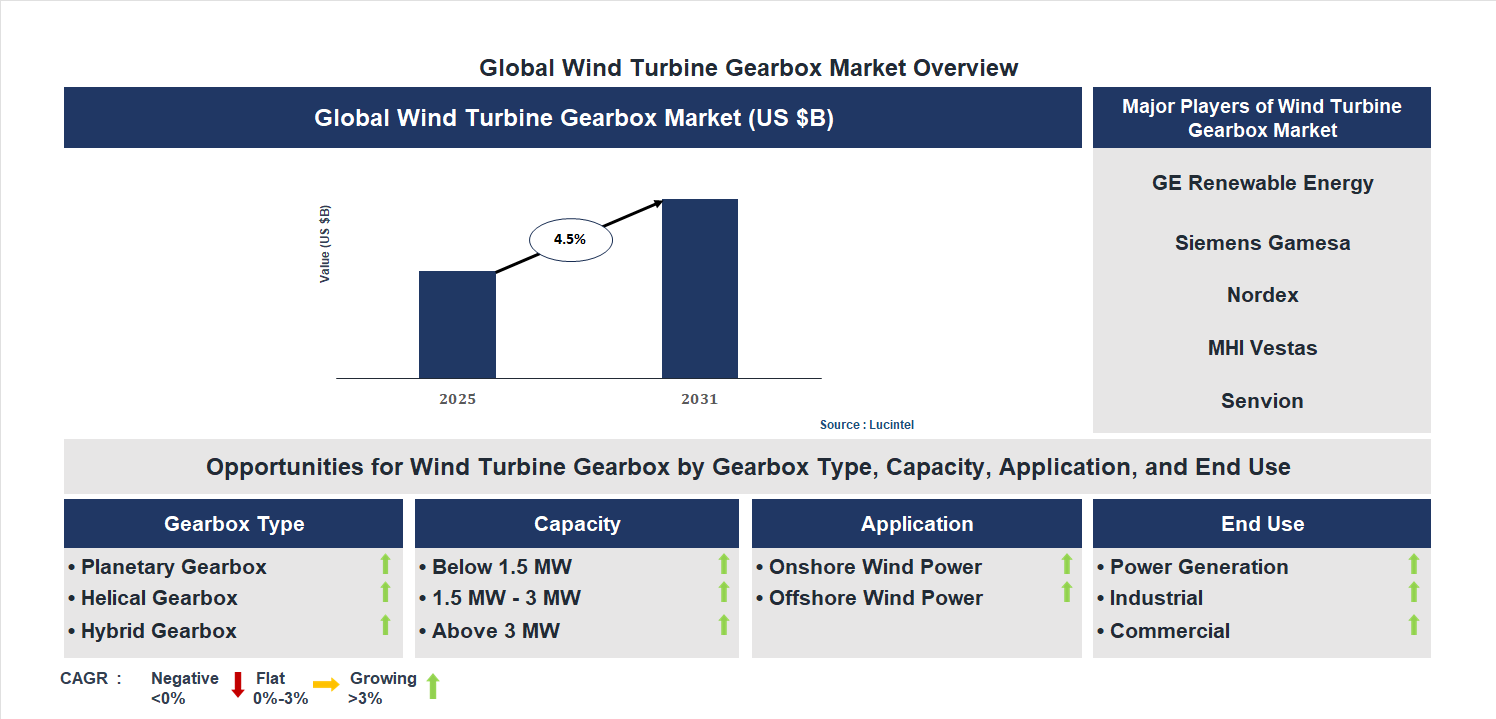
Key data points: The growth forecast = 4.5% annually for the next 7 years. Scroll below to get more insights. This market report covers trends, opportunities and forecasts in wind turbine gearbox market to 2031 by gearbox type (planetary gearbox, helical gearbox, and hybrid gearbox), capacity (below 1.5 MW, 1.5 MW - 3 MW, and above 3 MW), application (onshore wind power and offshore wind power), end use (power generation, industrial, and commercial), and region (North America, Europe, Asia Pacific, and the Rest of the World)
We'll send your sample report shortly.
• Lucintel forecasts that, within the gearbox type category, planetary gearbox is expected to witness the highest growth over the forecast period.
• Within the end use category, power generation is expected to witness the highest growth.
• In terms of region, APAC is expected to witness the highest growth over the forecast period. Gain valuable insights for your business decisions with our comprehensive 150+ page report. Sample figures with some insights are shown below.
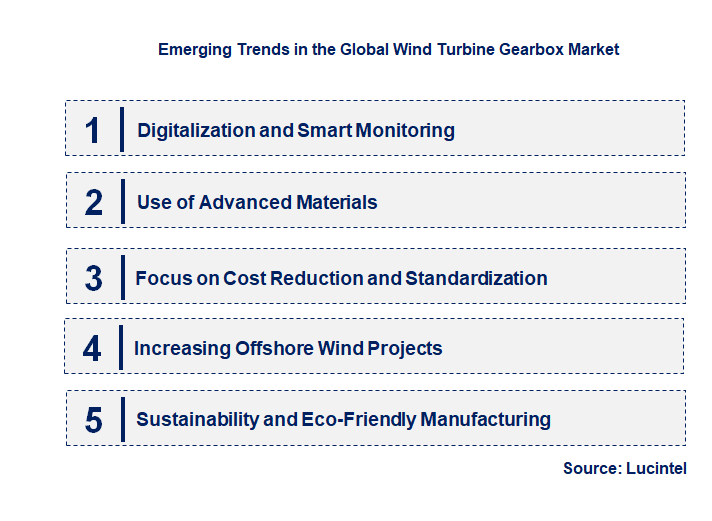
• Digitalization and Smart Monitoring: Integration of IoT and sensor technologies is enabling real-time condition monitoring of gearboxes. This trend improves predictive maintenance, reduces downtime, and enhances operational efficiency. Digital tools allow for data-driven decision-making, extending gearbox lifespan and lowering maintenance costs. As a result, manufacturers can offer more reliable products, and operators benefit from increased uptime and reduced operational risks.
• Use of Advanced Materials: The adoption of high-performance materials such as composites and specialized alloys is increasing. These materials improve gearbox durability, reduce weight, and enhance resistance to fatigue and corrosion. The use of advanced materials leads to longer service life and better performance under harsh environmental conditions, which is critical for offshore and onshore wind farms. This trend supports the development of more robust and efficient gearboxes.
• Focus on Cost Reduction and Standardization: Industry players are emphasizing cost-effective manufacturing processes and standardization to lower overall costs. Modular designs and mass production techniques are being adopted to streamline supply chains and reduce prices. Cost reduction strategies make wind energy more competitive and accessible, encouraging wider adoption. Standardization also facilitates easier maintenance and component replacement, further improving operational efficiency.
• Increasing Offshore Wind Projects: The growth of offshore wind farms is driving demand for specialized gearboxes capable of withstanding extreme conditions. These gearboxes are designed to handle higher loads and operate reliably in challenging environments. The expansion of offshore projects opens new markets and necessitates innovations tailored to marine conditions, boosting technological development and market size.
• Sustainability and Eco-friendly Manufacturing: Environmental considerations are influencing gearbox manufacturing processes, with a focus on reducing carbon footprints and waste. Companies are adopting greener production techniques and recyclable materials. This trend aligns with the broader sustainability goals of the renewable energy sector, enhancing corporate social responsibility and market appeal. Eco-friendly manufacturing practices also help companies meet regulatory standards and appeal to environmentally conscious consumers. In summary, these emerging trends are transforming the wind turbine gearbox market by enhancing product reliability, reducing costs, and expanding application scopes. Digital innovations, advanced materials, and sustainability initiatives are collectively driving growth and competitiveness. As these trends continue to evolve, they will shape a more efficient, durable, and environmentally friendly wind energy industry, unlocking new opportunities and redefining market dynamics.
• Technological Innovations: New gearbox designs incorporate advanced materials and manufacturing techniques, resulting in improved efficiency and reduced maintenance costs. These innovations extend gearbox lifespan and enhance performance under variable wind conditions, boosting overall turbine reliability and reducing operational expenses.
• Digitalization and Smart Monitoring: Integration of IoT and sensor technologies enables real-time monitoring of gearbox health. This development allows predictive maintenance, minimizing downtime and repair costs, and increasing operational efficiency. It also provides valuable data for optimizing turbine performance.
• Material Advancements: The adoption of high-strength, lightweight materials such as composites and specialized alloys enhances gearbox durability. These materials withstand harsh environmental conditions, reducing failure rates and increasing the lifespan of gearboxes, which benefits manufacturers and operators alike.
• Regional Market Expansion: Emerging markets in Asia-Pacific and Latin America are witnessing increased investments in wind energy infrastructure. This regional growth expands the market base, encourages local manufacturing, and fosters competitive pricing, thereby accelerating global market growth.
• Sustainability and Recycling Initiatives: Focus on eco-friendly manufacturing processes and gearbox recycling reduces environmental impact. These initiatives align with global sustainability goals, attract environmentally conscious investors, and promote a circular economy within the industry. In summary, these developments are collectively transforming the wind turbine gearbox market by enhancing product reliability, operational efficiency, and regional reach. They are also supporting sustainability goals and driving industry growth, positioning the market for continued expansion and innovation.
• Offshore Wind Farms: Expansion of offshore wind projects offers significant growth potential due to higher wind speeds and larger project sizes. Gearboxes designed for offshore conditions improve reliability and efficiency, enabling longer operational lifespans. This growth enhances energy output and reduces costs, making offshore wind a vital segment in the renewable energy mix.
• Onshore Wind Farms: The increasing deployment of onshore wind turbines in emerging markets presents substantial opportunities. Advanced gearboxes with improved durability and performance cater to diverse terrains and climates. This growth supports local energy needs, reduces dependence on fossil fuels, and accelerates regional economic development.
• Repowering and Upgrades: Existing wind farms are being retrofitted with modern gearboxes to boost efficiency and extend operational life. This strategic upgrade reduces maintenance costs and enhances energy production, providing a cost-effective solution for maximizing existing assets and meeting rising energy demands.
• Small-Scale Wind Applications: Growing interest in decentralized energy solutions drives demand for small-scale wind turbines. Compact, reliable gearboxes tailored for these applications enable easier installation and maintenance, expanding access to renewable energy in remote or underserved areas.
• Hybrid and Integrated Systems: The integration of wind turbines with energy storage and other renewable sources creates hybrid systems. Gearboxes optimized for such applications improve system stability and performance, facilitating the development of resilient, flexible energy solutions for diverse environments. In summary, these growth opportunities are significantly impacting the wind turbine gearbox market by fostering innovation, expanding application scope, and enhancing operational efficiency. They are driving market expansion, attracting investments, and supporting the global transition toward sustainable energy, ultimately shaping a more resilient and diversified renewable energy landscape.
• Technological Innovation: The continuous development of more efficient and reliable gearboxes enhances turbine performance, reduces maintenance costs, and extends operational lifespan. Innovations such as smart monitoring systems and advanced materials improve gearbox durability and efficiency, making wind energy more competitive. This technological progress attracts investments and accelerates market growth, especially as turbines are deployed in diverse environments requiring adaptable solutions.
• Growing Renewable Energy Demand: The global shift towards clean energy sources has led to increased investments in wind power projects. Governments and private sectors are prioritizing renewable energy to meet climate goals, resulting in higher demand for wind turbines and, consequently, gearboxes. This surge in demand fuels market expansion, especially in emerging markets where wind energy potential is being harnessed.
• Supportive Regulatory Policies: Many governments worldwide have implemented policies, incentives, and subsidies to promote wind energy adoption. These regulatory frameworks reduce project costs and encourage manufacturers to innovate and expand production capacities. Such policies create a favorable environment for market growth, attracting new entrants and fostering technological advancements.
• Market Expansion in Emerging Economies: Rapid industrialization and urbanization in countries like India, China, and Brazil are driving the adoption of wind energy. These regions offer vast untapped wind resources and government initiatives to develop renewable infrastructure, creating significant opportunities for gearbox manufacturers. Market expansion in these areas is expected to be a major growth driver in the coming years. The challenges facing this wind turbine gearbox market include:-
• High Manufacturing and Maintenance Costs: Producing advanced wind turbine gearboxes involves significant capital investment in research, development, and manufacturing facilities. Additionally, maintenance costs due to the complex nature of gearboxes and the need for specialized skills can hinder profitability. These costs can limit market penetration, especially in price-sensitive regions, and slow down overall industry growth.
• Technological Complexities and Reliability Issues: Wind turbine gearboxes are subjected to harsh environmental conditions, leading to wear and tear. Technological challenges such as gear fatigue, lubrication failures, and design flaws can cause breakdowns and increase downtime. Ensuring reliability and longevity remains a critical concern, impacting customer confidence and increasing warranty costs.
• Regulatory and Policy Uncertainties: While supportive policies exist, changing regulatory landscapes and policy uncertainties can pose risks. Variations in tariffs, environmental regulations, and subsidy schemes can affect project viability and investment decisions. These uncertainties can delay project timelines and impact the strategic planning of manufacturers and developers. In summary, the wind turbine gearbox market is driven by technological advancements, increasing renewable energy demand, supportive policies, and market expansion in emerging economies. However, high costs, technological challenges, and regulatory uncertainties present significant hurdles. These factors collectively influence the market’s growth potential, requiring stakeholders to innovate continuously and adapt to evolving conditions. Overall, the market’s future will depend on balancing these drivers and challenges to foster sustainable growth and technological resilience.
• GE Renewable Energy
• Siemens Gamesa
• Nordex
• MHI Vestas
• Senvion
• Suzlon Energy
• Goldwind
• Planetary Gearbox
• Helical Gearbox
• Hybrid Gearbox
• Below 1.5 MW
• 1.5 MW - 3 MW
• Above 3 MW
• Onshore Wind Power
• Offshore Wind Power
• Power Generation
• Industrial
• Commercial
• North America
• Europe
• Asia Pacific
• The Rest of the World
• United States: The US market has seen substantial growth driven by federal incentives and state-level renewable energy mandates. Technological advancements focus on improving gearbox efficiency and lifespan, with increased adoption of digital monitoring systems for predictive maintenance. Offshore wind projects along the East Coast are expanding, boosting demand for specialized gearboxes. Major players are investing in R&D to develop more reliable and cost-effective solutions, while local manufacturing facilities are being established to reduce supply chain disruptions. The US also emphasizes integrating wind energy into the national grid, fostering innovation in gearbox technology.
• China: China remains the largest market for wind turbine gearboxes, supported by aggressive government policies and large-scale wind farm projects. The focus is on increasing turbine capacity and efficiency, with significant investments in offshore wind development. Domestic manufacturers are expanding their technological capabilities through joint ventures and R&D initiatives. The country is also emphasizing the localization of supply chains to reduce costs and dependency on imports. Digitalization and smart gearbox systems are gaining traction, enhancing operational reliability. Chinas market growth is driven by its commitment to carbon neutrality and expanding renewable energy infrastructure.
• Germany: Germanys wind turbine gearbox market is characterized by high technological standards and a focus on offshore wind farms in the North Sea. The country emphasizes sustainable and efficient gearbox designs, integrating digital monitoring and predictive maintenance solutions. The transition to more powerful turbines requires advanced gearboxes capable of handling higher loads. German manufacturers are investing in innovative materials and manufacturing processes to improve durability. Policy support from the government and the European Union promotes renewable energy projects, fostering steady market growth. The focus remains on optimizing existing infrastructure and expanding offshore capacity to meet climate targets.
• India: India’s wind energy sector is rapidly growing, driven by government initiatives like the National Wind-Solar Hybrid Policy and renewable energy targets. The market is witnessing increased demand for reliable, cost-effective gearboxes suitable for diverse climatic conditions. Local manufacturers are enhancing their technological capabilities through collaborations and R&D investments. The focus is on improving gearbox efficiency and reducing maintenance costs to ensure long-term operational stability. The expansion of onshore wind farms and upcoming offshore projects are expected to boost market growth. Policy incentives and declining component costs are further supporting the development of the wind turbine gearbox industry in India.
• Japan: Japans wind turbine gearbox market is evolving with a focus on offshore wind projects, especially around the Fukushima coast. The country emphasizes high-performance gearboxes capable of withstanding harsh marine environments. Technological innovations include the integration of digital sensors for condition monitoring and predictive maintenance. Japan is also investing in local manufacturing to reduce reliance on imports and enhance supply chain resilience. Government policies aim to expand offshore wind capacity as part of its renewable energy strategy. The market is characterized by collaborations between domestic and international firms to develop advanced gearbox solutions tailored to Japan’s specific environmental conditions.


• GE Renewable Energy
• Siemens Gamesa
• Nordex
• MHI Vestas
• Senvion
• Suzlon Energy
• Goldwind Q5. Which wind turbine gearbox market segment will be the largest in future? Answer: Lucintel forecasts that, within the gearbox type category, planetary gearbox is expected to witness the highest growth over the forecast period. Q6. In wind turbine gearbox market, which region is expected to be the largest in next 5 years? Answer: In terms of region, APAC is expected to witness the highest growth over the forecast period. Q7. Do we receive customization in this report? Answer: Yes, Lucintel provides 10% customization without any additional cost.


Choose a license that fits your team. Instant PDF delivery.
Prices exclude taxes. Instant delivery. Custom licensing available on request.
Market Report · July 20, 2026
Market Report · July 20, 2026
Market Report · July 20, 2026
Trusted partner for strategic intelligence and business growth


Receive a complimentary market analysis tailored to your industry. Our analysts will identify key growth opportunities and competitive dynamics specific to your business.

Market size, growth rate, and key trend analysis for your specific sector.

Top competitor positioning and market share analysis.

Strategic recommendations backed by data-driven insights.
Get curated market intelligence and competitive moves straight to your inbox.
By subscribing, you agree to receive our monthly insights. Unsubscribe anytime.
Receive a complimentary market analysis tailored to your industry. Our analysts will identify key growth opportunities and competitive dynamics specific to your business.
Market size, growth rate, and key trend analysis for your specific sector.
Top competitor positioning and market share analysis.
Strategic recommendations backed by data-driven insights.
Get curated market intelligence, emerging trends, and competitive moves straight to your inbox each month.
By subscribing, you agree to receive our monthly insights. Unsubscribe anytime.
We'll send your sample report shortly.