
Market Report · July 31, 2026

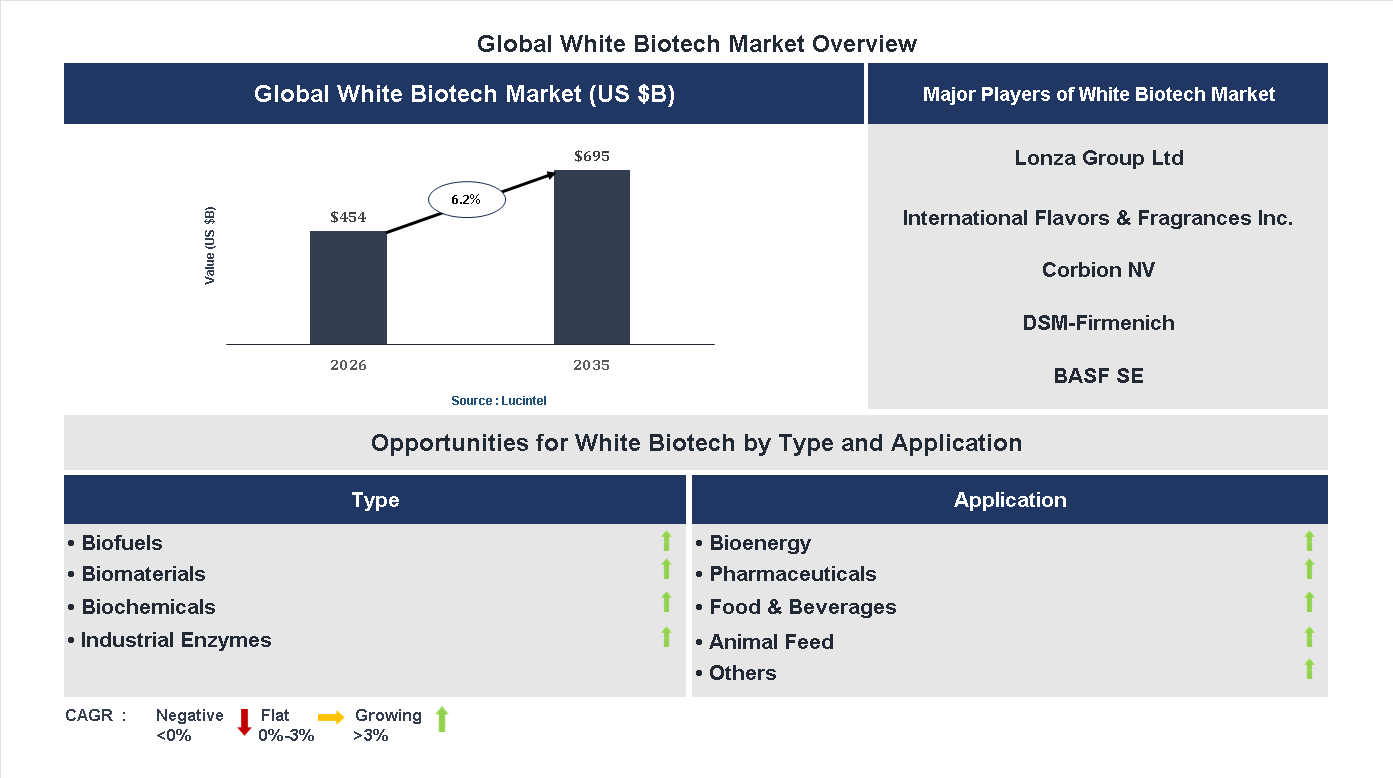
Key data points: The market size in 2035 = $695 billion, growth forecast = 6.2% annually for the next 8 years. Scroll below to get more insights. This market report covers trends, opportunities and forecasts in white biotech market to 2035 by type (biofuels, biomaterials, biochemicals, and industrial enzymes), application (bioenergy, pharmaceuticals, food & beverages, animal feed, and others), and region (North America, Europe, Asia Pacific, and the Rest of the World)
We'll send your sample report shortly.
• Lucintel forecasts that, within the type category, biofuel is expected to witness the highest growth over the forecast period.
• Within the application category, bioenergy is expected to witness the highest growth.
• In terms of region, APAC is expected to witness the highest growth over the forecast period. Gain valuable insights for your business decisions with our comprehensive 150+ page report. Sample figures with some insights are shown below.
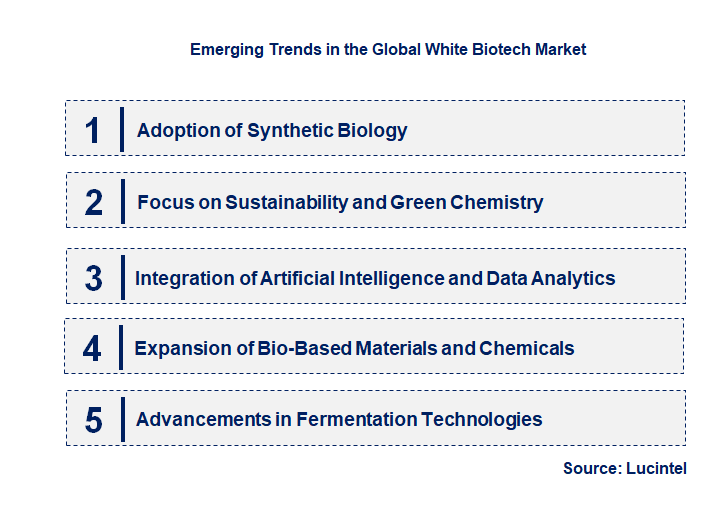
• Adoption of Synthetic Biology: Synthetic biology is revolutionizing the white biotech market by enabling the design and construction of new biological parts and systems. This trend allows for the development of customized microorganisms capable of producing biofuels, bioplastics, and specialty chemicals more efficiently. The impact includes reduced reliance on fossil fuels, lower production costs, and the ability to create sustainable alternatives to traditional chemicals. As synthetic biology advances, it is expected to accelerate innovation, improve scalability, and expand the range of bioproducts, making industrial processes more sustainable and economically viable.
• Focus on Sustainability and Green Chemistry: Sustainability is a core driver in the white biotech market, with companies increasingly adopting green chemistry principles. This trend emphasizes the use of renewable feedstocks, reduction of hazardous substances, and energy-efficient processes. The impact is significant, as it leads to environmentally friendly manufacturing practices, compliance with stricter regulations, and enhanced corporate social responsibility. Green chemistry not only minimizes environmental impact but also offers economic benefits through waste reduction and resource efficiency, positioning biotech solutions as key enablers of sustainable industrial development.
• Integration of Artificial Intelligence and Data Analytics: The incorporation of AI and data analytics into biotech processes is transforming the industry by optimizing production, accelerating research, and improving product quality. This trend enables predictive modeling, process automation, and real-time monitoring, leading to increased efficiency and reduced costs. The impact includes faster development cycles for bioproducts, enhanced process control, and better decision-making. As AI-driven tools become more sophisticated, they will further streamline biotechnological innovations, making industrial biotech more agile and responsive to market demands.
• Expansion of Bio-based Materials and Chemicals: There is a growing shift towards bio-based materials such as bioplastics, bio-based solvents, and bio-composites. This trend is driven by consumer demand for sustainable products and regulatory pressures to reduce plastic waste and carbon emissions. The impact is a diversification of product portfolios for biotech companies, increased market opportunities, and a reduction in dependence on petrochemicals. The development of bio-based materials also promotes circular economy principles, encouraging recycling and reuse, and fostering environmentally responsible manufacturing practices.
• Advancements in Fermentation Technologies: Innovations in fermentation processes are enabling higher yields, faster production times, and the use of diverse feedstocks. This trend includes the development of continuous fermentation systems and genetically engineered microorganisms tailored for specific outputs. The impact is a significant boost in productivity and cost-effectiveness, making bioproducts more competitive with traditional chemicals. These advancements facilitate the scaling of biotechnological solutions across various industries, supporting the transition to more sustainable manufacturing practices and expanding the market reach of white biotech products. These emerging trends are collectively transforming the white biotech market by fostering sustainable innovation, enhancing process efficiencies, and expanding the application scope of biotechnological solutions. They are driving a shift towards greener, more cost-effective, and versatile industrial practices, ultimately reshaping the future landscape of industrial biotechnology.
• Enzyme Technology Advancements: Expanding industrial applications and improving process efficiency. Enzyme technology is revolutionizing manufacturing by enabling more sustainable and cost-effective processes. Recent developments include engineered enzymes with enhanced stability and activity, which are now used in detergents, biofuels, and food processing. These innovations reduce reliance on harsh chemicals and lower energy consumption, making industries greener. The growing adoption of enzyme-based solutions is expected to boost market growth, create new revenue streams, and promote environmentally friendly practices across multiple sectors.
• Biocatalysts in Chemical Production: Enabling greener and more efficient chemical synthesis. Biocatalysts are increasingly replacing traditional chemical catalysts due to their selectivity, efficiency, and eco-friendliness. Recent breakthroughs include immobilized enzymes and tailored microbial strains that facilitate complex chemical reactions under mild conditions. This shift reduces hazardous waste, lowers energy use, and shortens production cycles. The impact is significant, as industries such as pharmaceuticals and specialty chemicals adopt biocatalytic processes, leading to cost savings, regulatory compliance, and a smaller environmental footprint.
• Microbial Engineering for Sustainable Agriculture: Improving crop yields and reducing chemical use. Advances in microbial engineering are creating biofertilizers and biopesticides that enhance crop productivity sustainably. Engineered microbes can fix nitrogen, promote plant growth, and combat pests naturally. These developments reduce dependence on chemical fertilizers and pesticides, lowering environmental pollution and health risks. The market impact includes increased adoption by farmers seeking eco-friendly solutions, government incentives for sustainable agriculture, and a shift toward integrated pest management, ultimately supporting global food security and environmental health.
• Industrial Biotechnology for Bio-based Materials: Developing eco-friendly plastics and chemicals. Innovations in microbial fermentation are enabling the production of bio-based plastics, solvents, and chemicals from renewable feedstocks. Recent progress includes genetically modified microbes that efficiently convert biomass into high-value products. These bio-based materials are biodegradable, reducing plastic pollution and reliance on fossil fuels. The market benefits from rising consumer demand for sustainable products, stricter environmental regulations, and corporate commitments to circular economy principles, fostering growth in eco-friendly material sectors and transforming traditional manufacturing paradigms.
• Digital Technologies Enhancing Biotech Processes: Improving efficiency and scalability. The integration of AI, IoT, and data analytics is optimizing bioprocess development and production. Recent developments include real-time monitoring, predictive modeling, and automation, which streamline workflows and reduce costs. These technologies enable precise control over microbial cultures and enzyme reactions, increasing yields and consistency. The impact on the market is substantial, as companies can scale up innovations faster, reduce waste, and meet regulatory standards more effectively, ultimately accelerating the adoption of white biotech solutions across industries. The overall impact of these developments is a more sustainable, efficient, and innovative market landscape. They are driving growth, reducing environmental impact, and opening new revenue streams, positioning white biotech as a key player in the future of industrial manufacturing and environmental stewardship.
• Pharmaceutical Production: Developing biopharmaceuticals and biosimilars offers significant growth potential. White biotech enables cost-effective, scalable production of complex drugs, vaccines, and personalized medicine. Sub-segments like monoclonal antibodies and enzyme therapies are expanding rapidly, driven by rising healthcare needs and technological innovations. Companies investing in microbial and cell culture technologies can tap into this lucrative market, improving drug efficacy and reducing manufacturing costs.
• Agricultural Biotechnology Solutions: White biotech provides sustainable alternatives for crop protection, soil enhancement, and biofertilizers. These solutions reduce reliance on chemical pesticides and fertilizers, aligning with environmental regulations and consumer preferences. Sub-segments such as bio-pesticides and genetically modified organisms (GMOs) are gaining traction. Advancements in microbial engineering and enzyme technology are enabling more efficient, eco-friendly agricultural inputs, supporting food security and sustainable farming practices.
• Industrial Enzyme Applications: The use of enzymes in industries like textiles, paper, and detergents is a key growth area. Enzymes improve process efficiency, reduce energy consumption, and lower environmental impact. Sub-segments include cellulases, amylases, and proteases, which are increasingly adopted in bio-refining, waste management, and cleaning products. Innovations in enzyme stability and activity under harsh conditions are expanding their industrial applications, fostering greener manufacturing processes.
• Bio-based Chemicals and Materials: The shift towards renewable resources is boosting the production of bio-based chemicals, plastics, and fibers. White biotech enables sustainable manufacturing of bioplastics, bio-solvents, and bio-based polymers, reducing dependence on fossil fuels. Sub-segments like polylactic acid (PLA) and bio-ethylene are gaining market share. Advances in microbial fermentation and metabolic engineering are critical for scaling production and making bio-based materials more cost-competitive.
• Waste Valorization and Bioremediation: Utilizing microbial processes to convert waste into valuable products offers significant growth prospects. White biotech facilitates waste-to-energy, biogas production, and pollutant degradation, supporting circular economy initiatives. Sub-segments include anaerobic digestion and microbial bioremediation of contaminated sites. Innovations in microbial consortia and enzyme technology are enhancing efficiency, reducing environmental hazards, and creating new revenue streams from waste management. These growth opportunities are poised to transform the white biotech landscape by fostering sustainable, efficient, and innovative industrial practices. Companies that strategically invest in these areas can capitalize on emerging markets, address environmental challenges, and drive long-term growth. The integration of advanced biotechnologies will be essential in shaping a resilient and eco-friendly industrial future.
• Technological Innovation: The development of advanced enzymes, microbes, and fermentation techniques enhances efficiency and product quality. These innovations enable the production of bio-based chemicals, pharmaceuticals, and biofuels, reducing reliance on fossil fuels and decreasing environmental impact. As research progresses, new applications emerge, expanding market potential. Companies investing in R&D are gaining competitive advantages, fostering industry growth. The continuous evolution of biotechnological tools ensures the market remains dynamic and capable of meeting diverse industrial needs.
• Rising Demand for Sustainable Solutions: Increasing awareness of environmental issues and climate change has led to a surge in demand for eco-friendly products. White biotech offers sustainable alternatives to traditional chemical processes, reducing greenhouse gas emissions and waste. Industries such as agriculture, textiles, and packaging are adopting bio-based solutions to meet consumer preferences and regulatory requirements. This shift towards sustainability is expected to drive market expansion, encouraging investments and innovation in green technologies.
• Economic Benefits and Cost Efficiency: White biotech processes often result in lower production costs due to the use of renewable raw materials and energy-efficient methods. These cost advantages appeal to manufacturers seeking to optimize operations and reduce expenses. Additionally, government incentives and subsidies for green technologies further enhance economic viability. As a result, companies are increasingly integrating white biotech solutions to improve profitability and competitiveness in global markets.
• Regulatory Support and Policies: Governments worldwide are implementing policies that promote the adoption of biotechnology for environmental and economic benefits. Regulations encouraging renewable energy, waste reduction, and sustainable manufacturing create a favorable environment for market growth. Certification standards and safety regulations also ensure product quality and consumer trust. Supportive policies incentivize research, development, and commercialization of white biotech innovations, fostering a conducive ecosystem for industry expansion.
• Growing Applications Across Industries: The versatility of white biotech is expanding across various sectors, including pharmaceuticals, agriculture, food & beverages, and bioenergy. The ability to produce bio-based chemicals, enzymes, and biofuels tailored to specific industry needs broadens market scope. This diversification reduces dependency on traditional industries and opens new revenue streams. As applications proliferate, the market benefits from increased demand, technological integration, and cross-sector collaborations. The challenges facing the white biotech market include:
• Regulatory and Safety Concerns: Stringent regulations related to genetically modified organisms (GMOs), biosafety, and environmental impact can delay product approval and commercialization. Navigating complex regulatory landscapes varies across regions, creating barriers for market entry and expansion. Ensuring compliance requires significant investment in safety assessments and documentation, which can hinder innovation and increase costs. These regulatory hurdles may slow down the adoption of new biotechnologies, impacting overall market growth.
• High Research and Development Costs: Developing new biotechnological processes involves substantial R&D investments, often with uncertain outcomes. The high costs associated with research, clinical trials, and scaling up production can strain financial resources, especially for smaller companies. Limited access to funding and long development timelines pose additional challenges. These factors can restrict innovation and slow market penetration of novel white biotech solutions, affecting overall industry momentum.
• Market Acceptance and Consumer Perception: Despite environmental benefits, consumer skepticism and lack of awareness about white biotech products can impede market growth. Concerns over GMO safety, product efficacy, and regulatory approval influence purchasing decisions. Educating consumers and building trust require targeted marketing and transparency, which can be resource-intensive. Resistance from traditional industries and stakeholders may also slow adoption, posing a significant challenge to expanding the market reach. The white biotech market is shaped by significant technological advancements, sustainability trends, economic incentives, supportive policies, and expanding applications. However, regulatory complexities, high R&D costs, and consumer perceptions present notable hurdles. These drivers collectively propel the industry forward, fostering innovation and growth, while challenges necessitate strategic navigation to ensure sustainable development. The overall impact is a dynamic, evolving market with substantial potential for environmentally friendly solutions, provided stakeholders effectively address regulatory and perception barriers.
• Lonza Group Ltd
• International Flavors & Fragrances Inc.
• Corbion NV
• DSM-Firmenich
• BASF SE
• Evonik Industries AG
• Laurus Labs
• BioSynth
• Novozymes A/S
• Archer-Daniels-Midland Company
• Biofuels
• Biomaterials
• Biochemicals
• Industrial Enzymes
• Bioenergy
• Pharmaceuticals
• Food & Beverages
• Animal Feed
• Others
• North America
• Europe
• Asia Pacific
• The Rest of the World
• United States: The US market has seen significant investments in bio-based chemicals and renewable fuels, driven by government incentives and private sector initiatives. Innovations in enzyme technology and bioprocessing have enhanced production efficiency. Major companies are expanding their R&D efforts to develop sustainable plastics and chemicals, with increased collaborations between biotech firms and automotive industries. The US also focuses on scaling up biomanufacturing facilities to meet domestic and export demands, positioning itself as a leader in industrial biotech innovation.
• China: China is rapidly advancing in the White Biotech sector, emphasizing bio-based chemicals and biofuels to reduce reliance on imported fossil fuels. The government’s supportive policies and substantial funding have accelerated research and commercialization efforts. Chinese firms are investing in enzyme development and biorefinery projects, aiming to create a circular economy. The country is also focusing on integrating biotech solutions into traditional manufacturing sectors, such as textiles and agriculture, to promote sustainable growth and reduce environmental pollution.
• Germany: Germany remains a key player in industrial biotechnology, with a strong focus on sustainable chemicals and bioplastics. The country’s emphasis on circular economy principles has led to innovations in bio-based packaging and biodegradable materials. German research institutions and companies are collaborating on developing advanced bioprocessing techniques and enzyme applications. The government’s support for green technologies and EU funding initiatives continue to foster growth, positioning Germany as a hub for sustainable industrial solutions in Europe.
• India: India’s White Biotech market is gaining momentum through government initiatives aimed at promoting bio-based products and renewable energy sources. The focus is on developing cost-effective enzymes and biofuels to support rural economies and reduce pollution. Indian companies are investing in biorefinery projects and expanding their product portfolios to include bio-based chemicals and fertilizers. The country’s large agricultural sector provides opportunities for integrating biotech solutions to improve crop yields and sustainability, aligning with national goals for sustainable development.
• Japan: Japan is advancing in enzyme technology and bio-based chemicals, driven by a strong emphasis on innovation and sustainability. The country’s biotech firms are developing eco-friendly materials and biofuels to meet domestic and international demand. Japan’s focus on aging population challenges has also spurred research into biotech solutions for healthcare and industrial applications. Government policies support R&D in green technologies, and collaborations with global firms are fostering the development of next-generation bio-based products, reinforcing Japan’s position in the global White Biotech market.


• Lonza Group Ltd
• International Flavors & Fragrances Inc.
• Corbion NV
• DSM-Firmenich
• BASF SE
• Evonik Industries AG
• Laurus Labs
• BioSynth
• Novozymes A/S
• Archer-Daniels-Midland Company Q6. Which white biotech market segment will be the largest in future? Answer: Lucintel forecasts that, within the type category, biofuel is expected to witness the highest growth over the forecast period. Q7. In white biotech market, which region is expected to be the largest in next 5 years? Answer: In terms of region, APAC is expected to witness the highest growth over the forecast period. Q8. Do we receive customization in this report? Answer: Yes, Lucintel provides 10% customization without any additional cost.


Choose a license that fits your team. Instant PDF delivery.
Prices exclude taxes. Instant delivery. Custom licensing available on request.
Market Report · July 31, 2026
Market Report · July 31, 2026
Market Report · July 31, 2026
Trusted partner for strategic intelligence and business growth


Receive a complimentary market analysis tailored to your industry. Our analysts will identify key growth opportunities and competitive dynamics specific to your business.

Market size, growth rate, and key trend analysis for your specific sector.

Top competitor positioning and market share analysis.

Strategic recommendations backed by data-driven insights.
Get curated market intelligence and competitive moves straight to your inbox.
By subscribing, you agree to receive our monthly insights. Unsubscribe anytime.
Receive a complimentary market analysis tailored to your industry. Our analysts will identify key growth opportunities and competitive dynamics specific to your business.
Market size, growth rate, and key trend analysis for your specific sector.
Top competitor positioning and market share analysis.
Strategic recommendations backed by data-driven insights.
Get curated market intelligence, emerging trends, and competitive moves straight to your inbox each month.
By subscribing, you agree to receive our monthly insights. Unsubscribe anytime.
We'll send your sample report shortly.