
Market Report · July 31, 2026

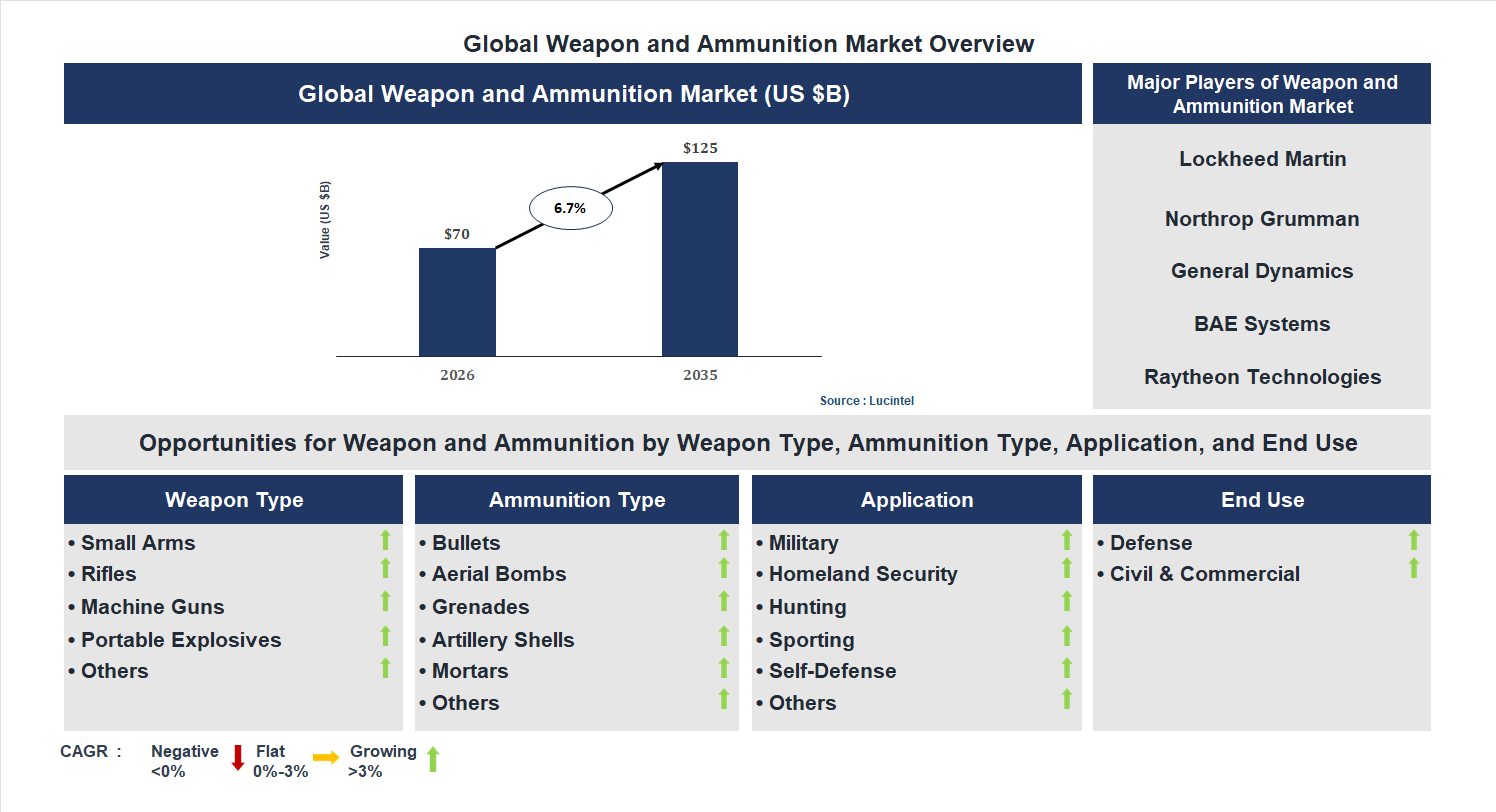
Key data points: The market size in 2035 = $125 billion, growth forecast = 6.7% annually for the next 8 years. Scroll below to get more insights. This market report covers trends, opportunities and forecasts in weapon and ammunition market to 2035 by weapon type (small arms, rifles, machine guns, portable explosives, and others), ammunition type (bullets, aerial bombs, grenades, artillery shells, mortars, and others), application (military, homeland security, hunting, sporting, self-defense, and others), end use (defense and civil & commercial), and region (North America, Europe, Asia Pacific, and the Rest of the World)
We'll send your sample report shortly.
• Lucintel forecasts that, within the weapon type category, portable explosive is expected to witness the highest growth over the forecast period.
• Within the end use category, defense is expected to witness higher growth.
• In terms of region, North America is expected to witness the highest growth over the forecast period. Gain valuable insights for your business decisions with our comprehensive 150+ page report. Sample figures with some insights are shown below.
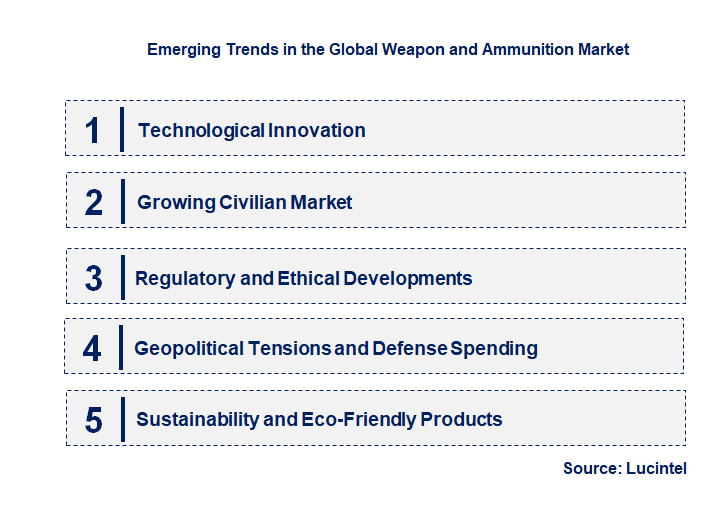
• Technological Innovation : Integration of smart technology and advanced materials is revolutionizing weapon and ammunition design. Smart weapons with targeting systems, improved accuracy, and connectivity features are gaining prominence. Innovations in materials, such as lightweight composites and corrosion-resistant alloys, enhance durability and performance. These advancements lead to more effective, reliable, and customizable products, appealing to military, law enforcement, and civilian markets. The trend toward technological innovation is driving product differentiation and opening new avenues for R&D investments, ultimately transforming traditional weaponry into sophisticated, high-tech solutions.
• Growing Civilian Market : Increasing demand for personal defense and recreational shooting is expanding the civilian segment. Consumers are seeking innovative, high-performance firearms and ammunition, often with customizable features. The rise of shooting sports, hunting, and home security drives this growth. Additionally, the proliferation of online platforms facilitates access to a broader range of products and information. This trend is encouraging manufacturers to develop user-friendly, versatile, and aesthetically appealing products, thereby broadening the market base and fostering a competitive environment that emphasizes safety, innovation, and personalization.
• Regulatory and Ethical Developments : Stricter regulations and international treaties are shaping market dynamics. Governments are implementing tighter controls on firearm sales, ammunition manufacturing, and export policies to address safety and ethical concerns. These regulations influence product design, manufacturing processes, and distribution channels. Companies are investing in compliance systems and transparent supply chains to meet legal standards. Ethical debates surrounding firearm accessibility and ammunition proliferation are also impacting consumer behavior and policy-making. Navigating this complex regulatory landscape is crucial for market players aiming to sustain growth while adhering to legal and ethical standards.
• Geopolitical Tensions and Defense Spending : Rising geopolitical tensions are prompting increased defense budgets worldwide. Countries are investing heavily in modernizing their armed forces, leading to higher procurement of advanced weapon systems and ammunition. This trend boosts demand for high-precision, long-range, and specialized munitions. Defense contractors are forming strategic alliances and expanding manufacturing capacities to meet the surge in orders. The focus on national security and military readiness is accelerating innovation and production cycles, making the market more competitive and technologically advanced. This geopolitical climate is a key driver of growth and innovation in the weapon and ammunition industry.
• Sustainability and Eco-Friendly Products : Environmental concerns are influencing industry practices. Manufacturers are developing eco-friendly ammunition with reduced lead content and biodegradable casings to minimize environmental impact. Sustainable sourcing of raw materials and waste reduction in manufacturing processes are gaining importance. This trend aligns with global efforts toward environmental responsibility and regulatory compliance. Eco-conscious consumers and institutions are increasingly favoring sustainable products, prompting companies to innovate in materials and production techniques. The shift toward sustainability is reshaping product development, supply chain management, and corporate social responsibility strategies within the market. These emerging trends are collectively reshaping the weapon and ammunition market by fostering innovation, expanding consumer segments, enforcing stricter regulations, responding to geopolitical needs, and emphasizing sustainability. This evolution is leading to a more sophisticated, responsible, and competitive industry landscape, poised for continued growth and technological advancement.
• Technological Innovations in Weaponry: Advancements in smart weapons, precision-guided munitions, and autonomous systems are transforming military capabilities. These innovations enhance accuracy, reduce collateral damage, and improve operational efficiency. As governments invest heavily in modernizing their armed forces, demand for cutting-edge weapon systems is surging. Civilian markets are also adopting smart technology for sporting and self-defense purposes. This evolution is driving market growth, encouraging R&D investments, and fostering competitive differentiation among manufacturers.
• Increasing Defense Budgets and Military Spending: Countries worldwide are boosting their defense budgets to address emerging threats and modernize their armed forces. This surge in military expenditure directly correlates with increased procurement of weapons and ammunition. Governments prioritize strategic security, leading to long-term contracts and sustained market demand. The rise in defense spending also stimulates innovation and infrastructure development within the industry. As a result, the market is expanding rapidly, attracting new entrants and fostering global supply chain growth.
• Expansion of Civilian and Law Enforcement Markets: The civilian and law enforcement sectors are experiencing significant growth, driven by rising security concerns and firearm ownership. Law enforcement agencies are upgrading their arsenals with advanced weaponry, while civilians seek high-performance firearms for self-defense and sporting activities. This diversification broadens the market beyond traditional military applications. The increasing demand for tactical gear, ammunition, and training services is fueling industry expansion. These segments offer substantial growth opportunities, especially in regions with rising urbanization and security challenges.
• Regulatory Changes and Ethical Considerations: Evolving regulations regarding firearm sales, ammunition manufacturing, and export controls are impacting market dynamics. Stricter laws aim to curb illegal arms trade and promote safety, influencing product development and distribution channels. Ethical debates surrounding firearm proliferation and violence also shape policy decisions, affecting market growth. Manufacturers are adapting by innovating within legal frameworks, exploring alternative materials, and enhancing safety features. These regulatory and ethical factors create both challenges and opportunities for sustainable industry development.
• Emerging Markets and Regional Growth: Developing regions in Asia, Africa, and Latin America are witnessing increased demand for weapons and ammunition due to geopolitical tensions and internal security issues. Rapid urbanization, political instability, and military modernization efforts are driving regional market expansion. Local manufacturing capabilities are also improving, reducing reliance on imports. This growth offers lucrative opportunities for global companies to establish regional supply chains and partnerships. As these markets mature, they will significantly influence global supply and demand dynamics, shaping the future landscape of the weapon and ammunition industry. The overall impact of these developments is a robust, innovative, and expanding market. Increased defense budgets, technological advancements, and regional growth are fueling demand, while regulatory and ethical considerations shape product development and market strategies. These factors collectively enhance industry competitiveness, foster innovation, and open new avenues for investment, ensuring sustained growth and evolution in the weapon and ammunition market.
• Increasing Defense Spending and Military Modernization: Growing defense budgets worldwide are fueling demand for advanced weapon systems and ammunition. Countries are investing in modernizing their armed forces, leading to increased procurement of firearms, artillery, and missile systems. This trend is driven by geopolitical tensions, security concerns, and technological upgrades, creating substantial opportunities for manufacturers to supply innovative, high-performance products tailored to military specifications. The expansion of military budgets directly correlates with increased market revenue and product development initiatives.
• Rising Demand for Personal and Home Security Solutions: The increasing need for personal safety and home security is boosting sales of firearms, self-defense weapons, and related ammunition. Consumers are seeking reliable, easy-to-use products for protection against crime and threats. This segment includes handguns, shotguns, and non-lethal weapons, with a focus on compact, lightweight, and technologically advanced options. The growth is supported by rising urbanization, societal concerns, and legal reforms, opening avenues for manufacturers to develop innovative, user-friendly security products.
• Technological Innovations in Weapon and Ammunition Design: Advancements in materials, manufacturing processes, and weapon technology are transforming the market. Innovations include lightweight composites, precision-guided munitions, and smart ammunition with enhanced accuracy and effectiveness. These developments improve operational efficiency and safety for military, law enforcement, and civilian users. The integration of automation, digital targeting, and customization options further enhances product appeal, encouraging manufacturers to invest in R&D and capitalize on the demand for cutting-edge weaponry.
• Expansion of Commercial and Sporting Firearms Market: The growing popularity of shooting sports, hunting, and recreational firearms is expanding the commercial segment. Consumers are seeking high-quality, customizable, and aesthetically appealing firearms and ammunition. This segment benefits from legal reforms, increased disposable income, and a culture of outdoor activities. Manufacturers are focusing on product innovation, branding, and distribution channels to capture market share, with sub-segments including tactical rifles, hunting shotguns, and specialty ammunition.
• Growing Focus on Sustainable and Eco-Friendly Ammunition: Environmental concerns are prompting the development of sustainable ammunition options, such as biodegradable bullets and lead-free primers. These eco-friendly products appeal to military, law enforcement, and civilian markets aiming to reduce environmental impact. Innovations in materials and manufacturing processes are making sustainable ammunition more effective and affordable. This trend opens new markets and enhances corporate social responsibility, encouraging manufacturers to invest in green technologies and expand their product portfolios. The overall market outlook is positively influenced by these growth opportunities, fostering innovation, expanding customer bases, and increasing revenue streams. Strategic focus on technological advancements, regional expansion, and sustainable practices will be crucial for market players to maintain competitiveness and capitalize on emerging trends. As demand continues to rise across applications, the weapon and ammunition market is poised for sustained growth and diversification.
• Technological Innovation: The continuous development of advanced weapon systems, including smart weapons, precision-guided munitions, and enhanced safety features, drives market growth. Governments and private companies invest heavily in R&D to improve accuracy, range, and operational efficiency, which fuels demand for cutting-edge ammunition and weaponry. These innovations not only meet modern combat requirements but also open new markets for defense contractors. As military forces modernize, the need for sophisticated weapon systems propels the industry forward, ensuring sustained growth and technological leadership.
• Geopolitical Tensions and Defense Spending: Increasing geopolitical tensions and regional conflicts prompt nations to bolster their defense capabilities. Countries allocate substantial budgets to modernize their armed forces, leading to higher procurement of weapons and ammunition. This heightened military activity sustains demand across various segments, from small arms to large-scale artillery and missile systems. The global focus on security and defense preparedness directly correlates with increased market activity, encouraging manufacturers to expand production capacities and innovate to meet rising orders.
• Regulatory and Export Policies: Stringent regulations and export controls significantly influence the weapon and ammunition market. Governments impose restrictions to prevent proliferation and ensure safety, which can limit market access and complicate international trade. Conversely, favorable policies and bilateral agreements can open new markets for defense exports. Compliance with international treaties like the Arms Trade Treaty affects manufacturing standards and export licenses, shaping the global supply chain. Navigating these regulatory landscapes is crucial for companies seeking to expand their market reach and maintain legal compliance.
• Private Sector Investment and Commercialization: The rise of private defense contractors and increased commercialization of weapon systems contribute to market expansion. Private investments in research, development, and manufacturing enhance innovation and competitiveness. Additionally, the commercialization of certain ammunition types for civilian markets, such as sporting and hunting ammunition, diversifies revenue streams. This trend fosters a dynamic industry environment, encouraging technological breakthroughs and expanding the customer base beyond traditional military clients.
• Military Modernization Programs: Ongoing military modernization initiatives worldwide drive demand for new weapons and ammunition. Countries are upgrading their existing arsenals with state-of-the-art equipment to enhance operational effectiveness. These programs often include procurement of advanced firearms, artillery, and missile systems, creating sustained demand for compatible ammunition. The focus on modernization ensures long-term growth prospects for manufacturers and stimulates innovation in ammunition design and manufacturing processes. The challenges facing the weapon and ammunition market include:
• Regulatory Restrictions and International Treaties: Strict regulations and international arms control treaties pose significant hurdles. Compliance requirements can delay procurement processes and increase costs for manufacturers. Export restrictions limit market access, especially in regions with stringent controls, reducing potential revenue streams. Additionally, evolving international policies may impose bans or restrictions on certain types of weapons or ammunition, impacting market stability and growth prospects.
• Ethical and Public Concerns: Growing ethical debates and public opposition to arms proliferation influence market dynamics. Concerns over civilian safety, human rights violations, and the proliferation of small arms can lead to stricter regulations and reduced demand. These societal pressures may also result in bans or restrictions on certain types of ammunition, affecting manufacturers ability to operate freely and innovate within the industry.
• Market Volatility and Geopolitical Instability: Political instability, conflicts, and changing government policies create an unpredictable market environment. Fluctuations in defense budgets and shifts in military priorities can lead to sudden changes in demand. Market volatility complicates long-term planning for manufacturers and suppliers, potentially leading to excess inventory or missed opportunities. Geopolitical tensions can also disrupt supply chains and international trade, further challenging industry stability. The weapon and ammunition market is shaped by rapid technological advancements, geopolitical factors, and regulatory frameworks that drive growth. However, regulatory restrictions, ethical concerns, and geopolitical instability pose significant challenges. These drivers and challenges collectively influence market dynamics, requiring stakeholders to adapt strategically. While technological innovation and modernization programs offer substantial growth opportunities, navigating regulatory landscapes and societal concerns remains critical. Overall, the industry’s future depends on balancing innovation with compliance and ethical considerations, ensuring sustainable growth amid evolving global security needs.
• Lockheed Martin
• Northrop Grumman
• General Dynamics
• BAE Systems
• Raytheon Technologies
• Thales Group
• Leonardo
• Rheinmetall
• Elbit Systems
• Saab
• Small Arms
• Rifles
• Machine Guns
• Portable Explosives
• Others
• Bullets
• Aerial Bombs
• Grenades
• Artillery Shells
• Mortars
• Others
• Military
• Homeland Security
• Hunting
• Sporting
• Self-Defense
• Others
• Defense
• Civil & Commercial
• North America
• Europe
• Asia Pacific
• The Rest of the World
• United States: The U.S. weapon and ammunition market has seen increased investment in advanced defense systems, including precision-guided munitions and drone technology. Domestic manufacturers are expanding production capacities to meet rising demand from military and law enforcement agencies. Recent legislation has also focused on streamlining procurement processes, boosting innovation in small arms and tactical gear. The U.S. continues to lead in research and development, emphasizing cybersecurity and autonomous weapon systems, which are expected to shape future military capabilities.
• China: China has rapidly advanced its military technology, significantly expanding its weapon and ammunition production capabilities. The country has prioritized the development of hypersonic missiles, modern naval vessels, and drone warfare systems. Government investments in defense research have increased, with a focus on indigenous innovation to reduce reliance on foreign technology. China’s military modernization efforts aim to enhance regional influence and strategic deterrence, with a notable push towards expanding its missile arsenal and upgrading existing weapon platforms.
• Germany: Germanys defense sector has focused on modernizing its existing weapon systems and increasing interoperability within NATO. Recent developments include the procurement of new fighter jets, submarines, and missile systems. The country is also investing in cyber defense and electronic warfare capabilities. German manufacturers are emphasizing sustainable and innovative ammunition solutions, aligning with broader European defense initiatives. The government’s increased defense budget reflects a commitment to maintaining technological edge and operational readiness.
• India: India has accelerated its defense modernization program, emphasizing indigenous production of weapons and ammunition. The country has launched several initiatives to develop advanced missile systems, artillery, and small arms. Recent collaborations with international partners aim to enhance technological capabilities and reduce dependency on imports. India’s focus on self-reliance is evident in its push for domestic manufacturing under the Make in India initiative, with significant investments in defense research and development to bolster its strategic deterrence.
• Japan: Japan has increased its defense spending, focusing on upgrading missile defense systems and acquiring advanced weaponry to counter regional threats. The country is investing in next-generation fighter jets, submarines, and missile technology, including ballistic missile defense systems. Japan is also exploring autonomous and cyber warfare capabilities to strengthen its defense posture. Recent policy shifts aim to enhance military readiness and interoperability with allies, reflecting a strategic response to regional security challenges and evolving technological landscapes.


• Lockheed Martin
• Northrop Grumman
• General Dynamics
• BAE Systems
• Raytheon Technologies
• Thales Group
• Leonardo
• Rheinmetall
• Elbit Systems
• Saab Q6. Which weapon and ammunition market segment will be the largest in future? Answer: Lucintel forecasts that, within the weapon type category, portable explosive is expected to witness the highest growth over the forecast period. Q7. In weapon and ammunition market, which region is expected to be the largest in next 8 years? Answer: In terms of region, North America is expected to witness the highest growth over the forecast period. Q8. Do we receive customization in this report? Answer: Yes, Lucintel provides 10% customization without any additional cost.


Choose a license that fits your team. Instant PDF delivery.
Prices exclude taxes. Instant delivery. Custom licensing available on request.
Market Report · July 31, 2026
Market Report · July 31, 2026
Market Report · July 31, 2026
Trusted partner for strategic intelligence and business growth


Receive a complimentary market analysis tailored to your industry. Our analysts will identify key growth opportunities and competitive dynamics specific to your business.

Market size, growth rate, and key trend analysis for your specific sector.

Top competitor positioning and market share analysis.

Strategic recommendations backed by data-driven insights.
Get curated market intelligence and competitive moves straight to your inbox.
By subscribing, you agree to receive our monthly insights. Unsubscribe anytime.
Receive a complimentary market analysis tailored to your industry. Our analysts will identify key growth opportunities and competitive dynamics specific to your business.
Market size, growth rate, and key trend analysis for your specific sector.
Top competitor positioning and market share analysis.
Strategic recommendations backed by data-driven insights.
Get curated market intelligence, emerging trends, and competitive moves straight to your inbox each month.
By subscribing, you agree to receive our monthly insights. Unsubscribe anytime.
We'll send your sample report shortly.