
Market Report · July 31, 2026

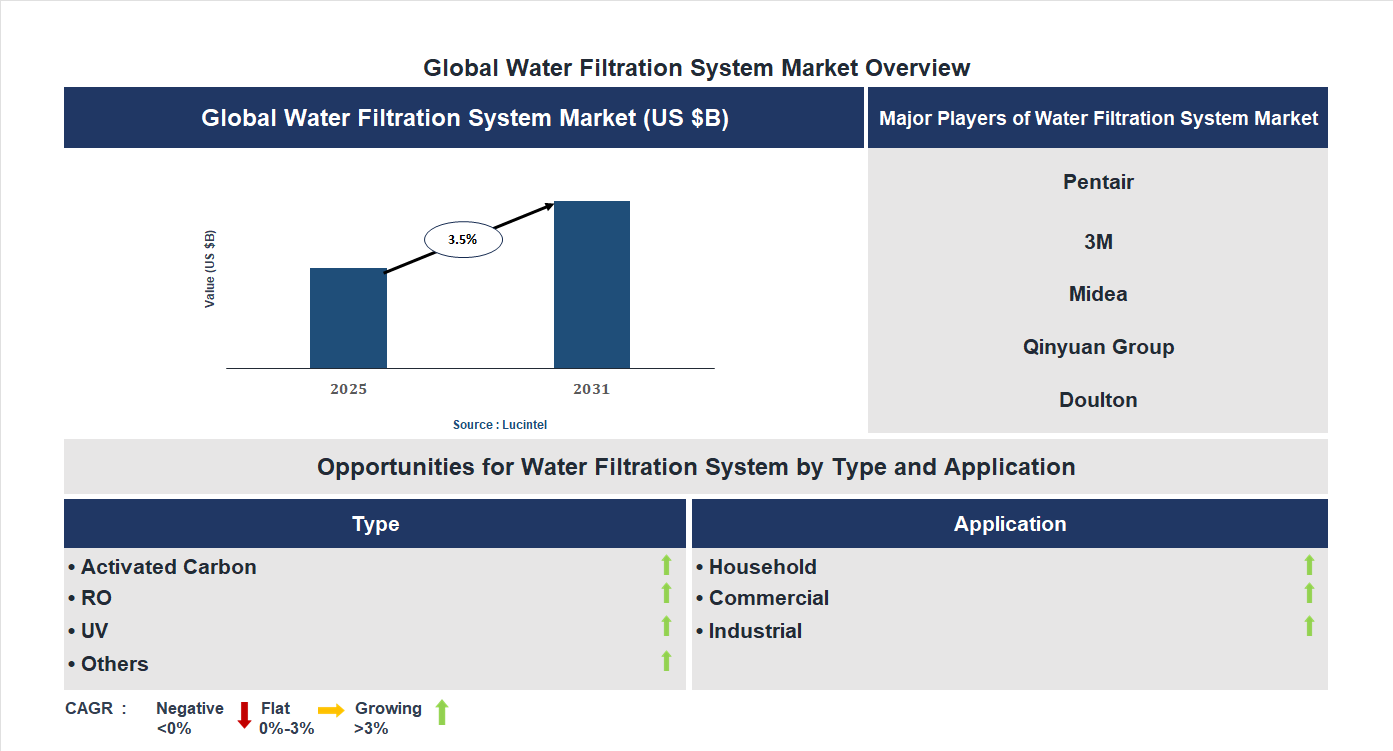
Key data points: The growth forecast = 3.5% annually for the next 7 years. Scroll below to get more insights. This market report covers trends, opportunities and forecasts in water filtration system market to 2031 by type (activated carbon, RO, UV, and others), application (household, commercial, and industrial), and region (North America, Europe, Asia Pacific, and the Rest of the World)
We'll send your sample report shortly.
• Lucintel forecasts that, within the type category, RO is expected to witness the highest growth over the forecast period.
• Within the application category, household is expected to witness the highest growth.
• In terms of region, APAC is expected to witness the highest growth over the forecast period. Gain valuable insights for your business decisions with our comprehensive 150+ page report. Sample figures with some insights are shown below.
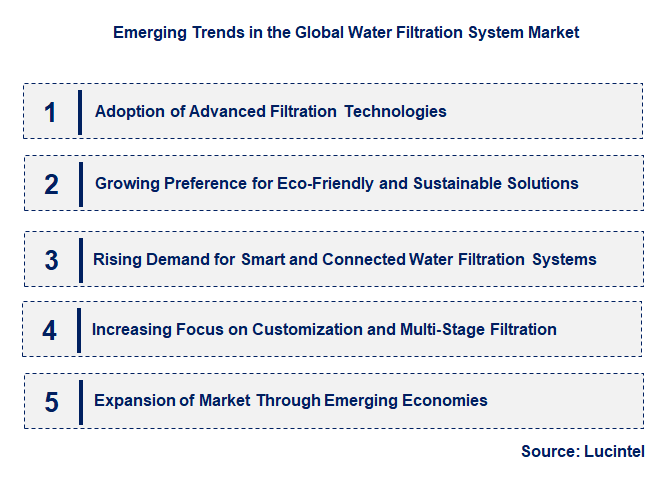
• Adoption of Advanced Filtration Technologies: The market is witnessing a shift toward innovative filtration methods such as reverse osmosis, UV purification, and nanotechnology. These technologies offer higher efficiency in removing contaminants like heavy metals, bacteria, and viruses, ensuring safer drinking water. As consumers become more health-conscious, demand for these advanced systems increases, prompting manufacturers to invest in R&D. This trend enhances product performance, reduces maintenance costs, and broadens application scopes, including residential, commercial, and industrial sectors, ultimately elevating the overall quality standards in water filtration.
• Growing Preference for Eco-Friendly and Sustainable Solutions: Environmental concerns are driving the demand for sustainable water filtration options. Manufacturers are adopting biodegradable materials, reducing plastic waste, and designing energy-efficient systems to minimize carbon footprints. The use of renewable energy sources, such as solar-powered filters, is also gaining traction. Consumers are increasingly favoring brands that demonstrate environmental responsibility, influencing product development and marketing strategies. This trend not only helps in reducing environmental impact but also aligns with global sustainability goals, fostering long-term market growth and consumer loyalty.
• Rising Demand for Smart and Connected Water Filtration Systems: Integration of IoT and smart technology into water filtration products is transforming user experience. Connected systems enable real-time monitoring of water quality, filter lifespan, and system performance via mobile apps. This facilitates proactive maintenance, reduces operational costs, and ensures consistent water safety. The convenience and transparency offered by smart systems appeal to tech-savvy consumers and commercial users alike. As connectivity becomes more affordable and widespread, the adoption of intelligent water filtration solutions is expected to accelerate, leading to more efficient water management and enhanced consumer trust.
• Increasing Focus on Customization and Multi-Stage Filtration: Consumers and industries are seeking tailored solutions that address specific water quality issues. Multi-stage filtration systems combining various technologies—such as sediment filters, activated carbon, and UV sterilization—are gaining popularity for their comprehensive purification capabilities. Customization options allow users to select systems based on local water conditions, usage requirements, and budget constraints. This trend promotes higher satisfaction and better health outcomes, encouraging manufacturers to develop versatile, modular products. It also opens avenues for niche markets and specialized applications, further diversifying the market landscape.
• Expansion of Market Through Emerging Economies: Rapid urbanization, industrialization, and increasing awareness of water safety are fueling market growth in developing regions such as Asia-Pacific, Africa, and Latin America. These areas often face water scarcity and contamination issues, creating significant demand for affordable and effective filtration solutions. Local manufacturers are entering the market, often offering cost-effective products tailored to regional needs. International companies are also expanding their presence through partnerships and distribution channels. This geographic diversification not only boosts overall market size but also encourages innovation tailored to diverse environmental and socio-economic contexts, fostering inclusive growth in the water filtration industry. In summary, these trends are collectively reshaping the water filtration system market by driving technological innovation, emphasizing sustainability, integrating smart features, enabling customization, and expanding into emerging markets. These developments are leading to more efficient, eco-friendly, and user-centric solutions, ultimately transforming how clean water is accessed and managed worldwide.
• Technological Innovations: Advanced filtration technologies such as reverse osmosis, UV purification, and nanotechnology are improving water quality and efficiency. These innovations enable removal of contaminants like heavy metals, bacteria, and viruses more effectively, expanding application scopes. The impact is increased consumer confidence and market growth, as products become more reliable and affordable.
• Growing Adoption of Smart Filtration Systems: Integration of IoT and smart sensors into filtration units allows real-time monitoring and maintenance. Consumers and businesses benefit from enhanced convenience, reduced operational costs, and improved water quality management. This trend is driving demand for connected systems and creating new revenue streams for manufacturers.
• Rising Regulatory Standards: Governments worldwide are implementing stricter water quality regulations, prompting manufacturers to upgrade products to meet these standards. This ensures safer drinking water and encourages innovation. The impact is a more competitive market with higher quality benchmarks, fostering consumer trust and market expansion.
• Increased Focus on Sustainability: Eco-friendly filtration solutions, such as reusable filters and energy-efficient systems, are gaining popularity. Companies are emphasizing sustainable practices to reduce environmental impact. This shift appeals to environmentally conscious consumers and supports regulatory compliance, boosting market growth.
• Expansion in Emerging Markets: Developing regions are witnessing increased investments in water infrastructure and filtration systems due to water scarcity and pollution concerns. This expansion opens new markets and diversifies revenue sources. The impact is accelerated global market growth and greater access to clean water in underserved areas. In summary, technological advancements, smart system integration, stricter regulations, sustainability efforts, and market expansion in emerging regions are collectively transforming the water filtration system market. These developments are leading to more efficient, accessible, and environmentally friendly solutions, driving sustained growth and innovation across the industry.
• Residential Applications: Growing health consciousness and urbanization are driving demand for advanced home water filtration systems. Consumers seek reliable solutions for safe drinking water, prompting innovations in multi-stage filters and smart systems. This growth enhances market penetration in urban and suburban areas, increasing revenue streams for manufacturers and expanding access to clean water at the household level.
• Commercial Applications: The hospitality, foodservice, and retail sectors are increasingly adopting sophisticated filtration systems to ensure water quality and comply with health standards. This trend boosts demand for high-capacity, customizable solutions, fostering innovation in filtration technology. It also opens new revenue channels for providers targeting commercial establishments seeking to enhance customer satisfaction and safety.
• Industrial Applications: Industries such as pharmaceuticals, manufacturing, and energy require high-purity water for their processes. The need for efficient, scalable filtration solutions presents opportunities for technological advancements like membrane filtration and automation. These innovations improve operational efficiency, reduce costs, and support industrial compliance with environmental regulations.
• Municipal Applications: Governments and municipalities are investing in large-scale water treatment infrastructure to address aging systems and water scarcity issues. This creates opportunities for integrated, sustainable filtration solutions that are cost-effective and environmentally friendly. Such developments help improve public health outcomes and ensure compliance with regulatory standards.
• Outdoor and Recreational Applications: The rising popularity of outdoor activities and sports necessitates portable and durable water filtration devices. Innovations in lightweight, user-friendly systems cater to campers, hikers, and travelers, expanding market reach. This segments growth supports outdoor safety and promotes sustainable water practices in remote locations. In summary, these growth opportunities across key applications are significantly impacting the water filtration system market by driving innovation, expanding market reach, and addressing diverse consumer and industrial needs. As these opportunities evolve, they will foster increased adoption, technological advancements, and sustainable water management solutions, shaping the future of the industry.
• Technological Innovation: The continuous development of advanced filtration technologies such as reverse osmosis, UV purification, and nanofiltration enhances system efficiency and effectiveness. These innovations meet increasing consumer demand for safe, clean drinking water and enable manufacturers to offer more reliable and energy-efficient products. As technology evolves, costs tend to decrease, making water filtration systems more accessible to a broader consumer base. This ongoing innovation fosters market growth by expanding product offerings and improving performance standards.
• Rising Health Awareness and Water Pollution Concerns: Growing awareness about waterborne diseases and the health benefits of clean water significantly drive market demand. Consumers are increasingly seeking reliable filtration solutions to eliminate contaminants like bacteria, viruses, heavy metals, and chemicals. The rise in water pollution levels due to industrialization and urbanization further amplifies the need for effective filtration systems, especially in developing regions. This trend encourages households, commercial entities, and governments to invest in advanced water purification solutions, fueling market expansion.
• Urbanization and Population Growth: Rapid urbanization and population growth in emerging economies increase the demand for safe drinking water. As urban areas expand, the strain on existing water infrastructure intensifies, leading to a higher reliance on point-of-use filtration systems. Additionally, increased household water consumption and the need for portable solutions in urban settings contribute to market growth. This demographic shift creates a sustained demand for innovative, scalable, and affordable water filtration systems tailored to urban needs.
• Regulatory Frameworks and Government Initiatives: Governments worldwide are implementing strict water quality standards and promoting water safety through policies and subsidies. Regulations such as the Safe Drinking Water Act in the U.S. and similar standards in other countries compel consumers and industries to adopt filtration systems. Government initiatives aimed at providing clean water access in rural and underserved areas further stimulate market growth. These regulatory and policy measures create a favorable environment for market players to innovate and expand their product reach. The challenges facing this water filtration system market include:-
• High Installation and Maintenance Costs: The initial investment required for advanced water filtration systems can be substantial, especially for large-scale or commercial applications. Ongoing maintenance, filter replacements, and energy consumption add to the total cost, making it less affordable for low-income households and small businesses. These financial barriers limit market penetration in developing regions and slow down overall adoption rates, despite the increasing demand for clean water.
• Regulatory Compliance and Certification Complexities: Navigating diverse and evolving regulatory standards across different regions poses significant challenges for manufacturers. Obtaining necessary certifications and ensuring compliance with local water quality standards can be time-consuming and costly. Non-compliance risks legal penalties and product recalls, which can hinder market entry and expansion. This complexity often discourages new entrants and complicates the supply chain for existing players.
• Technological Limitations and Reliability Issues: Despite advancements, some filtration technologies face limitations such as membrane fouling, limited lifespan, and inconsistent performance under varying water conditions. These issues can compromise water quality and increase maintenance costs. Technological reliability remains a concern, especially in remote or resource-constrained settings, where access to technical support is limited. Overcoming these limitations is crucial for building consumer trust and expanding market reach. In summary, the water filtration system market is driven by technological advancements, health awareness, urbanization, and supportive regulations, which collectively foster growth and innovation. However, high costs, regulatory hurdles, and technological limitations present significant challenges that could impede market expansion. Addressing these issues through innovation, cost reduction, and regulatory harmonization will be vital for sustained growth. Overall, the markets future depends on balancing these drivers and challenges to meet increasing global demand for safe, clean water solutions.
• Pentair
• 3M
• Midea
• Qinyuan Group
• Doulton
• Hanston
• Culligan International
• AQUAPHOR
• Haier
• Coway
• Activated Carbon
• RO
• UV
• Others
• Household
• Commercial
• Industrial
• North America
• Europe
• Asia Pacific
• The Rest of the World
• United States: The US market has seen rapid adoption of advanced filtration technologies, including smart and IoT-enabled systems. Major players are investing in R&D to develop eco-friendly and energy-efficient products. Regulatory standards like NSF certifications are driving quality improvements. The demand for home filtration systems has surged, especially post-pandemic, emphasizing health and safety. Commercial and industrial sectors are also adopting innovative solutions to meet stringent water quality standards. The US market is characterized by a focus on sustainability and technological integration, fostering growth and innovation.
• China: China’s water filtration market is expanding swiftly due to urbanization and increasing water pollution concerns. The government’s initiatives to improve water quality and infrastructure are boosting demand for advanced filtration systems. Local manufacturers are investing in R&D to develop cost-effective and efficient products tailored to domestic needs. The adoption of smart filtration systems is rising, supported by digital infrastructure growth. The market is also driven by rising consumer awareness about water safety and government regulations on water quality standards. Overall, China is becoming a significant player in the global water filtration industry.
• Germany: Germany’s market emphasizes high-quality, sustainable filtration solutions aligned with strict EU regulations. The focus is on eco-friendly materials and energy-efficient systems. Innovations in membrane technology and water recycling are prominent. The country’s strong environmental policies and consumer preference for green products are shaping market trends. Germany also leads in integrating smart technologies into filtration systems for better monitoring and maintenance. The industrial sector is adopting advanced filtration to meet environmental standards. Overall, Germany’s market is characterized by a commitment to sustainability, innovation, and regulatory compliance.
• India: India’s water filtration market is witnessing rapid growth due to increasing water pollution and inadequate municipal infrastructure. The rising middle class and awareness campaigns are driving demand for affordable and effective filtration solutions. Local companies are expanding their product portfolios with innovative and low-cost systems. The government’s initiatives like the Jal Jeevan Mission are promoting water safety and access. Urban and rural markets are both expanding, with a focus on portable and household filtration devices. The market is also seeing a rise in demand for solar-powered and eco-friendly systems, reflecting a shift towards sustainable solutions.
• Japan: Japan’s market is characterized by advanced technology adoption and a focus on health and safety standards. The country emphasizes high-performance filtration systems for both residential and industrial use. Innovations include nanotechnology and smart filtration systems with real-time monitoring. Japan’s aging population and increasing health consciousness are driving demand for reliable and safe water solutions. The government’s strict regulations on water quality and environmental sustainability influence market trends. Japanese companies are investing in R&D to develop cutting-edge, eco-friendly filtration products. Overall, Japan’s market is driven by technological innovation, regulatory standards, and a focus on health and environmental sustainability.


• Pentair
• 3M
• Midea
• Qinyuan Group
• Doulton
• Hanston
• Culligan International
• AQUAPHOR
• Haier
• Coway Q5. Which water filtration system market segment will be the largest in future? Answer: Lucintel forecasts that, within the type category, RO is expected to witness the highest growth over the forecast period. Q6. In water filtration system market, which region is expected to be the largest in next 5 years? Answer: In terms of region, APAC is expected to witness the highest growth over the forecast period. Q7. Do we receive customization in this report? Answer: Yes, Lucintel provides 10% customization without any additional cost.


Choose a license that fits your team. Instant PDF delivery.
Prices exclude taxes. Instant delivery. Custom licensing available on request.
Market Report · July 31, 2026
Market Report · July 22, 2026
Market Report · July 20, 2026
Trusted partner for strategic intelligence and business growth


Receive a complimentary market analysis tailored to your industry. Our analysts will identify key growth opportunities and competitive dynamics specific to your business.

Market size, growth rate, and key trend analysis for your specific sector.

Top competitor positioning and market share analysis.

Strategic recommendations backed by data-driven insights.
Get curated market intelligence and competitive moves straight to your inbox.
By subscribing, you agree to receive our monthly insights. Unsubscribe anytime.
Receive a complimentary market analysis tailored to your industry. Our analysts will identify key growth opportunities and competitive dynamics specific to your business.
Market size, growth rate, and key trend analysis for your specific sector.
Top competitor positioning and market share analysis.
Strategic recommendations backed by data-driven insights.
Get curated market intelligence, emerging trends, and competitive moves straight to your inbox each month.
By subscribing, you agree to receive our monthly insights. Unsubscribe anytime.
We'll send your sample report shortly.