
Market Report · July 29, 2026

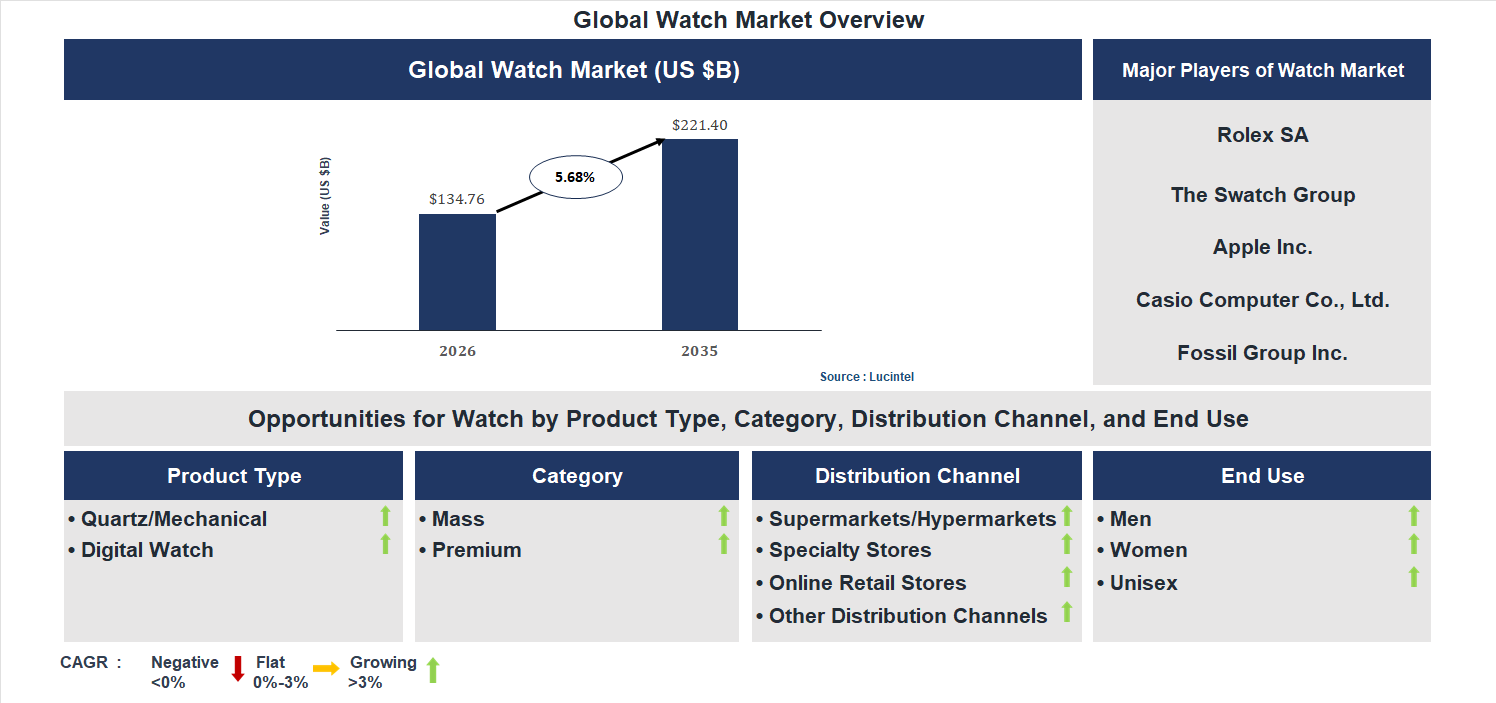
Key data points: The market size in 2035 = $222 billion, growth forecast = 0.068 annually for the next 8 years. Scroll below to get more insights. This market report covers trends, opportunities and forecasts in watch market to 2035 by product type (quartz/mechanical and digital watch), category (mass and premium), distribution channel (supermarkets/hypermarkets, specialty stores, online retail stores, and others), end use (men, women, and unisex), and region (North America, Europe, Asia Pacific, and the Rest of the World)
We'll send your sample report shortly.
• Lucintel forecasts that, within the product type category, quartz/mechanical is expected to witness higher growth over the forecast period.
• Within the distribution channel category, specialty store is expected to witness the highest growth.
• In terms of region, APAC is expected to witness the highest growth over the forecast period. Gain valuable insights for your business decisions with our comprehensive 150+ page report. Sample figures with some insights are shown below.
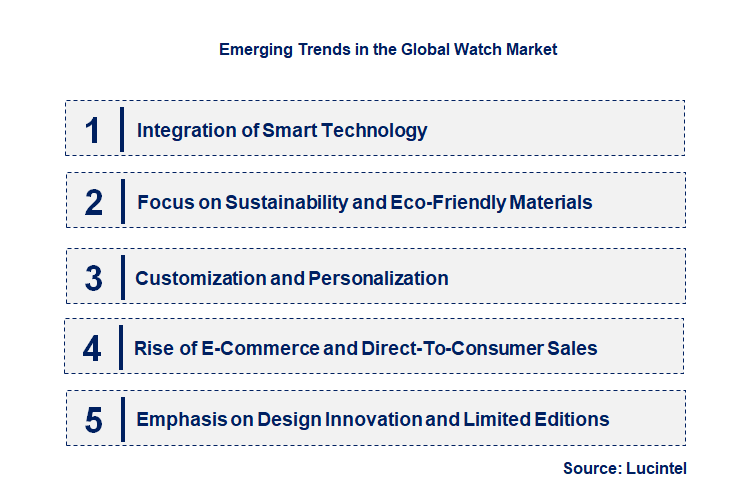
• Integration of Smart Technology: The rise of smartwatches is revolutionizing the market by offering multifunctional devices that combine timekeeping with health tracking, notifications, and apps. Consumers now prefer watches that serve as extensions of their smartphones, providing convenience and connectivity. This trend is driving traditional brands to incorporate digital features, creating hybrid models that appeal to tech-savvy users. The integration enhances user engagement and opens new revenue streams, making smartwatches a dominant segment in the industry.
• Focus on Sustainability and Eco-Friendly Materials: Increasing environmental awareness is prompting brands to adopt sustainable practices. Use of recycled metals, biodegradable straps, and eco-conscious packaging is becoming standard. Consumers are more inclined to purchase from brands demonstrating environmental responsibility, influencing product development and marketing strategies. This trend not only reduces the ecological footprint but also enhances brand loyalty and appeals to a broader demographic, especially younger consumers who prioritize sustainability.
• Customization and Personalization: Consumers are seeking unique, personalized watches that reflect their individual style and preferences. Brands are offering customizable options such as interchangeable straps, engraved details, and modular designs. Digital platforms enable consumers to design their own watches, fostering a sense of ownership and emotional connection. This trend increases customer satisfaction and differentiates brands in a competitive market, driving higher sales and brand loyalty.
• Rise of E-Commerce and Direct-to-Consumer Sales: The digital shift has accelerated the growth of online watch sales, bypassing traditional retail channels. Brands are leveraging e-commerce platforms and social media to reach global audiences directly. This approach reduces costs, allows for better customer engagement, and provides valuable data insights. The convenience of online shopping and targeted marketing strategies are making it easier for consumers to discover and purchase watches, significantly impacting distribution and sales models in the industry.
• Emphasis on Design Innovation and Limited Editions: To stand out in a crowded market, brands are focusing on innovative designs and limited-edition releases. Collaborations with designers, artists, and celebrities are creating buzz and exclusivity. Unique aesthetics, innovative materials, and storytelling elevate the perceived value of these products. This trend appeals to collectors and enthusiasts, fostering a sense of exclusivity and urgency. It also encourages brand differentiation and helps maintain consumer interest in a highly competitive environment. These trends are reshaping the watch market by integrating technology, emphasizing sustainability, enabling personalization, expanding digital sales channels, and fostering innovative designs. Together, they are driving growth, enhancing consumer engagement, and redefining what a watch can be in the modern era.
• Growth in Smartwatch Adoption: The increasing popularity of smartwatches is revolutionizing the market by blending traditional watch aesthetics with advanced technology. Consumers seek devices that offer fitness tracking, notifications, and health monitoring, driving demand across all age groups. This shift is expanding the market beyond conventional timepieces, fostering innovation and opening new revenue streams for established brands and startups. The integration of AI and IoT features further enhances user experience, making smartwatches a central accessory in daily life.
• Rising Demand for Sustainable Watches: Sustainability is becoming a key factor influencing consumer choices, prompting brands to adopt eco-friendly materials and ethical manufacturing practices. Recycled metals, biodegradable straps, and responsible sourcing are gaining popularity, appealing to environmentally conscious buyers. This trend not only enhances brand reputation but also aligns with global efforts to reduce environmental impact. As consumers prioritize sustainability, companies investing in green innovations are likely to gain competitive advantage and expand their market share.
• Expansion of Luxury Watch Collaborations: Collaborations between luxury brands and popular designers or celebrities are creating exclusive, limited-edition collections that attract affluent consumers and collectors. These partnerships generate buzz, increase brand visibility, and command premium prices. The fusion of high-end craftsmanship with contemporary culture appeals to a broader audience, boosting sales and brand loyalty. Such collaborations also foster innovation in design and marketing strategies, positioning luxury watchmakers at the forefront of industry trends.
• Technological Innovations in Watchmaking: Advances in materials, movement mechanisms, and digital features are transforming traditional watchmaking. Innovations like ceramic cases, lightweight alloys, and precision quartz movements improve durability and aesthetics. Digital features such as GPS, contactless payments, and health sensors enhance functionality. These technological strides enable brands to differentiate their products, meet evolving consumer expectations, and stay competitive in a rapidly changing market landscape, ultimately driving growth and innovation.
• Growing Preference for Customization and Personalization: Consumers increasingly seek personalized watches that reflect their individual style and identity. Brands are offering bespoke options, customizable dials, straps, and engravings, creating a more engaging shopping experience. This trend fosters deeper customer loyalty and allows brands to command higher prices. The rise of online platforms and virtual try-on tools further facilitates customization, making personalized watches accessible to a wider audience. This shift is significantly impacting market dynamics by emphasizing unique, consumer-centric products. These developments are collectively reshaping the watch market by fostering innovation, sustainability, and personalization. The integration of technology and eco-conscious practices is expanding consumer choices and driving growth. Luxury collaborations and customization options are elevating brand appeal and market differentiation. Overall, these opportunities are creating a more dynamic, competitive, and sustainable industry, positioning the market for continued expansion and evolution in the coming years.
• Integration of Smart Technology into Traditional Watches: The incorporation of smart features such as fitness tracking, notifications, and connectivity into traditional watch designs is transforming the market. Consumers seek multifunctional devices that combine style with technology, prompting brands to innovate. This convergence appeals to tech-savvy users and health-conscious individuals, expanding the customer base. Manufacturers are investing in R&D to develop hybrid watches that offer both classic aesthetics and modern functionalities, fueling market growth.
• Expansion of Luxury Watch Brands into Emerging Markets: Luxury watch brands are increasingly targeting emerging economies with rising disposable incomes and growing luxury consumption. By establishing local boutiques, offering customized services, and leveraging digital platforms, these brands aim to capture new customer segments. This expansion not only boosts sales but also enhances brand visibility and prestige. As economic growth continues in regions like Asia and Africa, luxury watch sales are expected to see significant upticks, creating lucrative opportunities for market players.
• Adoption of Sustainable and Eco-Friendly Materials: Consumers are becoming more environmentally conscious, prompting watch manufacturers to adopt sustainable practices. Using recycled metals, biodegradable straps, and eco-friendly packaging appeals to eco-aware buyers. Brands that emphasize sustainability can differentiate themselves and build brand loyalty. This shift aligns with global environmental goals and regulatory pressures, encouraging innovation in materials and manufacturing processes. The sustainable watch segment is poised for rapid growth as consumer preferences favor eco-friendly products.
• Development of Specialized Watches for Niche Applications: Niche markets such as diving, aviation, and sports are driving demand for specialized watches with unique features like enhanced water resistance, altimeters, or chronographs. These watches cater to enthusiasts and professionals requiring precise and durable instruments. Innovations in materials and technology improve performance and reliability, expanding the market. As these niche segments grow, brands that develop tailored products can establish strong market positions and command premium pricing, fueling overall industry expansion.
• Increasing Adoption of E-Commerce and Digital Marketing Strategies: The shift to online sales channels and digital marketing is transforming how watches are marketed and sold. E-commerce platforms provide wider reach, convenience, and personalized shopping experiences. Brands leveraging social media, influencer collaborations, and virtual try-ons can engage younger consumers and global audiences effectively. This digital shift reduces reliance on traditional retail outlets, lowers costs, and accelerates product launches. As online sales grow, companies that optimize digital strategies will gain competitive advantages and expand their market share. These growth opportunities collectively shape a dynamic and expanding watch market landscape. Technological integration, geographic expansion, sustainability, niche specialization, and digital marketing are key drivers that will influence future industry trajectories. Companies that strategically capitalize on these areas can enhance their competitiveness, meet evolving consumer demands, and achieve sustained growth in a competitive environment. Embracing innovation and market diversification will be crucial for long-term success.
• Technological Innovation: The rapid development of smartwatches and wearable technology has revolutionized the market. Consumers now demand multifunctional devices that combine health tracking, communication, and entertainment. Advancements in sensors, battery life, and connectivity have made these devices more reliable and appealing. Companies investing in R&D are able to introduce innovative features, attracting tech-savvy consumers and expanding market share. The integration of AI and IoT further enhances user experience, driving demand for smarter, more personalized watches. This technological evolution is crucial for market growth and competitiveness.
• Rising Health and Fitness Awareness: Increasing awareness about health and wellness has significantly impacted the watch market, especially in the wearable segment. Consumers are seeking devices that monitor heart rate, sleep patterns, activity levels, and other vital signs. The proliferation of fitness apps and health data integration has made these watches essential tools for health-conscious individuals. This trend is supported by the growing prevalence of chronic diseases and a focus on preventive healthcare. As a result, manufacturers are developing specialized fitness watches with advanced sensors, encouraging broader adoption and expanding the market.
• Growing Urbanization and Lifestyle Changes: Urbanization has led to busier lifestyles, prompting consumers to seek convenient, multifunctional accessories like smartwatches. The need for quick access to notifications, navigation, and communication on the go has increased demand for wearable devices. Additionally, changing fashion trends favor stylish and customizable watches, blending technology with aesthetics. The rise of digital lifestyles and the desire for seamless connectivity have made watches an integral part of daily life, fueling market expansion across various demographics and regions.
• Expansion of E-commerce and Digital Marketing: The proliferation of online retail channels has made watches more accessible to a global audience. E-commerce platforms enable consumers to compare products, read reviews, and purchase with ease, boosting sales. Digital marketing strategies, including social media campaigns and influencer collaborations, have increased brand visibility and consumer engagement. This digital shift allows manufacturers to reach niche markets and younger consumers more effectively, accelerating market growth. The convenience and reach of online channels are pivotal in driving sales and expanding market penetration.
• Increasing Investment in Brand Development and Product Diversification: Companies are investing heavily in branding and product diversification to differentiate themselves in a competitive market. Launching new collections, collaborations, and limited editions attract consumers seeking exclusivity and innovation. Strong branding enhances customer loyalty and brand recognition, which are vital for sustained growth. Diversification into luxury, sports, and fashion segments broadens the consumer base and mitigates risks associated with market fluctuations. Strategic investments in marketing and product innovation are essential for maintaining competitive advantage and capturing emerging market segments. The challenges facing the watch market include:-
• Regulatory and Compliance Issues: The watch industry faces stringent regulations related to product safety, environmental standards, and trade policies. Compliance with international standards, such as RoHS and REACH, increases manufacturing costs and complexity. Additionally, data privacy concerns, especially with smartwatches collecting health and personal data, require adherence to strict privacy laws. Regulatory changes can delay product launches and impact market strategies. Navigating these legal frameworks is challenging for manufacturers, particularly those operating across multiple regions, and can hinder innovation and market expansion.
• Rapid Technological Obsolescence: The fast pace of technological change poses a significant challenge. Devices quickly become outdated as new features and innovations emerge, leading to shorter product life cycles. Companies must continuously invest in R&D to stay competitive, which increases costs. The risk of obsolescence can also result in excess inventory and reduced profit margins. Consumers may delay purchases anticipating newer models, affecting sales. Managing technological upgrades and maintaining relevance in a rapidly evolving market is a persistent challenge for industry players.
• Intense Competition and Price Pressures: The market is highly competitive, with numerous established brands and new entrants vying for consumer attention. Price wars and promotional strategies often erode profit margins. Differentiating products through innovation, design, and branding becomes crucial but challenging amid price sensitivity. Smaller players struggle to compete with larger corporations that benefit from economies of scale. The competitive landscape necessitates continuous innovation and marketing investment, which can strain resources and impact profitability. The watch market is driven by technological innovation, health awareness, urbanization, digital marketing, and brand diversification, which collectively foster growth and consumer engagement. However, regulatory complexities, rapid technological changes, and fierce competition pose significant challenges. These factors create a dynamic environment requiring strategic agility from market participants. While opportunities for expansion and innovation are substantial, addressing regulatory and competitive hurdles is essential for sustainable growth. Overall, the markets future hinges on balancing innovation with compliance and differentiation amidst evolving consumer preferences.
• Rolex SA
• The Swatch Group
• Apple Inc.
• Casio Computer Co., Ltd.
• Fossil Group Inc.
• Citizen Watch Co., Ltd.
• Seiko Holdings Corporation
• Timex Group B.V.
• Garmin Ltd.
• Samsung Electronics Co., Ltd.
• Quartz/Mechanical
• Digital Watch
• Mass
• Premium
• Supermarkets/Hypermarkets
• Specialty Stores
• Online Retail Stores
• Others
• Men
• Women
• Unisex
• North America
• Europe
• Asia Pacific
• The Rest of the World
• United States: The U.S. watch market has seen a surge in smartwatch adoption, driven by health and fitness trends. Luxury brands like Rolex and Apple continue to dominate, with increased focus on customization and digital integration. E-commerce sales have grown significantly, and brands are emphasizing sustainability and ethical sourcing to appeal to eco-conscious consumers. The market also witnesses a rising interest in vintage and collectible watches, blending tradition with modernity.
• China: China remains a major growth driver, with a booming luxury watch segment and expanding middle class. Local brands are gaining prominence through innovative designs and competitive pricing. The adoption of smartwatches is accelerating, supported by tech giants like Huawei and Xiaomi. E-commerce platforms such as Tmall and JD.com facilitate rapid sales growth. The market is also witnessing increased demand for personalized and limited-edition watches, reflecting a shift towards exclusivity.
• Germany: Germanys watch industry is characterized by a strong focus on precision engineering and high-quality craftsmanship. The country is home to renowned luxury brands like A. Lange & Söhne and Glacette Original. There is a growing interest in sustainable and ethically produced watches, aligning with European values. The market is also embracing smart technology, with traditional brands integrating digital features into their collections. Retail innovation and online presence are key to maintaining competitiveness.
• India: The Indian watch market is expanding rapidly, driven by urbanization and rising disposable incomes. Affordable and mid-range watches are popular, with brands like Titan and Sonata leading the segment. There is increasing demand for smartwatches, especially among young consumers seeking connectivity and fitness tracking. E-commerce channels are expanding, and local brands are innovating with stylish designs and features. The market also shows a growing preference for watches that combine functionality with fashion.
• Japan: Japans watch industry is renowned for its technological innovation and precision. Brands like Seiko and Citizen continue to lead, focusing on advanced features such as solar power and radio-controlled timekeeping. The market has a strong demand for both luxury and everyday watches, with a preference for minimalist and functional designs. Smartwatches are gaining popularity, integrating seamlessly with Japans tech-savvy culture. Sustainability and eco-friendly materials are increasingly incorporated into product lines, reflecting consumer values.


• Rolex SA
• The Swatch Group
• Apple Inc.
• Casio Computer Co., Ltd.
• Fossil Group Inc.
• Citizen Watch Co., Ltd.
• Seiko Holdings Corporation
• Timex Group B.V.
• Garmin Ltd.
• Samsung Electronics Co., Ltd. Q6. Which watch market segment will be the largest in future? Answer: Lucintel forecasts that, within the product type category, quartz/mechanical is expected to witness higher growth over the forecast period. Q7. In watch market, which region is expected to be the largest in next 5 years? Answer: In terms of region, APAC is expected to witness the highest growth over the forecast period. Q8. Do we receive customization in this report? Answer: Yes, Lucintel provides 10% customization without any additional cost.


Choose a license that fits your team. Instant PDF delivery.
Prices exclude taxes. Instant delivery. Custom licensing available on request.
Market Report · July 29, 2026
Market Report · July 15, 2026
Market Report · July 13, 2026
Trusted partner for strategic intelligence and business growth


Receive a complimentary market analysis tailored to your industry. Our analysts will identify key growth opportunities and competitive dynamics specific to your business.

Market size, growth rate, and key trend analysis for your specific sector.

Top competitor positioning and market share analysis.

Strategic recommendations backed by data-driven insights.
Get curated market intelligence and competitive moves straight to your inbox.
By subscribing, you agree to receive our monthly insights. Unsubscribe anytime.
Receive a complimentary market analysis tailored to your industry. Our analysts will identify key growth opportunities and competitive dynamics specific to your business.
Market size, growth rate, and key trend analysis for your specific sector.
Top competitor positioning and market share analysis.
Strategic recommendations backed by data-driven insights.
Get curated market intelligence, emerging trends, and competitive moves straight to your inbox each month.
By subscribing, you agree to receive our monthly insights. Unsubscribe anytime.
We'll send your sample report shortly.