
Report Feature
Warfarin Market Trends and Forecast
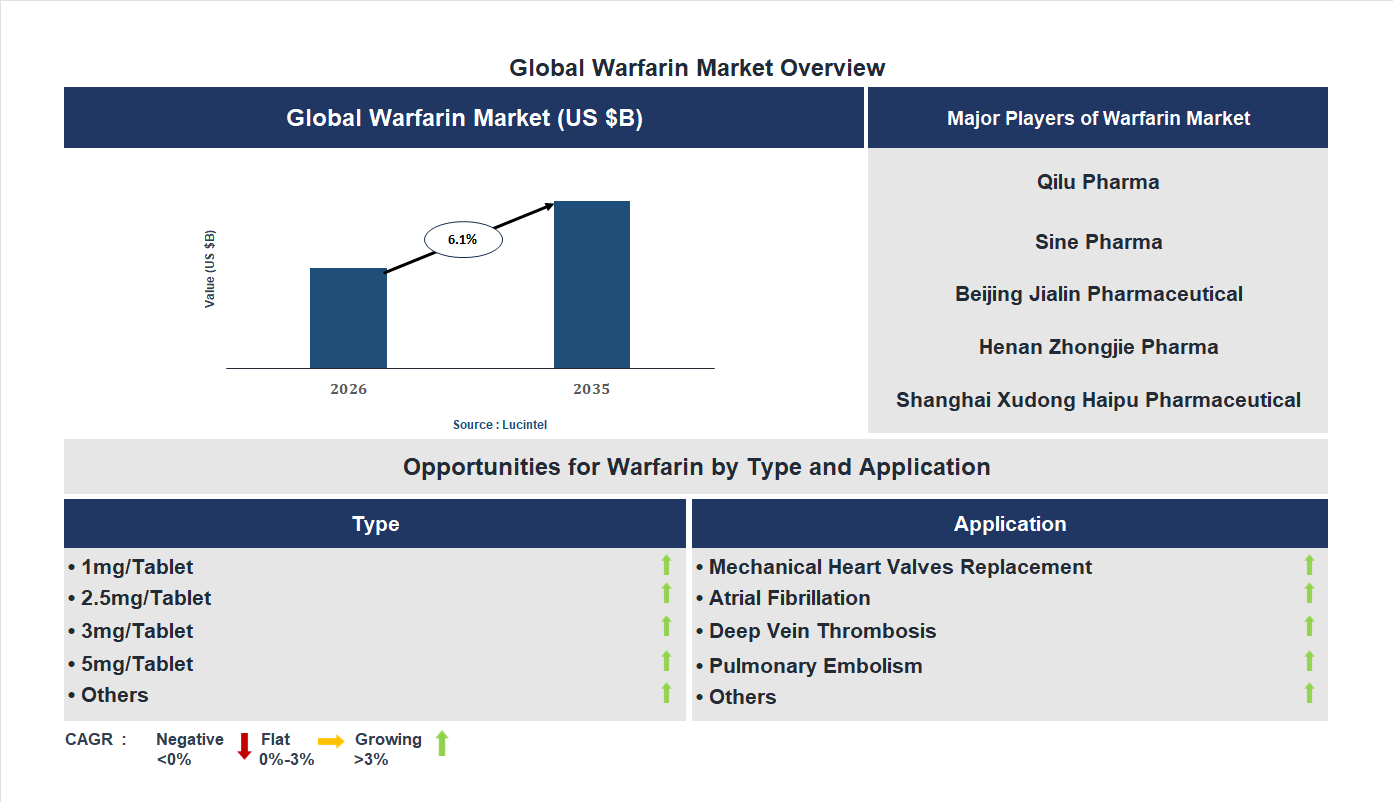
The future of the global warfarin market looks promising with opportunities in the mechanical heart valves replacement, atrial fibrillation, deep vein thrombosis, and pulmonary embolism markets. The global warfarin market is expected to reach an estimated $7.9 billion by 2035 with a CAGR of 5.1% from 2026 to 2035. The major drivers for this market are the increasing prevalence of cardiovascular disorders, the rising incidence of atrial fibrillation, and the growing demand for anticoagulant therapies.• Lucintel forecasts that, within the type category, 5mg/tablet is expected to witness the highest growth over the forecast period.
• Within the application category, atrial fibrillation is expected to witness the highest growth.
• In terms of region, APAC is expected to witness the highest growth over the forecast period. Gain valuable insights for your business decisions with our comprehensive 150+ page report. Sample figures with some insights are shown below.
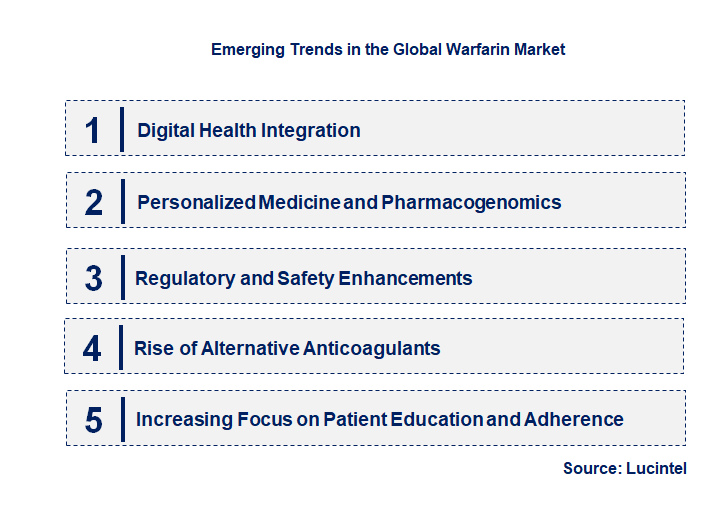
Emerging Trends in the Warfarin Market
The warfarin market is experiencing a significant transformation driven by technological advancements, regulatory changes, and evolving patient needs. As healthcare providers seek more effective and safer anticoagulant options, the market dynamics are shifting. Innovations in drug formulation, personalized medicine, and digital health are influencing market growth and competitive strategies. Additionally, increasing awareness of anticoagulation management and the rise of alternative therapies are impacting demand. These developments are collectively reshaping the landscape, creating new opportunities and challenges for stakeholders. Understanding these emerging trends is crucial for companies, healthcare providers, and policymakers aiming to navigate the future of anticoagulant therapy effectively.• Digital Health Integration: The incorporation of digital health tools such as mobile apps, remote monitoring devices, and telemedicine platforms is transforming warfarin management. These technologies enable real-time tracking of INR levels, medication adherence, and patient education, leading to improved safety and efficacy. Digital solutions facilitate personalized dosing and timely interventions, reducing adverse events. This trend enhances patient engagement and streamlines clinical workflows, making warfarin therapy more accessible and manageable, especially in remote or underserved areas. As digital health continues to evolve, it is expected to significantly influence market growth and patient outcomes.
• Personalized Medicine and Pharmacogenomics: Advances in pharmacogenomics are enabling tailored warfarin therapy based on individual genetic profiles. Variations in genes like CYP2C9 and VKORC1 affect drug metabolism and response, influencing dosing requirements. Personalized approaches reduce the risk of bleeding or clotting complications and improve therapeutic stability. This trend promotes safer, more effective treatment regimens and encourages the development of genetic testing services. As personalized medicine gains traction, it is likely to expand market opportunities and foster innovation in warfarin management, ultimately leading to better patient care.
• Regulatory and Safety Enhancements: Stricter regulatory standards and safety protocols are shaping the warfarin market. Enhanced guidelines for monitoring, dosing, and adverse event reporting aim to minimize risks associated with anticoagulation therapy. Regulatory agencies are emphasizing post-market surveillance and real-world evidence to ensure drug safety. These measures increase the complexity of market entry but also improve overall treatment safety. Companies investing in compliance and safety innovations are better positioned to succeed. This trend underscores the importance of robust regulatory frameworks in maintaining market integrity and patient trust.
• Rise of Alternative Anticoagulants: The development and approval of direct oral anticoagulants (DOACs) are challenging warfarins dominance. DOACs offer advantages such as fixed dosing, fewer food and drug interactions, and no routine monitoring. Their convenience and safety profile are driving increased adoption, especially among new patients. This shift impacts market share and prompts warfarin manufacturers to innovate or reposition their products. The competitive landscape is evolving, with a focus on cost-effectiveness and patient-centric solutions. The rise of alternatives is reshaping market strategies and influencing future growth trajectories.
• Increasing Focus on Patient Education and Adherence: Enhanced patient education initiatives are vital for effective warfarin therapy management. Proper understanding of medication, diet, and lifestyle impacts improves adherence and reduces complications. Healthcare providers are adopting comprehensive counseling programs and digital reminders to support patients. Improved adherence leads to better clinical outcomes and reduces healthcare costs associated with adverse events. This trend emphasizes the importance of patient-centric approaches and continuous engagement. As awareness grows, the market is likely to see increased demand for educational tools, support services, and adherence monitoring solutions, ultimately improving overall treatment success. In summary, these emerging trends are collectively reshaping the warfarin market by fostering innovation, enhancing safety, and improving patient outcomes. The integration of digital health, personalized medicine, regulatory improvements, competition from new therapies, and patient engagement strategies are driving a more dynamic and patient-focused landscape. Stakeholders who adapt to these changes will be better positioned to capitalize on future opportunities and address evolving healthcare needs.
Recent Development in the Warfarin Market
The warfarin market is experiencing significant shifts driven by advancements in healthcare, regulatory changes, and increasing global demand for anticoagulants. These developments are shaping the competitive landscape, influencing pricing strategies, and expanding therapeutic applications. Stakeholders are focusing on innovation, safety, and patient compliance to capitalize on emerging opportunities. As the market evolves, understanding these key developments is essential for strategic planning and investment decisions in this dynamic environment.• Growing Demand for Anticoagulants: The increasing prevalence of cardiovascular diseases and thromboembolic disorders worldwide is driving the demand for warfarin and other anticoagulants. This growth is supported by aging populations and rising awareness of blood clot prevention. Market players are expanding their distribution channels and investing in marketing to meet the rising need. The demand surge is also prompting research into improved formulations and dosing regimens, which could enhance patient outcomes and reduce adverse effects.
• Regulatory Reforms and Approval Processes: Recent regulatory changes aim to streamline approval processes for new anticoagulants and improve safety standards for warfarin. These reforms facilitate faster market entry for innovative products and ensure better quality control. Enhanced regulatory oversight is also encouraging manufacturers to develop safer, more effective formulations. This environment fosters innovation and competition, ultimately benefiting consumers through access to improved therapies and potentially lower costs.
• Technological Advancements in Monitoring: Innovations in point-of-care testing and digital health tools are transforming warfarin management. These technologies enable real-time monitoring of blood coagulation levels, improving dosing accuracy and reducing adverse events. The integration of AI and machine learning further personalizes treatment plans. Such advancements enhance patient safety, adherence, and overall treatment efficacy, making warfarin therapy more manageable and appealing for both clinicians and patients.
• Expansion of Therapeutic Indications: Warfarin is increasingly being used for new indications beyond traditional blood clot prevention, such as in cancer-associated thrombosis and mechanical heart valves. This expansion broadens the market scope and creates new revenue streams for manufacturers. It also encourages ongoing research to optimize dosing and minimize risks in these new applications. The diversification of indications enhances market resilience and offers growth opportunities amid changing healthcare needs.
• Increasing Focus on Patient Safety and Compliance: Market players are prioritizing safety features, such as improved formulations with fewer interactions and side effects. Educational initiatives and digital tools are being deployed to improve patient adherence and understanding of therapy. These efforts reduce complications and hospitalizations, ultimately lowering healthcare costs. Enhanced safety and compliance measures are critical for maintaining market competitiveness and meeting regulatory standards, fostering trust among healthcare providers and patients. These developments are significantly impacting the warfarin market by fostering innovation, expanding therapeutic uses, and improving safety and monitoring. The increased demand driven by global health trends, coupled with regulatory support and technological progress, is creating a more dynamic and competitive landscape. Overall, these opportunities are poised to enhance patient outcomes, stimulate market growth, and attract investments, shaping a more resilient and responsive industry environment.
Strategic Growth Opportunities in the Warfarin Market
The warfarin market is experiencing significant growth driven by increasing prevalence of cardiovascular diseases, expanding geriatric populations, and rising awareness of anticoagulant therapies. Technological advancements and regulatory approvals are further fueling market expansion. Strategic collaborations and product innovations are creating new opportunities for market players. As healthcare infrastructure improves globally, the demand for effective anticoagulant solutions like warfarin is expected to rise, making it a critical focus for pharmaceutical companies and healthcare providers aiming to improve patient outcomes and reduce thromboembolic events.• Growing Prevalence of Cardiovascular Diseases Drives Warfarin Demand: The increasing incidence of atrial fibrillation, deep vein thrombosis, and pulmonary embolism globally is boosting the need for effective anticoagulants like warfarin. As these conditions become more common, healthcare providers prefer warfarin due to its proven efficacy and cost-effectiveness. This trend is particularly prominent in developing countries with expanding healthcare access, creating a sustained demand for warfarin products and related monitoring services.
• Aging Population Enhances Market Growth Opportunities: The global geriatric population is expanding rapidly, leading to a higher prevalence of age-related cardiovascular conditions requiring anticoagulation therapy. Older adults are more susceptible to thromboembolic disorders, increasing the need for long-term anticoagulant management. This demographic shift is expected to sustain demand for warfarin, especially in regions with well-established healthcare systems, prompting manufacturers to focus on tailored dosing and monitoring solutions for elderly patients.
• Technological Advancements in Monitoring and Dosing Improve Patient Outcomes: Innovations such as point-of-care testing devices and pharmacogenetic testing are enhancing warfarin management by enabling precise dosing and real-time monitoring. These advancements reduce adverse events and improve therapeutic efficacy, encouraging wider adoption. Companies investing in these technologies are gaining competitive advantages, and healthcare providers are increasingly integrating them into clinical practice, thereby expanding the market for warfarin and associated monitoring services.
• Regulatory Approvals and Strategic Collaborations Expand Market Reach: Regulatory bodies approving new formulations and indications for warfarin facilitate market penetration. Strategic collaborations between pharmaceutical companies and healthcare organizations enable better distribution channels and patient education. These partnerships also foster innovation in formulation and delivery methods, making warfarin more accessible and acceptable. Such developments are crucial for expanding market share, especially in emerging markets where regulatory and distribution networks are evolving.
• Increasing Awareness and Adoption of Anticoagulant Therapy Boosts Market Growth: Growing awareness among healthcare professionals and patients about the benefits of anticoagulation therapy is driving increased adoption of warfarin. Educational initiatives and clinical guidelines promote its use for stroke prevention and other indications. Additionally, the shift from traditional to more advanced anticoagulants is gradually positioning warfarin as a cost-effective option, especially in resource-limited settings. This trend supports sustained market growth and encourages ongoing research and development efforts. In conclusion, these strategic growth opportunities are collectively poised to significantly influence the warfarin market, fostering innovation, expanding access, and improving patient care outcomes worldwide.
Warfarin Market Driver and Challenges
The warfarin market is influenced by a complex interplay of technological advancements, economic factors, and regulatory frameworks. Innovations in drug formulation and monitoring technologies have improved patient outcomes and expanded market reach. Economic considerations, such as healthcare spending and insurance coverage, directly impact accessibility and demand. Regulatory policies govern drug approval, safety standards, and prescribing practices, shaping market dynamics. Additionally, demographic shifts, like aging populations and the prevalence of cardiovascular diseases, further drive market growth. However, challenges such as safety concerns, stringent regulations, and competition from newer anticoagulants pose significant hurdles. Understanding these drivers and challenges is essential for stakeholders to navigate the evolving landscape effectively. The factors responsible for driving the warfarin market include:• Technological Innovations: The development of advanced monitoring devices, such as point-of-care INR testing, has enhanced the safety and efficacy of warfarin therapy. These innovations allow for more precise dose adjustments, reducing adverse events and improving patient compliance. Additionally, research into personalized medicine and pharmacogenomics has enabled tailored treatment plans, further expanding market potential. The integration of digital health tools and telemedicine has also facilitated remote management, making warfarin therapy more accessible, especially in remote areas. These technological advancements collectively boost market growth by improving treatment outcomes and patient safety.
• Increasing Prevalence of Cardiovascular Diseases: The rising incidence of atrial fibrillation, deep vein thrombosis, and pulmonary embolism has significantly increased demand for anticoagulants like warfarin. As cardiovascular diseases remain the leading causes of mortality worldwide, the need for effective anticoagulation therapy intensifies. Aging populations are particularly vulnerable, contributing to higher prescription rates. Moreover, the growing awareness of stroke prevention and thrombosis management fuels market expansion. This trend underscores the importance of warfarin as a cost-effective and well-established treatment option, ensuring sustained demand across healthcare settings.
• Regulatory Approvals and Guidelines: Stringent regulatory frameworks and clinical guidelines influence the market by ensuring drug safety and efficacy. Approval processes by agencies like the FDA and EMA validate warfarin’s continued use, while guidelines from organizations such as the American Heart Association recommend its use in specific patient populations. These regulations also promote standardization of dosing and monitoring protocols, enhancing treatment safety. However, evolving regulatory requirements can pose barriers to market entry for new formulations or competitors. Overall, regulatory oversight maintains market integrity and fosters confidence among healthcare providers and patients.
• Growing Awareness and Patient Education: Increased awareness about anticoagulation therapy benefits and risks has led to better patient compliance and proactive management. Educational initiatives by healthcare providers and advocacy groups emphasize the importance of regular monitoring and adherence, reducing adverse events. This heightened awareness encourages more patients to seek treatment, thereby expanding the market. Additionally, digital platforms and telehealth services facilitate patient engagement and education, further supporting market growth. As patients become more informed, demand for safe, effective, and easy-to-manage anticoagulant therapies like warfarin continues to rise.
• Strategic Collaborations and Market Expansion: Partnerships between pharmaceutical companies, healthcare providers, and technology firms drive innovation and market penetration. Collaborations facilitate the development of improved formulations, monitoring tools, and distribution channels. Market expansion into emerging economies is also a key driver, as increasing healthcare infrastructure and awareness boost demand. These strategic alliances enable companies to leverage resources, share expertise, and accelerate product development, ultimately expanding the market landscape. Such collaborations are vital for addressing unmet needs and adapting to changing healthcare environments. The challenges facing this warfarin market include:
• Safety Concerns and Adverse Events: Warfarin’s narrow therapeutic window necessitates careful dose management to prevent bleeding or thrombotic complications. Variability in patient response due to genetic factors, diet, and drug interactions complicates treatment. These safety concerns lead to frequent monitoring requirements and patient apprehension, limiting its use in some populations. The risk of severe adverse events also results in liability issues and impacts market perception. Addressing these safety challenges requires ongoing research, patient education, and improved monitoring, which can increase costs and complicate clinical management.
• Stringent Regulatory Environment: Evolving regulatory standards demand rigorous clinical data and compliance measures, prolonging approval processes for new formulations or indications. Post-marketing surveillance requirements add to the regulatory burden, increasing costs for manufacturers. These stringent regulations can delay product launches and limit innovation, especially for smaller companies with limited resources. Navigating complex regulatory landscapes is a significant challenge that can hinder market growth and competitiveness, necessitating substantial investments in compliance and quality assurance.
• Competition from Novel Anticoagulants: The emergence of direct oral anticoagulants (DOACs) such as rivaroxaban and apixaban offers alternatives to warfarin with advantages like fewer food and drug interactions and no routine monitoring. These benefits attract healthcare providers and patients, leading to a decline in warfarin prescriptions. The convenience and safety profile of DOACs threatens warfarin’s market share, compelling manufacturers to innovate or reduce prices. This competitive pressure necessitates strategic adaptations to maintain relevance in an evolving anticoagulation landscape. In summary, the warfarin market is shaped by technological progress, increasing disease prevalence, regulatory standards, and growing awareness, which collectively promote growth. However, safety concerns, regulatory hurdles, and competition from newer drugs pose significant challenges. These factors influence market dynamics, requiring stakeholders to innovate, adapt, and collaborate to sustain growth. The overall impact is a market that is both promising and competitive, demanding strategic agility to navigate future developments successfully.
List of Warfarin Companies
Companies in the market compete on the basis of product quality offered. Major players in this market focus on expanding their manufacturing facilities, R&D investments, infrastructural development, and leverage integration opportunities across the value chain. With these strategies warfarin companies cater increasing demand, ensure competitive effectiveness, develop innovative products & technologies, reduce production costs, and expand their customer base. Some of the warfarin companies profiled in this report include-• Qilu Pharma
• Sine Pharma
• Beijing Jialin Pharmaceutical
• Henan Zhongjie Pharma
• Shanghai Xudong Haipu Pharmaceutical
• Amneal Pharma
• TEVA
• Cipla
• Orion Corporation Orion Pharma
• BRISTOL MYERS SQUIBB
Warfarin Market by Segment
The study includes a forecast for the global warfarin market by type, application, and region.Warfarin Market by Type [Value from 2019 to 2035]:
• 1mg/Tablet
• 2.5mg/Tablet
• 3mg/Tablet
• 5mg/Tablet
• Others
Warfarin Market by Application [Value from 2019 to 2035]:
• Mechanical Heart Valves Replacement
• Atrial Fibrillation
• Deep Vein Thrombosis
• Pulmonary Embolism
• Others
Warfarin Market by Region [Value from 2019 to 2035]:
• North America
• Europe
• Asia Pacific
• The Rest of the World
Country Wise Outlook for the Warfarin Market
The warfarin market has experienced notable shifts driven by technological advancements, regulatory changes, and evolving healthcare needs across the globe. As anticoagulant therapies become more refined, countries are adopting innovative approaches to improve patient outcomes and manage risks associated with blood clotting disorders. The United States, China, Germany, India, and Japan are at the forefront of these developments, each contributing uniquely to the global landscape through research, policy adjustments, and market expansion. These countries efforts reflect a broader trend toward personalized medicine and safer, more effective anticoagulant options, shaping the future of warfarin therapy worldwide.• United States: The US market has seen increased adoption of digital health tools and personalized dosing algorithms, improving warfarin management. Regulatory agencies have emphasized safety, leading to updated guidelines and enhanced monitoring protocols. Investment in research for genetic testing to optimize therapy is also rising, aiming to reduce adverse events and improve patient outcomes.
• China: China is experiencing rapid growth in the warfarin market, driven by expanding healthcare infrastructure and rising prevalence of cardiovascular diseases. The government is promoting the use of warfarin through policy reforms and increased access to anticoagulant therapies. Local manufacturing of generic warfarin has increased, making treatment more affordable and accessible across rural and urban areas.
• Germany: Germanys market is characterized by stringent regulatory standards and a focus on clinical research. The country is advancing in pharmacogenomics to tailor warfarin therapy based on genetic profiles, reducing adverse reactions. Additionally, Germany is integrating digital health solutions for better patient monitoring and adherence.
• India: India is witnessing a surge in warfarin demand due to increasing cardiovascular and thromboembolic conditions. The market benefits from a large population base and growing awareness about anticoagulant therapy. Local pharmaceutical companies are expanding their product portfolios, and government initiatives aim to improve healthcare access and affordability.
• Japan: Japans market is marked by high adoption of advanced monitoring systems and a focus on minimizing side effects. The country is investing in research to develop safer anticoagulants and improve existing warfarin management practices. Aging population trends are also driving demand for effective anticoagulant therapies, including warfarin.

Features of the Global Warfarin Market
Market Size Estimates: Warfarin market size estimation in terms of value ($B). Trend and Forecast Analysis: Market trends (2019 to 2025) and forecast (2026 to 2035) by various segments and regions. Segmentation Analysis: Warfarin market size by type, application, and region in terms of value ($B). Regional Analysis: Warfarin market breakdown by North America, Europe, Asia Pacific, and Rest of the World. Growth Opportunities: Analysis of growth opportunities in different types, applications, and regions for the warfarin market. Strategic Analysis: This includes M&A, new product development, and competitive landscape of the warfarin market. Analysis of competitive intensity of the industry based on Porter’s Five Forces model.
FAQ
Q1. What is the market size and growth forecast for warfarin market? Answer: The global warfarin market is expected to reach an estimated $7.9 billion by 2035 and grow with a CAGR of 5.1% from 2026 to 2035. Q2. What are the major drivers influencing the growth of the warfarin market? Answer: The major drivers for this market are the increasing prevalence of cardiovascular disorders, the rising incidence of atrial fibrillation, and the growing demand for anticoagulant therapies. Q3. What are the major segments for warfarin market? Answer: The future of the warfarin market looks promising with opportunities in the mechanical heart valves replacement, atrial fibrillation, deep vein thrombosis, and pulmonary embolism markets. Q4. Who are the key warfarin market companies? Answer: Some of the key warfarin companies are as follows:• Qilu Pharma
• Sine Pharma
• Beijing Jialin Pharmaceutical
• Henan Zhongjie Pharma
• Shanghai Xudong Haipu Pharmaceutical
• Amneal Pharma
• TEVA
• Cipla
• Orion Corporation Orion Pharma
• BRISTOL MYERS SQUIBB Q5. Which warfarin market segment will be the largest in future? Answer: Lucintel forecasts that, within the type category, 5mg/tablet is expected to witness the highest growth over the forecast period. Q6. In warfarin market, which region is expected to be the largest in next 5 years? Answer: In terms of region, APAC is expected to witness the highest growth over the forecast period. Q7. Do we receive customization in this report? Answer: Yes, Lucintel provides 10% customization without any additional cost.
Table of Contents
List of Figures
List of Tables
Methodology
- In-depth interviews of the major players in this market
- Detailed secondary research from competitors’ financial statements and published data
- Extensive searches of published works, market, and database information pertaining to industry news, company press releases, and customer intentions
- A compilation of the experiences, judgments, and insights of Lucintel’s professionals, who have analyzed and tracked this market over the years.


Buy Now
Choose a license that fits your team. Instant PDF delivery.
Prices exclude taxes. Instant delivery. Custom licensing available on request.
Key Questions
- • What are some of the most promising, high-growth opportunities for the warfarin market by type (1mg/tablet, 2.5mg/tablet, 3mg/tablet, 5mg/tablet, and others), application (mechanical heart valves replacement, atrial fibrillation, deep vein thrombosis, pulmonary embolism, and others), and region (North America, Europe, Asia Pacific, and the Rest of the World)?
- • Which segments will grow at a faster pace and why?
- • Which region will grow at a faster pace and why?
- • What are the key factors affecting market dynamics? What are the key challenges and business risks in this market?
- • What are the business risks and competitive threats in this market?
- • What are the emerging trends in this market and the reasons behind them?
- • What are some of the changing demands of customers in the market?
- • What are the new developments in the market? Which companies are leading these developments?
- • Who are the major players in this market? What strategic initiatives are key players pursuing for business growth?
- • What are some of the competing products in this market and how big of a threat do they pose for loss of market share by material or product substitution?
- • What M&A activity has occurred in the last 7 years and what has its impact been on the industry? For any questions related to Warfarin Market, Warfarin Market Size, Warfarin Market Growth, Warfarin Market Analysis, Warfarin Market Report, Warfarin Market Share, Warfarin Market Trends, Warfarin Market Forecast, Warfarin Companies, write Lucintel analyst at email: helpdesk@lucintel.com. We will be glad to get back to you soon.


