
Market Report · July 13, 2026

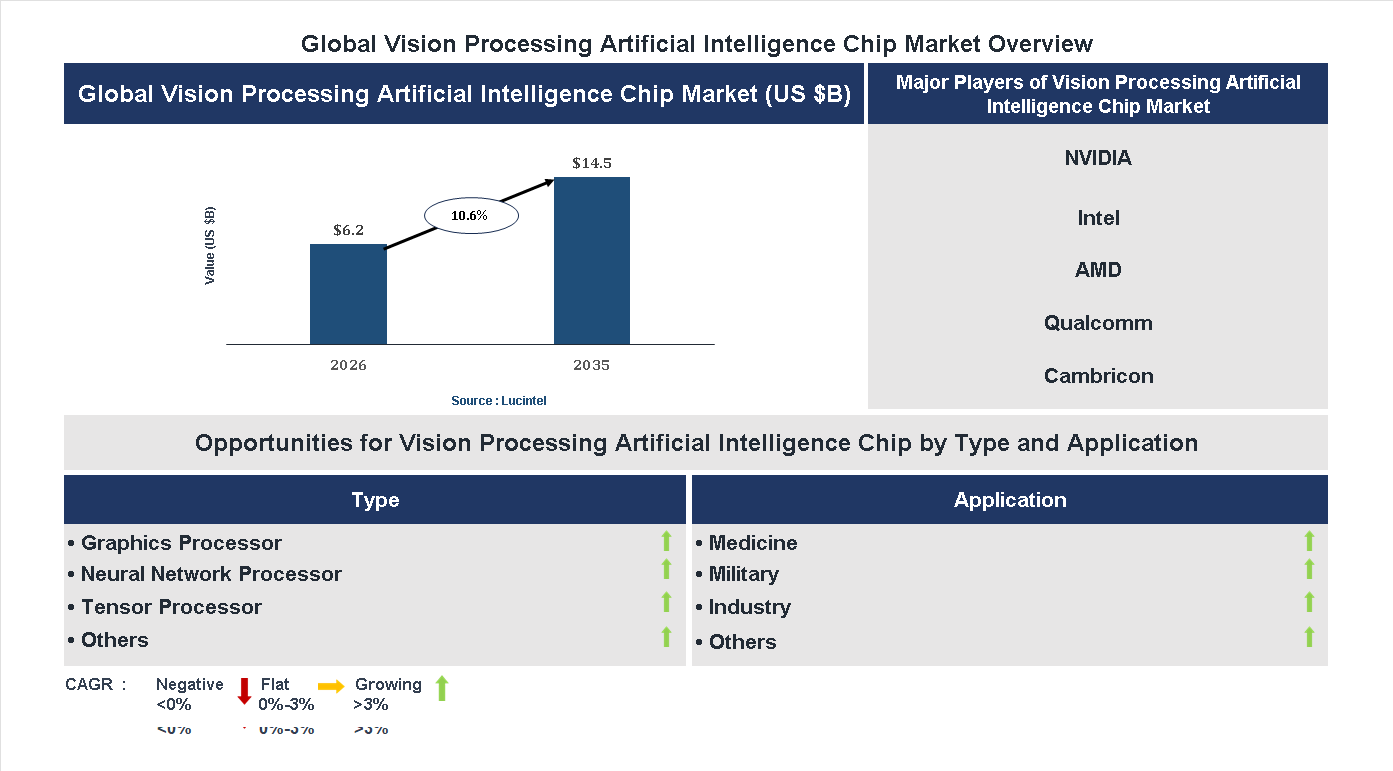
Key data points: The market size in 2035 = $14.5 billion, growth forecast = 10.6% annually for the next 8 years. Scroll below to get more insights. This market report covers trends, opportunities and forecasts in vision processing artificial intelligence chip market to 2035 by type (graphics processor, neural network processor, tensor processor, and others), application (medicine, military, industry, and others), and region (North America, Europe, Asia Pacific, and the Rest of the World)
We'll send your sample report shortly.
• Lucintel forecasts that, within the type category, neural network processor is expected to witness the highest growth over the forecast period.
• Within the application category, military is expected to witness the highest growth.
• In terms of region, APAC is expected to witness the highest growth over the forecast period. Gain valuable insights for your business decisions with our comprehensive 150+ page report. Sample figures with some insights are shown below.
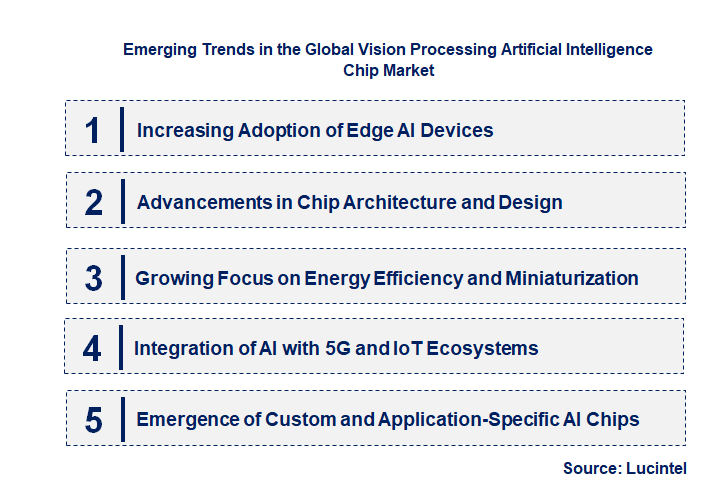
• Increasing Adoption of Edge AI Devices: The demand for edge AI devices is rising as industries seek real-time data processing without relying on cloud connectivity. These devices require compact, energy-efficient AI chips capable of performing complex vision tasks locally. This trend is driven by the need for faster decision-making, data privacy concerns, and reduced latency. As a result, chip manufacturers are developing specialized vision processing AI chips optimized for edge applications, which are transforming sectors like autonomous vehicles, smart cameras, and IoT devices by enabling smarter, more autonomous systems.
• Advancements in Chip Architecture and Design: Innovations in chip architecture, such as the integration of neural processing units (NPUs) and system-on-chip (SoC) designs, are significantly enhancing performance. These advancements allow for higher processing speeds, lower power consumption, and improved accuracy in visual data analysis. Companies are investing heavily in R&D to develop next-generation AI chips that can handle complex vision tasks more efficiently. This evolution is enabling more sophisticated applications in robotics, medical imaging, and augmented reality, thereby expanding the market’s capabilities and reach.
• Growing Focus on Energy Efficiency and Miniaturization: As AI chips become more powerful, there is a parallel emphasis on reducing energy consumption and physical size. Energy-efficient chips are crucial for battery-powered devices like drones, wearables, and mobile robots, where power constraints are critical. Miniaturization allows integration into smaller form factors, broadening application possibilities. This trend is pushing manufacturers to adopt new materials and innovative cooling techniques, resulting in more sustainable and versatile vision processing solutions that cater to a wider range of devices and environments.
• Integration of AI with 5G and IoT Ecosystems: The convergence of AI chips with 5G technology and IoT networks is creating new opportunities for real-time, high-speed visual data processing. This integration facilitates smarter surveillance systems, autonomous vehicles, and industrial automation with enhanced connectivity and data sharing. AI vision chips optimized for 5G enable rapid data transmission and processing at the edge, reducing latency and improving system responsiveness. This synergy is accelerating the deployment of intelligent, connected devices across various sectors, transforming how visual data is captured, analyzed, and acted upon in real-time.
• Emergence of Custom and Application-Specific AI Chips: The market is witnessing a shift towards custom-designed AI chips tailored for specific applications such as medical imaging, automotive vision systems, and retail analytics. These specialized chips offer optimized performance, lower latency, and better power efficiency compared to general-purpose solutions. Companies are increasingly investing in developing application-specific integrated circuits (ASICs) to meet unique industry requirements. This trend is enabling more precise and efficient vision processing solutions, fostering innovation, and providing competitive advantages in niche markets. These trends are collectively reshaping the vision processing artificial intelligence chip market by driving innovation, enhancing performance, and expanding application horizons. The focus on edge computing, energy efficiency, integration with emerging technologies, and custom solutions is creating a more versatile, efficient, and intelligent ecosystem. As these developments continue, the market is poised for significant growth, with new opportunities emerging across multiple sectors, ultimately transforming how visual data is processed and utilized worldwide.
• Growing Demand for Real-Time Image Processing: The market is expanding as industries require faster, more accurate real-time image analysis for applications like autonomous vehicles, security, and healthcare. Advanced AI chips enable quick decision-making, improving safety and efficiency. This demand drives innovation in chip architecture, leading to more powerful and energy-efficient solutions that meet the needs of high-speed processing environments. The trend is expected to continue, fueling market growth and technological development.
• Integration of AI Chips in Consumer Electronics: Increasing adoption of AI chips in smartphones, cameras, and wearable devices enhances user experience through improved image recognition, augmented reality, and smart features. This integration boosts product capabilities and differentiates brands in competitive markets. As consumer demand for smarter devices grows, manufacturers invest heavily in developing specialized vision processing chips, which accelerate market expansion and foster innovation in miniaturization and power efficiency.
• Advancements in Autonomous Vehicle Technology: AI vision chips are critical for the development of autonomous vehicles, providing real-time object detection, lane recognition, and environment mapping. These chips improve safety, reliability, and decision-making accuracy, accelerating the deployment of driverless cars. The automotive industrys focus on safety standards and regulatory approvals further propels market growth, encouraging investments in robust, high-performance vision processing solutions tailored for complex driving environments.
• Expansion in Surveillance and Security Systems: The need for intelligent surveillance systems with enhanced facial recognition, behavior analysis, and intrusion detection drives demand for advanced AI vision chips. These chips enable smarter, more efficient security infrastructure, reducing false alarms and improving response times. Governments and private sectors are investing heavily in upgrading security frameworks, which significantly boosts the market for specialized vision processing chips designed for high-resolution, real-time video analysis.
• Innovations in Healthcare Imaging and Diagnostics: AI vision chips are transforming medical imaging by enabling faster, more accurate diagnostics through enhanced image processing. Applications include MRI, CT scans, and pathology analysis, where real-time data interpretation improves patient outcomes. The healthcare sectors push for precision medicine and minimally invasive procedures fuels demand for sophisticated vision processing solutions, fostering market growth and encouraging collaboration between tech firms and medical device manufacturers. The overall impact of these developments is a dynamic, expanding market characterized by technological innovation, increased adoption across diverse sectors, and heightened competition. These opportunities are driving the evolution of smarter, faster, and more efficient vision processing AI chips, shaping the future landscape of the industry and opening new avenues for growth and investment.
• Enhanced Autonomous Vehicle Capabilities: The integration of vision processing AI chips in autonomous vehicles is crucial for real-time object detection, navigation, and safety features. These chips enable vehicles to process vast amounts of visual data quickly and accurately, improving decision-making and reducing accidents. As the automotive industry shifts toward fully autonomous systems, demand for high-performance vision AI chips will surge, fostering innovation and expanding market reach.
• Advancements in Healthcare Imaging and Diagnostics: Vision processing AI chips are transforming medical imaging by enabling faster, more accurate analysis of complex visual data. They facilitate real-time diagnostics, assist in early disease detection, and improve image resolution. The growing adoption of AI-powered imaging tools in hospitals and research centers presents a significant opportunity for chip manufacturers to cater to the healthcare sector’s need for precise, efficient visual data processing.
• Growth in Consumer Electronics and Augmented Reality Devices: The proliferation of smart devices, augmented reality (AR), and virtual reality (VR) applications relies heavily on advanced vision processing chips. These chips enhance user experiences through improved image recognition, gesture control, and immersive visuals. As consumer demand for innovative AR/VR products increases, the market for specialized vision AI chips will expand, driving technological development and competitive differentiation.
• Expansion in Surveillance and Security Systems: Vision processing AI chips are vital for modern surveillance systems, enabling real-time video analytics, facial recognition, and threat detection. The rising need for enhanced security in public spaces, enterprises, and smart cities fuels demand for efficient, high-capacity chips. This growth opportunity encourages manufacturers to develop scalable solutions that improve accuracy, reduce latency, and support large-scale deployment of intelligent security infrastructure.
• Increasing Adoption in Robotics and Industrial Automation: Vision processing AI chips are essential for robots and automated systems to interpret visual data for tasks such as quality inspection, navigation, and object manipulation. The industrial sector’s push toward automation and smart manufacturing creates a substantial market for these chips. Their ability to deliver high-speed processing with low power consumption supports the development of more autonomous, efficient, and adaptable robotic systems. The overall market growth is driven by these diverse opportunities, fostering innovation and expanding the application landscape of vision processing AI chips. As industries increasingly rely on intelligent visual data analysis, the market is poised for sustained expansion, technological breakthroughs, and competitive advancements.
• Technological Innovation: Rapid advancements in AI algorithms and hardware design are enabling the development of more efficient, powerful vision processing chips. These innovations improve image recognition, object detection, and real-time processing capabilities, making AI chips indispensable for applications like autonomous vehicles, surveillance, and robotics. As technology evolves, the market benefits from increased performance and reduced power consumption, fostering broader adoption across industries. Continuous R&D investments are fueling this growth, ensuring that AI chips keep pace with the increasing complexity of visual data processing needs.
• Growing Adoption of Autonomous Vehicles: The automotive industry is increasingly integrating vision processing AI chips to enable autonomous driving and advanced driver-assistance systems (ADAS). These chips facilitate real-time image analysis, obstacle detection, and decision-making, which are critical for vehicle safety and navigation. The rising demand for safer, smarter vehicles is a significant driver, supported by government regulations and consumer preferences for autonomous features. As automakers invest heavily in autonomous technology, the market for vision processing AI chips is expected to expand rapidly, driven by the need for high-performance, reliable visual data processing.
• Expansion in Surveillance and Security: The global security landscape is evolving, with increased reliance on intelligent surveillance systems. Vision processing AI chips enable real-time video analytics, facial recognition, and anomaly detection, enhancing security measures across public and private sectors. Governments and organizations are investing in smart surveillance infrastructure to improve safety and operational efficiency. The proliferation of IoT-enabled security devices and smart city initiatives further accelerates demand. This trend underscores the importance of advanced vision processing chips capable of handling vast amounts of visual data efficiently and accurately.
• Rise of Smart Devices and IoT: The proliferation of smart devices, including smartphones, drones, and IoT sensors, is fueling demand for compact, energy-efficient vision processing AI chips. These chips enable devices to perform complex visual tasks locally, reducing reliance on cloud processing and improving response times. The increasing integration of AI in consumer electronics and industrial applications is expanding the market. As IoT ecosystems grow, the need for scalable, high-performance vision processing solutions becomes critical, driving innovation and investment in this segment.
• Increasing Investment in AI and Visual Data Analytics: Governments, private enterprises, and research institutions are investing heavily in AI and visual data analytics to unlock new business opportunities and improve operational efficiencies. These investments support the development of advanced vision processing chips capable of handling large-scale data analysis, machine learning, and deep learning tasks. The focus on AI-driven insights across sectors such as healthcare, retail, and manufacturing is propelling market growth. This financial backing accelerates technological breakthroughs and broadens the application scope of vision processing AI chips. The challenges facing the vision processing artificial intelligence chip market include:
• High R&D and Manufacturing Costs: Developing advanced vision processing AI chips requires significant investment in research, development, and manufacturing infrastructure. The complexity of designing chips that balance high performance with low power consumption increases costs, which can limit profitability and market entry for smaller players. Additionally, the need for continuous innovation to stay ahead of competitors further escalates expenses. These high costs can slow down product development cycles and restrict the pace of market growth, especially in regions with limited funding or technological expertise.
• Technological Complexity and Integration Challenges: The integration of vision processing AI chips into various devices involves overcoming significant technical hurdles. Compatibility issues with existing hardware, software, and communication protocols can impede deployment. Ensuring real-time processing, low latency, and energy efficiency adds layers of complexity to chip design. Moreover, maintaining security and data privacy while processing sensitive visual data presents additional challenges. These technical barriers can delay product launches and increase costs, hindering widespread adoption and market expansion.
• Regulatory and Ethical Concerns: The deployment of vision processing AI chips raises concerns related to data privacy, surveillance, and ethical use of visual data. Stringent regulations and evolving legal frameworks can impose restrictions on data collection, storage, and processing, impacting product development and deployment strategies. Companies must navigate complex compliance requirements, which can increase operational costs and limit innovation. Public apprehension about privacy violations and misuse of surveillance technology also poses reputational risks, potentially slowing market growth and adoption. The Vision Processing AI Chip Market is driven by rapid technological advancements, increasing adoption in autonomous vehicles, expanding surveillance applications, growth in smart devices, and substantial investments in AI. However, high R&D costs, technical integration challenges, and regulatory concerns present significant hurdles. These factors collectively shape a competitive landscape that demands innovation, strategic planning, and compliance. While growth opportunities are substantial, addressing these challenges is crucial for sustainable development and market maturity. The overall impact of these drivers and challenges will determine the pace and direction of future market expansion, influencing stakeholders across industries.
• NVIDIA
• Intel
• AMD
• Qualcomm
• Cambricon
• Habana Labs
• Ceva
• Graphics Processor
• Neural Network Processor
• Tensor Processor
• Others
• Medicine
• Military
• Industry
• Others
• North America
• Europe
• Asia Pacific
• The Rest of the World
• United States: The US market has seen significant investments from tech giants like NVIDIA and Intel, focusing on developing high-performance AI chips for autonomous vehicles and data centers. Startups are also emerging with innovative solutions, and government initiatives are supporting AI research. The adoption of AI chips in consumer electronics and healthcare is accelerating, with new product launches emphasizing energy efficiency and real-time processing capabilities.
• China: China is rapidly advancing in AI chip technology, with major companies like Huawei and Alibaba investing heavily in domestic chip development to reduce reliance on foreign technology. The government’s strategic plans aim to boost local innovation, leading to breakthroughs in edge AI processing and integrated vision systems. Chinese firms are also expanding into automotive and surveillance markets, emphasizing high-speed, low-power AI chips.
• Germany: Germany’s focus is on industrial applications, with companies integrating AI vision chips into manufacturing and automation systems. The country is leveraging its strong engineering expertise to develop robust, reliable chips for industrial robots and quality control. Collaborations between academia and industry are fostering innovation, and government funding supports sustainable and energy-efficient AI chip solutions.
• India: India is witnessing a surge in AI chip startups and research initiatives aimed at affordable, scalable solutions for local markets. The government’s Digital India campaign encourages innovation in AI hardware, especially for healthcare, agriculture, and smart city projects. Companies are focusing on developing chips that balance performance with cost-effectiveness to serve the growing domestic demand.
• Japan: Japan emphasizes the integration of AI vision chips into robotics and consumer electronics, leveraging its advanced manufacturing capabilities. Companies are innovating in low-power, high-efficiency chips suitable for autonomous robots and IoT devices. The government promotes collaboration between industry and academia to foster cutting-edge research, aiming to maintain Japan’s leadership in precision and reliability in AI hardware.


• NVIDIA
• Intel
• AMD
• Qualcomm
• Cambricon
• Habana Labs
• Ceva Q6. Which vision processing artificial intelligence chip market segment will be the largest in future? Answer: Lucintel forecasts that, within the type category, neural network processor is expected to witness the highest growth over the forecast period. Q7. In vision processing artificial intelligence chip market, which region is expected to be the largest in next 5 years? Answer: In terms of region, APAC is expected to witness the highest growth over the forecast period. Q8. Do we receive customization in this report? Answer: Yes, Lucintel provides 10% customization without any additional cost.


Choose a license that fits your team. Instant PDF delivery.
Prices exclude taxes. Instant delivery. Custom licensing available on request.
Market Report · July 13, 2026
Market Report · July 13, 2026
Market Report · July 2, 2026
Trusted partner for strategic intelligence and business growth


Receive a complimentary market analysis tailored to your industry. Our analysts will identify key growth opportunities and competitive dynamics specific to your business.

Market size, growth rate, and key trend analysis for your specific sector.

Top competitor positioning and market share analysis.

Strategic recommendations backed by data-driven insights.
Get curated market intelligence and competitive moves straight to your inbox.
By subscribing, you agree to receive our monthly insights. Unsubscribe anytime.
Receive a complimentary market analysis tailored to your industry. Our analysts will identify key growth opportunities and competitive dynamics specific to your business.
Market size, growth rate, and key trend analysis for your specific sector.
Top competitor positioning and market share analysis.
Strategic recommendations backed by data-driven insights.
Get curated market intelligence, emerging trends, and competitive moves straight to your inbox each month.
By subscribing, you agree to receive our monthly insights. Unsubscribe anytime.
We'll send your sample report shortly.