
Market Report · July 29, 2026

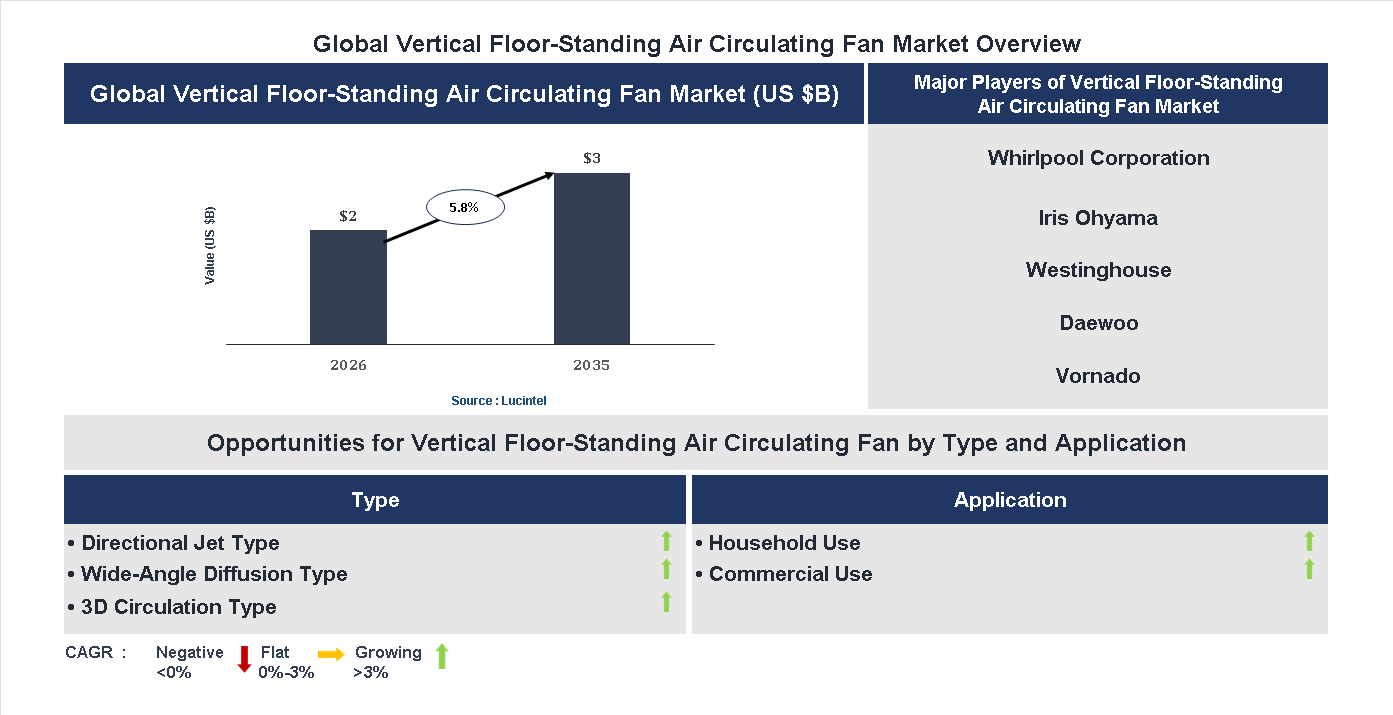
Key data points: The market size in 2035 = $3 billion, growth forecast = 5.8% annually for the next 8 years. Scroll below to get more insights. This market report covers trends, opportunities and forecasts in vertical floor-standing air circulating fan market to 2035 by type (directional jet type, wide-angle diffusion type, and 3D circulation type), application (household use and commercial use), and region (North America, Europe, Asia Pacific, and the Rest of the World)
We'll send your sample report shortly.
• Lucintel forecasts that, within the type category, 3D circulation type is expected to witness the highest growth over the forecast period.
• Within the application category, commercial use is expected to witness higher growth.
• In terms of region, APAC is expected to witness the highest growth over the forecast period. Gain valuable insights for your business decisions with our comprehensive 150+ page report. Sample figures with some insights are shown below.
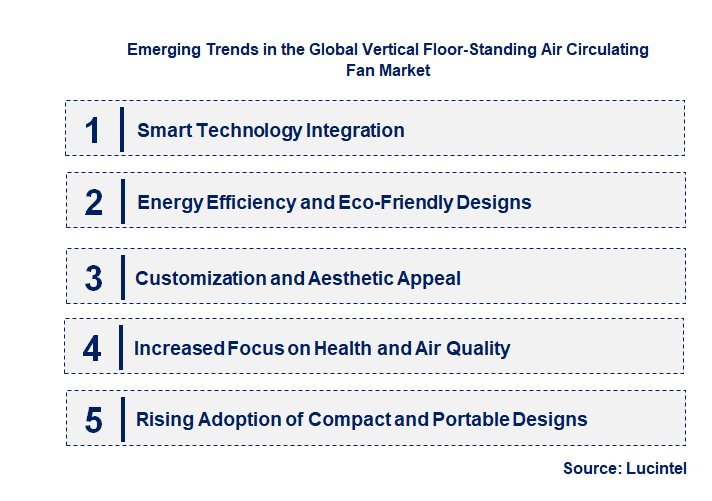
• Smart Technology Integration: The adoption of smart features is transforming the market by enabling remote control, voice activation, and automation. Consumers now prefer fans that can be integrated with home automation systems, offering convenience and energy efficiency. IoT-enabled fans can be controlled via smartphones or voice assistants, providing real-time adjustments and scheduling. This trend enhances user experience, reduces energy consumption, and aligns with the growing demand for connected home devices, thereby expanding market reach and product sophistication.
• Energy Efficiency and Eco-Friendly Designs: Increasing environmental awareness is driving demand for energy-efficient fans with eco-friendly features. Manufacturers are focusing on developing fans with lower power consumption, sustainable materials, and innovative designs that maximize airflow while minimizing energy use. Certifications like Energy Star are becoming important purchase criteria. This trend not only helps consumers reduce their carbon footprint but also aligns with regulatory standards, fostering market growth and encouraging sustainable manufacturing practices.
• Customization and Aesthetic Appeal: Consumers are seeking fans that complement their interior decor and personal preferences. The market is witnessing a rise in customizable options, including adjustable height, oscillation, and design elements that blend seamlessly with modern interiors. Aesthetic appeal is becoming as important as functionality, prompting manufacturers to offer sleek, stylish designs in various colors and finishes. This trend caters to a broader demographic, including homeowners and interior designers, and enhances product differentiation in a competitive market.
• Increased Focus on Health and Air Quality: The COVID-19 pandemic heightened awareness of indoor air quality and health. Fans equipped with air purification features, such as HEPA filters and ionizers, are gaining popularity. These products help improve indoor air quality by reducing airborne pollutants, allergens, and pathogens. The integration of health-focused features is reshaping product development, making air circulation fans not just cooling devices but also health and wellness tools, thereby expanding their market applications and consumer base.
• Rising Adoption of Compact and Portable Designs: The demand for space-saving, portable fans is increasing, especially in urban environments with limited space. These fans are lightweight, easy to move, and require minimal installation, making them ideal for both residential and commercial use. Innovations include foldable designs and rechargeable batteries, enhancing portability and convenience. This trend caters to consumers seeking flexible cooling solutions that can be used in multiple settings, including outdoor spaces, offices, and small apartments, thus broadening market opportunities. These trends are collectively reshaping the vertical floor-standing air circulating fan market by emphasizing technological innovation, sustainability, customization, health benefits, and portability. As consumer preferences evolve and technological capabilities advance, the market is poised for continued growth and diversification, offering more personalized, efficient, and health-conscious air circulation solutions.
• Growing Demand for Energy-Efficient Fans: The market is witnessing a surge in demand for energy-efficient fans due to rising energy costs and environmental concerns. Consumers prefer models that consume less power while providing optimal airflow, prompting manufacturers to develop advanced motor technologies and eco-friendly materials. This trend not only reduces operational costs for users but also aligns with global sustainability goals, thereby expanding market reach and encouraging innovation in energy-saving features.
• Integration of Smart Technology in Fans: The incorporation of smart features such as remote control, voice activation, and app connectivity is transforming the market. Smart fans offer enhanced convenience, customization, and energy management, appealing to tech-savvy consumers. Manufacturers are investing in IoT-enabled products that can be integrated into smart home ecosystems, leading to increased product differentiation and higher consumer engagement, ultimately driving sales and market growth.
• Customizable and Aesthetic Designs: Consumers are increasingly seeking fans that blend seamlessly with interior decor and offer personalization options. Manufacturers are responding by offering a variety of designs, colors, and adjustable features. This focus on aesthetics and customization enhances user satisfaction and broadens the appeal of vertical floor-standing fans across different market segments, fostering brand loyalty and expanding market penetration.
• Rising Adoption in Commercial and Public Spaces: The demand for vertical fans is expanding beyond residential use into commercial, hospitality, and public spaces. These fans are favored for their space-saving design, high airflow capacity, and ease of maintenance. This trend is driven by the need for effective air circulation solutions in large areas, boosting sales in the commercial sector and encouraging manufacturers to develop models tailored for institutional applications.
• Impact of Regulatory Standards and Sustainability Initiatives: Stricter energy efficiency regulations and sustainability initiatives are influencing product development and market offerings. Manufacturers are compelled to innovate with eco-friendly materials, energy-saving features, and recyclable components. These developments not only ensure compliance but also appeal to environmentally conscious consumers, fostering market growth and encouraging sustainable practices within the industry. The overall impact of these developments is a dynamic, innovative market characterized by increased consumer choice, higher energy efficiency, and integration of smart technologies. These factors are driving market expansion, fostering competitive differentiation, and aligning industry practices with sustainability goals, ultimately shaping a more sustainable and consumer-centric market landscape.
• Expansion Into Commercial and Industrial Sectors: The increasing need for effective air circulation in large commercial and industrial spaces presents a substantial growth opportunity. These sectors require high-capacity fans for ventilation, temperature regulation, and air quality improvement. Developing specialized models with enhanced durability, energy efficiency, and customizable features can meet these demands. Strategic investments in product innovation and targeted marketing can help manufacturers penetrate these lucrative markets, driving overall industry growth.
• Integration of Smart Technology For Enhanced User Experience: Incorporating smart features such as remote control, Wi-Fi connectivity, and automation into vertical fans offers a competitive edge. Consumers increasingly prefer intelligent appliances that can be integrated into smart home or building management systems. Developing IoT-enabled fans with programmable settings, energy monitoring, and voice control can attract tech-savvy customers and improve energy efficiency, thereby expanding market reach and fostering brand loyalty.
• Focus On Energy Efficiency And Eco-Friendly Designs: Rising environmental concerns and stricter regulations are pushing manufacturers to develop energy-efficient and eco-friendly fans. Utilizing sustainable materials, optimizing motor performance, and reducing power consumption are key strategies. Offering energy-saving models can appeal to environmentally conscious consumers and businesses seeking to reduce operational costs. This focus not only aligns with global sustainability goals but also enhances brand reputation and market competitiveness.
• Customization And Aesthetic Appeal To Meet Consumer Preferences: Consumers increasingly seek fans that blend functionality with aesthetic appeal. Offering customizable options in size, color, design, and airflow patterns can cater to diverse interior styles and personal preferences. Incorporating sleek, modern designs and user-friendly interfaces can differentiate products in a competitive market. Tailoring solutions for specific applications, such as residential or hospitality sectors, can further boost sales and customer satisfaction.
• Strategic Partnerships And Distribution Expansion: Forming alliances with retail chains, online platforms, and HVAC service providers can significantly expand market reach. Strengthening distribution networks ensures wider availability and visibility of products. Collaborations with architects and interior designers can facilitate integration into new building projects. Additionally, establishing after-sales service networks enhances customer trust and loyalty, ultimately driving sales growth and market penetration across various regions. The identified growth opportunities are poised to significantly influence the vertical floor-standing air circulating fan market, fostering innovation, expanding customer base, and promoting sustainable practices. Embracing these strategies will enable industry players to capitalize on emerging trends and meet evolving consumer and regulatory demands effectively.
• Technological Advancements: The continuous development of energy-efficient motors, smart controls, and innovative blade designs enhances product performance and appeal. These innovations meet consumer demand for quieter, more efficient, and feature-rich fans, thereby expanding market reach. Smart features like remote control and integration with home automation systems are particularly attractive, increasing consumer convenience and satisfaction. As technology progresses, manufacturers can differentiate their products, leading to increased sales and market share.
• Rising Urbanization and Population Growth: Rapid urbanization results in increased demand for effective cooling solutions in residential and commercial spaces. As urban populations grow, the need for space-efficient, powerful, and aesthetically appealing fans rises. This demographic shift drives manufacturers to develop products suited for compact living environments, boosting sales. Additionally, expanding commercial infrastructure necessitates reliable air circulation solutions, further fueling market growth.
• Increasing Focus on Energy Efficiency and Sustainability: Consumers and regulators are prioritizing energy-efficient appliances to reduce environmental impact and utility costs. This trend encourages the development of fans with lower power consumption and eco-friendly features. Governments are implementing stricter energy standards, prompting manufacturers to innovate and comply. The emphasis on sustainability not only enhances brand reputation but also opens new market segments focused on green products, fostering long-term growth.
• Growing Adoption of Smart and IoT-enabled Fans: The integration of Internet of Things (IoT) technology allows fans to be controlled remotely via smartphones and voice assistants. This connectivity offers enhanced user convenience and customization, appealing to tech-savvy consumers. The ability to monitor and optimize energy use through smart features also aligns with sustainability goals. As IoT adoption increases, manufacturers that incorporate these technologies can gain a competitive edge, expanding their customer base and market presence.
• Expansion into Emerging Markets: Developing regions present significant growth opportunities due to rising disposable incomes and increasing urban infrastructure. Manufacturers are targeting these markets with affordable, durable, and energy-efficient fans tailored to local needs. Market expansion strategies include local manufacturing and distribution partnerships, which reduce costs and improve accessibility. As these markets mature, demand for reliable air circulation solutions is expected to surge, contributing substantially to overall industry growth. The challenges facing the vertical floor-standing air circulating fan market include:-
• Regulatory and Environmental Standards: Stricter regulations regarding energy consumption and environmental impact pose compliance challenges for manufacturers. Developing products that meet diverse regional standards can increase R&D costs and time-to-market. Non-compliance risks include legal penalties and damage to brand reputation. Balancing innovation with regulatory adherence requires significant investment, which may impact profit margins and market competitiveness.
• Fluctuating Raw Material Prices: The cost of raw materials such as plastics, metals, and electronic components can be volatile due to global supply chain disruptions. These fluctuations affect manufacturing costs and product pricing strategies. Increased costs may lead to reduced profit margins or higher retail prices, potentially dampening demand. Manufacturers must adopt effective procurement strategies and diversify supply sources to mitigate these risks.
• Intense Market Competition: The market is highly competitive, with numerous established players and new entrants vying for market share. Differentiating products through innovation, branding, and pricing becomes crucial but challenging. Price wars and aggressive marketing strategies can erode profit margins. Additionally, rapid technological changes require continuous R&D investment, which can strain resources, especially for smaller companies, impacting overall market stability. The vertical floor-standing air circulating fan market is shaped by technological innovations, demographic shifts, and sustainability trends, which drive growth and consumer interest. However, regulatory compliance, raw material costs, and fierce competition present significant hurdles. The interplay of these drivers and challenges determines the market’s trajectory, requiring stakeholders to adapt strategically. Embracing technological advancements and expanding into emerging markets can unlock growth opportunities, while addressing regulatory and competitive pressures is essential for sustained success. Overall, the market's future hinges on balancing innovation with compliance and cost management to meet evolving consumer demands.
• Whirlpool Corporation
• Iris Ohyama
• Westinghouse
• Daewoo
• Vornado
• MUJI
• Balmuda
• Airmate
• Panasonic
• SAMPO
• Directional Jet Type
• Wide-Angle Diffusion Type
• 3D Circulation Type
• Household Use
• Commercial Use
• North America
• Europe
• Asia Pacific
• The Rest of the World
• United States: The US market has seen a surge in smart, energy-efficient fans with IoT integration, allowing remote control via smartphones. There is a growing preference for eco-friendly models with low power consumption, driven by environmental concerns and government regulations. Retailers are expanding online channels, and product innovation focuses on quieter operation and enhanced airflow. The adoption of premium models with advanced features is increasing among consumers seeking comfort and convenience.
• China: China remains the largest market for vertical floor-standing fans, with rapid urbanization and rising disposable incomes fueling demand. Manufacturers are introducing affordable, feature-rich models with modern designs. The market is witnessing a shift towards smart fans with Wi-Fi connectivity and app control. Local brands are expanding their presence, competing on price and innovation, while e-commerce platforms boost accessibility. Environmental regulations are encouraging the development of energy-efficient and sustainable products.
• Germany: The German market emphasizes high-quality, durable, and energy-efficient fans, aligning with strict EU environmental standards. There is a notable trend towards integrating smart technology, such as voice control and automation features. Consumers prefer sleek, minimalist designs that blend with modern interiors. Retailers focus on sustainable sourcing and eco-label certifications. The market also sees increased demand for quiet operation and customizable airflow options, catering to health-conscious and environmentally aware customers.
• India: The Indian market is characterized by rapid growth due to rising urbanization, increasing disposable income, and hot climate conditions. Affordable, durable, and energy-efficient fans are in high demand. Local manufacturers are innovating with features like oscillation, adjustable speed, and improved airflow. E-commerce sales are expanding, making products more accessible. There is also a growing preference for stylish designs and compact models suitable for small spaces. Government initiatives promoting energy efficiency are influencing product development and consumer choices.
• Japan: Japan's market focuses on technologically advanced, energy-efficient fans with a strong emphasis on comfort and health. Smart features such as remote control, timers, and air quality sensors are popular. Consumers prefer compact, sleek designs that fit modern homes and offices. The market is driven by environmental consciousness and strict energy regulations, leading to innovations in low-noise, high-performance fans. Brands are investing in R&D to develop eco-friendly materials and sustainable manufacturing processes, catering to Japan's environmentally aware population.


• Whirlpool Corporation
• Iris Ohyama
• Westinghouse
• Daewoo
• Vornado
• MUJI
• Balmuda
• Airmate
• Panasonic
• SAMPO Q6. Which vertical floor-standing air circulating fan market segment will be the largest in future? Answer: Lucintel forecasts that, within the type category, 3D circulation type is expected to witness the highest growth over the forecast period. Q7. In vertical floor-standing air circulating fan market, which region is expected to be the largest in next 5 years? Answer: In terms of region, APAC is expected to witness the highest growth over the forecast period. Q8. Do we receive customization in this report? Answer: Yes, Lucintel provides 10% customization without any additional cost.


Choose a license that fits your team. Instant PDF delivery.
Prices exclude taxes. Instant delivery. Custom licensing available on request.
Market Report · July 29, 2026
Market Report · July 15, 2026
Market Report · July 13, 2026
Trusted partner for strategic intelligence and business growth


Receive a complimentary market analysis tailored to your industry. Our analysts will identify key growth opportunities and competitive dynamics specific to your business.

Market size, growth rate, and key trend analysis for your specific sector.

Top competitor positioning and market share analysis.

Strategic recommendations backed by data-driven insights.
Get curated market intelligence and competitive moves straight to your inbox.
By subscribing, you agree to receive our monthly insights. Unsubscribe anytime.
Receive a complimentary market analysis tailored to your industry. Our analysts will identify key growth opportunities and competitive dynamics specific to your business.
Market size, growth rate, and key trend analysis for your specific sector.
Top competitor positioning and market share analysis.
Strategic recommendations backed by data-driven insights.
Get curated market intelligence, emerging trends, and competitive moves straight to your inbox each month.
By subscribing, you agree to receive our monthly insights. Unsubscribe anytime.
We'll send your sample report shortly.