
Market Report · July 29, 2026

Key data points: The market size in 2035 = $1,356 million, growth forecast = 4.4% annually for the next 8 years. Scroll below to get more insights. This market report covers trends, opportunities and forecasts in US residential humidifier market to 2035 by product type (warm-mist, ultrasonic, cool-mist, and others), end use (retail, wholesale, and online), and region (North America, Europe, Asia Pacific, and the Rest of the World)
We'll send your sample report shortly.
• Lucintel forecasts that, within the product type category, ultrasonic is expected to witness the highest growth over the forecast period.
• Within the end use category, online is expected to witness the highest growth.
• In terms of region, APAC is expected to witness the highest growth over the forecast period.
Gain valuable insights for your business decisions with our comprehensive 150+ page report. Sample figures with some insights are shown below.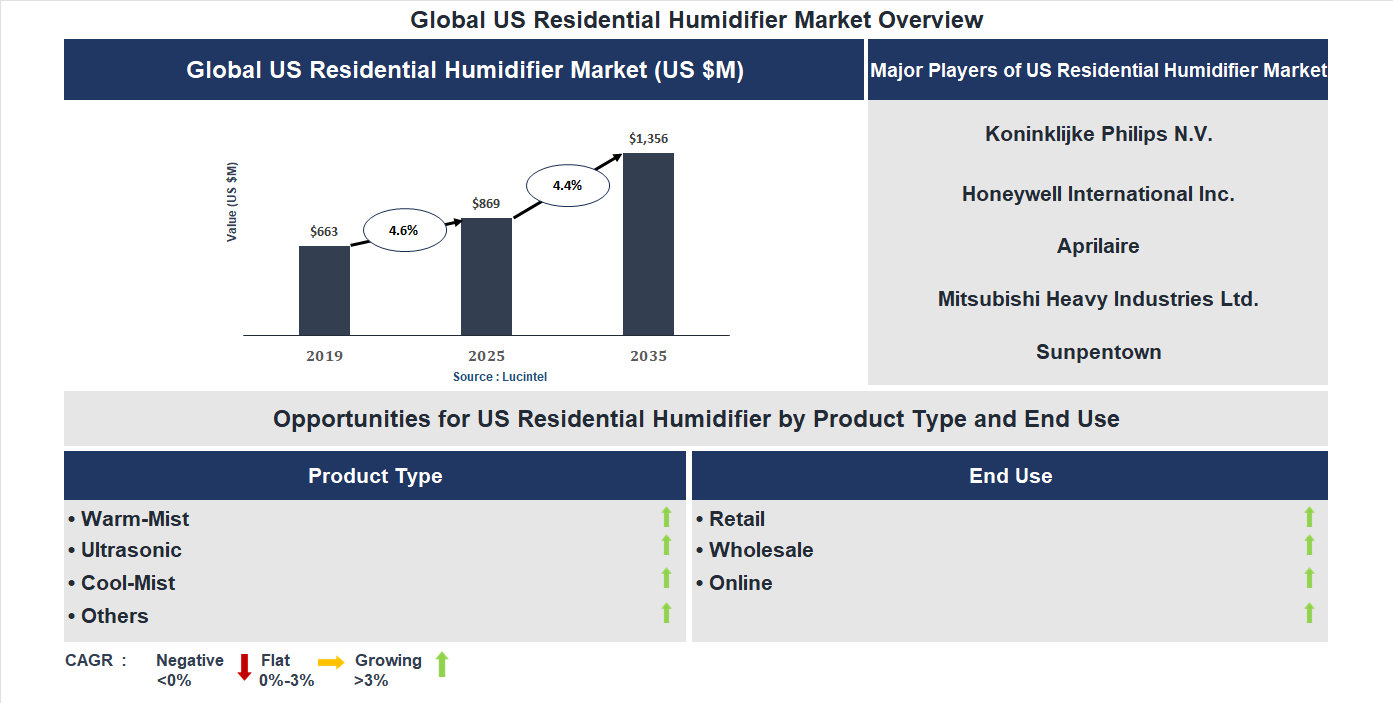
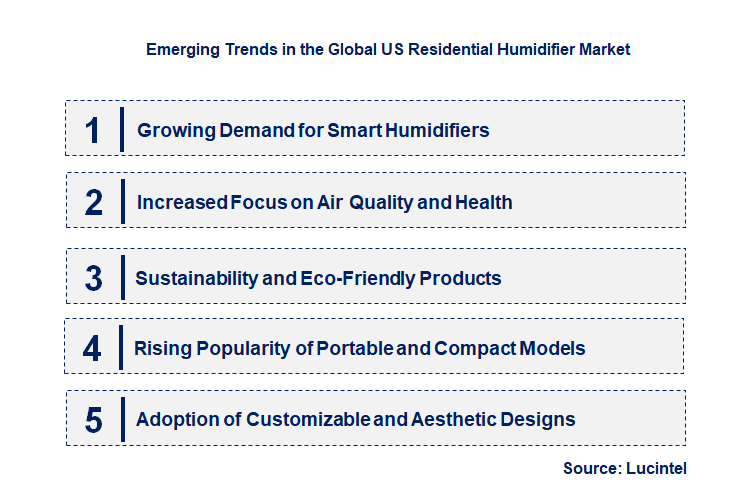
• Growing Demand for Smart Humidifiers: The integration of IoT technology is revolutionizing the market by enabling remote control, automation, and real-time monitoring. Consumers prefer smart humidifiers for their convenience, energy efficiency, and ability to maintain optimal humidity levels automatically. This trend enhances user experience and provides data-driven insights, leading to better health outcomes and energy savings. Manufacturers are investing heavily in developing connected devices, which are expected to dominate the market in the coming years, offering personalized and efficient humidification solutions.
• Increased Focus on Air Quality and Health: Rising awareness about indoor air quality and its impact on health is driving demand for advanced humidifiers with air purification features. Consumers are seeking products that not only add moisture but also filter allergens, dust, and pollutants. This trend is fueled by increased health consciousness, especially post-pandemic, and the desire for healthier living environments. Companies are incorporating HEPA filters, UV sterilization, and other technologies to meet these needs, positioning humidifiers as essential health devices rather than just comfort appliances.
• Sustainability and Eco-Friendly Products: Environmental concerns are prompting manufacturers to develop energy-efficient, eco-friendly humidifiers that reduce power consumption and use sustainable materials. Consumers are increasingly opting for products with low environmental impact, which also align with their eco-conscious lifestyles. Features such as biodegradable filters, recyclable components, and energy-saving modes are becoming standard. This trend not only appeals to environmentally aware consumers but also complies with stricter regulations, fostering innovation in sustainable product design.
• Rising Popularity of Portable and Compact Models: The demand for portable, space-saving humidifiers is growing, especially among urban dwellers and those with limited space. These models offer flexibility, ease of use, and affordability, making humidification accessible to a broader audience. Their compact design allows for use in multiple rooms or during travel, catering to modern lifestyles. Manufacturers are focusing on lightweight, stylish, and user-friendly designs to attract consumers seeking convenience without compromising performance.
• Adoption of Customizable and Aesthetic Designs: Consumers are increasingly interested in humidifiers that blend seamlessly with home decor and offer customization options. Aesthetic appeal, color options, and personalized features are influencing purchasing decisions. This trend reflects a shift towards products that serve both functional and decorative purposes, enhancing the overall living space. Companies are offering a variety of designs, finishes, and smart features that allow users to tailor their devices to match personal preferences and interior styles, thereby increasing market appeal.
• Adoption of Smart Humidifiers: The integration of IoT technology into humidifiers is transforming user experience by enabling remote control, automation, and real-time monitoring. Consumers value convenience and energy efficiency, prompting manufacturers to develop smart devices compatible with mobile apps and voice assistants. This trend enhances product appeal, increases market penetration, and fosters brand loyalty. As smart humidifiers become more affordable, their adoption is expected to accelerate, driving overall market growth and innovation.
• Focus on Energy-Efficient Products: Increasing environmental awareness and rising energy costs are pushing manufacturers to develop energy-efficient humidifiers. These products utilize advanced components like low-power fans and optimized heating elements to reduce electricity consumption. Energy-efficient models appeal to eco-conscious consumers and help reduce household utility bills. This focus not only aligns with sustainability goals but also provides a competitive edge, encouraging industry players to invest in greener technologies, thereby expanding the market and promoting responsible consumption.
• Expansion of Portable and Compact Models: The demand for portable, space-saving humidifiers is rising among urban dwellers and those with limited space. These compact devices offer flexibility, ease of use, and affordability, making them suitable for various settings such as bedrooms, offices, and travel. Manufacturers are designing lightweight, stylish models with user-friendly features to cater to this segment. The growth of portable humidifiers broadens market reach, attracts new customer segments, and stimulates innovation in design and functionality.
• Rising Preference for Health and Wellness Features: Consumers are increasingly seeking humidifiers with health benefits, such as antimicrobial filters, air purification, and aromatherapy compatibility. These features address concerns about allergies, respiratory issues, and overall wellness. Companies are incorporating advanced filtration systems and multi-functional capabilities to meet these demands. This trend enhances product differentiation, boosts sales, and aligns with the broader health and wellness movement, thereby expanding market opportunities and encouraging product diversification.
• Increased Focus on Eco-Friendly and Sustainable Materials: Sustainability is becoming a key consideration in product development, with manufacturers adopting eco-friendly materials and environmentally conscious manufacturing processes. Biodegradable plastics, reduced packaging, and energy-efficient designs are prioritized to minimize environmental impact. Consumers are increasingly favoring brands committed to sustainability, influencing purchasing decisions. This shift promotes responsible production, enhances brand reputation, and opens new markets for eco-conscious products, ultimately fostering a more sustainable and competitive industry landscape.
• Growing Demand for Smart and Connected Humidifiers: The integration of IoT technology enables remote control, automation, and real-time monitoring, appealing to tech-savvy consumers. Smart humidifiers offer convenience, energy efficiency, and enhanced user experience, driving adoption. Manufacturers investing in connectivity features can differentiate their products, tap into the growing smart home market, and meet consumer expectations for seamless integration with other devices, ultimately expanding market share and customer loyalty.
• Increasing Focus on Health and Wellness Benefits: Consumers are prioritizing indoor air quality to prevent respiratory issues, allergies, and dry skin. Humidifiers that incorporate air purification, antimicrobial features, and customizable humidity levels cater to health-conscious buyers. The rising awareness of the health benefits associated with proper humidity levels creates opportunities for product innovation, premium offerings, and targeted marketing strategies aimed at health and wellness markets.
• Rising Demand for Energy-Efficient and Eco-Friendly Products: Environmental concerns and rising energy costs are prompting consumers to seek sustainable solutions. Manufacturers are developing energy-efficient models with low power consumption, eco-friendly materials, and recyclable components. These products appeal to environmentally conscious consumers and regulatory standards, providing a competitive edge. The shift towards green products supports market growth while aligning with broader sustainability goals.
• Expansion of Portable and Compact Humidifier Options: The trend toward portable, space-saving devices caters to urban dwellers, small households, and those seeking convenience. Compact humidifiers are easy to move, require less maintenance, and fit into various living spaces. This segment‘s growth is driven by lifestyle changes, increased mobility, and the desire for personalized comfort, opening avenues for innovative designs and targeted marketing to diverse consumer segments.
• Adoption of Advanced Technologies for Improved Performance: Innovations such as ultrasonic, evaporative, and hybrid systems enhance efficiency, noise reduction, and ease of use. Incorporating features like automatic humidity control, filter indicators, and quiet operation improves user satisfaction. Continuous technological advancements enable manufacturers to offer high-performance products that meet evolving consumer expectations, fostering market expansion and establishing a competitive advantage through superior product offerings.
• Technological Innovation: The integration of smart technology and automation in humidifiers enhances user convenience and energy efficiency. Features like remote control, humidity sensors, and app connectivity are increasingly popular, making products more appealing to tech-savvy consumers. These innovations improve user experience and differentiate brands in a competitive market, encouraging higher adoption rates. As technology advances, manufacturers are able to develop more efficient, user-friendly, and feature-rich products, fueling market growth and expanding consumer interest.
• Rising Health Awareness: Growing awareness about indoor air quality and respiratory health is a significant driver. Consumers are increasingly seeking solutions to combat dry air, allergens, and airborne pathogens, especially in the wake of health crises like COVID-19. Humidifiers are viewed as essential appliances for maintaining optimal indoor humidity levels, which can reduce respiratory issues and improve overall well-being. This heightened health consciousness encourages consumers to invest in high-quality humidifiers, thereby expanding the market and prompting manufacturers to innovate health-focused features.
• Climate Change and Seasonal Variability: Changing climate patterns and colder winters in the US lead to lower outdoor humidity levels, prompting households to seek indoor humidification solutions. Seasonal demand peaks during winter months, as dry indoor air can cause discomfort and health problems. The need for consistent indoor humidity levels across different regions and seasons sustains steady demand. Manufacturers are responding by offering versatile, easy-to-use humidifiers suitable for various climatic conditions, thus supporting market stability and growth.
• Regulatory and Environmental Standards: Stringent regulations regarding energy consumption and environmental impact influence product development. Standards aimed at reducing energy use and emissions push manufacturers to innovate with energy-efficient and eco-friendly humidifiers. Compliance with these regulations not only avoids penalties but also appeals to environmentally conscious consumers. As regulatory frameworks evolve, they drive the adoption of sustainable technologies, shaping the market landscape and encouraging the development of greener, more efficient products.
• Urbanization and Housing Trends: Increasing urbanization and the growth of smart, modern homes contribute to higher demand for integrated and aesthetically appealing humidifiers. Compact, stylish, and multi-functional devices are preferred in contemporary residences, aligning with consumer preferences for home automation and design. Urban dwellers often face space constraints, prompting demand for portable and space-saving models. These trends influence product innovation and marketing strategies, fostering a market environment that emphasizes convenience, design, and integration with other smart home systems.
• High Competition and Market Saturation: The market is highly competitive, with numerous established brands and new entrants offering similar products. Differentiating offerings becomes difficult, leading to price wars and reduced profit margins. Consumers have a wide array of choices, which can slow down market growth and make it challenging for new players to gain market share. Additionally, rapid technological changes require continuous innovation, increasing R&D costs and operational complexities for manufacturers.
• Regulatory Compliance and Certification Costs: Meeting evolving safety, energy efficiency, and environmental standards involves significant costs. Manufacturers must invest in testing, certification, and compliance processes, which can be resource-intensive, especially for small and medium-sized enterprises. Non-compliance risks legal penalties and market restrictions, creating barriers to entry and expansion. These regulatory pressures can also delay product launches and increase overall costs, impacting profitability and market competitiveness.
• Seasonal Demand Fluctuations: The demand for humidifiers is highly seasonal, peaking during winter and declining in warmer months. This cyclical pattern affects inventory management, cash flow, and revenue stability. Companies must strategize to balance production and sales cycles, which can be challenging, especially for smaller firms. Seasonal fluctuations also make it difficult to sustain consistent marketing efforts and customer engagement throughout the year, potentially limiting overall market growth.
• Koninklijke Philips N.V.
• Honeywell International Inc.
• Aprilaire
• Mitsubishi Heavy Industries Ltd.
• Sunpentown
• Boneco AG
• GeneralAire
• Carel
• Condair Group
• LG Corporation.
• Warm-Mist
• Ultrasonic
• Cool-Mist
• Others
• Retail
• Wholesale
• Online
• North America
• Europe
• Asia Pacific
• The Rest of the World
• United States: The US market has seen a surge in smart humidifiers with Wi-Fi connectivity and app control, driven by consumer demand for convenience and automation. There is increased focus on energy-efficient models and eco-friendly materials, aligning with sustainability goals. The adoption of UV and antimicrobial technologies to improve air quality has also grown. Seasonal sales peaks during winter months boost market activity, while online retail channels expand reach. Regulatory standards for product safety and energy efficiency are becoming more stringent, encouraging innovation and compliance.
• China: The Chinese market is rapidly expanding due to rising urbanization and increasing awareness of indoor air quality. Local manufacturers are investing in R&D to develop advanced, affordable humidifiers with smart features. E-commerce platforms dominate sales channels, facilitating quick adoption of new technologies. Government initiatives promoting environmental sustainability are encouraging the development of energy-efficient and eco-friendly products. The market also benefits from rising disposable incomes and a growing middle class seeking healthier living environments. Product customization and innovative designs are key differentiators in this competitive landscape.
• Germany: The German market emphasizes high-quality, energy-efficient, and environmentally friendly humidifiers. Consumer preferences favor products with low noise levels, durability, and advanced filtration systems. There is a strong focus on sustainability, with many products made from recyclable materials and adhering to strict EU regulations. Smart features such as automatic humidity control and integration with home automation systems are increasingly popular. The market is also influenced by health-conscious consumers and a preference for natural, chemical-free air purification solutions. Retail channels include specialty stores, online platforms, and direct sales from manufacturers.
• India: The Indian market is witnessing rapid growth due to increasing awareness of indoor air pollution and health issues. Affordability remains a key factor, with manufacturers offering a range of budget-friendly models. Urbanization and rising disposable incomes are driving demand for modern, feature-rich humidifiers. The market is also seeing a shift towards smart and energy-efficient products, although price sensitivity remains high. Local brands are gaining prominence by providing customized solutions suited to Indian climatic conditions. Distribution channels are expanding through online platforms and retail outlets, making products more accessible to a broader consumer base.
• Japan: The Japanese market is characterized by high technological integration and a focus on health and wellness. Consumers prefer compact, energy-efficient, and quiet humidifiers with advanced filtration and sterilization features. Smart technology, including remote control and automatic humidity adjustment, is increasingly adopted. The market emphasizes eco-friendly materials and sustainable manufacturing practices. There is a strong demand for products that improve air quality in small living spaces, especially in urban areas. Regulatory standards for safety and environmental impact are strict, encouraging innovation. Retail channels include electronics stores, online platforms, and direct-to-consumer sales.


• Koninklijke Philips N.V.
• Honeywell International Inc.
• Aprilaire
• Mitsubishi Heavy Industries Ltd.
• Sunpentown
• Boneco AG
• GeneralAire
• Carel
• Condair Group
• LG Corporation.
Q6. Which US residential humidifier market segment will be the largest in future?

Choose a license that fits your team. Instant PDF delivery.
Prices exclude taxes. Instant delivery. Custom licensing available on request.
Market Report · July 29, 2026
Market Report · July 15, 2026
Market Report · July 13, 2026
Trusted partner for strategic intelligence and business growth


Receive a complimentary market analysis tailored to your industry. Our analysts will identify key growth opportunities and competitive dynamics specific to your business.

Market size, growth rate, and key trend analysis for your specific sector.

Top competitor positioning and market share analysis.

Strategic recommendations backed by data-driven insights.
Get curated market intelligence and competitive moves straight to your inbox.
By subscribing, you agree to receive our monthly insights. Unsubscribe anytime.
Receive a complimentary market analysis tailored to your industry. Our analysts will identify key growth opportunities and competitive dynamics specific to your business.
Market size, growth rate, and key trend analysis for your specific sector.
Top competitor positioning and market share analysis.
Strategic recommendations backed by data-driven insights.
Get curated market intelligence, emerging trends, and competitive moves straight to your inbox each month.
By subscribing, you agree to receive our monthly insights. Unsubscribe anytime.
We'll send your sample report shortly.