
Market Report · July 13, 2026

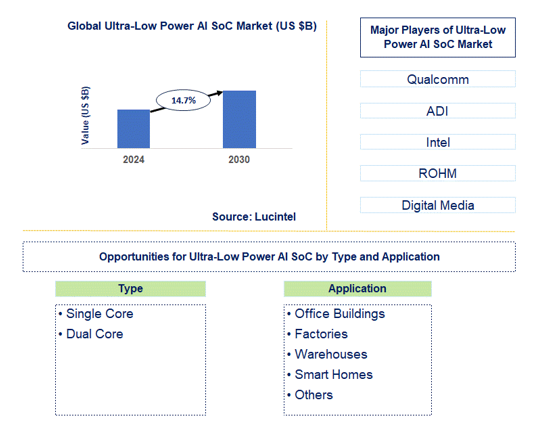
Key data points: The growth forecast = 14.7% annually for the next 6 years. Scroll below to get more insights. This market report covers trends, opportunities, and forecasts in the global ultra-low power ai soc market to 2030 by type (single core and dual core), application (office buildings, factories, warehouses, smart homes, and others), and region (North America, Europe, Asia Pacific, and the Rest of the World)
We'll send your sample report shortly.
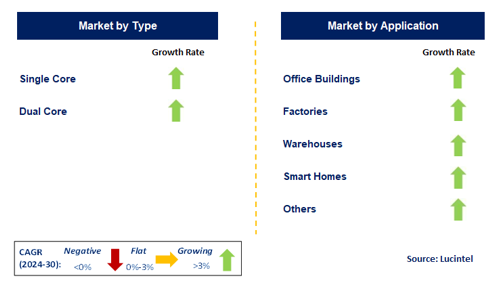
• Lucintel forecasts that,within the type category, single core is expected to witness a higher growth over the forecast period.
• In terms of regions, APAC is expected to witness the highest growth over the forecast period. A more than 150-page report is developed to help in your business decisions.
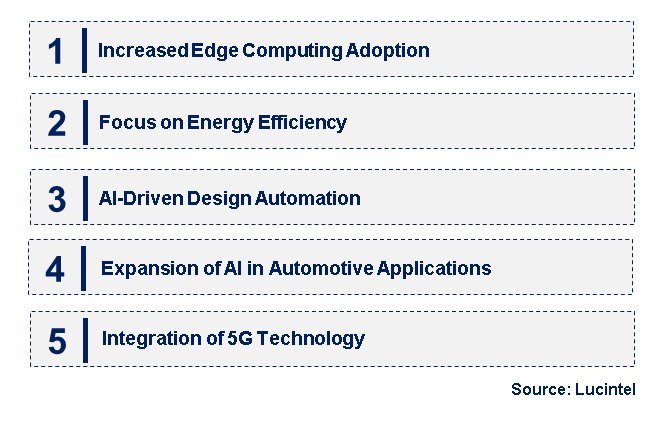
• Increased Edge Computing Adoption: Edge computing is becoming prevalent as devices require real-time processing capabilities. By integrating AI directly into edge devices, organizations reduce latency and bandwidth costs, enhancing performance. This trend allows for localized decision-making, making applications like smart cameras and IoT devices more efficient and responsive.
• Focus on Energy Efficiency: With growing concerns about energy consumption, manufacturers are prioritizing energy-efficient designs. Innovations in chip architecture, such as FinFET technology and low-power states, are enabling significant reductions in power usage. This focus not only meets regulatory demands but also appeals to environmentally conscious consumers.
• AI-Driven Design Automation: AI is increasingly utilized in the design and manufacturing processes of SoCs. By automating tasks like circuit design and testing, companies can accelerate time-to-market and improve accuracy. This trend is streamlining development processes and allowing for rapid iterations, fostering innovation in ultra-low power AI solutions.
• Expansion of AI in Automotive Applications: The automotive sector is increasingly incorporating AI for functionalities such as autonomous driving and advanced driver assistance systems (ADAS). Ultra-low power AI SoCs are critical for processing vast amounts of data from sensors and cameras in real time, enhancing safety and efficiency while minimizing energy consumption.
• Integration of 5G Technology: The rollout of 5G is driving demand for ultra-low power AI SoCs capable of handling increased data traffic with lower latency. These SoCs are crucial for applications like smart cities and IoT devices, enabling seamless connectivity and data processing, thus enhancing overall system performance. These trends collectively reshape the ultra-low power AI SoC market, driving innovation and creating new opportunities for businesses across various sectors.
• Introduction of Neuromorphic Chips: Neuromorphic computing is gaining traction as companies explore chip designs that mimic the human brain. This approach allows for highly efficient processing, making these chips ideal for real-time AI tasks in applications such as robotics and autonomous systems, thereby pushing the boundaries of energy efficiency.
• Emergence of AI-Optimized Hardware: Several firms are developing hardware specifically optimized for AI workloads. These dedicated chips, such as TPUs and FPGAs, offer substantial performance improvements over traditional processors, allowing for advanced functionalities in mobile devices and IoT applications while maintaining ultra-low power consumption.
• Collaboration between Tech Giants: Strategic partnerships between major technology firms and startups are driving innovation in the ultra-low power AI SoC space. These collaborations leverage complementary strengths, accelerating the development of new solutions that enhance capabilities in areas like machine learning and computer vision.
• Growth of Smart Wearables: The demand for smart wearables has spurred the development of ultra-low power AI SoCs tailored for health monitoring and fitness tracking. These chips enable continuous monitoring while minimizing battery usage, catering to consumer demands for longer-lasting devices and improved health insights.
• Focus on Security Features: As the proliferation of IoT devices continues, manufacturers are prioritizing security within ultra-low power AI SoCs. Implementing advanced encryption and secure boot mechanisms ensures data integrity and protection against cyber threats, making these solutions more attractive for enterprises and consumers alike. These developments are transforming the ultra-low power AI SoC market, enhancing performance while addressing energy efficiency and security challenges.
• Smart Home Devices: With the rise of IoT in smart homes, ultra-low power AI SoCs are essential for devices like smart speakers and security cameras. These chips enable real-time processing and voice recognition, enhancing user experience while minimizing energy consumption, which is crucial for consumer acceptance and market growth.
• Healthcare Monitoring: The demand for remote patient monitoring solutions is increasing, creating opportunities for ultra-low power AI SoCs in wearable health devices. These chips can process data from sensors efficiently, allowing for continuous health tracking and timely interventions, thus improving patient outcomes while reducing costs.
• Automotive Industry: The automotive sector is adopting AI technologies for safety and automation. Ultra-low power AI SoCs facilitate real-time data processing for features like collision avoidance and adaptive cruise control, driving growth as manufacturers seek to enhance vehicle intelligence while adhering to energy regulations.
• Industrial Automation: As industries move toward smart manufacturing, ultra-low power AI SoCs are critical for data analysis and process optimization. These chips can support predictive maintenance and real-time monitoring, improving operational efficiency and reducing downtime, thereby providing substantial cost savings.
• Agricultural Technology: The agricultural sector is increasingly utilizing IoT and AI for precision farming. Ultra-low power AI SoCs enable efficient data processing for applications such as soil monitoring and crop health analysis, leading to better resource management and increased yields, which is vital for food security. These growth opportunities are significantly influencing the ultra-low power AI SoC market, driving innovation and expanding applications across various sectors.
• Growing Demand for Energy Efficiency: As environmental concerns rise, there is an increasing demand for energy-efficient solutions across industries. Ultra-low power AI SoCs meet this need by providing high performance with minimal energy consumption, appealing to both consumers and manufacturers seeking to reduce their carbon footprint.
• Advancements in AI Technology: Continuous improvements in AI algorithms and processing techniques are driving the adoption of ultra-low power AI SoCs. Enhanced machine learning capabilities allow more complex tasks to be performed on-device, increasing the demand for efficient chips that can handle these advanced applications.
• Expansion of IoT Applications: The proliferation of IoT devices is creating a significant market for ultra-low power AI SoCs. These chips enable smart connectivity and real-time data processing, which are essential for applications in smart homes, healthcare, and industrial automation, fueling market growth.
• Supportive Regulatory Frameworks: Governments are increasingly promoting the development of energy-efficient technologies through incentives and regulations. This support accelerates investment in ultra-low power AI SoCs, fosters innovation, and ensures compliance with environmental standards.
• Rising Adoption of Edge Computing: The shift towards edge computing is driving the need for ultra-low power AI SoCs. By processing data closer to the source, these chips reduce latency and bandwidth requirements, enhancing overall system efficiency and making them indispensable for various applications. Challenges in the ultra-low power AI SoC market include:
• Technological Complexity: Developing ultra-low power AI SoCs requires sophisticated design and engineering capabilities. The complexity of integrating AI functions while maintaining power efficiency presents challenges for manufacturers, requiring significant investment in R&D and talent.
• Market Competition: The ultra-low power AI SoC market is becoming increasingly competitive, with numerous players vying for market share. This competition can lead to price wars and reduced profit margins, challenging smaller firms to differentiate their offerings in a crowded marketplace.
• Supply Chain Disruptions: Recent global events have highlighted vulnerabilities in semiconductor supply chains. Disruptions can impact the availability of key components for ultra-low power AI SoCs, affecting production timelines and ultimately slowing market growth. While drivers such as the demand for energy efficiency and advancements in AI technology are propelling the ultra-low power AI SoC market forward, challenges related to technological complexity and supply chain disruptions necessitate strategic planning and innovation.
• Qualcomm
• ADI
• Intel
• ROHM
• Digital Media Professionals
• Himax Technologies
• Embedded A.I Systems
• Single Core
• Dual Core
• Office Buildings
• Factories
• Warehouses
• Smart Homes
• Others
• North America
• Europe
• Asia Pacific
• The Rest of the World
• United States: The U.S. continues to lead in ultra-low power AI SoC innovation, focusing on enhancing machine learning capabilities while reducing energy consumption. Companies like NVIDIA and Intel are investing heavily in R&D, introducing new architectures optimized for edge computing. Startups are also emerging, focusing on specific applications such as wearables and smart home devices, driving competitive advancements. Collaborative efforts between tech giants and research institutions are fostering breakthroughs in neural processing units (NPUs) and specialized chips that cater to niche markets.
• China: China is aggressively advancing its ultra-low power AI SoC capabilities, primarily through government support and investment in semiconductor technology. Major players like Huawei and Baidu are developing proprietary AI chips tailored for applications in smart cities and autonomous vehicles. Recent collaborations between tech firms and academic institutions are accelerating innovation, while national policies encourage local manufacturing. As China aims for self-sufficiency in semiconductor production, the domestic market for ultra-low power AI SoCs is expected to expand rapidly, fostering competition and innovation.
• Germany: Germany is focusing on automotive and industrial applications for ultra-low power AI SoCs. Companies such as Infineon and Bosch are leading developments in energy-efficient chips that enable real-time data processing for connected vehicles and smart manufacturing. The country emphasizes sustainability and efficiency, aligning with European Union regulations on energy consumption. Additionally, partnerships between automotive manufacturers and tech firms are pushing the boundaries of what ultra-low power AI can achieve, particularly in enhancing vehicle safety and automation.
• India: India's ultra-low power AI SoC market is gaining momentum, driven by a burgeoning startup ecosystem and increasing adoption of IoT technologies. Companies are focusing on developing energy-efficient solutions for agriculture, healthcare, and smart cities. Government initiatives like "Make in India" are encouraging local manufacturing and R&D. The collaboration between tech firms and educational institutions is fostering innovation in chip design, allowing India to carve a niche in low-power AI solutions tailored for diverse applications.
• Japan: Japan is leveraging its advanced technology and robotics expertise to enhance ultra-low power AI SoCs. Companies like Sony and Renesas are at the forefront, developing chips optimized for robotics and consumer electronics. The focus on integrating AI into everyday devices is accelerating innovation, particularly in smart home technologies and healthcare applications. Additionally, Japan's aging population drives demand for efficient, intelligent solutions in medical devices, making the ultra-low power AI SoC market increasingly vital for economic growth and societal needs.


• Qualcomm
• ADI
• Intel
• ROHM
• Digital Media Professionals
• Himax Technologies
• Embedded A.I Systems Q5. Which ultra-low power AI SoC market segment will be the largest in future? Answer: Lucintel forecasts that single core is expected to witness higher growth over the forecast period. Q6. In ultra-low power AI SoC market, which region is expected to be the largest in next 5 years? Answer: APAC is expected to witness the highest growth over the forecast period. Q.7 Do we receive customization in this report? Answer: Yes, Lucintel provides 10% customization without any additional cost.


Choose a license that fits your team. Instant PDF delivery.
Prices exclude taxes. Instant delivery. Custom licensing available on request.
Market Report · July 13, 2026
Market Report · July 13, 2026
Market Report · July 2, 2026
Trusted partner for strategic intelligence and business growth


Receive a complimentary market analysis tailored to your industry. Our analysts will identify key growth opportunities and competitive dynamics specific to your business.

Market size, growth rate, and key trend analysis for your specific sector.

Top competitor positioning and market share analysis.

Strategic recommendations backed by data-driven insights.
Get curated market intelligence and competitive moves straight to your inbox.
By subscribing, you agree to receive our monthly insights. Unsubscribe anytime.
Receive a complimentary market analysis tailored to your industry. Our analysts will identify key growth opportunities and competitive dynamics specific to your business.
Market size, growth rate, and key trend analysis for your specific sector.
Top competitor positioning and market share analysis.
Strategic recommendations backed by data-driven insights.
Get curated market intelligence, emerging trends, and competitive moves straight to your inbox each month.
By subscribing, you agree to receive our monthly insights. Unsubscribe anytime.
We'll send your sample report shortly.