
Market Report · July 24, 2026

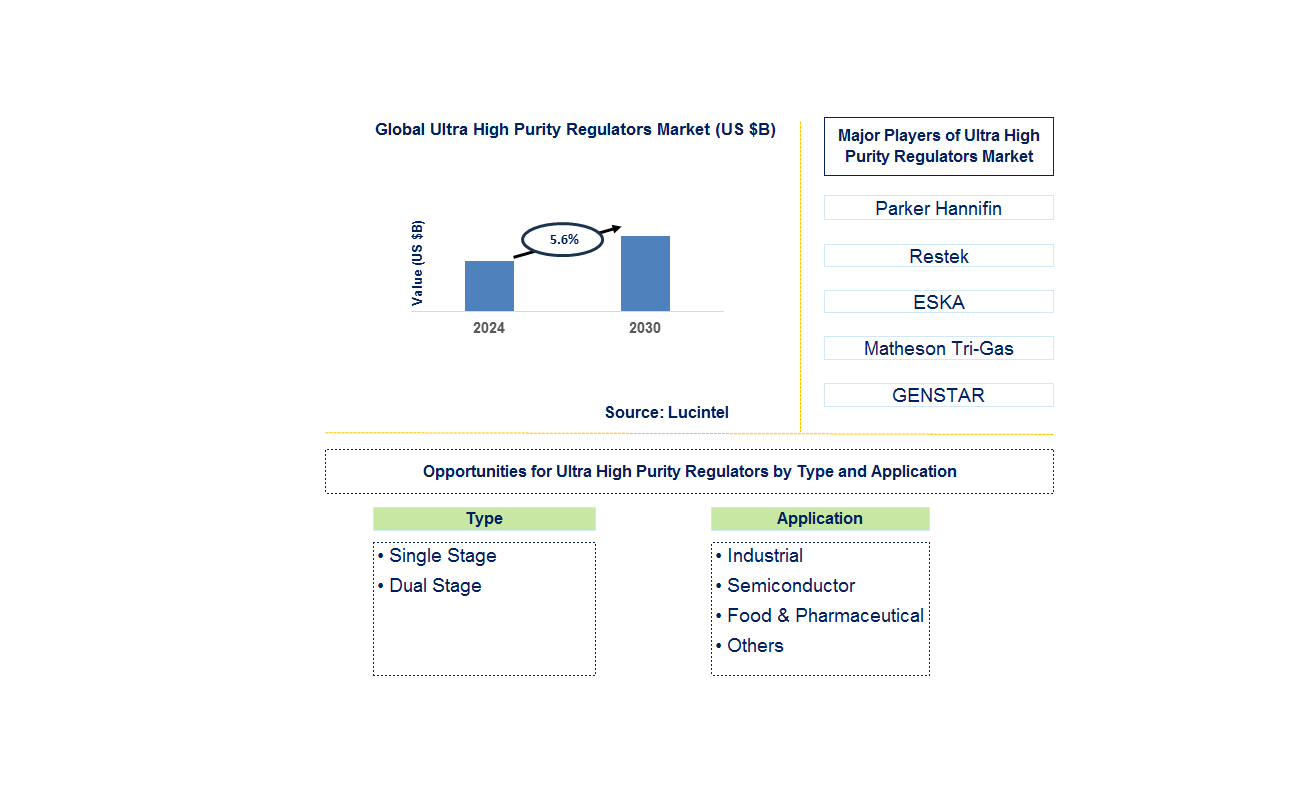
Key data points: The growth forecast = 5.6% annually for the next 6 years. Scroll below to get more insights. This market report covers trends, opportunities, and forecasts in the global ultra high purity regulators market to 2030 by type (single stage and dual stage), application (industrial, semiconductor, food & pharmaceutical, and others), and region (North America, Europe, Asia Pacific, and the Rest of the World)
We'll send your sample report shortly.
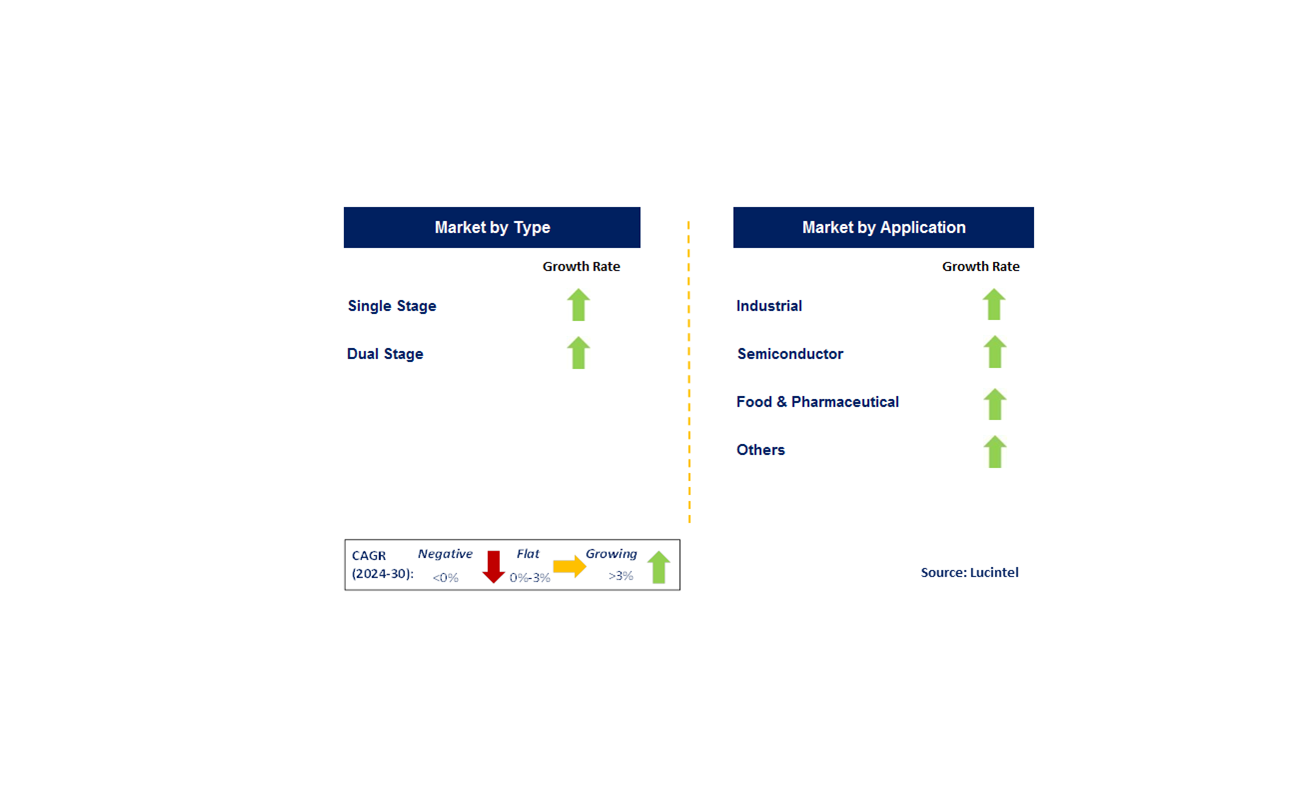
• Lucintel forecasts that, within the type category, single-stage will remain the largest segment over the forecast period due to a simpler design with fewer components, making them easier to manufacture and maintain.
• Within the application category, semiconductor will remain the largest segment due to high precision requirements and stringent regulations regarding product quality and safety.
• In terms of regions, APAC is expected to witness the highest growth over the forecast period due to semiconductor industry growth. Gain valuable insights for your business decisions with our comprehensive 150+ page report.
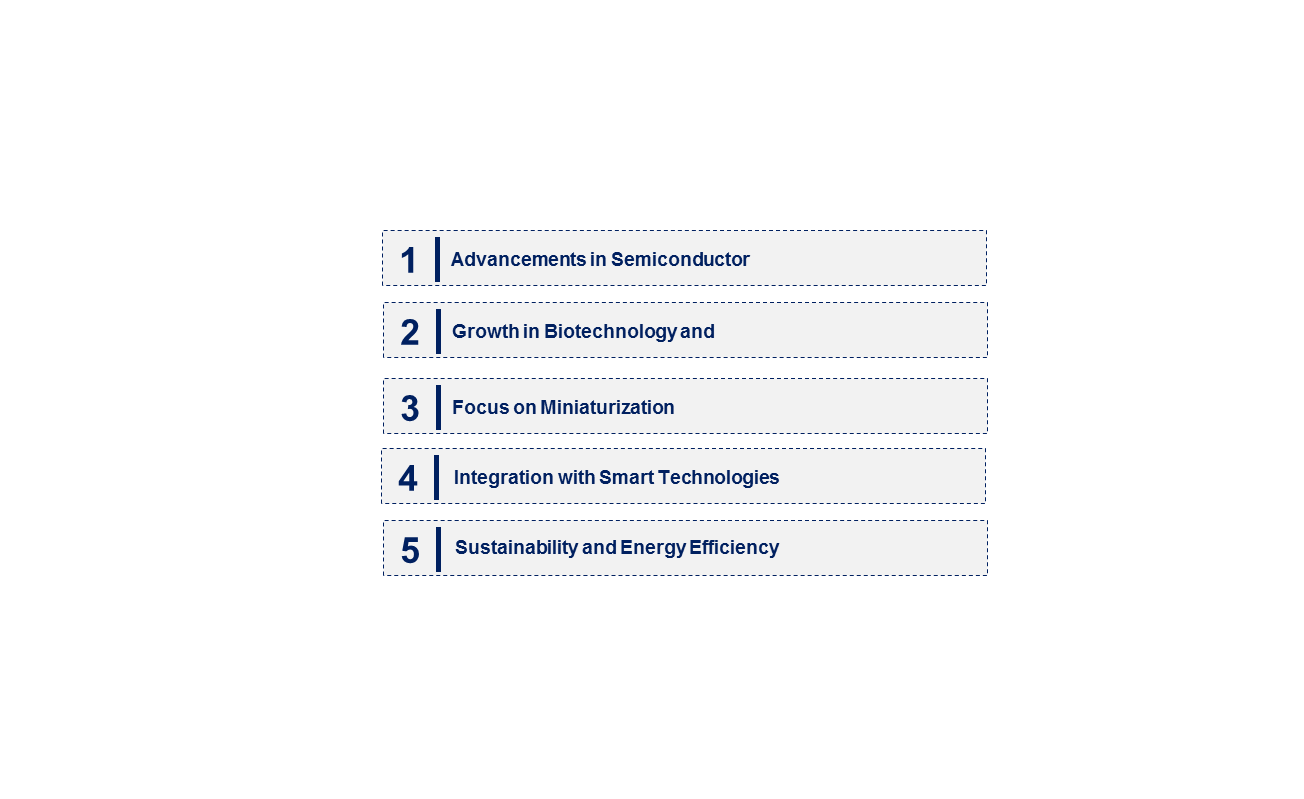
• Advancements in Semiconductor Manufacturing: As semiconductor manufacturing becomes more complex, the demand for UHP regulators with higher precision and reliability is increasing. These regulators are critical in maintaining the purity of gases used in semiconductor fabrication.
• Growth in Biotechnology and Pharmaceutical Sectors: The biotechnology and pharmaceutical industries are increasingly adopting UHP regulators to ensure the purity and consistency of gases used in drug manufacturing and research. This trend is driven by the growing emphasis on quality and safety in these sectors.
• Focus on Miniaturization: There is a growing trend towards the development of compact UHP regulators that can be integrated into smaller, more advanced systems. This miniaturization is crucial for applications where space is limited and precision is paramount.
• Integration with Smart Technologies: The integration of UHP regulators with smart technologies, such as IoT and advanced sensors, is becoming more prevalent. These smart regulators offer real-time monitoring and control, ensuring optimal performance and reducing the risk of contamination.
• Sustainability and Energy Efficiency: The trend towards sustainability is driving the development of UHP regulators that are more energy-efficient and environmentally friendly. Manufacturers are focusing on reducing waste and emissions associated with the use of high-purity gases.
• Customization and Flexibility: The demand for customizable and flexible UHP regulators is increasing, as different industries require regulators tailored to their specific needs. This trend is leading to the development of modular regulator systems that offer greater adaptability. Emerging trends such as advancements in semiconductor manufacturing, growth in biotechnology and pharmaceutical sectors, miniaturization, smart technology integration, sustainability, and customization are driving innovation and expansion in the UHP regulators market.
• New Product Launches: Leading companies in the UHP regulators market have introduced new products with enhanced features, such as higher accuracy, improved flow control, and better corrosion resistance. These products cater to the growing demand for precision in the semiconductor, pharmaceutical, and chemical industries.
• Technological Innovations: Recent technological advancements include the development of UHP regulators with integrated digital controls and real-time monitoring capabilities. These innovations improve the accuracy and reliability of gas regulation in critical applications.
• Partnerships and Collaborations: Companies are increasingly forming strategic partnerships and collaborations to leverage expertise and accelerate the development of advanced UHP regulators. These collaborations are leading to the introduction of more sophisticated products with improved performance.
• Expansion of Manufacturing Capabilities: Several companies are expanding their manufacturing capabilities to meet the rising demand for UHP regulators. This expansion includes the establishment of new production facilities and the upgrading of existing ones to enhance production efficiency and output quality.
• Focus on Regulatory Compliance: With the increasing importance of regulatory compliance in industries such as pharmaceuticals and semiconductors, manufacturers are developing UHP regulators that meet stringent international standards. This focus on compliance ensures the safety and reliability of high-purity gas systems.
• Market Penetration in Emerging Economies: Companies are expanding their presence in emerging markets, particularly in Asia-Pacific, to tap into the growing demand for UHP regulators in rapidly industrializing countries. This expansion is driving market growth and increasing global competition. Recent developments in the UHP regulators market, including new product launches, technological innovations, partnerships, manufacturing expansion, regulatory compliance, and market penetration, are driving the market forward and meeting the evolving needs of high-purity gas applications.
• Semiconductor Industry: The semiconductor industry offers significant growth opportunities for UHP regulators. The increasing complexity of semiconductor manufacturing processes, such as extreme ultraviolet (EUV) lithography, requires highly precise and reliable UHP regulators to maintain the purity of gases used in chip production.
• Biopharmaceutical Manufacturing: The biopharmaceutical industry is another key application area for UHP regulators. As the demand for biologics and personalized medicine grows, the need for UHP regulators that ensure the integrity of gases used in bioprocessing and drug manufacturing is also increasing.
• Chemical Processing: UHP regulators are critical in the chemical processing industry, where the purity and consistency of gases are essential for producing high-quality chemicals. The trend towards more sustainable and environmentally friendly chemical processes is further driving the demand for UHP regulators.
• Aerospace and Defense: The aerospace and defense sectors present growth opportunities for UHP regulators in applications such as satellite propulsion systems and life support systems. The demand for ultra-reliable and high-performance regulators in these critical applications is driving innovation and market expansion.
• Research and Development (R&D) Laboratories: UHP regulators are increasingly being used in R&D laboratories, particularly in fields such as materials science, nanotechnology, and advanced electronics. The need for precise gas control in experiments and testing is driving the adoption of UHP regulators in these settings.
• Food and Beverage Industry: The food and beverage industry is emerging as a new application area for UHP regulators, particularly in processes such as modified atmosphere packaging (MAP) and food preservation. The demand for high-purity gases in these applications is creating new growth opportunities for UHP regulators. Strategic growth opportunities for the UHP regulators market lie in the semiconductor industry, biopharmaceutical manufacturing, chemical processing, aerospace and defense, R&D laboratories, and the food and beverage industry. Leveraging these opportunities can drive market expansion and innovation.
• Rising Demand for High-Purity Gases: The increasing need for high-purity gases in industries such as semiconductors, pharmaceuticals, and chemicals is a major driver for the UHP regulators market. These regulators are essential for maintaining the purity and integrity of gases in critical applications.
• Growth of Semiconductor Industry: The rapid growth of the semiconductor industry, driven by advancements in technology and the demand for more powerful and efficient electronic devices, is boosting the demand for UHP regulators. These regulators play a key role in ensuring the precision and reliability of gas delivery in semiconductor fabrication.
• Expansion of Biotechnology and Pharmaceutical Sectors: The biotechnology and pharmaceutical industries are expanding globally, leading to a greater demand for UHP regulators. These regulators are crucial for maintaining the purity of gases used in drug manufacturing and bioprocessing.
• Focus on Regulatory Compliance: The increasing emphasis on regulatory compliance in industries such as pharmaceuticals and chemicals is driving the demand for UHP regulators that meet stringent standards. Compliance with international regulations ensures the safety and reliability of high-purity gas systems.
• Technological Advancements: Continuous technological advancements in UHP regulator design, such as the integration of smart controls and digital monitoring, are driving market growth. These innovations enhance the performance and reliability of UHP regulators in various applications. Challenges in the ultra high purity regulators market are:
• High Cost of UHP Regulators: The high cost of UHP regulators, due to the precision and materials required for their production, can be a barrier to market growth. This cost factor may limit adoption, particularly in cost-sensitive industries and regions.
• Complexity of Manufacturing: The complexity of manufacturing UHP regulators, which requires advanced technology and expertise, presents a challenge for companies. Ensuring consistent quality and performance in high-purity applications is critical but challenging.
• Supply Chain Disruptions: The global supply chain for UHP regulators and the materials used in their production can be affected by disruptions such as geopolitical tensions, natural disasters, and pandemics. These disruptions can impact the availability and pricing of UHP regulators.
• Regulatory Compliance: Meeting stringent regulatory standards for UHP regulators can be challenging, particularly in industries such as pharmaceuticals and semiconductors. Non-compliance can lead to significant consequences, including product recalls and legal liabilities.
• Competition and Market Saturation: The UHP regulators market is highly competitive, with established players and new entrants vying for market share. This competition can lead to market saturation and price pressures, affecting profitability.
• Energy Efficiency Concerns: As industries become more focused on sustainability, there is a growing demand for energy-efficient UHP regulators. Meeting this demand while maintaining performance can be challenging for manufacturers. The UHP regulators market is driven by factors such as the rising demand for high-purity gases, the growth of the semiconductor and pharmaceutical industries, and technological advancements. However, it faces challenges including high costs, manufacturing complexity, supply chain disruptions, regulatory compliance, competition, and energy efficiency concerns. Addressing these drivers and challenges is essential for sustaining market growth.
• Parker Hannifin
• Restek
• ESKA
• Matheson Tri-Gas
• GENSTAR
• Single Stage
• Dual Stage
• Industrial
• Semiconductor
• Food & Pharmaceutical
• Others
• North America
• Europe
• Asia Pacific
• The Rest of the World
• United States: The United States has witnessed significant developments in the Ultra High Purity (UHP) Regulators market, driven by the expansion of the semiconductor and biotechnology industries. The increasing demand for advanced semiconductor fabrication and biopharmaceutical manufacturing has led to the adoption of UHP regulators that ensure the integrity of high-purity gases. Major players in the U.S. are investing in the development of more precise and reliable UHP regulators to meet the stringent requirements of these industries. Furthermore, government support for the semiconductor industry through initiatives like the CHIPS Act is expected to further boost market growth.
• Germany: In Germany, the UHP regulators market is experiencing growth due to the country's strong industrial base and emphasis on precision engineering. The demand for UHP regulators is rising in sectors such as chemical processing, pharmaceutical manufacturing, and semiconductor production, where ultra-high purity gases are crucial. German companies are focusing on developing UHP regulators with enhanced corrosion resistance and long-term stability to cater to these applications. Additionally, the country's commitment to innovation and sustainability is driving the adoption of UHP regulators that are designed to minimize contamination and ensure energy efficiency.
• Japan: Japan's UHP regulators market is being propelled by the country's leadership in the electronics and semiconductor industries. Japanese manufacturers are at the forefront of developing cutting-edge UHP regulators that meet the exacting standards of semiconductor fabrication and other high-tech applications. The demand for UHP regulators is also growing in the pharmaceutical and chemical sectors, where purity and precision are critical. Moreover, Japan's focus on maintaining its competitive edge in technology and manufacturing is encouraging further advancements in UHP regulator technology, ensuring consistent quality and performance in high-purity applications.
• South Korea: South Korea is emerging as a key player in the UHP regulators market, largely due to its booming semiconductor industry. The country's leading semiconductor manufacturers require high-performance UHP regulators to maintain the purity of gases used in chip production. South Korean companies are investing in research and development to produce regulators that offer superior precision and reliability. Additionally, the government's support for the semiconductor industry, coupled with South Korea's strong position in electronics manufacturing, is expected to drive further growth in the UHP regulators market.
• China: China's rapid industrialization and growing focus on high-tech industries are contributing to the expansion of the UHP regulators market. The demand for UHP regulators is increasing in sectors such as electronics, pharmaceuticals, and chemical processing, where ultra-high purity gases are essential. Chinese manufacturers are enhancing their capabilities to produce UHP regulators that meet international standards, aiming to reduce dependence on imports. The government's push for technological self-reliance, especially in the semiconductor industry, is expected to stimulate further growth in the UHP regulators market in China.


• Parker Hannifin
• Restek
• ESKA
• Matheson Tri-Gas
• GENSTAR Q5. Which ultra high purity regulators market segment will be the largest in future? Answer: Lucintel forecasts that single stage will remain the largest segment over the forecast period due to simpler design with fewer components, making them easier to manufacture and maintain. Q6. In ultra high purity regulators market, which region is expected to be the largest in next 5 years? Answer: APAC is expected to witness the highest growth over the forecast period due to semiconductor industry growth. Q7. Do we receive customization in this report? Answer: Yes, Lucintel provides 10% customization without any additional cost.


Choose a license that fits your team. Instant PDF delivery.
Prices exclude taxes. Instant delivery. Custom licensing available on request.
Market Report · July 24, 2026
Market Report · July 20, 2026
Market Report · July 20, 2026
Trusted partner for strategic intelligence and business growth


Receive a complimentary market analysis tailored to your industry. Our analysts will identify key growth opportunities and competitive dynamics specific to your business.

Market size, growth rate, and key trend analysis for your specific sector.

Top competitor positioning and market share analysis.

Strategic recommendations backed by data-driven insights.
Get curated market intelligence and competitive moves straight to your inbox.
By subscribing, you agree to receive our monthly insights. Unsubscribe anytime.
Receive a complimentary market analysis tailored to your industry. Our analysts will identify key growth opportunities and competitive dynamics specific to your business.
Market size, growth rate, and key trend analysis for your specific sector.
Top competitor positioning and market share analysis.
Strategic recommendations backed by data-driven insights.
Get curated market intelligence, emerging trends, and competitive moves straight to your inbox each month.
By subscribing, you agree to receive our monthly insights. Unsubscribe anytime.
We'll send your sample report shortly.