
Market Report · July 20, 2026

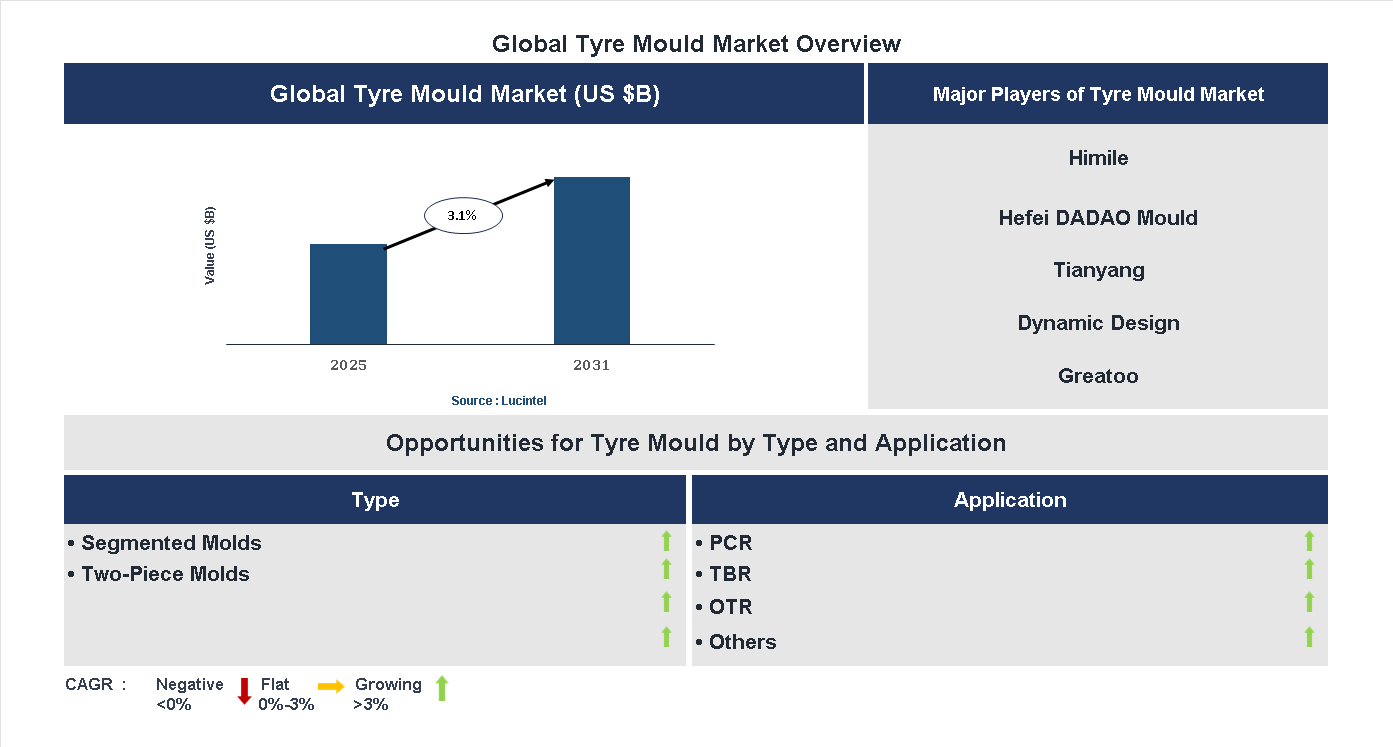
Key data points: The growth forecast = 3.1% annually for the next 7 years. Scroll below to get more insights. This market report covers trends, opportunities and forecasts in tyre mould market to 2031 by type (segmented molds and two-piece molds), application (PCR, TBR, OTR, and others), and region (North America, Europe, Asia Pacific, and the Rest of the World)
We'll send your sample report shortly.
• Lucintel forecasts that, within the type category, two-piece mold is expected to witness higher growth over the forecast period.
• Within the application category, TBR is expected to witness the highest growth.
• In terms of region, APAC is expected to witness the highest growth over the forecast period. Gain valuable insights for your business decisions with our comprehensive 150+ page report. Sample figures with some insights are shown below.
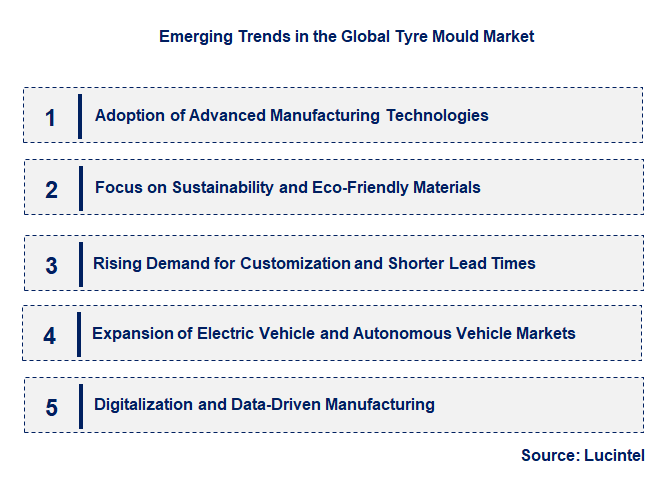
• Adoption of Advanced Manufacturing Technologies: The integration of automation, 3D printing, and CNC machining is revolutionizing tyre mould production. These technologies enable higher precision, faster turnaround times, and cost reductions, leading to improved product quality and customization options. Manufacturers can now produce complex mould designs more efficiently, meeting the increasing demand for innovative tyre patterns and specifications. This trend enhances overall operational efficiency and allows for rapid adaptation to market needs, giving companies a competitive edge in a fast-paced industry.
• Focus on Sustainability and Eco-Friendly Materials: Environmental concerns are prompting tyre mould manufacturers to adopt sustainable practices. This includes using eco-friendly materials, reducing waste during production, and implementing energy-efficient processes. Companies are also exploring biodegradable mould components and recycling initiatives to minimize their carbon footprint. Such efforts align with global sustainability goals and appeal to environmentally conscious consumers and automakers, fostering brand loyalty and compliance with regulations. This trend is shaping a greener, more responsible tyre mould industry.
• Rising Demand for Customization and Shorter Lead Times: The automotive sectors shift towards personalized vehicles and rapid product cycles is driving demand for customized tyre moulds. Manufacturers are investing in flexible production systems that can quickly adapt to specific client requirements. Shorter lead times are achieved through digital design tools and agile manufacturing processes, enabling faster delivery and reduced inventory costs. This trend allows tyre mould companies to better serve niche markets and respond swiftly to market changes, strengthening customer relationships and expanding market share.
• Expansion of Electric Vehicle (EV) and Autonomous Vehicle Markets: The growth of EVs and autonomous vehicles is influencing tyre design and mould requirements. These vehicles often demand specialized tyre patterns for efficiency, noise reduction, and safety features. Mould manufacturers are developing innovative designs tailored to these needs, often incorporating new materials and technologies. This shift opens new avenues for growth and diversification within the tyre mould market, as manufacturers innovate to meet the unique specifications of next-generation vehicles, positioning themselves as key suppliers in emerging automotive segments.
• Digitalization and Data-Driven Manufacturing: The adoption of Industry 4.0 principles is transforming tyre mould production through real-time data analytics, IoT integration, and digital twin technologies. These tools enable predictive maintenance, quality control, and process optimization, reducing downtime and defects. Digitalization facilitates better supply chain management and enhances collaboration across design, manufacturing, and logistics. As a result, companies can achieve higher efficiency, lower costs, and faster innovation cycles. This trend is fundamentally reshaping the market by making manufacturing more intelligent, responsive, and aligned with future technological advancements. In summary, these emerging trends are collectively reshaping the tyre mould market by fostering innovation, sustainability, customization, and digital transformation. They are enabling manufacturers to meet evolving automotive industry demands more effectively, ensuring competitive advantage and sustainable growth in a rapidly changing landscape.
• Technological Innovations: The integration of advanced manufacturing technologies such as 3D printing and automation has revolutionized tyre mould production. These innovations enable faster prototyping, higher precision, and customization, reducing lead times and costs. As a result, manufacturers can meet the increasing demand for specialized and high-performance tyres, boosting overall market growth and competitiveness.
• Material Advancements: The adoption of eco-friendly and durable materials in mould manufacturing has gained momentum. These materials improve the lifespan and performance of tyres while aligning with sustainability goals. This shift not only enhances product quality but also helps companies comply with stringent environmental regulations, opening new avenues for market expansion.
• Increasing Demand for High-Performance Tyres: The rising popularity of high-performance and specialty tyres, especially in the automotive and motorsport sectors, has driven the need for sophisticated mould designs. This demand encourages innovation in mould technology, leading to more complex and precise moulds that can produce advanced tyre features, thereby expanding market opportunities.
• Automation and Digitalization: The implementation of automation in mould manufacturing processes has improved efficiency, consistency, and safety. Digital tools such as CAD/CAM software facilitate precise design and production, reducing errors and waste. These advancements enable manufacturers to scale operations and meet global demand more effectively.
• Focus on Sustainability: Environmental concerns are prompting tyre mould manufacturers to adopt sustainable practices, including recycling and energy-efficient processes. These initiatives reduce carbon footprints and operational costs, aligning with global sustainability trends. Such focus enhances brand reputation and attracts environmentally conscious clients, fostering long-term market stability. In summary, recent developments in the tyre mould market—spanning technological innovation, material improvements, rising demand for high-performance tyres, automation, and sustainability—are collectively transforming the industry. These trends are driving increased efficiency, product quality, and environmental compliance, positioning the market for sustained growth and competitiveness in a rapidly evolving automotive landscape.
• Passenger Vehicles: Innovation in mould design enhances tyre performance and safety, attracting premium vehicle manufacturers and consumers seeking durability and comfort. This growth opportunity boosts market share for mould suppliers and encourages the development of customized solutions tailored to evolving vehicle specifications.
• Commercial Vehicles: The demand for heavy-duty and long-haul tyres drives the need for durable, high-precision moulds. Investing in advanced manufacturing techniques improves production efficiency and reduces lead times, supporting the expansion of commercial vehicle markets globally.
• Off-the-Road (OTR) Vehicles: Growing infrastructure projects and mining activities increase demand for specialised OTR tyres. Developing robust, high-performance moulds tailored for large, rugged tyres enhances product quality and supports industry growth in construction and mining sectors.
• Two-Wheelers: Rising urbanization and motorcycle usage in emerging markets create opportunities for lightweight, cost-effective moulds. Focused innovation in this segment can lead to increased market penetration and meet the needs of budget-conscious consumers.
• Specialty Tyres: The expanding niche of racing, aviation, and military tyres requires precision moulds with complex designs. Investing in high-tech mould manufacturing capabilities enables companies to serve these specialized markets and command premium pricing. In summary, these strategic growth opportunities across key applications are significantly impacting the tyre mould market by fostering innovation, improving manufacturing efficiency, and expanding market reach. Companies that capitalize on these areas are well-positioned to achieve sustainable growth and strengthen their competitive advantage in a rapidly evolving industry.
• Technological Innovation: The integration of advanced manufacturing techniques such as automation, 3D printing, and precision molding has significantly improved production efficiency and product quality. These innovations reduce lead times, lower costs, and enable customization, which appeals to global tire manufacturers seeking competitive advantages. As technology continues to evolve, the market benefits from increased capabilities, fostering growth and expanding application scopes across various vehicle segments.
• Rising Automotive Production: The global increase in vehicle manufacturing, driven by urbanization and rising disposable incomes, directly boosts demand for tyres and, consequently, tyre moulds. Countries like China, India, and Southeast Asian nations are experiencing rapid automotive industry growth, creating a substantial market for mould manufacturers. This surge in vehicle production ensures sustained demand for high-quality, durable moulds tailored to diverse tyre specifications.
• Environmental Regulations and Sustainability Initiatives: Stricter environmental standards and a push towards sustainable manufacturing practices influence the tyre mould industry. Manufacturers are adopting eco-friendly materials and energy-efficient processes to meet regulatory compliance. This shift encourages innovation in mould design and materials, promoting environmentally responsible production methods that appeal to global markets increasingly focused on sustainability.
• Increasing Demand for Customization and Specialty Tyres: The growing need for specialized tyres, such as those for electric vehicles, off-road applications, and high-performance sports cars, drives demand for customized moulds. Manufacturers require versatile and innovative mould solutions to produce a wide range of tyre sizes and designs, fostering market growth. This trend encourages technological advancements and diversification within the mould industry to meet specific client needs. The challenges facing this tyre mould market include:-
• Fluctuating Raw Material Prices: The tyre mould industry heavily depends on raw materials like steel, aluminum, and rubber, whose prices are subject to volatility due to geopolitical tensions, supply chain disruptions, and fluctuating commodity markets. Rising costs can squeeze profit margins and lead to increased product prices, affecting competitiveness and demand. Manufacturers must develop strategies to manage these fluctuations, such as sourcing diversification or cost optimization.
• Technological Obsolescence and High Capital Investment: Rapid technological advancements require continuous investment in new machinery and skills, which can be costly. Smaller players may struggle to keep pace, risking obsolescence and reduced market share. High capital expenditure for state-of-the-art equipment and R&D can be a barrier to entry and expansion, limiting innovation and market dynamism.
• Stringent Regulatory Compliance: Evolving safety, environmental, and quality standards impose additional compliance costs and operational challenges. Meeting diverse international regulations requires significant adjustments in manufacturing processes and materials, increasing complexity and expenses. Non-compliance can lead to penalties, reputational damage, and loss of market access, making regulatory adherence a critical but challenging aspect of industry sustainability. In summary, the tyre mould market is driven by technological advancements, increasing automotive production, environmental considerations, and customization demands. However, it faces challenges such as raw material price volatility, technological obsolescence, and regulatory compliance. These factors collectively influence market dynamics, requiring stakeholders to innovate, adapt, and strategize effectively. While growth prospects remain promising, navigating these drivers and challenges will be essential for sustained success and competitive advantage in the evolving industry landscape.
• Himile
• Hefei DADAO Mould
• Tianyang
• Dynamic Design
• Greatoo
• Yokohama Mold Co
• King Machine
• Hankook Precision Works
• Uzer Makina
• LiChond Mould
• Segmented Molds
• Two-Piece Molds
• PCR
• TBR
• OTR
• Others
• North America
• Europe
• Asia Pacific
• The Rest of the World
• United States: The US tyre mould market has seen increased adoption of automation and precision engineering, improving production efficiency and product quality. Major companies are investing in sustainable moulding materials to reduce environmental impact. The rise of electric vehicles has prompted innovations in mould design to accommodate new tyre specifications. Additionally, technological advancements in CAD/CAM software are enabling faster prototyping and customization, boosting competitiveness. The US market also benefits from strong R&D activities, fostering innovation in eco-friendly and high-performance moulds.
• China: China remains the largest market for tyre moulds, driven by rapid growth in automotive manufacturing and export activities. The focus is on cost-effective, high-volume production with advanced automation and robotics integration. Chinese manufacturers are increasingly adopting eco-friendly materials and energy-efficient processes to meet global sustainability standards. The government’s support for technological upgrades and Industry 4.0 initiatives has accelerated innovation. Moreover, local companies are expanding their R&D capabilities to develop moulds for new tyre types, including those for electric and hybrid vehicles, ensuring market competitiveness.
• Germany: Germany’s tyre mould market is characterized by high precision, quality, and innovation. Leading firms are investing heavily in advanced CNC machining and automation to produce complex, high-performance moulds. The emphasis on sustainability is evident through the development of eco-friendly materials and energy-efficient manufacturing processes. Germany’s strong automotive sector, especially luxury and premium car manufacturers, drives demand for specialized, high-quality moulds. The integration of Industry 4.0 technologies, such as IoT and smart manufacturing, enhances production flexibility and reduces lead times, maintaining Germany’s position as a technological leader.
• India: The Indian tyre mould market is experiencing rapid growth due to expanding automotive and tyre manufacturing industries. Local manufacturers are focusing on cost-effective, scalable solutions with increased automation to meet rising demand. The government’s initiatives to promote manufacturing and export are encouraging technological upgrades and skill development. There is a growing emphasis on eco-friendly moulding practices and materials to align with global sustainability standards. Additionally, India is investing in R&D to develop moulds suitable for the growing electric vehicle segment, aiming to capture emerging market opportunities.
• Japan: Japan’s tyre mould market is marked by innovation and high-quality standards. Companies are adopting advanced manufacturing techniques, including precision CNC machining and automation, to produce complex and durable moulds. Sustainability initiatives are prominent, with a focus on reducing energy consumption and waste. Japan’s automotive industry’s emphasis on safety and performance drives demand for specialized, high-performance moulds. The integration of smart manufacturing technologies, such as IoT and AI, enhances efficiency and customization capabilities. Japan continues to lead in technological advancements, maintaining its competitive edge in the global tyre mould market.


• Himile
• Hefei DADAO Mould
• Tianyang
• Dynamic Design
• Greatoo
• Yokohama Mold Co
• King Machine
• Hankook Precision Works
• Uzer Makina
• LiChond Mould Q5. Which tyre mould market segment will be the largest in future? Answer: Lucintel forecasts that, within the type category, two-piece mold is expected to witness higher growth over the forecast period. Q6. In tyre mould market, which region is expected to be the largest in next 5 years? Answer: In terms of region, APAC is expected to witness the highest growth over the forecast period. Q7. Do we receive customization in this report? Answer: Yes, Lucintel provides 10% customization without any additional cost.


Choose a license that fits your team. Instant PDF delivery.
Prices exclude taxes. Instant delivery. Custom licensing available on request.
Market Report · July 20, 2026
Market Report · July 20, 2026
Market Report · July 16, 2026
Trusted partner for strategic intelligence and business growth


Receive a complimentary market analysis tailored to your industry. Our analysts will identify key growth opportunities and competitive dynamics specific to your business.

Market size, growth rate, and key trend analysis for your specific sector.

Top competitor positioning and market share analysis.

Strategic recommendations backed by data-driven insights.
Get curated market intelligence and competitive moves straight to your inbox.
By subscribing, you agree to receive our monthly insights. Unsubscribe anytime.
Receive a complimentary market analysis tailored to your industry. Our analysts will identify key growth opportunities and competitive dynamics specific to your business.
Market size, growth rate, and key trend analysis for your specific sector.
Top competitor positioning and market share analysis.
Strategic recommendations backed by data-driven insights.
Get curated market intelligence, emerging trends, and competitive moves straight to your inbox each month.
By subscribing, you agree to receive our monthly insights. Unsubscribe anytime.
We'll send your sample report shortly.