
Country Research · May 18, 2026

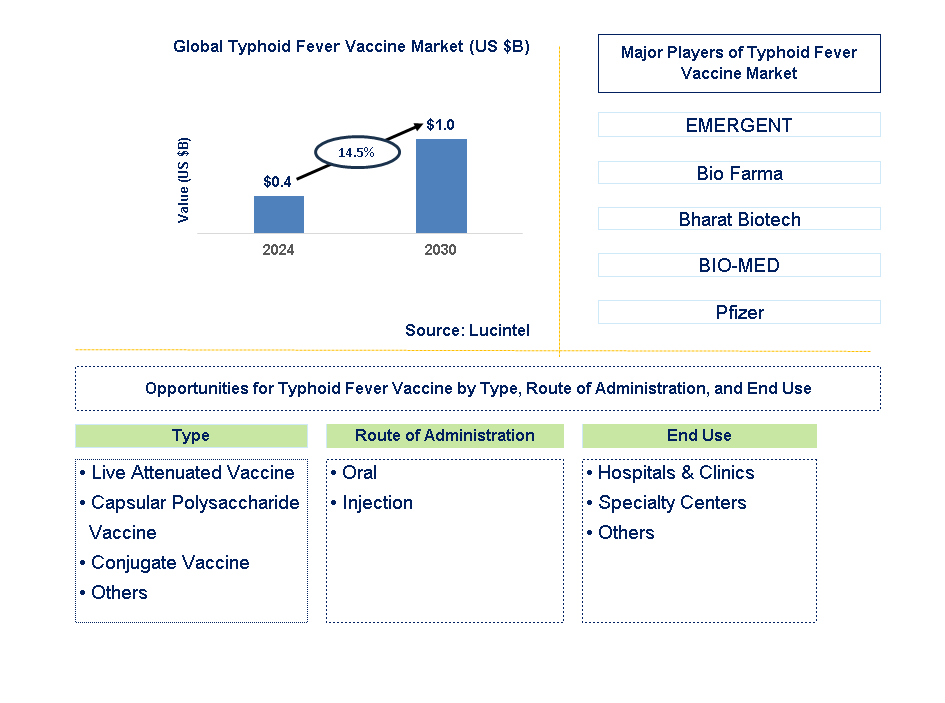
Key data points: The market size in 2030 = $1.0 billion, growth forecast = 14.5% annually next 6 years. Scroll below to get more insights. This market report covers trends, opportunities, and forecast in the global typhoid fever vaccine market to 2030 by type (live attenuated vaccine, capsular polysaccharide vaccine, conjugate vaccine, and others), route of administration (oral and injection), end use (hospitals & clinics, specialty centers, and others), and region (North America, Europe, Asia Pacific, and the Rest of the World)
We'll send your sample report shortly.
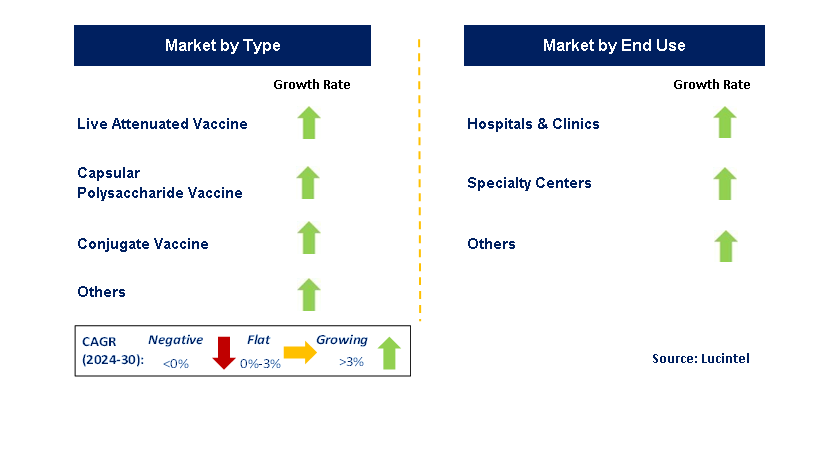
• Lucintel forecasts that, within the type category, capsular polysaccharide is expected to witness the highest growth over the forecast period due to its efficiency at preventing infection from the bacteria, safe with limited side effects, and it can be administered orally or by injection, making it easy and convenient to use.
• Within the end-use category, hospitals & clinics are expected to witness the highest growth over the forecast period.
• In terms of regions, North America will remain the largest region due to increasing demand for vaccines across all age groups and high awareness of the typhoid vaccines in the region. A more than 150-page report is developed to help in your business decisions.
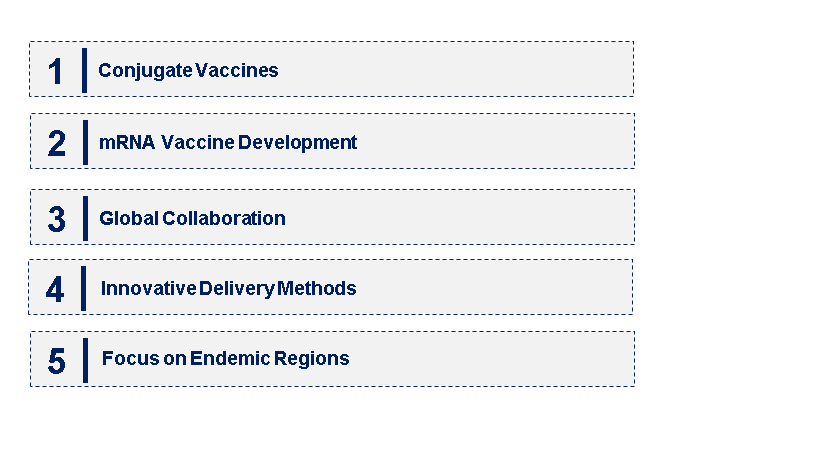
• Conjugate Vaccines: Increased usage of these vaccines has been realized as they provide longer-lasting immunity mainly among young children. Developed and developing countries alike are beginning to adopt these vaccines, with many new products being introduced into markets. This trend is expected to strengthen worldwide immunization efforts while decreasing typhoid fever occurrences, especially in areas where typhoid is endemic.
• mRNA Vaccine Development: Following the breakthroughs in mRNA technology for COVID-19 vaccines, interest has grown in its application for typhoid fever. Research is advancing on mRNA-based typhoid fever vaccines that could offer increased efficacy rates and shorter production periods. This may lead to a significant shift in the market by providing an adaptable response to outbreaks, making it more scalable for use during emergencies related to typhoid prevention strategies.
• Global Collaboration: A rise in global collaboration among governments, NGOs, and large pharmaceutical companies has driven the distribution of typhoid vaccines. GAVI and WHO-led initiatives are providing greater access to vaccines in poor countries. This is important for reducing the world’s total burden of typhoid fever and ensuring that vaccines reach those who need them most.
• Innovative Delivery Methods: New vaccine delivery methods, including oral sprays and needle-free alternatives, are being developed to enhance vaccine accessibility and patient adherence. In resource-poor settings where conventional vaccination strategies face logistical challenges, these innovations can be particularly helpful. If they make vaccination more convenient, these techniques could substantially increase rates of typhoid immunization while controlling the spread of the disease.
• Focus on Endemic Regions: The focus on vaccinating populations in regions with a high incidence of typhoid, especially in Asia and Africa, is growing. These areas are prioritized by governments and international organizations through focused vaccination campaigns and increased funding allocations. This represents an important trend toward controlling typhoid in the worst-affected areas, leading to improved global health security. Innovation, stronger global collaboration, and better vaccine availability will continue to reshape the typhoid fever vaccine market rapidly. It is anticipated that as these trends unfold, more effective immunization programs will be established, thereby reducing the global impact of typhoid fever.
• New Vaccines Approved by FDA: The U.S. Food and Drug Administration (FDA) has approved new typhoid vaccines, such as conjugate vaccines, that provide long-term protection, particularly to small children. This development is expected to increase vaccination rates and lower cases of typhoid fever both in the U.S. and globally, thus contributing to better public health.
• India’s Production Capacity Expansion: India has significantly expanded its vaccine production capacity, including setting up new manufacturing facilities and increasing exports to regions where typhoid is endemic. This expansion enables India to cater to worldwide demand, particularly in low- and middle-income countries where these vaccines are not easily accessible.
• Research on mRNA Vaccines in Germany: Ongoing research by German biotech firms is focused on using mRNA technology to develop vaccines for typhoid fever. This novel approach could result in the production of highly effective vaccines within short periods, possibly disrupting the market and creating new strategies for tackling typhoid fever.
• Global Partnerships for Vaccine Distribution: China and Japan have engaged in global collaborations aimed at improving vaccine supplies in typhoid-endemic areas. International medical organizations play an important role in achieving this goal by ensuring that the majority of the population, mainly in poor nations, is protected.
• Government Initiatives in Endemic Regions: In areas where typhoid fever is common, such as Asia and Africa, governments and international organizations are launching targeted immunization drives. These projects aim to achieve disease control and prevention, thus serving as crucial interventions for limiting outbreaks on a regional scale. These milestones have significantly propelled the typhoid fever vaccine market. They have reduced the global impact of typhoid fever by enhancing vaccine accessibility, promoting innovation, and strengthening worldwide health support activities, resulting in better public health outcomes.
• Travel Vaccination Programs: A significant opportunity for growth is presented by increased demand for typhoid vaccines from travelers going to endemic areas. Increasing travel vaccination programs in airports, travel clinics, and pharmacies will help safeguard travelers and contribute to global health security by reducing disease transmission.
• School-Based Vaccination Initiatives: Implementing school-based vaccination programs in typhoid-endemic regions can significantly increase vaccine coverage among children, who are particularly vulnerable to the disease. By serving large populations at low costs, these initiatives offer a strategic growth opportunity, thereby reducing the incidence of typhoid fever in high-risk areas.
• Public-Private Partnerships: Creating joint ventures with the private sector to finance and deliver vaccines in less developed countries is a strategic growth opportunity. Such partnerships ensure that the most vulnerable populations are also protected from typhoid fever, thus reaching more markets and meeting global immunization targets.
• Development of Combination Vaccines: The development of combination vaccines that protect against typhoid fever and other diseases, such as hepatitis A, presents an opportunity for growth by providing more comprehensive protection in a single dose. This would simplify vaccination schedules and uptake, particularly in areas where access to healthcare is limited.
• Expansion in Emerging Markets: Growth prospects for the typhoid vaccines market lie in expanding into emerging markets, especially in Asia and Africa. By focusing on these areas of high demand, vaccine manufacturers can access a largely untapped market that can improve public health and drive market growth. The typhoid fever vaccine industry is being transformed by these strategic growth opportunities, which are changing access, strengthening vaccination development capabilities, and promoting global cooperation. As these opportunities unfold, they will be instrumental in reducing the global burden of typhoid fever and driving market growth forward.
• Technological Advancements: Vaccine technologies, such as conjugate and mRNA-based vaccines, are driving market growth. These developments provide more efficient and long-lasting protection against typhoid fever, making them appealing to both consumers and medical practitioners, thus increasing vaccination rates.
• Government Initiatives: Vaccination campaigns initiated by governments and funding for vaccine research significantly drive the typhoid fever vaccine market. Such initiatives help increase vaccine coverage, particularly in endemic areas, leading to controlled disease spread and market expansion.
• Global Health Partnerships: Collaboration among governments, non-governmental organizations (NGOs), and pharmaceutical companies has been identified as a major driver for improving vaccine distribution, especially in low-income nations. These partnerships are vital for ensuring that many vaccines reach underserved populations, thereby contributing to global immunization efforts and increasing market size.
• Rising Awareness: Rising awareness of the dangers of typhoid fever in endemic areas is fueling demand for vaccines. Public health promotions and educational campaigns are increasing the number of people willing to get vaccinated, boosting market growth.
• Expansion in Emerging Markets: The demand for large doses of vaccines in emerging markets, specifically in Asia and Africa, is one of the major market drivers. These regions have significant untapped potential and represent an immense opportunity for vaccine manufacturers seeking to increase their market presence. Challenges in the typhoid fever vaccine market are:
• Regulatory Hurdles: The complexity of regulatory frameworks across different countries is a significant obstacle for vaccine manufacturers. This can slow down the introduction of new vaccines due to stringent approval processes and a myriad of regulations, thereby restricting market expansion.
• Vaccine Hesitancy: Vaccine hesitancy poses a major challenge to increasing immunization rates and is driven by misinformation and cultural beliefs. This barrier must be overcome by addressing concerns through public education and direct communication strategies that expand the market base.
• Supply Chain Issues: The consistency and reliability of vaccine supplies for low-income countries is a significant challenge. Any disruption in the supply chain, whether due to logistical problems or manufacturing delays, can affect the distribution of vaccines and limit market growth. The typhoid fever vaccine market is influenced by various growth-driving factors and challenges. While scientific advancements and global cooperation are instrumental in pushing new frontiers, regulatory barriers, vaccination hesitancy, and supply chain concerns persistently hinder the broadening of immunization rates and the expansion of market size.
• EMERGENT
• Bio Farma
• Bharat Biotech
• BIO-MED
• Pfizer
• GlaxoSmithKline
• Novartis
• Mylan
• Teva Pharmaceutical
• Sanofi
• Live Attenuated Vaccine
• Capsular Polysaccharide Vaccine
• Conjugate Vaccine
• Others
• Oral
• Injection
• Hospitals & Clinics
• Specialty Centers
• Others
• North America
• Europe
• Asia Pacific
• The Rest of the World
• United States: One area where the U.S. has improved is vaccine distribution, particularly to individuals traveling to endemic areas. Domestic availability of vaccines has been enhanced by increased government funding for FDA-approved new vaccine formulations. Additionally, efforts to curb typhoid fever within and outside America have seen significant strides made by the private sector through public-private partnerships with health organizations, leading to broader vaccine coverage and awareness campaigns.
• China: Research is a key area where China is focusing its investment due to increased global demand. The state is heavily involved in research, especially on conjugate vaccines expected to work more effectively than earlier versions. Moreover, by partnering with international health agencies, Chinese firms are fast-tracking the distribution of vaccines to low-income countries, thereby establishing a strong presence in the global typhoid fever vaccination market.
• Germany: Progressive vaccine developments in Germany, particularly with advanced technological approaches such as mRNA, are noteworthy. These improvements stem from ongoing collaboration between research organizations and biotech companies, resulting in vaccines that are more effective and safer than those currently available. Investments have been made in building production facilities for both domestic and international use.
• India: India remains a major hub for typhoid vaccine production, particularly for low- and middle-income nations. The Indian government, along with private firms, is expanding its vaccine manufacturing capabilities and improving vaccination reach. For example, affordable conjugate vaccines were recently introduced, alongside increased exports to Africa and Southeast Asia, thereby supporting India’s global vaccine supply chain.
• Japan: Japan is advancing its vaccine development efforts through cutting-edge research and the latest technology. The country is developing new delivery methods, including oral or needle-free administration routes, thus enhancing vaccine accessibility. Additionally, Japanese drug companies are partnering globally to facilitate typhoid vaccination distributions in endemic regions, fitting into their broader outlook on global health initiatives.
• EMERGENT
• Bio Farma
• Bharat Biotech
• BIO-MED
• Pfizer
• GlaxoSmithKline
• Novartis
• Mylan
• Teva Pharmaceutical
• Sanofi Q6. Which typhoid fever vaccine market segment will be the largest in future? Answer: Lucintel forecasts that capsular polysaccharide is expected to witness the highest growth over the forecast period due to its efficiency at preventing infection from the bacteria, safe with limited side effects, and it can be administered orally or by injection, making it easy and convenient to use. Q7. In typhoid fever vaccine market, which region is expected to be the largest in next 5 years? Answer: North America will remain the largest region due to increasing demand for vaccines across all age groups and high awareness of the typhoid vaccines in the region. Q.8 Do we receive customization in this report? Answer: Yes, Lucintel provides 10% customization without any additional cost.


Choose a license that fits your team. Instant PDF delivery.
Prices exclude taxes. Instant delivery. Custom licensing available on request.
Country Research · May 18, 2026
Trusted partner for strategic intelligence and business growth


Receive a complimentary market analysis tailored to your industry. Our analysts will identify key growth opportunities and competitive dynamics specific to your business.

Market size, growth rate, and key trend analysis for your specific sector.

Top competitor positioning and market share analysis.

Strategic recommendations backed by data-driven insights.
Get curated market intelligence and competitive moves straight to your inbox.
By subscribing, you agree to receive our monthly insights. Unsubscribe anytime.
Receive a complimentary market analysis tailored to your industry. Our analysts will identify key growth opportunities and competitive dynamics specific to your business.
Market size, growth rate, and key trend analysis for your specific sector.
Top competitor positioning and market share analysis.
Strategic recommendations backed by data-driven insights.
Get curated market intelligence, emerging trends, and competitive moves straight to your inbox each month.
By subscribing, you agree to receive our monthly insights. Unsubscribe anytime.
We'll send your sample report shortly.