
Report Feature
Trisodium Phosphate Market Trends and Forecast
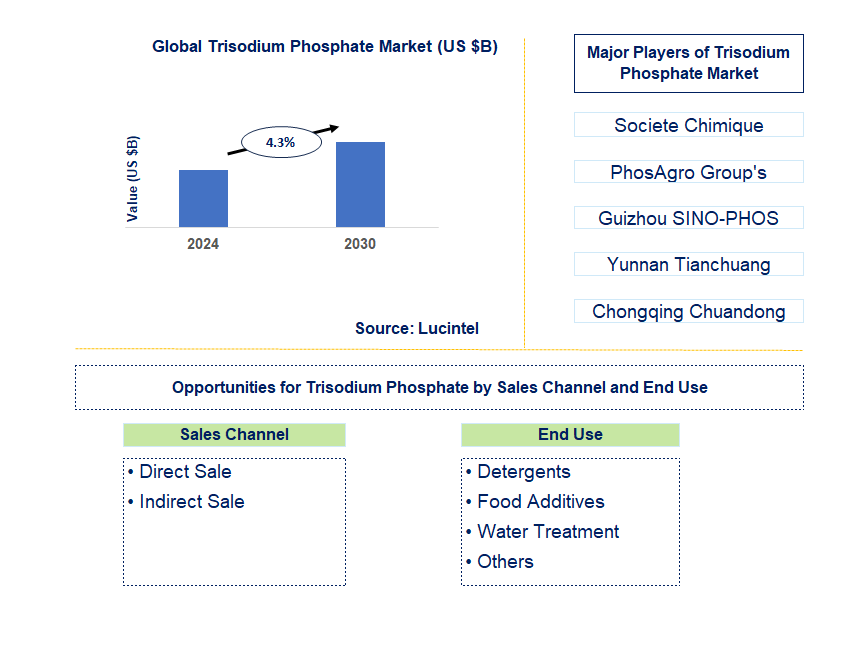
The future of the global trisodium phosphate market looks promising with opportunities in the food additive, detergent, and water treatment markets. The global trisodium phosphate market is expected to grow with a CAGR of 5.3% from 2025 to 2031. The major drivers for this market are the increasing demand from the food & beverage industry for food additives & preservatives, the growing applications in industrial cleaning & surface treatment processes, and the rising awareness of the importance of personal hygiene.• Lucintel forecasts that, within the sales channel category, direct sale is expected to witness higher growth over the forecast period.
• Within the end use category, detergent will remain the largest segment.
• In terms of region, APAC is expected to witness the highest growth over the forecast period. Gain valuable insights for your business decisions with our comprehensive 150+ page report. Sample figures with some insights are shown below.
Emerging Trends in the Trisodium Phosphate Market
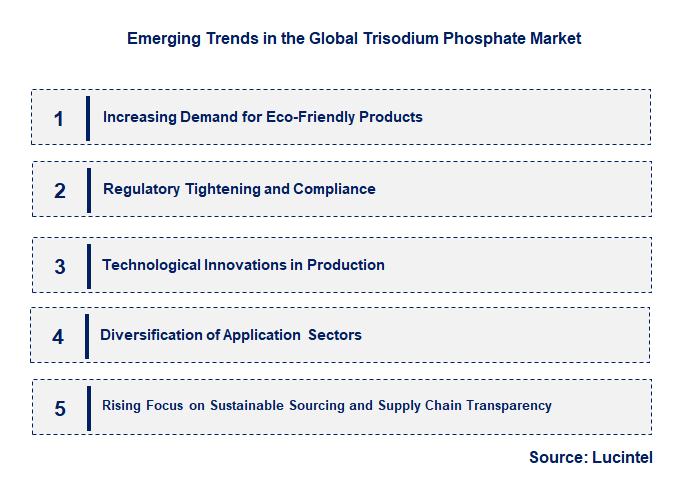
The trisodium phosphate market is experiencing significant transformation driven by technological advancements, environmental considerations, and shifting industry demands. As industries such as cleaning, food processing, and water treatment evolve, the market adapts to meet new standards and consumer preferences. Emerging trends are shaping the future landscape, influencing supply chains, product formulations, and regulatory frameworks. Companies are innovating to stay competitive while addressing sustainability concerns. These developments are not only redefining market dynamics but also creating new opportunities for growth and innovation across various sectors involved with trisodium phosphate.• Increasing demand for eco-friendly products: Growing environmental awareness is prompting companies to develop sustainable TSP alternatives. Consumers and regulators favor products with reduced environmental impact, leading to innovations in biodegradable and less toxic formulations. This trend encourages manufacturers to invest in research and development, shifting the market towards greener solutions. As a result, companies that adapt quickly can gain a competitive edge, while traditional TSP producers face pressure to modify their offerings to meet stricter environmental standards.
• Regulatory tightening and compliance: Governments worldwide are implementing stricter regulations on the use and disposal of chemicals like TSP due to environmental and health concerns. These regulations influence manufacturing processes, labeling, and usage guidelines, compelling companies to ensure compliance. Non-compliance can lead to penalties and market restrictions, prompting firms to innovate in safer, compliant alternatives. This trend fosters a more transparent market environment and encourages the development of safer chemical formulations, ultimately impacting supply chains and product availability.
• Technological innovations in production: Advances in manufacturing technology are enabling more efficient, cost-effective, and environmentally friendly production methods for TSP. Innovations such as improved synthesis techniques and waste reduction processes are reducing environmental footprints and production costs. These technological developments enhance product quality and consistency, allowing companies like solvay and fosfa to meet increasing demand while adhering to sustainability goals. The adoption of automation and process optimization is also streamlining operations, making the market more competitive and responsive to customer needs.
• Diversification of application sectors: The versatility of TSP is leading to its expanded use across various industries, including food processing, water treatment, and detergents. This diversification reduces dependency on traditional markets and opens new revenue streams. As industries seek effective cleaning agents, food additives, and water purification solutions, the demand for TSP grows. Companies are tailoring their products to meet specific sector requirements, which fosters innovation and broadens market reach, ultimately strengthening the overall market resilience.
• Rising focus on sustainable sourcing and supply chain transparency: Consumers and regulators are demanding greater transparency regarding the sourcing and environmental impact of chemical ingredients like TSP. Companies are adopting sustainable sourcing practices and enhancing supply chain transparency to build trust and meet market expectations. This trend encourages responsible mining and manufacturing practices, reducing environmental and social risks. Enhanced traceability and sustainability credentials are becoming key differentiators, influencing purchasing decisions and fostering a more ethical and sustainable market environment. In summary, these emerging trends are reshaping the trisodium phosphate market by emphasizing sustainability, regulatory compliance, technological innovation, application diversification, and supply chain transparency. Companies that proactively adapt to these developments will be better positioned to capitalize on new opportunities, ensuring long-term growth and market relevance in a rapidly evolving landscape.
Recent Development in the Trisodium Phosphate Market
The trisodium phosphate market has experienced significant shifts driven by technological advancements, regulatory changes, and evolving industrial demands. As industries such as cleaning, food, and agriculture adapt to new standards and innovations, the market landscape is transforming rapidly. Recent developments reflect a focus on sustainability, product innovation, and regulatory compliance, shaping the future trajectory of TSP. These changes are influencing supply chains, pricing strategies, and market competitiveness, ultimately impacting stakeholders across various sectors. Understanding these key developments is essential for businesses aiming to capitalize on emerging opportunities and navigate potential challenges in the trisodium phosphate market.• Growing demand for eco-friendly products: Increasing environmental awareness has led companies like solvay to develop greener TSP formulations, reducing environmental impact and aligning with regulatory standards, which boosts market acceptance and expands customer base.
• Regulatory restrictions on phosphate use: Governments in regions such as the EU and North America have imposed restrictions on phosphate content in detergents and food additives, prompting manufacturers like stearochem to innovate alternative formulations and diversify product offerings.
• Technological advancements in production processes: Innovations in manufacturing, such as energy-efficient synthesis methods, have lowered production costs and improved product quality, enabling companies like fosfa to enhance competitiveness and meet rising demand.
• Expansion into emerging markets: Companies like hanwha are increasing their presence in Asia-Pacific and Latin America, driven by industrial growth and urbanization, which opens new revenue streams and diversifies market risks.
• Product diversification and innovation: Firms such as tetrasodium pyrophosphate are developing new applications in food preservation and water treatment, broadening the market scope and creating additional revenue channels. These developments are collectively reshaping the trisodium phosphate market by promoting sustainability, fostering innovation, and expanding geographic reach. They are encouraging companies to adapt to regulatory landscapes, invest in new technologies, and explore emerging sectors, ultimately driving growth and competitiveness in the industry.
Strategic Growth Opportunities in the Trisodium Phosphate Market
The trisodium phosphate market is experiencing significant growth driven by increasing demand across various industries such as cleaning, food, and agriculture. As consumer awareness and regulatory standards evolve, companies are exploring innovative applications to expand their market share. Key players like stevensons, georgian, and cordenphos are investing in research and development to capitalize on emerging opportunities. The market's future hinges on the ability to adapt to changing consumer preferences, technological advancements, and sustainability initiatives. These developments are creating a dynamic landscape, offering numerous avenues for growth across different applications, ultimately shaping the trajectory of the trisodium phosphate industry.• Food Industry: Expansion in food additives and preservatives : The food industry is increasingly utilizing trisodium phosphate as a leavening agent, stabilizer, and pH buffer, enhancing food quality and safety. This growth boosts demand for TSP in processed foods, bakery products, and dairy, providing companies like stevensons with new revenue streams and strengthening their market position.
• Cleaning and Detergents: Rising demand for industrial and household cleaning products : TSP's effectiveness as a cleaning agent and stain remover is driving its adoption in detergents and cleaning formulations. This trend benefits companies such as georgian by expanding their product portfolio and meeting consumer preferences for eco-friendly and efficient cleaning solutions.
• Agriculture Sector: Use as a fertilizer additive and soil conditioner : The agricultural sector is increasingly adopting TSP to improve soil fertility and crop yield. This application offers growth opportunities for firms like cordenphos, enabling them to cater to the rising demand for sustainable farming inputs and enhance crop productivity.
• Water Treatment: Application in water purification processes : TSP's role in water treatment as a pH adjuster and corrosion inhibitor is gaining traction. This development opens new avenues for companies to supply TSP for municipal and industrial water management, supporting environmental compliance and infrastructure development.
• Pharmaceuticals: Emerging use in drug formulations and excipients : The pharmaceutical industry is exploring TSP for use in drug delivery systems and excipients, driven by its chemical stability and safety profile. This application presents a niche but promising growth area, encouraging innovation and diversification for industry players. In summary, these key growth opportunities across applications are significantly impacting the trisodium phosphate market by diversifying its use cases, increasing demand, and fostering innovation. Companies that capitalize on these trends are poised to strengthen their market presence and drive sustainable growth in this evolving industry.
Trisodium Phosphate Market Driver and Challenges
The trisodium phosphate market is influenced by a variety of technological, economic, and regulatory factors that shape its growth trajectory. Advances in manufacturing processes, environmental regulations, and shifts in end-user demand are key elements impacting the market dynamics. Additionally, global economic conditions and trade policies play significant roles in determining market expansion or contraction. As industries such as cleaning, food, and agriculture evolve, their requirements for TSP also change, creating both opportunities and challenges. Understanding these drivers and challenges is essential for stakeholders to navigate the complex landscape of the TSP market effectively. The factors responsible for driving the trisodium phosphate market include:-• Technological Advancements: The development of more efficient and environmentally friendly manufacturing processes has significantly boosted TSP production. Innovations such as improved purification techniques and sustainable raw material sourcing have reduced costs and enhanced product quality. These advancements enable manufacturers to meet stricter regulatory standards while maintaining competitive pricing. As industries demand higher purity and eco-friendly options, technological progress continues to propel market growth, especially in regions with stringent environmental policies. The ongoing R&D efforts are expected to further optimize production, reduce waste, and expand application scopes, thereby supporting sustained market expansion.
• Growing Demand in Food and Beverage Industry: TSP is widely used as a food additive, pH regulator, and cleaning agent in food processing. The increasing global population and rising disposable incomes have led to higher consumption of processed foods, which in turn drives demand for TSP. Moreover, the food industry’s focus on food safety and quality standards necessitates the use of TSP in various applications. The expansion of food manufacturing facilities, especially in emerging economies, further fuels this demand. As consumers seek safer and more efficient food processing methods, the role of TSP becomes increasingly vital, supporting market growth.
• Environmental Regulations and Sustainability Initiatives: Governments worldwide are implementing stricter regulations to control the environmental impact of chemical manufacturing. These regulations influence the production, usage, and disposal of TSP, encouraging manufacturers to adopt greener practices. Companies investing in sustainable production methods, such as waste minimization and recycling, are gaining a competitive edge. These initiatives also promote the development of eco-friendly alternatives, which can challenge traditional TSP markets but also push innovation. Overall, regulatory pressures are shaping a more sustainable industry landscape, influencing market strategies and growth prospects.
• Expansion in End-Use Industries: The growth of end-use sectors such as cleaning, agriculture, and water treatment significantly impacts the TSP market. In cleaning applications, TSP is valued for its effectiveness in removing grease and stains, especially in industrial and household cleaning products. In agriculture, it is used as a fertilizer additive, supporting crop yield improvements. The increasing adoption of TSP in water treatment plants to control pH levels and remove contaminants further boosts demand. As these industries expand globally, driven by urbanization and infrastructure development, the TSP market benefits from increased consumption across diverse applications. The challenges in the trisodium phosphate market are:
• Stringent Environmental Regulations: While regulations aim to reduce environmental impact, they also pose significant hurdles for TSP manufacturers. Restrictions on phosphate discharge into water bodies and bans on phosphate-based cleaning agents in certain regions have led to decreased demand. Compliance costs increase as companies invest in cleaner production technologies or seek alternative ingredients. These regulatory constraints can limit market growth, especially in regions with aggressive environmental policies, forcing manufacturers to innovate or exit certain markets altogether.
• Competition from Eco-Friendly Alternatives: The rising awareness of environmental issues has led to the development of phosphate-free cleaning agents and fertilizers. These alternatives often offer comparable or superior performance without the environmental drawbacks associated with TSP. The shift towards sustainable products challenges traditional TSP markets, forcing companies to diversify their product portfolios. The increasing availability and acceptance of eco-friendly substitutes threaten the long-term viability of TSP, especially in regions with strict environmental standards.
• Volatility in Raw Material Prices: The cost of raw materials used in TSP production, such as phosphates and other chemicals, is subject to fluctuations due to geopolitical tensions, supply chain disruptions, and market demand. Price volatility affects profit margins and can lead to increased product prices, impacting competitiveness. Manufacturers may face difficulties in planning and investment, which can hinder innovation and expansion efforts. Managing raw material costs remains a critical challenge for sustaining profitability in the TSP market. In summary, the trisodium phosphate market is shaped by technological innovations, expanding end-use industries, and regulatory pressures that drive growth and innovation. However, environmental restrictions, competition from eco-friendly alternatives, and raw material price volatility pose significant challenges. These factors collectively influence market dynamics, requiring stakeholders to adapt strategies to sustain growth. The future of the TSP market hinges on balancing regulatory compliance with innovation and market demand, ensuring long-term viability amid evolving global standards and consumer preferences.
List of Trisodium Phosphate Companies
Companies in the market compete on the basis of product quality offered. Major players in this market focus on expanding their manufacturing facilities, R&D investments, infrastructural development, and leverage integration opportunities across the value chain. With these strategies trisodium phosphate companies cater increasing demand, ensure competitive effectiveness, develop innovative products & technologies, reduce production costs, and expand their customer base. Some of the trisodium phosphate companies profiled in this report include-• Societe Chimique ALKIMIA
• PhosAgro Group
• Guizhou SINO-PHOS Chemical
• Yunnan Tianchuang Technologies
• Chongqing Chuandong Chemical
• Aditya Birla Group
• Xingfa Chemical Group
Trisodium Phosphate Market by Segment
The study includes a forecast for the global trisodium phosphate market by sales channel, end use, and region.Trisodium Phosphate Market by Sales Channel [Value from 2019 to 2031]:
• Direct Sale
• Indirect Sale
Trisodium Phosphate Market by End Use [Value from 2019 to 2031]:
• Food Additives
• Detergents
• Water Treatment
• Others
Trisodium Phosphate Market by Region [Value from 2019 to 2031]:
• North America
• Europe
• Asia Pacific
• The Rest of the World
Country Wise Outlook for the Trisodium Phosphate Market
The trisodium phosphate market has experienced notable shifts driven by regulatory changes, technological advancements, and evolving industrial demands across major economies. As environmental concerns and safety standards tighten, companies are innovating to meet new compliance requirements while expanding applications in cleaning, food, and industrial sectors. The United States, China, Germany, India, and Japan are key players influencing market trends through policy updates, manufacturing capacity adjustments, and research initiatives. These developments reflect a global push toward sustainable practices and product innovation, shaping the future landscape of the TSP industry.• United States: The US market for trisodium phosphate has seen increased regulatory scrutiny, prompting companies like stevens and whittaker to innovate safer, eco-friendly formulations. There is a rising demand in cleaning products and food processing sectors, supported by stricter safety standards. Manufacturers are investing in research to develop alternatives that reduce environmental impact while maintaining efficacy. The adoption of sustainable practices is also encouraging the use of recycled raw materials, aligning with government initiatives for greener manufacturing processes.
• China: China remains the largest producer and consumer of trisodium phosphate, with companies such as shanghai chemical and guangzhou chemical expanding production capacities to meet domestic and export demands. Recent government policies aim to regulate chemical safety and reduce pollution, leading to cleaner production techniques. The market is witnessing technological upgrades to improve efficiency and reduce waste. Additionally, increasing applications in food preservation and industrial cleaning are driving growth, despite environmental concerns prompting some shifts toward alternative substances.
• Germany: In Germany, the market for trisodium phosphate is characterized by stringent environmental regulations and a focus on sustainable manufacturing. Companies like bayer and basf are investing in research to develop environmentally friendly substitutes and improve process efficiencies. The demand for TSP in food and industrial applications remains steady, but there is a notable trend toward reducing phosphate usage due to environmental impact. Innovations in waste management and recycling are also prominent, aligning with Germany’s broader sustainability goals and regulatory frameworks.
• India: The Indian trisodium phosphate market is expanding rapidly, driven by growth in food processing, ceramics, and cleaning industries. Companies such as tata chemicals and hindustan chemicals are increasing production capacity to cater to domestic demand and exports. Government initiatives promoting industrial growth and infrastructure development are fueling market expansion. However, environmental regulations are becoming more stringent, prompting manufacturers to adopt cleaner production methods. The market is also witnessing increased research into alternative, eco-friendly chemicals, balancing growth with sustainability concerns.
• Japan: Japan’s trisodium phosphate market is evolving with a focus on safety, quality, and environmental sustainability. Companies like mitsubishi chemical and sumitomo are investing in advanced manufacturing technologies to reduce emissions and waste. The demand in food preservation, electronics, and industrial cleaning remains stable, with a shift toward using TSP in more environmentally conscious applications. Regulatory pressures are encouraging innovation in product formulations and recycling practices. Japan’s emphasis on technological advancement and sustainability is shaping a more efficient and eco-friendly TSP industry.

Features of the Global Trisodium Phosphate Market
Market Size Estimates: Trisodium phosphate market size estimation in terms of value ($M). Trend and Forecast Analysis: Market trends (2019 to 2024) and forecast (2025 to 2031) by various segments and regions. Segmentation Analysis: Trisodium phosphate market size by sales channel, end use, and region in terms of value ($M). Regional Analysis: Trisodium phosphate market breakdown by North America, Europe, Asia Pacific, and Rest of the World. Growth Opportunities: Analysis of growth opportunities in different sales channel, end use, and regions for the trisodium phosphate market. Strategic Analysis: This includes M&A, new product development, and competitive landscape of the trisodium phosphate market. Analysis of competitive intensity of the industry based on Porter’s Five Forces model.
FAQ
Q1. What is the growth forecast for trisodium phosphate market? Answer: The global trisodium phosphate market is expected to grow with a CAGR of 5.3% from 2025 to 2031. Q2. What are the major drivers influencing the growth of the trisodium phosphate market? Answer: The major drivers for this market are the increasing demand from the food & beverage industry for food additives & preservatives, the growing applications in industrial cleaning & surface treatment processes, and the rising awareness of the importance of personal hygiene. Q3. What are the major segments for trisodium phosphate market? Answer: The future of the trisodium phosphate market looks promising with opportunities in the food additive, detergent, and water treatment markets. Q4. Who are the key trisodium phosphate market companies? Answer: Some of the key trisodium phosphate companies are as follows:• Societe Chimique ALKIMIA
• PhosAgro Group
• Guizhou SINO-PHOS Chemical
• Yunnan Tianchuang Technologies
• Chongqing Chuandong Chemical
• Aditya Birla Group
• Xingfa Chemical Group Q5. Which trisodium phosphate market segment will be the largest in future? Answer: Lucintel forecasts that, within the sales channel category, direct sale is expected to witness higher growth over the forecast period. Q6. In trisodium phosphate market, which region is expected to be the largest in next 5 years? Answer: In terms of region, APAC is expected to witness the highest growth over the forecast period. Q7. Do we receive customization in this report? Answer: Yes, Lucintel provides 10% customization without any additional cost.
Table of Contents
List of Figures
List of Tables
Methodology
- In-depth interviews of the major players in this market
- Detailed secondary research from competitors’ financial statements and published data
- Extensive searches of published works, market, and database information pertaining to industry news, company press releases, and customer intentions
- A compilation of the experiences, judgments, and insights of Lucintel’s professionals, who have analyzed and tracked this market over the years.


Buy Now
Choose a license that fits your team. Instant PDF delivery.
Prices exclude taxes. Instant delivery. Custom licensing available on request.
Key Questions
- • What are some of the most promising, high-growth opportunities for the trisodium phosphate market by sales channel (direct sale and indirect sale), end use (food additives, detergents, water treatment, and others), and region (North America, Europe, Asia Pacific, and the Rest of the World)?
- • Which segments will grow at a faster pace and why?
- • Which region will grow at a faster pace and why?
- • What are the key factors affecting market dynamics? What are the key challenges and business risks in this market?
- • What are the business risks and competitive threats in this market?
- • What are the emerging trends in this market and the reasons behind them?
- • What are some of the changing demands of customers in the market?
- • What are the new developments in the market? Which companies are leading these developments?
- • Who are the major players in this market? What strategic initiatives are key players pursuing for business growth?
- • What are some of the competing products in this market and how big of a threat do they pose for loss of market share by material or product substitution?
- • What M&A activity has occurred in the last 5 years and what has its impact been on the industry? For any questions related to Trisodium Phosphate Market, Trisodium Phosphate Market Size, Trisodium Phosphate Market Growth, Trisodium Phosphate Market Analysis, Trisodium Phosphate Market Report, Trisodium Phosphate Market Share, Trisodium Phosphate Market Trends, Trisodium Phosphate Market Forecast, Trisodium Phosphate Companies, write Lucintel analyst at email: helpdesk@lucintel.com. We will be glad to get back to you soon.


