
Market Report · July 29, 2026

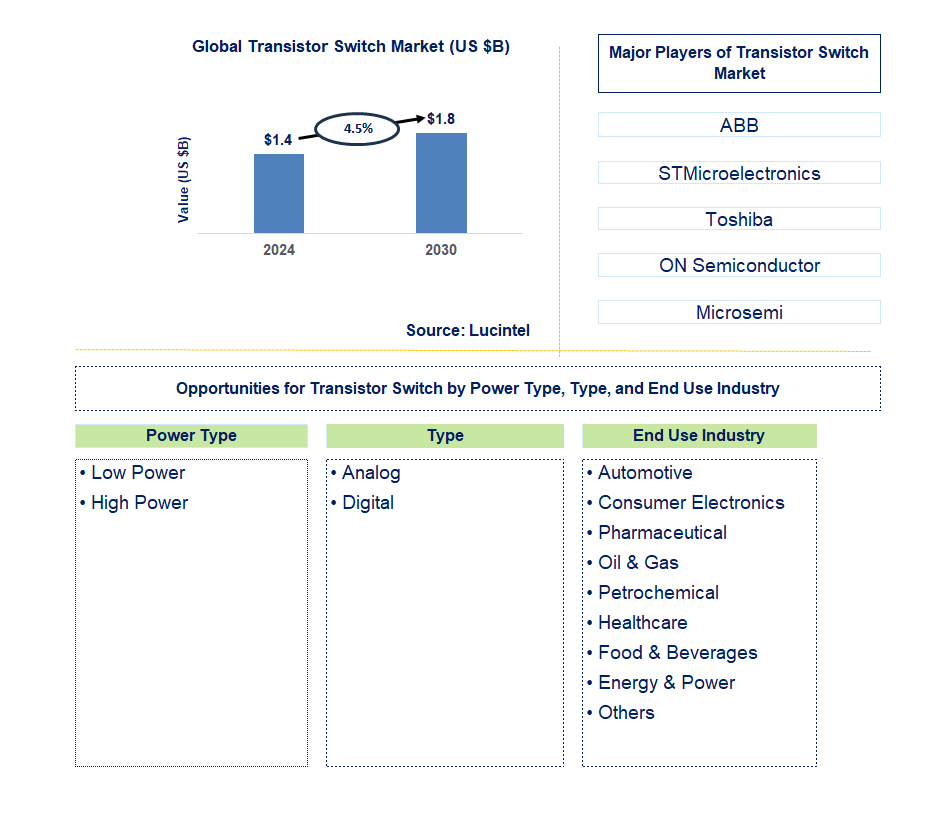
Key data points: The market size in 2030 = $1.77 billion, growth forecast = 4.5% annually for the next 6 years. Scroll below to get more insights. This market report covers trends, opportunities, and forecasts in the global transistor switch market to 2030 by power type (low power and high power), type (analog and digital), end use industry (automotive, consumer electronics, pharmaceutical, oil & gas, petrochemical, healthcare, food & beverages, energy & power, and others), and region (North America, Europe, Asia Pacific, and the Rest of the World)
We'll send your sample report shortly.
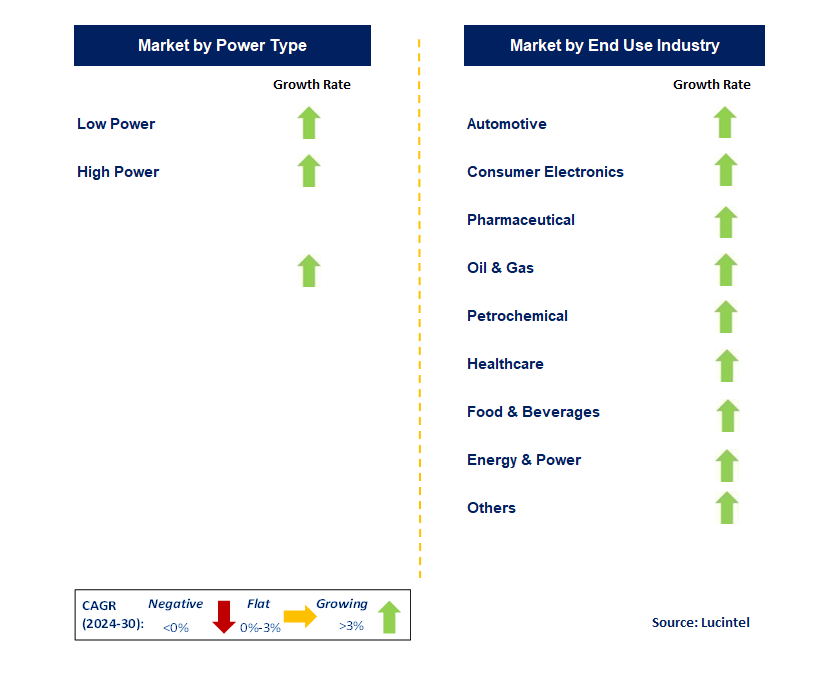
• Lucintel forecasts that, within the type category, digital is expected to witness the highest growth over the forecast period due to low power consumption, small size, and low noise, fast switching action, automated manufacturing process and cost-effective mass production.
• Within the end use industry category, consumer electronics will remain the largest segment due to the expansion of new consumer electronic products with improved features.
• In terms of regions, APAC is expected to witness the highest growth over the forecast period due to highest growth of consumer electronics products like smartphone, wearable electronics products, electrical vehicles. Gain valuable insights for your business decisions with our comprehensive 150+ page report.
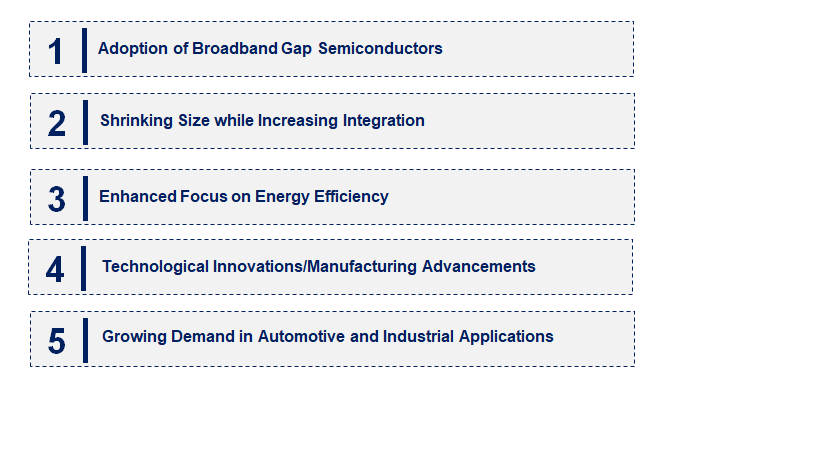
• Adoption of Broadband Gap Semiconductors: A major trend in the market for transistor switches is the move towards using wide band gap (WBG) semiconductors such as silicon carbide (SiC) and gallium nitride (GaN). Improved performance over silicon-based traditional transistors, including higher efficiency, improved thermal conductivity, and greater power handling capabilities, are provided by these materials. The usage of large-bandgap semiconductors is increasing across areas like electric vehicles, renewable energy systems and high-frequency electronics. This development spurs change as well as enhances transistors’ switch performance resulting in electronic system that are more efficient and dependable.
• Shrinking Size while Increasing Integration: Driven by demand for compactness and high-performance electronic devices miniaturization as well as integration remains among the key trends in the transistor switch market. Smaller transistor switches offering better performance and functionality are being developed thanks to progress made in fabrication technologies and materials science. As a result, there is an increasing tendency to integrate transistor switches into multi-functional chips or systems which promotes highly integrated electronic devices. It also finds particular relevance in consumer electronics automotive applications and IoT devices, where space limitations along with performance requirements hold paramount importance for either case of technology shrinkage or design improvement purposes.
• Enhanced Focus on Energy Efficiency: The increased focus on energy efficiency is reshaping the market for transistor switches, spurred by a growing need for low-power and long-lasting electronic solutions. Transistor switches are being designed to minimize power loss and enhance overall energy efficiency of electronic systems. This trend is especially noticeable in areas such as electric vehicles, renewable energy systems and industrial automation. It helps to address the demand for greener technologies by improving energy efficiency in transistor switches so as to reduce power consumption across different sectors.
• Technological Innovations/Manufacturing Advancements: Manufacturing technology developments are proving to be vital in determining the fate of the transistor switch market as they enable more effective and reliable devices to be manufactured. These include improvements made through advanced lithography methods, precision etching, automated production processes which have helped improve quality and expandability of transistors’ production line. These advancements aim at tackling issues related to accuracy, productivity rates, expense thereby fostering expansion within this marketplace. Also by using enhanced manufacturing technologies it can utilize novel materials as well as designs thereby leading further innovation in the transistor switch industry.
• Growing Demand in Automotive and Industrial Applications: The market is experiencing an upsurge of need for semiconductor devices used as switch and amplifiers. In the automotive industry, more use of transistor switches have been seen in electrically powered cars, ADAS, among other performances demanding applications. In addition to that, these are also widely applied in machineries used in industries like power management systems and control systems. This has led to advances in technology related to transistor switch especially those that are efficient, reliable as well as high performing necessary for such growing applications. The areas where wide bandgap materials are gaining popularity include miniaturization and integration, energy efficiency is now being viewed with seriousness while new manufacturing technologies are already advancing along with the increased demand for auto parts. Such trends lead to invention, this raises performance standards while increasing applications from which transistors can be found thereby affecting the future direction of the sector.
• The emergence of Wide-Bandgap Materials: Another significant development in the transistor switch market is wide-bandgap materials like silicon carbide (SiC) and gallium nitride (GaN). They offer better per-formance than previous devices such as improved power density, better thermal management and reduced switching losses. The use of wide band gap materials is growing in areas like electric vehicles, renewable energy systems and high-frequency electronics. It promotes invention while enhancing efficiency and reliability in transistors used; hence driving growth of this market.
• Innovations in High-Speed Switching: High-speed switching advancements in transistor switches drive innovations in the market. In this regard, new transistor switch designs and materials that facilitate faster switching speeds and better performance are being improved by researchers and manufacturers. These breakthroughs are very essential to applications that require fast switching such as high frequency communication systems and advanced computing technologies. More efficient, more responsive electronic systems are brought about by improved high speed switching capabilities which has driven the demand for advanced transistor switches across several industries.
• Integration with Power Electronics: The integration of transistor switches into power electronics is a major development in this field. Transistor switches have been embedded in power management systems and control circuits to improve efficiency, accuracy, or speed of operation on electronic devices. This convergence supports the creation of smaller size but highly effective power electronics solutions addressing issues like electric vehicles or renewable energy systems for industrial automation applications. The combination of transistor switches with power electronics opens up possibilities for innovation and extends application areas where this constituent can be used.
• Technological advancements in Manufacture: The transistor switch market is growing due to the development of manufacturing techniques. Advanced lithography, precision etching and automated fabrication processes are some of the new fabrication methods that have been improving quality, accuracy and scalability in transistor switch production. These advances resolve problems related to yield, cost and performance thereby supporting high-quality transistor switches. The inclusion of advanced materials and designs through improved manufacturing techniques drives market innovation and growth.
• More Emphasis on Efficiency: Transistor switch market developments are being driven by a greater emphasis on energy efficiency. With an aim of minimizing power dissipation while boosting overall energy efficiency especially for electronic systems, manufacturers have started making transistor switches with this in mind. This has more relevance in cases where electric vehicles, renewable energy systems or industrial automation can be applied as well as situations where other similar systems are used. By increasing the power efficiency of transistor switches, suppliers are satisfying the rising demand for environmentally friendly low-power electronic solutions which promote sustainability hence contributing to the markets upswing. Advances in wide-bandgap materials, manufacturing techniques, high-speed switching technology, integration with power electronics and energy efficiency are some of the most recent developments in transistor switch market. These innovations are encouraging innovation as well as enhancing performance while widening the scope of application for transistor switches thereby affecting its future course.
• Electric Vehicles (EVs): For transistor switches, the electric vehicle market is a great avenue for expansion. Power management systems in EVs need to have high performance transistors for switching in motor control and charging infrastructure as demand grows with increased adoption. For EV components to be more efficient and reliable, it is necessary that there are improved transistor switches. This chance can be utilized by businesses by inventing advanced transistor switches that satisfy specifics needs of EV applications thereby further boosting this market’s growth.
• Renewable Energy Systems: Transistor switches represent a significant growth opportunity regarding renewable energy systems specifically wind power and solar energy. Efficient power management and control components are required in these systems to optimize energy generation and distribution. Transistor switches are crucial for managing power flows as well as enhancing the output of renewable energy systems. Businesses may identify opportunities to design highly efficient transistor switches for use in renewable energy applications thus driving towards green energy industry development.
• Industrial Automation: As far as transistor switches are concerned, the industrial automation industry presents a growth opportunity. For control, power management and signal switching in automation systems, reliable and high-performance components is needed. Robotics, process control and machinery are some instances where transistor switches are used in the industries. Through developing robust and efficient transistor switches for industrial automation, corporations could cater for this growing market while boosting the growth of automation technologies.
• Telecommunications and 5G Networks: The need for advanced transistor switches in telecommunications and 5G networks is being driven by these sectors. Deployment of 5G networks necessitates faster data transmission rates as well as better network performance which demand high-speed and high-frequency transistor switches. Companies that meet the requirements for performance of telecommunication applications like 5G should capitalize on this trend through development of transistor-switches. More so, the increasing appetite for faster connectivity speeds and modern communication technologies has been responsible for this growth opportunity.
• Consumer Electronics: On the other hand, consumer electronics is a sector where growth opportunities are available for transistor switches. This is because there is an increase in complexity and functionality of electronic devices throughout the world leading to a great demand for transistor switches. Transistor switches are used in smartphones, tablets as well as wearables among many other consumer electronics. With these devices getting more sophisticated and packed with more features, high performing transistors become necessary to support all their operations. As far as developing innovative transistor switches for consumer electronics is concerned, this creates an avenue through which companies can meet the changing requirements of this dynamic market. In addition to electric vehicles (EVs), renewable energy systems, industrial automation, telecommunications and 5G networks; strategic growth opportunities within the transistor switch market include also consumer electronics that offer ways to broaden markets and create new products. Firms could seize such chances so as to boost their product lines, focus on rising issues and stimulate growth in the area of transistors switch production.
• Technological Advancements: Technological advancements also serve as chief drivers of the transistor switch market. In this case, novel fabrication techniques for semiconductor materials are impacting on the performance and capabilities of transistor switches. Innovation leading to things like high-speed switching technologies, GaN), wide-bandgap materials (SiC and better manufacturing processes have been driving development within this sector. Consequently these improvements enable more efficient, reliable, and high-performance transistor switches that can meet changing demands of different applications
• High-Efficiency Electronics with High Demand: The transistor switch market is driven by the growing demand for high-efficiency electronics. As electronic devices become more power-conscious, there is a need for transistor switches offering improved energy efficiency and reduced power loss. Energy-efficient applications such as electric vehicles, renewable energy systems, and industrial automation are increasingly demanding advanced transistor switches. This driver supports market growth by addressing the need for more sustainable and efficient electronic solutions.
• Electric Vehicles (EVs) Expansion and Renewable Energy: The expansion of electric vehicles (EVs) and renewable energy systems involves a shift in demand for transistor switches. Advanced power management and control components are required by both sectors to optimize performance and efficiency. In managing power flows, improving reliability, as well as supporting the functionality of EVs and renewable energy systems, Transistor switches play a critical role. The development of these sectors has led to innovations in transistor switch technology hence promoting market growth.
• ch and development (R&D) are driving the transistor switch market. Notably, electronic devices and systems continue to become more intricate necessitating advanced transistor switches which can handle higher frequencies, power levels and integration needs. Pioneering advancements in transistor switch technology are facilitating the emergence of more complex and powerful electronic systems that foster the growth of markets. Some of these sectors include telecommunications, computing and industrial automation.
• The Upward Trend in Semiconductor R&D: The increased funding on semiconductor study and research has led to growth in demand for transistors switch in the market. The increasing complexity of electronics calls for advanced types of transistors that can handle high frequencies, power levels and integration requirements. Technological advancements in transistor switches have made it possible to develop more complicated electronic systems, leading to market growth. Within this sector, this driver is particularly applicable to segments like telecommunications, computing, industrial automation etc. Challenges in the transistor switch market are:
• Expensive Manufacturing Costs: The high costs of manufacturing constitute a problem with respect to the transistor switch market. Demand for sophisticated materials and fabrication techniques in relation to high performance transistor switches is costly, thus affecting their affordability and availability. High manufacturing costs might constrain the diffusion of advanced semiconductor devices especially in the less endowed companies and developing economies where they are required most. Overcoming this challenge entails finding ways of minimizing production costs through improved manufacturing processes and taking advantage of economies of scale.
• Technical Complexity:
• Transistor Switching Market has Technical Complexity as one of its challenges. Advanced transistor switches need complex designing, fabricating, and testing methods. Growth complexity may inhibit manufacturers’ ability to scale up and ensure reliability in producing transistors that are used for switching appliances. Research and innovation have to be sustained to overcome this issue by simplifying product design as well as process engineering without sacrificing performance or dependability.
• Regulatory and Compliance Issues: Regulatory & compliance issues are challenges within the transistor switch market. Adherence to industry standards, safety regulations, environmental guidelines, etc ensures market acceptance and integration into applications; while non-compliance can lead to loss of such markets. These regulatory requirements can delay development timelines and increase associated costs which could pose challenges for manufactures. Successful entry into any market requires that there exist clear regulatory regimes on these products such as standards for transistors switching capacities. The transistor switch market is being shaped by major drivers like increasing complications of electronic systems, technological advancements, rising investments on semiconductor R&D, growth in the electric vehicles and renewable energy markets due to high demand for high efficiency electronic devices. Manufacture costs are very high as well as technical complexity and regulatory issues that affect dynamics of the market. Dealing with these drivers and challenges is crucial for promoting growth, fostering innovation and expanding the market in transistor switch industry.
• ABB
• STMicroelectronics
• Toshiba
• ON Semiconductor
• Microsemi
• Comsol
• Renesas Electronics
• Fairchild Semiconductor
• Hitachi
• Mitsubishi Electric
• Low Power
• High Power
• Analog
• Digital
• Automotive
• Consumer Electronics
• Pharmaceutical
• Oil & Gas
• Petrochemical
• Healthcare
• Energy & Power
• Others
• North America
• Europe
• Asia Pacific
• The Rest of the World
• USA: Recent developments in the transistor switch market in America have seen improvements in high-efficiency semiconductor materials and technologies. Silicon carbide (SiC) and gallium nitride (GaN) are being used by companies as well as research institutions in a bid to enhance efficiency of transistor switches. These offer better thermal management and increased efficiencies over traditional silicon-based transistors. The U.S. is also witnessing growing uptake of transistor switches within electric vehicles (EVs) and renewable energy systems caused by the demand for greener technologies. High performance semiconductor producers are investing in R&D to make them faster and minimize power dissipation as part of the wider movement towards energy saving systems, while producing electrical devices of high performance.
• China: The government support and focus on semiconductor technology advancement have enabled China to make significant inroads into the transistor switch market. Recently, there have been advancements in high-power transistor switches manufacturing especially in SiC and GaN technologies. In addition, Chinese companies and research organizations are working towards improving production processes to enhance reliability and efficiency of these devices. This concentration on developing domestic production capabilities and innovation in semiconductor technology has led to increased investment by the country. Also with an expanding electronics industry notably 5G and automotive while accelerating the evolution of markets for advanced transistor switches.
• Germany: The recent developments in the transistor switch market in Germany revolve around precision engineering and having these integrated with existing semiconductor technologies. The German companies are striving to develop high-frequency, high-efficiency transistor switches that can be used in the automobile industry, telecommunications, or the industrial sector. In addition, advances achieved in materials science such as SiC and GaN have led to the development of more robust and efficient transistor switches. With strong emphasis placed on research and development fostered by Fraunhofer Society and Max Planck Institute, Germany is a leader in innovation for transistor switch technology. It is also worth noting that the country automotive industry is among the main users of advanced transistors especially those used towards electric and hybrid vehicles.
• India: There is a shifting focus of the transistor switch market in India towards encouraging domestic manufacturing capacity and promoting invention. Recent developments include research on semiconductor materials and fabrication techniques that increase the performance and reliability of these switches. Also, Indian research institutions as well as technology companies are considering the application of advanced materials such as GaN and SiC to enhance transistor switch functionality. The increasing demand for high-performance transistor switches has been driven by the electronics and automotive sectors in India. Furthermore, there is growth in India’s transistor switch market due to government initiatives to boost its semiconductor industry and promote local production.
• Japan: The transistor switch industry in Japan has seen remarkable strides because of its expertise in semiconductor technology and manufacturing. In recent times, there have been advancements in high-speed, high-efficiency transistor switches with a focus on advanced materials such as GaN and SiC. Japanese companies are also investing into next-generation manufacturing techniques to improve the accuracy and scalability of transistors’ production. The electronics and automotive industries have a significant presence in the country hence generating demand for sophisticated transistor switches especially for electric cars’ applications and Hi-performance computing (HPC). It is worth noting that this country’s focus on technological leadership and innovation is still shaping its role within the global transistor-switch market.


• ABB
• Stmicroelectronics
• Toshiba
• ON Semiconductor
• Microsemi
• Comsol
• Renesas Electronics
• Fairchild Semiconductor
• Hitachi
• Mitsubishi Electric Q6. Which transistor switch market segment will be the largest in future? Answer: Lucintel forecasts that digital is expected to witness the highest growth over the forecast period due to low power consumption, small size, and low noise, fast switching action, automated manufacturing process and cost-effective mass production. Q7. In transistor switch market, which region is expected to be the largest in next 5 years? Answer: APAC is expected to witness the highest growth over the forecast period due to highest growth of consumer electronics products like smartphone, wearable electronics products, electrical vehicles. Q.8 Do we receive customization in this report? Answer: Yes, Lucintel provides 10% customization without any additional cost.


Choose a license that fits your team. Instant PDF delivery.
Prices exclude taxes. Instant delivery. Custom licensing available on request.
Market Report · July 29, 2026
Market Report · July 15, 2026
Market Report · July 13, 2026
Trusted partner for strategic intelligence and business growth


Receive a complimentary market analysis tailored to your industry. Our analysts will identify key growth opportunities and competitive dynamics specific to your business.

Market size, growth rate, and key trend analysis for your specific sector.

Top competitor positioning and market share analysis.

Strategic recommendations backed by data-driven insights.
Get curated market intelligence and competitive moves straight to your inbox.
By subscribing, you agree to receive our monthly insights. Unsubscribe anytime.
Receive a complimentary market analysis tailored to your industry. Our analysts will identify key growth opportunities and competitive dynamics specific to your business.
Market size, growth rate, and key trend analysis for your specific sector.
Top competitor positioning and market share analysis.
Strategic recommendations backed by data-driven insights.
Get curated market intelligence, emerging trends, and competitive moves straight to your inbox each month.
By subscribing, you agree to receive our monthly insights. Unsubscribe anytime.
We'll send your sample report shortly.