
Report Feature
Transdermal Absorption Patch Market Trends and Forecast
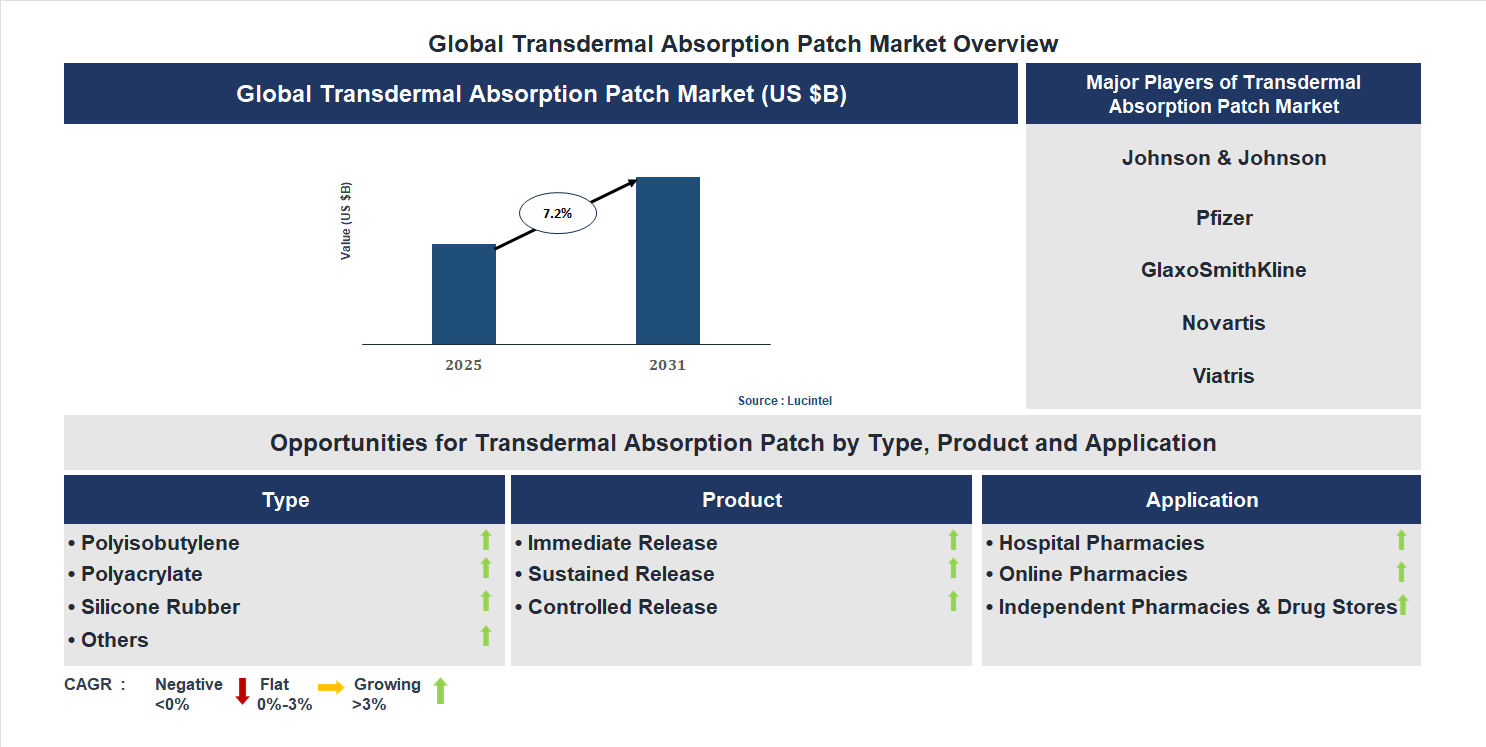
The future of the global transdermal absorption patch market looks promising with opportunities in the hospital pharmacy, online pharmacy, and independent pharmacy & drug store markets. The global transdermal absorption patch market is expected to grow with a CAGR of 7.2% from 2025 to 2031. The major drivers for this market are the increasing demand for painless drug delivery, the rising preference for sustained release therapies, and the growing adoption of wearable medical devices.• Lucintel forecasts that, within the type category, silicone rubber is expected to witness the highest growth over the forecast period.
• Within the application category, independent pharmacy & drug store is expected to witness the highest growth.
• In terms of region, APAC is expected to witness the highest growth over the forecast period. Gain valuable insights for your business decisions with our comprehensive 150+ page report. Sample figures with some insights are shown below.
Emerging Trends in the Transdermal Absorption Patch Market
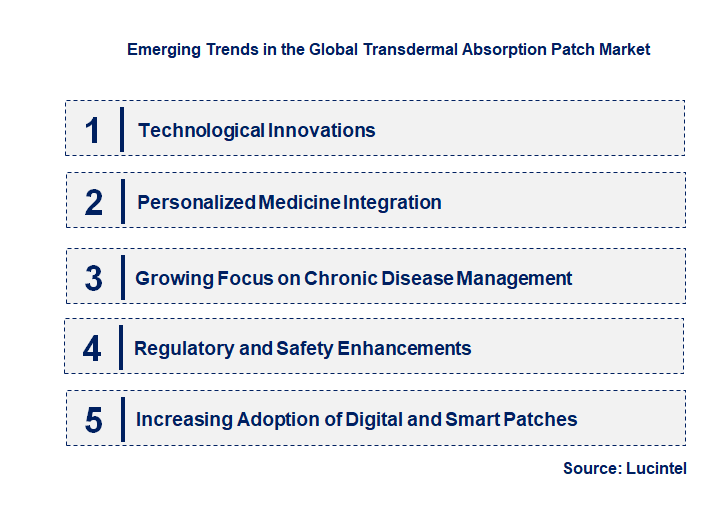
The transdermal absorption patch market is experiencing rapid growth driven by technological advancements, increasing consumer demand for non-invasive drug delivery methods, and a shift towards personalized healthcare. As the healthcare landscape evolves, innovative solutions are emerging to improve efficacy, safety, and patient compliance. These developments are transforming the way medications are administered, offering new opportunities for pharmaceutical companies and healthcare providers. The markets future will likely be shaped by ongoing research, regulatory changes, and consumer preferences, making it a dynamic and competitive space. Here are five key emerging trends that are defining the future of this market.• Technological Innovations: Advancements in materials and drug delivery systems are enhancing patch efficacy. New adhesive technologies, micro-needle arrays, and nanotechnology are enabling more efficient absorption and targeted delivery. These innovations improve patient comfort and compliance while expanding the range of drugs that can be administered transdermally. As research progresses, we can expect more sophisticated patches capable of delivering complex therapies, including biologics and vaccines, broadening the market scope.
• Personalized Medicine Integration: The trend toward personalized healthcare is influencing transdermal patch development. Customizable patches tailored to individual patient needs, genetic profiles, and specific conditions are emerging. This approach allows for optimized dosing, reduced side effects, and improved therapeutic outcomes. The integration of diagnostics with patches, such as biosensors, enables real-time monitoring of health parameters, making treatments more precise and adaptive, thus increasing market adoption and patient trust.
• Growing Focus on Chronic Disease Management: The prevalence of chronic conditions like pain, cardiovascular diseases, and diabetes is driving demand for long-term, convenient drug delivery solutions. Transdermal patches offer a non-invasive, steady release of medication, improving adherence and quality of life for patients. Market players are investing in patches that can deliver multiple drugs or provide controlled release over extended periods, addressing the needs of chronic disease management and expanding market opportunities.
• Regulatory and Safety Enhancements: As the market matures, regulatory bodies are implementing stricter standards for safety, efficacy, and quality control. Innovations in patch design are focusing on reducing skin irritation, ensuring consistent drug release, and preventing misuse. Enhanced regulatory frameworks are fostering trust among consumers and healthcare providers, encouraging wider adoption. Companies investing in compliance and safety are gaining competitive advantages, which will shape future product development and market growth.
• Increasing Adoption of Digital and Smart Patches: The integration of digital technology into transdermal patches is revolutionizing patient monitoring and treatment management. Smart patches equipped with sensors can track drug delivery, physiological parameters, and adherence, transmitting data to healthcare providers. This connectivity enables personalized treatment adjustments and improves health outcomes. The rise of wearable health devices and telemedicine further accelerates the adoption of smart patches, making them a pivotal component of digital health ecosystems and expanding market potential. In summary, these emerging trends are collectively reshaping the transdermal absorption patch market by fostering innovation, enhancing safety, and promoting personalized, patient-centric care. They are driving market expansion, improving therapeutic outcomes, and positioning transdermal patches as a vital modality in modern healthcare delivery.
Recent Development in the Transdermal Absorption Patch Market
The transdermal absorption patch market is experiencing rapid growth driven by technological advancements, increasing demand for non-invasive drug delivery methods, and a rising focus on patient convenience. Innovations in patch design, materials, and drug formulations are expanding applications across healthcare sectors. Regulatory support and growing awareness of transdermal therapies are further fueling market expansion. This dynamic environment presents significant opportunities for manufacturers, healthcare providers, and investors to capitalize on emerging trends and improve patient outcomes through innovative transdermal solutions.• Technological Innovations in Patch Design: The development of advanced materials and micro-needle technologies enhances drug absorption efficiency, broadening the application scope. These innovations improve patient comfort, reduce side effects, and enable precise dosing, making transdermal patches more attractive for both consumers and healthcare providers. As research progresses, new formulations and delivery mechanisms are expected to further expand market potential, especially in chronic disease management and personalized medicine.
• Increasing Demand for Non-Invasive Drug Delivery: Patients prefer non-invasive options over injections or oral medications, driving demand for transdermal patches. This trend is particularly evident in pain management, hormone therapy, and vaccination sectors. The convenience, reduced discomfort, and improved compliance associated with patches are boosting adoption rates. Healthcare providers are increasingly recommending transdermal patches for their efficacy and ease of use, which is expected to sustain market growth and encourage innovation in delivery systems.
• Rising Focus on Patient Convenience and Compliance: Transdermal patches offer a discreet, easy-to-use alternative to traditional medication routes, improving patient adherence. This is especially important for elderly and pediatric populations, who may struggle with oral or injectable therapies. The market benefits from increased awareness of these advantages, leading to higher adoption rates. Manufacturers are investing in user-friendly designs and long-lasting patches to meet consumer preferences, thereby expanding market reach and improving health outcomes.
• Regulatory Support and Market Approvals: Governments and regulatory agencies are streamlining approval processes for transdermal products, encouraging innovation and commercialization. Clear guidelines and supportive policies facilitate faster market entry for new patches, boosting industry confidence. Regulatory approvals for novel formulations and delivery systems are expanding the range of treatable conditions. This supportive environment fosters investment, accelerates product development, and enhances market competitiveness, ultimately benefiting patients through access to advanced transdermal therapies.
• Growing Applications in Healthcare and Wellness Sectors: Beyond pharmaceuticals, transdermal patches are increasingly used in wellness, sports, and cosmetic industries. These applications include nutrient delivery, skincare, and performance enhancement. The diversification of uses broadens market scope and attracts new consumer segments. As awareness and acceptance grow, the market is poised for sustained expansion, driven by innovation and cross-sector collaborations. This trend enhances the overall market size and encourages the continuous development of versatile transdermal solutions. Conclusion (80 Words): These recent developments are significantly transforming the transdermal absorption patch market by enhancing technology, expanding applications, and improving patient experience. Increased regulatory support and rising demand across healthcare and wellness sectors are fueling growth. As innovation continues, the market is expected to see sustained expansion, offering new opportunities for stakeholders. Overall, these developments are making transdermal patches more effective, accessible, and versatile, thereby shaping the future landscape of drug delivery and health management.
Strategic Growth Opportunities in the Transdermal Absorption Patch Market
The transdermal absorption patch market is experiencing rapid growth driven by advancements in drug delivery systems, increasing demand for non-invasive treatments, and expanding applications across healthcare sectors. Innovations in patch technology and rising patient preference for convenience are fueling market expansion. Additionally, regulatory support and strategic collaborations are enhancing product development. This environment presents significant opportunities for industry players to capitalize on emerging trends, improve patient outcomes, and expand market reach through targeted strategies and technological advancements.• Expansion into Chronic Disease Management: Transdermal patches offer a convenient, controlled drug delivery method for chronic conditions like pain, hypertension, and hormone therapy. Their ability to provide sustained release improves patient compliance and reduces dosing frequency. As the prevalence of chronic diseases rises globally, the demand for non-invasive, easy-to-use treatment options increases, creating substantial growth opportunities for manufacturers to develop specialized patches tailored to these conditions.
• Technological Innovations in Patch Design: Advances in materials, adhesive technology, and drug encapsulation are enhancing patch efficacy and safety. Innovations such as microneedle patches and smart patches with embedded sensors enable precise dosing and real-time monitoring. These developments open avenues for personalized medicine, expanding applications in diagnostics and therapeutics, and attracting investments from biotech firms seeking to leverage cutting-edge technology for improved patient outcomes.
• Growing Adoption in Cosmetic and Wellness Applications: The use of transdermal patches in cosmetic and wellness sectors is expanding, driven by consumer demand for non-invasive anti-aging, skincare, and nutritional products. These patches deliver active ingredients directly through the skin, offering targeted benefits with minimal discomfort. The trend toward personalized health and beauty solutions presents a lucrative market segment, encouraging companies to innovate and diversify product portfolios to meet consumer preferences.
• Increasing Focus on Pain Management and Postoperative Care: Transdermal patches are increasingly preferred for pain relief and postoperative recovery due to their ease of use and ability to deliver consistent medication levels. They reduce the risk of gastrointestinal side effects associated with oral drugs and improve patient adherence. The rising incidence of acute and chronic pain conditions globally supports market growth, prompting pharmaceutical companies to develop new analgesic patches with enhanced absorption and efficacy.
• Strategic Collaborations and Regulatory Approvals: Partnerships between biotech firms, pharmaceutical companies, and research institutions are accelerating product development and market entry. Regulatory approvals and supportive policies are facilitating the commercialization of innovative patches. These collaborations enable access to advanced technologies, expand distribution channels, and foster innovation, ultimately driving market growth. Companies leveraging strategic alliances are well-positioned to capitalize on emerging opportunities and meet evolving healthcare needs. The overall market outlook is positively influenced by these growth opportunities, promising increased innovation, expanded applications, and improved patient-centric solutions. As technological and strategic advancements continue, the transdermal absorption patch market is poised for sustained growth, benefiting healthcare providers, patients, and industry stakeholders through enhanced treatment options and market diversification.
Transdermal Absorption Patch Market Driver and Challenges
The transdermal absorption patch market is influenced by a variety of technological, economic, and regulatory factors that shape its growth trajectory. Advances in drug delivery systems and materials science have enhanced the efficacy and safety of patches, making them a preferred choice for many therapies. Economic factors such as increasing healthcare costs and the demand for cost-effective treatment options further propel market expansion. Regulatory frameworks ensure safety and efficacy, fostering consumer confidence and industry innovation. However, challenges like regulatory hurdles, skin irritation issues, and market competition also impact growth. Understanding these drivers and challenges is essential for stakeholders aiming to capitalize on emerging opportunities within this dynamic market. The factors responsible for driving the transdermal absorption patch market include:• Technological Innovations: The development of advanced materials and drug delivery technologies has significantly improved the effectiveness, safety, and user comfort of transdermal patches. Innovations such as micro-needle arrays and controlled-release formulations enable precise dosing and reduce side effects, making patches more appealing for both consumers and healthcare providers. These technological advancements facilitate the treatment of a broader range of conditions, including pain management, hormone therapy, and nicotine replacement, thereby expanding market potential. Continuous R&D efforts are expected to further enhance product capabilities, driving sustained market growth.
• Increasing Prevalence of Chronic Diseases: The rising incidence of chronic conditions such as cardiovascular diseases, diabetes, and arthritis globally is a major driver. Patients and healthcare providers prefer non-invasive, convenient treatment options that improve compliance. Transdermal patches offer a steady release of medication, reducing the frequency of dosing and enhancing patient adherence. As the burden of chronic diseases escalates, the demand for innovative drug delivery systems like patches is expected to grow, fueling market expansion across various regions.
• Regulatory Support and Approvals: Stringent regulatory standards ensure the safety, efficacy, and quality of transdermal patches, fostering consumer trust. Regulatory agencies such as the FDA and EMA have streamlined approval processes for innovative patches, encouraging manufacturers to invest in new product development. Additionally, regulatory incentives for novel drug delivery systems promote innovation and market entry. This supportive environment accelerates product launches and broadens the scope of approved therapies, thereby boosting market growth and attracting investments.
• Growing Awareness and Acceptance: Increasing awareness about the benefits of transdermal patches, including ease of use, reduced side effects, and improved compliance, is driving consumer acceptance. Healthcare providers are increasingly recommending patches over traditional oral medications for certain conditions. Marketing campaigns, patient education, and positive clinical outcomes contribute to this shift. As acceptance grows, market penetration deepens, especially in emerging economies where awareness campaigns are expanding, further propelling market growth.
• Strategic Collaborations and Mergers: Partnerships between pharmaceutical companies, biotech firms, and research institutions facilitate innovation and expand product portfolios. Collaborations enable access to new technologies, markets, and expertise, accelerating the development of advanced transdermal patches. Mergers and acquisitions also help companies strengthen their market position and diversify their offerings. These strategic moves foster a competitive environment that encourages innovation, improves product availability, and ultimately drives market expansion. The challenges facing this transdermal absorption patch market include:
• Regulatory Hurdles: Despite supportive frameworks, navigating complex regulatory pathways remains challenging. Approval processes can be lengthy and costly, especially for novel technologies or indications, delaying product launches. Variability in regulations across regions complicates global market entry and compliance. Stringent safety and efficacy requirements necessitate extensive clinical trials, increasing time and financial investment. These hurdles can deter smaller players and slow overall market growth, requiring strategic planning and significant resources to overcome.
• Skin Irritation and Allergic Reactions: One of the primary concerns with transdermal patches is skin irritation, which can lead to patient discomfort and non-compliance. Allergic reactions to adhesives or other patch components may also occur, limiting the usability of certain products. These issues necessitate ongoing research into hypoallergenic materials and improved formulations. Managing adverse skin reactions is critical for maintaining consumer trust and ensuring widespread adoption, but addressing these challenges requires significant innovation and testing.
• Market Competition and Patent Expirations: The market faces intense competition from generic products and alternative drug delivery systems, which can suppress pricing and profit margins. Patent expirations of key products open the door for generic manufacturers, increasing market saturation and reducing revenue for original developers. Companies must continuously innovate to maintain a competitive edge, which involves substantial R&D investments. The competitive landscape also pressures pricing strategies and marketing efforts, impacting overall profitability and market stability. In summary, the transdermal absorption patch market is driven by technological advancements, rising chronic disease prevalence, regulatory support, growing consumer acceptance, and strategic collaborations. However, challenges such as regulatory complexities, skin irritation issues, and intense market competition pose significant hurdles. These factors collectively influence the pace and direction of market growth. While opportunities for innovation and expansion are substantial, addressing the challenges effectively is crucial for sustained success. Overall, the markets future will depend on how well stakeholders navigate these drivers and challenges to deliver safe, effective, and innovative transdermal solutions.
List of Transdermal Absorption Patch Companies
Companies in the market compete on the basis of product quality offered. Major players in this market focus on expanding their manufacturing facilities, R&D investments, infrastructural development, and leverage integration opportunities across the value chain. With these strategies transdermal absorption patch companies cater increasing demand, ensure competitive effectiveness, develop innovative products & technologies, reduce production costs, and expand their customer base. Some of the transdermal absorption patch companies profiled in this report include-• Johnson & Johnson
• Pfizer
• GlaxoSmithKline
• Novartis
• Viatris
• Hisamitsu Pharmaceutical
• Teikoku Seiyaku
• Endo International
• Acorda Therapeutics
• LTS Lohmann Therapie-Systeme
Transdermal Absorption Patch Market by Segment
The study includes a forecast for the global transdermal absorption patch market by type, product, application, and region.Transdermal Absorption Patch Market by Type [Value from 2019 to 2031]:
• Polyisobutylene
• Polyacrylate
• Silicone Rubber
• Others
Transdermal Absorption Patch Market by Product [Value from 2019 to 2031]:
• Immediate Release
• Sustained Release
• Controlled Release
Transdermal Absorption Patch Market by Application [Value from 2019 to 2031]:
• Hospital Pharmacies
• Online Pharmacies
• Independent Pharmacies & Drug Stores
Transdermal Absorption Patch Market by Region [Value from 2019 to 2031]:
• North America
• Europe
• Asia Pacific
• The Rest of the World
Country Wise Outlook for the Transdermal Absorption Patch Market
The transdermal absorption patch market has experienced significant growth driven by technological advancements, increasing demand for non-invasive drug delivery methods, and expanding applications in healthcare. As countries adopt innovative solutions to improve patient compliance and treatment efficacy, regional developments reflect varying levels of adoption, regulatory support, and research investment. The United States, China, Germany, India, and Japan are key players shaping the global landscape through their unique advancements and strategic initiatives. These countries efforts are crucial in driving market expansion, fostering innovation, and addressing healthcare challenges with transdermal technologies.• United States: The US market has seen rapid growth due to technological innovations, increased R&D investments, and supportive regulatory frameworks. Major pharmaceutical companies are developing advanced patches for pain management, hormone therapy, and vaccines. The FDAs approval of new transdermal systems has further boosted market confidence. Additionally, rising awareness about non-invasive drug delivery options has expanded consumer acceptance. The integration of digital health technologies with patches for real-time monitoring is also gaining traction, enhancing personalized medicine approaches.
• China: China is experiencing substantial market expansion driven by a large patient population and government initiatives promoting healthcare innovation. Local companies are investing heavily in research and development of transdermal patches for chronic diseases such as diabetes and cardiovascular conditions. The government’s supportive policies and increasing healthcare expenditure are facilitating market growth. Moreover, China is focusing on manufacturing cost-effective patches to cater to both domestic and export markets, with a growing emphasis on quality standards and regulatory compliance.
• Germany: Germanys market is characterized by high technological adoption and stringent regulatory standards. The country is a hub for research collaborations between academia and industry, leading to innovative transdermal formulations. German companies are focusing on patches with enhanced drug absorption efficiency and improved skin compatibility. The countrys emphasis on sustainable and eco-friendly manufacturing practices is influencing product development. Additionally, Germany’s robust healthcare infrastructure supports widespread adoption of transdermal patches for various therapeutic areas, including pain management and hormone therapy.
• India: India’s market is rapidly expanding due to increasing healthcare awareness, rising prevalence of chronic diseases, and a large population base. Local manufacturers are developing affordable and effective transdermal patches to meet domestic demand. The government’s initiatives to promote healthcare innovation and manufacturing are also contributing to growth. The market is witnessing a surge in research activities aimed at developing patches for diabetes, hypertension, and other chronic conditions. Additionally, increasing penetration of healthcare insurance and telemedicine is facilitating broader adoption of transdermal drug delivery systems.
• Japan: Japan’s market is driven by an aging population and high healthcare standards. The country is investing in advanced transdermal technologies, including patches with integrated sensors for health monitoring. Japanese companies are focusing on developing patches that offer improved drug delivery efficiency and minimal skin irritation. Regulatory support for innovative medical devices and a strong emphasis on quality assurance are key factors. The integration of digital health solutions with transdermal patches is also gaining momentum, aligning with Japan’s focus on smart healthcare solutions for its elderly population.

Features of the Global Transdermal Absorption Patch Market
Market Size Estimates: Transdermal absorption patch market size estimation in terms of value ($B). Trend and Forecast Analysis: Market trends (2019 to 2024) and forecast (2025 to 2031) by various segments and regions. Segmentation Analysis: Transdermal absorption patch market size by type, product, application, and region in terms of value ($B). Regional Analysis: Transdermal absorption patch market breakdown by North America, Europe, Asia Pacific, and Rest of the World. Growth Opportunities: Analysis of growth opportunities in different types, products, applications, and regions for the transdermal absorption patch market. Strategic Analysis: This includes M&A, new product development, and competitive landscape of the transdermal absorption patch market. Analysis of competitive intensity of the industry based on Porter’s Five Forces model.
FAQ
Q1. What is the growth forecast for transdermal absorption patch market? Answer: The global transdermal absorption patch market is expected to grow with a CAGR of 7.2% from 2025 to 2031. Q2. What are the major drivers influencing the growth of the transdermal absorption patch market? Answer: The major drivers for this market are the increasing demand for painless drug delivery, the rising preference for sustained release therapies, and the growing adoption of wearable medical devices. Q3. What are the major segments for transdermal absorption patch market? Answer: The future of the transdermal absorption patch market looks promising with opportunities in the hospital pharmacy, online pharmacy, and independent pharmacy & drug store markets. Q4. Who are the key transdermal absorption patch market companies? Answer: Some of the key transdermal absorption patch companies are as follows:• Johnson & Johnson
• Pfizer
• GlaxoSmithKline
• Novartis
• Viatris
• Hisamitsu Pharmaceutical
• Teikoku Seiyaku
• Endo International
• Acorda Therapeutics
• LTS Lohmann Therapie-Systeme Q5. Which transdermal absorption patch market segment will be the largest in future? Answer: Lucintel forecasts that, within the type category, silicone rubber is expected to witness the highest growth over the forecast period. Q6. In transdermal absorption patch market, which region is expected to be the largest in next 5 years? Answer: In terms of region, APAC is expected to witness the highest growth over the forecast period. Q7. Do we receive customization in this report? Answer: Yes, Lucintel provides 10% customization without any additional cost.
Table of Contents
List of Figures
List of Tables
Methodology
- In-depth interviews of the major players in this market
- Detailed secondary research from competitors’ financial statements and published data
- Extensive searches of published works, market, and database information pertaining to industry news, company press releases, and customer intentions
- A compilation of the experiences, judgments, and insights of Lucintel’s professionals, who have analyzed and tracked this market over the years.


Buy Now
Choose a license that fits your team. Instant PDF delivery.
Prices exclude taxes. Instant delivery. Custom licensing available on request.
Key Questions
- • What are some of the most promising, high-growth opportunities for the transdermal absorption patch market by type (polyisobutylene, polyacrylate, silicone rubber, and others), product (immediate release, sustained release, and controlled release), application (hospital pharmacies, online pharmacies, and independent pharmacies & drug stores), and region (North America, Europe, Asia Pacific, and the Rest of the World)?
- • Which segments will grow at a faster pace and why?
- • Which region will grow at a faster pace and why?
- • What are the key factors affecting market dynamics? What are the key challenges and business risks in this market?
- • What are the business risks and competitive threats in this market?
- • What are the emerging trends in this market and the reasons behind them?
- • What are some of the changing demands of customers in the market?
- • What are the new developments in the market? Which companies are leading these developments?
- • Who are the major players in this market? What strategic initiatives are key players pursuing for business growth?
- • What are some of the competing products in this market and how big of a threat do they pose for loss of market share by material or product substitution?
- • What M&A activity has occurred in the last 6 years and what has its impact been on the industry? For any questions related to Transdermal Absorption Patch Market, Transdermal Absorption Patch Market Size, Transdermal Absorption Patch Market Growth, Transdermal Absorption Patch Market Analysis, Transdermal Absorption Patch Market Report, Transdermal Absorption Patch Market Share, Transdermal Absorption Patch Market Trends, Transdermal Absorption Patch Market Forecast, Transdermal Absorption Patch Companies, write Lucintel analyst at email: helpdesk@lucintel.com. We will be glad to get back to you soon.


