
Market Report · July 15, 2026

Key data points: The growth forecast = 12.9% annually for the next 7 years. Scroll below to get more insights. This market report covers trends, opportunities and forecasts in track and trace solution market to 2031 by type (hardware systems and software solution), application (pharmaceutical & biopharmaceutical companies, medical device companies, cosmetic, and others), and region (North America, Europe, Asia Pacific, and the Rest of the World)
We'll send your sample report shortly.
• Lucintel forecasts that, within the type category, software solution is expected to witness higher growth over the forecast period.
• Within the application category, pharmaceutical & biopharmaceutical company is expected to witness the highest growth.
• In terms of region, APAC is expected to witness the highest growth over the forecast period. Gain valuable insights for your business decisions with our comprehensive 150+ page report. Sample figures with some insights are shown below.

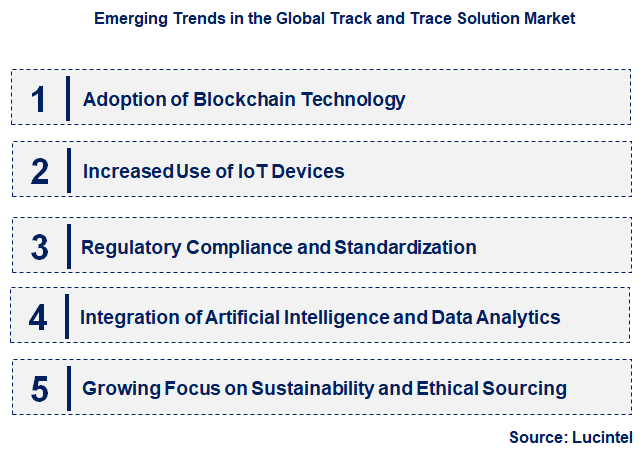
• Adoption of Blockchain Technology: This trend involves integrating blockchain to enhance transparency and security in supply chains. Blockchain provides an immutable ledger for tracking products from origin to end-user, reducing fraud and counterfeiting. Its decentralized nature ensures data integrity and real-time visibility, which is crucial for compliance and quality assurance. As industries recognize its benefits, blockchain is becoming a core component of advanced track and trace solutions, fostering greater trust among consumers and regulators.
• Increased Use of IoT Devices: The deployment of Internet of Things (IoT) sensors and devices is significantly improving data collection and real-time monitoring. IoT enables continuous tracking of products through RFID tags, GPS, and sensors, providing detailed insights into location, temperature, humidity, and other conditions. This trend enhances supply chain efficiency, reduces losses, and ensures product integrity, especially in sensitive sectors like pharmaceuticals and food. The proliferation of IoT devices is making track and trace solutions more accurate, scalable, and responsive to dynamic supply chain needs.
• Regulatory Compliance and Standardization: Governments and industry bodies are imposing stricter regulations requiring comprehensive tracking and reporting. This trend drives the adoption of standardized protocols and systems to meet compliance standards such as GS1, DSCSA, and FMD. Companies are investing in advanced solutions to ensure traceability, recall readiness, and serialization. Regulatory pressures are also encouraging harmonization across regions, facilitating smoother international trade and reducing counterfeit risks, thereby elevating the overall integrity of supply chains.
• Integration of Artificial Intelligence and Data Analytics: AI and data analytics are transforming track and trace solutions by enabling predictive analytics, anomaly detection, and smarter decision-making. These technologies analyze vast amounts of tracking data to identify patterns, forecast disruptions, and optimize logistics. AI-driven insights improve inventory management, reduce delays, and enhance product safety. As AI becomes more sophisticated, it allows for proactive responses to supply chain issues, increasing resilience and efficiency in the market.
• Growing Focus on Sustainability and Ethical Sourcing: Consumers and regulators are demanding greater transparency regarding environmental and social impacts. Track and trace solutions are increasingly used to verify sustainable sourcing, ethical labor practices, and eco-friendly packaging. This trend encourages companies to adopt transparent tracking systems that demonstrate compliance with sustainability standards. It also helps in building brand trust and meeting corporate social responsibility goals, ultimately influencing purchasing decisions and market competitiveness. In summary, these emerging trends are fundamentally reshaping the track and trace solution market by enhancing transparency, security, and efficiency. They are fostering innovation, ensuring regulatory compliance, and aligning supply chains with sustainability goals. As these developments continue to evolve, they will drive greater trust among consumers and stakeholders, ultimately transforming how products are tracked, verified, and managed across industries.
• Adoption of Blockchain Technology: Blockchain integration enhances transparency and security in supply chains, reducing counterfeiting and fraud. This development improves trust among consumers and regulators, leading to increased compliance and streamlined verification processes.
• Implementation of IoT Devices: IoT sensors enable real-time tracking and monitoring of products throughout the supply chain. This advancement improves inventory management, reduces theft, and ensures product integrity, especially in sensitive industries like pharmaceuticals.
• Regulatory Compliance and Standardization: Governments and industry bodies are establishing stricter regulations requiring detailed tracking and reporting. This has driven companies to adopt advanced track and trace solutions to meet compliance, avoiding penalties and enhancing brand reputation.
• Integration of AI and Data Analytics: AI-powered analytics optimize supply chain operations by predicting demand, identifying bottlenecks, and enhancing traceability. This development leads to more efficient logistics and better decision-making.
• Growth of Cloud-Based Solutions: Cloud technology offers scalable, cost-effective track and trace systems accessible from anywhere. This trend facilitates easier deployment, updates, and collaboration across global supply chains, boosting overall efficiency. These recent developments are collectively transforming the track and trace solution market by increasing transparency, security, and efficiency. They enable companies to meet regulatory demands, reduce counterfeiting, and improve supply chain visibility, ultimately fostering greater consumer trust and operational excellence.
• Enhanced Drug Safety and Compliance : The adoption of track and trace solutions in pharmaceuticals ensures compliance with stringent regulations like DSCSA and FMD, reducing counterfeit drugs and improving patient safety. This drives market growth by increasing demand for secure serialization and real-time monitoring systems.
• Supply Chain Transparency and Food Safety : Implementing track and trace solutions helps food companies verify origin, monitor freshness, and ensure safety standards. This transparency boosts consumer confidence, reduces recalls, and aligns with regulatory mandates, fueling sector growth.
• Counterfeit Prevention and Brand Protection : In consumer goods, track and trace solutions combat counterfeiting by authenticating products and safeguarding brand reputation. This application enhances consumer trust and supports premium pricing strategies, expanding market opportunities.
• Real-Time Tracking and Inventory Management : Logistics providers leverage these solutions for real-time shipment tracking, inventory control, and route optimization. Improved efficiency and reduced losses contribute to market expansion in logistics services.
• Asset Management and Regulatory Compliance : Healthcare facilities utilize track and trace systems for managing medical devices, ensuring regulatory compliance, and preventing theft or loss. This application enhances operational efficiency and patient safety, driving growth in healthcare markets. In summary, these growth opportunities across key applications are significantly impacting the track and trace solution market by fostering innovation, improving safety standards, and enabling compliance. As industries increasingly prioritize transparency and security, the market is poised for sustained expansion driven by technological advancements and regulatory pressures.
• Technological Innovation: The continuous development of advanced tracking technologies such as RFID, IoT, and blockchain enhances supply chain visibility and product authenticity. These innovations enable real-time tracking, reduce counterfeiting, and improve inventory management, thereby increasing efficiency and consumer trust. As technology becomes more affordable and scalable, adoption accelerates across industries like pharmaceuticals, food, and retail, fueling market growth.
• Regulatory Compliance and Standards: Governments and industry bodies are implementing strict regulations to ensure product safety, authenticity, and traceability. Regulations such as the Drug Supply Chain Security Act (DSCSA) and the EU Falsified Medicines Directive (FMD) mandate comprehensive tracking systems. Compliance drives companies to adopt track and trace solutions to avoid penalties, recalls, and reputational damage, thus propelling market expansion.
• Increasing Demand for Supply Chain Transparency: Consumers and businesses are demanding greater transparency regarding product origin, safety, and authenticity. This trend is particularly prominent in sectors like pharmaceuticals, food, and luxury goods. Track and trace solutions provide end-to-end visibility, helping companies build trust, meet consumer expectations, and differentiate themselves in competitive markets.
• Growth of E-commerce and Global Supply Chains: The surge in e-commerce and complex global supply chains necessitates robust tracking systems to ensure timely delivery and authenticity. As products move across borders, the need for real-time tracking and verification becomes critical. This growth drives investments in advanced track and trace solutions to streamline logistics, reduce theft, and enhance customer satisfaction. The challenges in the track and trace solution market are:
• High Implementation and Maintenance Costs: Deploying comprehensive track and trace systems requires significant capital investment in hardware, software, and infrastructure. Small and medium-sized enterprises may find these costs prohibitive, limiting widespread adoption. Additionally, ongoing maintenance, updates, and staff training add to the financial burden, potentially slowing market growth.
• Data Security and Privacy Concerns: The extensive collection and sharing of data across supply chains raise concerns about cybersecurity and data breaches. Sensitive information related to product provenance, manufacturing processes, and customer data must be protected against hacking and unauthorized access. These security challenges necessitate advanced cybersecurity measures, increasing costs and complexity.
• Regulatory and Legal Complexities: Navigating diverse and evolving regulatory landscapes across different regions poses a significant challenge. Companies must ensure compliance with varying standards, which can be time-consuming and costly. Non-compliance can lead to legal penalties, product recalls, and damage to brand reputation, making regulatory complexity a critical barrier to market expansion. In summary, the track and trace solution market is driven by technological advancements, regulatory mandates, and increasing demand for transparency, all of which foster growth and innovation. However, high costs, data security issues, and regulatory complexities present substantial hurdles. Balancing these drivers and challenges will be crucial for market participants to capitalize on emerging opportunities and sustain long-term growth in this dynamic landscape.
• TraceLink
• Optel Vision
• Siemens
• Mettler-Toledo International
• Axway
• Laetus
• Adents Internationa
• Seidenader Maschinenbau
• Antares Vision
• Systech
• Hardware Systems
• Software Solution
• Pharmaceutical & Biopharmaceutical Companies
• Medical Device Companies
• Cosmetic
• Others
• North America
• Europe
• Asia Pacific
• The Rest of the World
• United States: The US market has seen rapid adoption of blockchain-based traceability systems to improve supply chain transparency. Regulatory agencies like the FDA are mandating serialization for pharmaceuticals, prompting companies to upgrade their tracking solutions. Additionally, IoT integration has enhanced real-time monitoring of goods, especially in food and healthcare sectors. Major players are investing in AI-driven analytics to predict supply chain disruptions and improve efficiency. The US also emphasizes data security and privacy, leading to innovations in secure tracking technologies.
• China: China has accelerated its deployment of advanced track and trace systems, particularly in pharmaceuticals and food safety. The government has implemented strict regulations requiring serialization and real-time tracking to combat counterfeit products. Chinese companies are adopting IoT sensors and blockchain to ensure product authenticity and improve supply chain integrity. The country is also investing in big data analytics to optimize logistics and reduce fraud. E-commerce giants are integrating these solutions to enhance consumer trust and streamline cross-border trade processes.
• Germany: Germanys market focuses on integrating Industry 4.0 technologies into track and trace solutions, emphasizing automation and data interoperability. The automotive and pharmaceutical sectors are leading adopters, utilizing RFID and IoT sensors for precise tracking. The country is also investing in sustainable supply chain practices, with solutions that enable better resource management and waste reduction. German firms are collaborating with technology providers to develop standardized, secure systems that comply with EU regulations, fostering cross-border interoperability within the European Union.
• India: India has seen a surge in the adoption of track and trace solutions driven by government initiatives like the Pharmaceutical Track and Trace System (PTRMS) and the Food Safety and Standards Authority of India (FSSAI) regulations. Companies are deploying RFID, QR codes, and blockchain to enhance product authenticity and reduce counterfeiting. The focus is on improving supply chain visibility in rural and remote areas, with mobile-based tracking solutions gaining popularity. The government’s push for digitalization and ease of doing business is accelerating the deployment of these technologies across various sectors, including pharmaceuticals, food, and consumer goods.
• Japan: Japan continues to innovate in track and trace solutions with a focus on precision and security. The market emphasizes the integration of IoT and AI to improve supply chain resilience and product safety. Japanese companies are adopting blockchain for secure data sharing and traceability, especially in pharmaceuticals and high-value electronics. The country is also exploring sustainable practices by implementing eco-friendly tracking technologies. Collaboration between industry and government initiatives aims to enhance traceability standards and ensure compliance with international regulations, reinforcing Japan’s position as a leader in supply chain technology.


• TraceLink
• Optel Vision
• Siemens
• Mettler-Toledo International
• Axway
• Laetus
• Adents Internationa
• Seidenader Maschinenbau
• Antares Vision
• Systech Q5. Which track and trace solution market segment will be the largest in future? Answer: Lucintel forecasts that, within the type category, software solution is expected to witness higher growth over the forecast period. Q6. In track and trace solution market, which region is expected to be the largest in next 5 years? Answer: In terms of region, APAC is expected to witness the highest growth over the forecast period. Q7. Do we receive customization in this report? Answer: Yes, Lucintel provides 10% customization without any additional cost.


Choose a license that fits your team. Instant PDF delivery.
Prices exclude taxes. Instant delivery. Custom licensing available on request.
Market Report · July 15, 2026
Market Report · June 26, 2026
Market Report · June 24, 2026
Trusted partner for strategic intelligence and business growth


Receive a complimentary market analysis tailored to your industry. Our analysts will identify key growth opportunities and competitive dynamics specific to your business.

Market size, growth rate, and key trend analysis for your specific sector.

Top competitor positioning and market share analysis.

Strategic recommendations backed by data-driven insights.
Get curated market intelligence and competitive moves straight to your inbox.
By subscribing, you agree to receive our monthly insights. Unsubscribe anytime.
Receive a complimentary market analysis tailored to your industry. Our analysts will identify key growth opportunities and competitive dynamics specific to your business.
Market size, growth rate, and key trend analysis for your specific sector.
Top competitor positioning and market share analysis.
Strategic recommendations backed by data-driven insights.
Get curated market intelligence, emerging trends, and competitive moves straight to your inbox each month.
By subscribing, you agree to receive our monthly insights. Unsubscribe anytime.
We'll send your sample report shortly.